
Jogos de Arcade
Luxor
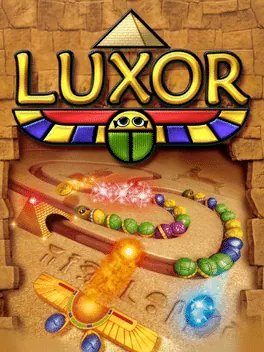
Embark on an expedition through ancient sands in this exciting action-puzzler. A unique take on the match three puzzle, Luxor challenges you to think quickly and aim carefully as you explore the path of the Nile.
Ninja Spirit
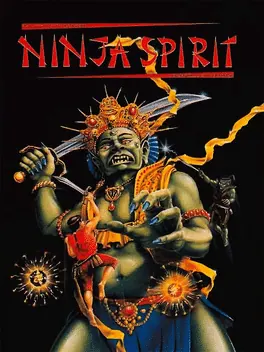
There are a total of seven stages varying from woodlands, wastelands, swamps, temples and cliffs. Each stage begins with the player slashing his way to the end, until he confronts a level boss. The ninja is always armed with the sword Righteous Cloud which can be fluidly used to attack in all directions. Extra weapons include the Swirling Leaf (shurikens), the Bamboo Thunder (bombs), and the Rising Dragon (kusarigama). There are also several powerup items, such as one unleashing multiple ninja ghosts to assist the player.
Space War
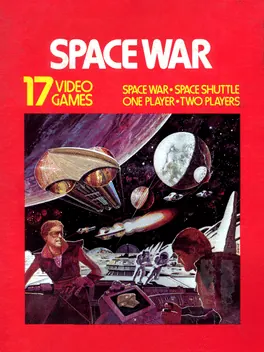
This video game is an Atari 2600 port of Spacewar!, the famous 1962 computer game by Steve Russell. The cartridge comes programmed with 17 game variations. Variations 1 to 13 are duels between two ships and 14 to 17 are for one player. In some of the variations the ships fight near a planet which has gravitational attraction. This concept was used in the Star Control series of games.
Side Pocket
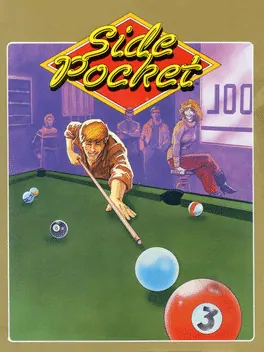
Side Pocket is a pocket billiards video game originally released into arcades by Data East in 1986. The arcade version was eventually ported to six home console platforms and two sequels to the game were produced, as well as a spin-off series called Pocket Gal. G-Mode currently owns the intellectual property rights to the Side Pocket series, and licenses these games globally.
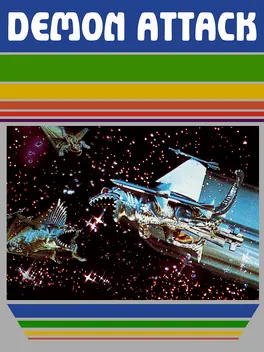
Demon Attack
Demon Attack is an arcade action game with gameplay similar to Space Invaders. You control a laser cannon at the bottom of the screen, and need to destroy wave after wave of brightly colored demons. The demons bounce around the screen in bizarre patterns, and try to destroy your cannon with bombs or lasers. When you shoot a demon, it will be replaced with another or will split into two smaller demons depending on which wave you are playing. When the required number of demons for the current round is finally destroyed, you can move on to the next, more difficult round.
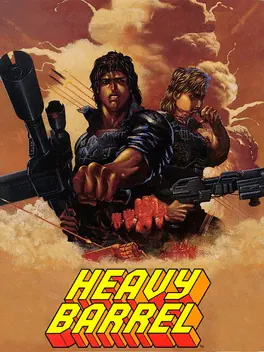
Heavy Barrel
Heavy Barrel is a 1987 overhead run and gun arcade game by Data East. Terrorists have seized the underground control complex of a nuclear missile site, and it is up to the player to infiltrate the base and kill the enemy leader. Players begin armed with a laser gun with unlimited ammunition and a limited supply of grenades. Improved weapons and grenade powerups are made available within the game, either in plain sight or within crates that must be unlocked using keys. Additionally, crates may contain orbs or one of the six pieces of the Heavy Barrel superweapon. Like SNK's Ikari Warriors, the original arcade version featured 8-way rotary joysticks. The name of the game is from an in-game weapon. The Heavy Barrel is found in six pieces and is an energy cannon capable of destroying any enemy in the game with a single shot (except the final enemy, and possibly one other boss that may have required two shots). The weapon has a wide arc of fire and can be fired as fast as the player's trigger finger permits, but after thirty seconds its use is exhausted, at which point the bearer reverts to his previous weaponry. Best used to get past tough bosses, the weapon could be built several times in a single game (probably three or four times). In a two-player game, whoever collects the sixth piece is equipped with the Heavy Barrel.
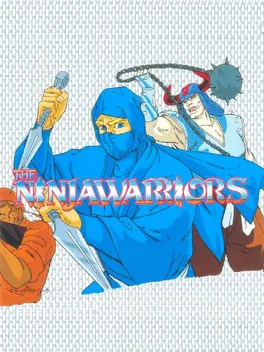
The Ninja Warriors
The Ninja Warriors presents side-scrolling hand-to-hand combat. Players take control of Kunoichi or Ninja and fight wave after wave of Banglar forces across five levels.
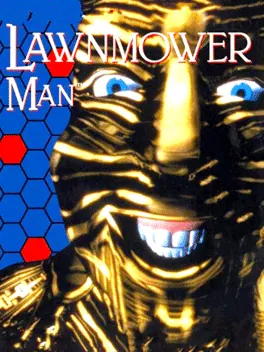
The Lawnmower Man
The Lawnmower Man is the game based on the 1992 movie of the same name (itself loosely based on a Stephen King short story) starring pre-Bond fame Pierce Brosnan as Dr. Lawrence Angelo, a scientist working for Virtual Space Industries in "Project 5", a secret research that attempts to increase the intelligence of primates using psychotropic drugs and VR training. The twists of the game are true-3D level connectors, based on the CG sequences of the movie, usually all involving avoiding obstacles (and the occasional shooting) at high speed in the VR world. There are four different (Virtual World, Cyber War, Cyber Run and Cyber Tube), each taking a slightly different approach (Virtual World is seen in first person, the objective being dodging obstacles such as trees and archs and reach the exit, Cyber War similar to Virtual World but with some shooting stops, Cyber Run is seen in third person and requires occasional shooting of obstacles, while Cyber Tube is a fast travel with plenty of enemies in a VR tunnel).
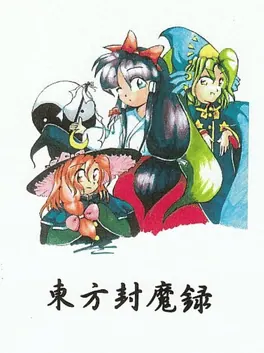
Touhou Fuumaroku: The Story of Eastern Wonderland
The Story of Eastern Wonderland casts the player as the Shrine Maiden Reimu Hakurei and offers three distinct attack types to choose from: a wide-range type with weak attack power, a mid-range type with moderate attack power and auto-targeting capabilities, and a narrow-range type with high attack power but lowered movement speed. The bombs also exhibit unique behavior depending on the type chosen. As the first danmaku shooting game in the Touhou Project, the Story of Eastern Wonderland introduces many features that are now hallmarks of the series as a whole: relatively small hit boxes, boss characters who are not much larger than the player character however are highly mobile, a power-up system, variable-worth point items, an unlockable Extra Stage, and a semi-complex scoring system. The game also marks the first appearance of Marisa Kirisame, who would become a major character in the series, appearing as often as Reimu Hakurei herself.
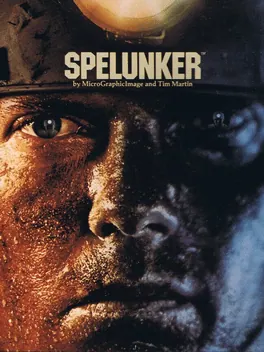
Spelunker
A miner has to find the exit to a world of wonders that is deep in the ground. During his journey he has to collect bombs to destroy rocks in his way, collect keys to open doors and pick up little potions that refresh his timer. Treasure chests can be opened for bonus items.
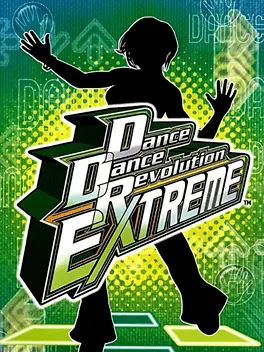
Dance Dance Revolution Extreme
Dance Dance Revolution Extreme is a music video game by Konami and is the eighth release in the main Dance Dance Revolution (DDR) series. It was released on December 25, 2002 for Japanese arcades, on October 9, 2003 for the Japanese PlayStation 2, and on September 21, 2004 for the North American PlayStation 2. This game is the ninth release in North America, but despite having the same name as its Japanese counterpart, its gameplay and soundtrack is significantly different[1] and won the Video Music Awards in 2005 on MTV for Best Video Game Soundtrack. While the PlayStation 2 version came out in North America, the arcade version was exclusive to Japan. Despite this, the arcade version was exported to many arcades in the USA (most of them being bootlegged). Dance Dance Revolution Extreme was the last game in the DDR arcade franchise for four years until Dance Dance Revolution SuperNova in 2006. The arcade release of the game contains one of the largest soundtracks of any DDR game, featuring 240 songs, as well as music from other Bemani music titles. Konami issued an in-game thank you to the fans of Dance Dance Revolution and announced a rejuvenation of the entire series, but did not go into details. Konami's announcement led people to believe that DDR Extreme might be the final DDR release or that the series might be on hiatus or rebooted in the same manner as Beatmania and Beatmania IIDX.
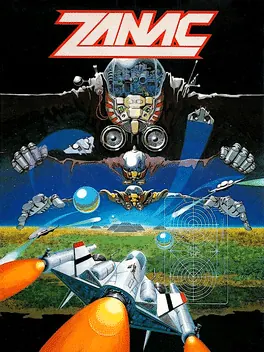
Zanac
The "system" was created by an organic intelligence body many milleniums ago and began attacking the human race. The earth was thrown into turmoil with only one hope for salvation. Fighter model AFX-6502 ZANAC was perfected by the 256th Riot Fleet to ward off the enemy system. It's your job, as ZANAC, to save the human race. Using eight special weapons and secret power forces buried along the way, guide ZANAC through 12 screens of enemy creatures to victory.
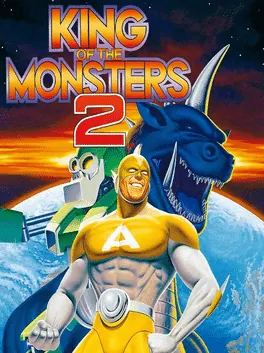
King of the Monsters 2
Alien super monsters have returned and are trying to invade Earth again! Now, Super Geon, Atomic Guy, and Cyber Woo must fight to retain control of the planet. Each one has special attacks and powers. Take on monsters that have unique abilities never seen before, including fire breath, aerial spins, and radioactive blasts. Challenge a friend, or have him help you out in the two-player option. Battle your way through seven levels of intense action in King of The Monsters 2.
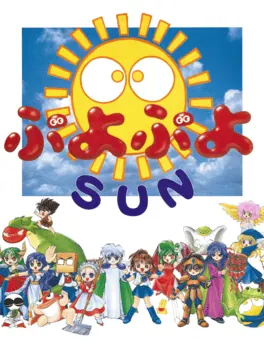
Puyo Puyo SUN
Satan has enlarged the sun in a devious attempt to get a perfect tan. Arle Nadja embarks on a quest to defeat him in this competitive puzzle game. This is the 3rd installment of the Puyo Puyo games series, and the sequel to Puyo Puyo Tsu. After the highly acclaimed success of its predecessor, Compile took a slightly more retro approach, so players had a more original feel to the game over that of Tsu. The name of Puyo Puyo SUN comes from a Japanese pun on san, and also indicates a new Puyo brought into the game. As Sun Puyo were used in this game, and the game itself is not only set on a tropical beach, but is the third in the series (san (三)) is the Japanese word for the number three), the name served multiple purposes. This game was released only in Japan. Following the arcade release, Puyo Puyo Sun was ported to the then-current home consoles. The Saturn version was released merely three months after the arcade release, while the other ports were released in late 1997 and throughout 1998. The Saturn, PlayStation, and Windows 95 versions feature fully voiced cutscenes unlike the original ST-V version.
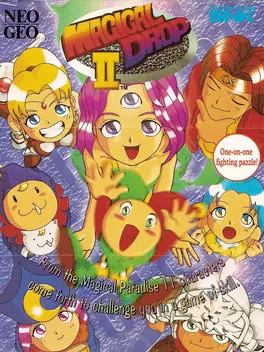
Magical Drop II
Magical Drop is played in a style and gameplay similar to Compile's (now Sega's) Puyo Puyo and Taito's Puzzle Bobble franchises; a "stack" of random colored bubbles descend from the top, and a player is defeated when a bubble hits the bottom. Bubbles can be picked up and dropped by the player's "clown" at the bottom, and are destroyed when three or more of the same color are put together on a single column. "Chains" are formed either when a single drop caused a chain reaction, or when more than one group of bubbles is destroyed in quick succession. The game is normally played with two players (one may be a computer opponent), and chains cause the opponent's stack to descend faster. There are 24 characters, all but the Black Pierrot being named after a tarot card (although the Strength card has been represented by two characters throughout the series). Different characters have different attack patterns. The columns of the opponent's stack will descend at different rates relative to each other depending on the character chosen. This causes a disjunction of colors that may make it more difficult for the other player to clear their stack. For example, with the character Devil, all the columns will descend at the same rate, whereas with Sun, the middle columns will descend faster than the others.
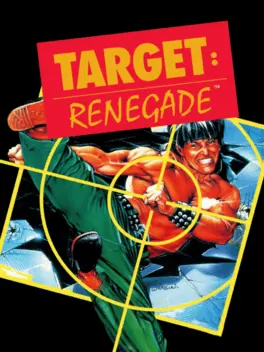
Target: Renegade
Target: Renegade is a scrolling beat'em up (or flip-screen on certain versions) computer game released on the Amstrad CPC, Commodore 64 and ZX Spectrum systems in the late 1980s by Ocean Software on their "Imagine" label, as well as a Nintendo Entertainment System version published by Taito. The game is a sequel to Renegade and was followed by Renegade 3. When acquiring the license to convert the original arcade game Renegade to home computers, Ocean acquired the option to produce and release their own home-computer-only sequels to the game, and Target Renegade was the first of these sequels. On most formats, the game caters for one or two players and concerns itself with the adventures of a streetfighter (or a pair of identical streetfighters) known only as "Renegade", who seek(s) revenge against a local crime kingpin named "Mr. Big" for murdering his or their brother Matt. The player character varies, depending on the format, but is usually represented as topless apart from a leather vest and wearing jeans. Regardless of the format, the cover of the game and the title screen (as seen on the image to the right) portrays a topless street fighter performing a flying kick through a window. In keeping with video game box art and advertising of the era, the character shown in this illustration bears little relation to any character in the game itself. The actual picture is based on Martial Arts Legend Joe Lewis from the cover of his book The World's Greatest Fighter Teaches You How To Master Bruce Lee's Fighting System, but has been adjusted so as to fit in with the character of Renegade. The game comprises five levels, though details of enemies and weapons vary from one version to another (the NES version in particular is more like Double Dragon than the home computer versions). The NES and C64 versions of the game do not have a two-player co-operative mode.
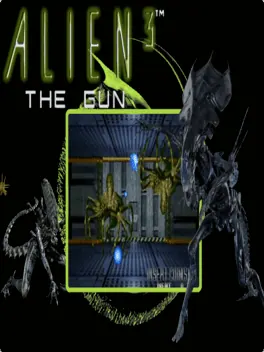
Alien3: The Gun
Using cabinet mounted guns you and another player blast away the Aliens in an attempt to save the prison planet. You are also given a limited number of grenades to use when the going gets tough. The gameplay is very close to Sega’s other lightgun games from the period such as Gunblade and Jurassic Park. This game was based on the movie of the same name.
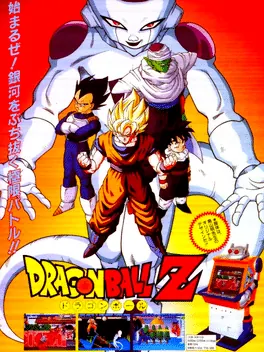
Dragon Ball Z
Dragon Ball Z is a fighting game designed and manufactured in Japan by Banpresto in 1993. The game's cabinet is shaped like a robot with markings similar to Goku's gi (suit). The game features large sprites and a color palete that is identical Toriyama's water color scheme in the manga. The environments are semi destructible as chunks of wall or ground could be destroyed. The controls are unique as most of the characters movements are flight related. The playable characters are Goku, Super Saiyan Goku, Gohan, Vegeta, Piccolo, Frieza, Captain Ginyu, Recoome, and Burter.

Barrier X
Dodge! Shoot! Go faster! Break the sound barrier in this unbelievably fast game and go straight for the first place in the leaderboard of Barrier X!
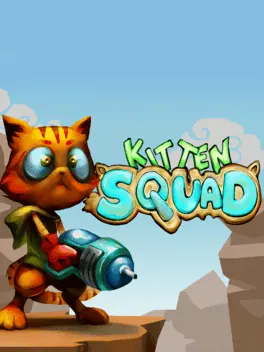
Kitten Squad
Sadistic robots have enslaved orcas at SeaLand Marine Park. The evil Sheep Puncher robot has kidnapped sheep for the twisted wool industry. Only the Kitten Squad is up to the task of saving these gentle animals. Players must guide the Kitten Squad, armed with weaponry ranging from carrot rocket launchers to yarn ball guns, on missions to defeat the evil robots and free the animals in this action game brought to you by PETA.

Fatal Fury: Wild Ambition
PS1 port of "Fatal Fury: Wild Ambition" It was ported to the Sony PlayStation on June 24 in Japan and November 30 in North America, making it the only Hyper Neo Geo 64 game to receive a port for a home system. The game was re-released as a downloadable game for PlayStation 3 and PlayStation Portable via the PlayStation Network in Japan on April 25, 2007.
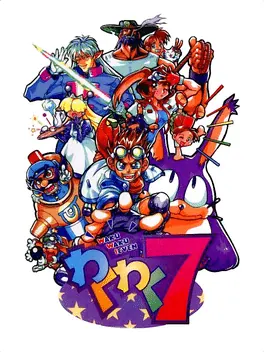
Waku Waku 7
Waku Waku 7 is a SNK fighting game originally released for the Neo Geo MVS arcade system.
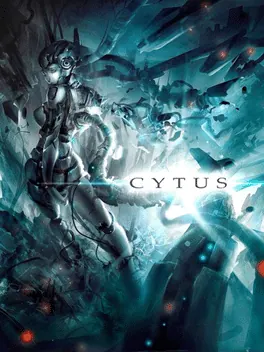
Cytus
200 songs and 400 variations, including many from famous composers around the world. Beautiful hand-drawn art style. Easy, intuitive Active Scan Line system and 3 types of notes. Different display modes allow player-friendly previewing of notes. Strong beat and rhythms provide satisfying feedback for taps. More than 9 difficulty levels for more fun and challenges. Various music genres: POP, JAZZ, TRANCE, HARDCORE, DRUM 'N BASS and much more.
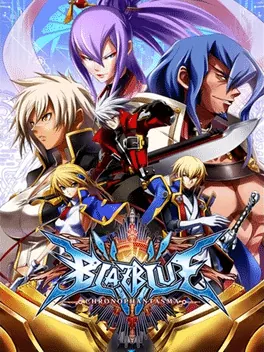
BlazBlue: Chrono Phantasma
BlazBlue: Chrono Phantasma, released in Japan as BlazBlue: Chronophantasma, is a 2D fighting game developed by Arc System Works. It is the third game of the Blazblue series, set after the events of BlazBlue: Continuum Shift. Besides normal rebalancing from Continuum Shift Extend, Chrono Phantasma features several revamped gameplay mechanics and introduces seven new characters to the roster. The character sprites have also been redrawn and several new songs were composed for the game. All previous musical themes were re-arranged. The storyline continues after events of Continuum Shift. A new mechanic called "Overdrive" has been added to the game, replacing the Gold Bursts from Continuum Shift.
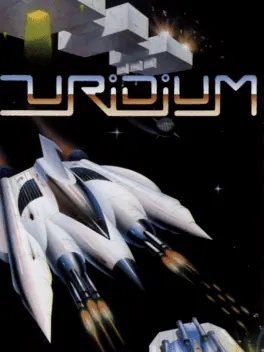
Uridium
Uridium (released on the NES as The Last Starfighter) is a science fiction side-scrolling shoot 'em up originally designed by Andrew Braybrook for the Commodore 64, and later ported to other 8-bit machines. It consists of fifteen levels, each named after a metal element, with the last level being called Uridium (a fictional metallic element, not to be confused with the real metallic element iridium). The manual quotes Robert Orchard, who invented the name as saying "I really thought it existed".

Noby Noby Boy
Noby Noby Boy is an Action game, developed and published by Bandai Namco Games, which was released in 2009.
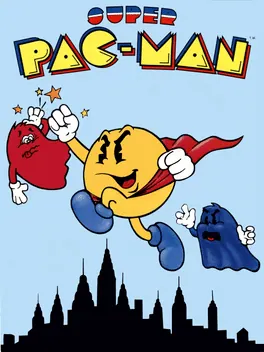
Super Pac-Man
Super Pac-Man is a game in Namco's Pac-Man family, but instead of gobbling up dots, Pac is required to eat fruit and prizes, such as apples, bunches of bananas, doughnuts, hamburgers, fried eggs, ears of corn, sneakers, pieces of cakes, raspberries, limes, cups of coffee, mushrooms, Galaxians, bells, and shamrocks. Most of these items are hidden in passages that have locked doors at either entrance, and in order to unlock the doors, Pac needs to eat the key that is closest to the passage that he wishes to unlock. As usual, ghosts will keep chasing Pac around the maze until he has lost all his lives. However, Pac can enter the warp tunnels at either side of the maze to lose the ghosts quickly. There are two types of power pellets in the maze: green and yellow. Yellow power pellets cause ghosts to turn blue, allowing Pac to eat them for points, whereas green ones cause Pac to enlarge and will also cause the ghosts to become much thinner and wider, allowing him to fly over them. He can also break open the doors without the need of keys. The effects of the pellets, unfortunately, only last for a number of seconds. During the time that he is enlarged, a flashing star will appear besides two boxes that are located in the middle of the maze. The first box will display the current fruit or prize, and the other will display a rotating selection of them. If Pac manages to eat the star when they match there will be a large bonus score. Occasionally, after three or more stages, there will be a bonus stage where Pac automatically gets enlarged. The object of these stages is to eat everything in the maze before the time runs out and, during these stages, there will be no ghosts to pursue him.
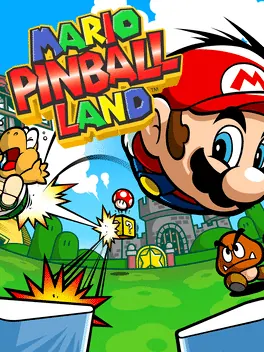
Mario Pinball Land
Jumping has always helped Mario perform heroic feats, but in Mario Pinball Land, the plumber must learn how to roll to rescue the princess. When Bowser kidnaps Peach and escapes to another dimension, a scientist transforms Mario into a ball to chase after the fiend. Now you must use your flippers to shoot a much rounder Mario into doors that lead to new areas. In his new form, Mario is also useful for knocking down enemies, picking up special bonuses, and finding power-ups.
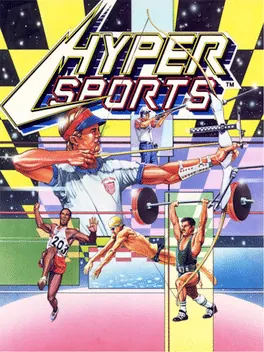
Hyper Sports
Six tough events await in this joystick-waggling action game. The full sequence of events is - swimming, skeet shooting, gymnastics, archery, triple jumping and weightlifting. You must complete each event in order to be allowed onto the next one. Swimming involves moving left and right as fast as possible, while pressing fire when a breath is required. Skeet shooting and archery both come down to timing - though elevation and wind factors affect the latter. Gymnastics involves timing a succession of presses to ensure that the jump is long and the landing graceful. The triple jump involves one press for each part of the jump, whereas the weightlifting involves merely brute strength.
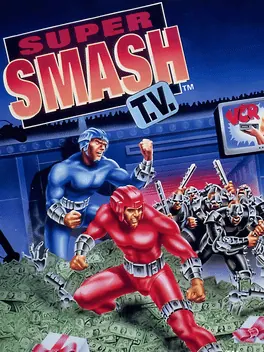
Super Smash T.V.
The Super Nintendo Entertainment System and Super Famicom port of Smash T.V. Smash T.V. was an arcade game created by Eugene Jarvis and Mark Turmell for Williams released in 1990. It is a dual-stick shooter in the same vein as its predecessor, Robotron: 2084 (also produced by Jarvis). As in the previous game, players battle waves of enemies by using guns. The plot of Smash TV revolves around a futuristic game show in which players compete for various prizes as well as their lives. As the Super Nintendo doesn't have dual stick controls, the ABXY buttons are used to aim the player's gun instead - for a total of 8 possible directions.
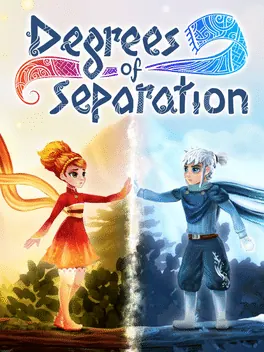
Degrees of Separation
Degrees of Separation is a puzzle platformer where cooperation is built into every move. Two contrasting souls, Ember and Rime, fall in love, but are separated by an enigmatic force, and must use their powers to progress through a spectacular world of fantasy and adventure. Players solve environmental obstacles by drawing upon the contrasting temperatures of warm and cold in single-player and cooperative multiplayer.
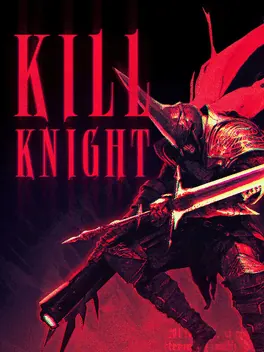
Kill Knight
KILL KNIGHT is an ultra-responsive arcade-inspired isometric action shooter. Condemned to eternal sufferance, deep within the voids of an eldritch arena, you must wield an arsenal of devastating weaponry to obliterate swarms of otherworldly horrors - and MASTER THE DEMON WITHIN.
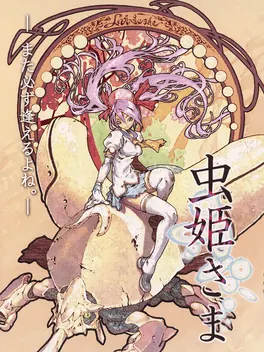
Mushihimesama
Mushihimesama is a manic shooter developed by Cave and released by Taito in 2004. It was ported to the PlayStation 2 in 2005 and iOS in 2011. An Xbox 360 port was released in May 2012 (with ver1.5 as first print DLC). A significantly changed "version 1.5" was released to arcades in 2011. The game has an insect theme as all of the enemies resemble various insects such as beetles and butterflies. The game is set in various forest environments. It received a sequel in 2006, known as Mushihimesama Futari, and a spin-off iOS game entitled Mushihimesama Bug Panic.
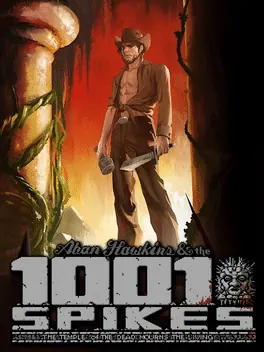
1001 Spikes
The son of a famous adventurer, Aban Hawkins must avoid an endless gauntlet of devious traps and dastardly hazards while exploring the Ukampa Ruins in South America. Sharp spikes, poison darts, falling blocks and flamethrowers are among the deadly obstacles that Aban will have to overcome in order to reach the Door of Poko-Mum and learn the truth about his missing father. A throwback to the most challenging 8-bit platformers, 1001 Spikes requires intense concentration, constant memorization and flawless timing. You start the game with 1,001 lives, and you may end up losing every last one of them before you make it to the Golden Shrine!
Sokobond
Sokobond is an elegantly designed puzzle game about chemistry. It's logical, minimalist, and crafted with love and science.
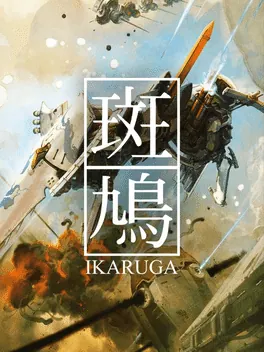
Ikaruga
In this vertical scrolling spaceship shooter, you control a ship that can change its polarity at will. As blue/white, the ship can easily destroy red/black enemies, and visa versa. Bullets of your polarity can be collected to fuel your missile gauge, but those opposite will kill you. Destroying an enemy ship will make them drop points for you to pick up, but they are polarized, too. Different difficulties exist to change exactly how you interact with polarized points, or how they appear. Ikaruga is a balls-hard shmup with lots of difficulty even at the easiest level, and lots of replay value for those willing to face the challenge.