
Jogos para Arcade
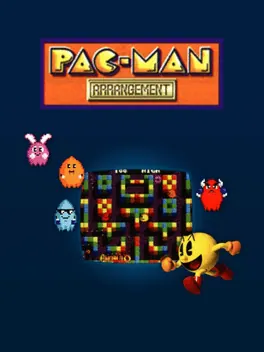
Pac-Man Arrangement
A remake of the original Pac-Man, with modernized presentation and gameplay.
Dance Dance Revolution Supernova 2
The hottest revolution and bestselling video game in the music game category explodes onto the dance floor with Dance Dance Revolution SuperNOVA2, the follow-up to 2006's biggest and best DDR game to date! Dance Dance Revolution SuperNOVA2 will deliver a dance party extravaganza with its fun interactive gameplay, incredible song selection and innovative new game modes.
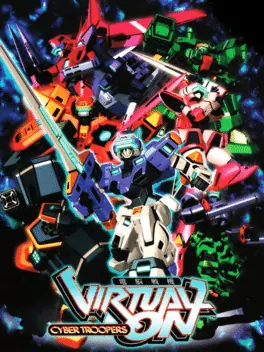
Cyber Troopers Virtual-On
Virtual-On is set up similar to a Versus fighting game. Two Virtuaroids (Mecha) face each other on a stage. The player(s) use a variety of firearms, explosives, melee weapons, and other techniques to destroy the enemy for a set number of rounds, usually a single battle, or best two out of three rounds, like fighting games. The game is made to be played with a two-joystick setup, known as the twin-sticks. Each stick is equipped with a trigger and a button on top of the stick.
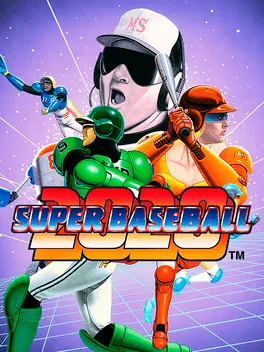
Super Baseball 2020
Different from real baseball and other baseball video games, this game consists of both male and female characters, as well as robots. All three types of players have the same basic abilities and vary only on their personal strengths. In many cases, human players are better than their robot counterparts. One major difference between the human and robot characters is that the robot characters can blow up (or lose all their power) if they are worked too hard during a game. That can happen if you constantly make them dive for a ball, run extra bases, or even if they get hit by a pitch. Under no stress whatsoever, some robots, especially pitchers, will naturally run out of power as the game progresses. When this happens, they will lose all their abilities and be useless, both offensively and defensively. When that occurs, you can either power them up or replace them with another person on the roster. Human players do not blow up, but human pitchers can tire out. When they are tired, they will pant heavily and throw the ball very slowly. This can be remedied by either an upgrade or, as in real baseball, switching to a relief pitcher.
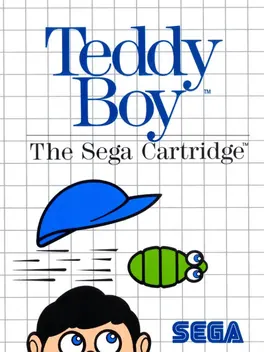
Teddy Boy
In Teddy Boy you must scramble from maze to maze - each more magnificent than the one before it - bumping off bugs, guppies, snails, dominos and more as you go. Grab precious points for tennis shoes, teddy bears, snails, and other identifiable objects. And try to avoid the ugly Den Den, a snapping dragon head. Or you'll be forced to wake up to reality.
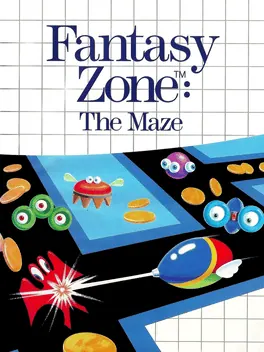
Fantasy Zone: The Maze
The evil Menons have returned... in multi-level bases which are hidden in seven different planets! The brave Opa-Opa has been called to battle their evil threat. And joining him in the fight is his younger brother, Upa-Upa. Your Mission: Guide this brave team of brothers through level after level of treacherous mazes. Get the golden coins stolen by the Menon hoard and use them to purchase powerful weapons. The Fantasy Zone is counting on you! Don't let them down.
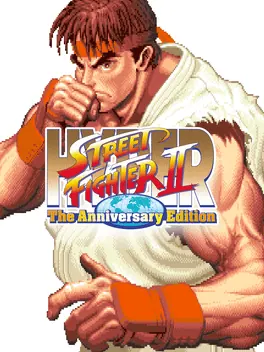
Hyper Street Fighter II: The Anniversary Edition
Hyper Street Fighter II: The Anniversary Edition is a modified port of Super Street Fighter II Turbo in which players can control any versions of the main characters from the five Street Fighter II games previously released for the arcades.
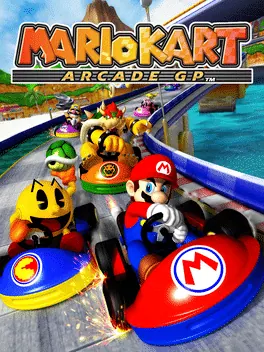
Mario Kart Arcade GP
Mario Kart Arcade GP is an arcade-only iteration of Nintendo's Mario Kart series, developed by Namco. Designed for the Triforce arcade board (also used for F-Zero AX), players can race as one of eleven characters on twenty-four tracks. On certain machines, for an additional fee, a player's data can be saved on a magnetic card which can be inserted into the machine again later to retain unlocked items and records. Nintendo's limited role of development was mainly isolated to ensuring that it was a worthy title for the established franchise. This game's arcade cabinet houses a camera that will take a photograph of the player's face. The photo can be customized and then will be displayed above the player's character during multiplayer races. The game is noted for being the first Mario Kart to feature playable crossover characters: Namco's Pac-Man, Ms. Pac-Man and Blinky. The game's sequel also featured Mametchi, a character from the Tamagotchi games. The third installment included Don from the Taiko no Tatsujin franchise.
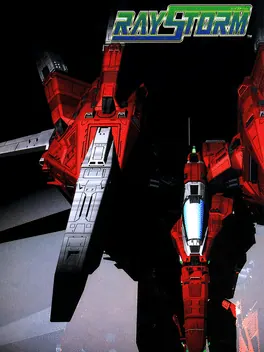
RayStorm
RayStorm is a scrolling shooter set hundreds of years in the future, and was one of the launch titles for the Sony PlayStation. RayStorm consists of eight stages where players must pilot their "R-Gray" spaceships shooting down anything that moves. Like all of the games in the Ray Series, enemies can be shot down with a primary weapon or by holding down a missile button to lock on to multiple enemies.
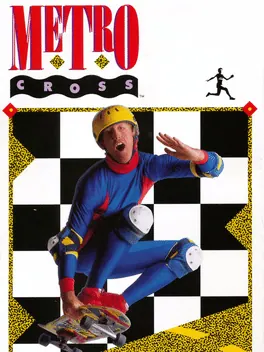
Metro-Cross
Metro-Cross is a platform arcade game that was released by Namco in 1985. It runs upon Namco Pac-Land hardware (but with a video system like that used in Dragon Buster, modified to support a 2048-color palette). It uses a Motorola M6809 microprocessor, with a Hitachi HD63701 sub-microprocessor (both running at 1.536 MHz) and Namco 8-channel waveform PSG for audio. The player must take control of a man known only as Runner, who is given a time limit to run through each of the game's thirty-two rounds while avoiding obstacles and collecting drink cans. The actual running happens automatically: the job of the player is to avoid the obstacles and collect the cans by moving the Runner with the stick and adjusting his speed accordingly. If the Runner finishes the round within the time limit, the remaining time will be awarded to him as bonus points and he will proceed to the next round. Every fourth round is special, using the remaining time from the three previous ones as additional time. However, if the Runner has not finished the round by the time the time limit runs out, he will be electrocuted and the game will immediately be over.
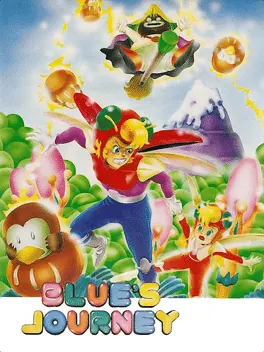
Blue's Journey
The planet Raguy was once a beautiful place, until the evil Daruma tribe invaded, bringing pollution that corrupted the land. You, as Blue, are a specialist of the Leaf Dump, and you love Princess Fa of the Raguy family. Unfortunately, Princess Fa has fallen sick from the pollution. It's your job to save your princess in Blue's Journey, a 2D side-scrolling platformer with RPG elements. Go through stages jumping on platforms and avoiding traps, while dealing with a multitude of bad guys, with a special bad guy boss at the end of every level to defeat with special means. To help with this, Blue can use a leaf attack and shrink. The leaf attack, only used when Blue is full sized, lets Blue slam a leaf that stuns any enemies he hits. Blue can also pick up power-ups for a more devastating leaf attack, or change his attack entirely. When the enemies are stunned, Blue can pick them up and throw them across the screen to dispose of more baddies. Shrunken down Blue can't use his attacking power, but he can fit into small crevasses and crannies not normally accessible. Of course, Blue can also dispatch enemies by jumping on them. Since Raguy's economy is flower based, Blue can collect flowers to buy things at special huts. But Blue must take care not to fall into traps or bottomless pits, which cause instant death. Being hit by bad guys or their shots is just as bad. Blue starts the game with two hearts, losing one when he gets whacked by a bad guy. When his heart count goes to zero, Blue dies. Play the game alone (as Blue), or with your friend (as a green Blue) for two-player simultaneous fun.
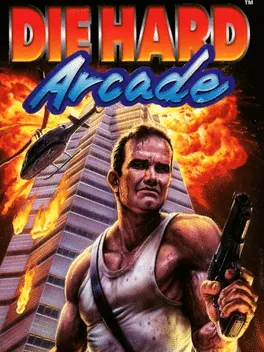
Die Hard Arcade
Die Hard Arcade is a beat 'em up for two players, who play as either John McClane or Chris Tompsen (Bruno Delinger and Cindy Holiday in the original Japanese version). Players fight their way through waves of enemies, using their fists, feet, and a variety of weapons that can be collected from enemies or the environment, from household items such as brooms and pepper shakers to high-damage missile launchers and anti-tank cannons. Most weapons are automatically lost at the end of each action scene, but hand guns can be retained so long as they have ammunition remaining. The typical level structure is a number of minions the player must defeat in many rooms, followed by a boss. Bosses can be anything from human minions of White Fang to spider robots. Quick Time Events are interspersed between many of the scenes. In these events, the player(s) may be running and turning a corner and they face an enemy, so they must perform a designated command to avoid being injured or to help defeat an enemy. In some cases failing a Quick Time Event will result in loss of health, as is usual for QTEs, but failing most will put the player characters into an additional action scene which they otherwise would not have to complete. Cut scenes are interspersed into the action.
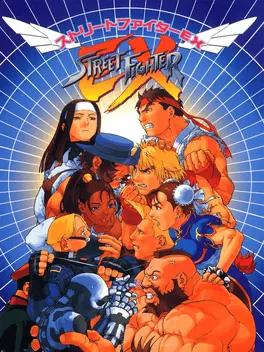
Street Fighter EX
The Street Fighter EX fighting system uses fighting systems of the Street Fighter II and Street Fighter Alpha series. In many ways, EX still plays like a 2D fighting game, but the linear plane in which characters fight often changes along a 3D battleground. The game uses special moves and super combos familiar or similar to previous games in the series. Like in Alpha and Darkstalkers, the super combo gauge, used to do Super Combos and other moves, was divided into three levels. The game introduces various new features to enhance the player's combat choices. It was followed by an updated arcade version titled Street Fighter EX Plus, as well as a PlayStation-exclusive home console version titled Street Fighter EX Plus α, both released in 1997.
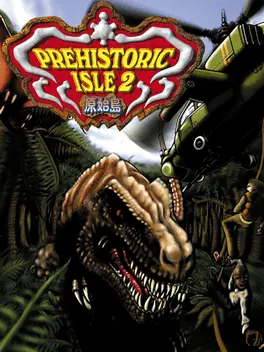
Prehistoric Isle 2
Prehistoric Isle 2 is complete madness. You pick one of two available helicopters, and blast your way through six increasingly difficult stages. The only thing in your way are dinosaurs, which just so happen to have the ability to breath fire, shoot lasers, and want nothing more than to see you perish! It’s completely insane, and that’s what makes it so bloody great! It doesn’t hurt any that the game was developed by the same people who made the excellent Blazing Star and Pulstar so you know you’re in for a good time.
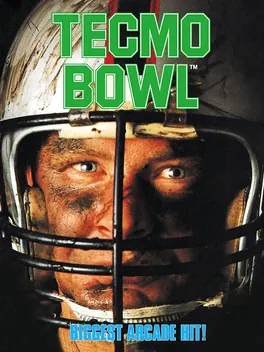
Tecmo Bowl
NES port of Tecmo Bowl which was also released in Arcades as part of the Nintendo PlayChoice-10 machine. Through the NFLPA license, each roster mimics that of the NFL team based out of the same city or state. Tecmo Bowl only uses players from twelve of the best and most popular teams of the time. Two NES versions were released in the U.S. The first is identified by its black and gold seal of quality, Eric Dickerson as running back, and Albert Bentley as a kick returner for Indianapolis. The second is identified by its white and gold seal, Albert Bentley as running back, and Clarence Verdin as a kick returner.
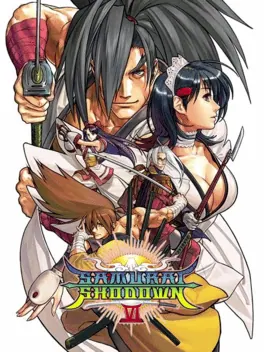
Samurai Shodown VI
Among other series changes, aerial blocking was removed entirely, and the switch-around move, which enabled a player to shift quickly behind the other's back, as well as the dodge (evade, side-step), in which the move virtually brings a semi-3D environment to the defense in attempt to use each sword more effectively. One can no longer charge one's own "pow" gauge. The off-screen delivery man was omitted entirely from the game. The "CD combo" was added, wherein a player can press the C and D buttons together, triggering a strike that can be followed up by a sequence of button taps. SNK also added a "suicide" move, wherein one's character forfeits the round. The bonus to this is that the one committing suicide will start the next round with a full "POW" gauge. Certain finishes also enable a "fatality" move in the vein of Mortal Kombat.
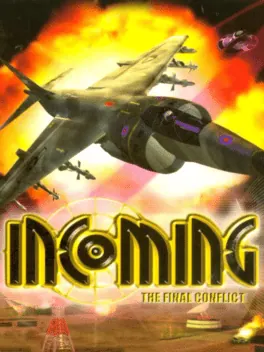
Incoming: The Final Conflict
Set in the near-future of 2009, the game primarily revolves around controlling vehicles and turrets to fight alien invaders of Earth.
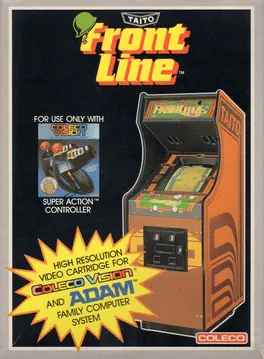
Front Line
Front Line is a vertically scrolling action game. Your mission is to infiltrate enemy territory and destroy their fortress. To reach the fortress, you will have to make your way through varied and dangerous terrain. Jungles, deserts, brush, and rocks all slow your progress, plus each area has numerous enemy fighters and tanks trying to stop you. To help get past these obstacles, you are armed with a machine gun and grenades; at some points in the game you may even come across an abandoned tank which you can control to increase your odds of survival. When you reach the end of the level and successfully destroy the fortress, the game will repeat at a higher level of difficulty. Gameplay is for one or two players, and four different skill levels are available.
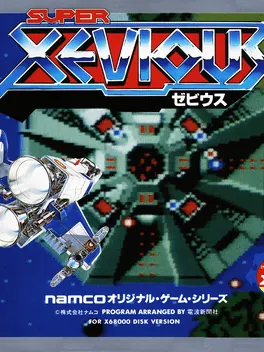
Super Xevious
The gameplay is very much like that of the original Xevious except this time it is a little more difficult. Several new enemies have also been introduced (including a silver Galaxian flagship, a rare silver Galaga "scorpion" ship, two jet planes, a helicopter, and a dark yellow Tank Battalion tank). Some of these enemies will reset the player's score back to 0 if they are destroyed - and the hidden "Sol Citadel" towers and Rally-X Special Flags are also located in different places.
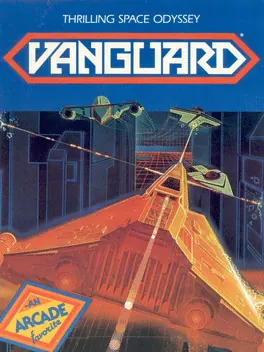
Vanguard
Vanguard is a shoot 'em up game which leads the player through five different zones to the City of Mystery where the creature Gond awaits him which he has to kill. The five zones run horizontally as well as vertically and are filled with different enemies for each zone. Being hit by an enemy, a projectile or the walls results in losing a life. There are, however, collectable items which grant the player a short time of invincibility. Shooting differs somewhat from other shoot 'em ups: The player's ship is able to fire in all four directions depending on the direction the player steers his ship. However, in doing so, the ship flies in that direrction as well which may result in crashing into an obstacle. The ship is constantly running out of fuel which can be replenished by killing enemies. After defeating Gond the game starts anew on a higher difficulty level.
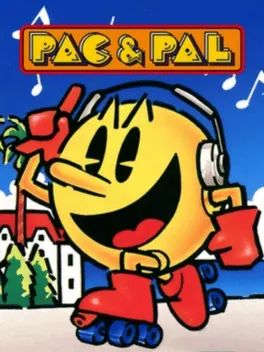
Pac & Pal
Pac & Pal is an arcade game that was released by Namco on July 30, 1983 exclusively in Japan. It runs on Namco Super Pac-Man hardware, and the object of the game is for Pac-Man to eat all the items before he is caught by the ghosts. Most of the items are fruits from the original Pac-Man game, with a few new additions. Their value varies, starting with cherries at 50 points, and ending with keys from 700 to 5000 points. The items had to first be unlocked by turning over cards distributed around the maze (instead of eating keys like in Super Pac-Man). Very few cabinets still exist today, and this is possibly one of the rarest Pac-Man titles to find in playable format outside Japan.
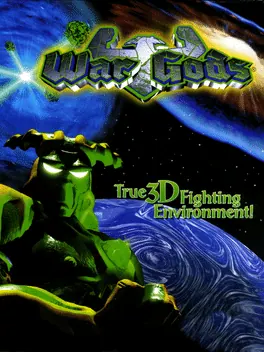
War Gods
Billions of years ago, a Being from a distant galaxy was transporting a precious cargo of life giving Ore. The turbulent formation of our solar system caused his ship to crash, scattering Ore over the molten surface of Planet Earth. Through the millennia, Ten Humans came into contact with the Ore and were transformed into super-evolved warriors. These are the WarGods.
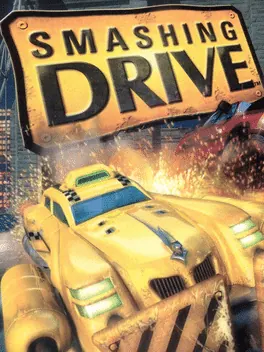
Smashing Drive
Smashing Drive puts you in the driver's seat of an insane, outrageous taxi on the busy streets of New York City. Your job is to simply race from point to point in the fastest time possible. The key to success in Smashing Drive lies in two features: crazy power-ups and hidden shortcuts. Almost all of the power-ups transform your taxi in some way that allows you to smash your way through traffic with ease. And the shortcuts usually involve crashing through the insides of buildings, like movie theaters and sports arenas.
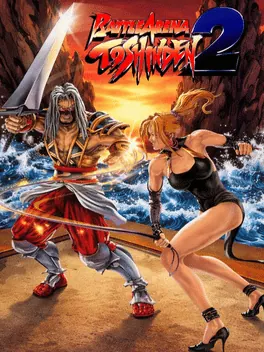
Battle Arena Toshinden 2
CHOOSE YOUR WEAPON…and do battle against the greatest warriors of the world! Each martial arts fighter has been personally selected to represent his/her special techniques and tactics in a winner-takes-all secret tournament that defies death. Your favorite characters are back in the arena with new moves and special attacks-Eiji, the master swordsman, Sofia and her deadly whip, and Mondo with his powerful spear! Two mysterious new contenders also join the battle with original moves and abilities that give them the chance to dominate the action! Learn brand new special moves, master the fight, and prepare for your day in Arena!
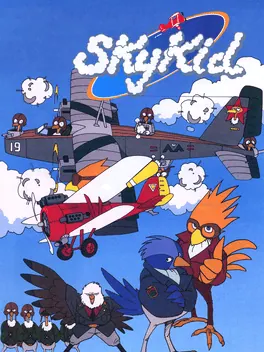
Sky Kid
You are the legendary Red Baron, flying a plane through a horizontal side-scrolling scenery set during World War I. To complete a mission, you simply need to get to the landing spot on the other side without being shot down, but you can gain extra points by destroying enemy vehicles and planes. For huge points, pick up a bomb hidden in the level (you will be warned by a sound when approaching it) and drop it on a large structure. If you fail to land on the landing strip, you run out of fuel and crash. You can only shoot horizontally and diagonally by tilting the plane's nose. When in trouble, perform an aerial loop with the secondary button, this often destroys other planes and avoids bullets. There is a co-op mode with the character Max as well.
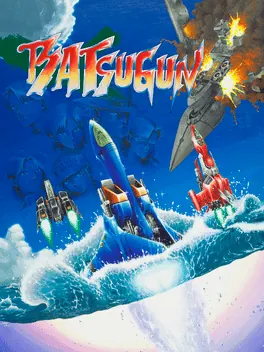
Batsugun
Batsugun is a vertically scrolling shoot 'em up video game created by the now-defunct Japanese game developer Toaplan. The title translates to "exceptional" or "extraordinary". It was the final game created before Toaplan's dissolution, and has been regarded as a key title in the development of the modern manic shooter, with elements of the game such as the size of the player's hitbox, the scale of their firepower, and the complexity of enemy bullet patterns all having an influence on future titles in the sub-genre. Members of the development team also went on to work on other successful manic shooters, most notably lead artist Junya Inoue.
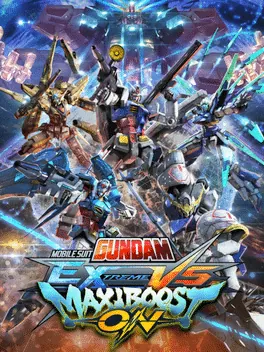
Mobile Suit Gundam: Extreme vs. Maxiboost - On
Mobile Suit Gundam Extreme Vs. Maxi Boost ON is a port of the arcade version of the same game, that started operation in 2016. This 2vs2 team battle action game allows you to control Mobile Suits that have appeared in numerous Gundam works! In addition to the 183 units that appeared in the arcade version, you can also use 2 MS that are new to the game !
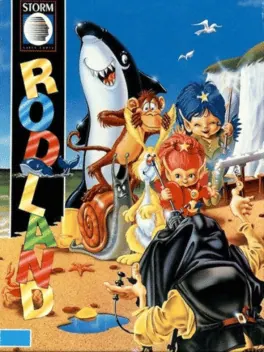
Rod-Land
The player(s) control one or two fairies called Tam and Rit armed with a magic wand (rod). Following the concept of Taito's Bubble Bobble, the rod doesn't kill the monsters directly, but only leaves them immobilized, crying. To kill them, the rod can grasp them in a magic force-field and the player can smash them down over her head until they disappear and leave a power-up behind. Each level is only one small screen composed of monsters, platforms, ladders and, later, tunnels. Unlike other games of the genre, the players can never jump, but have to use ladders. They can conjure one custom ladder above or below them in order to go to the appropriate platform. There can be only one such 'custom' ladder; therefore if the fairy summons it again, it will disappear from its previous position in order to appear again next to the fairy. This can be beneficial for the player, if a monster is climbing that ladder to approach her. The fairies' quest is to rescue their mother, trapped in a tower. In the sequel (part of the original arcade machine) they must venture into a pyramid, to stop an evil demon that is building a mobile fortress. The spirit of their departed father "guides" them at a couple of points. The ending implies that the demon in the pyramid was somehow responsible for their father's death.
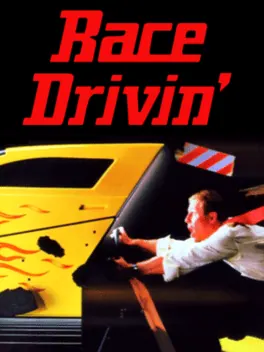
Race Drivin'
Race Drivin' is a sequel to the arcade driving simulator Hard Drivin'. Game play is similar to the first game. The player must complete laps around the race track before a timer expires. There are several checkpoints around the track which increase player's time as he passes.
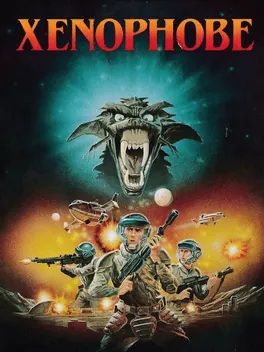
Xenophobe
Xenophobe is a 1987 arcade game and the goal of each level is to defeat all the aliens before time runs out. Levels may contain more than one floor, and players use elevators or holes to move between floors to defeat all of the aliens. Players can also pick up more powerful weapons and other items to help in their eradication of the aliens.
Silent Hill: The Arcade
Silent Hill: The Arcade is an arcade game based on the Silent Hill series. Being a rail shooter, the game is a large departure from the normal survival horror mechanics. Gameplay is similar to the House of the Dead series in which players use light guns to aim and shoot at enemies. Shooting away from the screen reloads the player's gun. The Arcade has a multiplayer element, a second player can join the game at any time.
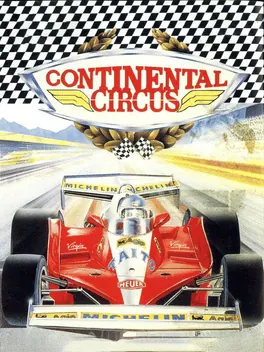
Continental Circus
Continental Circus, released as Continental Circuit in North America, is a racing simulation arcade game, created and manufactured by Taito in 1987. It was later ported to various home computers in 1989, including the Amiga, Amstrad CPC, Atari ST, Commodore 64, MSX and ZX Spectrum. It was then released in 2005 for the PlayStation 2, Xbox and PC as part of Taito Legends. The arcade version of this game comes in both upright and sit-down models, both of which feature shutter-type 3D glasses hanging above the player's head. According to Computer and Video Games in 1988, it was "the world's first three dimensional racing simulation." The home conversions of Continental Circus lack the full-on 3D and special glasses of the arcade version, or the detailed graphics, but retain the essential gameplay structure.
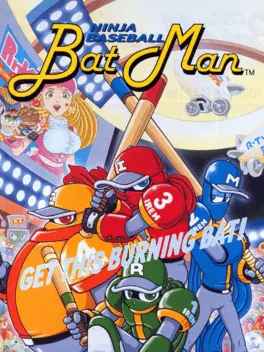
Ninja Baseball Bat Man
Ninja Baseball Bat Man is a 1993 beat 'em up developed and published by Irem Corporation in association with its North American division Irem America exclusively as an arcade game. It is the fourth arcade game by IREM to use a belt scroll perspective, following Blade Master, Hook and Undercover Cops.
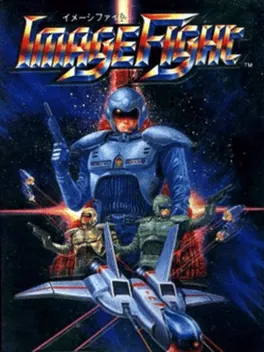
Image Fight
On a fateful day in 20XX, the Earth's moon exploded into four large fragments and a multitude of meteors. Aliens from afar had succeeded in destroying the West's moon base. One after another, mankind's other military industrial space complexes were being lost. What mankind dreaded had come to pass. Scores of unidentified fighters were in the area. In addition, the moon's main computer, still intact after the explosion, had a strange vegetation coiled around it. Their trademark evil exploits being a dead giveaway, invaders from the Boondoggle Galaxy had arrived to take over the Earth. To counter these evil forces, leading scientists from all over the globe created the "OF-1" Fightership. Combat pilots depart the Earth to fend off the invaders and earn everlasting glory.
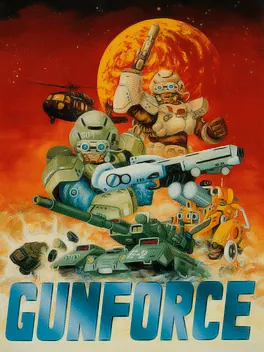
Gunforce
GunForce: Battle Fire Engulfed Terror Island or simply titled as GunForce, is a side-scrolling action shooting game produced by Irem for the arcades in 1991. The game was later ported by Bits Studios and published by Irem to the Super Famicom exclusively in Japan in 1992. Outside of Japan, it later received a sequel titled GunForce II, originally known in Japan as Geo Storm. The player is armed with a gun that fires rapid-fire bullets. Each direction it shoots can be fixed toward it so the player doesn't have to hold the joystick toward it. Players may find motorcycles to speed across enemy territory faster in addition to helicopters and cable cars. After scoring over any high score, whether they win or lose, players can enter their name into the high score list after the game over screen is "achieved". A strict time limit keeps the game going at a steady pace throughout; the consequence involves losing a life.
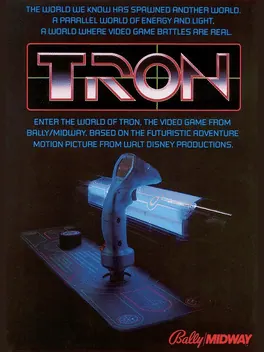
Tron
Tron is a coin-operated arcade video game manufactured and distributed by Bally Midway in 1982. It is based on the Walt Disney Productions motion picture Tron released in the same year. The game consists of four subgames inspired by the events of the science fiction film. It features some characters and equipment seen in the film, e.g. the Light Cycles, battle tanks, the Input/Output Tower.