
Jogos para Arcade
Pulstar
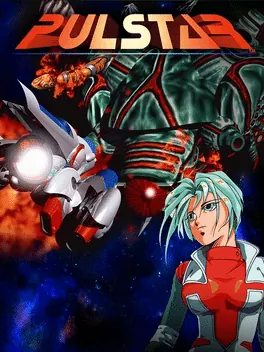
The basic gameplay is simple: progress through the levels in the spacecraft, collecting powerups and protecting the spacecraft from destruction. The game has very obvious similarities in design and gameplay to R-Type. It is actually believed that some ex-Irem employees left the company to join Aicom, which used to be a subcontractor for various coin-op manufacturers like Jaleco or SNK. Despite the familiarities, Pulstar is not without innovations. There is the option of using the weapon power bar, which consists of two halves. The right-hand side of the bar turns blue when the fire button is depressed. When fully charged the ship delivers a devastating emission of energy. The left-hand side turns red when it is continually pressed, shooting out a barrage of smaller, rapid blasts. The in-game visuals are mostly pre-rendered 3D graphics, which gives the interactive elements a far more realistic appearance. Great care was taken to really place the player into the world of the game, with cinematic style cut scenes and pre-rendered movies. There is a hefty reliance on strategy and not just blasting everything in sight. Using the charged weapon is key, and requires careful precision. Also, once a power up is obtained, a small orb appears at the posterior end of the ship. This can be used as an advantage by deflecting/absorbing oncoming enemy fire and taking out small enemies that run into it.
RoboCop 2
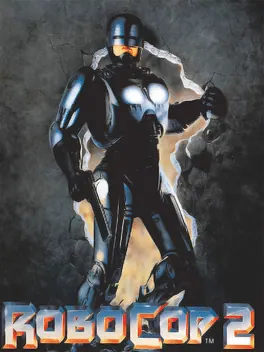
RoboCop 2 is a series of video games published in the 1990s by Ocean and Data East for various home computers and video game consoles. They are based on the movie of the same name. Three different games were produced, each produced on two systems. The version for the Commodore 64 and NES was a simple left-to-right scrolling platformer, in which RoboCop was required to collect/destroy at least two-thirds of the drug "nuke" in each level and arrest two-thirds of the suspects by running into them (in contrast to shooting them). If RoboCop does not manage to attain the required amounts of nuke or number of arrests then he has two chances in the game to prove his efficiency at a shooting range. If he succeeds, he may continue onto the next level. If he fails, or if both chances at the shooting range are already used up, he must repeat the level. The version for the ZX Spectrum and Amstrad CPC was also a platform game, but one that offered movement in both directions (vertically and horizontally) as well as into various areas providing an element of exploration. There were also a number of puzzle sub-games that had to be completed to progress in the game. The version for the 16-bit Commodore Amiga and Atari ST was similar in nature to the 8-bit Spectrum and Amstrad CPC versions, but contained completely different levels to take advantage of the extra power offered by these computers. There was also an arcade-only version of RoboCop 2, developed and published in 1991 by Data East (who still held the rights to create arcade games based on the franchise), which allowed up to two players at once (one controlling the original RoboCop, the other controlling a slightly purple-hued clone). The game followed the basic premise of the movie, but had some major sequential differences.
Fantasy Zone II
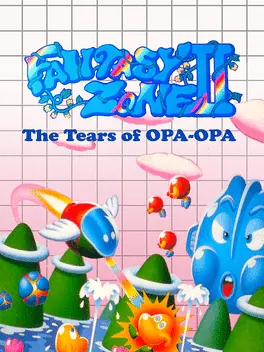
Fantasy Zone II: The Tears of Opa-Opa is the sequel to Fantasy Zone, in which you control Opa-Opa, a pretty colored ship with wings on its side. You must destroy the large creatures in each world before moving on to the next. Your task becomes difficult by other small creatures that happen to pass by. If you destroy a large creature, they will drop a dollar bill, which you can pick up and use at the shop to buy items and powerful weapons such as laser beams, x-way shots, and big wings. Another way to get money is to shoot certain kinds of enemies all in a row. More often than not, some large creatures will reveal a warp gate rather than a dollar bill. You can go through the warp gate to get to another part of the land, and destroy more large creatures. Only one of them will have a warp gate in the form of a 'stop' sign - that is your ticket to the round boss, but you must defeat all large creatures in order to pass through it. Also like in the original can you walk on the ground to avoid approaching enemies, and spend money in the shop to get new weapons (but they only last for a limited time).
Exerion
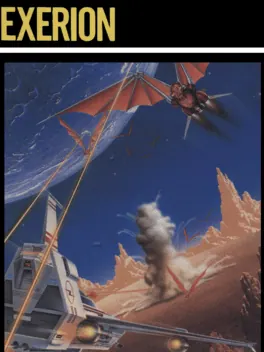
Exerion is a vertical shoot 'em up released by Jaleco in 1983 and licensed to Taito for distribution in the United States. Screenshot from arcade version Exerion is a shoot 'em up game featuring parallax effects and inertia simulation, something notable for 1983. The player travels around strange scenarios shooting aliens. The player has two types of guns: fast single shot (limited) or slow double shot (unlimited). In 1984, along with the MSX1 port of the original, a sequel was released titled Exerion II: Zorni for the MSX1, with similar gameplay to the original. There were plans for an NES release of this game. In 1987, the game was followed by the semi-sequel titled Exerizer, also known as Sky Fox.
Loco-Motion
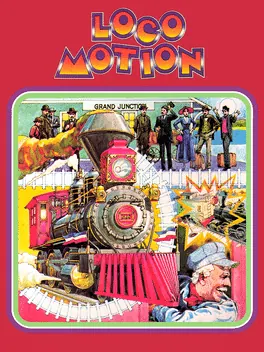
Loco-Motion is basically an updated version of a sliding block puzzle game where the player can move pieces horizontally or vertically within a frame to complete a picture. However, the presence of a constantly moving locomotive complicates matters. The player controls the playfield and the aim is to guide the locomotive around the tracks to collect the passengers waiting at the stations located around the edges of the screen. The player uses a joystick to slide a piece of the track into the vacant square. The locomotive is always moving, but the player has the option of making it move faster to get to the passengers more quickly by using a button next to the joystick. The player must avoid crashing the locomotive into the dead-end barricades (shown as a yellow 'X'), and also ensure that it does not run into the edge of the gap or a barrier at the playfield edge, either of which costs a life.
Arch Rivals
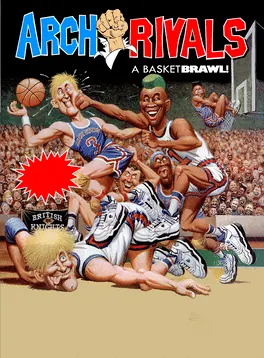
Arch Rivals is a basketball game developed and published by Midway in 1989. The game introduces violence as an important part of the game, encouraging players to punch opposing players and stealing the ball from them. The game is regarded as the forerunner to Midway's popular arcade basketball game, NBA Jam.
Power Instinct
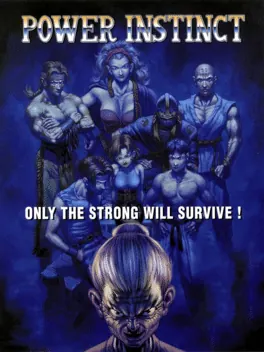
The original Arcade version of Power Instinct. This version only has the arcade mode and multiplayer while the later ports to console added practice, battle, time attack and life attack game modes. Power Instinct is a one-on-one 2D fighting game in the tradition of Street Fighter 2, in which you select your character from a group of 8 unique fighters and attempt to defeat your opponents in successive fashion using your arcade reflexes and your character's unique moves.
Narc
Narc is a 1-2 player game, where your mission is to infiltrate the Mr. Big Corporation, the scourge of the underworld. To do this, you must get through the game's eight stages, with over ten sectors like the junkyard, subway, drug lab, nursery, downtown, Sunset Strip, and even the corporation, where Mr. Big resides. In order to get through the stages, you are required to collect a number of safe cards, and insert them in the slot next to the stage exit. Each sector includes a map, and should be easy to read. For example, the blue or red dots represent you, and the white dots are the missile launchers, while the "E" indicates the exit.
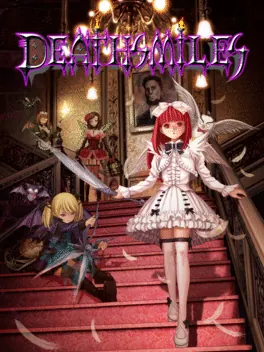
Deathsmiles
Deathsmiles is CAVE's bullet-hell shoot-'em-up where you take the role of one of five Angels to defend the magical land of Gilverado from an invasion by Hell itself! Eradicate this devilish assault!
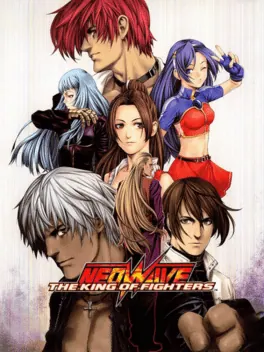
The King of Fighters Neowave
KOF Neowave features 12 three-man teams made up of some of the greatest characters from SNK's 11-year history, including the Women Fighters Team (Mai, King and Yuri) and the Fatal Fury Team (Terry, Joe, and Andy). NEOWAVE features three modes of play - Super Cancel, Guard Break, and Max2. A new "Heat Mode" lets players power up their attacks in exchange for a gradual loss of health. A total of 43 characters including 7 Bonus characters. 12 of the most dangerous fighting teams ever assembled. Pick your team and fight it out in the original 3-on-3 battle format. Beautifully rendered background graphics. Activate "Heat Mode" to power-up your attacks. Revives the evacuation rolling maneuver and thrust attacks. Over-the-top Super Special Moves. 3 modes of play: Super Cancel, Guard Break and Max2. Link a Special Move with a Super Attack in the Super Cancel Mode to cause extreme damage.
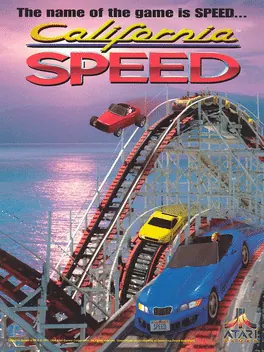
California Speed
California Speed features racing through California, with a range of different and unique tracks based on the real life maps of the US state, with short-cuts and branching elements adding elements of strategy when racing to the finish line.The car pool includes the usual collection of fast cars, as well as F1 racers and golf-carts.
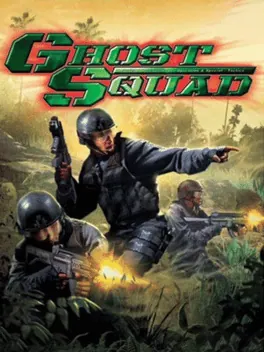
Ghost Squad
One of the first light gun games to arrive on the Wii, Ghost Squad will take full advantage of the unique controls of the Wii Remote. Three dangerous missions bring a new gameplay experience every time with multiple levels, alternate routes, changing daylight, a variety of player choices and secret weapons and costumes to unlock. Alone or with up to three squad mates, players will rescue hostages, apprehend suspects and deactivate bombs as they eliminate terrorist threats around the world. Unlock 25 different tactical weapons including sniper and assault rifles, submachine guns, hand guns, and more.
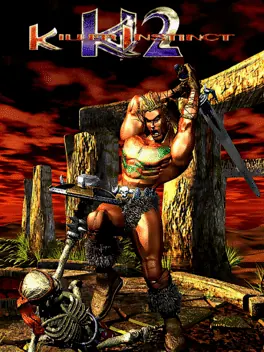
Killer Instinct 2
Killer Instinct 2 follows on from the plot line that the previous installment ended with. Eyedol's death at the hands of Orchid accidentally sets off a time warp, transporting some of the combatants back in time and allowing the Demon Lord Gargos to escape from Limbo. Now, trapped 2000 years in the past, the warriors that survived Killer Instinct, along with several new faces, fight for the right to face Gargos in combat, but Chief Thunder, Cinder and Riptor did not return. Each character that survived the journey from the first game has a corresponding background story, while new characters on this installment are native inhabitants of this past time period. Some fighters, like T.J. Combo who survives from the original, just want to get home. Others, like new character Tusk, want to bring an end to Gargos and his reign of evil. This time there is no tournament or prize money, just a fight to the finish with the fate of the future hanging in the balance.
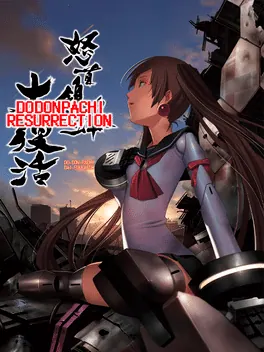
DoDonPachi Resurrection
The past is being altered. An android, known as Next EXY, has traveled one thousand years back in time. Your task is to stop NEXY and the other Elemental Daughters who were built in the image of the Elemental Dolls who once protected humanity. What is NEXY’s intent? Should you attack what you shouldn’t understand? Orders are orders, and Col. Godwin Longhener is not to be ignored. The legendary bullet-hell shoot-’em-up series has come to Steam with DoDonPachi Resurrection from CAVE Co., Ltd., the powerhouse behind revered bullet-hell shooters such as Mushihimesama and Deathsmiles.
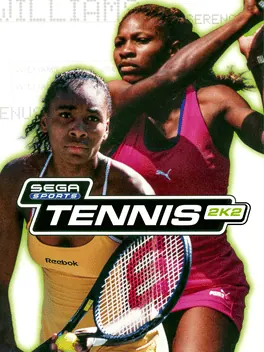
Tennis 2K2
Virtua Tennis 2 (known as Tennis 2K2 in North America) is a tennis video game in which players compete to reach the world No. 1 ranking. It features 16 internationally ranked male and female players and supports singles, doubles, and mixed doubles matches with up to four participants. The game includes Tournament, Exhibition, and World Tour modes, offering structured competitions and progression systems. Matches focus on core tennis mechanics such as serving, volleys, lobs, and smashes.
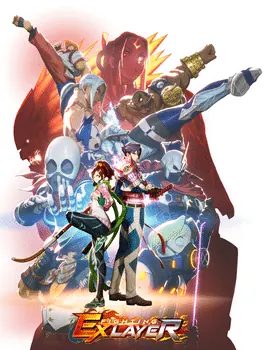
Fighting EX Layer
A successor to Arika's Street Fighter EX series. With a roster identical to Street Fighter EX2 Plus, FEXL stands out by introducing chain combos, running, and the "Gougi" system, which allows the player to change the properties of their character - or even the game's system - by fulfilling certain requirements mid-match.
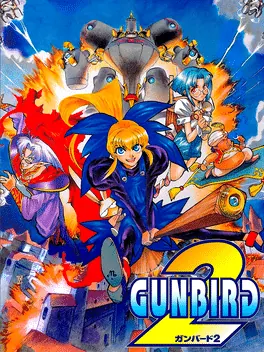
Gunbird 2
Seven warriors are challenged to head on a quest to find three powerful elements of Sun, Moon and Stars. Whoever brings the elements to the Potion God will be rewarded the legendary Almighty Potion and all its magical powers.[3] Through gameplay cutscenes (and endings) it appears that the zany, uproarious (and at times rather adult) humor has considerably increased since the original Gunbird. The game has numerous similarities to the Parodius series, including the final boss in the game, a cartoon elephant playing a trumpet.
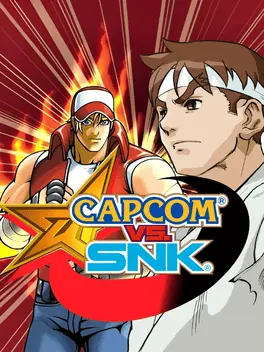
Capcom vs. SNK: Millennium Fight 2000
Two of the worlds greatest arcade fighter developers, Capcom and SNK, join forces to finally answer the question asked by many for years: Who is the dominant fighter? A range of fighters from both worlds are available to choose from, with two different fighting styles (Capcom and SNK, of course) meaning that players of both worlds can fit into the game easily, while new gamers can try Ryu using the SNK format.
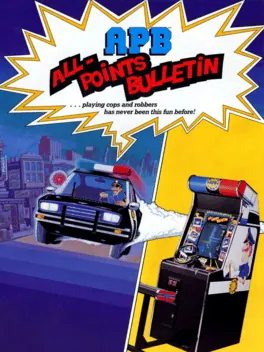
APB
APB ("All Points Bulletin") is a 1987 arcade game where the player assumes the role of "Officer Bob," a rookie police officer. As Bob, players drive around the city, ticketing motorists for minor infractions and pulling over more serious offenders. Eventually, players must apprehend criminals for which an all-points bulletin has been called.
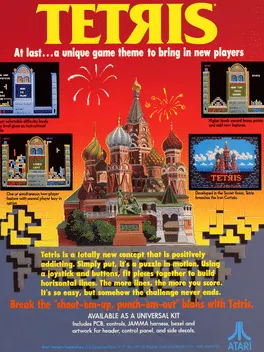
Tetris
Tetris is a puzzle game developed originally released for arcades. Players must stack differently shaped falling blocks to form and eliminate horizontal lines from the playing field. The game features several difficulty levels and two-player simultaneous play.
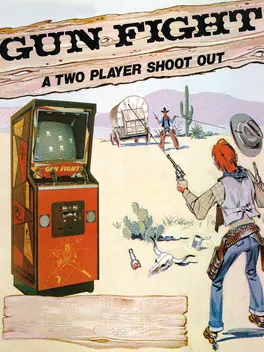
Gun Fight
Old west theme shoot-out. Using simple graphics, two cowboys one on the left and one on the right move up down, left and right trying to get a clear shot avoiding cactus at the other.
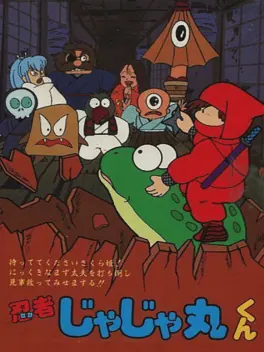
Ninja JaJaMaru-kun
The game stars the brother of Ninja-kun (from Ninja-Kid). Princess Sakura has been kidnapped by Damazu-Dayuu, and because Ninja-Kun is away on a journey, the task falls to young JaJaMaru-kun. In the game, the player starts with three lives and can only run, jump and throw shurikens. The game is divided into stages, each with four floors and eight enemies. Sakura-Hime and Damazu are placed, unreachable, at the top of the screen. Enemies use various projectiles, one of which will cause the player to lose a life. If JaJaMaru-kun lands on top of an enemy, it will simply be temporarily stunned and vice versa. Once an enemy is defeated and offscreen, a spirit will appear and ascend to the top of the screen. It can be collected before it has disappeared to receive points, which vary depending on the enemy. Sakura will sometimes drop petals that the player can collect, and Damazu will sometimes run around, dropping bombs. To advance to the next stage, the player must defeat all eight enemies by using shurikens. Some bricks yield items. They include: A cart that temporarily makes JaJaMaru-kun invincible and faster. Projectiles and enemies will also be destroyed if touched. A bottled substance that makes JaJaMaru temporarily invincible and able to walk through enemies. A red ball that increases speed. Bombs (which must be avoided). Coins that yield various amounts of points. An extra life. If all three types of power-ups are collected, Gamapa-kun, a giant frog, will be summoned, which is completely invincible and able to eat all enemies. If three of Sakura's petals are collected, the player will go to a bonus stage in which JaJaMaru-kun is on the bottom and Damazu at the top. Damazu drops bombs, and the player throws shurikens upward. If the player manages to hit Damazu, bonus points are awarded. If the JaJaMaru-kun is hit by a bomb, he goes on to the next stage. Initially the game was released exclusively in Japan, but it came to the rest of the world for the first time in 2007 as part of the Wii virtual console, as well as for Nintendo Switch Online in 2021.
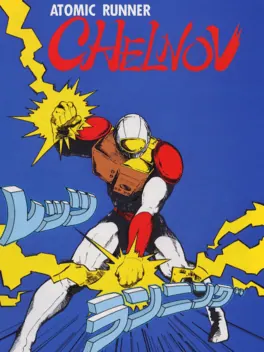
Atomic Runner Chelnov
The player takes the role of Chelnov, a coal miner who miraculously survives the malfunction and explosion of a nuclear power plant. Chelnov's body gains superhuman abilities due to the massive amount of radiation given off by the explosion, and a secret organization seeks to harness those abilities for its own evil purposes. Chelnov must battle and defeat the secret organization using his newfound abilities.
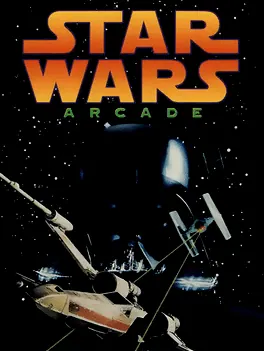
Star Wars Arcade
Launch your X-wing fighter for the final Death Star assault! The Force is with you as you pursue Darth Vader through an exploding galaxy! You are the last hope for the Rebel Alliance!
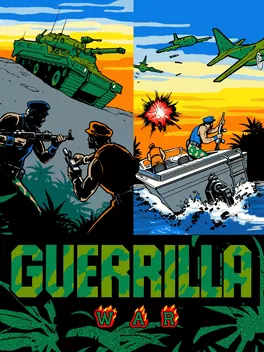
Guerrilla War
Guerrilla War is an overhead run and gun game produced by SNK. Originally released for arcades in 1987 as a coin-operated arcade game, Guerrilla War followed the adventures of two unnamed rebel commandos (Che Guevara and Fidel Castro in the Japanese version) as they raid an unnamed Caribbean Island in order to free it from the rule of an unnamed tyrannical dictator. Along the way the players vanquish hordes of unnamed enemy soldiers while attempting to rescue hostages (with large score deductions for any hostages killed in the crossfire), collecting weapons from troopers and operating tanks.
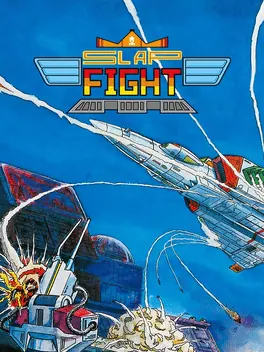
Slap Fight
A.L.C.O.N (Allied League of Cosmic Nations), also known as Slap Fight, is a vertically scrolling shooter developed by Toaplan.
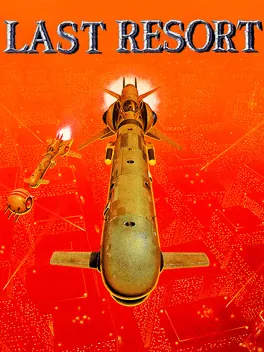
Last Resort
Last Resort is an arcade shoot 'em up video game by SNK released in 1992.
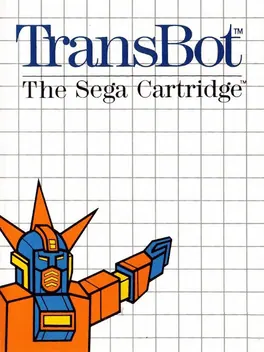
TransBot
Thwart an underground invasion with your transforming weaponry. The ground is scarred by craters, a reminder of the recent Dalaus invasion. And continuous acid rains give the sky an eerie irridescence. You are the only Transbot pilot left from the now defunct regime. So you must battle wave after wave of orbiting debris. To try to get to the notorious Dalaus artificial intelligence computer. Fortunately, your astro-plane can go through 6 different transformations. Turn into a robot warrior and more. By the time you transform, you should be able to penetrate the fortress of Dalaus. And rid the galaxy of her evil influence forever!
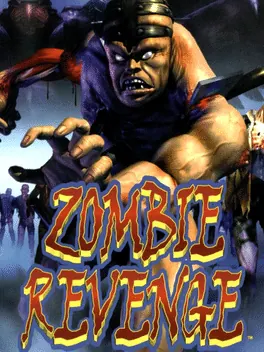
Zombie Revenge
A 3D beat'em up released as an Arcade and later ported to Dreamcast. It served as a House of the Dead spin-off, where players had to take down hordes of zombies and monsters using not only their fists, but also melee and ranged weapons.

Viewpoint
One or two players (in hot-seat or cooperative mode) control a spaceship equipped with a laser cannon which can be charged (by holding the shooting button down) for a stronger blast. Besides the main weapon, three special weapons are available: a wall of fire which wipes the screen up in a wave, a nova-like blast and a circle of spherical-green homing missiles.
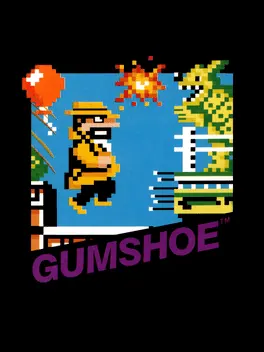
Gumshoe
Jennifer's been kidnapped! Now's your chance to prove you're a sharp-shooting detective by helping Jennifer's father find the five diamonds that will pay her ransom. You'll use your Zapper light gun to blow away anything that gets in your way. But even with the Zapper, this case will be hard to crack. Because not only are the diamonds hard to find, but you only have 24 hours to find them! What's more, you'll have to think fast and shoot even faster, because ferocious monsters, diving airplanes and hungry man-eating sharks will stop at nothing to prevent you from getting to the diamonds. Think you're a sharp-shooting detective? Well, you better be. Because if you're not, it's curtains for you in this quick-on-the-trigger Nintendo Light Gun game! A direct port of the game was released for the Nintendo VS. System arcade machine in 1987.
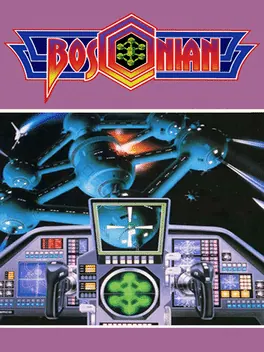
Bosconian
The object of Bosconian is to score as many points as possible by destroying enemy bases and ships. The player controls a small fighter ship that can move in eight directions and can fire both forward and backward. Each level consists of a number of green space stations that must all be destroyed to advance to the next level (a semi-transparent mini-map helps identify their location). Each station consists of six cannons arranged in a hexagon, surrounding a central core. The player must either destroy all six cannons or shoot the core to destroy a station, and in later levels the core is capable of defending itself. Additionally, the player must avoid or destroy asteroids, mines, and a variety of enemy missiles and ships that attempt to collide with the player's ship. Enemies occasionally launch formation attacks — destroying the leader causes all remaining enemies to disperse, but destroying all enemies in a formation scores extra bonus points. A spy ship (worth a random bonus value) also appears occasionally, which must be destroyed or the enemies will go berserk.
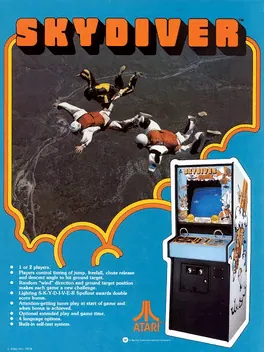
Sky Diver
Sky Diver is an arcade video game designed by Owen Rubin, and released by Atari, Inc. in 1978. Its interface is a simple third-person view of a parachuting drop zone. Sky Diver is a two-player game, although one player can play. The object of Sky Diver is to jump out of a plane, release a parachute and land on the landing pad. To get higher points, the player must release the parachute closer to the ground. The player has nine jumps. If the landing pad is missed, the player loses points. The highest score possible is 99 points (11 points maximum per jump).
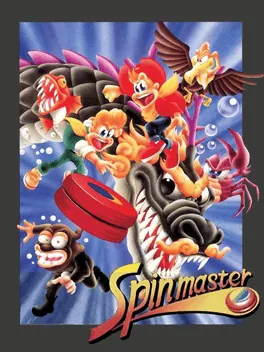
Spinmaster
Spinmaster is a platform/beat 'em up arcade game developed and released by Data East in 1993. The story follows the main character Johnny and his sidekick Tom as they battle their way through treasure-seeking, mad scientist, Dr. De Playne's henchmen in a quest to save Johnny's girlfriend Mary and get their hands on a hidden treasure. Both playable characters are armed with yo-yos but can also upgrade to other weapons (such as throwing stars, icicle daggers and guided missiles) to defeat all enemies and help them open treasure chests.
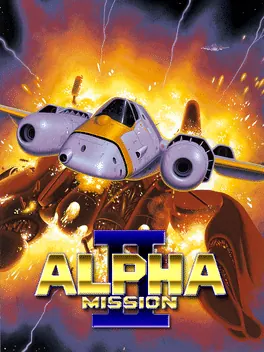
Alpha Mission II
Alpha Mission II is a 2D vertical scrolling shooter with a great deal of depth for two players moving vertically up the screen boards shooting anything that moves. Equip up to three pieces of armor, which also serve as weapons, for a variety of attacks such as the laser and flamethrower. Use them to defeat the evil “Fulvar” and save mankind!
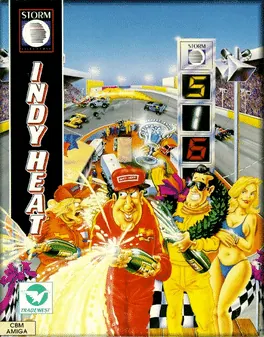
Danny Sullivan's Indy Heat
A 3-player, Indy style racing game with 5 cars that each race around 15 of Danny Sullivan's favorite tracks. Players can turbo, crash, catch fire, and lose fuel, but they may pit stop for repair. Danny himself always races (yellow car) and players can earn money for more turbo, faster pit crew, acceleration, brakes, and tires.