
Jogos para Arcade
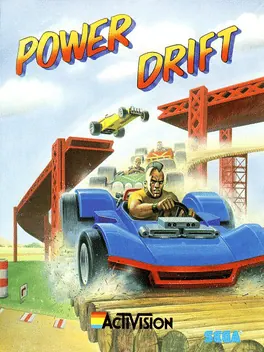
Power Drift
Power Drift is a kart racing game released in arcades by Sega in 1988. More technologically advanced than Sega's earlier 2.5D racing games, like Hang-On (1985) and Out Run (1986), in Power Drift the entire world and track consist of sprites. The upgraded hardware of the Sega Y Board allows individual sprites and the background to be rotated–even while being scaled–making the visuals more dynamic. Designed and directed by Yu Suzuki, the game was a critical and commercial success upon release in arcades. It was subsequently ported to various home computers in Europe by Activision in 1989, followed by a PC Engine port published in Japan by Asmik Ace in 1990. It was not released on Sega consoles until the Sega Ages release for the Sega Saturn in 1998.
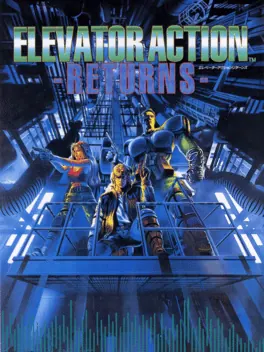
Elevator Action Returns
Elevator Action Returns, also known as Elevator Action II, is a 1994 run and gun arcade game developed and published by Taito. It is the sequel to Elevator Action (1983), featuring a much more gritty and realistic setting. Returns retains the elevator-based gimmick from the original, but expands the gameplay system and replaces the spy motif with a new scenario involving a paramilitary team fighting against a terrorist group.
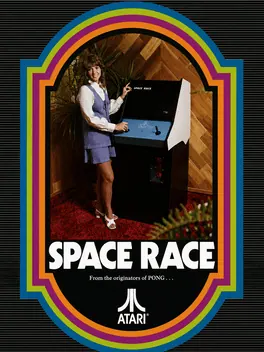
Space Race
Space Race is the second arcade game created by Atari and was released in July, 1973. The two players each control a rocket ship; the object of the game is to make it from the bottom of the screen to the top, while avoiding obstacles such as asteroids. Score is kept electronically and the background consists of a simple starfield.
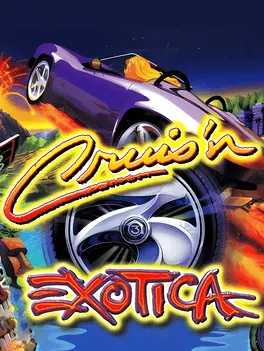
Cruis'n Exotica
GET EXOTIC! …from Atlantis to Mars and everywhere in between. Race in style! Cruis’n Exotica takes you to fantastic locales in even more fantastic vehicles. Race through steamy Jurassic jungles or on the ocean floor. Midair stunts keep the action nonstop! Valuable shortcuts and nitro boosts speed up the already fast-paced action! Fantastic driving excitement straight from the arcade! 28 exotic cars to race! 1 to 4 player non-stop racing action! Turbo boosts, stunts, nitros and more! 60 tracks from around the world! Three modes of play to choose from!
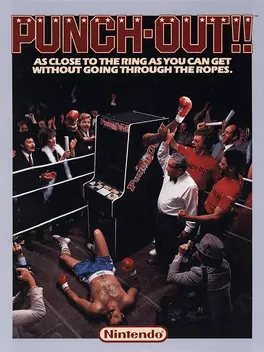
Punch-Out!!
Punch-Out!! is a boxing arcade game by Nintendo, released 1984. It was the first in a series of successful Punch-Out!! games that produced an arcade sequel known as Super Punch-Out!!, a spin-off of the series titled Arm Wrestling, a highly popular version for the NES originally known as Mike Tyson's Punch-Out!!, and Super Punch-Out!! for the SNES. The arcade game introduced recurring video games characters such as Glass Joe, Piston Hurricane, Bald Bull, and Mr. Sandman. It is also notable to be the debut project for Koji Kondo, who would later go on to write the acclaimed music for the Super Mario and The Legend of Zelda series.
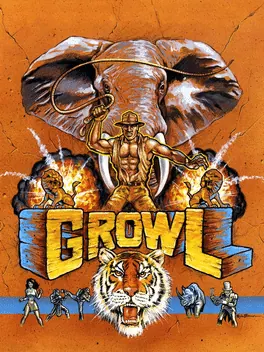
Growl
The player begins the game by choosing from one of four different forest rangers, each with a different amount of health, attack strength, and jumping height. The game's controls consists of an eight-way joystick for moving the character and two action buttons (attack and jump). The player can perform a variety of different attacks (punches, kicks, and finishing blows) depending on the position of an enemy. By pressing both buttons while surrounded by enemies, the player can perform a special attack that strikes every enemy around him. By pressing both buttons while holding the joystick upwards, the player will perform a longer jump. The player can procure weapons by destroying barrels and wooden crates or disarming certain enemies. There are a total of eight weapons which can be obtained: three melee weapons (a pipe, a sword and a whip), two throwing weapons (knives and hand grenades), and three firearms (a pistol, a machine gun, and a rocket launcher). The barrels and crates can also be picked up and thrown at enemies as well. When the machine gun or rocket launcher runs out of ammunition, these are still wielded by the player as melee weapons. The pistol, on the other hand, is thrown by the player after all of its bullets are used. The player can drop his current weapon by pressing down and attack while wielding it. If a weapon lies on the ground after a certain period, it will vanish completely. There are seven regular stages (called rounds) and a bonus game, for a total of eight stages. The locations include a city, a moving train, a boat, a jungle, a cavern, and the hideout of the poachers. There are six types of enemy characters throughout the game, excluding the final boss (who has two forms). There are also animal helpers that will help out the player after they're rescued from a poacher, such as an eagle, a herd of deer, and an elephant.
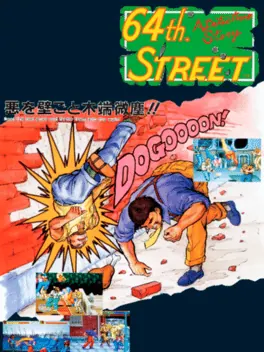
64th Street: A Detective Story
Players One and Two start with the two selectable protagonists, Rick and Allen. Each private detective uses different fighting styles, attempt to solve cases by beating up each criminal they encounter. Lots of special items can be found by throwing enemies into the background and breaking things, typical of this popular genre in the 1990s arcades. Along the way they are harangued by all manner of thugs and toughs, whose costumes range from 1980s hip-hop wear to stereotypical pirates. The bosses are tough by way of strange special attacks.
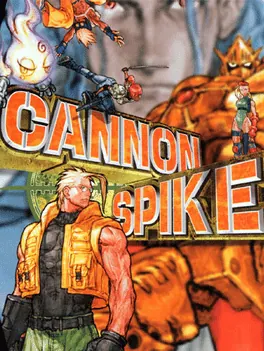
Cannon Spike
Cannon Spike (released in Japan as Gunspike) is a top-down run-and-gun shooting game developed by Psikyo & published by Capcom in the year 2000. Players select from a roster of classic Capcom characters, then play through a series of short stages & boss battles in a randomly selected order.
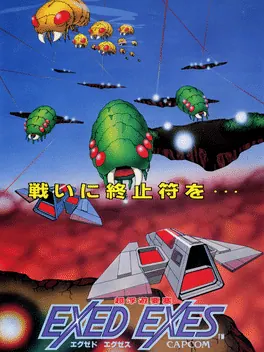
Exed Exes
On a planet 6000 light-years from earth, there were creatures called Exes, which resemble large insects, that were used for industrial purposes. However, these creatures one day took to revolting against their creators. Two battle machines have been sent to fight against the Exes, known as Colonel and Sargent. The Exes are nearing completion of their secret weapon, Exed Exes, and they must be defeated before this is allowed to happen! Exed Exes is a basic vertical scrolling shooter; the game scrolls forward, and the player can maneuver their ship around the screen to shoot enemies and avoid attack. POW icons sometimes appear that can power up the ship or turn enemies into fruit that are worth extra points. The game can be played either solo or two-player cooperatively.
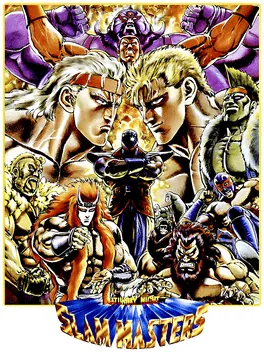
Saturday Night Slam Masters
Slam Masters is an arcade conversion of Capcom's wrestling game of the same name. Ten wrestlers with different fighting styles and individual special attacks are available. They are controlled with three buttons; one for jumping, one for attacking and one for pinning. When close to your opponents, you can grab them to perform various moves ranging from ordinary attacks to body slams to throws. Since the action takes place in a ring, it is also possible to climb the turnbuckle or use the ropes to your advantage. You can also leave the ring for a limited amount of time to fight with different weapons that can be found outside the ring. Apart from a standard Single Match mode, the SNES version also features a Battle Royal mode for up to four players. This mode is not available in the Genesis version, which features a Death Match mode that can not be found in the SNES version. A Death Match is a no rules match in which weapons can be used used and the rope is replaced with barbed wire.
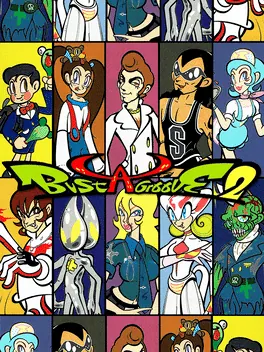
Bust A Groove 2
Bust a Groove 2 is a hybrid music/fighting game released in 2000 for the Sony PlayStation and is the sequel to Bust a Groove. The game was originally released in Japan as Bust a Move 2: Dance Tengoku Mix, and was never released in Europe.
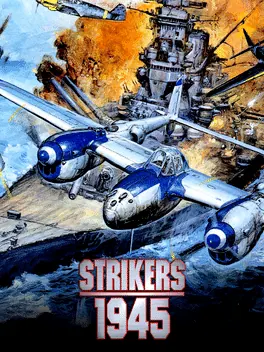
Strikers 1945
In 1945, the second world war ended. Soon, there was peace, but an organization of high-ranking military officers from all over the world form a global army known as CANY. Their mission was to conquer the world. CANY activity was found in areas like the Soviet Union, America, Japan, and even Germany. It is revealed that CANY had weapons never seen before from rockets to mechanical walkers. The world quickly formed a group of pilots and planes called the Strikers whose mission is to rid of CANY from the world.
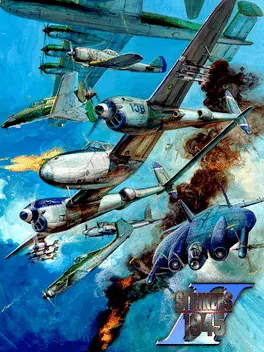
Strikers 1945 II
Continuing where the last game ended, the forces of CANY had been demolished by the previous Strikers' line-up. However, a small group known as the FGR stole the sources and technology responsible for the last events and planned to continue CANYs work by initiating world-warfare with massive mech technology. Once again, the Strikers are called into action.
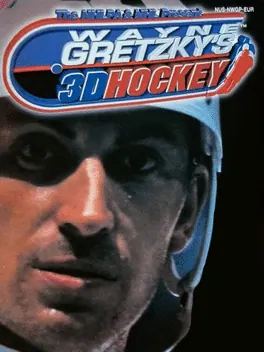
Wayne Gretzky's 3D Hockey
As opposed to the more realistic hockey gameplay seen in Electronic Arts' NHL series, the game featured a more unrealistic arcade-style of gameplay, featuring moves such as "power saves", which caused the goaltender to briefly transform into a brick wall, "power shots", which would set the net on fire or knock the goalie into the net, and "power checks", which would send an ambulance across the top of the screen. It featured high-scoring games and over-the-top fights. There was also a simulation mode for those looking for more realistic gameplay. The game allowed the creation of profiles and would keep track of important individual and team stats, including goals, assists, and wins, among others.
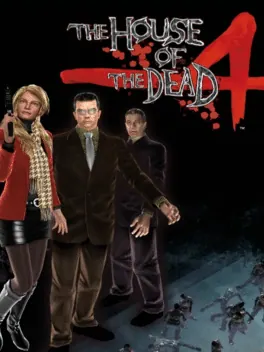
The House of the Dead 4
The House of the Dead 4 is a light gun arcade game with a horror theme and the fourth installment of the House of the Dead series of video games, developed by Sega. The game takes place between the events of The House of the Dead 2 and The House of the Dead III, and introduced several new gameplay concepts. Players can control characters James Taylor, from The House of the Dead 2, or Kate Green, a new character to the series. The House of the Dead 4 is the first game to run on the Sega Lindbergh arcade system board. A PlayStation 3 version featuring support for PlayStation Move and the two stages from The House of the Dead 4 Special was released on April 17, 2012 on the PlayStation Network.
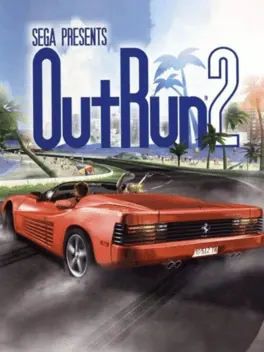
OutRun 2
OutRun 2, usually stylized as OutRun2, is a 2003 racing game released by Sega for the arcades. Although this is the first "official" sequel to Out Run, it is the fourth title in the OutRun series.
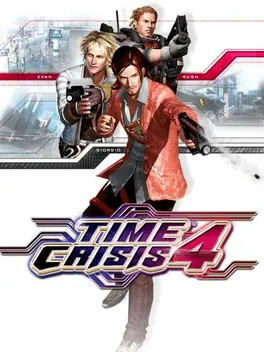
Time Crisis 4
Time Crisis 4 is the fourth installment in the Time Crisis series which introduces new features to the cover-based light gun shooter gameplay engine of its predecessors alongside a new story and roster of characters.
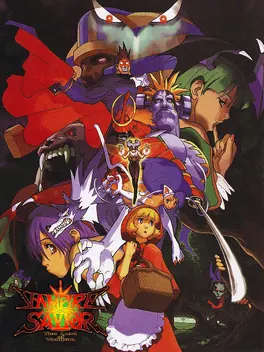
Vampire Savior: The Lord of Vampire
This is the 3rd in the Darkstalkers series. It plays much the same as the first, but features better animation, more playable characters, and a deeper storyline.
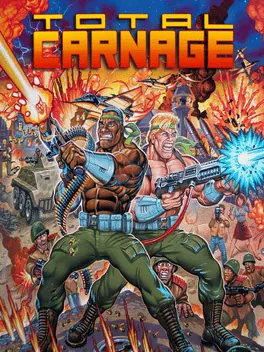
Total Carnage
The names of the two player characters are Captain Carnage and Major Mayhem. Blast your way through the Baby Milk Factory and fight Orcus, the Mother of All Bosses. Collect keys to enter the Pleasure Domes. Many special weapons and secret areas.
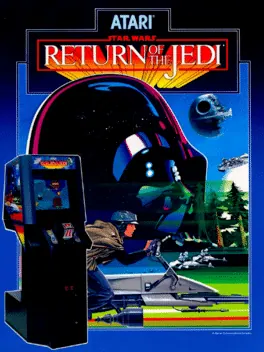
Star Wars: Return of the Jedi
The Return of the Jedi completes the Trilogy of games based on the Star Wars films. Each one is a conversion of the Arcade game and Return of the Jedi picks up the action of the movie where the rebel forces begin their attack against the Imperial Death Star. In the first lever you control Princess Leia on her Speederbike through the forest of Endor to safety of the Ewok village. You leave Leia there and go to another part of the forest to control Chewbacca's Scout Walker. There, Hans Solo is waiting to deactivate the shields protecting the Death Star. On the second and third levels, you control Chewbacca and Lando Calrissian as he flies the Millennium Falcon. Lando flies close to the Death Star fighting off a mighty attack from the T.I.E. fighters. The Millennium Falcon enters the Death Star and travels down a dangerous tube towards the central reactor. Blast the reactor and then turnaround to get away from the Death Star as it blows up.
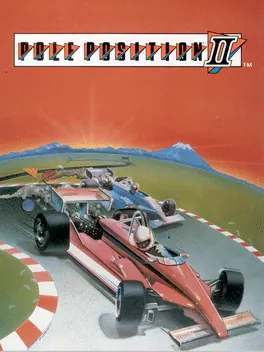
Pole Position II
Just like the first game, but with improved graphics and 4 different tracks to choose.
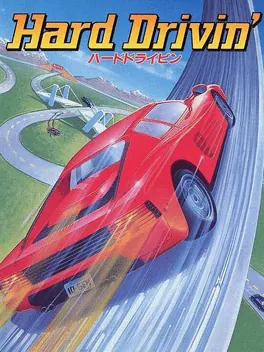
Hard Drivin'
Hard Drivin' is a 3D arcade hit from Atari Games. You are in control of a high-performance sports car. Your objective is to race around the course as fast as possible and hit as many checkpoints as possible. If you hit a checkpoint you gain extra time to go farther. You will see traffic on the road both in your direction and coming down the opposite direction, so be careful when you pass... The course has two sections: speed track, and stunt track. Speed track is longer, but you can usually achieve higher speeds. Stunt track requires you to perform several stunts such as jumping bridges, driving through a loop, and so on. Crashing the car has no serious consequences and indeed shows a replay of your crash from a cinematic angle. Admire your crash head-on into the cement truck, or clipping the minivan, or flying off the bridge in the wrong angle... You lose several seconds as your car is "reset" and you get up to speed again. The home conversions retain most of the then-advanced 3D graphics but lack the force-feedback that was in the arcade version.
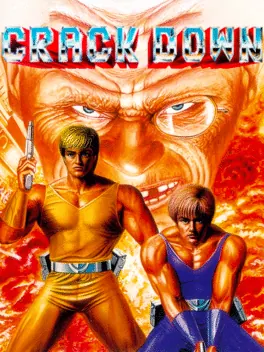
Crack Down
Ben and Andy, the two top Special Service agents have accepted a very dangerous assignment – the elimination of Mr.K and his Artificial Life System. Mr. K plans to rid the earth of human life forms using the killer robots he’s created, and no one but Ben and Andy can stop him!
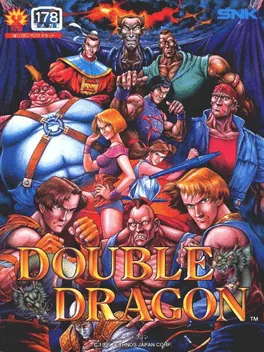
Double Dragon
A head-to-head fighting game based on the 1994 Double Dragon movie, the game features a roster selectable which consists of "Double Dragon" alumni Billy, Jimmy, Marian, Abobo and Burnov, as well as 5 original characters as they enter a martial arts tournament to take out evil crime lord of Bloody Town, Koga Shuko. Unique features in the game includes destructible environments and a super move meter which fills out based on how much energy the player has left, giving weaker fighters a handicap. After defeating the default 10 fighters, the player faces Shuko's bodyguard, Duke, before fighting Shuko himself.
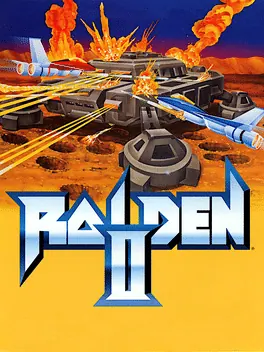
Raiden II
Excellent sequel to the classic original "Raiden". As in the original, players control a fighter jet/spaceship through various levels while shooting down other planes and bombing tanks on the ground.
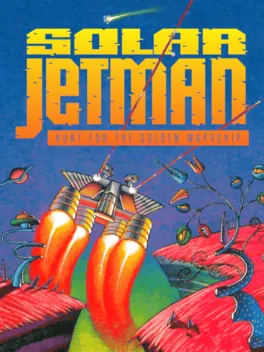
Solar Jetman: Hunt for the Golden Warpship
Blasting off through the cosmos and into hostile alien terrain, Jetman has returned in his most ambitious adventure yet! After the most powerful spacecraft in the known Universe, the Golden Warpship, is disassembled by a band of ruthless Space Pirates and scattered throughout the galaxy, Solar Jetman is tasked with rebuilding the ship to its former glory. Aided only by the gargantuan Federation Mothership for refuelling, Jetman will have to explore twelve labyrinthine planets solo in his Jetpod, where opposition is hidden inside every cavern and beyond every crater. With survival running as thin as his fuel, Solar Jetman will need to ward off every potential invasion and escape with the Golden Warpship intact – only then can he face off against his largest interstellar foe yet! Solar Jetman was re-released as part of the Rare Replay Collection on Xbox One.
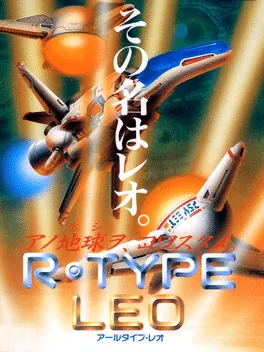
R-Type Leo
R-Type Leo is a horizontally scrolling shooter arcade game. It is a spin-off of the R-Type series and the last entry to be released in Arcades. R-Type Leo was initially an original shoot 'em up game in development by Nanao before Irem retooled it into an R-Type project instead. It is also the first R-Type game to feature simultaneous two player gameplay.
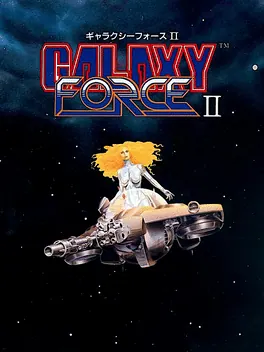
Galaxy Force II
The peaceful and prosperous solar system Junos was located at the end of the Milky Way. Those who called its five planets home had no idea what was about to happen... Halcyon, ruler of the Fourth Empire, had Junos marked as its final target in the galactic massacre, and had sent the bulk of his attacking force in with a single purpose – the elimination of all life forms in the system, and the construction of a gigantic fortress on each of the five planets from which to rule the galaxy. Galaxy Force II is not a true sequel to the orginal game but a an enhanced version of the original. It was released roughly two months after the release of the first part thus making it obsolete.
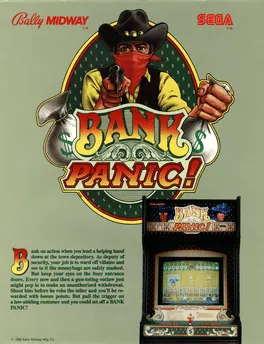
Bank Panic
Bandits are holding up a bank and have taken people hostage, and as a gunslinger, it's your job to shoot them. The bank has 12 doors, and the bandits are behind each one of them. When they pull a gun out at you when you open a door, you have only a few seconds to shoot them before they shoot you. If you shoot them too early (ie: before he sticks his gun out at you), it is considered unfair, and you won't score any points, but if you're too late, he'll shoot you and you lose one of your three lives.If you waste too much time, a bandit will come out from one of the doors and stick dynamite on it. You must then shoot the dynamite to get rid of it. If you're lucky, either a man or a woman will throw you a bag of gold coins. If you shoot any of these people by accident, you also lose a life. More often than not, the person will throw his/her hands up, saying "I haven't got anything". That's when they will be replaced by bandits. Some men will carry three to five pieces of gold on top of their heads, and shooting at all of the gold will award you with a bag of gold coins. Others will be tied up with rope. If you shoot the rope, there's more money for you, because not only will you receive one bag of gold coins, but you'll get three bags of gold coins.
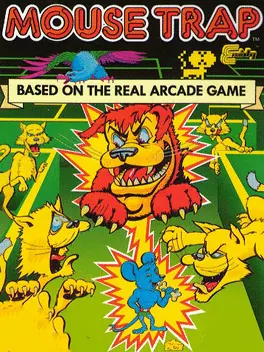
Mouse Trap
Mouse Trap is a 1981 arcade game released by Exidy, similar to Pac-Man. It was ported to three home systems by Coleco; Coleco's ColecoVision, Mattel's Intellivision, and the Atari 2600.
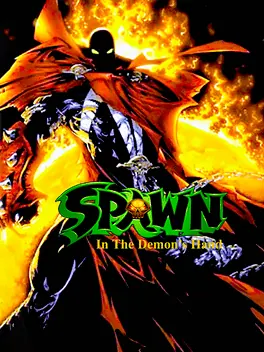
Spawn: In the Demon's Hand
The legendary hellbound comic anti-hero comes to life. Straight from the blockbuster arcade game, this home version kicks it up a notch with ever more features and modes of play. Up to 4 players can battle in the "death match-style" Battle Royal Mode or choose a computer controlled teammate to take on Team Battle Mode. All your favorite characters from the Spawn series are faithfully recreated in the ultimate death match challenge.
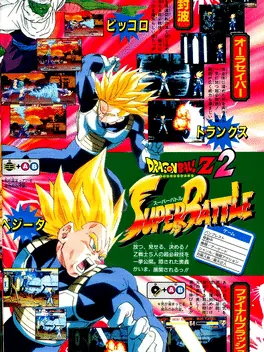
Dragon Ball Z 2: Super Battle
Dragon Ball Z 2: Super Battle is a video game for arcades based on the anime Dragon Ball Z. It was designed and manufactured exclusive in Japan by Banpresto in 1995. The game is a direct sequel the previous arcade Dragon Ball Z game, produced two years earlier.
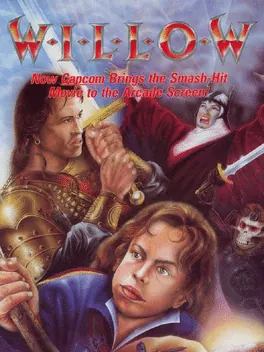
Willow
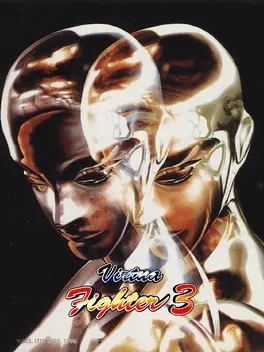
Virtua Fighter 3
Virtua Fighter 3 is the third fighting game in the Virtua Fighter series. Two new Japanese characters were added to the roster of fighters: Aoi Umenokoji, a beautiful Japanese woman and a childhood friend of Akira Yuki who used a nimble form of Aiki-jujutsu as her fighting style of choice, and Taka-Arashi, a Sumo wrestler from Japan. Taka Arashi would not make another appearance in the Virtua Fighter series until Virtua Fighter 5 R; the series' current producer, Hiroshi Kataoka explained that the removal of Taka in subsequent installments was due to the technical implications of having a substantially larger character.
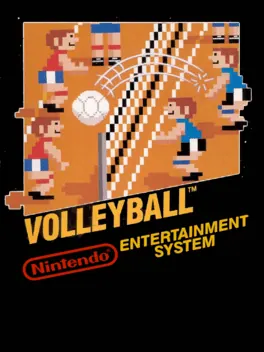
Volleyball
Volleyball is one of the fastest team games around, and this NES classic recreates the speedy sport in a way that anyone can play.
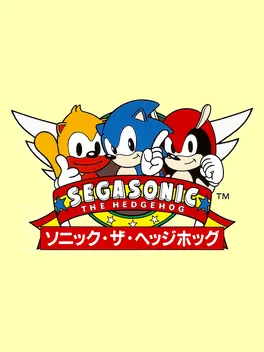
SegaSonic the Hedgehog
SegaSonic the Hedgehog is an isometric platforming game with three characters who shares identical controls and abilities. The characters are controlled with one action button which lets the player perform a spin jump, and a trackball which is used to move the characters around. Each trackball and corresponding action button are color-coded, meaning the blue ones are for Sonic, red ones are for Mighty and yellow ones are for Ray. The premise of the game is to reach the end of an isometric course without dying. This objective is similar to other video games in the Sonic the Hedgehog series. Yet, it is also different in the sense that instead of a typical platforming game, the game is centered entirely around running as fast as possible on a linear course from a never-ending barrage of threats, including giant boulders, lava flows, rogue gears, falling stalactites, and other traps. When the player is hit by a dangerous obstacle or hazard, they lose health from the Health Gauge, which can be refilled by collecting Rings that found around the arena. Upon completing each level, the game tallies up how many Rings were grabbed. Extra points are also received if over half of the level's Rings were found. The game only has a few enemies and one boss that appears midway through the game. At the end of the final level, the player is given twenty seconds to escape from the self-destructing tower. Failure results in an instant Game Over.