
Jogos para NEC PC-6000 Series
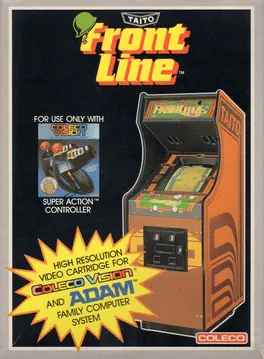
Front Line
Front Line is a vertically scrolling action game. Your mission is to infiltrate enemy territory and destroy their fortress. To reach the fortress, you will have to make your way through varied and dangerous terrain. Jungles, deserts, brush, and rocks all slow your progress, plus each area has numerous enemy fighters and tanks trying to stop you. To help get past these obstacles, you are armed with a machine gun and grenades; at some points in the game you may even come across an abandoned tank which you can control to increase your odds of survival. When you reach the end of the level and successfully destroy the fortress, the game will repeat at a higher level of difficulty. Gameplay is for one or two players, and four different skill levels are available.
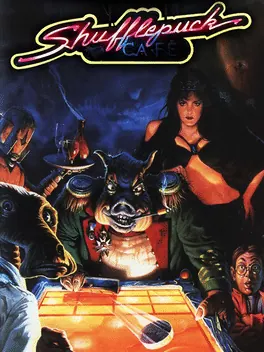
Shufflepuck Cafe
Shufflepuck Café is a computer air hockey game developed by Christopher Gross, Gene Portwood and Lauren Elliott for Brøderbund. There are two game modes. The player can compete in a tournament, playing against opponents who visit the Café, or can practice against each opponent to find out his/her/its weakness in a single-player match. There is a general storyline behind the Amiga version of the game in which the player is an inter-galactic salesman whose spaceship has broken down. He needs to find a telephone to call the breakdown service and get the spaceship fixed. Shufflepuck Café is the nearest place for miles, so he goes in to use their telephone. The main eight Shufflepuck players are standing in his way and will not let him get to the phone until he has beaten them all. Once all are defeated, the player gets in his spaceship and flies off into the distance.

True Love
True Love is a Japanese bishoujo eroge visual novel with dating sim and adventure game elements released in 1995 which was later localized in Europe by Otaku Publishing and distributed in North America by JAST USA in 1999.

Hydlide
An evil demon named Varalys casts a curse upon the princess Ann, turning her into three fairies. You control Sir Jim and set out to find the fairies, and then slay Varalys. Only by vanquishing Varalys can the curse be lifted. Once the princess is restored the kingdom will be saved. The fighting is a little more in-depth than hack and slash. You can either fight with a defensive or offensive stance, or you can use magic spells.
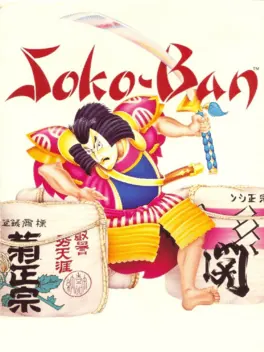
Soko-Ban
Sokoban ("warehouse keeper") is a is a classic puzzle game created in 1981 by Hiroyuki Imabayashi, and published in 1982 by Thinking Rabbit, a software house based in Takarazuka, Japan. In 1984 the ASCII Corporation published a version produced by Khaled Bentebal. It was the basis of numerous clones in the later years. It is set in a warehouse. On each level, the player must push crates (from square to square) to get them onto designated spots; once each crate is on a marked spot, the level is complete. Crates can only be pushed one at a time (so two crates next to each other cannot be pushed together), and cannot be pulled--so it's possible to get a crate stuck in a corner, where it cannot be retrieved! By the last levels, you must plan 40 steps in advance.

Nuts & Milk
Nuts & Milk is a platform-style puzzle game developed and published by Japanese software developer Hudson Soft in 1983. The game was released initially on the FM-7, MSX, NEC PC-8801, NEC PC-6001, and later to the Famicom in Japan. It was the first third party video game to be released on a Nintendo console.
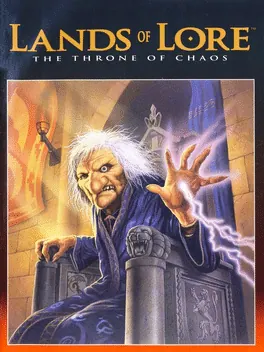
Lands of Lore: The Throne of Chaos
Lands of Lore: The Throne of Chaos takes you on an adventure: save the dying king and stop the evil sorceress Scotia’s Dark Army. Your band of heroes will travel through a vast fantasy word full of mysterious places, dangerous monsters, and hidden treasures in a quest to find a way to defeat the immortal evil enchantress and save the world.
Mappy
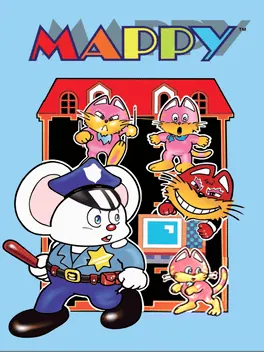
The player guides Mappy the police mouse through the mansion of the cats called Mewkies (Meowky in the U.S. version) to retrieve stolen goods. The player uses a left-right joystick to move Mappy and a single button to operate doors. The mansion has six floors of hallways in which the stolen items are stashed.
Lode Runner
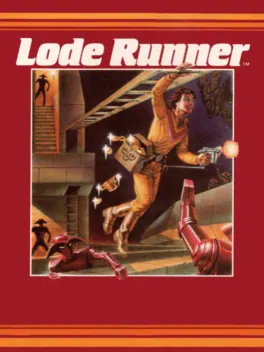
Lode Runner is a 1983 puzzle video game, first published by Brøderbund. It is one of the first games to include a level editor, a feature that allows players to create their own levels for the game. This feature bolstered the game's popularity, as magazines such as Computer Gaming World held contests to see who could build the best level.