
Jogos para Neo Geo AES
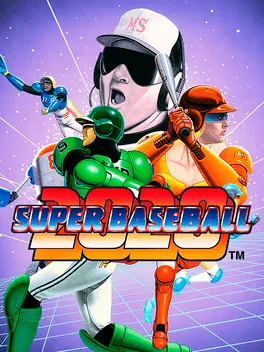
Super Baseball 2020
Different from real baseball and other baseball video games, this game consists of both male and female characters, as well as robots. All three types of players have the same basic abilities and vary only on their personal strengths. In many cases, human players are better than their robot counterparts. One major difference between the human and robot characters is that the robot characters can blow up (or lose all their power) if they are worked too hard during a game. That can happen if you constantly make them dive for a ball, run extra bases, or even if they get hit by a pitch. Under no stress whatsoever, some robots, especially pitchers, will naturally run out of power as the game progresses. When this happens, they will lose all their abilities and be useless, both offensively and defensively. When that occurs, you can either power them up or replace them with another person on the roster. Human players do not blow up, but human pitchers can tire out. When they are tired, they will pant heavily and throw the ball very slowly. This can be remedied by either an upgrade or, as in real baseball, switching to a relief pitcher.
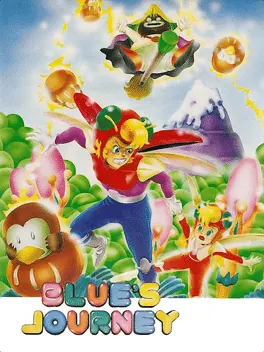
Blue's Journey
The planet Raguy was once a beautiful place, until the evil Daruma tribe invaded, bringing pollution that corrupted the land. You, as Blue, are a specialist of the Leaf Dump, and you love Princess Fa of the Raguy family. Unfortunately, Princess Fa has fallen sick from the pollution. It's your job to save your princess in Blue's Journey, a 2D side-scrolling platformer with RPG elements. Go through stages jumping on platforms and avoiding traps, while dealing with a multitude of bad guys, with a special bad guy boss at the end of every level to defeat with special means. To help with this, Blue can use a leaf attack and shrink. The leaf attack, only used when Blue is full sized, lets Blue slam a leaf that stuns any enemies he hits. Blue can also pick up power-ups for a more devastating leaf attack, or change his attack entirely. When the enemies are stunned, Blue can pick them up and throw them across the screen to dispose of more baddies. Shrunken down Blue can't use his attacking power, but he can fit into small crevasses and crannies not normally accessible. Of course, Blue can also dispatch enemies by jumping on them. Since Raguy's economy is flower based, Blue can collect flowers to buy things at special huts. But Blue must take care not to fall into traps or bottomless pits, which cause instant death. Being hit by bad guys or their shots is just as bad. Blue starts the game with two hearts, losing one when he gets whacked by a bad guy. When his heart count goes to zero, Blue dies. Play the game alone (as Blue), or with your friend (as a green Blue) for two-player simultaneous fun.
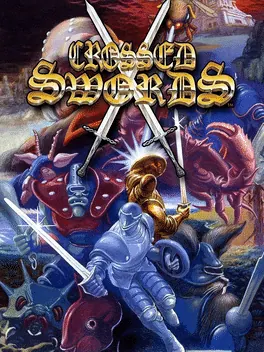
Crossed Swords
Crossed Swords is a hack & slash action RPG arcade game developed by Alpha Denshi and published by SNK for the Neo Geo arcade system in 1990 and Neo Geo console in 1991. Its gameplay was similar to SNK's earlier 1990 first-person shooter and beat 'em up game, The Super Spy, but with role-playing game elements and hack & slash combat instead of shooting and fist-fighting.[1] The game allowed cooperative gameplay with up to two players on the same screen.[1] As only the player characters' silhouettes are visible on screen as wire-frame models, much like Punch-Out!!,[2] the game's perspective may be considered either first-person[1] or third-person.[3] The game was later cited as an inspiration for the 2010 first-person fighting game Rage of the Gladiator.[4] A sequel of the game entitled Crossed Swords 2 was released in Japan on May 2, 1995 for the Neo-Geo CD, and was one of the few games designed specifically for the Neo-Geo CD, rather than being an arcade port.[5]
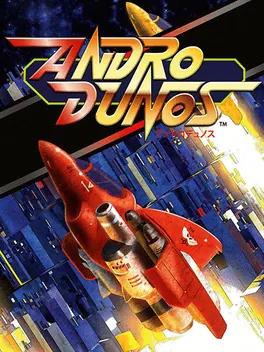
Andro Dunos
Andro Dunos is a horizontally scrolling shoot 'em up arcade game released by Visco in 1992 for the SNK Neo-Geo MVS. The player controls a futuristic fighter spacecraft with different weapon settings that you can switch between, and shoot enemies, collect power-ups, and defeat bosses to advance levels.
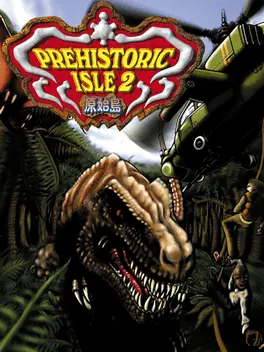
Prehistoric Isle 2
Prehistoric Isle 2 is complete madness. You pick one of two available helicopters, and blast your way through six increasingly difficult stages. The only thing in your way are dinosaurs, which just so happen to have the ability to breath fire, shoot lasers, and want nothing more than to see you perish! It’s completely insane, and that’s what makes it so bloody great! It doesn’t hurt any that the game was developed by the same people who made the excellent Blazing Star and Pulstar so you know you’re in for a good time.
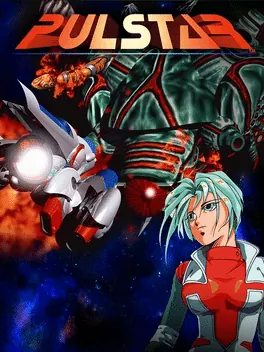
Pulstar
The basic gameplay is simple: progress through the levels in the spacecraft, collecting powerups and protecting the spacecraft from destruction. The game has very obvious similarities in design and gameplay to R-Type. It is actually believed that some ex-Irem employees left the company to join Aicom, which used to be a subcontractor for various coin-op manufacturers like Jaleco or SNK. Despite the familiarities, Pulstar is not without innovations. There is the option of using the weapon power bar, which consists of two halves. The right-hand side of the bar turns blue when the fire button is depressed. When fully charged the ship delivers a devastating emission of energy. The left-hand side turns red when it is continually pressed, shooting out a barrage of smaller, rapid blasts. The in-game visuals are mostly pre-rendered 3D graphics, which gives the interactive elements a far more realistic appearance. Great care was taken to really place the player into the world of the game, with cinematic style cut scenes and pre-rendered movies. There is a hefty reliance on strategy and not just blasting everything in sight. Using the charged weapon is key, and requires careful precision. Also, once a power up is obtained, a small orb appears at the posterior end of the ship. This can be used as an advantage by deflecting/absorbing oncoming enemy fire and taking out small enemies that run into it.
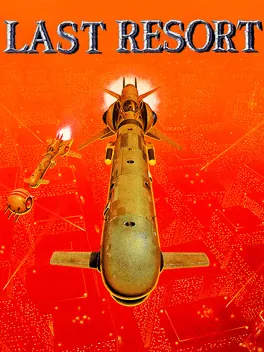
Last Resort
Last Resort is an arcade shoot 'em up video game by SNK released in 1992.
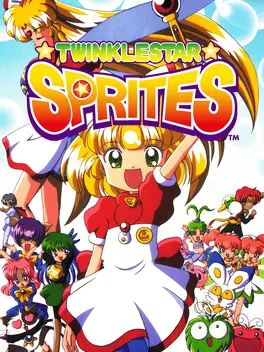
Twinkle Star Sprites
Twinkle Star Sprites is a 1996 competitive scrolling shooter arcade game originally created by ADK. It was ADK's last production for the Neo-Geo platform. The gameplay, which can be characterized as a combination of a fixed shooter and a versus puzzle game, uses combinations of shots, as well as timed power-ups to attempt to damage the opponent. These attacks also serve as counters to the opponent's attack.
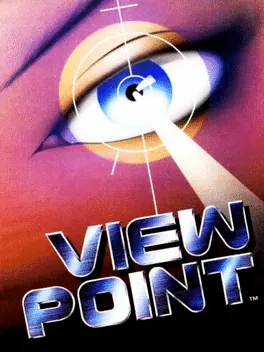
Viewpoint
One or two players (in hot-seat or cooperative mode) control a spaceship equipped with a laser cannon which can be charged (by holding the shooting button down) for a stronger blast. Besides the main weapon, three special weapons are available: a wall of fire which wipes the screen up in a wave, a nova-like blast and a circle of spherical-green homing missiles.
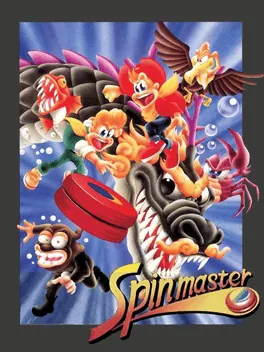
Spinmaster
Spinmaster is a platform/beat 'em up arcade game developed and released by Data East in 1993. The story follows the main character Johnny and his sidekick Tom as they battle their way through treasure-seeking, mad scientist, Dr. De Playne's henchmen in a quest to save Johnny's girlfriend Mary and get their hands on a hidden treasure. Both playable characters are armed with yo-yos but can also upgrade to other weapons (such as throwing stars, icicle daggers and guided missiles) to defeat all enemies and help them open treasure chests.
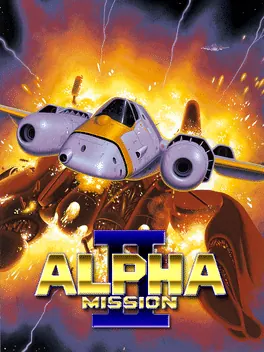
Alpha Mission II
Alpha Mission II is a 2D vertical scrolling shooter with a great deal of depth for two players moving vertically up the screen boards shooting anything that moves. Equip up to three pieces of armor, which also serve as weapons, for a variety of attacks such as the laser and flamethrower. Use them to defeat the evil “Fulvar” and save mankind!
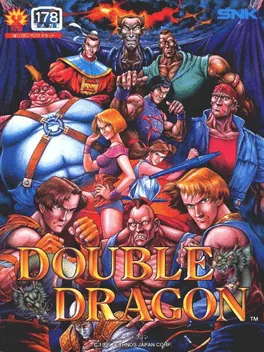
Double Dragon
A head-to-head fighting game based on the 1994 Double Dragon movie, the game features a roster selectable which consists of "Double Dragon" alumni Billy, Jimmy, Marian, Abobo and Burnov, as well as 5 original characters as they enter a martial arts tournament to take out evil crime lord of Bloody Town, Koga Shuko. Unique features in the game includes destructible environments and a super move meter which fills out based on how much energy the player has left, giving weaker fighters a handicap. After defeating the default 10 fighters, the player faces Shuko's bodyguard, Duke, before fighting Shuko himself.
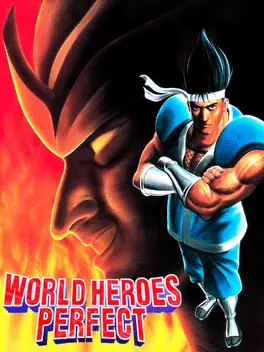
World Heroes Perfect
One year after both the conclusion of the World Heroes Battle Fest and the defeat of Zeus, invitations has been sent to the 16 fighters by Dr. Brown, informing them of a new World Heroes tournament that'll help finally settle the question of who's the strongest fighter in history. With the 16 fighters preparing themselves in order to finally determine on who's the strongest fighter in history, Zeus seeks to gain his revenge against those who had caused his downfall, but little does Zeus and the rest of the fighters know and realize that an old enemy from the past is also back and that he too has his own personal desire for revenge as well.
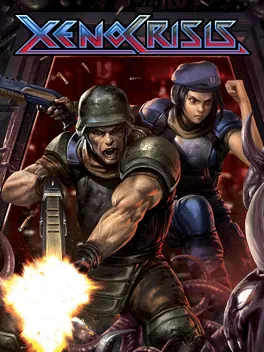
Xeno Crisis
Xeno Crisis is an arena shooter in which one or two players take control of battle-hardened marines embarking on a deadly mission to confront an alien menace and get home alive! Run and gun your way through thousands of adversaries as you explore the devastated research outpost, searching for survivors, and ultimately facing the origin of the outpost's demise. Outpost 88 is divided into seven distinct areas, each being randomly generated with each play, meaning that your strategy must evolve on the fly if you're to succeed in your mission. Collect dog-tags from vanquished enemies to upgrade your equipment between areas and look out for special weapons which will give you a momentary advantage.
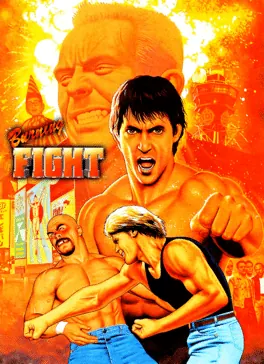
Burning Fight
Duke and Billy, two popular and renowned New York City Police detectives, are hot on the trail of a dangerous Japanese crime syndicate. Their investigation has led them to the mean streets of Japan where they meet a police officer and martial arts expert named Ryu. Ryu agrees to join the NYPD detectives as they track down the crime syndicate bosses and end their reign of terror once and for all.
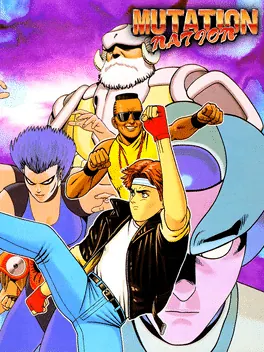
Mutation Nation
The Slum... an area of town completely forgotten. No one could imagine the cruelness suffered by innocent people who were transformed into horrible mutant creatures by genetic experiments. They hovered everywhere and completely took control of the town. Mutation Nation is a 1-2 player action game where you must control your hero and beat up any mutant that gets in your way, by either using your fists or one of four special attacks. A boss at the end of each area needs to be defeated if you want to proceed further through the game.
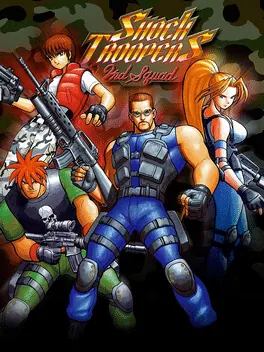
Shock Troopers: 2nd Squad
“Shock Troopers 2nd Squad”, the sequel to the NEOGEO fan favorite 2D top-down view action shooting game, returns to the missions on the Steam battlefield!
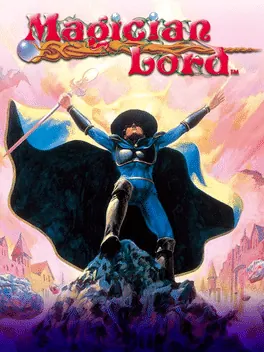
Magician Lord
Magician Lord is a side-scrolling platform game that was a launch title for both the Neo-Geo MVS (arcade) and AES (home) systems, and was one of the pack-in games for the Neo-Geo AES. The game was re-released through the Virtual Console download service in Europe and Australia on October 26, 2007, and in North America on October 29, 2007. It was later released for the PlayStation 3 and PlayStation Portable through the PlayStation Store. It was previously included in SNK Arcade Classics Vol. 1, released for the Wii, PlayStation 2 and PlayStation Portable in North America on May 1, 2008.
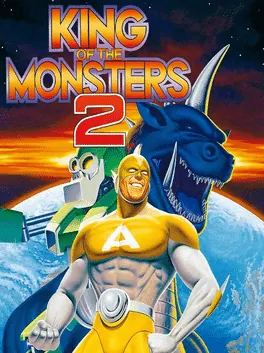
King of the Monsters 2
Alien super monsters have returned and are trying to invade Earth again! Now, Super Geon, Atomic Guy, and Cyber Woo must fight to retain control of the planet. Each one has special attacks and powers. Take on monsters that have unique abilities never seen before, including fire breath, aerial spins, and radioactive blasts. Challenge a friend, or have him help you out in the two-player option. Battle your way through seven levels of intense action in King of The Monsters 2.
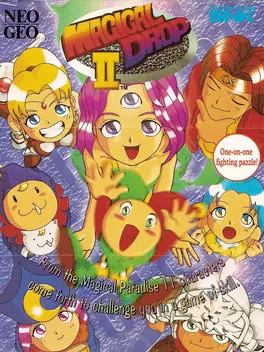
Magical Drop II
Magical Drop is played in a style and gameplay similar to Compile's (now Sega's) Puyo Puyo and Taito's Puzzle Bobble franchises; a "stack" of random colored bubbles descend from the top, and a player is defeated when a bubble hits the bottom. Bubbles can be picked up and dropped by the player's "clown" at the bottom, and are destroyed when three or more of the same color are put together on a single column. "Chains" are formed either when a single drop caused a chain reaction, or when more than one group of bubbles is destroyed in quick succession. The game is normally played with two players (one may be a computer opponent), and chains cause the opponent's stack to descend faster. There are 24 characters, all but the Black Pierrot being named after a tarot card (although the Strength card has been represented by two characters throughout the series). Different characters have different attack patterns. The columns of the opponent's stack will descend at different rates relative to each other depending on the character chosen. This causes a disjunction of colors that may make it more difficult for the other player to clear their stack. For example, with the character Devil, all the columns will descend at the same rate, whereas with Sun, the middle columns will descend faster than the others.
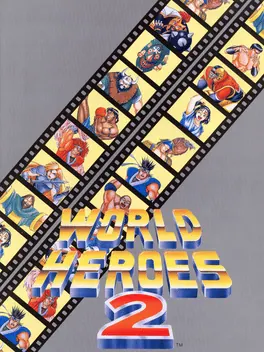
World Heroes 2
The time traveling tournament fighters are back! The original eight characters from the popular arcade hit return, along with six new characters hand-picked from several different eras and locations all through time. But a new boss awaits the victor... who or what is behind this new tournament? You'll have to get to him to find out! This sequel features all-new stages and music, and improved animation and graphics. You can now reflect projectile moves at your opponent, and reverse normal throws if your timing is right! The original game's Death Match mode is also back, but with a new feature - the life bar will increase or decrease as you inflict or receive damage. Get your side's life bar to 100% and your enemy will lose.
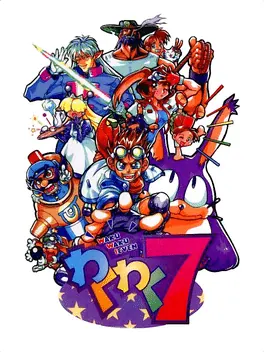
Waku Waku 7
Waku Waku 7 is a SNK fighting game originally released for the Neo Geo MVS arcade system.
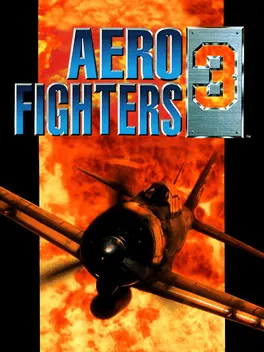
Aero Fighters 3
When enemy forces wipe out the jets of the Aero Fighters, they must scramble using heavily-modified World War II warplanes in the third installment of the comical Aero Fighters series.
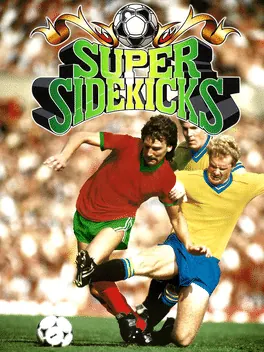
Super Sidekicks
Published in 1993, the original Super Sidekicks (known as Tokuten Ou, "Goal-Scoring King" in Japan) was SNK's first soccer video game. It features 12 teams divided into two groups which compete for the "SNK Cup" (the main differences between teams is their formations on the field): Group A: Germany, Italy, Spain, England, Mexico, Japan Group B: Argentina, Holland, Brazil, France, United States, South Korea The players' team plays against all the others in their group, then it goes into an elimination tournament's semifinals and then the final to win the cup. There was also a hidden feature in the game, which wasn't documented, and affects a single player game. During a free kick for the CPU if the player has tapped button A for player two, the CPU performs a short-shot, while pressing the button A performs a longer kick.
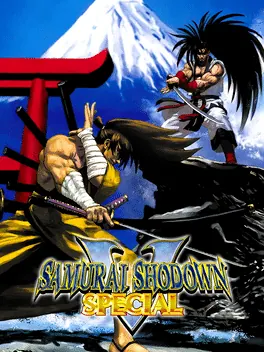
Samurai Shodown V Special
An ordained meeting of 28 fierce warriors begins, to precede a series of duels to the death. These individuals entrust their fates to their skill and their weapons. For those not up to the task, a cherished end in battle is their only hope. The twenty-eight Samurai characters clash in one epic title. Samurai Shodown V Special was the final release for the Neo Geo. The most iconic addition to this entry in the series is the inclusion of character specific “Overkill Moves”, which can be used to finish off an opponent with style.
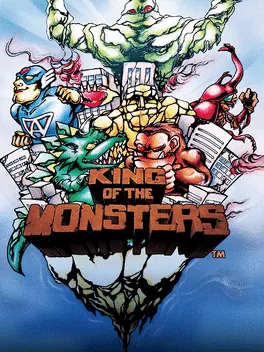
King of the Monsters
Players get to choose any one of six monsters (four in the 16-bit ports) for battle, and two players can join forces to fight the monsters together. Battles end when one of the monsters is pinned for a three count or if time expires (in which case the player loses). The game consists of 12 total levels: the player first must defeat all six monsters, with the last monster being oneself, but in a different palette. Then the player must defeat the six monsters again, in the same order, but this time in different cities
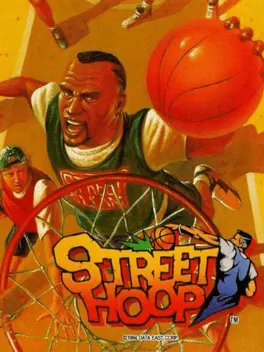
Street Hoop
Street Hoop, known in Japan as Dunk Dream and known in North America as Street Slam, is a basketball video game developed by Data East for Neo-Geo, released in 1994. The game features three-on-three basketball match-ups with a variety of different teams.
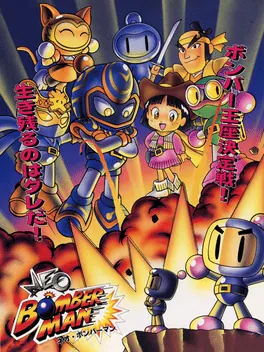
Neo Bomberman
The gameplay consists of walking through maze-like areas filled with monsters with a goal of opening the gate leading to the next area. Playing as a bomberman, the player can lay bombs to destroy all of the monsters, which will subsequently open the gate. Destroying blocks in the maze may uncover useful items including remote control bombs, accelerators, hearts, and increased firing range. Neo Bomberman includes Bosses that appear after each zone. Each zone is harder than the last, some featuring new traps and level obstacles such as conveyor belts.
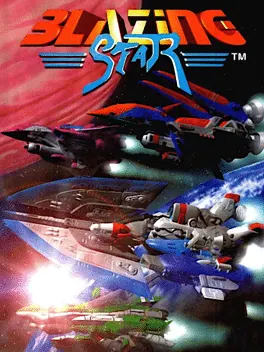
Blazing Star
Blazing Star is a scrolling shooter video game for the Neo Geo home game system. It is the sequel to the acclaimed Neo Geo shooter Pulstar, which was itself a close cousin to the R-Type franchise. A typically hefty Neo Geo ROM at 346 Mb, the game makes extensive use of pseudo-3D prerendered sprites, brief anime and CGI cutscenes (mostly during the intro sequence), and frequent Engrish voice samples and captions. While Blazing Star was superior in many respects to previous shooter games, some fans compare it unfavorably with Pulstar on the basis that Blazing Star was overly easy and there are those that prefer the simpler 2D sprite look over the prerendered sprites that came to dominate many of the more recent shoot-em-ups.
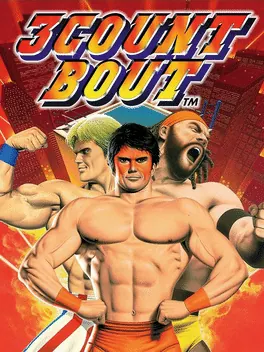
3 Count Bout
3 Count Bout is a one-on-one fighting game. Choose from ten wrestlers who have their own power attacks. There are ten rounds in the game, and each one of them has you fighting other wrestlers that are much tougher than the previous ones. You defeat each one by biting, kicking, and performing other moves to the point where their damage meter is empty. But just because it is empty doesn't mean that you win. You have to pin him for the infamous-three count. Also features competitive play and tag match battles. 3 Count Bout by SNK Corporation attempts to take you into the world of professional wrestling by giving you control of one of many different wrestlers as you fight both in the ring and in the seedy underworld in your quest to become an accomplished wrestling champion. Choose from one of ten different characters, each with his own strengths and weaknesses, and employ your wrestling moves using a combination of three buttons. There are also a number of hidden moves and combinations which can be unlocked for even greater variety in the gameplay. When you have your opponent on the mat, keep him there until the count of three and you've won the match. In two-player mode, you can either take on your opponent in a match or wrestle tag team. This game uses the Neo-Geo MVS cartridge system.
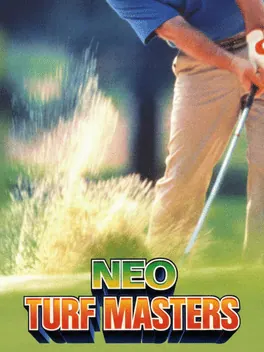
Neo Turf Masters
Neo Turf Masters is a golf video game by Nazca for the Neo Geo, released in 1996. This is also one of the first two titles by Nazca, the other being the popular Metal Slug before & between being acquired by SNK. The game is a fast paced, arcade-style golf game. Players choose from two game modes, stroke play for one or two players, and match play for two players only. Competing on one of four fictional golf courses located in the United States, Japan, Australia and Germany, players choose from one of six players with different attributes: "Young Hero" (George Spinner, USA) "Technician" (Thomas Stewart, United Kingdom) "Veteran" (Frank Adams, Australia) "Shot Maker" (Robert Landolt, Germany) "Power Golfer" (Fernando Almeida, Brazil) "Putt Master" (Toyoshige Takeno, Japan) Unlike many golf games of the era which used a two-click swing system to determine the hook or slice of the ball, Neo Turf Masters uses a single click for the power of the shot, and a second for the height of the shot; hook and slice are selected with buttons B and C before making the shot. This makes the game much easier to pick up and play well than its contemporaries, but it compensates for this reduced difficulty with fiendish (if somewhat unrealistic) course layouts and highly variable wind.
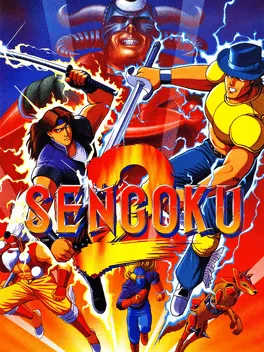
Sengoku 2
In Sengoku 2, a warrior from the future is summoned by a prophetic princess to feudal Japan, where an evil monarch has gained supernatural powers to control the dead. The player must battle through armies of reanimated souls to restore peace to a land where the weak have fallen prey to the strong.
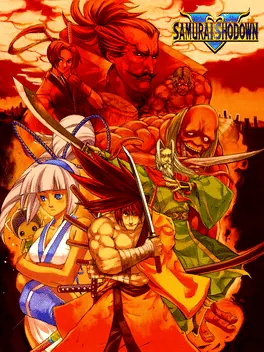
Samurai Shodown V
Samurai Shodown V brings back the classic side-scrolling action with a completely new storyline, new characters and new moves. A samurai's quest to prove himself against the Shogun leads to a gathering of the world's greatest warriors to compete for the right to be named the greatest.
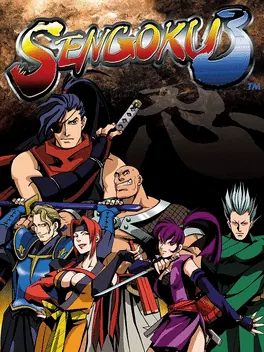
Sengoku 3
The game takes a greater departure from its predecessors in both story and presentation. The heroes are now members of a ninja clan who have to dispatch an evil emperor before he is released. Players can choose which character they want for the first time, each having their own strengths and weaknesses. Two bosses that confront the player can also be playable after a certain chapter of the game, allowing players to re-select their character if they wish.
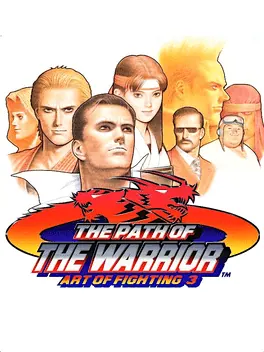
Art of Fighting 3: The Path of The Warrior
In this third and final entry in the Art of Fighting series, the story shifts from Ryo Sakazaki to his best friend and rival, Robert Garcia, as he ventures into Mexico to try and locate Freia Lawrence, a childhood friend, who asked for his help. However, he leaves without the consent of The Garcia Foundation, which sends an agent named Karman Cole to get him back. But not everything is as simple as it looks... because Robert is not the only one looking for Freia. Art of Fighting 3: The Path of The Warrior features ten playable characters with different fighting styles, a completely new fighting system based on joystick and button combinations, and incredibly detailed graphics and animation.
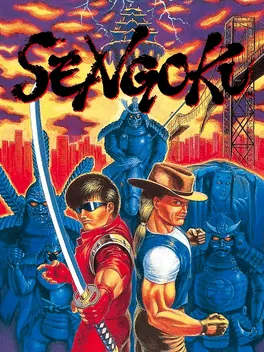
Sengoku
Sengoku is a side scrolling action game where the player takes the role of a super warrior who must battle against ghosts from the past bent on taking over the present.