
Jogos para PlayStation
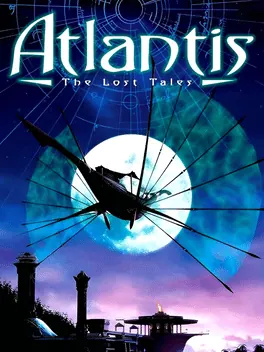
Atlantis: The Lost Tales
Atlantis: The Lost Tales is a fantasy adventure computer game developed by Cryo Interactive and published by DreamCatcher Interactive, and released on September 30, 1997. The game is named after its initial and most important setting, Atlantis. It is the first in a Myst-like series, and is followed by Atlantis II (Beyond Atlantis outside Europe), Atlantis III: The New World (Beyond Atlantis II), Atlantis Evolution and The Secrets of Atlantis: The Sacred Legacy.
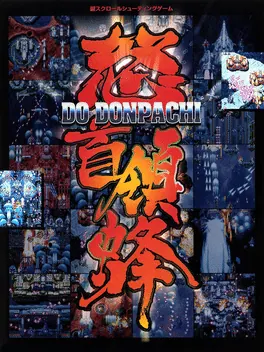
DoDonPachi
Compared to DonPachi, DoDonPachi is generally known for introducing new gameplay elements while improving or changing existing ones. The overall background of the game, unlike following sequels, remains more or less centered around a supposed invasion by a mysterious race of mechanized aliens, which the player is called to face throughout its run. However, more sinister and shocking secrets lie beneath the surface, accessible only to those brave and skilled enough to clear the entire game.
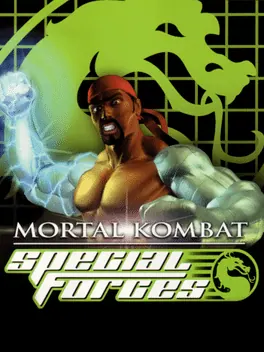
Mortal Kombat: Special Forces
Take on the role of Mortal Kombat character Jax, as you descend into the realm of Mortal Kombat in search of arch- villain, Kano. As you make your way through the game, you will delve deeper into one of the most interesting and enigmatic stories in the Mortal Kombat universe. Battle your way through complex 3D levels. Destroy your enemies using never-before-seen special moves and combos, all leading to an unforeseen climactic ending.
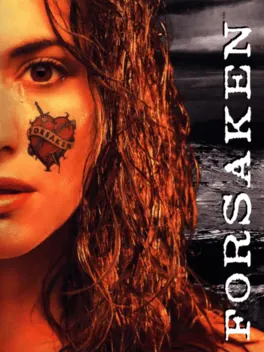
Forsaken
Forsaken is a Sci-Fi First-Person Shooter game, developed by Probe Entertainment Limited and published by Acclaim, which was released in 1998.
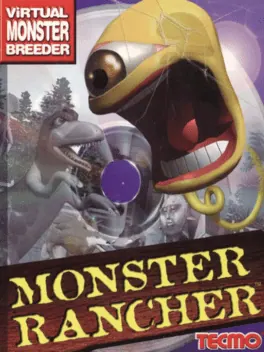
Monster Rancher
Monster Rancher is a console game released in 1997 for the PlayStation system. It is the first game in Tecmo's Monster Rancher series, featuring the raising, fighting, and breeding of monsters.
Devil Summoner: Soul Hackers
Soul Hackers delivers a first-person, dungeon-crawling RPG experience set in a future where technology and otherworldly forces meet in a macabre fusion of cyberpunk futurism and gothic horror. A first-person sci-fi RPG epic, Soul Hackers tells of a city held up as a beacon of humanity's triumph of technology, but with an infernal secret. In this would-be utopia, a group of hackers takes on a centuries-old mystic society, and a battle for control over humanity's fate is about to begin.

Pink Panther: Pinkadelic Pursuit
The Pink Panther is determined to find the treasure hidden in his uncle's house. Help him overcome all the obstacles that separate him from this wonderful treasure. Join the famous panther in some exciting adventures! Six different universes to explore: the Pyramid, Dracula's castle, the Gangsters nest, the Stone Age, etc. Fierce enemies to shake off...or to knock down. Wild hide and seek parties for the most stylish panther! Crazy roller skating rides. The main objective of all the levels in the game (except the final level) is to collect the key hidden in each level and get to the goal to proceed to the next level. There are a total of 12 "rooms" (levels) within 3 game modes: platform, race and boss fight.

Lucky Luke
You, as Lucky Luke, have to stop the Dalton gang from making another crime. Walking around town you have to solve puzzles, shoot criminals and collect money. After finishing the level you have a chance to buy an extra life with the money collected. Shooting isn't ordinary, often Lucky needs to ricochet shots to hit his target. The game view sometimes changes from 2D style to behind the shoulders. The levels differ from town exploring, to bottle-shooting in a bar, to freeing hostages on the roof of train, to Indian sneaking. But, all of them lead Lucky to $1,000,000 for the capture of the Daltons.
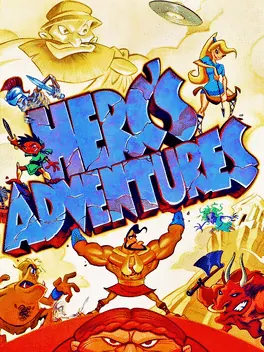
Herc's Adventures
Ahhh...ancient Greece. A fertile land, full of wine, women, and some of the best gyros you'll ever taste. Thanks to Persephone, the Greek goddess of spring and fertility, Greece is a wonderful paradise. But now the lord of the Underworld, Hades, has gone and kidnapped Persephone, causing the land to slowly wither away! Zeus, the King of the Gods, needs help in saving her, so who do you call? None other than three of the greatest warriors in the land! You can choose from the big 'n' buff Herc, the super swift Atlanta, or the young and street-smart Jason, each of whom have their own weapons and strengths. The game's 40 levels include many further variations and pastiches of Greek mythology and legend. It's all up to you to rescue Persephone and give Hades a beatdown he'll never forget!
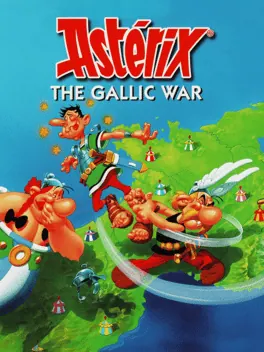
Astérix: The Gallic War
Astérix: The Gallic War is a light-hearted action-strategy hybrid game featuring the popular Asterix comic book characters. You play as Asterix, Obelix and the rest of the Celtic Gaul army as they war with the Romans, led by Caesar, who have seized all but one territory from the Gaul Empire. After gathering your army, you must capture lands adjacent to yours.
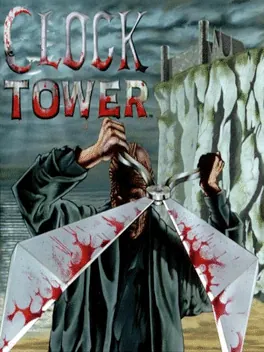
Clock Tower
Clock Tower, known as Clock Tower 2 in Japan, is a PlayStation point-and-click survival horror game and a sequel to Clock Tower: The First Fear. One year after the events of Clock Tower: The First Fear, in late 1996, Jennifer Simpson has been adopted by Helen Maxwell, the assistant of a renowned psychiatrist, Samuel Barton, and is currently undergoing treatment at a university research building in Oslo, Norway, to help her cope with her traumatic experiences in the Clock Tower case and possibly shed some light on the mystery that was the Scissorman.
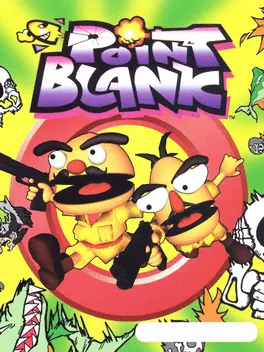
Point Blank
Point Blank is a first-person arcade shooter developed by Namco. Players use two attached light guns to hit targets onscreen; missions require speed, quick judgment or pinpoint accuracy. The game consists of non-violent, all-ages, shooting contests like shooting targets, shooting cardboard targets, etc.
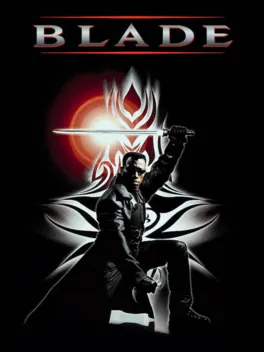
Blade
Blade is an action game based on the 1998 film Blade. It was developed by HammerHead for the PlayStation in 2000, and by HAL Laboratory and Avit Inc. for the Game Boy Color. The game was published by Activision and serves as a prequel to the movie, following the adventure of Blade with help of his mentor and friend Abraham Whistler. Reviews were mixed, with criticism of the graphics, camera, controls, and voice acting.
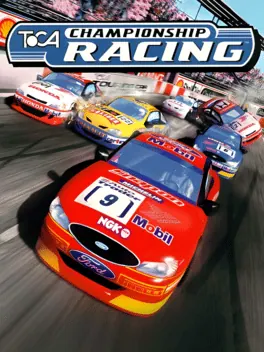
TOCA Championship Racing
Fight the pack to gain position without losing control of your car as you race on nine different original tracks of the British Touring Car Championships. This game features eight different game modes, such as single race, championship, time trial, and party play. More commonly known as TOCA Touring Car Championship, the first game of the series was released for the PC and PlayStation platforms in late 1997 in Europe, and in summer 1998 in the United States. Featuring all the licensed cars (not including privateers) and tracks from the 1997 British Touring Car Championship, the game was critically acclaimed by the European games press - especially on console where it was widely considered the best in its genre until the release of Gran Turismo several months later.
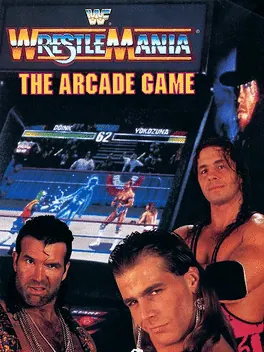
WWF WrestleMania: The Arcade Game
WWF WrestleMania (also known on console versions as WWF WrestleMania: The Arcade Game) is a professional wrestling arcade game released by Midway Manufacturing Co. in 1995. It is based on the World Wrestling Federation (WWF) professional wrestling promotion. The game featured digitized representations of eight WWF performers who are pitted against each other in fast-paced matches inspired by Midway's Mortal Kombat games. Commentary is provided by Vince McMahon and Jerry Lawler, who also appear in the game sitting at the announcers' table to the right of the ring. Acclaim, who published the console versions of the game, developed a follow-up, WWF in Your House for the PlayStation, Sega Saturn, and DOS.
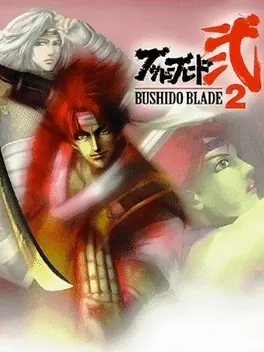
Bushido Blade 2
The sequel to the most original and realistic fighting game - bigger, better and more brutal than ever. No life bars, no time limits, no mercy. And a single blow can still make the difference between life and death. 12 new warriors for a total of 20. New weapons, subweapons, stances and moves. 6 fighting modes, plus first-person view option. Each character follows their own story path, with unique encounters and endings. Two-handed swordplay, throwing weapons, mud-slinging and more. Unique body damage system allows you to incapacitate or kill with one well-placed strike. Run, dodge and slash through huge 3D settings.

Loaded
Loaded is a violent, bloody top-down shooter which places you in the boots of one of six characters, who are all strange and deformed, from a psychotic clown to a huge baby. Loaded is a mission based game, where you have to complete various objectives, such as "escape the prison." Throughout each mission, there are tons of enemies to kill. You can choose to play through the single player campaign, or you can go head to head in two player.
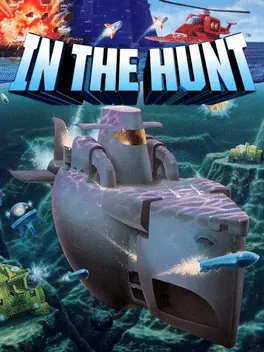
In the Hunt
In the Hunt is a horizontal scrolling shooter arcade game by Irem. It was released in 1993 and later ported to the Sega Saturn, the PlayStation and Windows 95 for the PC by Kokopeli.
D
The first entry in the D series and one of the first games released by the company, it dealt with taboo content such as violence and cannibalism, featured 3D CGI full-motion video and a first-person perspective. It was the first game to star the digital actress, Laura.

Real Bout Fatal Fury
Real Bout changes the play controls from the previous Fatal Fury games, reducing the number of attack buttons from four to three: a standard Punch and Kick button, a "Strong Attack" button which can be either a stronger punch or kick attack, depending on the character. The game retains the three-plane "oversway" system from Fatal Fury 3, which features a main lane for fighting, with foreground and background planes used to avoid attacks or leap towards the opponent. A dedicated button is now used to make an "oversway" (or change plane) towards the background or foreground. Real Bout introduces a Power Gauge, which fills up as the player performs normal or special techniques against their opponent or defend themselves, similar to many super move gauges featured in other fighting games. The Power Gauge allows players to perform one of three types of Special Techniques, depending of the level of the Power Gauge. Real Bout also introduces stages with ring-outs, a gameplay feature previously introduced in 3D fighting games such as Virtua Fighter. If the player performs certain attacks on their opponent while next to the boundaries, the character will eventually destroy the barrier keeping the opponent in the ring and be able to knock them out of the stage for an easy win.
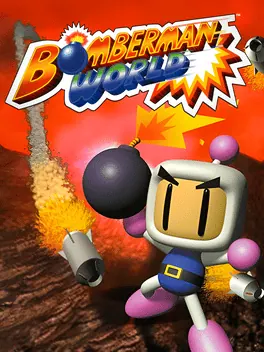
Bomberman World
Bomber worlds. To complete the areas, you must control Bomberman and set bombs to destroy enemies and obstacles that will lead to the exit. To be able to complete each level, the player must locate and pick up all of the Crystals on the map. Once this is complete, the door to the exit will open, and the player is allowed to move on to the next area. In the fourth area of each world, the player will have to defeat a Dark Force Bomber, and an extra boss that is themed after the type of world the setting is in. Once you defeat a Dark Force Bomber, the player is given a unique battle armor to wear for the next boss battle, which has a normal attack and a special attack. The battle armor is only used for the boss battles, meaning once the player advances to the next world, the battle armor will be lost. As such, it is recommended that players take full advantage of the armor.

Toy Story Racer
The race is on! For the first time ever, join Woody, Buzz Lightyear and the gang in a crazy, turbo-blasting remote-controlled racing competition through the action-packed world of Disney's Toy Story!
Echo Night
Echo Night is a mystery adventure video game developed by From Software. The story revolves around Richard Osmond and his journey to find out what happened to the ship Orpheus, which mysteriously disappeared from the sea. The story will uncover too the mystery about two stones which contain some kind of power.
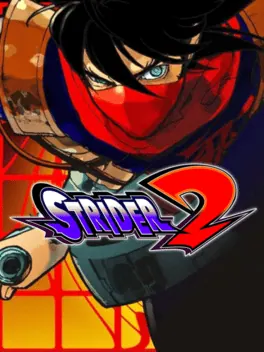
Strider 2
Strider 2, released in arcades and on the Sony Playstation in 2000, is the sequel to the popular arcade and multiplatform game Strider. This game is considered the true sequel to the original Strider, rather than Strider Returns. Strider Returns is not considered a part of the series, as it was not developed by Capcom, it was exclusive to the west, and most people hated it. Strider 2, on the other hand, was very well received. Unfortunately, despite being hailed by critics and series fans, Strider 2 did not sell well. The Playstation version of the game included the original Strider on a separate disc, for those who had never played it to become accomodated with the series. In the United States, there was a printing error for the game that swapped the labelling of each CD, so the Strider 2 disc was labelled Strider, and the Strider disc was labelled Strider 2.
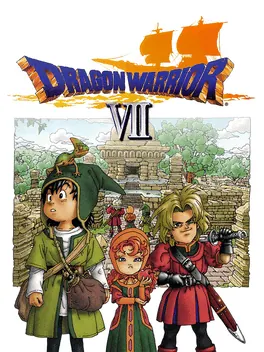
Dragon Warrior VII
Dragon Quest VII is the seventh installment of the popular Dragon Quest series of role playing games and the first in the series to not be a part of a larger trilogy. It was the first main series Dragon Quest title to be released outside of Japan since the release of Dragon Quest IV: Chapters of the Chosen in North America in 1992, and the last DQ title to be released in North America with the Dragon Warrior name.
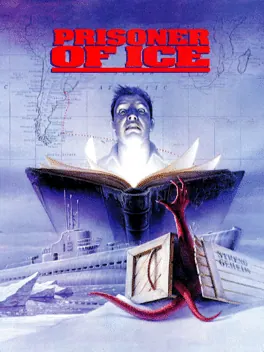
Prisoner of Ice
Amid an atmosphere of suspense and intrigue you'll launch your voyage in the icy cold wastelands of the Antarctic aboard a Royal Navy submarine - the H.M.S. Victoria. As an American agent of the Office of Naval Intelligence, your mission is to thwart a Nazi plot and recover top secret cargo. Horrific creatures capable of shifting the balance of world power must be conquered. World War II looms ahead and your every move could change the course of history. As you journey to the seemingly placid surroundings of a Greek courtyard or the secret gardens of Tihuanica, beware - things are not as they seem. This supernatural action adventure is sure to pique your obsession with horror and espionage.
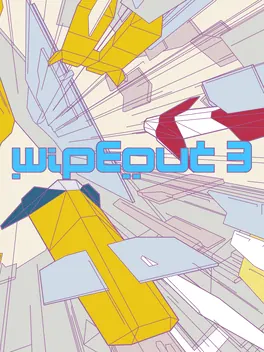
Wipeout 3
The third release of Psygnosis's seminal anti-grav racing series, and also the first game from the series to remain exclusive to the PlayStation. Set in the "F7200 Anti-Gravity Racing League", players control anti-gravity racing craft to eliminate competitors and complete events across a futuristic urban metropolis.

NBA Live 99
NBA Live 99 is EA Sports' NBA release for the 1998–99 NBA season. Some of the major additions in Live 99 include Practice Mode and multi-season play featuring player development between seasons. Although it did not feature free agency or generated rookies, it would turn out to be the forerunner to Franchise Mode. Live 99 shipped with 1997-98 season rosters due to the NBA lockout of 1998–99 putting a hold on player movements and rookie signings during the summer of 1998.
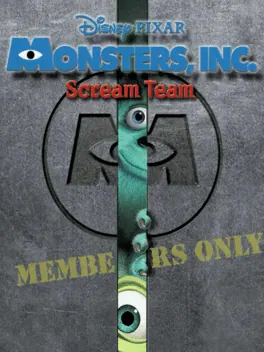
Monsters, Inc. Scream Team
What would you say if you found out that the scary monsters hiding in children's closet were all part of a corporate conspiracy? Well, that's the premise of the 2001 Disney or Pixar film, Monsters, Inc., and it's the basis of this videogame for the PlayStation. Play as either Sully or Mike two of the monsters hired to scare little kids as you move from house to house, just trying to do your job. The company you work for is in the business of drumming up "scream energy," so you'll have to be extra frightening if you hope to succeed. Each of the game's 3D environments is detailed and expansive, representing the movie well, and there are dozens of hidden bonuses and power-ups that you can use toy your advantage.
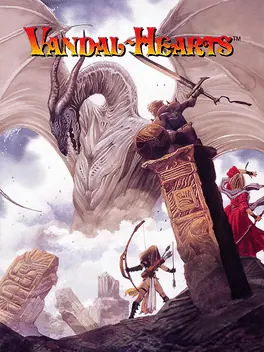
Vandal Hearts
You assume the role of Ash Lambert, a hero torn between saving his country and restoring honor to the disgraced Lambert dynasty. As he struggles with his inner demons and personal problems, he will meet various companions throughout his journey. They will help your character fight to overthrow the oppressive regime and ward off an ancient being that threatens the world. Vandal-Hearts is a 3D turn-based strategy game. Unlike many games of the genre, the various battlefields have sloped surfaces that will either work to your advantage or against you. It will be up to you to accommodate your strategy and amount an appropriate offensive assault against your foes as well as set up defensive measures.
Rampage 2: Universal Tour
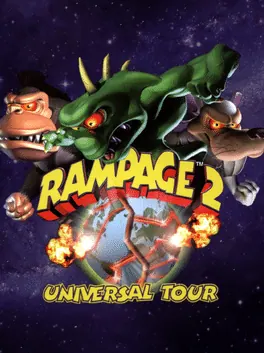
Players choose one of the three original monsters to rescue. The player then uses the characters in the part of the world where the rescue is held. They work as a collective to break buildings, eat people, and destroy cars and this creates competition among players. When a player (literally) unlocks George, Lizzie, or Ralph, then they become playable characters. Once all the monsters are rescued, aliens begin to invade the earth, leaving the monsters the only ones who can save the planet they just helped partially destroy. After fending off the invasion on Earth, the monsters rescue Myukus (a cyclops-like alien) from Area 51 before chasing the aliens through space, destroying the aliens' bases throughout the Solar System and eventually rampaging through their homeworld.
NFL Blitz
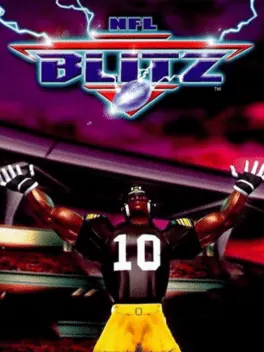
NFL Blitz takes the idea of a normal football video game and turns it on its head with fewer players, bigger hits, and lots of personality.
Chrono Trigger
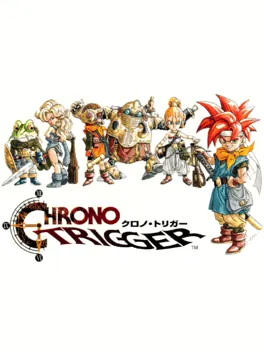
An enhanced port of Chrono Trigger that adds anime cutscenes and an exclusive Extras Mode. It is also known for having significantly longer load times in comparison to the original SNES version. Extras Mode is an option in the main menu that let players view cutscenes and artwork, listen to music, and view information about techs, enemies, bosses, endings, and item locations. It was first released for PlayStation in Japan before it came to North America as part of the Final Fantasy Chronicles compilation.

Tony Hawk's Pro Skater 3
A simpler port of THPS3 for the previous console generation. You may not be able to live like the legend, but now you can skate like him. Skate as the legendary Tony Hawk or choose from a dream team of 12 top pro skaters, including old favorites like Lasek, Thomas, Muska, and Steamer, as well as new talent like Gilfberg, Caballero, Koston, and Mullen. Or enjoy full customization abilities with the enhanced Create-a-Skater (now including female skaters) and the Skatepark Editor. Travel from L.A. to Tokyo, Suburbia to Skater's Island performing challenges and meeting goals. New moves include the Revert, which allows you to link vert tricks, and flatland tricks such as Caspers, the Primo, and Handstand Manual. If you're good, you can even unlock hidden pro footage.
Area 51
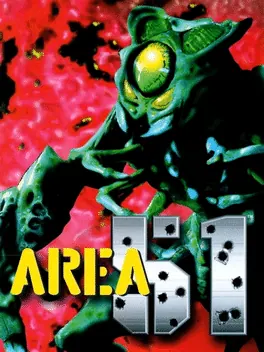
Area 51 is a light gun arcade game released by Atari Games. It takes its name from the Area 51 military facility.
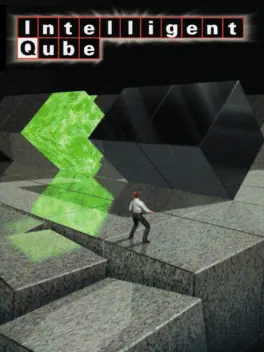
Intelligent Qube
Intelligent Qube is a puzzle game for the PlayStation. In the game, the player controls a character who must run around a platform made of cubes, clearing certain cubes as they approach. Cubes are "cleared" by marking a spot on the stage, waiting for the cube to roll on top of it, and then deactivating the marked spot.