
Jogos para Sega Master System/Mark III

Mortal Kombat
Mortal Kombat is a side-scrolling fighting game. Fighting is set as one-on-one combat, allowing each player to perform a variety of punches, kicks, and special moves in order to defeat their opponent. When the opponent faces their second round loss, the winner can perform a finishing move called a "Fatality" on the loser. The Fatality is a move unique to each fighter that graphically kills the loser in a blood-soaked finale.
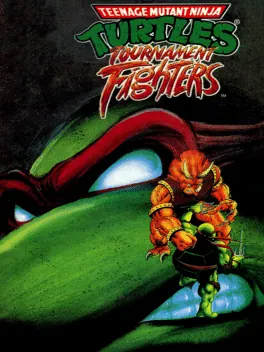
Teenage Mutant Ninja Turtles: Tournament Fighters
The Genesis version uses the standard three-button controller, with only two buttons for attacking (punch and kick). To perform stronger punches or kicks, the player must hold the directional pad towards the opponent while pressing either attack buttons. The third button is used for taunting. Some of the stages in the game feature destroyable scenery that gives the player and their opponent access to new areas in the stage. As well as their special moves, each character has a 'killer' attack which is only accessible when they are close to death and the red part of the characters' life gauge at the top starts flashing. This is done by pressing the Taunt button in conjunction with a specific D-Pad motion. These moves nearly take out the other character's life gauge completely. The game has eight playable characters, which includes the four Turtles and Casey Jones, as well as April O'Neil (whose active role differs from the versions of the character featured in other games), Ray Fillet (a character from the Teenage Mutant Ninja Turtles Adventures comics), and Sisyphus (an original character, named Musha Beetle in the Japanese version). The player can adjust their power and speed after selecting their character. The music in this version was composed by renowned video game composer Miki Higashino, in collaboration with Masanori Adachi.
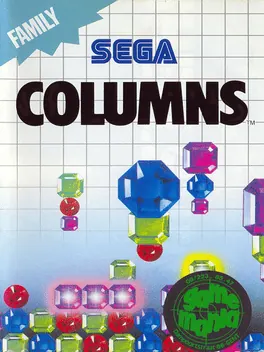
Columns
Columns is a match-three puzzle video game created by Jay Geertsen in 1989. Early versions of the game were ported across early computer platforms and Atari ST. In 1990, Jay Geertsen sold the rights to Sega, who ported the game to several Sega consoles.

Super Tennis
Super Tennis, is a sports game developed and published by Sega for the Sega Master System.
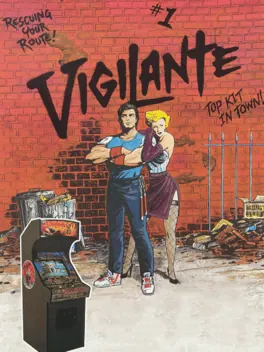
Vigilante
On the baddest streets of the city they know your name. You are lean and mean... the karate master they call the Vigilante! Your turf was left alone. Your friends and neighbors lived in peace. Until the Rogue gang got too big for their britches. You chilled, hoping things wouldn't get too rough. No such luck. They've taken your girlfriend Maria, and there's only one thing you can do... get her back... anyway you can! You have fists of steel! Legs like pistons! And courage that just won't quit! You will need all three because the Rogues are waiting with knives, guns and a whole bunch of nasty punks. And you'll have to fight fast. If the Rogues make it back to their headquarters before you rescue Maria, all hope will be lost. But catch them first and you'll fight the leader of the Rogues. Win Maria... and your turf... will remain safe. Feel any pressure? No way. You're the Vigilante!
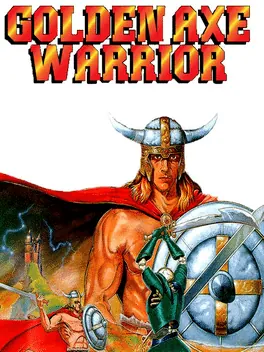
Golden Axe Warrior
World peace is at stake! Death Adder, a wicked giant, has stolen the nine crystals from the kingdom of Firewood and has hidden them in nine labyrinths that he has created. These nine magic crystals protected the people from evil – especially from Death Adder's grasp. But now that the crystals are lost, the world is defenseless! Someone must put an end to the fiend's realm of darkness, death and destruction! Do you have what it takes to bring back peace and happiness? Trek through deep, dark forests and sail across vast, stormy seas. Chop down trees with your Battle Axe and move rocks with your magic spells to find secret caves. When you take on Death Adder's gruesome monsters, think only of winning – or else you won't find the nine crystals. And when you do, you'll find the Golden Axe – the only weapon that can crush Death Adder!
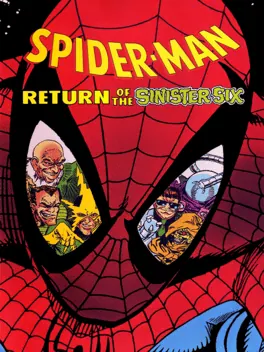
Spider-Man: Return of the Sinister Six
Spider-Man: Return of the Sinister Six is a side-scrolling game which puts you in the role of Spidey throughout six levels against Electro, Sandman, Mysterio, Vulture, Hobgoblin and Doctor Octopus respectively. Some puzzle solving (like finding a key) is necessary to beat some levels. Spidey can duck jump, climb walls, punch, shoot webs to swing (by pressing punch and jump together) and perform a jump kick (by pressing the punch button twice). Collecting web cartridges allows Spidey to shoot limited web projectiles. Although hard to die, Spidey has only one life, there are no items to recharge life (but killing some guys will do so) and only one continue.
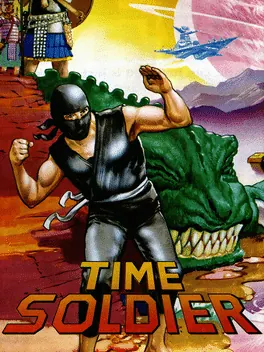
Time Soldiers
Travel throughout various time periods to save your fellow comrades. Collect power-ups to help you defeat a variety of enemies and end-bosses. Uses rotary joysticks to allow player to fire in a variety of directions.
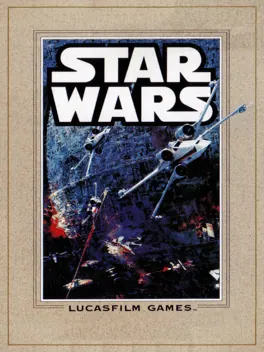
Star Wars
This game is based entirely on the first Star Wars movie, Episode IV: A New Hope. The opening of the game features an animated cinematic of the opening scene of the film. After that the player takes control of Luke Skywalker, driving the landspeeder across Tatooine in search of R2-D2. Luke Skywalker explores various locations throughout Tatooine, fighting numerous enemies including Jawas and Stormtroopers. The game features many locations from the movie including the Chalmun's Cantina in Mos Eisley where Luke meets Han Solo for the first time. This section of the game features a classic 8-bit rendition of the "Cantina Band" theme as played by the fictitious band, Figrin D'an and the Modal Nodes, in the feature film. The game also contains many famous lines from the movie including Obi-Wan Kenobi's plea to Luke to join him in his trip to Alderann and Han Solo's description of the smell from the Death Star's trash compactor. The player eventually lands on the Death Star and has to destroy the tractor beam to escape. The game also features first person segments of piloting the Millenium Falcon through that Asteroid field that was once Alderaan, and shooting down Tie Fighters in both the Millenium Falcon and an X-Wing fighter. The finale of the game features a top down view of Luke Skywalker's X-Wing flying through the Death Star trenches. After the player successfully fires a torpedo into the Death Star's exposed exhaust port, a cinematic of the Death Star exploding and Luke Skywalker being awarded a medal on Yavin IV is shown. The game featured the characters Luke Skywalker, Han Solo, Obi-Wan Kenobi, Princess Leia, R2-D2, and C-3PO. The game however does not feature Darth Vader or Chewbacca, both of whom are major characters in the film.
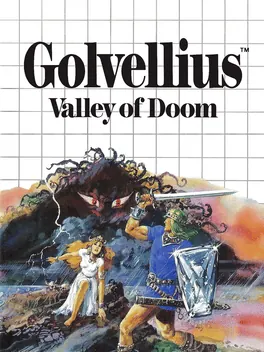
Golvellius: Valley of Doom
Enter the world of Golvellius. Where demons rule the valley of water...and control the creatures of land, sea and air. Where almost everyone stands against you. There is only one way in...and no way out except victory or death! It's an adventure that will take you across deserts and mountains, oceans and forests...through eerie graveyards and caves filled with danger and surprise. Golvellius has a PASSWORD SAVE feature that lets you keep all your possessions. So you never have to start an adventure empty handed!
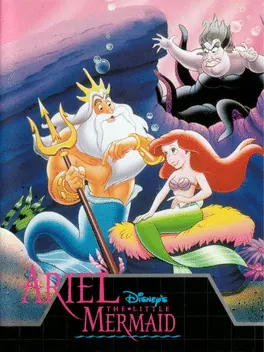
Disney's Ariel: The Little Mermaid
Disney's Ariel: The Little Mermaid is an Action game, developed by Blue Sky Software and published by Tec Toy, which was released in South America in 1992.
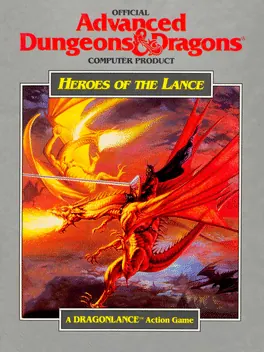
Advanced Dungeons & Dragons: Heroes of the Lance
Heroes of the Lance is a side-scrolling action game. The game used actual Dungeons & Dragons statistics, with statistics for the characters exactly as they were in the rule books. Eight heroes from the Dragonlance novels series must be assembled for the quest, and only one is visible on the screen at a time; when one on-screen hero dies, the next in line appears.

World Games
World Games is an Olympics-style sports game with arcade-oriented gameplay. The events players can compete in include: •Barrel jumping •Bull riding •Caber toss •Cliff diving •Log rolling •Platform diving •Pole vault •Skiing •Sumo wrestling •Weightlifting
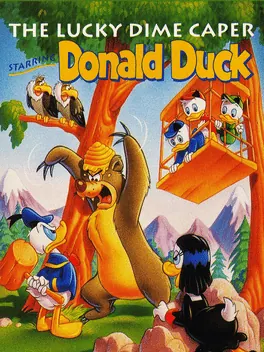
The Lucky Dime Caper Starring Donald Duck
Sorceress Magica De Spell and her rotten ravens have kidnapped Huey, Dewey and Louie! Worse yet, she's snatched Uncle Scrooge's Lucky Dime! Join Donald Duck in his quest to prove that Magica is no match for him.

Shanghai
Shanghai is a computerized version of mahjong solitaire. After winning a game, the tiles reveal the three-dimensional blinking eye of a dragon behind the game screen. The Macintosh and Sega Master System version shows an animated dragon spitting fire.
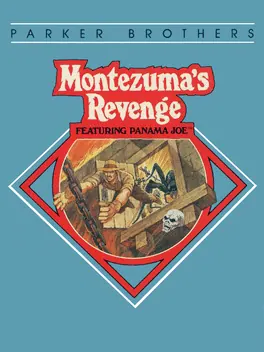
Montezuma's Revenge featuring Panama Joe
PANAMA JOE, That’s what they call him ‘round these parts; though no one knows his real name or where he comes from. But one thing’s for sure, PANAMA JOE’s a daredevil from the word “go!” No risk’s too great if the reward’s large enough. Winning. That’s what’s the most important to him. And more times than not, that’s exactly what he does. Because he’s tough, clever – resourceful. And sometimes, downright pig-headed! Though occasionally (ah-hum), he’s been known to get in over his head. Luckily, he’s got a knack for getting himself out of hot water as quickly as he gets into it! Let’s hope MONTEZUMA’S REVENGE is one of those times.
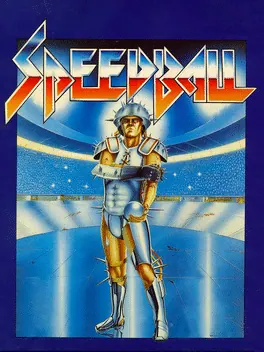
Speedball
Speedball is a futuristic football-like game which takes place on a steel walled floored pitch, 160 feet long by 90 feet wide. There are two teams, and the team scoring the most goals wins. There is a goal at each end of the pitch and a ball warp tunnel in each side of the wall. The warp tunnels can warp a ball from one tunnel to another. The ball is launched from the center of the pit by the automatic launcher in a random direction. There also bounce domes, off of which the ball will be deflected, but over which players are free to move.
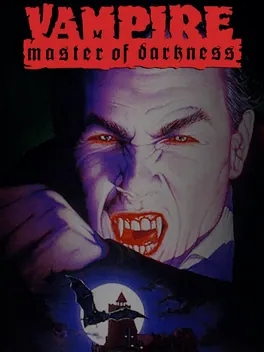
Vampire: Master of Darkness
The shadow of Dracula has spread over Victorian England. Make your way through strange and forbidding streets and cavernous warehouses while fighting his army of monsters. Find Dracula, the Master of Darkness, and rescue England from his terrifying grasp.
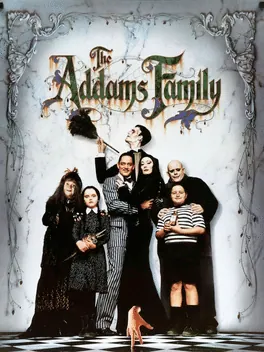
The Addams Family
The Addams Family is a side-scrolling platformer based on the movie of the same name. The player takes the role of Gomez who searches for his missing family members. To find them he has to explore six different parts of the mansion, e.g. the woods, which are basic platform levels: the player moves from left to right while jumping a lot and avoiding enemies. Some of them can be dispatched of by a jump on their heads. The main difference to the other versions of this game is a unique level design. There is also a life meter which allows to get hit more often before dying.
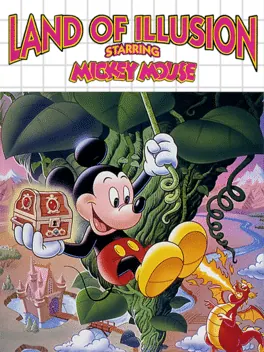
Land of Illusion Starring Mickey Mouse
Mickey finds himself in a fairy tale land where an evil Phantom-in-the-Clouds has stolen a special gem which brought peace and prosperity to a tiny village. It's up to you to help him save the day - and earn a place in Minnie's heart!

Indiana Jones and the Last Crusade: The Action Game
Indiana Jones and the Last Crusade: The Action Game is a side-scrolling action title based on the 1989 film of the same name. Players control Indiana Jones through various levels that loosely follow the movie’s plot, including iconic locations like the catacombs and the Zeppelin. Gameplay focuses on platforming, basic combat, and item collection, with limited lives and high difficulty. The graphics and sound vary across platforms, with the Amiga and Atari ST versions generally offering the most polished presentation.
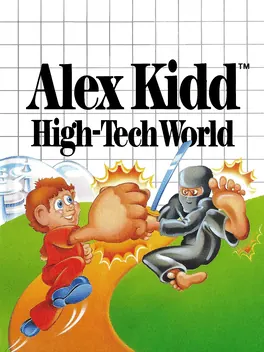
Alex Kidd: High-Tech World
Life isn't always easy for the Crown Prince of Radactian. When the High-Tech World arcade opened up, someone in your castle tore the map into eight pieces! But it's such a cool arcade, you have to go there. It's a challenge worthy of any Kidd!
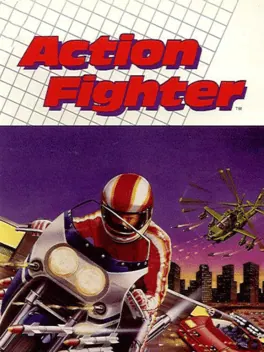
Action Fighter
Take to the streets or take to the skies. Because Action Fighter is the incredible, transformable combat vehicle. You start out on a customized cycle. Built with enough speed and power to jump over water and overtake enemies. Then, by finding the right parts along the way, you'll change your cycle into a supercharged, state-of-the-art sports car. Next, add two turbojets to make your car airborne. And take to the skies. Down hyped-up helicopters and jet spaceships from above. And no matter which vehicle you're manning- or who you're after- get ready to stand by for action!
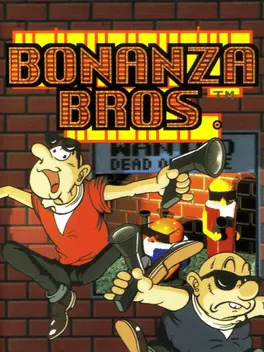
Bonanza Bros.
Just who are these guys? Mobo and Robo are the coolest villains you'll ever meet- they rob banks, museums (and innocent computer gamers of their sanity). One evening whilst watching TV a mysterious stranger appeared on screen. "Good Evening Boys I've got a job for you... My businesses are being robbed and I need you to test my security systems... Deliver the goods and I'll reward you." Take control of Mobo and Robo and guide them around the various establishments, collecting evidence on the way.

Klax
Klax is a 1989 computer puzzle game designed by Dave Akers and Mark Stephen Pierce. The object is to line up colored blocks into rows of similar colors to make them disappear, to which the object of Columns is similar. Atari Games originally released it as a coin-op follow up to Tetris, about which they were tangled in a legal dispute at the time.
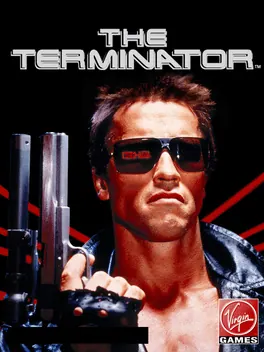
The Terminator
The Sega Versions of the "The Terminator". This side scroller was based on the 1984 science fiction blockbuster of the same name. Just like the movie, you assume the role of Kyle Reese, a traveller from the future who returns to modern-day L.A. to protect the life of Sarah Conner - the beautiful woman who holds the key to the survival of the human race. Your mission: Outwit and outmaneuver a brutal killing machine known as the Terminator. He's big, he's bad and he's virtually unstoppable - let's hope you're smarter! Featuring 10 huge main levels pumped up with hardcore weaponry and heavy-hitting adversaries.
Disney's Aladdin
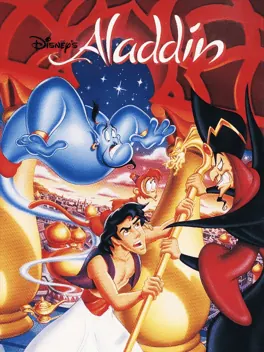
This version of Disney's Aladdin is a completely different game than either the SNES or Genesis versions, and was only released for SEGA's 8-bit systems, Master System & Game Gear. It has a classic-era Prince of Persia kind of gameplay. Like the other versions, it is a side-scrolling action game. The player controls Aladdin, making his way through a variety of locations, including the streets of Agrabah, the Cave of Wonders, the Sultan's palace and more. Gameplay takes several different forms: some levels are chases, where Aladdin runs automatically, but must be made to jump over chasms or rolling rocks and barrels, evade falling objects and avoid getting caught by a guard. Other levels are platforming affairs: Aladdin must run, jump and climb, find keys or switches to open doors while searching for the exit. Rocks can be collected and be thrown to dispatch enemies or hit buttons otherwise out of reach. Finally, there are also several magic carpet rides in the game, in which the level scrolls automatically and the player must make sure to avoid any obstacles in the way.

Kick Off 2
Viewed top-down, the controls involve trapping the ball under your foot, giving you time to prepare passes. Running with the ball is tricky at first, as it doesn't stick to your foot the way it did in contemporary football games. Complex moves such as overhead kicks, back-heels and long-range through-ball passes can be completed with practice.

Sonic Drift 2
Start your engines and prepare for the race of your life! Choose from 7 of your favorite characters including Sonic, Knuckles and Robotnik, each with his own special powers. Plug in your Gear to Gear connector and take on a friend through over 17 courses in the ultimate Chaos Grand Prix!
Astérix
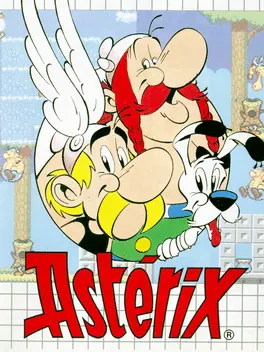
The Romans have kidnapped Getafix, who is the only one that can brew the magic potion the Gauls need to stand against the Romans. Asterix and Obelix embark on a journey to free him. You can play as either Asterix or Obelix which play slightly differently (Obelix is slower, but can manipulate objects, Asterix moves faster).
Dick Tracy
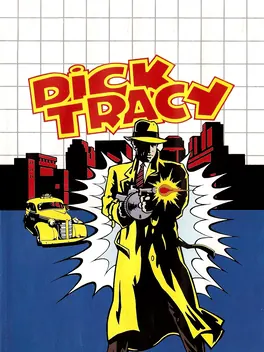
Dick Tracy is a tie in to the 1990 movie adaptation of the classic comic strip, staring Warren Beatty and Madonna. While an action/adventure hybrid using this license was released by Disney for the PC and Amiga, Titus also held a license to the movie. This is a side scrolling action game, where you control Dick Tracy as he moves through five stages, shooting gangsters with an assortment of weapons. Each stage leads to one of the mob bosses, until you ultimately capture the big man himself.
Fantastic Dizzy
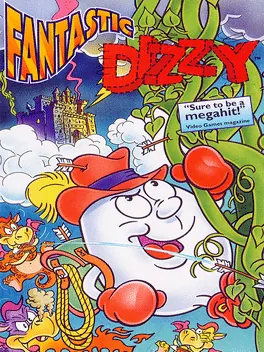
Dizzy is an egg living in a world of magic and fantasy. The basic concept of the game is to move around the world, finding various items and collectibles, and to use them in the right locations. Dizzy has no special skills or abilities, save for his remarkable feats of somersaulting, and must solve all problems he faces with the clever use of one or more items.
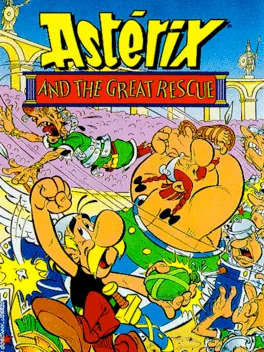
Astérix and the Great Rescue
It is 50 B.C., and the entire Gaul (today's France) is conquered by the Romans. Only one village still remains independent, thanks to the incredible powers of its two great warriors, Asterix and Obelix. In the game, they must first of all liberate the village Orvio and rescue their friend Dogmatix. The player can play as either Asterix or Obelix. They make their way through platform levels, fighting enemies by punching them, and jumping to access higher ares or to avoid falling down. There are also some items that the player can collect, such as bombs, with which the player can overcome obstacles and advance in the game.
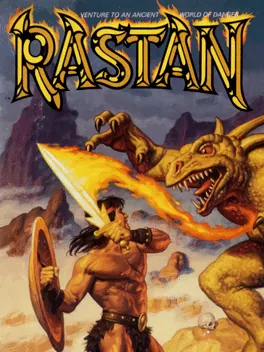
Rastan
Rastan is a fantasy-themed side-scrolling action game originally released for the arcades in 1987. The controls of Rastan consist of an eight-way joystick and two buttons for attacking and jumping. Using the joystick in combination with either button, the player can determine the height of Rastan's jumps and the direction in which he swings his weapon. The game uses a health gauge system along with limited lives, although certain obstacles will instantly kill Rastan regardless of how much health he has left.
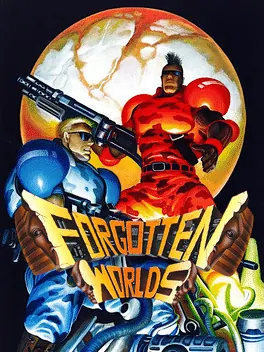
Forgotten Worlds
Forgotten Worlds can be played by up to two players simultaneously. The player controls a flying muscle-bound soldier armed with a rifle with unlimited ammo. The Player 1 character is equipped with a long-range automatic rifle, while Player 2 has a short-range wide shot. The controls in the original coin-op version consists of an eight-way joystick for moving the character in the air while flying and a unique rotatable button known as the "roll switch".Rotating the switch left or right allows the player to adjust their character's aim in one of sixteen directions, while pressing it causes the player character to shoot his gun. This allows for the player to move their character anywhere while keeping their aim in one direction. Pressing the switch rapidly will cause the character to perform a "megacrush" attack will destroy all on-screen enemies, but at the expense of a portion of their vitality gauge. The player character is accompanied by a satellite module orbiting near him that will provide backup firepower every time the player fires their gun. Like the main character, the satellite can also be rotated with the roll switch. Rotating the character while firing will only rotate the aim of the satellite, while rotating the character without firing will not only rotate the satellite's aim, it will also move its relative position around the player. The player can obtain blue-colored coins known as "zennies" from defeating enemies throughout the game. The zennies are used as currency to obtain new power-up items from shops located at certain points in each stage. When the player enters an item shop, they are given a choice of the items available and a limited time to make any purchase they wish. These items consists primarily of new weapons for the satellite module, but also includes a health kit to restore lost vitality, an armor that allows the player to sustain additional damage, and even tips on how to defeat the boss awaiting at the end of the current stage. Forgotten Worlds consists of five stages with a total of eight bosses. The player will lose if their vitality gauge runs out, but will be given a chance to continue.
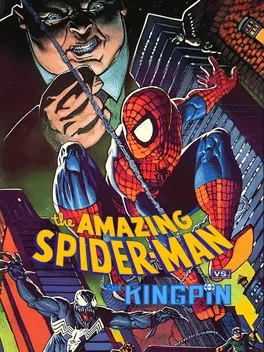
The Amazing Spider-Man vs. The Kingpin
Spider-Man vs. The Kingpin is a video game produced by Sega of America and developed by Technopop initially on the Mega Drive/Genesis. It was ported internally by Sega of America for the Master System and Game Gear consoles, the latter being published by Acclaim Entertainment through its Flying Edge division. An updated version was also released for the Sega CD under the name of The Amazing Spider-Man vs. The Kingpin. All versions of the video game are side-scrolling platform games, whereby the player controls superhero Spider-Man to battle various supervillains (Doctor Octopus, Sandman, The Lizard, Hobgoblin, Vulture, Mysterio, Electro, and Venom) to obtain the keys needed to disarm a nuclear bomb that the Kingpin has not only framed Spider-Man for stealing but plans to detonate within twenty-four hours. In the middle of the game, Spider-Man's wife Mary Jane Watson is also kidnapped by Venom.