
Jogos para TRS-80
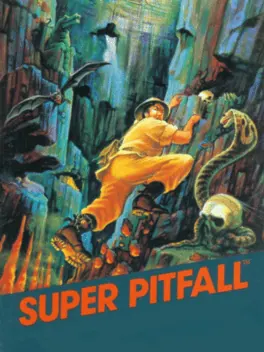
Super Pitfall
Pitfall Harry returns to adventuring in this "Super" sequel to Pitfall! and Pitfall II: Lost Caverns. Harry’s mission: to recover the famed Raj Diamond, and also to rescue his niece Rhonda and loyal lion sidekick, Quickclaw. Now armed with a gun, Harry must navigate some 270 screens of 8-bit action-platforming. Valuable items will be collected along the way to aid your quest, but beware: dangers also abound, from snakes and spiders to falling rocks and boiling lava!
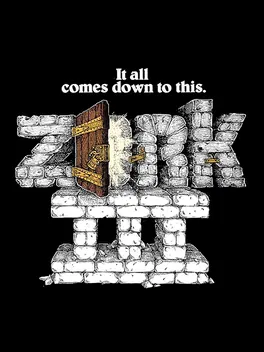
Zork III: The Dungeon Master
In the third game of the adventure game series Zork, you are once again a nameless adventurer, only this time you won't travel through a beautiful magical land, but are immediately cast into a deep dungeon. Like in a dream, you hear a mysterious voice telling you that you have passed all the tests but one. When conscience returns to you, you find yourself on the endless spiral of stairs, with only your trusty lantern near you... will you be able to survive the horrors of the Dungeon?
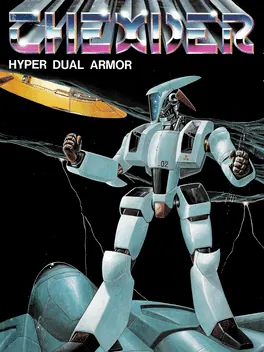
Thexder
Thexder is a robot capable of transforming into a jet whose job is to destroy the central computer to save the planet.15 stages are waiting you for in this shooting game.
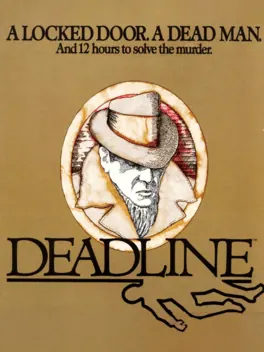
Deadline
Deadline is an interactive fiction computer game published by Infocom in 1982. Written by Marc Blank, it was one of the first murder mystery interactive fiction games. Like most Infocom titles, Deadline was created using ZIL, which allowed the easy porting of the game to popular computer platforms of the time such as the Apple II and the Commodore 64. It is Infocom's third game. The player's character in Deadline is an unnamed police detective, summoned to a sprawling Connecticut estate to investigate the apparent suicide of wealthy industrialist Marshall Robner. At first, it seems a very straightforward case: the body was discovered in the library, which had been locked from the inside, and the cause of death was an overdose of his prescribed antidepressants. But something just doesn't feel right. Could someone have killed Robner for his money? Did he make an enemy through his business dealings? Or was there some other motive? With the able assistance of level-headed Sgt. Duffy, the player has twelve hours to solve the case before it is closed forever.
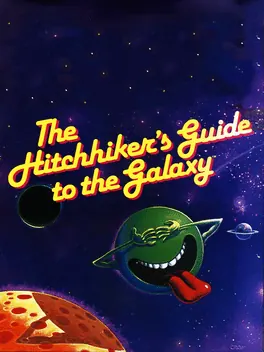
The Hitchhiker's Guide to the Galaxy
The Hitchhiker’s Guide to the Galaxy is a classic Interactive Fiction game. Though divergent from the source material, the main characters, locations, and concepts are here. Unlike the book, death can come quickly if Arthur fails to observe his surroundings, collect inventory, talk to people, and consult the Guide. Don't panic!
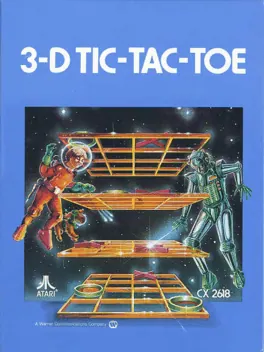
3-D Tic-Tac-Toe
The game is similar to the traditional game of tic-tac-toe, but is played on four 4×4 grids stacked vertically; it is basically a computerized version of the board game Qubic using traditional tic-tac-toe notation and layout. To win, a player must place four of their symbols on four squares that line up vertically, horizontally, or diagonally, on a single grid, or spaced evenly over all four grids. This creates a total of 76 possible ways to win, in comparison to eight possible ways to win on a standard 3×3 board. The game has nine variations: it can be played by two players against each other, or one player can play against a built-in AI on one of eight different difficulty settings. The game uses the standard joystick controller.
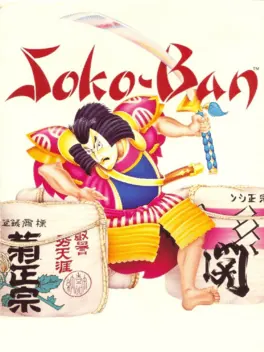
Soko-Ban
Sokoban ("warehouse keeper") is a is a classic puzzle game created in 1981 by Hiroyuki Imabayashi, and published in 1982 by Thinking Rabbit, a software house based in Takarazuka, Japan. In 1984 the ASCII Corporation published a version produced by Khaled Bentebal. It was the basis of numerous clones in the later years. It is set in a warehouse. On each level, the player must push crates (from square to square) to get them onto designated spots; once each crate is on a marked spot, the level is complete. Crates can only be pushed one at a time (so two crates next to each other cannot be pushed together), and cannot be pulled--so it's possible to get a crate stuck in a corner, where it cannot be retrieved! By the last levels, you must plan 40 steps in advance.
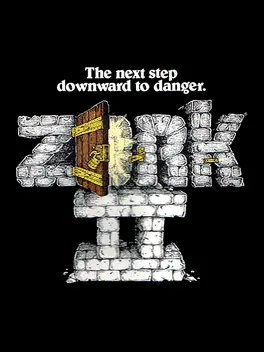
Zork II: The Wizard of Frobozz
The adventure begins in the Barrow from "Zork I" armed only with the trusty brass lantern and sword of elvish antiquity. The purpose of the game is not initially clear. Like its predecessor, Zork II is essentially a treasure hunt. Unlike the previous game, the ten treasures are tied together by a crude plot. Finding the treasures does not end the game, nor are all the treasures needed to finish the game. Instead, the adventurer must figure out a way to use the treasures in order to reach the game's finale.
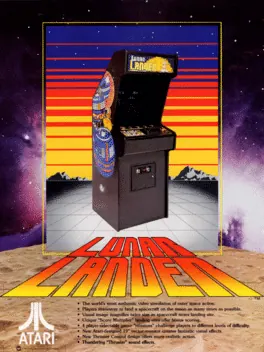
Lunar Lander
Lunar Lander is an arcade game released by Atari, Inc. in 1979, which uses a vector monitor to display vector graphics. The object is to pilot a lunar landing module to a safe touchdown on the moon.
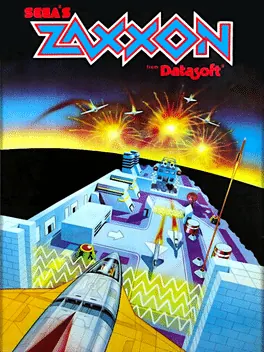
Zaxxon
Zaxxon is a 1982 isometric shooter arcade game developed and released by Sega. The game gives the player the experience of flying a fighter craft through a fortress while shooting at enemy entities (missiles, enemy gunfire, etc.) The object of the game is to hit as many targets as possible without being shot down or running out of fuel, which can be replenished paradoxically, by blowing up fuel drums.
Zork
Zork is one of the earliest interactive fiction computer games, with roots drawn from the original genre game, Colossal Cave Adventure. The first version of Zork was written in 1977–1979 using the MDL programming language on a DEC PDP-10 computer.
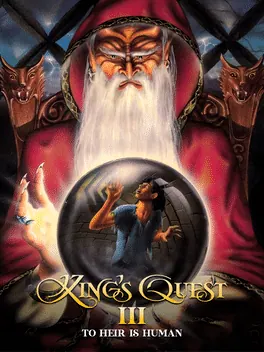
King's Quest III: To Heir is Human
King's Quest III: To Heir is Human is an adventure game in the King's Quest series. Players control Gwydion, a young slave to the evil wizard Manannan in the land of Llewdor. The game follows Gwydion's journey as he learns magic, escapes his captor, and discovers his true identity as the lost prince of Daventry. Players must solve puzzles, avoid the wizard's watchful eye, and navigate various dangers to complete their quest. The game expands on the series' fantasy setting, introducing new locations and characters while maintaining the puzzle-solving and exploration elements that define the King's Quest franchise. As the third installment in the series, King's Quest III continues the story of the royal family of Daventry, connecting to the broader narrative of the King's Quest saga.
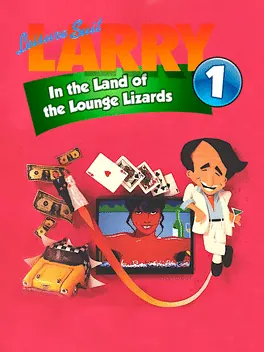
Leisure Suit Larry in the Land of the Lounge Lizards
A middle-aged male virgin named Larry Laffer desperately tries to "get lucky" in the fictional American city of Lost Wages. Your goal in Leisure Suit Larry in the Land of the Lounge Lizards is to find and seduce the girl of your dreams. This goal won't come easy, because you only have one night, and unfortunately, you are stuck with Larry's looks. Other problems, such as lack of money, lack of opportunity, and bad breath can complicate things significantly. Your interaction with the game controls the outcome of each situation. For example, having your character sign on with a major league baseball team or start a successful men's magazine could be beneficial to your ultimate goal. On the other hand, catching a fatal disease or losing all your cash can only impede your progress. A combination of common sense, logical thinking, and downright sheer luck is needed to achieve your goal.