
Jogos para Amiga

Nigel Mansell's World Championship Racing
Timing smiled on Gremlin with this licensed Formula 1 simulation, as Nigel's long quest for a championship had finally come good. The game was pitched somewhere in between a full-blown simulation like F1 GP and action games like Continental Circus. Only 12 cars were in each race, which could last from between 3 and 20 laps. Before each race you can customize wing downforce, gear ratio, tyre selection and fuel load choices – pitstops are a standard feature of the longer races. The 16-bit versions include a unique 'Improve With Mansell' mode, in which a digitized version of Nigel's head appears in the top corner of the screen, offering instructions and praise.
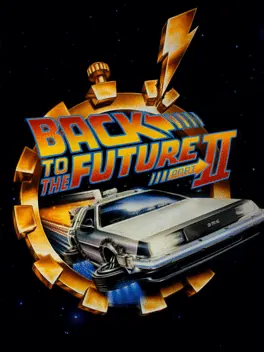
Back to the Future Part II
It's time to go back... Great Scott! Returning from the year 2015, Doc Emmet Brown has some bad news for Marty McFly... His future's in danger unless he can put things right. Guide Marty through five levels in this exciting interpretation of the smash-hit film. Can you assure a safe future for Marty? Or will Biff ensure there's no future at all?
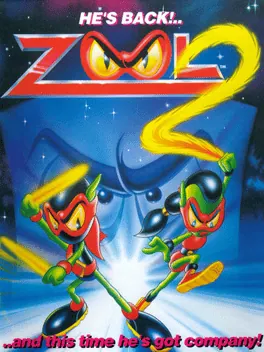
Zool 2
The intergalactic gremlin ninja Zool returns, and this time his enemies in the game were named Krool and his assistant Mental Block, whose goal is to stifle the world's imagination, causing rampant boredom. In his fight Zool is aided by his female companion, named Zooz (in a red costume), and his faithful dog Zoon. The ending contained a hint at a possible further sequel
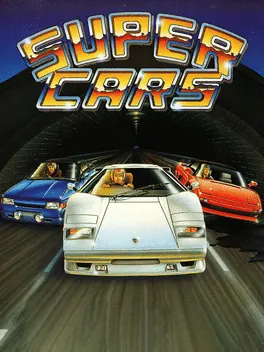
Super Cars
Super Cars is a top-view racing game from Gremlin Interactive, who later produced the Lotus series of games. Stylistically, the game is influenced by Super Sprint. There are 9 tracks at each of the 4 difficulty levels, which can be raced in any order (although the last track you race is made harder than usual). In the races you win money, which can be spent on temporary handling and power upgrades, plus armour plating and front/rear shooting missiles that can knock out other racers. The player must finish in the top 3 of each race to progress - initially there are 4 computer opponents, but more are added as you progress through the game. The car can be upgraded throughout the game via the shop section. The player is given an initial price, but also a number of options of things to say to the salesman - with the right combination, the price will drop.
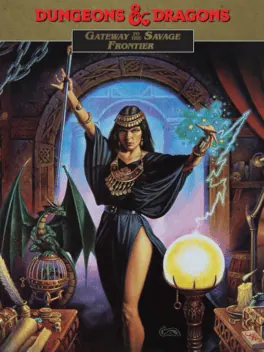
Gateway to the Savage Frontier
As the story opens, you and your companions are celebrating in triumph. The caravan you've been guarding has just completed its dangerous passage to the trading town of Yartar. But the realms are full of danger and there is tension in the air. Great armies are on the move, and the relative peace of recent times will soon be shattered. Your party becomes a problem to the evil forces whose plans lie behind the current troubles. Only by the swiftness of your sword--on land and water--will you live to save the region from certain destruction.
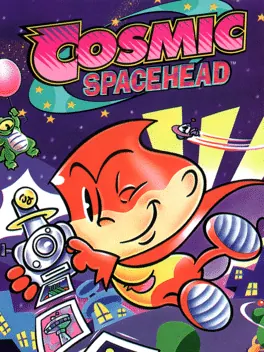
Cosmic Spacehead
Cosmic needs your help! He has no money, no car, and no respect from his fellow Cosmonaut's! The trouble is, no one believed his tale of discovering a far away planet called "Earth" so it's your job to help him get back there and take some handy snaps! Starting from his home town Old Lino Town, it's Cosmic gameplay all the way in a unique blend of adventure and arcade action plus a whole galaxy of surprises thrown in!
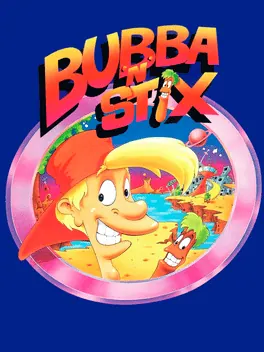
Bubba 'n' Stix
Our goofy hero and his friend - an intelligent alien stick - have crash-landed on a weird planet after being captured by an alien spacecraft. In order to get back to Earth, Bubba must use Stix in a variety of different ways to solve puzzles, overcome adversaries and foil the comedic attempts of his kidnapper to recapture him in this multi-directional scrolling puzzle.
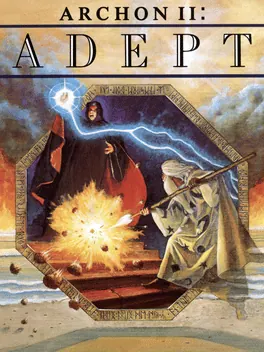
Archon II: Adept
Archon 2 or also Adept is the successor of the successful Electronic Arts classic Archon. As already seen in Archon, an apocalyptic fight takes place in a fantasy surrounding, now not between "light" and "dark" but between "order" and "chaos". It all happens in a game area which is divided into 4 elemental layers. In the center is the earth layer, it is surrounded by the water layer and this is surrounded by the air layer. The outer layer is made of fire. Opposite to its forerunner the players start in Adept only with one magician ("Adept") per layer. All the other creatures have to be conjured in the course of the game. Evocations and other spells cost energy, which is renewed by occupying energy points on the game area with your own creatures. The more points you occupy, the more energy you get. Every side possesses 4 own elemental beings, which have a special force when they are on their corresponding layer. Moreover 4 different demons can be conjured from both sides, which can fight independently from the chosen element. Many of these creatures can use a shooting attack, but they have also lots of special attacks. When two figures meet on a field, here also the screen is zoomed and a fight for life and death starts. The winner claims the hard-fought field. Dependent on the layer you are fighting on, the battlefield has different obstacles such as slowing-down lakes, shoot destracting swirls, flame walls or simply walls ready. The only exception are the two void fields, here no terrain is used

Superfrog
Superfrog is a 2D platformer developed and published by Team17, originally released for the Amiga in 1993. Players control a super-powered frog who must traverse a variety of levels, overcome obstacles, and defeat enemies using different power-ups. The game is noted for its challenging platforming sections and a humorous, whimsical design, and it has since been ported to multiple platforms.
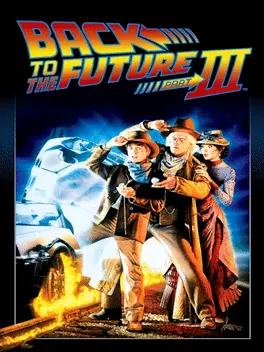
Back to the Future Part III
There's no time like the past and there's no time to lose! Great Scott! Doc's flashed himself back to 1885, into the arms of his future bride Clara Clayton, and right into the hands of Hill Valley's most vicious varmint, Buford "Mad Dog" Tannen. And Marty's learned that Doc is just a few days away from being deep sixed. So saddle up the DeLorean and bring Doc back to the future before he makes a no-return ride to Boot Hill. Jump, shoot and duck past runaway suitcases, trunks, chicken crates, vultures, Indians, boulders, logs and more. Power up with three way shooting shotguns to get through the Indians arrows and cavalry's bullets. Keep an eye on the clock as you blast away at cutouts of Buford and his gang, flying geese, bonus ducks and more. You're cornered by Buford's bad guys so whip those pie trays and try to take them out. Punch, crawl, duck and jump across the racing rail cars to get to the DeLorean. Play both leading roles - Doc and Marty - during this fun, pistol packin' arcade action adventure inspired by the scenes from the smash hit movie. Four part rescue chase has you racing across the plains dodging danger, and galloping through a gauntlet of enemy crossfire to save Doc's sweetheart, Clara. Take aim at the first person perspective Shooting Gallery. Practice mowing down Mad Dog, his cronies and a wild western assortment of fast moving targets. It's tin vs. lead as you pit your supply of pie trays against Buford's gang and their six shooters. Atop the speeding hijacked train you'll have to save your own caboose while collecting speed logs. It's the trickiest obstacle course ever to ride the rails.
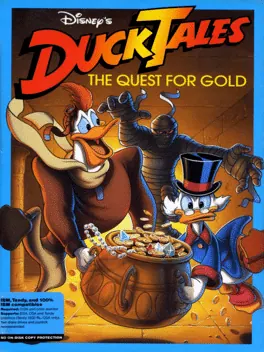
Disney's DuckTales: The Quest for Gold
A money-making strategy game. Become the MacDuck the richest duck on the world. Your goal in this game looks simple : Making money. But to do so, you have to manage your cash, make good investments and of course look for treasures with your animated friends. Versions: - Amiga/DOS features copy protection in the form of a unique password system. When the game is booted up, you must use a key script (located in the game manual) to translate symbols on the screen. If you fail, you are identified to the game as a Beagle Boy invader, and it will send the user back to the DOS prompt to try again or shutdown the pc on Amiga version, and there is no way to play the game without deciphering the code. In at least the Amiga version of the game, a flying saucer can rarely be seen during the flight sequence. The condition which triggers the event is not known. - A version of this game was advertised for the ZX Spectrum, but was later canceled. - Although marketing materials for an Apple II port exist, there is no evidence that this version was ever published or sold.
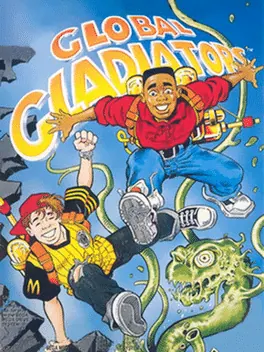
Global Gladiators
Global Gladiators (also known as Mick and Mack: Global Gladiators) is a 1992 platform game by Virgin Interactive, originally programmed by David Perry (who at the time had already moved to the United States and was located on the recently formed Virgin Games USA development studio) for the Mega Drive/Genesis and eventually ported by other Virgin Interactive teams in Europe (with the help of Graftgold and Krisalis Software) to the Sega Master System, Sega Game Gear and the Commodore Amiga. A Super Nintendo port was also in development but was never completed for undisclosed reasons, though a prototype exists on the Internet. The game is loosely based on the McDonald's fast food chain and has a strong environmentalist message. A Game Boy port of the title was also fully developed (by Damian Stones, of Climax) but was never released for the same legal reasons as the Super Nintendo port. In the single-player game, the player controls Mick or Mack through four worlds; Slime World, Mystical Forest, Toxi-town and Arctic World. Each world has several sub-stages where the character must collect a certain number of Golden Arches to advance. They are guided in their quest by Ronald McDonald, who appears at the beginning and the end of the game. The characters are armed with a Super Soaker-type gun that shoots gooey projectiles. The game engine is the same used in other Virgin Interactive games such as Cool Spot and Disney's Aladdin, as all of them (Mega Drive/Genesis versions) were handled by David Perry's programming team, which eventually turned into Shiny Entertainment.
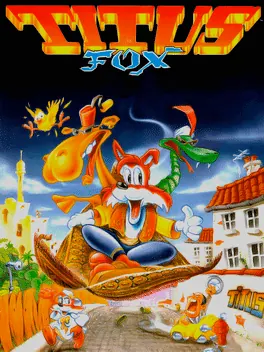
Titus the Fox: To Marrakech and Back
Titus the Fox: To Marrakech and Back was released in 1992. The main character of the game is a fox. His beloved Suzy has been kidnapped on the other side of the Sahara desert, and to get her back he has to advance through 15 levels. Player's goal is to avoid dogs, construction workers, giant bees and similar creatures. The player can fight back by throwing objects back at them, or - most notably - picking walking enemies up from behind and throwing them as projectiles at other obstacles. The game features a code-based "saving" system, with the codes calculated uniquely for each machine.

SimEarth: The Living Planet
SimEarth is a planet simulator - a model of a planet. It is a game, an educational toy, and an enjoyable tool. With SimEarth you can take over many included planets, or design and create your own. SimEarth treats the planet as a whole: life climate the atmosphere, and the planet itself - from dirt and rock to the molton core - all affect on each other. You will see your planet as a whole - from a satellite's point of view, at two levels of magnification. SimEarth can be played in two modes: game and experimental. In game mode, you will try to develop, manage, and preserve your planet within allotted energy budgets. In experimental mode, you are given enlimited energy to mold your planet. This allows you to set up any stage of development, and then introduce any new factors you want and see what happens. In this mode SimEarth is a "planetary spreadsheet." Your SimEarth planets will be poulates by electronic life-forms called SimEarthlings. Sim Earthlings range from single-celled plants and animals to intellegent species. Intellegent Simearthlings are not limited to Humans - or even Mammals. There can be intellegent Dinosaur SimEarthlings, intellegent Mollusk SimEarthlings, even intellegent Insects SimEarthlings - but only one intellegent life-form at a time. A single planet can be populated by billions of SimEarthling. Their welfare is in your hands.
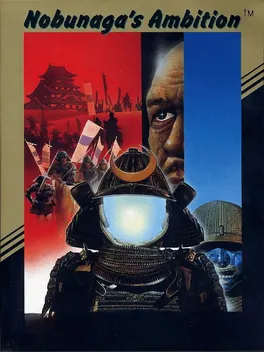
Nobunaga's Ambition
The second game in the series, previously released as Nobunaga's Ambition in the West. Players take on the role of one of the main characters of the period, Nobunaga Oda, Shingen Takeda, Kenshin Uesugi, or others and try to unite the 50 kingdoms of Japan, from Ezo in the north to Kyushu in the south, under their own rule.
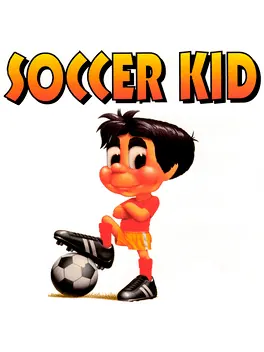
Soccer Kid
Soccer Kid is a side-scrolling platform game released in 1993 for various home computers and consoles. Players control a young boy who uses his soccer ball to defeat enemies and overcome obstacles. The game’s story follows his quest to recover pieces of the World Cup trophy scattered across different countries. Levels feature themed environments based on locations such as England, Italy, Russia, Japan, and the United States.
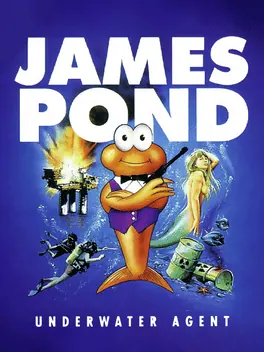
James Pond: Underwater Agent
James Pond, also known as James Pond: Underwater Agent, is a platform video game that was developed by British video game developers Vectordean Ltd and Millennium Interactive, and published by Millennium Interactive and Electronic Arts for numerous home computers and consoles in 1990. The character was popular and even featured in some comic books of the time, and the game was successful enough to spawn two sequels and one spin-off game. A nefarious supervillain named "Doctor Maybe" (a pun on the name of Dr Julius No, the villain in Dr. No) has overtaken the ruthless megacorporation Acme Oil Co, and is not only filling the oceans with radiation and toxic waste but even threatening all the world from his underwater lair. The protagonist of the story and player character of the game is an intelligent, mutated anthropomorphic mudskipper who is given the name "James Pond" (after the legendary spy James Bond) and hired by the British Secret Service to protect the seas and take out the bad guys in underwater areas. He is also suave enough to seduce numerous attractive mermaids, some of whom act as double agents as is common with James Bond's love interests. The game spoofs James Bond movies with levels mimicking their titles, with level names like "License to Bubble" (after Licence to Kill), "A View to a Spill" (after A View to a Kill), "Leak and Let Die" (after Live and Let Die) and "From Three Mile Island with Love" (after From Russia with Love).
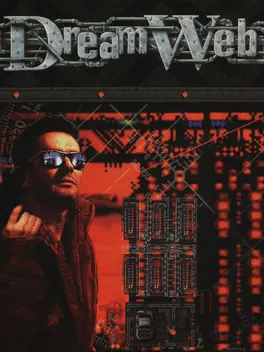
Dreamweb
Dreamweb is an MS-DOS and Amiga point-and-click cyberpunk top-down adventure game released in 1994, developed by Creative Reality and published by Empire Interactive Entertainment. The game features mature themes and a dark plot filled with violence and brief full frontal nudity, a rarity for games at the time. Dreamweb was re-released as freeware in October 2012.
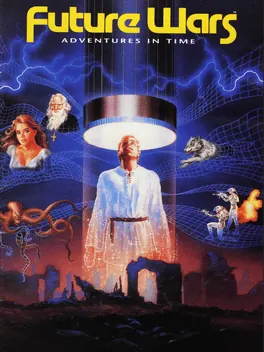
Future Wars
In the year 1989, a simple window cleaner is working outside of a skyscraper. Intending to play a prank on his angry boss, the unlikely hero discovers a secret passage leading to a time machine along with mysterious alien documents. Operating the device transports the protagonist to the year 1304, where he is given a seemingly ordinary task of rescuing a lady in danger. However, he soon finds out about a much more. The first in what was supposed to be a series of games about time travel but no other games were made.
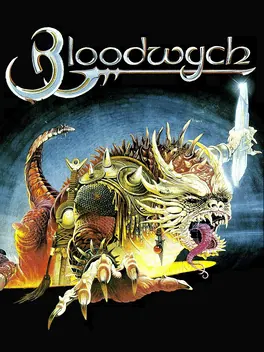
Bloodwych
The land of Trazere was once ruled by the powerful and benevolent organization of mages known as Bloodwych. Governed by the Grand Dragon, the Bloodwych supervised over the balance in the land, protecting it from evil and driving it to prosperity. However, the second-in-command of Bloodwych, named Zendick, turned against his group, banished his opponents to the astral plane, and began working on a mad plan - summon the ultimate evil, the Lord of Entropy. The player controls the champion of Trazere, whose ultimate goal is to stop Zendick and restore peace in the country. Bloodwych is an RPG in the style of Dungeon Master and Eye of the Beholder, being a 3D first-person maze-like game. This game's distinguishing feature is the two-player split screen support, allowing simultaneous playing on one computer. Each player controls a party of four characters. The four basic classes are warrior, mage, adventurer, and thief; however, each class also has sub-classes, which are represented by four different colors. These colors come into play also when the characters learn and combine spells.
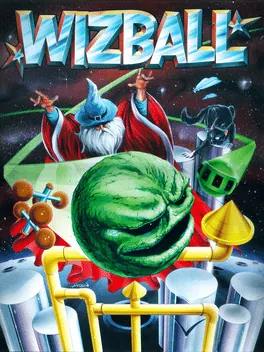
Wizball
Wizball is a scrolling shooter in similar vein to Gradius with an additional collection dynamic. It is a horizontally scrolling game taking place over eight levels, which involves navigating around a landscape and shooting at sprites. However, the aim of the game is to collect droplets of coloured paint to colour the level. Each level starts off as monochromatic, drawn in three shades of grey, and needs three colours (red, blue, and green) to be collected to complete it. The player, a wizard who has taken the form of a green ball, can navigate between the levels through portals. At first the wizard only has access to the first three levels, but completing levels gains access to further levels. Each level has bouncing spheres of a different colours, and shooting them releases droplets, which may be collected. At the same time, each level needs a different colour to be added, which can be composed by collecting sufficient quantities of the correct colours. On later levels, the spheres of paint start shooting bullets, further adding to the challenge. The wizard himself is not capable of collecting paint droplets, and is initially capable of very limited movement, bouncing up and down at a fixed rate, with the player only controlling a speed of rotation, and thus how fast it will move horizontally after next touching the ground. Collecting green pearls (which appear when some sprites have been shot) gives the player tokens which can be used to "buy" enhancements, such as greater control over movement and improved firepower, and also a companion known as Catellite. Catellite (ostensibly the wizard's cat) is also spherical in form. It normally follows the wizard, but it can also be moved independently by holding down the fire button whilst moving the joystick (which also renders the wizard uncontrollable). Only Catellite is capable of collecting paint droplets; the player has to use it to do so. In the two-player mode, Catellite is controlled by the second player. As well as droplets of colours, sometimes droplets of other colours also appear, having various effects. These include: Light blue - causes a "filth raid", where a wave of fast-moving enemies appear, shooting bullets at the player. Grey - changes Catellite into an "Indestructacat", making it invulnerable to enemies. White - gives an extra life. Purple - changes Catellite into a "mutant cat", causing it to disobey the player's controls. Black - causes "freaky bits", turning most of the scenery black.

Pizza Tycoon
Your goal in Pizza Tycoon is to build an empire of pizza parlors while dealing with competing restaurants, crooked police officers, or even ruthless gangsters! The object of the game is to control a minimum of five percent of the market share in all ten cities. In order to succeed, you'll need to use demographic reports to determine the best location for your shop, contact banks to negotiate the lowest interest rates, decide which advertising to use (billboards, newspapers or TV commercials), and hire waiters, cooks or managers. Decide on your restaurant's decorations to attract new customers or develop new recipes to get a leg up on your competition. Not doing so well? Contact the underworld and start taking out other restaurants using sabotage!

Leisure Suit Larry 1: In the Land of the Lounge Lizards
A remake of the original Leisure Suit Larry in the Land of the Lounge Lizards featuring redrawn, VGA graphics and a point-and-click interface using Sierra's Creative Interpreter (SCI) engine.
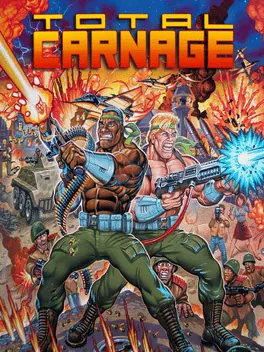
Total Carnage
The names of the two player characters are Captain Carnage and Major Mayhem. Blast your way through the Baby Milk Factory and fight Orcus, the Mother of All Bosses. Collect keys to enter the Pleasure Domes. Many special weapons and secret areas.
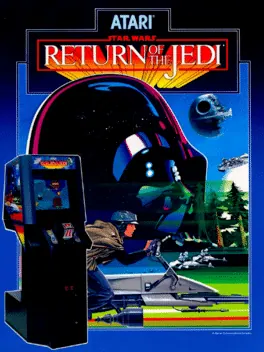
Star Wars: Return of the Jedi
The Return of the Jedi completes the Trilogy of games based on the Star Wars films. Each one is a conversion of the Arcade game and Return of the Jedi picks up the action of the movie where the rebel forces begin their attack against the Imperial Death Star. In the first lever you control Princess Leia on her Speederbike through the forest of Endor to safety of the Ewok village. You leave Leia there and go to another part of the forest to control Chewbacca's Scout Walker. There, Hans Solo is waiting to deactivate the shields protecting the Death Star. On the second and third levels, you control Chewbacca and Lando Calrissian as he flies the Millennium Falcon. Lando flies close to the Death Star fighting off a mighty attack from the T.I.E. fighters. The Millennium Falcon enters the Death Star and travels down a dangerous tube towards the central reactor. Blast the reactor and then turnaround to get away from the Death Star as it blows up.
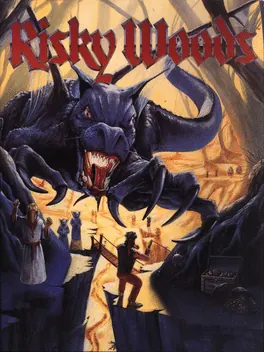
Risky Woods
Unusually for Electronic Arts in the early 90s, this was a platform -shooter game with little or no adventuring or strategy elements. The game scrolls sideways, and has sections where precision jumps are required, either to clear rivers or collect bonuses. You carry a dagger to deal with the enemies, and must avoid contact with them. When killed, they leave coins to be collected - these are spent in the shop sections. Death loses you most of your coins, but they can usually be retrieved if they land on solid ground - making it better to be killed in combat than by drowning.
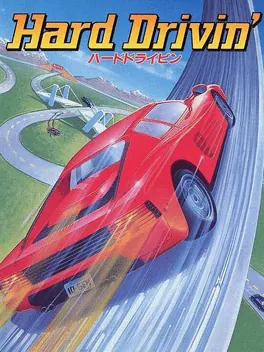
Hard Drivin'
Hard Drivin' is a 3D arcade hit from Atari Games. You are in control of a high-performance sports car. Your objective is to race around the course as fast as possible and hit as many checkpoints as possible. If you hit a checkpoint you gain extra time to go farther. You will see traffic on the road both in your direction and coming down the opposite direction, so be careful when you pass... The course has two sections: speed track, and stunt track. Speed track is longer, but you can usually achieve higher speeds. Stunt track requires you to perform several stunts such as jumping bridges, driving through a loop, and so on. Crashing the car has no serious consequences and indeed shows a replay of your crash from a cinematic angle. Admire your crash head-on into the cement truck, or clipping the minivan, or flying off the bridge in the wrong angle... You lose several seconds as your car is "reset" and you get up to speed again. The home conversions retain most of the then-advanced 3D graphics but lack the force-feedback that was in the arcade version.
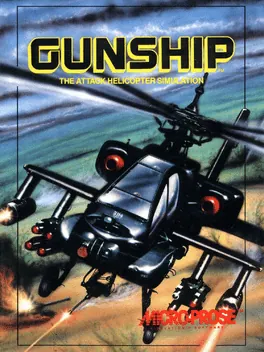
Gunship
After selection of region, style, and enemies, the pilot is assigned a primary mission and a secondary mission. These could include such objectives as "Destroy enemy headquarters" or "Support friendly troops" (i.e. destroy targets near friendly forces). The latter would be an easier mission, because the battle would be fought closer to friendly lines.

F-15 Strike Eagle II
The second in the series features campaigns in Lybia, the Persian Gulf, The Middle East and Vietnam, making for a total of 250,000 miles of potential action and danger. Primary and secondary aerial and ground-based targets must be destroyed on each of these. You are armed with a cannon, AMRAAM long-range air-to-air missile, Sidewinder short-range air-to-air missile, and the Maverick air-to-ground missile.
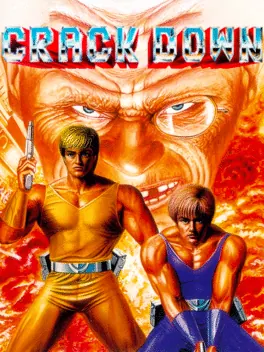
Crack Down
Ben and Andy, the two top Special Service agents have accepted a very dangerous assignment – the elimination of Mr.K and his Artificial Life System. Mr. K plans to rid the earth of human life forms using the killer robots he’s created, and no one but Ben and Andy can stop him!
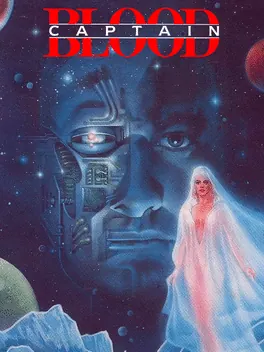
Captain Blood
Five clones scattered throughout the galaxy, draining your life force. You must find and assimilate them before the ship's auto-bionic functions take over completely... and render you inhuman. Death-defying flights through hyperspace and dangerous terrain lead to strange worlds with alien inhabitants: Migrax, Croolis-Ulv, and the beautiful and beguiling Torka. They have the information you need to find and destroy your clones- if you're clever enough to get it.
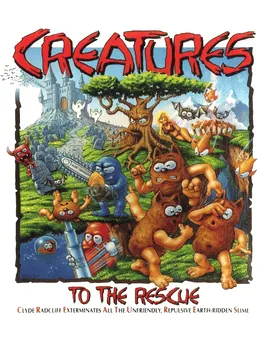
Creatures
The inhabitants of the pretty but insignificant planet Blot decided to leave to find a trendier planet, and escape being called the Blotians, a most unhip name. Until they such a planet, they call themselves the Fuzzy Wuzzies. Their colony ship collides with an asteroid, and crash lands in the Pacific Ocean, near an unchartered island, which they colonise, calling it "The Hippest Place in The Known Universe". Unfortunately the island is also home to rather nasty demons, who can't stand the commotion caused by the happy Fuzzies, or their silly name for the island. The demons kidnap the Fuzzy Wuzzies by hosting a massive party, then capturing them in a net, and dragging them off to the torture chambers. The only Fuzzy not caught is Clyde Radcliff, who was already being sick in the bushes. He wakes up in the morning with a really bad headache, and fiery halitosis, and sets out to destroy the demons, and rescue his friends. The game consists of 3 levels, each made up of 3 of stages. The first two stages of each level are side scrolling platformers, where Clyde must destroy the enemies by firing at them, presumably using his halitosis. At the end of each of these stages, Clyde meets a witch, who can provide him with extra firing patterns, or upgrade those he has, in exchange for 'magic potion creatures' found during the stages.
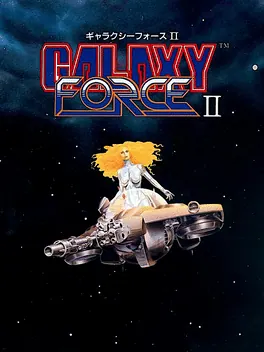
Galaxy Force II
The peaceful and prosperous solar system Junos was located at the end of the Milky Way. Those who called its five planets home had no idea what was about to happen... Halcyon, ruler of the Fourth Empire, had Junos marked as its final target in the galactic massacre, and had sent the bulk of his attacking force in with a single purpose – the elimination of all life forms in the system, and the construction of a gigantic fortress on each of the five planets from which to rule the galaxy. Galaxy Force II is not a true sequel to the orginal game but a an enhanced version of the original. It was released roughly two months after the release of the first part thus making it obsolete.
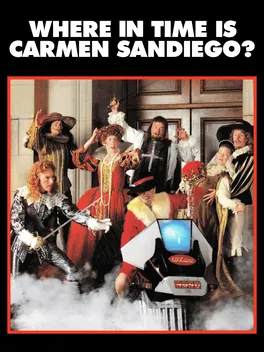
Where in Time is Carmen Sandiego?
Carmen Sandiego and her gang are loose once again, and it is the players job to capture her! This time around the player not only has to find where she is, but also when she is. Traveling to various locations, they need to assemble clues by questioning witnesses and searching locations to close in and capture Carmen Sandiego. Included with the game is The New America Desk Encyclopedia to help make clues more meaningful (and act as a form of copy protection!).
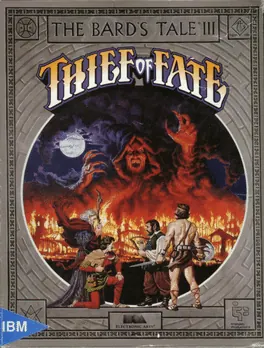
The Bard's Tale III: Thief of Fate
The warriors who have destroyed the evil wizard Mangar receive a letter while celebrating their victory. The letter informs them of a terrible disaster: Mangar's master, the Mad God Tarjan, has unleashed his wrath upon the town of Skara Brae, completely destroying in. The heroes visit a refugee camp nearby and embark on a quest to defeat Tarjan. Thief of Fate is the third installment in the Bard's Tale series, and a sequel to The Destiny Knight. It is similar to its predecessors, being a first-person fantasy role-playing game in which the player explores maze-like pseudo-3D towns, dungeons, and wilderness areas. Two new character classes have been added: Geomancer and Chronomancer. There are more dungeons than in the previous games, and this installment also adds an auto-mapping feature. The game's world is divided into separate realms accessed by using time warps, each with its own theme and setting - including, among others, famous locations from Earth's history such as ancient Rome or Berlin during World War II.
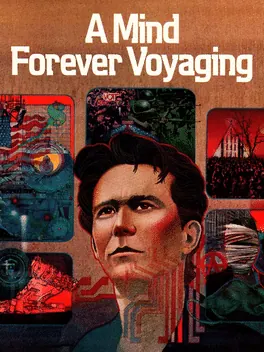
A Mind Forever Voyaging
A Mind Forever Voyaging (AMFV) is a 1985 interactive fiction game, intended as a polemical critique of Ronald Reagan's politics.