
Jogos para Amiga

It Came from the Desert
It Came From the Desert is an action-adventure game that derives its inspiration from the many cult-horror B-Movies of the 50's and 60's, the 1954 film Them in particular. The player plays the part of Dr. Greg Bradley, a geologist and the newest resident in town. Eager to satisfy his scientific mind, Bradley sets out to examine the crash-site of a mysterious meteor, but what he finds is not at all what he had been looking for. The game takes place all over Lizard Breath, and there are several different types of action / interaction. The adventure part of the game is very linear, guiding the player in a fairly set sequence of action sections. These include first-person bug shooting, scrolling overhead shooting, and a chase sequence.
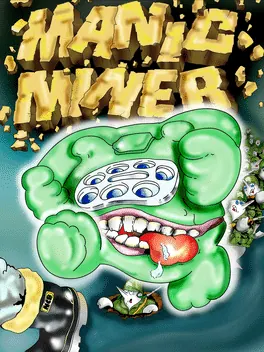
Manic Miner
Manic Miner is a platform video game originally written for the ZX Spectrum by Matthew Smith and released by Bug-Byte in 1983 (later re-released by Software Projects). It is the first game in the Miner Willy series and among the early titles in the platform game genre. The game itself was inspired by the Atari 800 game Miner 2049er. It has since been ported to numerous home computers and video game consoles.
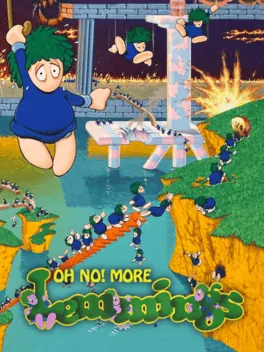
Oh No! More Lemmings
Oh No! More Lemmings is the follow-up to Lemmings. The game features 100 new levels, and all-new graphics and music. It was released in both a stand-alone and an add-on version.
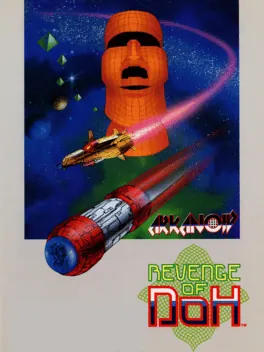
Arkanoid: Revenge of Doh
Arkanoid - Revenge of Doh (a.k.a. Arkanoid 2) is an arcade game released by Taito in 1987 as a sequel to Arkanoid. The mysterious enemy known as DOH has returned to seek vengeance on the Vaus space vessel. The player must once again take control of the Vaus (paddle) and overcome many challenges in order to destroy DOH once and for all. Revenge of Doh sees the player battle through 34 rounds, taken from a grand total of 64. NEW FEATURES: Revenge of Doh differs from its predecessor with the introduction of "Warp Gates". Upon completion of a level or when the Break ("B") pill is caught, two gates appear at the bottom of the play area, on either side. The player can choose to go through either one of the gates - the choice will affect which version of the next level is provided. The fire-button is only used when the Laser Cannons ("L") or Catch ("C") pill is caught. The game also features two new features for bricks. Notched silver bricks, like normal silver bricks, take several hits to destroy. However, after a short period of time after destruction, they regenerate at full strength. Fortunately, clearing a level does not require that any notched bricks be destroyed. Also, some bricks move from side to side as long as their left and/or right sides are not obstructed by other bricks. The US version features an entirely different layout for Level 1 that feature an entire line of notched bricks, with all colored bricks above it moving from side to side. The game features a mini-boss in the form of a giant brain, which will help you practice for DOH. Home versions of Revenge of DOH also featured a level editor, where players could create their own levels or edit and replace existing levels, with the exception of two levels: the mini-boss and DOH.
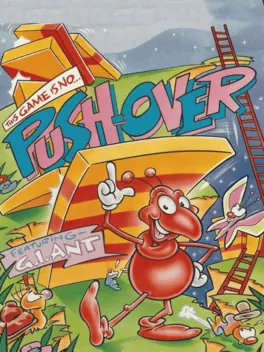
Pushover
Pushover is a platform puzzle game developed by Red Rat Software and published by Ocean Software in 1992 for the Amiga, Atari ST, DOS and Super NES. Notably, the game was sponsored by Smiths' British snack Quavers (now owned by Walkers), where the game plot revolves around the then Quavers mascot 'Colin Curly' losing his Quavers packets down a giant ant hill. The player is then tasked with controlling 'G.I. Ant', a large soldier ant, to recover the Quavers by solving a series of puzzles. The SNES version lacks the Quavers branding, and instead the aim is to recover bundles of cash dropped down the ant hill by Captain Rat. The game consists of 100 levels of increasing complexity over nine different themed worlds. Each level features several interconnected platforms holding a number of "dominoes". The aim is to rearrange the dominoes, such that with a single push, all of the dominoes are toppled, thus opening the exit to the next level. There are 11 different types of domino, identified by red and yellow patterns, each with different actions. The player controls G.I. Ant, who can move certain dominoes by carrying them one at a time. Various factors can result in failure to complete a level. As well as toppling all of the dominoes, the player must be able to access the exit door once the dominoes have fallen. For instance, the player will be unable to reach the exit if a ledge leading to the exit has been destroyed, or if a gap leading to the exit has not been bridged, or if a line of dominoes lie across the exit. G.I. Ant may die by falling from a large height, by falling off the bottom of the screen, or by being crushed under a falling domino. The player is then greeted with the message "You Failed, You Died" and has to restart the level. Also, the level will be failed if any dominoes are destroyed by landing one domino on top of another. Each level has a time limit during which it must be completed. However, if the time runs out the player is still able to continue with the puzzle if they wish. By pausing the game once the time has run out, a small hint will be displayed, giving advice on how to complete the level. As a side note, the hint for level 98 informs the player that the game's designer cannot remember how to complete the level without trickery ("Use a drop! There is a way to make it work with a push, but I can't find it!"). The themed worlds, in order, are an industrial complex, an Aztec world, a space station, an electronic world, a Greek temple, a Medieval castle, a Meccano-inspired world, a dungeon and a Japanese temple. Each world has 11 levels, making a total of 99 regular levels. A packet of Colin's Quavers is retrieved after each world, with nine packets in all to be collected. Many of the early levels are tutorials demonstrating how each type of domino will act. Often there is only a single solution to each level, though some levels have multiple solutions. The final level, level 100, must be completed using dominoes with hidden markings. A password system allows the player to continue an earlier game, without having to restart from the first level. Additionally, upon completing a level the player gains a token, which once a level has been failed, allows the player to return to the point before the domino push, rather than having to return to the initial state of the level.
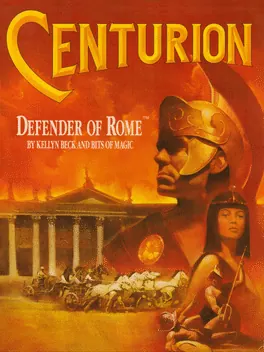
Centurion: Defender of Rome
The year is 275 B.C. Through conquest and careful diplomacy, the Roman republic has brought the petty kingdoms and city-states of Italia under its control. This is the moment at which the heirs of Romulus and Remus step onto the world stage. This is the humble beginning of an empire that will one day cover most of Europe, Asia Minor, and North Africa. As an ambitious young officer, you duty is to defend Rome. Your hope is to become Caesar. Your fate - to rule the world.
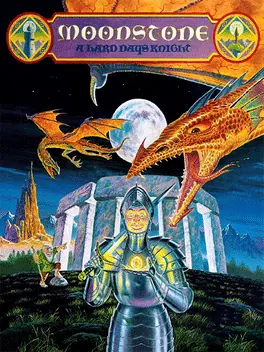
Moonstone: A Hard Days Knight
Moonstone: A Hard Days Knight, is a video game developed and published by Mindscape in 1991. It was released on the Amiga and one year later converted to MS-DOS with alternate sound and music. The title is a play on A Hard Day's Night. Moonstone's gameplay blends several different genres, including strategy, real time fighting and role-playing video games. It allows up to four players to participate in a basic turn based Role Playing Game with real time combat for any encounters. It is also notable as one of the goriest games of its time, with some exceptionally bloody fight and death scenes.
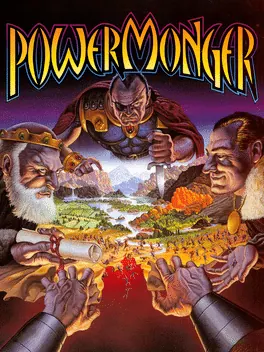
PowerMonger
In a world without kings, power is the only law. No leader controls the destiny of this new world. Yet. Can you? Unite each territory by word or by sword or face bitter defeat at the hands of the other PowerMongers. Encounter a living world. Win the loyalty of farmers, shepherds, merchants, ranchers- even thieves. Hundreds of people with individual homes, jobs, and personalities. React to changing seasons. Store food for the winter- your soldiers won't take orders on an empty stomach.
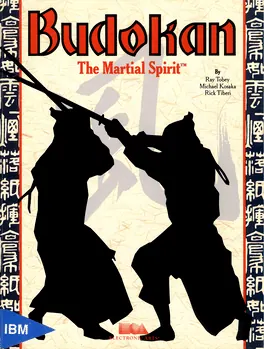
Budokan: The Martial Spirit
Walk the path of the warrior. Learn four classic martial arts- Karate, Kendo, Nunchaku and Bo. Combine power and grace into a dangerous black belt mix. Enter Tobiko Ryu Dojo. Your journey to the Bodokan begins here. Are you willing to endure the hard training it takes to be called a master? Tobiko Sensei observes your every action. Go to him for words on tactics, strategy, and guidance. Put your philosophy into action. Say hello to Goro-San. If you survive him, eleven others are ready to teach you the zen of defeat. If you don't, it's konban-wa (goodnight!). Do you fast attack for quick points or store up your ki (energy) for the devastating blow? Better decide before his Yari answers for you. Authentic Japanese/Okinawan martial arts- all arts and weapons based on real life. Unique player interface allows for over 25 moves per style. Twelve authentic martial arts styles, including Yari, Tonfa, Kusari-gama and Naginata.

Indiana Jones and the Last Crusade: The Action Game
Indiana Jones and the Last Crusade: The Action Game is a side-scrolling action title based on the 1989 film of the same name. Players control Indiana Jones through various levels that loosely follow the movie’s plot, including iconic locations like the catacombs and the Zeppelin. Gameplay focuses on platforming, basic combat, and item collection, with limited lives and high difficulty. The graphics and sound vary across platforms, with the Amiga and Atari ST versions generally offering the most polished presentation.
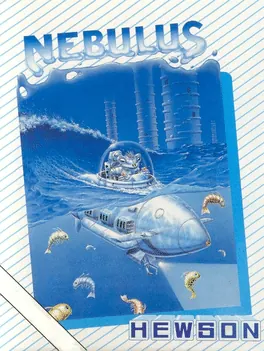
Nebulus
You play a small green guy who needs to blow up eight towers, because their presence is somehow poisoning the water of planets which could potentially be ideal colonies. Unfortunately you need to get to the top of these towers to blow them up. You make your way up to the top of the tower via walkways around the outside of the towers. You need to jump over, kick, and run from various enemies in your journey to the top. Most vertical movement is achieved by jumping onto moving ledges at the right moment. The game was considered revolutionary in its time for its graphic technique. As the main character walked around the outside of the tower, the character was fixed in the middle of the screen while the tower itself rotated. This gave it a pseudo-3D effect. Towers are linked together via a voyage through the sea in your trusty MK.7 submarine. This plays out as a side-scrolling collect-'em-up in which bonus points can be obtained.
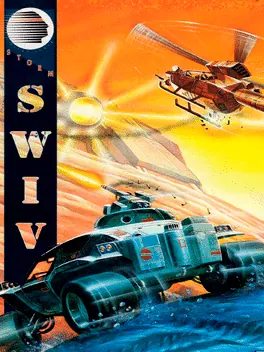
SWIV
SWIV is a vertical scrolling shooter and an unofficial follow-up to Sales Curve's conversion of the side scroller Tecmo arcade game Silkworm. One player controls a helicopter and the other a jeep, with the jeep transforming into a boat when the vehicles pass over water. As well as a host of blaster fodder the game also includes a mid-level enemy inspired by the "Goose" enemy from the earlier title Silkworm. Pieces of this enemy would fly onto the screen and assemble into one vehicle before commencing to fire at the players' vehicles. When destroyed the "goose" would drop power-ups.
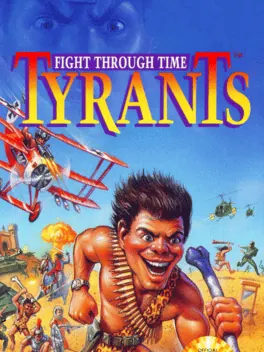
Tyrants: Fight Through Time
First you choose one out of four different characters to represent you, Scarlet (red army), Oberon (yellow army), Caesar (green army), or Madcap (blue army). The game is split into 10 levels - the first 9 are groups of 3 territories which can be completed in any order, while the final 'Mother of All Battles' has its own surprises. Land is mostly of sand, grass or ice. You start with 100 men and you can use whatever quantity you find necessary on each island. The rest men left will go to another level with another new 100. In the second half of the game you can freeze men to save them for the Mother of All Battles. Once you select your island and place for your HQ, you must do some research for better weapons and defences. On the roof of your buildings you can put protectors like archers, gunmen, boiling oil men, and later on even laser turrets. If you send a team of unarmed men into an unoccupied square, they will build an additional base there, with larger armies completing this more quickly. Later on higher levels, you'll also build mines and factories, as you'll need to dig a certain material for higher level weapons, depending on whether the area you're on is rich with a certain material or not. With each next level, you'll start from a higher technology level and be able to progress to one higher level up than at the previous level
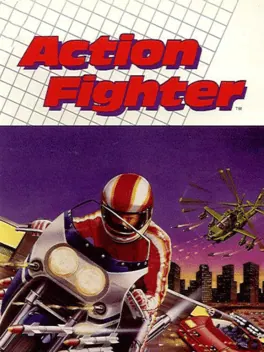
Action Fighter
Take to the streets or take to the skies. Because Action Fighter is the incredible, transformable combat vehicle. You start out on a customized cycle. Built with enough speed and power to jump over water and overtake enemies. Then, by finding the right parts along the way, you'll change your cycle into a supercharged, state-of-the-art sports car. Next, add two turbojets to make your car airborne. And take to the skies. Down hyped-up helicopters and jet spaceships from above. And no matter which vehicle you're manning- or who you're after- get ready to stand by for action!
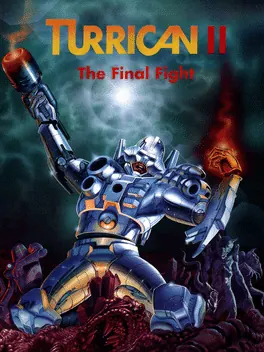
Turrican II: The Final Fight
Turrican II: The Final Fight is a platformer/shooter as typically seen on consoles, but designed for home computers from the ground up. Its plot is - naturally - very simple: an evil mega-robot called The Machine attacks the United Planets Ship Avalon 1, slaughtering all who resist. All - except Bren McGuire, who manages to escape and slips into the experimental Turrican bionic armor. As Turrican, he strives to show The Machine who's the boss. Unlike other games of its type, this game contains three levels of horizontal shooter action in the spirit of R-Type or the developers' own Katakis. Six large worlds are to be explored, where you are basically free to go everywhere you want, since there is no automatic scrolling and the levels are packed with hidden extra lives and weapons. All those levels are very different: the first one in the rock desert is pretty colorful with parallaxing rainbow background and happy music, while the following worlds get darker and darker.
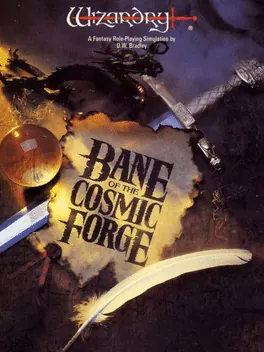
Wizardry: Bane of the Cosmic Forge
Ten years ago, Wizardry set the standards in Fantasy Role-Playing (FRP). Now after two million copies have been sold and dozens of awards have been won, Bane of the Cosmic Forge raises and redefines those standards. This new Wizardry , the truest simulation ever of Fantasy Role Playing, will push your computer, your mind, and your sense of adventure to their very limits. Only through the power of the latest computer technology could the full dimensions of this new genre in FRP be possible.
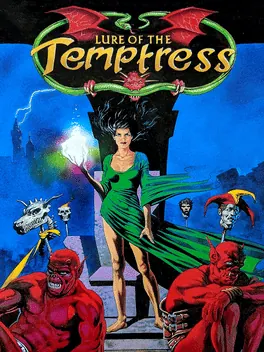
Lure of the Temptress
Lure of the Temptress is an Adventure game, developed by Revolution Software and published by Konami, which was released in 1992.
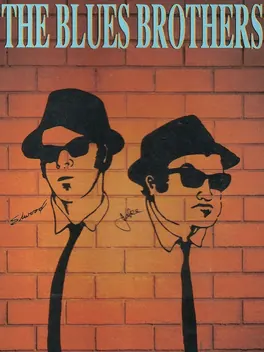
The Blues Brothers
The Blues Brothers video game was designed by Titus Software and is based on the comedic sketch band of the same name. The platformer-style game was released in 1991 for MS-DOS. It was subsequently ported to a number of other platforms, including the Amiga, Atari ST, and NES.
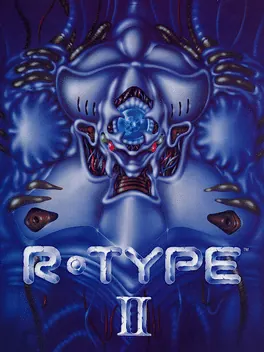
R-Type II
The game is the sequel to R-Type, which was first released as an arcade game in 1987 and profoundly influenced later shooting games with its charge shots, unique weaponry, and grotesque enemies. Hudson Soft ported the later 4 levels of the original R-Type to the PC Engine with the title R-Type II, but the Hudson release is unrelated to the game described in this article. The player controls a ship called the R-9C (or R-9 Custom), which is an improved version of its predecessor game's ship; the R-9. The ship's design was changed slightly, and the wave cannon was given homing capabilities. Two new types of weapons (the Search Laser and Shotgun Laser) were added, bringing the total number of weapon types up to five. A new anti-ground unit bomb was also added to the missile inventory. Though the number of levels was decreased from the prequel, the number of enemies, their durability, and the number of bullets they shoot were greatly increased. Enemy movements and terrain were also made trickier, bringing the game's difficulty up considerably. The same revival system is used as in the prequel, where the player is brought back to a checkpoint whenever their ship is destroyed. The controls are mostly unchanged from R-Type, where the 8-way joystick controls the ship's movement, and the shot button fires the ship's main beam. The other button is used to equip or unequip Force; the series' most unusual innovation. Pressing down the shot button causes the blue beam gauge to fill up, and releasing the button causes a wave beam to travel a certain distance depending on the length of time the button was pressed down. If the button is pressed down until the blue gauge is fully charged, a red gauge appears and fills up quickly. Filling up the red gauge causes it to flash blue and red, releasing the shot button at this point shoots an even more powerful beam. Unlike the normal beam that only travels in a straight line, the newly added Shotgun Laser beam explodes in multiple directions after traveling a short distance. This shot causes heavy damage if the player can target a single enemy with it. However, holding the button down after the gauge is flashing causes the beam to return to the normal transverse beam (the gauge alternates between flashing and returning to the normal state while the button is held down), so the player must release the button at the right timing in order to successfully target enemies. The other newly added beam, the Search Laser, is semi-homing, and can bend at angles up to 45°.
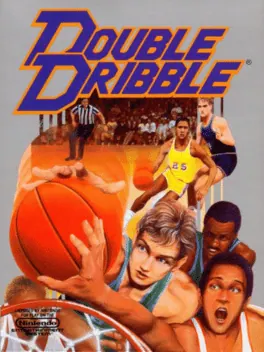
Double Dribble
Double Dribble was the second basketball arcade game developed and released in 1986 by Konami, following Super Basketball. Much of the game's popularity came from its animation sequences showing basketball players performing slam dunks, as well as The Star-Spangled Banner theme during attract mode, which was the first arcade game to feature the national anthem. These were uncommon in video games at the time of Double Dribble's release. While successful in the arcades, the game became and remained popular and remembered when it was ported to the Nintendo Entertainment System in 1987.

Super Monaco GP
A superb Formula One racing game from Sega that took sprite-scaled graphics to a whole new level. The game's single track offered a very reasonable representation of the famous Monaco Grand Prix circuit. Players could chose to race with one of three different skill/gear settings : Beginner : Automatic Gears Intermediate : 4-Speed Manual gears Professional : 7-Speed Manual Gears Before entering the Grand Prix, a qualification lap had to be completed. In the event of qualifying, the qualifying time determined the player's position on the starting grid. During the race itself, checkpoints had to be reached within a set time, or the race was over.
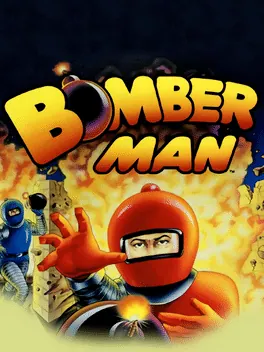
Bomberman
Bomberman is a 1990 action maze video game developed by Hudson Soft for the TurboGrafx-16. Belonging to the Bomberman franchise, it is a greatly expanded re-imagining of the first game in the series. In Europe, the game was released for the MS-DOS, Amiga and Atari ST, retitled as Dyna Blaster due to the European mainstream media associating the original title with terrorist bombings. A Commodore 64 version was advertised as well but never released.
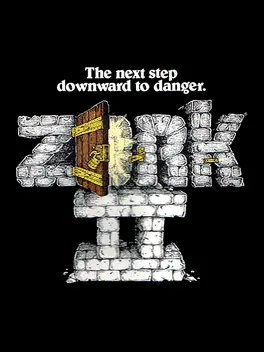
Zork II: The Wizard of Frobozz
The adventure begins in the Barrow from "Zork I" armed only with the trusty brass lantern and sword of elvish antiquity. The purpose of the game is not initially clear. Like its predecessor, Zork II is essentially a treasure hunt. Unlike the previous game, the ten treasures are tied together by a crude plot. Finding the treasures does not end the game, nor are all the treasures needed to finish the game. Instead, the adventurer must figure out a way to use the treasures in order to reach the game's finale.
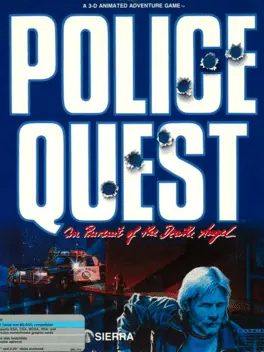
Police Quest: In Pursuit of the Death Angel
Police Quest: In Pursuit of The Death Angel is an adventure game in which gameplay is centered on interacting with the environment to resolve a series of scenarios. These largely revolve around typical police work, such as securing crime scenes and recovering stolen vehicles, while following proper duty procedures. The original release of the game required the player to type in the desired actions, such as opening doors, pressing buttons, or firing one's gun, while the remake allows the player to use the mouse to select actions from a menu and objects in the environment.
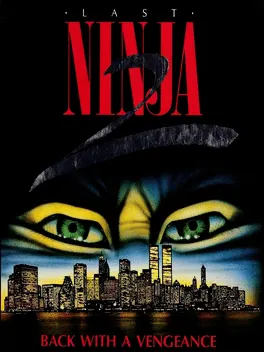
Last Ninja 2: Back with a Vengeance
Once beaten, but not destroyed, the evil Shogun Kunitoki used all his mystic powers to transport himself through time and establish a new empire of tyranny in modern day Manhattan. Only you can stop him!
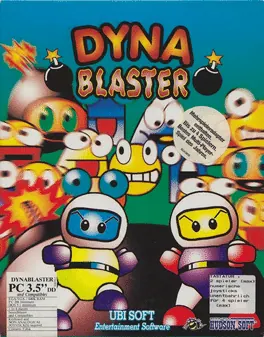
Dyna Blaster
Dyna Blaster or Dynablaster is a name that has been given to the European releases of the game of the Bomberman. It's a strategic, maze-based video game franchise originally developed by Hudson Soft. Most games in the Bomberman franchise largely revolve around two modes of play; single player campaigns where the player must defeat enemies and reach an exit to progress through levels, and multiplayer modes where players must attempt to eliminate each other and be the last one standing. Gameplay involves strategically placing down bombs, which explode in multiple directions after a certain amount of time, in order to destroy obstacles and kill enemies and other players. The player can pick up various power-ups, giving them benefits such as larger explosions or the ability to place more bombs down at a time. The player is killed if they touch an enemy or get caught up in a bomb's explosion, including their own, requiring players to be cautious of their own bomb placement.

Paperboy 2
You're a paper boy (or papergirl). Get on your bicycle. Avoid obstacles on the road, such as dogs, cars, and basically everything you can imagine. Hell, some people shoot cannon balls at you! And you'd better be very sure to only throw papers at the right houses!
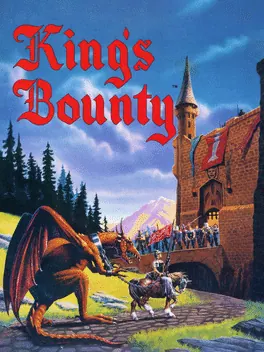
King's Bounty
While King Maximus ruled the land, life was good in the four continents. The Sceptre of Order rested safely in his hands, keeping at bay the forces of darkness that infested the world. Children were happy. Merchants prospered. Honest folks made honest livings. And nobody complained much. But far across the waters, Arech Dragonbreath, leader of the Dark Legions, looked enviously upon the wealth and splendor of the four continents. With the aid of great magic, Arech stole into the chambers of King Maximus and wrested the Sceptre from the grip of the sleeping King. He then released his evil forces, ordering his minions and lieutenants to seize the land in whatever manner they pleased (as long as it involved considerable amounts of pain and terror). Arech retired to his new lair on the four continents and waited for King Maximus’s certain resistance. The King and his forces, however, offered none. Fearing some kind of trickery, Arech peered into his prophetic crystal to see what Maximus was up to. The crystal showed the King lying in bed, his face pale and gaunt like death itself. Over the King stood a noble young knight with the strength and resolve of great leader. The King was speaking. "Come here" he gasped, "I am weak and breath is a luxury. Please." He extended his hand and the great leader drew close. "You must restore my kingdom. I, too, must be restored. I am tied to this land and as it dies, so do I. My days here are numbered. You must recover the Sceptre if I and my land are to live."Arech watched this exchange and quickly buried the Sceptre somewhere on the four continents. He draw a map of its location, then shredded it into 25 pieces. He gave one to each of his 16 villainous nobles, kept one for himself, and the other eight he hid with powerful artifacts around the four continents. Your time grows short, leader. You have your quest and King Maximus’s last hope. May you be guarded in your journey by the Spirits of Order. Good luck!
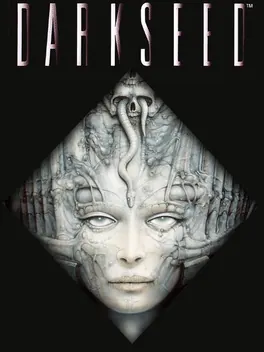
Dark Seed
You have just moved into a new house and you are experiencing some horrible nightmares. The nightmares are caused by the Aliens that made the "dark world" which the only access to is through the magic mirror. You've got to find whats behind those nightmares and get rid of the Aliens.
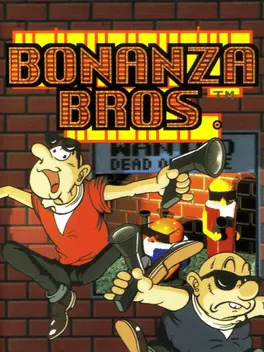
Bonanza Bros.
Just who are these guys? Mobo and Robo are the coolest villains you'll ever meet- they rob banks, museums (and innocent computer gamers of their sanity). One evening whilst watching TV a mysterious stranger appeared on screen. "Good Evening Boys I've got a job for you... My businesses are being robbed and I need you to test my security systems... Deliver the goods and I'll reward you." Take control of Mobo and Robo and guide them around the various establishments, collecting evidence on the way.
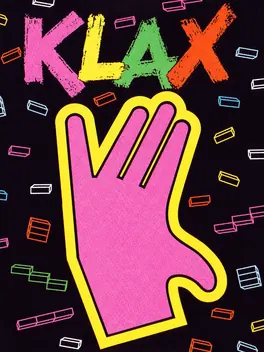
Klax
Klax is a 1989 computer puzzle game designed by Dave Akers and Mark Stephen Pierce. The object is to line up colored blocks into rows of similar colors to make them disappear, to which the object of Columns is similar. Atari Games originally released it as a coin-op follow up to Tetris, about which they were tangled in a legal dispute at the time.
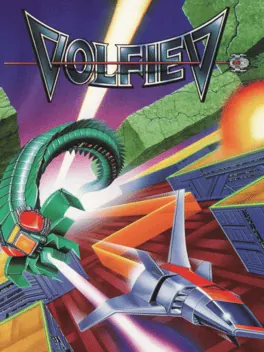
Volfied
Once in the game, using the arrow keys you can move the 'Scanner' ship around the 'Shield Line' at the parameter of the playing area. While moving around this edge the ship is protected from the aliens by a shield indicated by a glowing circle around the ship. This shield is not infinite and care should be taken to complete each level as quickly as possible. A counter indicates the level of shield that you have: when it reaches zero then any contact with an alien is deadly whether you are on the 'Shield Line' or not. The idea of the game is to cut areas out of the screen without touching any of the aliens. This is done by pressing the SPACE key which initiates the 'Laser Cutter' and moving off the 'Shield Line' and rejoining it somewhere else. While you are in the process of drawing a line, your shield is inactive and touching an alien is fatal. Similarly, if one of the aliens touches the line then it will send a charge down the line towards you and you must quickly return to the safety of the edge before it reaches you. When you rejoin the 'Shield Line' the area that does not contain the 'Boss' alien will be filled (points are gained by trapping the other aliens) and the 'Shield Line' will be adjusted to surround the area that is left. The level is completed when a certain percentage of the total area has been filled in. This percentage starts at 80% but may increase in the later levels.
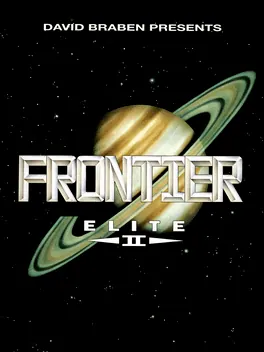
Frontier: Elite II
Frontier: Elite 2 is, of course, the sequel to Elite and it continues in much the same way. You have a ship and limited funds, and nowhere to go but out into space. Trade, fight, hunt criminals, work for the various governments, anything goes in Frontier. There are few, if any, limits on what you can do or where you can go. And Frontier's universe (with approx. 100,000,000,000 planets and moons) is so big you'll never see the end of it.
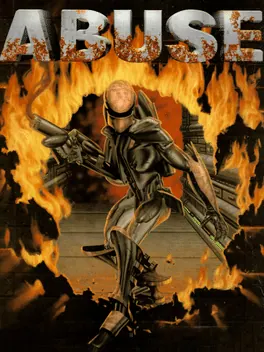
Abuse
Abuse resembles a side-scrolling platform game. The game is marked for its unusual control scheme: The keyboard is used to move Nick, while the mouse is used for aiming the weapons. The basic gameplay consists of fighting various enemies (mostly the various forms of mutants, who prefer to attack in huge swarms) and solving some simple puzzles, most involving switches.
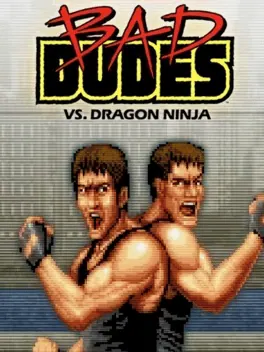
Bad Dudes vs. Dragon Ninja
Bad Dudes Vs. DragonNinja, often referred to simply as Bad Dudes (on the American NES port of the arcade original), and known in Japan simply as DragonNinja is a 1988 arcade game developed and published by Data East. It was also ported to many computer and game console home systems. Bad Dudes is a side-scrolling beat 'em up where the players are set in the role of the titular duo tasked with rescuing "President Ronnie" from ninja kidnappers. It was met with commercial success, and a generally positive to mixed critical reception. It has since become widely known for its general premise and introductory cut scene.

Kick Off 2
Viewed top-down, the controls involve trapping the ball under your foot, giving you time to prepare passes. Running with the ball is tricky at first, as it doesn't stick to your foot the way it did in contemporary football games. Complex moves such as overhead kicks, back-heels and long-range through-ball passes can be completed with practice.