
Jogos para Amiga
Mad TV
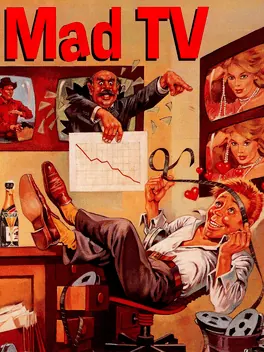
Mad TV is a television station management simulation computer game produced in 1991 by Rainbow Arts. It is loosely based on Mad Magazine, and the game's introduction animation features the magazine's mascot, Alfred E. Neuman, smiling on a television. The game puts the player in the role of a new program director for a TV station. The player is in charge of selecting programming and earning advertising for the station, while simultaneously trying to marry Betty, an attractive woman working in the building.

Lotus Esprit Turbo Challenge
The first in a series of 3 racing games endorsed by the legendary car company, which is now a part of Proton. The game features a total of 32 fictitious racetracks from around the world, split into 3 difficulty levels. There are 19 computer opponents (15 on the 8-bit versions) and you have to finish in the top 10 (top 8 on the 8-bits) to progress. The higher you finish in one race, the lower down the grid you start for the next race. The opposition drivers have pun names based on the F1 drivers of the day - examples include Ricardo Pastry and Crashhard Banger. You can choose between sound effects or one of a variety of music pieces. The game features a simultaneous 2-player mode, but the 1-player mode only uses half the screen, a simple animation filling the other half. In most races you will have to make a pitstop for fuel in order to reach the finish. The tracks include features such as oil slicks, roadworks, boulders and rivers - contact with these (or the other cars) will slow you, but there is no car damage model.
Dragon Spirit
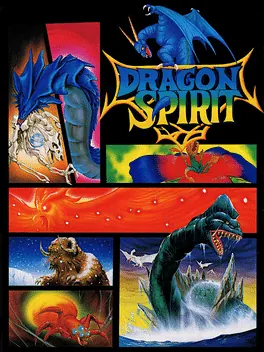
Dragon Spirit is a vertical scrolling shooter arcade game that was released by Namco in 1987 and licensed to Atari Games for its American manufacture and distribution. In the kingdom of Mitgult, a serpent demon named Zawell escapes imprisonment after a thousand years, and kidnaps Princess Alicia. A soldier named Amul is chosen to rescue her and destroy Zawell. He points his sword skyward and transforms into a powerful blue dragon. He can breathe fire and drop bombs, as well as collect up to thirteen additional powers during his journey. Amul must fight nine of Zawell's mightiest beasts, one at the end of each stage, before facing Zawell himself.
Chip's Challenge
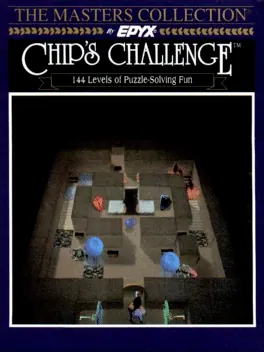
A port of Chip's Challenge, originally for the Atari Lynx. In this strategy game, players of all ages will love the puzzle-solving challenges facing Chip as he must conquer 144 game levels in order to join Melinda's exclusive computer club, the Bit Busters. Every level of Chip's Challenge represents a unique, timed, one-player puzzle. Solving a level invariably involves collecting microchips with available tools such as keys, magnets, shields, and cleats. Doors, traps, monsters, and other mischievous devices pose barriers, entice you into danger and complicate your progress. As each level is solved you are led into the next, slightly more difficult level. The first eight levels are puzzles that introduce you to the game's basic concepts. You find your way through mazes, collect keys to open doors, teleport from place to place, pick-up tools, and use logic to conquer each puzzle. The levels get progressively more formidable. You must pay attention to subtle hidden clues, learn how to evade many forms of disaster, and execute a complex series of actions. With 144 levels, even the most skilled strategy game players will be absorbed by Chip's Challenge for countless hours.

Ski or Die
Ski or Die is a 1990 winter sports game by Electronic Arts for the Amiga, NES, MS-DOS and Commodore 64. It consisted of 5 minigames which could be played individually or in a set sequentially. Up to 6 players could compete against each other via hotseat in 4 of the minigames, and semi-hotseat in 1 of them (up to two players at a time). The sports and activities depicted in the minigames are halfpipe-snowboarding, inflatable sled racing, aerial skiing, downhill skiing and snowball fights. The DOS port featured Roland MT-32, AdLib and beeper music and sound effects and ran at 15 FPS.
Blockout
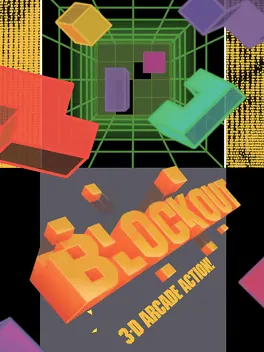
Blockout is a puzzle videogame, created in 1989 by Polish developer - California Dreams, designed by Aleksander Ustaszewski and Mirosław Zabłocki. The game is the logical extension of Tetris into the third dimension. In Tetris, the player manipulates a set of tetrominoes which fall into a two-dimensional pit (seen from the side). The aim is to solve a real-time packing problem by forming complete rows, which then disappear and score points. Poor play leads to incomplete rows, caused by inefficient arrangements of tiles; these rows do not disappear, giving the player progressively less space and less time to play subsequent pieces. Similarly, in Blockout, the player manipulates a set of polycubes which fall into a three-dimensional pit (seen from above; the pieces appear in the foreground and fall away). The pieces can be rotated around all three axes, and moved horizontally and vertically. The aim is to form complete layers.

Shaq-Fu
Shaq brings his awesome skill and size to a multi-world fighting game. As Shaq, use your lightning-fast shuriken and other martial art techniques to prevail over 11 intensely evil warriors in the enforcement of justice. Or choose any of the 12 warriors and fight head to head. Summon Voodoo's bone shattering earthquake, rebound with Rajah's shockwave sword or lash out with Sett's terrifying mummy wrap. Scores of secret power moves to discover and master.
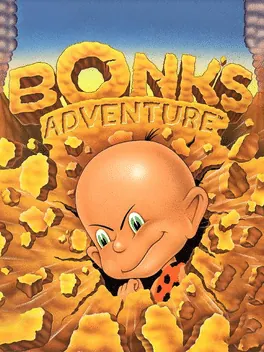
Bonk's Adventure
Bonk's Adventure was developed by Red Company and Atlus and released on the TurboGrafx-16 in 1989 before being ported to the NES, Game Boy and Amiga. It is a 2D platform game that became quite popular, with subsequent remakes and sequels spawning from the game. It was later included in Nintendo's Virtual Console service as well as the PlayStation Store.
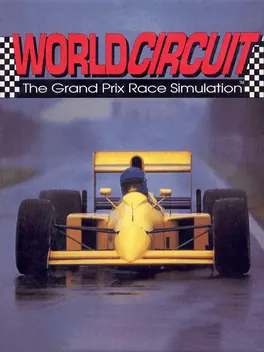
World Circuit: The Grand Prix Race Simulation
Formula 1 Grand Prix (known as World Circuit in the US) is the first installment of Geoff Crammond's Grand Prix series. The game includes all 16 international GP circuits of 1991. Players may drive them in quick race mode, single race or a full championship. The 18 teams and 35 drivers and their performance are based on the 1991 season, but the game doesn't include real names. It is possible to edit and save team and driver names by hand. The extensive tuning feature influences the performance of the car. In-race setup allows players to adjust gear ratios, brake balance, wing downforce and tires during each visit to the pit box. Six optional driving aids help F1 rookies finish their race: players can toggle best line and suggested gear displays to learn track tactics, or have auto brakes, auto gears, self-righting spins and indestructibility to improve their driving. A replay system allows players to watch race scenes from three different views, including track-side camera footage. The game features 3D graphics and various details and effects such as working rear mirrors, collisions with flying debris, crude damage models (wings are visibly bent after crashes), and wet weather that influences traction, including a fog effect that obscures vision when driving in another car's splash water. While the Amiga version allows multiplayer races in hotseat mode, the PC version originally had solo races only. In 1993, the v1.05 update added modem support and a few other improvements.
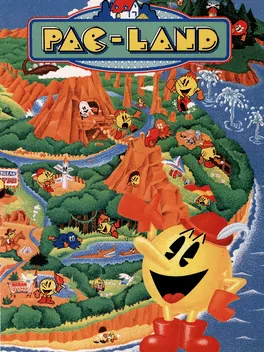
Pac-Land
Pac-Land itself is split into trips. In each of these trips the objective is to get the fairy (that is kept under Pac-man's hat) to Fairyland and also to return home to Pac-Man's house. The majority of the trip involves moving from left to right avoiding various obstacles such as the enemy ghosts, water spurts and quicksand traps. Each trip is divided into a number of rounds, the end of which provides Pac-Man with bonus points depending on how much time he has left and also his position in jumping at the end of each round. If the player runs out of time before finishing the round, Sue, the purple ghost, will speed up rapidly. The penultimate round of a trip ends with Pac-Man entering Fairyland and returning the fairy under his hat to the Fairy Queen. In return the Fairy Queen gives Pac-Man magic boots. For the final round of the trip, Pac-Man has to travel from right to left back home. For assistance he uses the magic boots, which allow him to jump repeatedly while in mid-air. Once Pac-Man completes the trip, he is greeted by Ms. Pac-Man and Baby Pac-Man. In the US release of the game, Pac-Man's cat and dog in the cartoon series, Sour Puss and Chomp-Chomp, are also there to welcome Pac-Man home. Pac-Man then begins his next trip following the same objectives as before, although the difficulty increases. As in the original Pac-Man, there are fruit which appear to eat for bonus points and power pellets to turn the ghosts blue and vulnerable. A hidden item (sometimes accidentally dropped by the ghosts) is a Flagship from Galaxian, which rewards 7650 points when collected (a reference to Namco's goroawase number of 765). The Galaxian Flagship is a long running cameo that appears in the Namco-made Pac-Man games. There are also hidden bonuses in the game, eating ghosts in a certain order will give extra time and pushing an obstacle in the opposite direction can give extra lives, invincibility, and balloons to collect for points and warps.
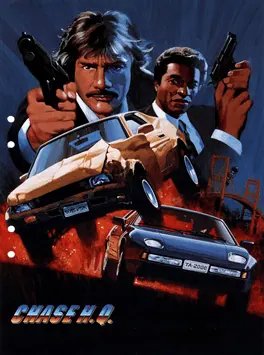
Chase H.Q.
At the start of each level the player is informed who they are pursuing, a great distance away: They must apprehend the criminal before their time limit expires. The criminal's car is constantly moving away, so if the player repeatedly crashes or drives too slowly, the criminal will escape. At some points during the game the road splits, and the correct turn must be taken, otherwise it will take longer to catch the criminal. When their vehicle is reached, the time limit is extended; the vehicle must be rammed a number of times until the criminal is forced to stop, then is arrested. The game includes five levels. As both the initial time limit to reach the criminal and the time extension to ram the criminal are just 60 seconds, the game is very short - a player who is able to finish the game on one credit will enjoy at most ten minutes of game-play. Interestingly enough when Nancy at Chase HQ (at the start of every level) calls on the radio the frequency is always 144.X (various)Mhz. This is actually the 2-meter band of amateur or ham radio frequencies. Although superficially similar in technology to Sega's Outrun, Chase HQ features significant technical advancements over that title in the presentation of perspective, hills and track splits.
Starflight
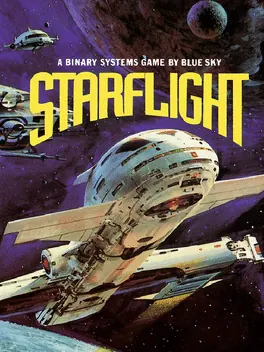
Starflight is a space exploration role-playing adventure video game developed by Binary Systems and published by Electronic Arts in 1986. Originally developed for IBM compatible and Tandy systems, it was later released for the Amiga, Atari ST, Macintosh and Commodore 64. A fully revamped version of the game was developed for the Sega Mega Drive/Genesis in 1991. Set in the year 4620, the game puts players in the role of a starship captain sent to explore the galaxy. There is no set path, allowing players to switch freely between mining, ship-to-ship combat, and alien diplomacy. The broader plot of the game emerges slowly, as the player discovers that an ancient race of beings is causing stars to flare and destroy all living creatures.

Krusty's Fun House
Krusty the Clown's Fun House has been overrun by rats. You must help him to herd the rats into trap machines to clear them out. In order to do so, Krusty must manipulate his environment to set up pathways so that the rats are headed in the right direction. Objects that Krusty move around include blocks, fans, and pipe pieces.
Hero's Quest: So You Want to Be a Hero
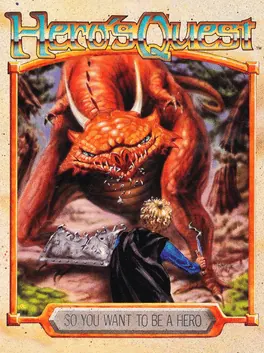
The little town of Spielburg is populated mostly by beer-drinking humans and some centaurs who like working in the field. Spielburg is surrounded by forests and mountains, where all kinds of weird creatures dwell: ogres, goblins, talking foxes, stupid magicians, and others. Lately, Spielburg has been assaulted by brigands; besides, the witch Baba Yaga is not to be trusted. The town has everything it needs--even a Thieves Guild--except a strong, brave hero who would protect it. So when a wandering adventurer enters the town, he quickly realizes that his skills might be of use. Hero's Quest: So You Want to Be a Hero is a hybrid game that contains Role-Playing and Adventure elements. It is visually very similar to other Quest titles by Sierra (such as for example Space Quest), but the gameplay--besides the usual exploration, conversations with characters, and the solving an occasional puzzle with the help of inventory items--also involves combat and character development. In the beginning of the game, the player chooses a character class for the protagonist--either a Fighter, a Mage, or a Thief. The choice of class will influence not only the combat, but also many other events in the game. Puzzles might have different solutions depending on the class and the amount of ability points in various categories. The main character's skills and abilities are raised directly by repeatedly performing appropriate actions, e.g. fighting enemies, practicing, climbing, throwing objects, etc. Many of those activities are necessary to perform in order to successfully complete the game. Combat takes the player to a separate screen (represented by the enemy's picture) and involves timed selection of commands such as Attack, Parry, etc. The interaction with the game-world is performed by typing verb commands or conversation topics. The game features a day/night cycle, which also includes character schedules. The main character can get hungry and tired, so feeding him and getting some rest is essential.
Heretic II
Heretic II is a third-person action game based on the Quake II engine that plunges you into a deep, compelling game combining brutal face-to-face combat and mystery-laden adventure. Gamers travel through complex, richly detailed environments filled with stunning special effects, wicked magic spells, detailed characters, vivid artwork and challenging level designs created by the Raven team and renowned fantasy artist Brom.

Kick Off
Kick Off was the first football game of its kind, having a top-down view and unlike other football games of that time, the ball was not glued to the feet of the players.
Supaplex
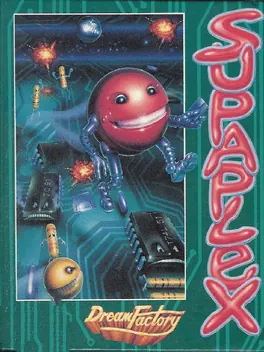
Supaplex is the first Boulder Dash-like game that is not fully grid-based: while the playing field is an obvious grid, the objects do not "snap" from one grid position to another, but can be halfway or "in between" grid positions. Supaplex introduces a number of new elements that were not present in Boulder Dash, including bugs, pieces of base that randomly cause a life threatening electrostatic discharges, Ports, which limit Murphy's movement to specific directions, and terminals, which set off yellow Utility Disks. Utility Disks are explosive floppy disks and come in three different colors: Orange Disks work like Zonks, but explode when hit or when falling. Yellow Disks do not fall yet may be pushed in any direction, and explode when the Terminal is used. Red Disks can be carried and dropped when convenient, exploding seconds after.

Lotus III: The Ultimate Challenge
The third game in the series combined the gameplay aspects of its predecessors, allowing players to choose between racing opponents of Lotus Turbo Challenge or the arcade-like time trials of Lotus 2. The two-player option was retained and the music selection feature returns (Patrick Phelan's soundtrack to Lotus III spawned many modern remixes). Lotus III also added a third car - a concept Lotus M200 automobile - and allowed the player to choose which one to race with. The game recycled most of the graphics from Lotus 2, but added a number of new sceneries.
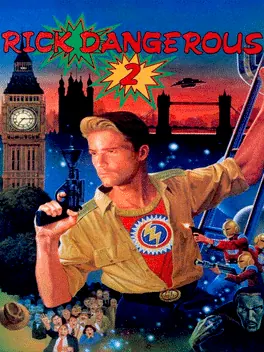
Rick Dangerous 2
Rick Dangerous II is a multi screen platformer game released in 1990 by MicroStyle.
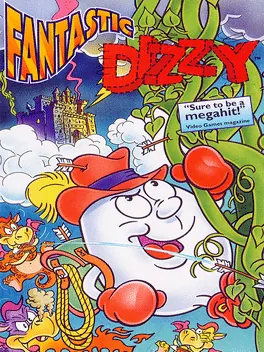
Fantastic Dizzy
Dizzy is an egg living in a world of magic and fantasy. The basic concept of the game is to move around the world, finding various items and collectibles, and to use them in the right locations. Dizzy has no special skills or abilities, save for his remarkable feats of somersaulting, and must solve all problems he faces with the clever use of one or more items.
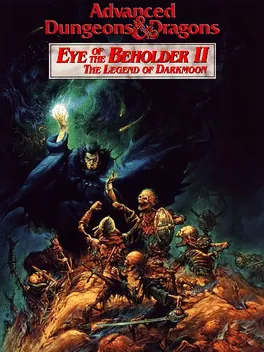
Eye of the Beholder II: The Legend of Darkmoon
Eye of the beholder II: The legend of Darkmoon is an all-3D leisure series computer role-playing adventure based on the popular AD&D 2nd edition game rules and on an original story created for this game. THe action takes place in and around the dreaded temple Darkmoon located in TSR's Forgotten Realms gameworld. Everything in Eye of the Beholder II is from your point of view. Watch the trees pass by as you move through the forest around the temple. Pick up items and take them with you. Open door with keys, by pressing buttons or by pulling release levers. See monsters draw nearer to you and close in for battle. Attack with the weapons your characters have in their hands. Cas spells with your Cleric's or Paladin's hoily symbols and your mages' spell books. Those in the front of the party may attack with weapons such as swords and maces, while characters in the rear ranks may attack with spells or ranged weapons such as bows and slings.
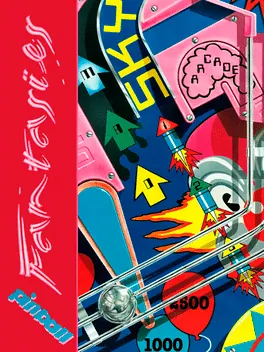
Pinball Fantasies
After the success of Pinball Dreams on several systems, a sequel featuring four new tables was created. The gameplay is much the same as the first game, with realistic physics, multi-player options and a high score table to aim for. The tables are Partyland, Speed Devils, Billion Dollar Gameshow and Stones 'n' Bones, taking in a funfair, racing cars, a tacky game-show, and a graveyard. Each one has a range of ramps, combos, light sequences and targets to shoot, as well as general themes which are less influenced by real tables than those in Pinball Dreams.
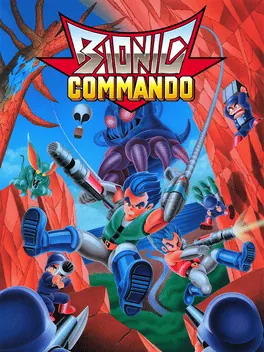
Bionic Commando
For two years, your people have struggled against the relentless onslaught of invading forces. With your army reduced to a handful and your artillery depleted, further resistance seems impossible. But in a hidden underground laboratory, a team of scientists has at least perfected a new kind of fighting machinery: a bionic arm that extends and contracts, providing unheard-of strength and maneuverability. Combined with an arsenal of rapid-fire, armor-piercing, and heat-seeking weaponry, this will put the power of an entire army in the hands of one man... one carefully chosen soldier, who has what it takes to become a new breed of unstoppable commando... a Bionic Commando. And you are that soldier! Your mission will take you through the heavily-patrolled wilderness surrounding the enemy headquarters, and into the very heart of the fortress itself. Even to the most courageous soldier, it would seem an impossible challenge. But there has never been a soldier like the Bionic Commando!
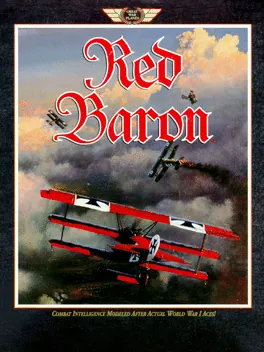
Red Baron
Experience the thrill of flying World War I bi- and triplanes. Defend yourself in spectacular aerial dogfights whilst enemies assault you from all sides. Carry out bombing missions, negotiate enemy AAA fire and outwit your opponents with smart tactical moves. Red Baron Pack offers exciting air-to-air and air-to-ground combat in an age when wooden bi-planes and tri-planes ruled the air.
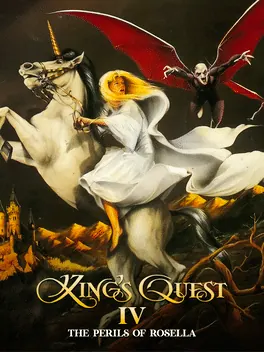
King's Quest IV: The Perils of Rosella
King's Quest IV: The Perils of Rosella is an adventure game in the King's Quest series. Players control Princess Rosella, daughter of King Graham, as she embarks on a quest to save her father's life and rescue a fairy kingdom. The game takes place in the land of Tamir, where Rosella must find a magical fruit to heal her ailing father while also helping the fairy queen Genesta reclaim her stolen talisman from the evil fairy Lolotte. Players navigate Rosella through various environments, solving puzzles and interacting with characters from folklore and fairy tales. King's Quest IV introduces real-time elements and day-night cycles to the series, affecting gameplay and puzzle solutions. The game expands on the series' narrative by focusing on a female protagonist and exploring new themes while maintaining the fantasy setting and puzzle-solving mechanics characteristic of the King's Quest franchise.
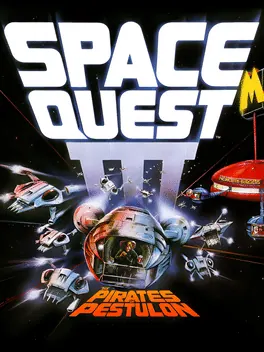
Space Quest III: The Pirates Of Pestulon
Space Quest III: The Pirates of Pestulon continues the hilarious space-faring adventures of Roger Wilco, the unlikely hero and intergalactic garbageman. In this installment, players must unravel the mystery behind the disappearance of the "Two Guys from Andromeda," the fictional creators of the Space Quest series. As Roger, players navigate through a satirical sci-fi universe, facing off against the nefarious Pirates of Pestulon and possibly other suspects, including overzealous fans and revenge-seeking minions of previous villain Sludge Vohaul. With its blend of point-and-click adventure gameplay, cutting-edge graphics for its time, and trademark humor, Space Quest III challenges players to save the kidnapped game designers and thwart another galactic threat, all while delivering a self-aware, comical take on the adventure game genre and sci-fi tropes.
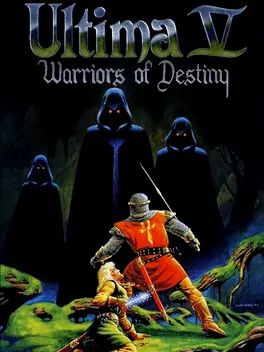
Ultima V: Warriors of Destiny
After a century of relative peace, the Avatar of Virtue is summoned back to the medieval kingdom of Britannia to deal with a new threat: the usurper Lord Blackthorn, a formerly honorable nobleman who has been corrupted by strange new creatures called the Shadowlords. After the recent disappearance of the true king, Lord British, the realm has fallen under martial law. Blackthorn now rules the land by brutally enforcing the eight Virtues upon the people of Britannia - corrupting their meaning in the process. The Avatar must gather together his former companions, now made outlaws by Blackthorn's regime, and venture forth to defeat the vile Shadowlords and recover the true king from the shadowy depths of the Underworld.
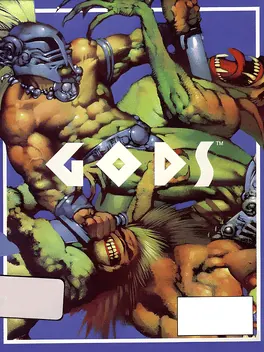
Gods
Who would have thought that a man would be so foolish or so daring as to accept a challenge set down by the Gods? And yet one came forward to claim the right to test his skills and strengths against a city so legendary its name alone struck fear in the hearts of all who heard it spoken.
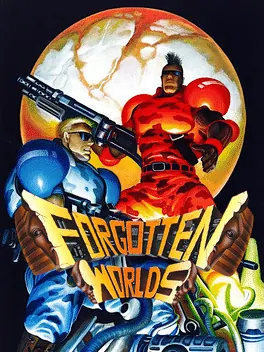
Forgotten Worlds
Forgotten Worlds can be played by up to two players simultaneously. The player controls a flying muscle-bound soldier armed with a rifle with unlimited ammo. The Player 1 character is equipped with a long-range automatic rifle, while Player 2 has a short-range wide shot. The controls in the original coin-op version consists of an eight-way joystick for moving the character in the air while flying and a unique rotatable button known as the "roll switch".Rotating the switch left or right allows the player to adjust their character's aim in one of sixteen directions, while pressing it causes the player character to shoot his gun. This allows for the player to move their character anywhere while keeping their aim in one direction. Pressing the switch rapidly will cause the character to perform a "megacrush" attack will destroy all on-screen enemies, but at the expense of a portion of their vitality gauge. The player character is accompanied by a satellite module orbiting near him that will provide backup firepower every time the player fires their gun. Like the main character, the satellite can also be rotated with the roll switch. Rotating the character while firing will only rotate the aim of the satellite, while rotating the character without firing will not only rotate the satellite's aim, it will also move its relative position around the player. The player can obtain blue-colored coins known as "zennies" from defeating enemies throughout the game. The zennies are used as currency to obtain new power-up items from shops located at certain points in each stage. When the player enters an item shop, they are given a choice of the items available and a limited time to make any purchase they wish. These items consists primarily of new weapons for the satellite module, but also includes a health kit to restore lost vitality, an armor that allows the player to sustain additional damage, and even tips on how to defeat the boss awaiting at the end of the current stage. Forgotten Worlds consists of five stages with a total of eight bosses. The player will lose if their vitality gauge runs out, but will be given a chance to continue.
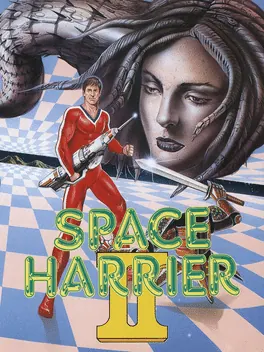
Space Harrier II
A call for help comes from deep in the universe. Fantasyland has been taken over by destructive forces. Quick on the scene is Space Harrier equipped with his laser, who must attempt to outwit and outmanoeuvre the hoards and prevent Fantasyland from being blown into oblivion!

The Duel: Test Drive II
The Duel: Test Drive II is a cross-platform racing game developed by Distinctive Software and published by Accolade in 1989. It is the second entry in the Test Drive series of video games.
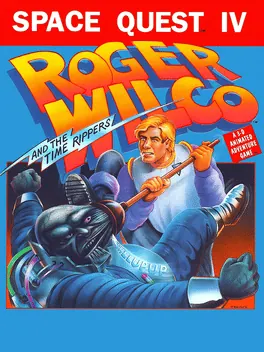
Space Quest IV: Roger Wilco and the Time Rippers
May the farce be with you! Get ready for a trek through time with everybody's favorite intergalactic sanitation engineer and freelance hero, Roger Wilco. In their latest spaced-out space opera, the Two Guys From Andomeda take on science fiction (and just about everything else!) is a spoofy sendup that will leave you laughing. Roger Wilco embarks on a topsy-turvy trip through space and time in this fourth chapter in the award-winning Space Quest series, Roger Wilco and the Time Rippers. From a nostalgic look at his past in Space Quest I to a terrifying visit to the future of Space Quest XII, Roger's on the run again. And hot on his ion trail are the Sequel Police, deadly crosstime assassins who are out to put an end to Roger and all of his Space Quest nonsense once and for all. Once again it's up to Roger Wilco to save his future- or is that his past?- of the Space Quest series, and keep the universe safe for fair play, bad jokes, and lots more Space Quest Games.
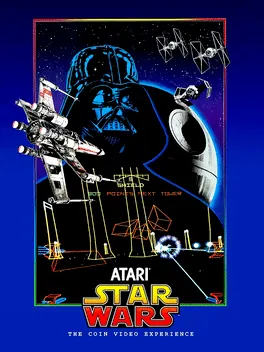
Star Wars
Star Wars is a first-person shoot 'em up based around the original Star Wars film. You take on the role of Luke Skywalker, aiming to destroy the Death Star - which, as any fan knows, involves attacking the 'weak spot' near the exhaust. To even get to this you have to pass swarms of TIE Fighters. Complete the game and it loops back around at ever-increasing difficulty. The game uses vector graphics, which allow lots of action at high speed on comparatively slow systems.
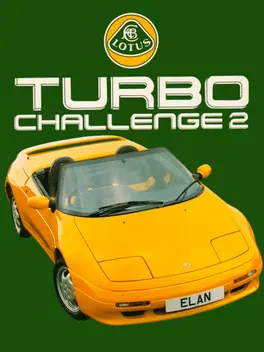
Lotus Turbo Challenge 2
The second Lotus game shifted focus to arcade-oriented gameplay. Being the first of the series released for a game console (for Sega Genesis/Mega Drive under the title Lotus Turbo Challenge), the fuel limit and difficulty levels were dropped, and the lap-based levels were replaced with course-based time trials, (not unlike arcade games such as Out Run), with the player required to complete each course within a specified time to qualify for the next one. In addition to the Esprit Turbo SE, Lotus Turbo Challenge 2 also featured the Lotus Elan SE, hence 'Esprit' being dropped from the title. There was no choice of car however; the player runs with the Elan SE on odd levels, and with the Esprit on even levels. Lotus 2's single-player mode uses all of the game screen instead of half, and opponent cars appear in a variety of colors (opponent cars in the original game were all white). However, music is absent from racing altogether; the player instead hears the car's engine sound. Lotus 2 was developed for the Amiga and then converted for the other platforms.
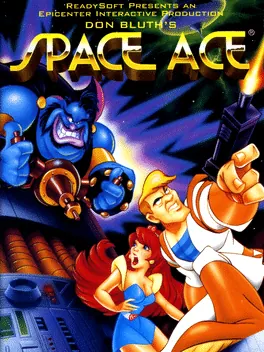
Space Ace
In Space Ace you play the heroic Ace who must stop the evil Commander Borf from taking over the Earth! Borf plans to reduce all of humankind to infants and take over the planet.
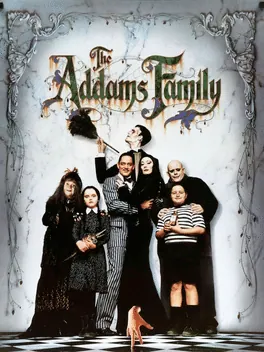
The Addams Family
Creepy, Kooky, Ooky, Spooky! Morticia has been kidnapped! Uncle Fester has lost his memory and has fallen under the spell of Abigail Craven, a conniving character who is anxious to lay her greedy hands on the Addams' hidden fortune. Having recruited a misled Uncle Faster, and assisted by her cohorts, Tully and The Judge, she managers to capture and imprison the other members of the Addams Family within the huge Addams Mansion! Only Gomez can save the day by freeing his son Pugsley, his daughter Wednesday, and Granny- and by restoring Uncle Fester's memory. Accomplishing these tasks is daunting enough, but then Gomez must seek out Morticia in the underground vaults of the Addams Mansion and confront the evil Judge in a kooky and spooky climax!