
Jogos para Amiga
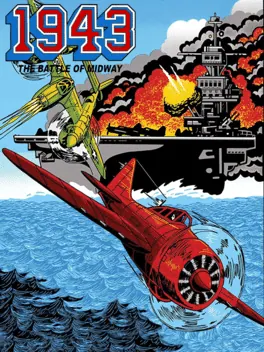
1943: The Battle of Midway
The game is set in the Pacific theater of World War II, off the coast of the Midway Atoll. The goal is to attack the Japanese Air Fleet that bombed the players' American Aircraft Carrier, pursue all Japanese Air and Sea forces, fly through the 16 levels of play, make their way to the Japanese battleship Yamato and destroy her. 11 Levels consist of an Air-to-Sea battle (with a huge battleship or an aircraft carrier as an End-Level Boss), while 5 levels consist of an all-aerial battle against a squadron of Japanese Bombers and a Mother Bomber that needs to be destroyed. As in 1942, players pilot a P-38. Two buttons are used: one for regular attacks (with several weapons) and one for special actions that executes either a loop like in 1942 or one of three special attacks that damage the plane. Unlike 1942, the player only has one life, with one refillable energy meter. Destroying a complete formation of red enemy planes will result in a power-up, such as a health boost or a temporary special weapons which replaces the default twin gun.
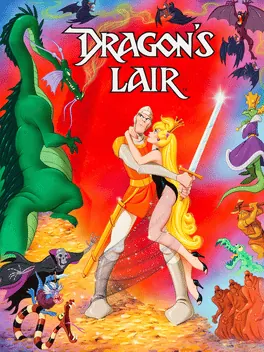
Dragon's Lair
Haven't heard of Dragon's Lair?! Well, you play the heroic Dirk the Daring, a valiant knight on a quest to rescue the fair princess from the clutches of an evil dragon! Originally released in the summer of 1983, Dragon's Lair has solidified itself as a cultural icon in gaming.
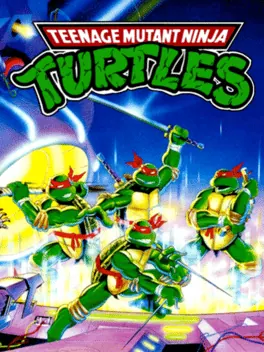
Teenage Mutant Ninja Turtles
A Port of "Teenage Mutant Ninja Turtles" for home computers. Teenage Mutant Ninja Turtles is an action-platform game. It is based on the first Teenage Mutant Ninja Turtles animated series which began airing in late 1987.
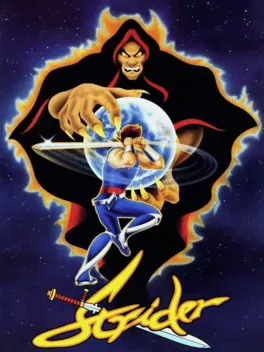
Strider
The controls of Strider consist of an eight-way joystick and two action buttons for attacking and jumping. The player controls Hiryu himself, whose main weapon is a tonfa-like plasma sword known as "Cypher". He can perform numerous acrobatic feats depending on the joystick/button combination used. Pressing the jump button while Hiryu is standing still will cause him to do a regular vertical jump, while pressing the jump button while pushing the joystick left or right will enable him to do a cartwheel jump. Hiryu can also slide under or through certain obstacles and enemies by first crouching down and then pressing the jump button. As well as his sliding move, both jumps can also be used to destroy weaker opponents. Hiryu is able to latch onto certain platforms, and climb across walls and ceilings using a metallic hook. While running down a sloped surface, Hiryu can gain enough momentum to allow him to do a longer cartwheel jump than usual. Numerous power-ups can be obtained from item boxes carried by certain enemies. These includes an extension to Hiryu's attack range that lasts for one hundred slashes, two types of health aids (represented by the kanji used to write Hiryu's name: 飛 and 飛竜), a max health extension (represented by the kanji 竜, the second character in Hiryu's name), an extra life, and a power-up that not only makes Hiryu invulnerable to attack but also increases his own attack abilities via shadow images of himself for 15 seconds.[3] Hiryu can also summon robotic companions known collectively as "options" that help him fight enemies. These consist of up to two mushroom-like droids, a saber-toothed tiger and a hawk, known individually as Option A, B and C respectively. The game has five stages: the Kazakh Soviet Socialist Republic (called "St. Petersburg" during the arcade game's attract sequence), the Siberian Wilderness, the Aerial Battleship Balrog (געלראב), the Amazonian Jungle, and the Grandmaster's lair itself, the Third Moon. Each of the stages is divided into a number of smaller sections, each with their own time limit and checkpoint location. The player has a three-point health gauge (which can be increased to five points with the health extensions. Hiryu will lose a life when either his health gauge is fully depleted, by moving him off the screen entirely (like falling into a bottomless pit) or when the game's timer reaches zero. It's Game Over when all of Hiryu's lives are lost, but the player can be given the opportunity to continue.
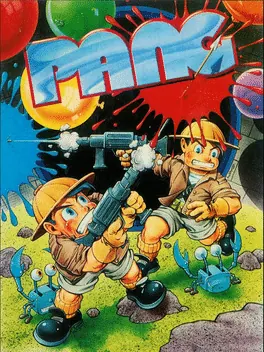
Buster Bros.
Pang, originally released in Japan as Pomping World and in North America as Buster Bros., is a 1989 arcade action game developed by Mitchell Corporation. Its core gameplay is similar to the 1983 Japanese MSX game Cannon Ball, also released that year for the ZX Spectrum as Bubble Buster. Players embark on a round-the-world quest to destroy bouncing balloons that are threatening landmarks and cities across the globe. The game features 50 stages set in 17 locations, including Mt. Fuji, Mt. Keirin, the Temple of the Emerald Buddha, Angkor Wat, Ayers Rock, the Taj Mahal, Leningrad, Paris, London, Barcelona, Athens, Egypt, Kenya, New York, Maya ruins, Antarctica, and Easter Island. Later versions added additional locations. Each stage includes a background depicting local landmarks, along with a unique arrangement of blocks, some destructible, some permanent, and some hidden with bonus items. Stages begin with balloons of various sizes; the largest balloons split into smaller ones three times before disappearing after the fourth hit. Players start with a single harpoon, though special weapons can drop when balloons are popped. At certain points, food items worth bonus points may also appear. Contact with any balloon results in the loss of a life. In two-player mode, if both players touch a balloon at the same time, only Player 1 loses a life. Similarly, when both reach a bonus or weapon simultaneously, only Player 1 collects it. Players begin with three to five lives depending on dip switch settings, with extra lives awarded upon reaching specific score thresholds. A stage is cleared when all balloons are destroyed, and the game concludes after all stages are completed, ending with the heroes driving their jeep into the sunset on an Easter Island beach.
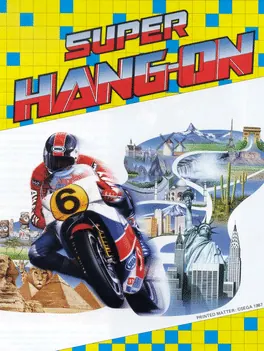
Super Hang-On
Super Hang-On is a 1987 motorcycle racing arcade game by Sega, and the sequel to the acclaimed Hang-On. A version of this game, in the full simulated-motorcycle cabinet used by the original Hang-On, was released in 1991 as Limited Edition Hang-On. It was also released for the Sega Mega Drive, Commodore Amiga, Atari ST, Macintosh, ZX Spectrum, Amstrad CPC and Commodore 64 in 1989. Super Hang-On was also released for the Sharp X68000 computer in Japan. The game also appeared on several Mega Drive compilations, namely Mega Games I (bundled with the console as Mega Drive Magnum Set), and Sega Genesis Six Pack. The arcade version was released on the Wii Virtual Console in Japan on September 14, 2010 and later for the other regions on May 3, 2012. A stereoscopic 3D version was released for the Nintendo 3DS eShop in Japan on March 27, 2013 and in North America and Europe on November 28, 2013.

Populous
Populous is a real-time strategy game where the player takes the role of a deity influencing the development of civilizations. You shape terrain, guide followers, and use natural disasters like floods, volcanoes, and earthquakes to influence or eliminate opposing tribes. The game features an isometric perspective and includes 500 levels (worlds), each with different challenges. Originally developed by Bullfrog and designed by Peter Molyneux, it is considered one of the earliest examples of the god-game genre.
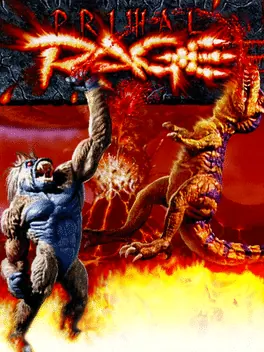
Primal Rage
Primal Rage is a one-on-one fighting game featuring dinosaurs and giant apes as the fighters. The graphics are done with digitized stop-motion animation. Gameplay is similar to Mortal Kombat in that it is viewed from a side perspective, and features deadly finishing moves at the end of the match.
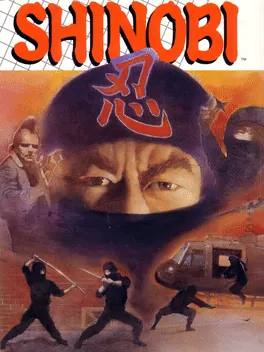
Shinobi
The five missions in the game are each three or four stages long. Several hostages are being held in each stage; Joe must rescue all of them before he is allowed to finish the stage. The last stage in each mission has no hostages, but instead features a powerful boss character whom Joe must defeat. After completing each of the first four missions the player is taken to a bonus stage, where he can earn an extra life if he is able to kill all of the ninjas leaping towards him. Completing the fifth mission ends the game. Also, once the fifth mission begins, continues are no longer allowed; the player has to finish the game with however many lives he has left at that point. If the player earns a place on the high score board, the number of credits it took him to get that score is displayed along with his score. Joe's standard weapons are an unlimited supply of shuriken, along with punches and kicks when attacking at close range. One hostage per stage gives him a power-up. When powered-up, his throwing stars are replaced by a gun that fires large, explosive bullets, and his close-range attack becomes a katana slash. Joe can also perform "ninja magic," which may be used only once per stage and kills (or damages, in the case of bosses) all enemies on the screen. The game also allows the enemies to hide behind boxes or use shields to block Musashi's shurikens.[4] Joe can be killed with one hit, provided he is hit by a projectile or melee attack, but if he does not find himself in those situations, the player can touch regular enemies and just be pushed back without being damaged. Since most enemies appear in the same place on each level, it is possible to master the game by memorizing their locations and devising patterns to defeat them. At the end of each stage, the player receives score bonuses based on performance. Completing the stage without using ninja magic or without using any throwing stars or bullets earns the player a point bonus. The player has three minutes to complete each stage; remaining time at the end of the stage is also converted to bonus points and added to the player's score.
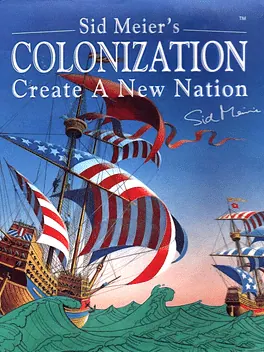
Sid Meier's Colonization
The New World lies before you with all its peril, promise and infinite possibility. Your colonists anxiously follow you to shore. The treasures of an entire continent await you. Finally, the much-anticipated follow-up to Civilization is here! Sid Meier's Colonization takes you into the Colonial Era to discover, explore and colonize vast territories that promise both danger and reward. Play one of four colonial powers as you set sail to discover the New World. Explore new lands and strategically plant your first colony. Direct its growth, manage its resources and establish lucrative trade routes. Balance economics, political and military strategy to create your own powerful nation. But beware of your enemies! Angry natives and rival powers can encroach upon your territory. You'll have to overcome your foes with superior military strategy and wily diplomacy. Only then can you launch your revolution and declare your independence. Colonization, The newest strategy game from Sid Meier continues the great tradition of Civilization.
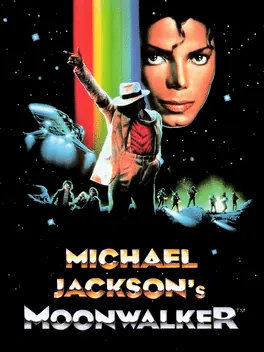
Michael Jackson's Moonwalker
Several video games based on the 1988 Michael Jackson film Moonwalker. U.S. Gold published various games for home computers, released in 1989, whilst Sega developed two similarly themed beat 'em up video games in 1990; one released for arcades and another released for the Mega Drive/Genesis and Master System.
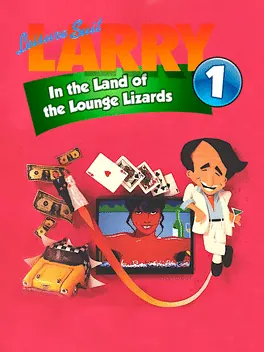
Leisure Suit Larry in the Land of the Lounge Lizards
A middle-aged male virgin named Larry Laffer desperately tries to "get lucky" in the fictional American city of Lost Wages. Your goal in Leisure Suit Larry in the Land of the Lounge Lizards is to find and seduce the girl of your dreams. This goal won't come easy, because you only have one night, and unfortunately, you are stuck with Larry's looks. Other problems, such as lack of money, lack of opportunity, and bad breath can complicate things significantly. Your interaction with the game controls the outcome of each situation. For example, having your character sign on with a major league baseball team or start a successful men's magazine could be beneficial to your ultimate goal. On the other hand, catching a fatal disease or losing all your cash can only impede your progress. A combination of common sense, logical thinking, and downright sheer luck is needed to achieve your goal.
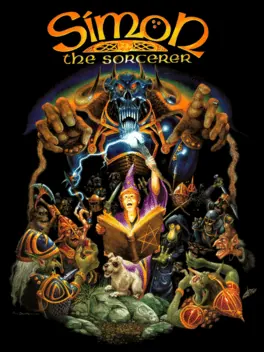
Simon the Sorcerer
Simon the Sorcerer is an adventure game that was released by Adventure Soft on 2 January 1993 for Amiga and DOS formats. The game's name comes from the account of Simon the Sorcerer in Acts 8. The game includes parodies of various popular books and fairy tales, including Rapunzel, The Lord of the Rings, The Chronicles of Narnia, Jack and the Beanstalk and the Three Billy Goats Gruff.
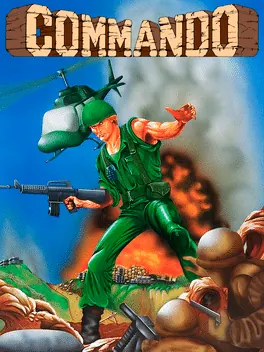
Commando
Several levels await your super-tough Commando in this arcade conversion. Armed with only a standard rifle and a few grenades you must take on hordes of enemies. Some are wandering around in the open, while others have picked out hiding places, which you must approach from certain angles. Trees, rivers and bridges create a varied combat-like terrain and must be incorporated into your thinking. Extra grenades can be collected, and will definitely be required, as they allow you to kill from distance and thus avoid some enemy shots.
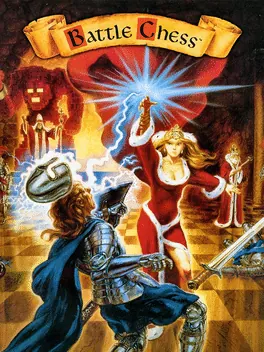
Battle Chess
Battle Chess was developed by Interplay as their first project after severing ties with Electronic Arts. They designed it for the Amiga in 1988, and it was released on the majority of the other systems in the late 1980s and early 1990s as well. It was widely successful, and resulted in two follow-ups, many copy-cat games, and a remake for Steam on PC. The only significant criticism the game received was the weak chess AI, as it was not until the mid 1990s that chess ai began to consistently win against strong opponents.
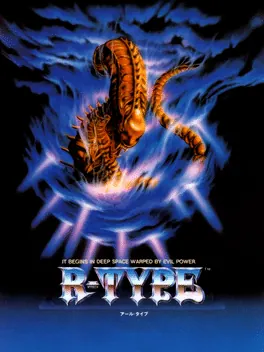
R-Type
R-Type is set in the 22nd century, and the player flies a futuristic fighter craft called the R-9a "Arrowhead", named for its shape, and because it is the ninth model in the 'R' series of fighter craft (but it is the first of the series to actually be used in combat; the previous models were all prototypes). The mission is to 'blast off and strike the evil Bydo Empire'. The R- in the series title originally stood for "ray", as in a ray of light. It was a reference to the many different types of ray-like weapons in the first R-Type. his was later retconned in R-Type Final to refer specifically to the production code as well as a term of endearment for the player fighter craft, the "Round Canopy". The original R-Type was well received by most gaming critics. However, it was also infamous for its relentless difficulty. It earned 7th place in IGN's Top 10 most difficult games to beat. The gameplay of R-Type is noticeably distinct among shoot 'em ups. Invariably the player will lose, not because of an inequality in firepower, but because of the design of the levels themselves. There is usually a 'correct' way to get through a level, but players must learn these by experience - i.e. by losing and restarting from earlier in the level. The game innovated with its weapon system compared to contemporary shooters, featuring a chargeable shot (beam-meter), and detachable 'force' pod; levels were designed to require different tactics and ideal weapons (air-air, diagonal, or air-ground laser).
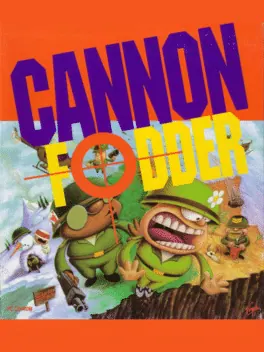
Cannon Fodder
Cannon Fodder is an action-strategy shoot 'em up game developed by Sensible Software and published by Virgin Interactive. The game is military-themed and based on shooting action but with a strategy game-style control system. The player directs troops through numerous missions, battling enemy infantry, vehicles and installations. Cannon Fodder has a darkly humorous tone which commentators variously praised and condemned. Its creators intended it to convey an anti-war message, which some reviewers recognised, but the Daily Star and a number of public figures derided the game. In other respects, reviewers highly praised the game, which widely achieved scores of over 90% in Amiga magazines. Amiga Action awarded it an unprecedented score, calling it the best game of the year.

Dune
Dune is a 1992 video game, based upon Frank Herbert's science fiction novel of the same name. Developed by Cryo Interactive, is the first of the Dune computer games. Dune blended adventure with economic and military strategy, and is considered by many the most immersive Dune computer game. Loosely following the story of the novel, the game casts the player as Paul Atreides, with the ultimate goal of driving the Harkonnen from Planet Dune, while managing spice extraction, military, and later, ecology through the native Fremen tribes. As the player progresses, his troops are equipped with weapons from "crysknives" to atomics, tap into Paul's latent psychic powers, and get acquainted with such characters from the book as Chani and Liet-Kynes.

Desert Strike: Return to the Gulf
Desert Strike: Return to the Gulf, commonly known as Desert Strike, is a shoot 'em up video game released by Electronic Arts (EA) in February 1992 for Sega's Mega Drive. The game was later released on several other formats such as the SNES, including a much upgraded version for the Amiga home computer. The game was inspired by the Gulf War and depicts a conflict between an insane Middle Eastern dictator, General Kilbaba, and the United States. The player controls a lone Apache helicopter and attempts to destroy enemy weapons and installations, rescue hostages and capture enemy personnel, while managing supplies of fuel and ammunition.
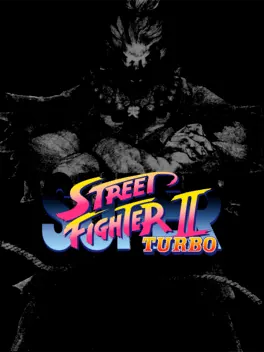
Super Street Fighter II Turbo
Super Street Fighter II Turbo, released in Japan as Super Street Fighter II X: Grand Master Challenge, is a competitive fighting game released for the arcades by Capcom in 1994. It is the fifth installment in the Street Fighter II sub-series of Street Fighter games, following Super Street Fighter II: The New Challengers. Like its predecessor, it ran on the CP System II hardware. Super Turbo introduced several new gameplay mechanics not present in previous versions of Street Fighter II, including the addition of Super Combos and air combos. It also introduced the secret character Akuma, who would go on to become a recurring character in later Street Fighter installments and other Capcom fighting games. Super Turbo was originally ported to the 3DO Interactive Multiplayer, followed by the PlayStation and Sega Saturn (under the title of Super Street Fighter II Turbo: The Ultimate Championship) as part of the Street Fighter Collection, and for the Dreamcast in Japan under the title of Super Street Fighter II X for Matching Service. A remake of the game was released for the PlayStation 3 and Xbox 360 titled Super Street Fighter II Turbo HD Remix.

Cool Spot
Cool Spot is a mascot for 7 Up, introduced in 1987. During this time, the red spot in the 7 Up logo was anthropomorphized: given arms, legs, a mouth, and sunglasses. British video games developer Virgin Interactive's American studio produced a platform game starring the 7 Up Spot, entitled Cool Spot.

Road Rash
Road Rash is a high-octane motorcycle racing game where players become bikers competing in illegal races across the U.S.A. The game focuses on a series of races in California, which players must win to progress to more challenging competitions. Along the way, they engage in both unarmed and armed combat to outmaneuver other racers.
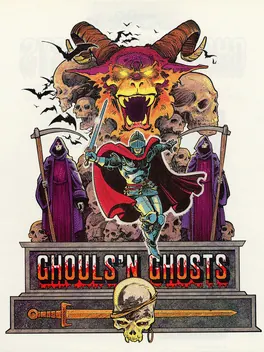
Ghouls 'n Ghosts
The gameplay for Ghouls 'n Ghosts is similar to that of Ghosts 'n Goblins. The player controls the knight Arthur, who must advance through a series of eerie levels and defeat a number of undead and demonic creatures in his quest to restore the souls stolen by Lucifer (Loki in the English-language Mega Drive and Sega Master System versions), including the soul of his lover, Princess Prin Prin. Along the way, Arthur can pick up a variety of weapons and armor to help him in his quest. While the core gameplay remains the same as its predecessor, the game now allows Arthur to fire directly upward and directly downward while in mid air. By jumping in certain spots, players can cause a treasure chest to erupt from the ground. By firing his weapon at the chest, players may uncover new weapons, gold armor or an evil magician that changes Arthur into an elderly man or a helpless duck. The gold armor allows players to charge up the weapon to release a powerful magical attack. Each weapon has its own special attack. There are five levels and Lucifer's chamber at the end, considered a sixth level in itself. To defeat the game, Arthur must complete level 1 to 5 twice. Upon completing level's 1 to 5 the first time, Arthur is taken back to level 1 again but this time a special weapon appears during the game. To enter Lucifer's chamber the player must have this special weapon equipped and defeat the penultimate boss.

Indiana Jones and the Last Crusade: The Graphic Adventure
Europe, 1938. The Lost Ark was just a warm up! Now Adolph Hitler is after the most powerful talisman of all- the Holy Grail. A few brave men stand in his way. Fortunately, one of them is Indiana Jones. And this time, he has his dad with him. The bad guys are in your face all the way- Nazis, mercenaries, traitors, spies. Not to mention everything the Luftwaffe can throw at you.. Can you handle the heat? If you can, you just might earn a higher I.Q. (Indy Quotient) than the man with the whip and the hat. Puzzles, action, adventure.
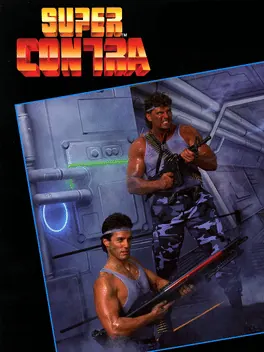
Super Contra
Super Contra is a Run and Gun-style action game produced by Konami, originally released as a coin-operated arcade game in 1988. It is the sequel to the original Contra and the second game in the Contra series released for the arcades. Like in the original game, the game centers on soldiers Bill Rizer and Lance Bean, who are once again assigned to protect the Earth from an army of alien invaders. The game features standard side-scrolling stages, as well as all new overhead stages in lieu of the original game's "3D" stages.
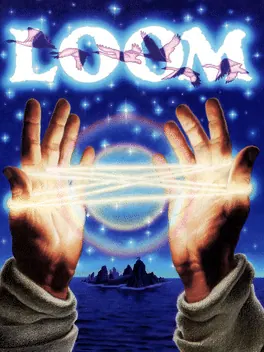
Loom
Long after the passing of the Second Shadow, when dragons ruled the twilight sky and the stars were bright and numerous, came the Age of the Great Guilds. Blacksmiths. Shepherds. Clerics. Each dedicated to the absolute control of secret knowledge. Another such Guild was the Weavers. Over the centuries, their craft transcended the limits of physical cloth, until they wove the very fabric of reality itself. Now, a strange power has swept the Weavers into oblivion, leaving behind one Weaver boy to unravel the mystery. Help young Bobbin rescue his Guild...and you just might save the universe from an unspeakable catastrophe.
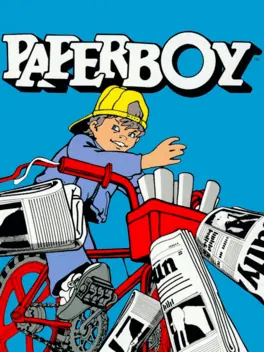
Paperboy
Paperboy is a 1985 arcade game by Atari Games originally developed in 1984 . The players take the role of a paperboy who delivers newspapers along a suburban street on his bicycle. The game was ported to numerous video game consoles and personal computers. Paperboy was innovative for its theme and novel controls. The player controls a paperboy on a bicycle delivering newspapers along a suburban street which is displayed in a cabinet perspective (or oblique projection) view. The player attempts to deliver a week of daily newspapers to subscribing customers, attempts to vandalize non-subscribers' homes and must avoid hazards along the street. Subscribers are lost by missing a delivery or damaging a subscriber's house.
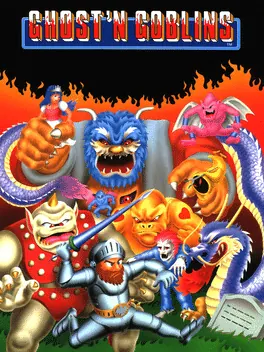
Ghosts 'n Goblins
Ghosts 'n Goblins is a platform game where the player controls a knight, named Sir Arthur, who must defeat zombies, ogres, demons, cyclops, dragons and other monsters in order to rescue Princess Prin Prin, who has been kidnapped by Satan, king of Demon World. Along the way the player can pick up new weapons, bonuses and extra suits of armor that can help in this task. The game is often considered very difficult by arcade standards and is commonly regarded as one of the most difficult games ever released. The game is considered by Gametrailers.com to be the world's second most difficult game ever made. The player can only be hit twice before losing a life (the first hit takes away Arthur's armor, and the player must continue on in his underwear until completing the level, or finding replacement armor). If the player loses a life, he is returned to the start of the level, or the halfway point if he has managed to get that far. Furthermore, each life can only last a certain length of time (generally around three minutes), the clock being reset at the start of a level. If the clock does run out, the player instantly loses that life. After defeating the final boss, but only with the cross weapon (if the player does not have the cross weapon, they will be prompted that it is needed to defeat the boss and restart at the beginning of level 5 and must repeat round 5 and 6 again regardless if the weapon is obtained immediately or not) for the first time the player is informed that the battle was "a trap devised by Satan". The player must then replay the entire game on a higher difficulty level to reach the genuine final battle.
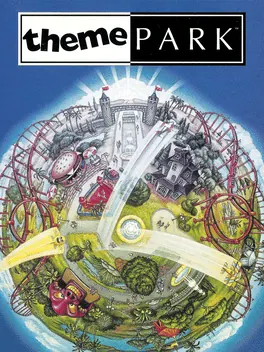
Theme Park
You have inherited a fortune from an eccentric aunt and her will states the money can be spend building the world largest and most profitable theme park. Create a wonderful theme part full of thrilling rides and greasy - but delicious - food and start to make the loads of money. You are a lucky one who can create the best theme park ever made plus make a fortune. Your park will be compared to 40 rivals all over the world every year. Your goal is to become the best park in all categories.
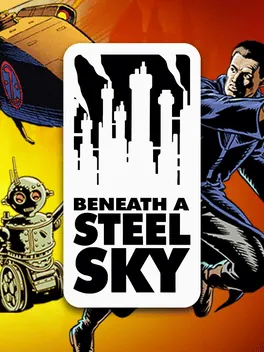
Beneath a Steel Sky
Beneath a Steel Sky is a cyberpunk, point and click, adventure game. You assume the role of Robert Foster and embark on a quest to make the world a better place, along with your robot companion Joey.
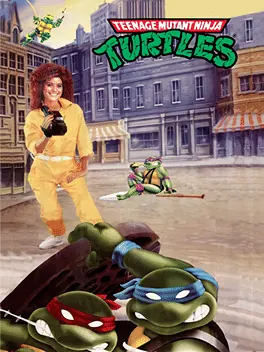
Teenage Mutant Ninja Turtles
NOTE: This is the original 4-Player Arcade release, not the NES Title. The player chooses from one of the four Ninja Turtles: Leonardo, Michelangelo, Donatello, and Raphael. After Shredder kidnaps the Turtles' friend April O'Neil and their mentor Splinter, they must give chase, save their comrades, and defeat the evil Shredder. The player chooses from one of the four Ninja Turtles: Leonardo, Michelangelo, Donatello, and Raphael. Depending on the version of the game, the characters are either, chosen at the start of the game or assigned by control panel. After Shredder kidnaps the Turtles' friend April O'Neil and their mentor Splinter, they must give chase, save their comrades, and defeat the evil Shredder. Up to four players (two in some versions) can take control of any of the Turtles. Donatello has slower attacks but a longer range, Michelangelo and Raphael have faster attacks but a shorter range, and Leonardo is a well-rounded Turtle with average range and speed. The eight-way joystick controls the movements of the Turtle, the jump button makes them jump and the attack button makes them hit in front of them using their weapon. In addition to this, some combinations are possible. The Turtles can throw Foot soldiers overhead, and by pressing the jump and attack buttons, a special attack is performed. Raphael rolls along the ground and finishes with a kick, while the other Turtles do a sweeping jump attack with their weapons. Turtles can also spring off the wall in certain areas. Enemies can be defeated more quickly by slamming them into walls or solid objects. Many objects such as traffic cones, parking meters, fire hydrants and exploding oil drums can be hit or damaged with attacks in order to help defeat nearby enemies. In the attract mode, the game showed the first part of the cartoon opening, along with a portion of the Teenage Mutant Ninja Turtles theme song. Most of the enemies the Turtles face are the Foot Soldiers, all color-coded to indicate their attack patterns and weapon of choices. Some enemies, such as the standard purple-clad Foot Soldiers and Roadkill Rodney robots, have the ability to restrain the Turtles' mobility and drain their health, leaving the player open to attack for other enemies. The bosses in the game include Rocksteady and Bebop (individually at first in that order, and later the two of them together), Baxter Stockman, Granitor, General Traag, Krang, and Shredder himself.
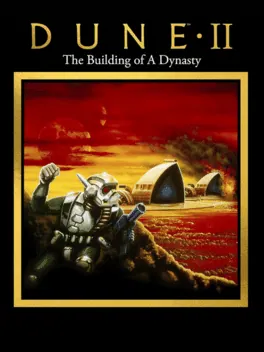
Dune II: The Building of a Dynasty
Dune II is often considered the first mainstream modern real-time strategy game and established many conventions of the genre. Even though set in Frank Herbert's famous Dune universe, the game is only loosely connected to the plot of any of the books or the films based from them. Controlling either of the three Houses, the player must fight a number of battles against the other Houses. In the early levels, the goal is simply to earn a certain number of credits, while in the later missions, all enemies must be destroyed. The single resource in the game is the Spice, which must be collected by harvesters. The spice is converted to credits in a refinery, which are then spent to construct additional buildings and units. There are two terrain types: buildings can only be constructed on stone, while the Spice is only found on sand. However, units moving on sand attract the large sandworms of Dune, who are virtually indestructible and can swallow even large units whole. As levels progress, new and more advanced buildings and units are made available, including structures like a radar station, a repair facility or defense turrets and, for units, various ground troops, light vehicles and tanks. Each House can construct one unique special unit, and, after building a palace improvement, can unleash a unique palace effect.
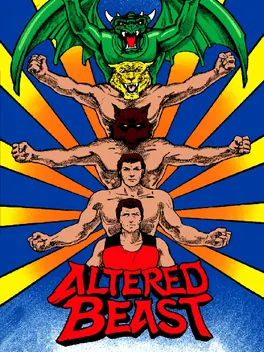
Altered Beast
Altered Beast is a 1988 beat 'em up video game developed by Team Shinobi and published by Sega for arcades. Set in Ancient Greece, the game follows a Roman centurion who is resurrected by the Olympian god Zeus to rescue his daughter Athena from Neff, the demonic ruler of the underworld. By collecting three power-ups in a level, the player character can transform into one of five mythical beasts. In the original arcade, the end credits are interspersed with images of actors in costumes for the different characters and monsters of the game, implying the whole game was a film production.
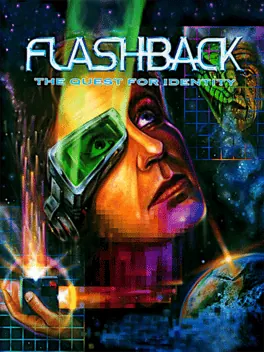
Flashback: The Quest for Identity
Throughout the 20th century, an unprecedented political and economic crisis afflicted Earth, leading to the systematic disabling of it's programme to conquer outer space through lack of funding. The highest priority now was to carryout research into new energy sources, preservation of the enviro- ment and maintenance of the cultural heritage. However, at the dawn of the 21st century, provision of considerable funds from an unknown source released by the politicians of the new, unified government, permitted a return to the space research programme. The conquest began gradually with the construction of huge, manned artificial satellites. Several lunar bases were created with the view to becoming future Earth colonies within the solar system. The considerable advancements made together with the supply of increasingly greater sums of money allowed man to explore, even as far as the planet Titan. You play the part of Conrad Hart, controlling his every move through the 6 levels of the game. During your quest, you will come across many different friends and foes whom you may wish to help or vanquish using your gun. you will have to complete many challenges in order to restore your lost memory. Each level features its own unique graphics and hazards, linked by cinematic animation sequences.

X-COM: UFO Defense
X-COM: UFO Defense is a strategy game that combines tactical combat with base management and global defense. Players lead an international organization tasked with defending Earth from an alien invasion. The game unfolds on two levels: a global view where players manage resources, research alien technology, and intercept UFOs, and a tactical combat mode where squad-based battles occur. Players recruit and train soldiers, build bases, and develop new weapons and equipment based on recovered alien technology. Missions involve turn-based combat against aliens in various environments, with permadeath adding tension to each engagement. As the alien threat escalates, players must balance research, defense, and offensive operations to protect Earth's nations from panic and alien infiltration. X-COM: UFO Defense's blend of strategic depth, tactical combat, and atmospheric tension creates a compelling gameplay experience in the face of a global alien threat.
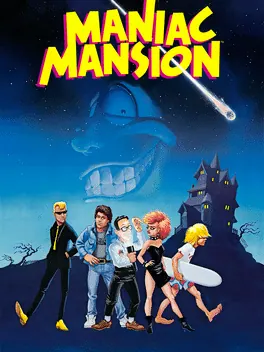
Maniac Mansion
Maniac Mansion is a 1987 graphic adventure video game developed and published by Lucasfilm Games. It follows teenage protagonist Dave Miller as he attempts to rescue his girlfriend from a mad scientist, whose mind has been enslaved by a sentient meteor. The player uses a point-and-click interface to guide Dave and two of his six playable friends through the scientist's mansion while solving puzzles and avoiding dangers. Gameplay is nonlinear, and the game must be completed in different ways based on the player's choice of characters. Initially released for the Commodore 64 and Apple II, Maniac Mansion was Lucasfilm Games' first self-published product.