
Jogos para Amstrad CPC
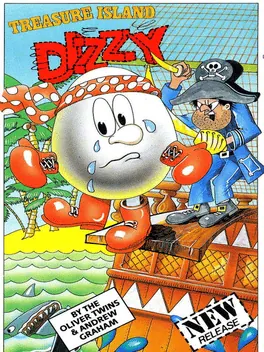
Treasure Island Dizzy
Treasure Island Dizzy is a computer puzzle game published in 1988. Treasure Island Dizzy was the second game in the Dizzy series, and is the sequel to Dizzy - The Ultimate Cartoon Adventure.
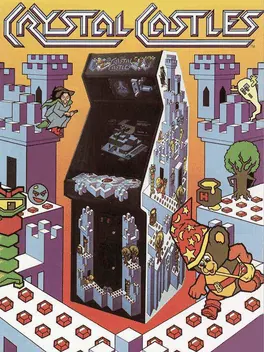
Crystal Castles
Crystal Castles is an arcade game released by Atari, Inc. in 1983. The player controls a cartoon bear by the name of Bentley Bear, who has to collect gems located throughout trimetric-projected rendered castles while avoiding enemies out to get him as well as the gems. Crystal Castles is notable for being one of the first arcade action games with an actual ending, whereas most games of the time either continued indefinitely, ended in what was termed a "kill screen" or simply just restarted from the first level, and to contain advance warp zones.
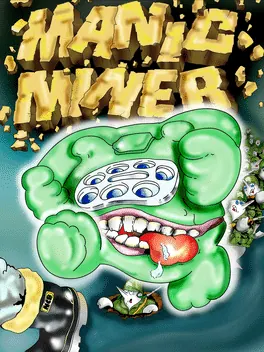
Manic Miner
Manic Miner is a platform video game originally written for the ZX Spectrum by Matthew Smith and released by Bug-Byte in 1983 (later re-released by Software Projects). It is the first game in the Miner Willy series and among the early titles in the platform game genre. The game itself was inspired by the Atari 800 game Miner 2049er. It has since been ported to numerous home computers and video game consoles.
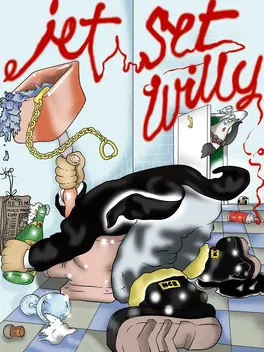
Jet Set Willy
Jet Set Willy is a flip-screen platform game in which the player moves the protagonist, Willy, from room to room in his mansion collecting objects. Unlike the screen-by-screen style of its prequel, the player can explore the mansion at will.
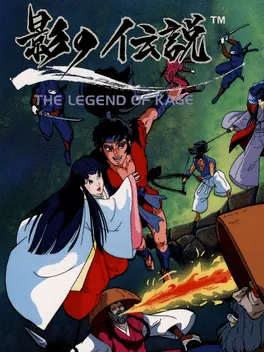
The Legend of Kage
The Legend of Kage is a 1985 arcade game by Taito and was released for several contemporary video game home systems in 1986. The player is armed with a kodachi shortsword and an unlimited amount of shuriken. Grabbing a crystal ball causes the player character's Kage's clothes to change to the next level in colour and thereby attain certain powers (bigger shuriken and/or faster speed); if Kage is hit while in green or orange clothes, he does not die but revert to his normal red clothes. Grabbing a scroll causes Kage to stand still and meditate for several seconds while approaching enemies drop to the ground dead (although the scrolls appear in the arcade version, the crystal balls do not). This MSX version was brought without a license to the SG-1000 in Taiwan.
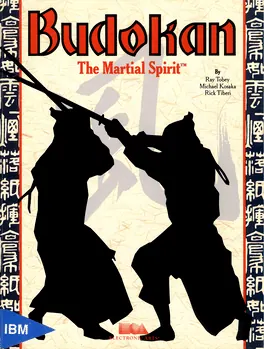
Budokan: The Martial Spirit
Walk the path of the warrior. Learn four classic martial arts- Karate, Kendo, Nunchaku and Bo. Combine power and grace into a dangerous black belt mix. Enter Tobiko Ryu Dojo. Your journey to the Bodokan begins here. Are you willing to endure the hard training it takes to be called a master? Tobiko Sensei observes your every action. Go to him for words on tactics, strategy, and guidance. Put your philosophy into action. Say hello to Goro-San. If you survive him, eleven others are ready to teach you the zen of defeat. If you don't, it's konban-wa (goodnight!). Do you fast attack for quick points or store up your ki (energy) for the devastating blow? Better decide before his Yari answers for you. Authentic Japanese/Okinawan martial arts- all arts and weapons based on real life. Unique player interface allows for over 25 moves per style. Twelve authentic martial arts styles, including Yari, Tonfa, Kusari-gama and Naginata.
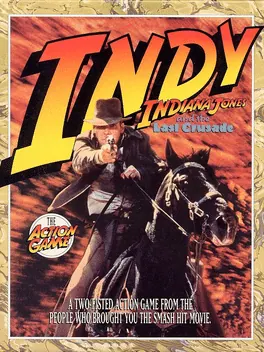
Indiana Jones and the Last Crusade: The Action Game
Indiana Jones and the Last Crusade: The Action Game is a side-scrolling action title based on the 1989 film of the same name. Players control Indiana Jones through various levels that loosely follow the movie’s plot, including iconic locations like the catacombs and the Zeppelin. Gameplay focuses on platforming, basic combat, and item collection, with limited lives and high difficulty. The graphics and sound vary across platforms, with the Amiga and Atari ST versions generally offering the most polished presentation.
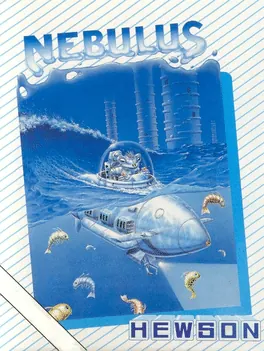
Nebulus
You play a small green guy who needs to blow up eight towers, because their presence is somehow poisoning the water of planets which could potentially be ideal colonies. Unfortunately you need to get to the top of these towers to blow them up. You make your way up to the top of the tower via walkways around the outside of the towers. You need to jump over, kick, and run from various enemies in your journey to the top. Most vertical movement is achieved by jumping onto moving ledges at the right moment. The game was considered revolutionary in its time for its graphic technique. As the main character walked around the outside of the tower, the character was fixed in the middle of the screen while the tower itself rotated. This gave it a pseudo-3D effect. Towers are linked together via a voyage through the sea in your trusty MK.7 submarine. This plays out as a side-scrolling collect-'em-up in which bonus points can be obtained.
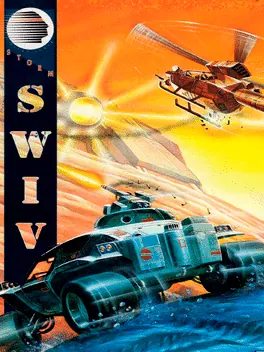
SWIV
SWIV is a vertical scrolling shooter and an unofficial follow-up to Sales Curve's conversion of the side scroller Tecmo arcade game Silkworm. One player controls a helicopter and the other a jeep, with the jeep transforming into a boat when the vehicles pass over water. As well as a host of blaster fodder the game also includes a mid-level enemy inspired by the "Goose" enemy from the earlier title Silkworm. Pieces of this enemy would fly onto the screen and assemble into one vehicle before commencing to fire at the players' vehicles. When destroyed the "goose" would drop power-ups.
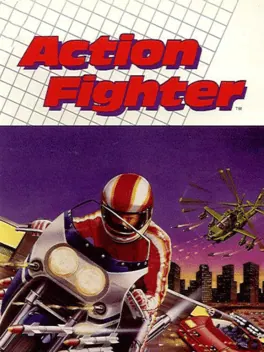
Action Fighter
Take to the streets or take to the skies. Because Action Fighter is the incredible, transformable combat vehicle. You start out on a customized cycle. Built with enough speed and power to jump over water and overtake enemies. Then, by finding the right parts along the way, you'll change your cycle into a supercharged, state-of-the-art sports car. Next, add two turbojets to make your car airborne. And take to the skies. Down hyped-up helicopters and jet spaceships from above. And no matter which vehicle you're manning- or who you're after- get ready to stand by for action!
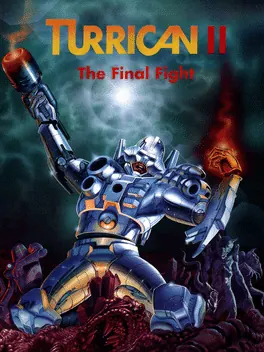
Turrican II: The Final Fight
Turrican II: The Final Fight is a platformer/shooter as typically seen on consoles, but designed for home computers from the ground up. Its plot is - naturally - very simple: an evil mega-robot called The Machine attacks the United Planets Ship Avalon 1, slaughtering all who resist. All - except Bren McGuire, who manages to escape and slips into the experimental Turrican bionic armor. As Turrican, he strives to show The Machine who's the boss. Unlike other games of its type, this game contains three levels of horizontal shooter action in the spirit of R-Type or the developers' own Katakis. Six large worlds are to be explored, where you are basically free to go everywhere you want, since there is no automatic scrolling and the levels are packed with hidden extra lives and weapons. All those levels are very different: the first one in the rock desert is pretty colorful with parallaxing rainbow background and happy music, while the following worlds get darker and darker.
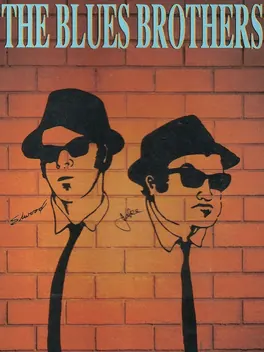
The Blues Brothers
The Blues Brothers video game was designed by Titus Software and is based on the comedic sketch band of the same name. The platformer-style game was released in 1991 for MS-DOS. It was subsequently ported to a number of other platforms, including the Amiga, Atari ST, and NES.

Super Monaco GP
A superb Formula One racing game from Sega that took sprite-scaled graphics to a whole new level. The game's single track offered a very reasonable representation of the famous Monaco Grand Prix circuit. Players could chose to race with one of three different skill/gear settings : Beginner : Automatic Gears Intermediate : 4-Speed Manual gears Professional : 7-Speed Manual Gears Before entering the Grand Prix, a qualification lap had to be completed. In the event of qualifying, the qualifying time determined the player's position on the starting grid. During the race itself, checkpoints had to be reached within a set time, or the race was over.
Zork II: The Wizard of Frobozz
The adventure begins in the Barrow from "Zork I" armed only with the trusty brass lantern and sword of elvish antiquity. The purpose of the game is not initially clear. Like its predecessor, Zork II is essentially a treasure hunt. Unlike the previous game, the ten treasures are tied together by a crude plot. Finding the treasures does not end the game, nor are all the treasures needed to finish the game. Instead, the adventurer must figure out a way to use the treasures in order to reach the game's finale.
Last Ninja 2: Back with a Vengeance
Once beaten, but not destroyed, the evil Shogun Kunitoki used all his mystic powers to transport himself through time and establish a new empire of tyranny in modern day Manhattan. Only you can stop him!

Paperboy 2
You're a paper boy (or papergirl). Get on your bicycle. Avoid obstacles on the road, such as dogs, cars, and basically everything you can imagine. Hell, some people shoot cannon balls at you! And you'd better be very sure to only throw papers at the right houses!
Bonanza Bros.
Just who are these guys? Mobo and Robo are the coolest villains you'll ever meet- they rob banks, museums (and innocent computer gamers of their sanity). One evening whilst watching TV a mysterious stranger appeared on screen. "Good Evening Boys I've got a job for you... My businesses are being robbed and I need you to test my security systems... Deliver the goods and I'll reward you." Take control of Mobo and Robo and guide them around the various establishments, collecting evidence on the way.
Klax
Klax is a 1989 computer puzzle game designed by Dave Akers and Mark Stephen Pierce. The object is to line up colored blocks into rows of similar colors to make them disappear, to which the object of Columns is similar. Atari Games originally released it as a coin-op follow up to Tetris, about which they were tangled in a legal dispute at the time.
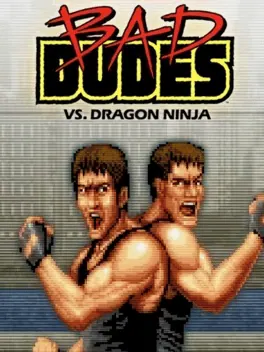
Bad Dudes vs. Dragon Ninja
Bad Dudes Vs. DragonNinja, often referred to simply as Bad Dudes (on the American NES port of the arcade original), and known in Japan simply as DragonNinja is a 1988 arcade game developed and published by Data East. It was also ported to many computer and game console home systems. Bad Dudes is a side-scrolling beat 'em up where the players are set in the role of the titular duo tasked with rescuing "President Ronnie" from ninja kidnappers. It was met with commercial success, and a generally positive to mixed critical reception. It has since become widely known for its general premise and introductory cut scene.
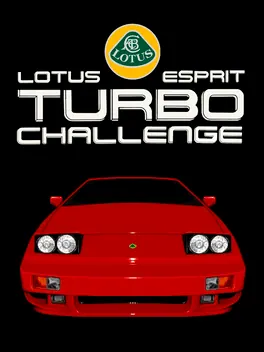
Lotus Esprit Turbo Challenge
The first in a series of 3 racing games endorsed by the legendary car company, which is now a part of Proton. The game features a total of 32 fictitious racetracks from around the world, split into 3 difficulty levels. There are 19 computer opponents (15 on the 8-bit versions) and you have to finish in the top 10 (top 8 on the 8-bits) to progress. The higher you finish in one race, the lower down the grid you start for the next race. The opposition drivers have pun names based on the F1 drivers of the day - examples include Ricardo Pastry and Crashhard Banger. You can choose between sound effects or one of a variety of music pieces. The game features a simultaneous 2-player mode, but the 1-player mode only uses half the screen, a simple animation filling the other half. In most races you will have to make a pitstop for fuel in order to reach the finish. The tracks include features such as oil slicks, roadworks, boulders and rivers - contact with these (or the other cars) will slow you, but there is no car damage model.
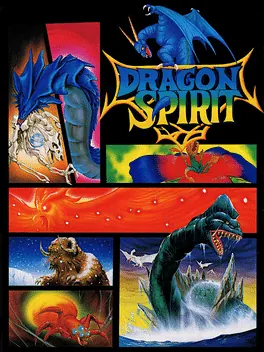
Dragon Spirit
Dragon Spirit is a vertical scrolling shooter arcade game that was released by Namco in 1987 and licensed to Atari Games for its American manufacture and distribution. In the kingdom of Mitgult, a serpent demon named Zawell escapes imprisonment after a thousand years, and kidnaps Princess Alicia. A soldier named Amul is chosen to rescue her and destroy Zawell. He points his sword skyward and transforms into a powerful blue dragon. He can breathe fire and drop bombs, as well as collect up to thirteen additional powers during his journey. Amul must fight nine of Zawell's mightiest beasts, one at the end of each stage, before facing Zawell himself.
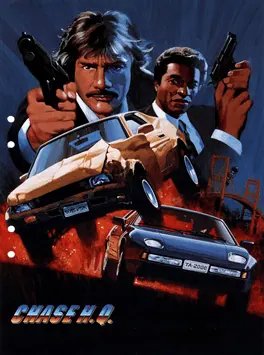
Chase H.Q.
At the start of each level the player is informed who they are pursuing, a great distance away: They must apprehend the criminal before their time limit expires. The criminal's car is constantly moving away, so if the player repeatedly crashes or drives too slowly, the criminal will escape. At some points during the game the road splits, and the correct turn must be taken, otherwise it will take longer to catch the criminal. When their vehicle is reached, the time limit is extended; the vehicle must be rammed a number of times until the criminal is forced to stop, then is arrested. The game includes five levels. As both the initial time limit to reach the criminal and the time extension to ram the criminal are just 60 seconds, the game is very short - a player who is able to finish the game on one credit will enjoy at most ten minutes of game-play. Interestingly enough when Nancy at Chase HQ (at the start of every level) calls on the radio the frequency is always 144.X (various)Mhz. This is actually the 2-meter band of amateur or ham radio frequencies. Although superficially similar in technology to Sega's Outrun, Chase HQ features significant technical advancements over that title in the presentation of perspective, hills and track splits.

Kick Off
Kick Off was the first football game of its kind, having a top-down view and unlike other football games of that time, the ball was not glued to the feet of the players.
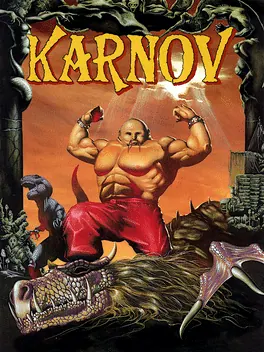
Karnov
Karnov is a 1987 platform arcade game. It is the debut of Data East's mascot of the same name. After Data East became defunct due to bankruptcy in 2003, Paon, a company comprising former Data East staff, acquired the rights to Karnov, along with multiple other Data East games. In the game, players take control of the title character Jinborov Karnovski, or "Karnov" for short. Karnov is a strongman popularly illustrated as being from an unspecified part of the Soviet Union's Central Asian republics as shown on the original arcade flyer and again in Karnov's Revenge.
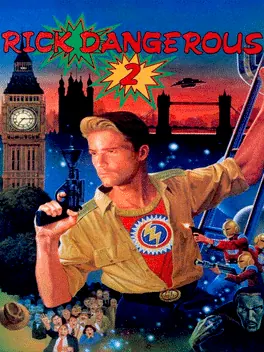
Rick Dangerous 2
Rick Dangerous II is a multi screen platformer game released in 1990 by MicroStyle.
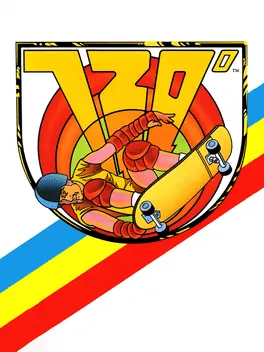
720 Degrees
720 Degrees is a 1986 arcade game by Atari Games. 720°, a skateboarding game, is notable in that along with BMX Simulator, it is one of the first extreme sports video games, and has a unique timed structure that requires the player score points in order to keep the game going.
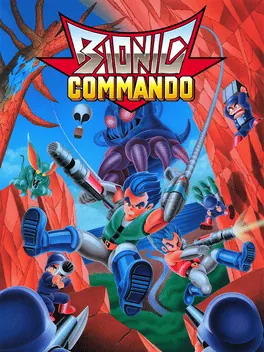
Bionic Commando
For two years, your people have struggled against the relentless onslaught of invading forces. With your army reduced to a handful and your artillery depleted, further resistance seems impossible. But in a hidden underground laboratory, a team of scientists has at least perfected a new kind of fighting machinery: a bionic arm that extends and contracts, providing unheard-of strength and maneuverability. Combined with an arsenal of rapid-fire, armor-piercing, and heat-seeking weaponry, this will put the power of an entire army in the hands of one man... one carefully chosen soldier, who has what it takes to become a new breed of unstoppable commando... a Bionic Commando. And you are that soldier! Your mission will take you through the heavily-patrolled wilderness surrounding the enemy headquarters, and into the very heart of the fortress itself. Even to the most courageous soldier, it would seem an impossible challenge. But there has never been a soldier like the Bionic Commando!
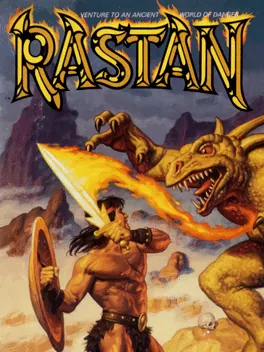
Rastan
Rastan is a fantasy-themed side-scrolling action game originally released for the arcades in 1987. The controls of Rastan consist of an eight-way joystick and two buttons for attacking and jumping. Using the joystick in combination with either button, the player can determine the height of Rastan's jumps and the direction in which he swings his weapon. The game uses a health gauge system along with limited lives, although certain obstacles will instantly kill Rastan regardless of how much health he has left.
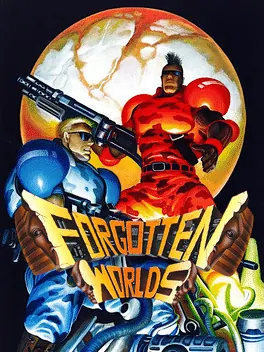
Forgotten Worlds
Forgotten Worlds can be played by up to two players simultaneously. The player controls a flying muscle-bound soldier armed with a rifle with unlimited ammo. The Player 1 character is equipped with a long-range automatic rifle, while Player 2 has a short-range wide shot. The controls in the original coin-op version consists of an eight-way joystick for moving the character in the air while flying and a unique rotatable button known as the "roll switch".Rotating the switch left or right allows the player to adjust their character's aim in one of sixteen directions, while pressing it causes the player character to shoot his gun. This allows for the player to move their character anywhere while keeping their aim in one direction. Pressing the switch rapidly will cause the character to perform a "megacrush" attack will destroy all on-screen enemies, but at the expense of a portion of their vitality gauge. The player character is accompanied by a satellite module orbiting near him that will provide backup firepower every time the player fires their gun. Like the main character, the satellite can also be rotated with the roll switch. Rotating the character while firing will only rotate the aim of the satellite, while rotating the character without firing will not only rotate the satellite's aim, it will also move its relative position around the player. The player can obtain blue-colored coins known as "zennies" from defeating enemies throughout the game. The zennies are used as currency to obtain new power-up items from shops located at certain points in each stage. When the player enters an item shop, they are given a choice of the items available and a limited time to make any purchase they wish. These items consists primarily of new weapons for the satellite module, but also includes a health kit to restore lost vitality, an armor that allows the player to sustain additional damage, and even tips on how to defeat the boss awaiting at the end of the current stage. Forgotten Worlds consists of five stages with a total of eight bosses. The player will lose if their vitality gauge runs out, but will be given a chance to continue.
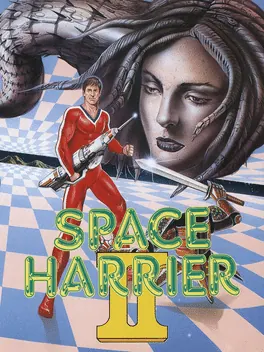
Space Harrier II
A call for help comes from deep in the universe. Fantasyland has been taken over by destructive forces. Quick on the scene is Space Harrier equipped with his laser, who must attempt to outwit and outmanoeuvre the hoards and prevent Fantasyland from being blown into oblivion!

The Duel: Test Drive II
The Duel: Test Drive II is a cross-platform racing game developed by Distinctive Software and published by Accolade in 1989. It is the second entry in the Test Drive series of video games.
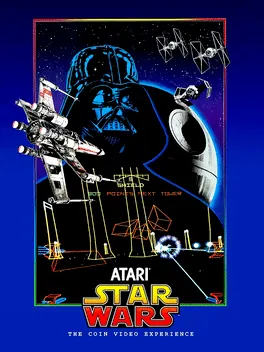
Star Wars
Star Wars is a first-person shoot 'em up based around the original Star Wars film. You take on the role of Luke Skywalker, aiming to destroy the Death Star - which, as any fan knows, involves attacking the 'weak spot' near the exhaust. To even get to this you have to pass swarms of TIE Fighters. Complete the game and it loops back around at ever-increasing difficulty. The game uses vector graphics, which allow lots of action at high speed on comparatively slow systems.
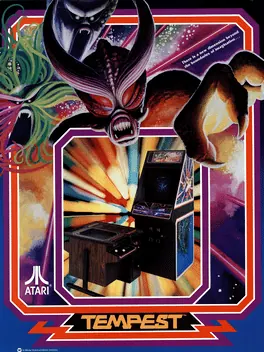
Tempest
Tempest is a 1981 arcade game by Atari Inc., designed and programmed by Dave Theurer. It takes place on a three-dimensional surface, sometimes wrapped into a tube, which is viewed from one end and is divided into a dozen or more segments or lanes. The player controls a claw-shaped spaceship (named Blaster) that crawls along the near edge of the playfield, moving from segment to segment. Tempest was one of the first games to use Atari's Color-QuadraScan vector display technology. It was also the first game to allow the player to choose their starting level (a system Atari dubbed "SkillStep"). This feature increases the maximum starting level depending on the player's performance in the previous game, essentially allowing the player to continue. An official port was released for the Atari ST. An official port that bears the Atari logo was released by Superior Software for the BBC Micro and Acorn Electron in 1985, and another by Electric Dreams for the ZX Spectrum and Amstrad CPC in 1987. Versions for the Atari 2600 and 5200 were in the works in Atari, Inc. during 1984, and unfinished prototypes exist for both of them.
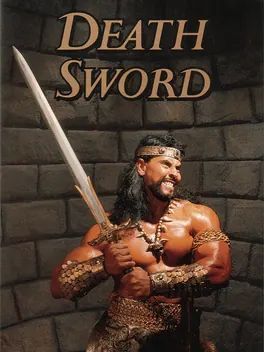
Death Sword
Barbarian: The Ultimate Warrior is a video game first released for Commodore 64 personal computers in 1987; the title was developed and published by Palace Software, and ported to other computers in the following months. The developers licensed the game to Epyx, who published it as Death Sword in the United States. Barbarian is a fighting game that gives players control over sword-wielding barbarians. In the game's two-player mode, players pit their characters against each other. Barbarian also has a single-player mode, in which the player's barbarian braves a series of challenges set by an evil wizard to rescue a princess.
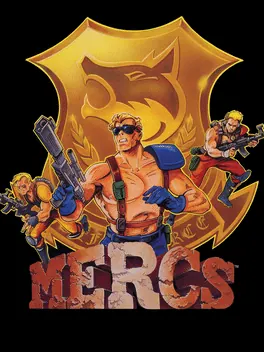
Mercs
The players are members of a covert counter-terrorist team of mercenaries known as the "Wolf Force". The aim of the game was to rescue the former President from rebels in the fictional African country of Zutula, which bears resemblance to the apartheid regime in South Africa. The game has six main levels, plus the final level where your mission is to rescue the former U.S. president from the Hercules Transport. The game's arsenal include real-world machine guns, shot guns, flame throwers, and grenade launchers. Several missions even have pilotable vehicles available.
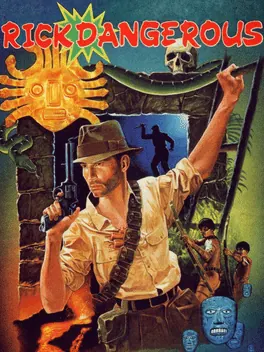
Rick Dangerous
The game is largely based on the Indiana Jones movie Raiders of the Lost Ark. Set in 1945, British agent Rick Dangerous travels to the Amazon jungle to search for the lost Goolu tribe. His plane crashes in the jungle, and Rick must escape from the enraged Goolu. When the game starts Rick finds himself in a cave running from a rolling boulder, a famous scene from the Indiana Jones movie. Armed with a pistol and dynamite, Rick must fight hostiles and evade countless traps in three more levels. The second level is set inside a pyramid in Egypt. In level three, Rick must venture to the Nazi stronghold of Schwarzendumpf castle to rescue captured Allied soldiers. The rescued soldiers tell him that the Nazis are planning a missile attack on London. Therefore, in the last level Rick must infiltrate their secret missile base.