
Jogos para Apple II
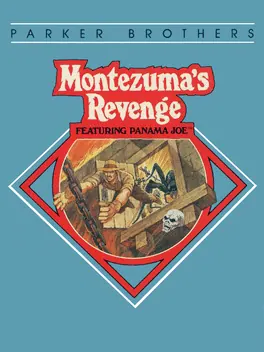
Montezuma's Revenge featuring Panama Joe
PANAMA JOE, That’s what they call him ‘round these parts; though no one knows his real name or where he comes from. But one thing’s for sure, PANAMA JOE’s a daredevil from the word “go!” No risk’s too great if the reward’s large enough. Winning. That’s what’s the most important to him. And more times than not, that’s exactly what he does. Because he’s tough, clever – resourceful. And sometimes, downright pig-headed! Though occasionally (ah-hum), he’s been known to get in over his head. Luckily, he’s got a knack for getting himself out of hot water as quickly as he gets into it! Let’s hope MONTEZUMA’S REVENGE is one of those times.
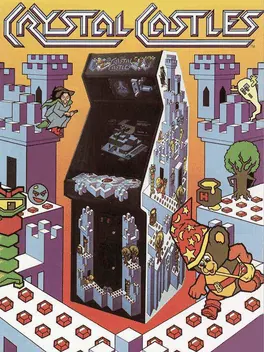
Crystal Castles
Crystal Castles is an arcade game released by Atari, Inc. in 1983. The player controls a cartoon bear by the name of Bentley Bear, who has to collect gems located throughout trimetric-projected rendered castles while avoiding enemies out to get him as well as the gems. Crystal Castles is notable for being one of the first arcade action games with an actual ending, whereas most games of the time either continued indefinitely, ended in what was termed a "kill screen" or simply just restarted from the first level, and to contain advance warp zones.
Might and Magic II: Gates to Another World
The Sequel to the successful Might and Magic I, it boasted better graphics, a larger world, but still pretty much the same game engine and presentation. Embark on a glorious journey then save the world of CRON and yourself. A balanced party is a necessity in this game. There are several locations and items that are restricted to certain genders, alignments, or races. A party made up of Good Human Males won't get you very far. Time plays a large role in this game. Time travel is a part of it, but on a more basic level, you will find that characters age as the game goes on. If you wait too long, your characters' statistics will change to reflect their aging.
Might and Magic: Book One - The Secret of the Inner Sanctum
Feel the power... Experience the magic! Lead your party of hand-picked adventurers into the enchanted Land of Varn. From dark, moldy caverns through corridors of majestic castles, you'll travel in search of clues to unlock the Secret of the Inner Sanctum. Daring exploits of heroism and sorcery will keep you riveted for hours. Choose from a variety of extraordinary personalities and lead them on an adventure of a lifetime. Over 250 weapons and items and more than 92 mystical spells to use in your search for the Inner Sanctum. Battle legions of ravenous monsters as you travel through forests and islands shrouded in mystery.
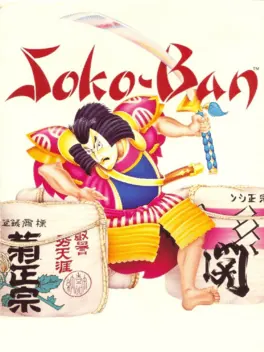
Soko-Ban
Sokoban ("warehouse keeper") is a is a classic puzzle game created in 1981 by Hiroyuki Imabayashi, and published in 1982 by Thinking Rabbit, a software house based in Takarazuka, Japan. In 1984 the ASCII Corporation published a version produced by Khaled Bentebal. It was the basis of numerous clones in the later years. It is set in a warehouse. On each level, the player must push crates (from square to square) to get them onto designated spots; once each crate is on a marked spot, the level is complete. Crates can only be pushed one at a time (so two crates next to each other cannot be pushed together), and cannot be pulled--so it's possible to get a crate stuck in a corner, where it cannot be retrieved! By the last levels, you must plan 40 steps in advance.
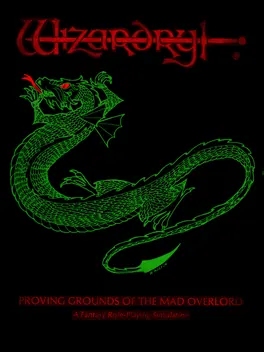
Wizardry: Proving Grounds of the Mad Overlord
The Mad Overlord Trebor was once only power-mad, but went off the deep end after he acquired a magical amulet of immense power, only to have it stolen from him by his nemesis, the evil archmage Werdna. Werdna, not quite sure how to use the amulet properly, accidentally causes an earthquake which creates a ten-level dungeon beneath Trebor's castle. To avoid looking silly, Werdna declares the dungeon to be the new lair for him and his monster hordes. Trebor, not to be outdone, declares the labyrinth his new Proving Grounds where adventurers must prove themselves for membership in his elite honor guard, and incidentally retrieve his amulet in the process. The first Wizardry was one of the original dungeon-crawling role-playing games, and stands along with Ultima and Might & Magic as one of the defining staples of the genre. The player generates and control a party of up to six different adventurers, choosing from four races (humans, elves, dwarves, gnomes and hobbits), three alignments (good, neutral and evil), and four basic classes (fighter, priest, mage and thief). These can later evolve into elite classes (bishop: priest with mage spells; samurai: fighter with mage spells; lord: fighter with priest spells, and ninja: fighter with thief abilities) if they meet the necessary level requirements. After outfitting the party with basic weapons and armor, the player sends it into a 3D vector maze-like dungeon to fight monsters in turn-based combat and find treasure.
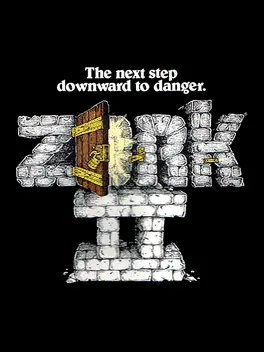
Zork II: The Wizard of Frobozz
The adventure begins in the Barrow from "Zork I" armed only with the trusty brass lantern and sword of elvish antiquity. The purpose of the game is not initially clear. Like its predecessor, Zork II is essentially a treasure hunt. Unlike the previous game, the ten treasures are tied together by a crude plot. Finding the treasures does not end the game, nor are all the treasures needed to finish the game. Instead, the adventurer must figure out a way to use the treasures in order to reach the game's finale.
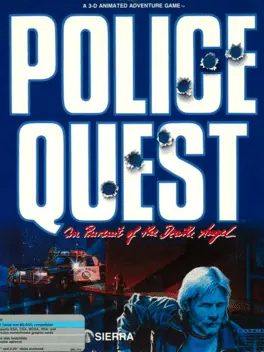
Police Quest: In Pursuit of the Death Angel
Police Quest: In Pursuit of The Death Angel is an adventure game in which gameplay is centered on interacting with the environment to resolve a series of scenarios. These largely revolve around typical police work, such as securing crime scenes and recovering stolen vehicles, while following proper duty procedures. The original release of the game required the player to type in the desired actions, such as opening doors, pressing buttons, or firing one's gun, while the remake allows the player to use the mouse to select actions from a menu and objects in the environment.
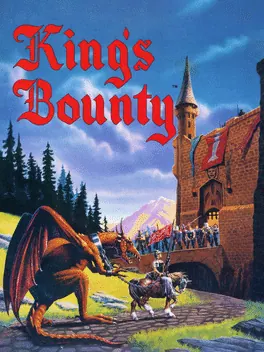
King's Bounty
While King Maximus ruled the land, life was good in the four continents. The Sceptre of Order rested safely in his hands, keeping at bay the forces of darkness that infested the world. Children were happy. Merchants prospered. Honest folks made honest livings. And nobody complained much. But far across the waters, Arech Dragonbreath, leader of the Dark Legions, looked enviously upon the wealth and splendor of the four continents. With the aid of great magic, Arech stole into the chambers of King Maximus and wrested the Sceptre from the grip of the sleeping King. He then released his evil forces, ordering his minions and lieutenants to seize the land in whatever manner they pleased (as long as it involved considerable amounts of pain and terror). Arech retired to his new lair on the four continents and waited for King Maximus’s certain resistance. The King and his forces, however, offered none. Fearing some kind of trickery, Arech peered into his prophetic crystal to see what Maximus was up to. The crystal showed the King lying in bed, his face pale and gaunt like death itself. Over the King stood a noble young knight with the strength and resolve of great leader. The King was speaking. "Come here" he gasped, "I am weak and breath is a luxury. Please." He extended his hand and the great leader drew close. "You must restore my kingdom. I, too, must be restored. I am tied to this land and as it dies, so do I. My days here are numbered. You must recover the Sceptre if I and my land are to live."Arech watched this exchange and quickly buried the Sceptre somewhere on the four continents. He draw a map of its location, then shredded it into 25 pieces. He gave one to each of his 16 villainous nobles, kept one for himself, and the other eight he hid with powerful artifacts around the four continents. Your time grows short, leader. You have your quest and King Maximus’s last hope. May you be guarded in your journey by the Spirits of Order. Good luck!
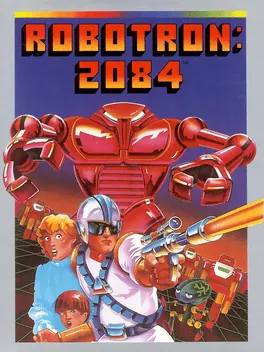
Robotron: 2084
In 2084, man creates a species of super-advanced cyborgs known as Robotrons. Recognizing the imperfect nature of their creators, the Robotrons conclude that the inefficient human race must be exterminated. In Robotron: 2084, only you and a single family of clones remain. If mankind is to survive, you must destroy the Grunts, Brains, Enforcers, and Tanks - but avoid the indestructible Hulks at all cost. Can you withstand wave after wave of android invasion and rescue Mommy, Daddy, and Mikey... before it's too late?
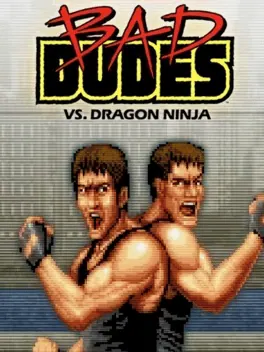
Bad Dudes vs. Dragon Ninja
Bad Dudes Vs. DragonNinja, often referred to simply as Bad Dudes (on the American NES port of the arcade original), and known in Japan simply as DragonNinja is a 1988 arcade game developed and published by Data East. It was also ported to many computer and game console home systems. Bad Dudes is a side-scrolling beat 'em up where the players are set in the role of the titular duo tasked with rescuing "President Ronnie" from ninja kidnappers. It was met with commercial success, and a generally positive to mixed critical reception. It has since become widely known for its general premise and introductory cut scene.
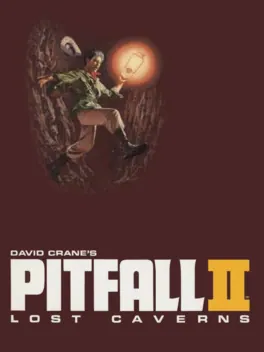
Pitfall II: The Lost Caverns
Pitfall II: The Lost Caverns is the sequel to Pitfall and was released for a variety of systems during the mid-1980s including the SG-1000 in 1985. It was also ported to Sega System 1 arcade hardware by Sega. Gameplay is similar to the original game, but the levels are more maze-like. Sega's version of Pitfall II was tweaked significantly from its western counterparts released for the Atari 2600, ColecoVision etc. The gameplay is largely the same, but there are many additions. These include a Lives system, mine-carts, balloons, and a final Demon boss. The increased specifications of System 1 hardware means the arcade version is much more detailed and allows the player to see more of the maze at one time. The SG-1000 version is directly inspired by the arcade game, and though cannot match the same level of graphical quality, it is arguably the nicest looking home port of the game.
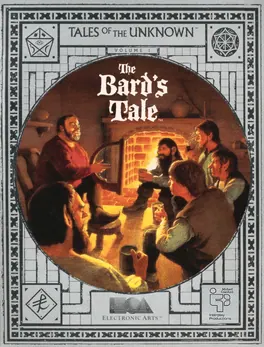
Tales of the Unknown: Volume I - The Bard's Tale
Tales of the Unknown: Volume I, better known as "The Bard's Tale", is an RPG developed by Interplay Productions in 1985 originally for the Apple II. It was quickly ported to numerous other platforms and became widely successful. This was partly because it incorporated unprecedented 3D graphic design, featuring partly animated character portraits and engaging gameplay. It also helped that the game was available on the Commodore 64-the most successful game console at the time, whereas the main competitor-the Ultima series, was not.
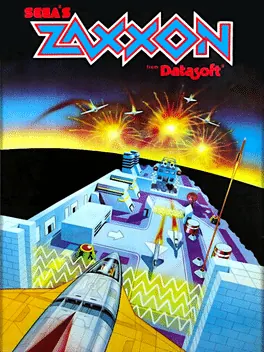
Zaxxon
Zaxxon is a 1982 isometric shooter arcade game developed and released by Sega. The game gives the player the experience of flying a fighter craft through a fortress while shooting at enemy entities (missiles, enemy gunfire, etc.) The object of the game is to hit as many targets as possible without being shot down or running out of fuel, which can be replenished paradoxically, by blowing up fuel drums.
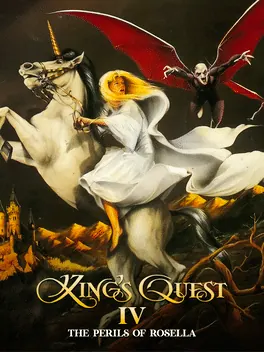
King's Quest IV: The Perils of Rosella
King's Quest IV: The Perils of Rosella is an adventure game in the King's Quest series. Players control Princess Rosella, daughter of King Graham, as she embarks on a quest to save her father's life and rescue a fairy kingdom. The game takes place in the land of Tamir, where Rosella must find a magical fruit to heal her ailing father while also helping the fairy queen Genesta reclaim her stolen talisman from the evil fairy Lolotte. Players navigate Rosella through various environments, solving puzzles and interacting with characters from folklore and fairy tales. King's Quest IV introduces real-time elements and day-night cycles to the series, affecting gameplay and puzzle solutions. The game expands on the series' narrative by focusing on a female protagonist and exploring new themes while maintaining the fantasy setting and puzzle-solving mechanics characteristic of the King's Quest franchise.
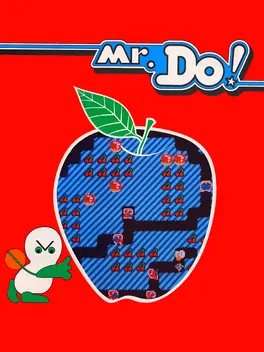
Mr. Do!
Mr. Do! is an arcade game created by Universal in 1982. Similar in some ways to Namco's popular Dig Dug title, Mr. Do! was also popular and saw release on a variety of home video game consoles and systems. It is the first game in the Mr. Do series, and was released both as a standalone game and as a conversion kit (released by Taito Corp.) for existing arcade cabinets. It was one of the first arcade games to be released as a conversion kit, and went on to sell 30,000 units in the United States. It was also a popular choice on the 1983 video arcade-based game show Starcade.
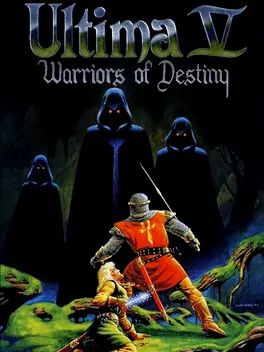
Ultima V: Warriors of Destiny
After a century of relative peace, the Avatar of Virtue is summoned back to the medieval kingdom of Britannia to deal with a new threat: the usurper Lord Blackthorn, a formerly honorable nobleman who has been corrupted by strange new creatures called the Shadowlords. After the recent disappearance of the true king, Lord British, the realm has fallen under martial law. Blackthorn now rules the land by brutally enforcing the eight Virtues upon the people of Britannia - corrupting their meaning in the process. The Avatar must gather together his former companions, now made outlaws by Blackthorn's regime, and venture forth to defeat the vile Shadowlords and recover the true king from the shadowy depths of the Underworld.
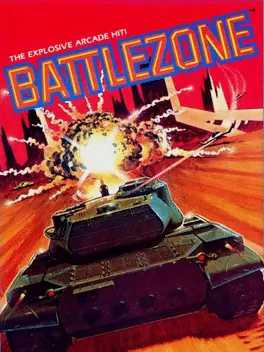
Battlezone
Battlezone is an arcade game from Atari released in November 1980. It displays a wireframe view (using vector graphics rather than raster graphics) on a horizontal black and white (with green and red sectioned color overlay) vector monitor. Due to its novel gameplay and look, this game was very popular for many years. Throughout the 1980s, Battlezone was ported to several home computer systems (usually on the Atarisoft label), including the Apple II, the Commodore 64, the Sinclair ZX Spectrum, and the Atari XEGS. The Atari ST port contains large parts of the original 6502 code which is emulated in real time. An Atari 2600 port was also released, but has colored raster graphics due to limitations and the view is behind the tank rather than inside it.
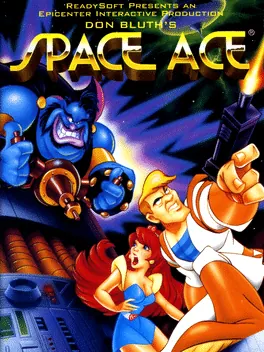
Space Ace
In Space Ace you play the heroic Ace who must stop the evil Commander Borf from taking over the Earth! Borf plans to reduce all of humankind to infants and take over the planet.
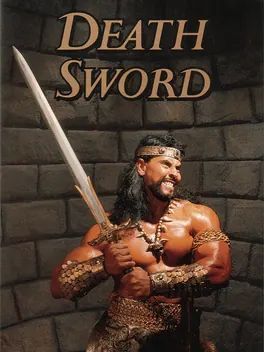
Death Sword
Barbarian: The Ultimate Warrior is a video game first released for Commodore 64 personal computers in 1987; the title was developed and published by Palace Software, and ported to other computers in the following months. The developers licensed the game to Epyx, who published it as Death Sword in the United States. Barbarian is a fighting game that gives players control over sword-wielding barbarians. In the game's two-player mode, players pit their characters against each other. Barbarian also has a single-player mode, in which the player's barbarian braves a series of challenges set by an evil wizard to rescue a princess.
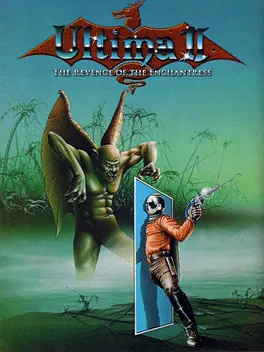
Ultima II: The Revenge of the Enchantress
After obtaining aid from the lords of the realm in Ultima I, your character travels back in time, locates the mad wizard Mondain, slays him, and ends his reign of terror. In Ultima II: Revenge of the Enchantress, Mondain's protégé, Minax, who studied the mad wizard's teachings and writings, returns to wreak vengeance on the person who slew her teacher and lover -- you. And, instead of waiting for you to return to her native land of Sosaria, she wreaks havoc on your own Earth. Throughout Ultima II: Revenge of the Enchantress, your quest is quite different in scope from its predecessor. Earth is turned into a half-modern, half-fantasy world by the forces of magic and, as a result, things are much stranger than one might expect. As explained in the introduction, your tasks in the game are to "Battle strange creatures across the face of the Earth, search for clues in careless words spoken at the local pub, traverse deep, dark, deadly dungeons and tall, terrifying towers...and conquer Time itself to battle Minax the Enchantress."
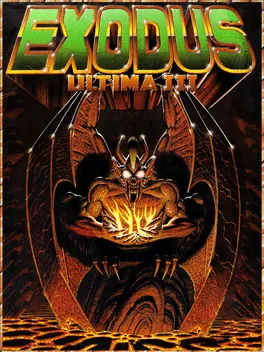
Ultima III: Exodus
Eons ago Lord British came unto the lands of Sosaria. Since that time it has been united under his rule as the Kingdom of Britannia and has gone through two major crises. A few years ago there were political upheavals among the city states of the kingdom. The ringleader of this political instability was Mondain, the Magician. Under his horrible rule, the people's lives were devastated. A valiant warrior was called forth from another world by Lord British. This warrior overthrew Mondain. Britania survived the first crisis. But peace in the Kingdom of Britannia did not last long. Minax, the Witch, a disciple of Mondain, became very powerful and ruled the world of darkness. Minax had power to sway the time axis of the universe. However, a legendary hero again came to the rescue, overthrew Minax, and brought peace back to the kingdom. Now, the Kingdom is about to face its third crisis. Rumours abound about a fiery island which has emerged in the southwestern seas. Little is known of the evil that dwells there. It is known only as Exodus.
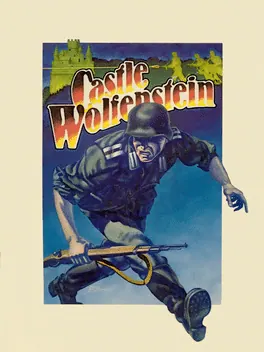
Castle Wolfenstein
Castle Wolfenstein is a slow-paced stealth game set in World War II. The game's main objective is to traverse the levels of the castle to find the secret war plans and escape alive. Progressively higher military ranks are earned upon each successful escape with the war plans, and the game becomes correspondingly more difficult as each higher rank is achieved. There are 8 ranks, beginning with Private, culminating at the rank of Field Marshall.
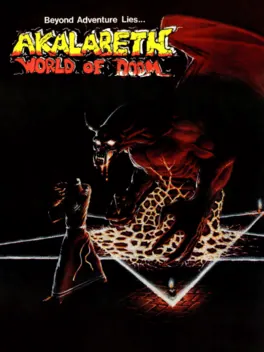
Akalabeth: World of Doom
In the game, the player character visits Lord British and is instructed by him to kill certain monsters. The final mission is to kill a balrog, and after this has been accomplished, Lord British proclaims that "thou hast proven thyself worthy of knighthood".
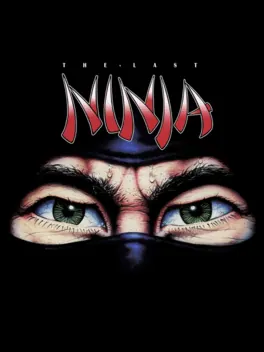
The Last Ninja
Brotherhood. Survival. Revenge. The evil Shogun Kunitoki and his henchmen have slaughtered the entire Brotherhood of White Ninja. You alone survive. The Shogun has taken possession of the Ninja Palace of Lin Fen and the sacred scrolls containing the ancient secrets of the Ninja. Only you- the Last Ninja- can avenge the Brotherhood and recapture the secrets of the Ninja. You must use all your fighting skills. Samurai warriors, masters of the martial arts, and the Shogun's guards lurk at every turn, ready to test their hand-to-hand combat skills against yours. You must be as wise as you are strong. Find your way through a magnificent landscape that unfolds in screen after screen of unparalleled graphics- from the lavish interior of the Ninja Palace to the depths of its foulest dungeons. Scale forbidding mountains; cross lakes and rivers. Master new and dangerous tasks, like Ninja magic. Search for the hidden weapons, food, and charms that you need to win the final battle- and all the battles in between. The way is long and dangerous. Start now. Kunitoki's warriors are already learning the Ninja ways.
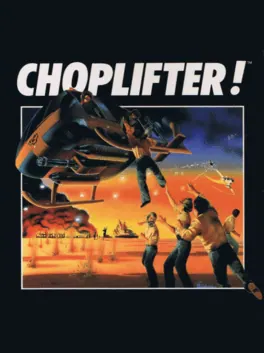
Choplifter!
Choplifter is military themed scrolling shooter where you play as a pilot. Take off from your home base and fly across a horizontally-scrolling playfield of rugged terrain to reach the enemy Bungelings' barracks. There, you must land and rescue a group of helpless hostages and return then to your base. To hinder your mission, the enemy will attack with an array of armaments including tanks, jets, and dangerous air mines. To complete a perfect game, you must rescue all of the 64 hostages.

Dangerous Dave
The object of the game was to collect gold cups to move on to the next level. Since the original 1988 publishing of Dangerous Dave on UpTime, there have been three sequels and three ports of the original to other platforms. The idea of Dangerous Dave came to John Romero under the influence of Super Mario. There are definitely similarities that are easily noticeable, such as the secret levels, the level design, the monsters, and the jumping. The mission is to guide Dave through ten levels, collecting trophies in the hideout of his enemy, Clyde. Romero says that among all Dangerous Dave sequels Dangerous Dave in the Haunted Mansion is "the best Dave ever created". In 2008 Dangerous Dave in the Haunted Mansion was ported to cell phones.
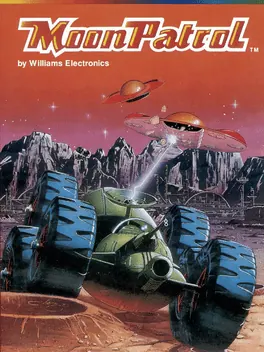
Moon Patrol
Moon Patrol is a side-scrolling shooter that puts players at the controls of a six-wheeled moon rover that can jump and shoot. The goal is to move through the entire course as quickly as possible while shooting enemies for additional points. Cannons are mounted on the front and top of the vehicle, and both fire simultaneously when the fire button is pressed. Rocks, mines, and pits in the course prevent you from just holding to the right for maximum speed. Rocks and mines can be shot, but pits must be jumped. Some enemies fire shots that create new pits in the course, forcing players to react quickly.
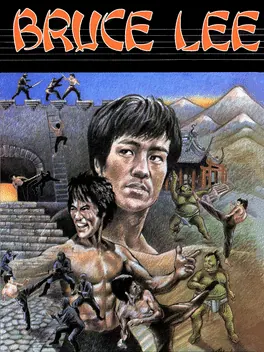
Bruce Lee
Bruce Lee is a video game designed by Ron J. Fortier, with graphics by Kelly Day and music by John A. Fitzpatrick. It was originally developed for the Atari 8-bit family and published in 1984 by Datasoft, along with a port for the Commodore 64. The game was converted to the ZX Spectrum and Amstrad CPC and published by U.S. Gold in the same year. An MSX version was published in 1985 by Comptiq. Bruce Lee is a platform game/beat 'em up hybrid, in which the player controls Bruce Lee.
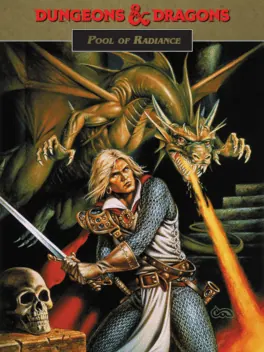
Advanced Dungeons & Dragons: Pool of Radiance
Located on the northern shore of the Moonsea in the Forgotten Realms, the fabled city of Phlan had been overrun by monsters led by a mysterious leader. Your quest: discover the identity of this evil force and rid Phlan of its scourge. Pool of Radiance represents the first in a line of software created by SSI in collaboration with TSR - the producer of the legendary Advanced Dungeons & Dragons fantasy role-playing system.
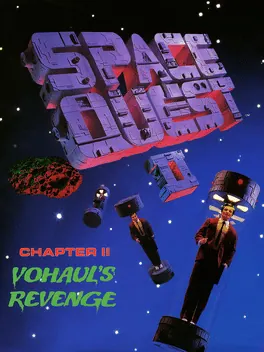
Space Quest II: Vohaul's Revenge
Just when you thought it was safe to go back into space, He's Back! And he wants revenge! Sludge Vohaul, the demented evil scientist (whose sinister plan you unknowingly foiled in our last episode), is seething over his Sarien slip-up. Madder than a drenched Astrochicken, (and still determined to rule the galaxy) Vohaul has devised a new plan. A nasty plan. A plan so evil that only one as wickedly sadistic as he could imagine it. Yes, the worst nightmare ever is about to come knocking on your door- and it won't take No for an answer! It's The Invasion of the Insurance Salesmen! Hordes and hordes of pushy, obnoxious (genetically engineered) salesmen will soon be dumped upon your home planet- unless somebody dumps on Vohaul first. And who knows more about getting dumped on than you? Roger Wilco to the rescue! Once again, you, Roger Wilco, sanitation engineer and involuntary hero, must don your sanitary space mittens and prepare for the onslaught of evil that Vohaul has prepared. A chore not for queasy or fainthearted. And if you can stomach that…Get ready for the Granddaddy of Gross. The Emperor of Evil. The first name is Nastiness, Sludge Vohaul himself! With nothing to protect you but your wits and your wet mop, you haven't got a chance! (But that's what makes the game so much fun!) Have fun staying out of trouble! Beat the odds. Conquer insurmountable obstacles. Defy gravity. Cry for help. Misfortune awaits you at every turn… Boggle your way through the humid stenchlands of the jungle planet Labion. Blunder your way onto the asteroid fortress of the slime-sucking Vohaul. Flounder your way through more perilous escapades than you can wiggle a space worm at. Guaranteed to make you laugh! Packed with comedy, tragedy, suspense, horror, and many other nouns, Space Quest II will tickle your funny bone and relieve that heavy feeling in your wallet.
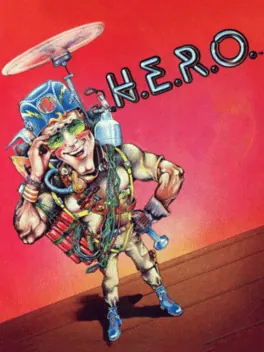
H.E.R.O.
There is trouble in the mines! Volcanic activity has trapped numerous miners, and it is your job to save them. As Roderick Hero, you need to make your way through the dangerous mineshaft avoiding the dangerous creatures and lava, and find out where the miners are located before you run out of energy. To help on your mission, Roderick Hero has several useful types of equipment. A prop pack will allow you to hover and fly around the mineshaft and (hopefully) avoid the many dangers within. Your helmet features a short range microlaser beam which can be used to destroy the bats, spiders, snakes, and other creatures you'll encounter in the mines. From time to time, your path through the mine may be blocked by stone or lava walls. You begin each mission with six sticks of dynamite which can be used to destroy these obstacles (be careful you don't blow yourself up, though!) If you run out of dynamite, your laser beam can also be used to destroy the walls, though this will take longer and use up more energy. As the levels progress, the mine shaft will become longer and more maze-like, creatures will more frequently block the path, and lava walls and pools will appear which are dangerous to the touch.
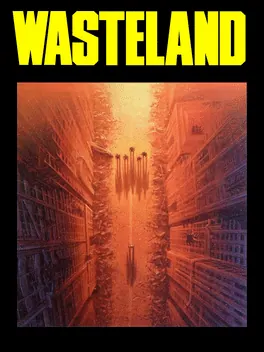
Wasteland
The game mechanics were based directly on those used in the tabletop role-playing games Tunnels and Trolls and Mercenaries, Spies and Private Eyes created by Wasteland developers Ken St. Andre and Michael Stackpole. Characters in Wasteland consequently have various statistics (strength, intelligence and luck among others) that allow them to use different skills and weapons. Experience is gained through battle and through use of skills. The game would generally let players advance with a variety of tactics: to get through a locked gate, a player could use his picklock skill, his climb skill, or his strength attribute; or he could force the gate with a crowbar - or a LAW rocket. The initial band of Desert Rangers encountered a number of NPCs as the game progressed who could be recruited into the party of up to seven. Unlike those of other computer RPGs of the time, these NPCs might temporarily refuse to give up an item or perform an action if ordered to do so. The game was also noted for its high and unforgiving difficulty level and for such combat prose as "reduced to a thin red paste" and "explodes like a blood sausage", which prompted an unofficial PG-13 sticker on the game packaging in the United States. Wasteland was one of the first games featuring a persistent world, where changes to the game world were stored and kept. Returning to areas later in the game, one would find them in the state one left them in, instead of being reset to their original state, as was common for games of the time. Since hard drives were still rare in home computers in 1988, this meant the original game disk had to be copied first, as the manual instructed one to do.
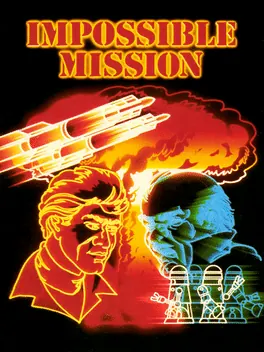
Impossible Mission
The situation: for three days have the strategic central computers of the great powers acted up. An unknown person manipulates their programmes; at the end of these programmes is the starting command for the intercontinental rocket. The countdown is on, only 6 hours keep the humanity from an atomic inferno. An unknown person? Only professor Elvin, the insane computer expert could crack the top secret start code, Elvin, who entrenches himself in his intangible subterraneous, guarded by 90 murderous robots, that until now had hunted down every intruder. No one who has ever set foot on the lift to Elvins cave labyrinth has returned back alive. The last hope: Special Agent 4125, the most cunning, toughest and most indiscriminate man, that the secret service can offer. Only ice cold reckoning and superior physical condition give this unarmed hero a tiny chance to avert the disaster in the last minute. The game: your task is to put a stop to evil Elvin Atombender's game. For this you have to enter in his laboratory, protected by a vault somewhere on his underground stronghold. To open the laboratory's door you need a nine letters password, each letter of which Elvin coded into a punchcard, just for cutting in four each one of them, painting them in different colors and hiding the resulting pieces everywhere in his base's furniture. So all you have to do is search into every object of every room for pieces of puzzle while surviving the robots, the pits and doctor Elvin's annoying voice, retrieve all the 36 pieces, put them together in groups of four, and head for the laboratory, where an unpleasant surprise waits you
Zork
Zork is one of the earliest interactive fiction computer games, with roots drawn from the original genre game, Colossal Cave Adventure. The first version of Zork was written in 1977–1979 using the MDL programming language on a DEC PDP-10 computer.
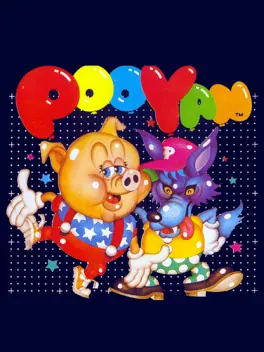
Pooyan
Pooyan is a classic arcade game manufactured by Stern Electronics under license from Konami in 1982. In it, the player controls "Mama", a pig whose babies have been kidnapped by a group of wolves.