
Jogos para Apple II
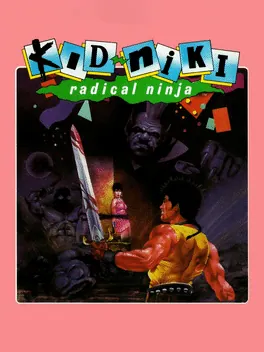
Kid Niki: Radical Ninja
One day in Feudal Japan, Kid Niki, the most radical of ninjas, is training at his Ninja School. Suddenly, a passing bird is struck down by an arrow and lands at Niki's feet. Attached is a note explaining that Niki's girlfriend, Princess Margo, has been kidnapped by the evil Stone Wizard. With the cry of "Will help you!" Niki bursts through the wall of his school and sets off on his quest to save Margo.
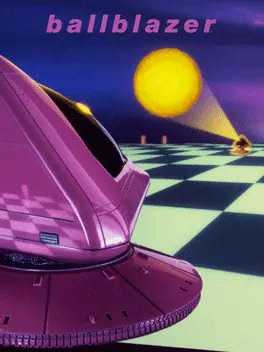
Ballblazer
Ballblazer is a 1984 computer game created by Lucasfilm Games (later LucasArts Entertainment). It was originally released for the Atari 8-bit systems, such as the Atari 800 and the Atari 5200. It was also ported to other popular platforms of the day, such as the Apple II, ZX Spectrum (by Dalali Software Ltd), Amstrad CPC, Commodore 64, Atari 7800, and the NES. The Atari 800 version was called Ballblaster during development - pirated versions of the game went by this name as well. The principal creator and programmer of Ballblazer was David Levine. In 1990, LucasArts and Rainbow Arts released a remake and follow-up to this game, called Masterblazer. This game was released for the Amiga, Atari ST, and PC DOS. A similar game inspired by Ballblazer called Space Football: One on One was developed and released by Triffix for the Super NES in 1992. Years later on March 31, 1997, a remake of the original titled Ballblazer Champions was released for the Sony PlayStation.
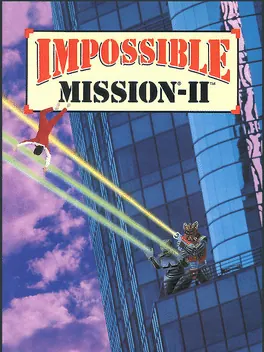
Impossible Mission II
You have 8 hours to prevent Elvin, a psychotic genius from destroying the world in this sequel to the highly successful Impossible Mission. Enter Elvin's tower fortress, avoid his robots, assemble security combinations for each tower, recover musical sequences and tie them together into a full melody to reach Elvin's central control room.
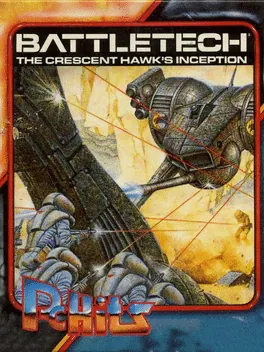
BattleTech: The Crescent Hawk's Inception
20 Lethal tons of massive fighting power are primed for battle and your in control. The 31st century is a desperate time. Five Successor States are hopelessly locked in mortal struggle for power. In this era of endless war, the powerful, death-dealing BattleMechs are valued higher than human life. You are 18-year-old Jason Youngblood, and fate has given you a terrible gauntlet to run. Abruptly wrenched from the intense drilling of 'Mech warrior training, you are plunged into real battle with deadly Kurita warriors. Savage experience is now your unforgiving teacher, and the very survival of The Lyran Commonwealth demands you learn the ruthless precision of battle strategy quickly. Can you, the son of legendary "Mech warrior Jeremiah Youngblood, steel yourself for the greatest challenge of your life? Authentic Battletech combat is yours to command. The master storytellers of Infocom have joined forces with FASA, the creators of Battletech and the computer wizards of Westwood Associates to bring you an unparalleled adventure. You're in command: you choose your weapons and your target for each member of your fighting unit. Experience the thrill of battle as you move your "Mechs across the far-reaching terrain of Chara IV.
Silent Service
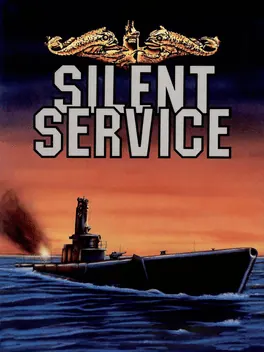
Exciting World War II Submarine Action in the South Pacific by Sid Meier. 0400 hours, Tuesday 1942... BATTLE STATIONS!! BATTLE STATIONS!! Enemy convoy identified on radar!! SILENT SERVICE, The Submarine Simulation, brings exciting action, great strategy, detailed graphics and an ultra-realistic simulation of a World War II U.S. submarine in the South Pacific. SILENT SERVICE's outstanding features include: all the critical battle stations 0 engine room, conning tower and ship's bridge; challenging and realistic combat versus single ships and heavily escorted convoys; and an infinite variety of situations using complete maps and charts for the entire South-west Pacific and a sophisticated and realistic attack plotting system. SILENT SERVICE is the most detailed and realistic submarine simulation for home computers. Player selected "reality levels" allow the player to customize complexity, and time scaling ensures that the actions and decisions are constantly required. SILENT SERVICE provides a wide selection of historical scenarios from individual attacks to patrol missions that bring challenge and fun to both the first time player and the experienced submarine veteran. Will you, as submarine captain, select a quiet patrol sector in the Marianas Islands, or choose the dangerous waters off the coast of Japan? Is the submerged daylight periscope attack best, or do you charge in on the surface at night using only radar bearing to guide you? Do you pick off the enemy with a single torpedo shot? These decisions and many more are yours to make as you take your place among the elite ranks of the SILENT SERVICE!

Alter Ego
Alter Ego is a life simulation game where players create a character and guide them through seven life phases from infancy to old age by making decisions in various situations. Players choose from multiple response options that influence personality, health, and future scenarios, with each choice carrying long-term consequences that can lead to different outcomes including early death or game over. The gameplay unfolds through a life tree structure with situation cards representing thematic encounters, and players can manage relationships, careers, and lifestyle choices as their character ages, with separate male and female versions available.
Wizardry: Knight of Diamonds - The Second Scenario
Are you ready to take the next step into the world of Wizardry? A step so dangerous, the mere utterance of a spell can decimate the entire city of Llylgamyn. Knight of Diamonds is the Second Scenario in the Wizardry Master Series, the fantasy role-playing simulation for the Nintendo Entertainment System. In Wizardr Knight of Diamonds, only the bravest may venture through murky dungeons more dangerous than any ever encountered by earthly mortals. Only the most cunning may recover the magical Staff of Gailda and save the city of Llylgamyn.
Archon II: Adept
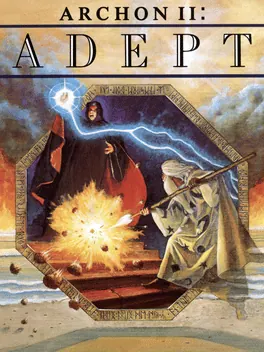
Archon 2 or also Adept is the successor of the successful Electronic Arts classic Archon. As already seen in Archon, an apocalyptic fight takes place in a fantasy surrounding, now not between "light" and "dark" but between "order" and "chaos". It all happens in a game area which is divided into 4 elemental layers. In the center is the earth layer, it is surrounded by the water layer and this is surrounded by the air layer. The outer layer is made of fire. Opposite to its forerunner the players start in Adept only with one magician ("Adept") per layer. All the other creatures have to be conjured in the course of the game. Evocations and other spells cost energy, which is renewed by occupying energy points on the game area with your own creatures. The more points you occupy, the more energy you get. Every side possesses 4 own elemental beings, which have a special force when they are on their corresponding layer. Moreover 4 different demons can be conjured from both sides, which can fight independently from the chosen element. Many of these creatures can use a shooting attack, but they have also lots of special attacks. When two figures meet on a field, here also the screen is zoomed and a fight for life and death starts. The winner claims the hard-fought field. Dependent on the layer you are fighting on, the battlefield has different obstacles such as slowing-down lakes, shoot destracting swirls, flame walls or simply walls ready. The only exception are the two void fields, here no terrain is used

Softporn Adventure
A text based adventure game released in 1981 and has similar content to "Leisure Suit Larry in the Land of the Lounge Lizards" developed by Al Lowe which is based on "Softporn Adventure". It was ported to PC in 1991 and has also been included in some Leisure Suit Larry Collection editions.
B.C.'s Quest for Tires
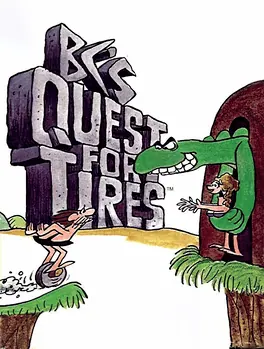
Cute Chick is in trouble! She is being held captive by the dinosaur, and it is up to Thor to ride his trusty wheel to the rescue. There are many obstacles in the way which Thor will need to jump and duck, including rocks, trees, rivers, lava pits, cliffs, and of course Fat Broad. When you duck, the character bounces up and down, so don't duck too soon. BC's Quest For Tires is a side scrolling action game resembling Moon Patrol in some ways, featuring characters from the comic strip BC.
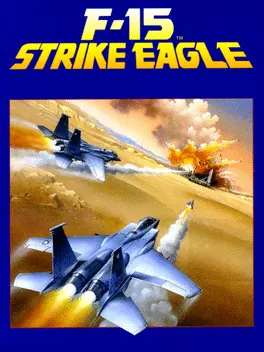
F-15 Strike Eagle
F-15 Strike Eagle is an F-15 Strike Eagle combat flight simulator first released in 1985 by MicroProse. It is the first in the F-15 Strike Eagle series comprising also the sequels F-15 Strike Eagle II and F-15 Strike Eagle III.
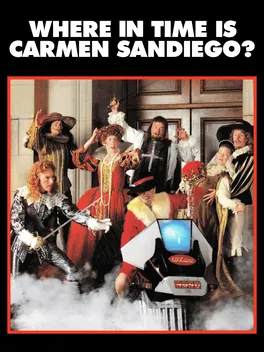
Where in Time is Carmen Sandiego?
Carmen Sandiego and her gang are loose once again, and it is the players job to capture her! This time around the player not only has to find where she is, but also when she is. Traveling to various locations, they need to assemble clues by questioning witnesses and searching locations to close in and capture Carmen Sandiego. Included with the game is The New America Desk Encyclopedia to help make clues more meaningful (and act as a form of copy protection!).
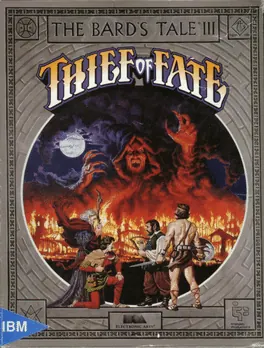
The Bard's Tale III: Thief of Fate
The warriors who have destroyed the evil wizard Mangar receive a letter while celebrating their victory. The letter informs them of a terrible disaster: Mangar's master, the Mad God Tarjan, has unleashed his wrath upon the town of Skara Brae, completely destroying in. The heroes visit a refugee camp nearby and embark on a quest to defeat Tarjan. Thief of Fate is the third installment in the Bard's Tale series, and a sequel to The Destiny Knight. It is similar to its predecessors, being a first-person fantasy role-playing game in which the player explores maze-like pseudo-3D towns, dungeons, and wilderness areas. Two new character classes have been added: Geomancer and Chronomancer. There are more dungeons than in the previous games, and this installment also adds an auto-mapping feature. The game's world is divided into separate realms accessed by using time warps, each with its own theme and setting - including, among others, famous locations from Earth's history such as ancient Rome or Berlin during World War II.

A Mind Forever Voyaging
A Mind Forever Voyaging (AMFV) is a 1985 interactive fiction game, intended as a polemical critique of Ronald Reagan's politics.
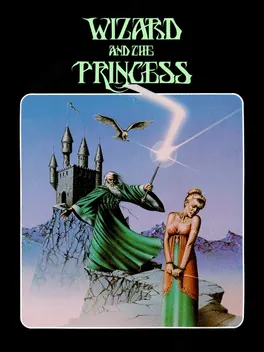
The Wizard and the Princess
Princess Priscilla has been kidnapped and the player seems to be the only valliant hero willing to rescue the damsel in distress. This is the second text adventure with illustrating graphics released by Sierra. Communicating with the game works via entering commands which tell the player's alter ego where to go and what to do. Since the parser is a very basic one it only understands two-word commands. Two years after its initial release, the game was renamed "Adventure in Serenia" for its PC release. This suggested sequel was, however, exactly the same game as in its previous incarnation.
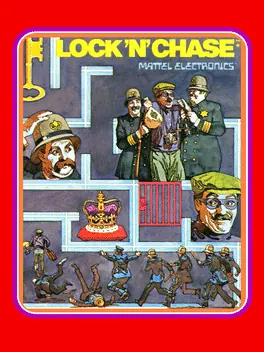
Lock 'n' Chase
Lock 'n' Chase is a 1981 maze arcade game developed and published by Data East in Japan in 1981, and later published in North America by Taito. Lock 'n' Chase was Data East's response to Pac-Man. The game's main character is a thief. The object of the game is to enter a maze and collect all the coins and, if possible, any other treasure that may appear. The thief must then exit the maze (a vault) without being apprehended by the Super D (policemen). The thief can close doorways within the maze in order to temporarily trap the Super D and allow him to keep his distance from them. Only two doors can be closed at a time. The Super D policemen are named Stiffy, Scaredy, Smarty, and Silly.
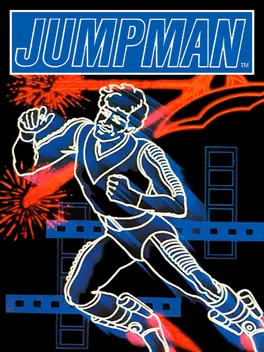
Jumpman
Jumpman is a platform game written by Randy Glover and released by Epyx in 1983. Originally developed for the Atari 8-bit family, versions were also released for the Commodore 64, Apple II, IBM PC, and ColecoVision.
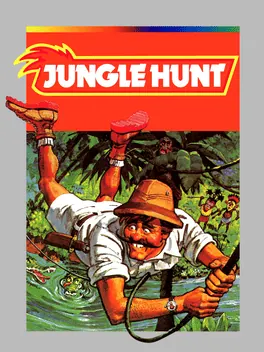
Jungle Hunt
Jungle Hunt is side-scrolling arcade game produced and released by Taito in 1982. It was initially released as Jungle King. Jungle Hunt is one of the first video games to use parallax scrolling. The player controls an unnamed jungle explorer sporting a pith helmet and a safari suit. The player attempts to rescue his girl from a tribe of hungry cannibals by swinging from vine to vine, swimming a crocodile-infested river, jumping over or ducking beneath rolling rocks, then releasing the girl before she is lowered into a boiling cauldron. Home versions were released for the Apple II, Atari 2600, Atari 5200, Atari 8-bit family, Commodore 64, ColecoVision, VIC-20, and IBM PC. The PC version was developed by Sierra On-Line and is incompatible with everything except an original IBM PC/XT with a CGA video card. In the Atari-ported versions the hero is named Sir Dudley, and the girl, married to Sir Dudley, is Lady Penelope.
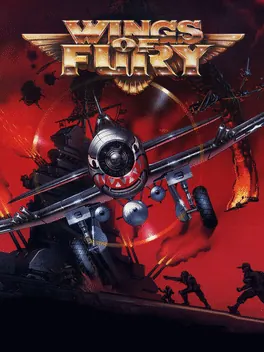
Wings of Fury
The game is a horizontally scrolling shooter set over a number of World War II missions. The player starts each mission by taking off from an aircraft carrier, which he/she has to protect from attacks by Japanese planes. The goal is to defeat the Japanese by destroying enemy bunkers, turrets and barracks on a series of islands and killing enemy soldiers either with bombs or by machine gun. The weapons to complete these objectives, besides machine guns, are a limited number of bombs, rockets and torpedoes. On some missions, the player must also sink Japanese vessels, such as destroyers, battleships, and aircraft carriers. The player has a finite amount of fuel and munitions, which can be replenished by returning to the carrier. The player's aircraft can be destroyed by accumulated damage from enemy fire or by crashing into the terrain.
Heavy Barrel
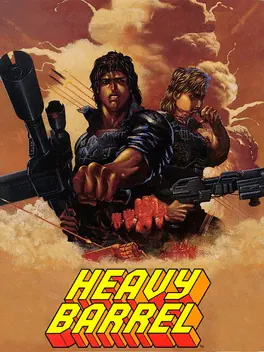
Heavy Barrel is a 1987 overhead run and gun arcade game by Data East. Terrorists have seized the underground control complex of a nuclear missile site, and it is up to the player to infiltrate the base and kill the enemy leader. Players begin armed with a laser gun with unlimited ammunition and a limited supply of grenades. Improved weapons and grenade powerups are made available within the game, either in plain sight or within crates that must be unlocked using keys. Additionally, crates may contain orbs or one of the six pieces of the Heavy Barrel superweapon. Like SNK's Ikari Warriors, the original arcade version featured 8-way rotary joysticks. The name of the game is from an in-game weapon. The Heavy Barrel is found in six pieces and is an energy cannon capable of destroying any enemy in the game with a single shot (except the final enemy, and possibly one other boss that may have required two shots). The weapon has a wide arc of fire and can be fired as fast as the player's trigger finger permits, but after thirty seconds its use is exhausted, at which point the bearer reverts to his previous weaponry. Best used to get past tough bosses, the weapon could be built several times in a single game (probably three or four times). In a two-player game, whoever collects the sixth piece is equipped with the Heavy Barrel.

Beyond Castle Wolfenstein
Like its predecessor, Beyond Castle Wolfenstein is a combination action and adventure game. It is set in World War II during Adolf Hitler's rule as Chancellor of Germany. The objective of the game is to traverse all the levels of the secret Berlin bunker where the Führer is holding secret meetings with his senior staff. The player must retrieve a bomb that the operatives have placed inside the bunker and place it outside the door of the room where Hitler is holding his meeting, a scenario bearing a passing resemblance to the July 20 plot.
Zork III: The Dungeon Master
In the third game of the adventure game series Zork, you are once again a nameless adventurer, only this time you won't travel through a beautiful magical land, but are immediately cast into a deep dungeon. Like in a dream, you hear a mysterious voice telling you that you have passed all the tests but one. When conscience returns to you, you find yourself on the endless spiral of stairs, with only your trusty lantern near you... will you be able to survive the horrors of the Dungeon?
Raid over Moscow
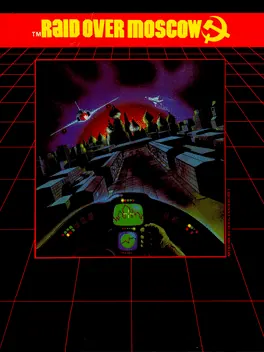
Released during the Cold War era, Raid Over Moscow is an action game in which the player (an American space pilot) has to stop three Soviet nuclear attacks on North America, then fight his way into and destroy a nuclear facility located in Moscow's Kremlin. According to the game's storyline, the United States is unable to respond to the attack directly due to the dismantlement of its nuclear arsenal.
Karate Champ
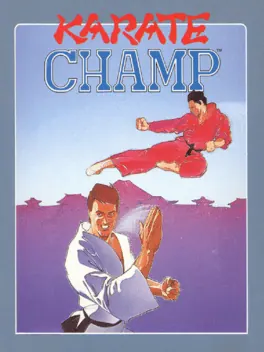
Single players compete against a computer opponent while two players fight each other in this Karate game. Players each use two joysticks which allow for a variety of different moves. The best two matches, out of three, wins.
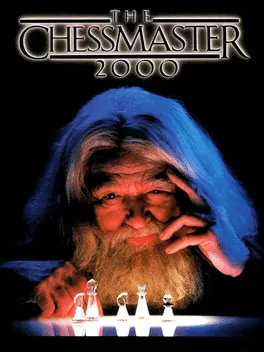
The Chessmaster 2000
The Chessmaster 2000 is the most powerful computer chess program in the world today and the friendliest! It draws from a mammoth opening library of over 71,000 moves - the world's largest. In mid-game, it displays amazing combinations of classical and modern strategy. At end game it calls further upon the world's newest and finest computer chess algorithm to mount virtuoso tactics.
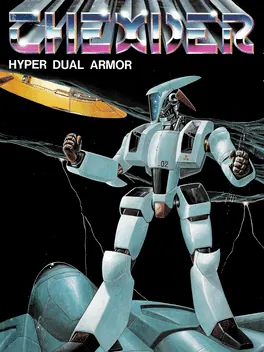
Thexder
Thexder is a robot capable of transforming into a jet whose job is to destroy the central computer to save the planet.15 stages are waiting you for in this shooting game.

Dragonfire
Dragons have driven the Royal Court from the Castle "O we are lost, lost" laments the King. "Without our vast treasures we cannot raise an army 'gainst these accursed dragons. Our Kingdom must now languish under lizards!" "Nay, not so, my liege!" replied the young Prince. "None knows that Castle, those many bridges and storerooms, better than I. Give me leave and I shall loot those lizards of their plunder and restore my lord to his birthright." "Brave boy," said the King, fully pleased. "But," he added darkly, "beware dread dragonfire!"
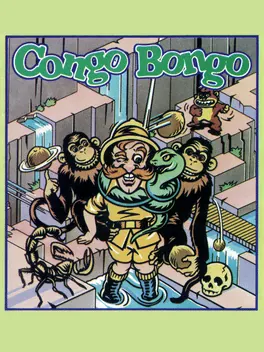
Congo Bongo
Congo Bongo is an isometric platform arcade game released by Sega in 1983. The game has come to be seen as Sega's answer to the highly successful Donkey Kong game that was released two years prior. The player takes the role of a red-nosed safari hunter who tries to catch an ape named "Bongo". The hunter seeks Bongo to exact revenge for an apparent practical joke in which Bongo set fire to the hunter's tent, giving him a literal "hotfoot". The game was named by Peter W. Gorrie who was the CFO of Sega at that time.
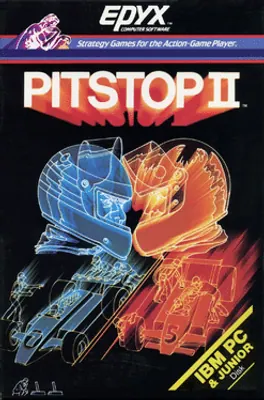
Pitstop II
Pitstop II is the first 3D racing game to implement a split-screen simultaneous two-player game mode. Players could be in completely different places on the racing track, and each split screen would show the view of the track according to the player's position.

Deadline
Deadline is an interactive fiction computer game published by Infocom in 1982. Written by Marc Blank, it was one of the first murder mystery interactive fiction games. Like most Infocom titles, Deadline was created using ZIL, which allowed the easy porting of the game to popular computer platforms of the time such as the Apple II and the Commodore 64. It is Infocom's third game. The player's character in Deadline is an unnamed police detective, summoned to a sprawling Connecticut estate to investigate the apparent suicide of wealthy industrialist Marshall Robner. At first, it seems a very straightforward case: the body was discovered in the library, which had been locked from the inside, and the cause of death was an overdose of his prescribed antidepressants. But something just doesn't feel right. Could someone have killed Robner for his money? Did he make an enemy through his business dealings? Or was there some other motive? With the able assistance of level-headed Sgt. Duffy, the player has twelve hours to solve the case before it is closed forever.
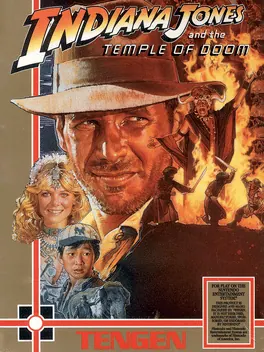
Indiana Jones and the Temple of Doom
As Indy, the player must complete several cycles of the following three types of levels: 1.Mine level: Whip your way through a mine in order to free children that are held captive. Use your whip to swing across chasms, climb ladders, ride along conveyor belts and defend yourself against attacks from Thuggee guards, bats, snakes and the fireball-throwing Mola ram. Escape with the mine cart after you've freed all children. 2.Mine cart level: Pick the right route through a network of tracks while riding in a mine cart. Avoid potholes, broken tracks & guards in carts and safely reach the end of the track. 3.Temple level: Make your way to the altar and grab the Sankara stone while Mola Ram, bats and Thuggee guards attack you. Watch out for that lava.
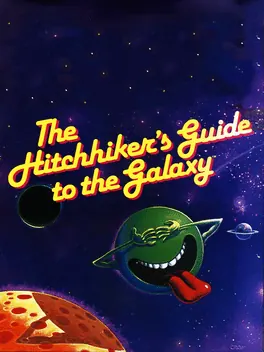
The Hitchhiker's Guide to the Galaxy
The Hitchhiker’s Guide to the Galaxy is a classic Interactive Fiction game. Though divergent from the source material, the main characters, locations, and concepts are here. Unlike the book, death can come quickly if Arthur fails to observe his surroundings, collect inventory, talk to people, and consult the Guide. Don't panic!
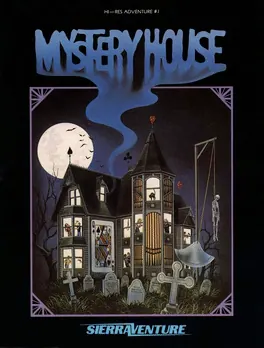
Mystery House
In the first graphic adventure game ever, the player along with seven other people is in an old mansion hunting for some jewels. All too soon it becomes obvious that someone is killing one member of the group after another. It is the player's task in this murder mystery to find out who the murderer is before the player is killed himself.
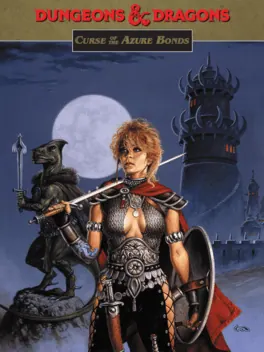
Curse of the Azure Bonds
Welcome to the official Advanced Dungeons & Dragons computer product, Curse of the Azure Bonds, A Forgotten Realms fantasy role-playing epic. This adventure game is based on the rules and background created by TSR, Inc. and a storyline created especially for this game. THE CURSE OF THE AZURE BONDS adventure begins in the frontier city of Tilverton on the border between the great kingdom of Cormyr and the scattered settlements of the Dalelands. The characters begin as experienced adventurers who have been ambushed, captured, and cursed with five magical bonds. Each bond is an azure-blue symbol imprinted just under the skin of each character's swordarm. These bonds have dangerous magical powers that can take control of the characters' actions. The characters' quest in Curse of the Azure Bonds is to search the Realms for the source of the bonds and rid themselves of the bonds' terrible curse.
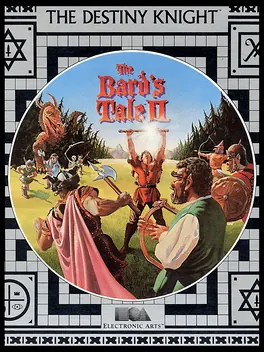
The Bard's Tale II: The Destiny Knight
When the going gets even tougher... Another wolf! Your magic sword cleaves him mid snarl, and he drops in a fur pile at your feet. There's a slime ball conjurer just out of reach who'll keep summoning these slobbering missiles until your sword arm drops off. Unless you can figure out a way to get at him. When you put Mangar out to pasture, all you really wanted was a bottomless mug and an ace up your sleeve. So what are you doing out here in the gnarly wilderness, knee deep in wolf meat, itching to put an arrow through the Adam's apple of some spell caster? It must be your destiny. Between the six cities lies an immense wilderness. It's a mapping challenge never before seen in a fantasy game, and a whole new way to get lost. A new class of magic user, the Archmage has 8 powerful spells like Heal All, Fanskar's Night Lance, and the legendary Mangar's Mallet. There are 25 different full-color scrolling mazes like Fanskar's Castle.

World Games
World Games is an Olympics-style sports game with arcade-oriented gameplay. The events players can compete in include: •Barrel jumping •Bull riding •Caber toss •Cliff diving •Log rolling •Platform diving •Pole vault •Skiing •Sumo wrestling •Weightlifting