
Jogos para Atari 2600
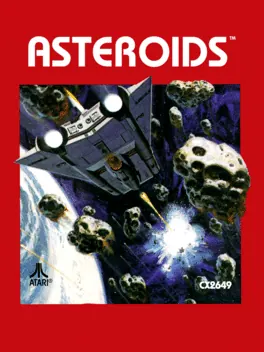
Asteroids
Asteroids for the Atari 2600 is a port of the arcade space shooter released in November 1979. The player controls a spaceship in an asteroid field which is periodically traversed by flying saucers. The objective of the game is to destroy both, asteroids and saucers. The triangular ship can rotate left and right, fire shots straight forward, and thrust forward. Once the ship begins moving in a direction, it will continue in that direction for a time without player intervention unless the player applies thrust in a different direction. The ship eventually comes to a stop when not thrusting. The player can also send the ship into hyperspace, causing it to disappear and reappear in a random location on the screen, at the risk of self-destructing or appearing on top of an asteroid.
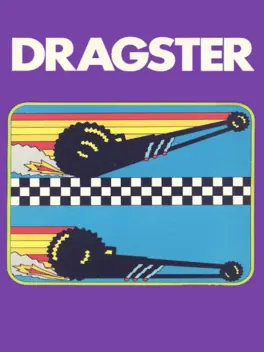
Dragster
You have in your hand one of the most exciting video games ever designed. One word of caution: this game takes a little time to learn because it's so challenging. It's very tricky. So, please read these directions and give yourself some practice time. Then you can aim for the World Record. Game 1: Straight-ahead Dragster, one or two players. Game 2: Steerable Dragster, one or two players. Your Joystick Controller is both the clutch and gear shift for your Dragster; the red button is your gas pedal. Use left Joystick for the top car; right one for bottom car. Hold Joystick with button at the upper left. To shift gears, clutch by pushing Joystick to the left and shift by letting the Joystick spring back to the center. Your car starts each race in neutral (N). There are four gear positions--1, 2, 3, 4--and you must clutch and shift between each gear. You cannot downshift. When the countdown reaches 0, you can start. If you drop into gear too soon, before the end of the countdown, EARLY will appear on the screen and you have to wait for the next race. You can clutch during the countdown, but you cannot drop into 1st until the countdown reaches 0. The object of Dragster is to beat your opponent across the screen, or to race against the clock for best time.
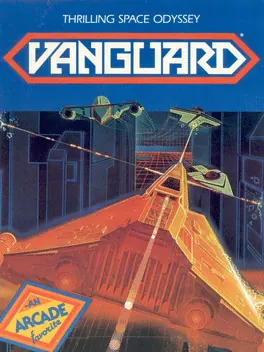
Vanguard
Vanguard is a shoot 'em up game which leads the player through five different zones to the City of Mystery where the creature Gond awaits him which he has to kill. The five zones run horizontally as well as vertically and are filled with different enemies for each zone. Being hit by an enemy, a projectile or the walls results in losing a life. There are, however, collectable items which grant the player a short time of invincibility. Shooting differs somewhat from other shoot 'em ups: The player's ship is able to fire in all four directions depending on the direction the player steers his ship. However, in doing so, the ship flies in that direrction as well which may result in crashing into an obstacle. The ship is constantly running out of fuel which can be replenished by killing enemies. After defeating Gond the game starts anew on a higher difficulty level.
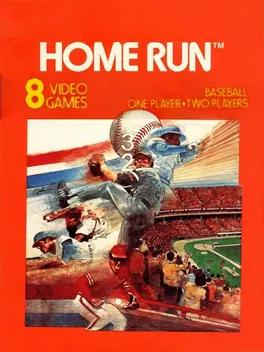
Home Run
This is the first of three iterations of baseball from Atari and is the most simple. The pitcher pitches and controls the direction of the ball. The batter hits and keeps running until he's made to stop. There are up to 3 defensive players that can try to get the batter out after he hits. All hits are grounders and defensive players can't throw the ball.
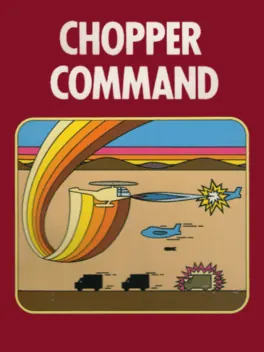
Chopper Command
Chopper Command is a video game by Activision released for the Atari 2600 in June 1982. It was designed and programmed by Bob Whitehead. In Chopper Command the player controls a military helicopter in a desert scenario protecting a convoy of trucks. The goal is to destroy all enemy fighter jets and helicopters that attack the player's helicopter and the friendly trucks traveling below, ending the current wave. The game ends when the player loses all of his or her lives or reaches 999,999 points. A radar, called a Long Range Scanner in the instruction manual, shows all enemies, including those not visible on the main screen. A player who achieved 10,000 points could send in a photo of the TV screen and receive a "Chopper Commandos" patch.
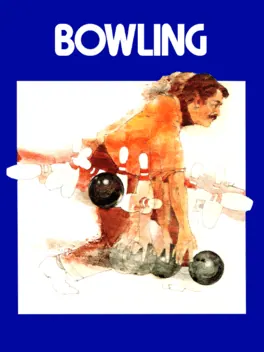
Bowling
The game is based on the game of bowling, playable by one player or two players alternating. In all six variations, games last for 10 frames, or turns. At the start of each frame, the current player is given two chances to roll a bowling ball down an alley in an attempt to knock down as many of the ten bowling pins as possible. The bowler (on the left side of the screen) may move up and down his end of the alley to aim before releasing the ball. In four of the game's six variations, the ball can be steered before it hits the pins. Knocking down every pin on the first shot is a strike, while knocking every pin down in both shots is a spare. The player's score is determined by the number of pins knocked down in all 10 frames, as well as the number of strikes and spares acquired.
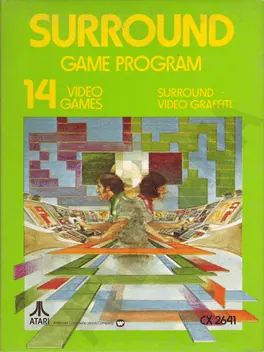
Surround
Surround was an unofficial port of the arcade game Blockade, released the previous year by Gremlin. As such, it was the first home console version of the game that would become widely known on other platforms as Snake. As with other early Atari games, it was licensed to Sears, which released it under the name Chase. The cartridge was subdivided into 14 different games. The first 12 of these were variations on the Blockade theme. Like its predecessor Blockade and successor Snake, the object of Surround was to maneuver a sprite across the screen, leaving a trail behind. A player wins by forcing the other player to crash into one of the trails. Various options allowed for speed-up, diagonal movement, wrap-around and "erase" (the choice to not draw at a given moment); in addition, the sprites could be set to operate at a beginning "slow" speed, or progressively speed up through five speeds.
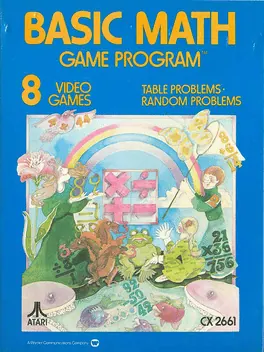
Basic Math
Basic Math (aka Fun With Numbers) is a video game cartridge developed by Atari for its Video Computer System (later known as the Atari 2600). The game was one of the nine launch titles offered when the Atari 2600 went on sale in September 1977. The player's objective is simple: solve basic arithmetic problems. Game variations determine whether the player solves addition, subtraction, multiplication, or division problems, and whether he/she could select the top number (the console randomly selects the lower number). The player uses the joystick to enter a guess, with sound effects signaling whether it is right or wrong.
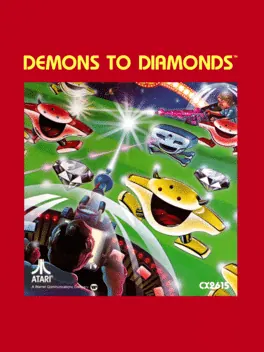
Demons to Diamonds
Players attempt to shoot demons in a "cosmic carnival" and then pick up the diamonds left behind by them, while dodging shots from enemy skulls. The player operates a laser base at the bottom of a multi-row playfield, using the paddle controller to move it from side to side and the controller's action button to fire a laser beam vertically up the playfield. The player can control how far onto the playfield the beam advances by releasing the button at the desired height. The player receives one point for each demon and ten points for each diamond successfully shot. Points are multiplied by the distance from the base to the target. For example, a demon shot one row above the player is worth one point, while a demon shot four rows above the player is worth four points. In multiplayer mode, the second player operates a laser base at the top of the screen, firing from top to bottom. Again, the second player must shoot demons that match the color of its gun in order to produce diamonds. However, diamonds may be shot by either player. Also, skulls are capable of shooting both up and down the playfield. In select variations of the game, the players can shoot their opponent's laser gun in order to deplete their stock of extra lives. In both single and multiplayer versions, players begin with five lives. One life is lost when the player's laser base is hit by a laser beam fired by a skull or by an opponent, depending on the game variation being played. The game ends when all lives are lost; in multiplayer versions, the surviving player receives a bonus for each life remaining.
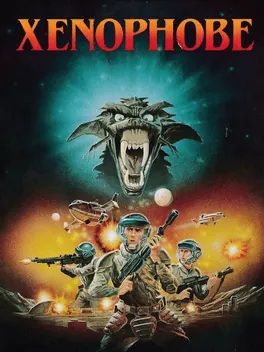
Xenophobe
Xenophobe is a 1987 arcade game and the goal of each level is to defeat all the aliens before time runs out. Levels may contain more than one floor, and players use elevators or holes to move between floors to defeat all of the aliens. Players can also pick up more powerful weapons and other items to help in their eradication of the aliens.
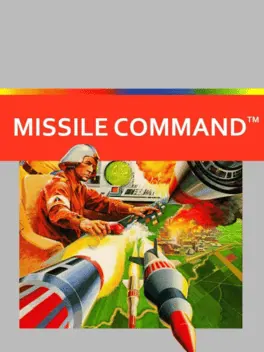
Missile Command
Atari 2600 port of Missile Command.
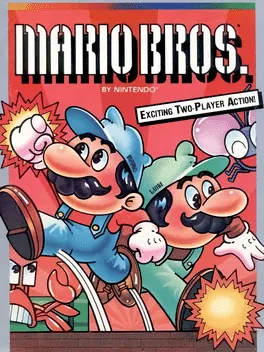
Mario Bros.
Mario Bros. is the Atari 2600 port of the homonymous arcade game.
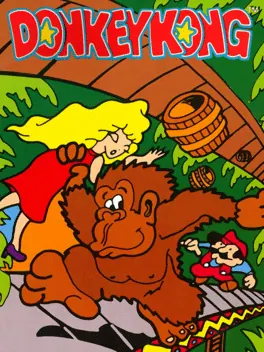
Donkey Kong
The Atari 2600 port of the hit arcade Donkey Kong differs from the original version in gameplay and has two stages instead of the original four.
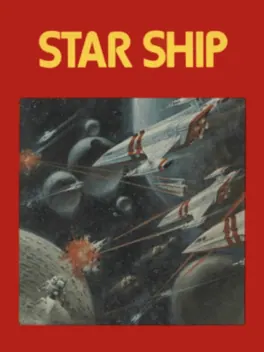
Star Ship
Star Ship is a First-person shooter video game cartridge developed by Atari, Inc. for its Video Computer System (later known as the Atari 2600). The game was one of the nine launch titles offered when the Atari 2600 went on sale. It was designed and programmed by Bob Whitehead. It was based on the Atari arcade game Starship 1. The re-branded Sears TeleGames version was titled "Outer Space".
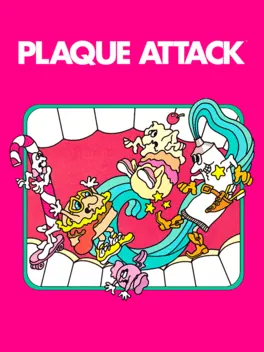
Plaque Attack
Plaque Attack is a 1983 video game for the Atari 2600 that was made by Activision. Loosely based on Space Invaders, the player must prevent food from destroying teeth in a person's mouth. Steve Cartwright, who designed the game, said that game was meant to help people develop good dental habits.
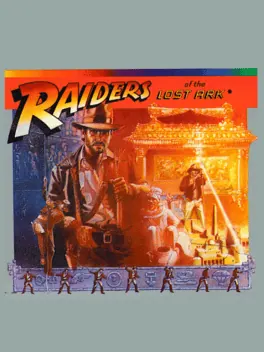
Raiders of the Lost Ark
Based on the movie itself.
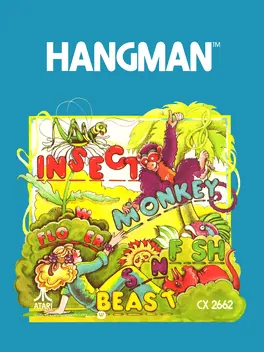
Hangman
Hangman was one of the eleven Atari 2600 titles that were part of the second wave of games released in 1978. It is based on the old words guessing game played with paper and pen. The player must guess which letters compose a word. Every wrong guess adds to the diagram of a man being hung, or in the case of this game, a monkey hanging from a bar. Eleven wrong guesses ends the game. Games can be played as one or two player games, and different grade levels of words. Two players can even provide the words for one another.
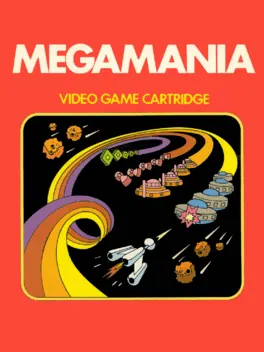
Megamania
In Megamania, the gameplay resembles that of Space Invaders. Rather than being aliens or spaceships, however, the enemies in this game are various objects such as hamburgers, bow ties, and steam irons. The object is to shoot them down before the energy bar at the bottom of screen is depleted, all while avoiding the oncoming enemies and their own projectiles attacks. Each of the enemies fly in select patterns and as soon as they hit the bottom of the screen, they re-appear at the top until shot by the player. The player's spacecraft depicted in the game is a cross between the U.S.S. Enterprise and Klingon battlecruiser from the Star Trek universe. Gameplay-wise and in terms of graphics, MegaMania bears a very strong resemblance to Sega's 1981 arcade title "Astro Blaster". Both games feature nearly identical patterns of approaching enemies with the player relying on an "Energy" meter. Also, the player's ship bears a remarkable similarity in both games. When Megamania was originally sold, anyone who scored above 45,000 points could send Activision a picture of their screen and become an official Megamaniac. They also would receive an Official Megamaniac emblem.[2] If a player exceeds a score of 999,999 the game ends.
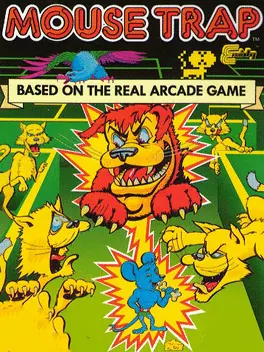
Mouse Trap
Mouse Trap is a 1981 arcade game released by Exidy, similar to Pac-Man. It was ported to three home systems by Coleco; Coleco's ColecoVision, Mattel's Intellivision, and the Atari 2600.
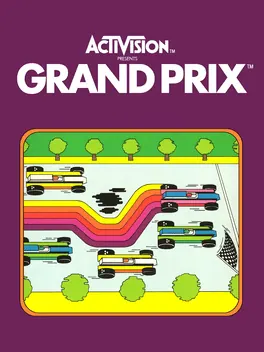
Grand Prix
The player drives a Formula One car in a time trial on one of four race tracks, each of which has a different difficulty level. Difficulty is gauged by the length of the course, the number of cars and oil slicks on the track, and the number of bridges to cross. The player views the race from a top-down perspective, and the screen scrolls from right to left. The player's car maneuvers only on a vertical axis, and loses a little speed when it does so. The joystick's button is the throttle: Depressing it accelerates, and releasing it decelerates. Pressing the joystick leftward applies the brake. The transmission audibly shifts as the player's car accelerates and decelerates. Grand Prix is a time trial, and the competing cars are obstacles rather than competition for the finish line. The player's car can easily outpace the other cars, but if it collides with one, its speed drops lower than that of the impacted car. Driving over an oil slick causes the player's car to skid slightly sideways, but does not slow it down. Once every scale mile, the player crosses a narrow bridge over blue water. Colliding with any wall of the bridge stops the car, and the player must slowly gain speed to continue.
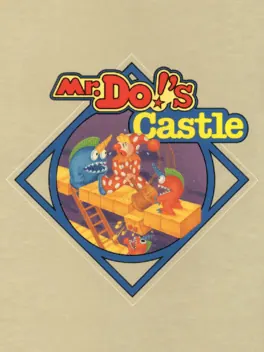
Mr. Do!'s Castle
Mr. Do!, that king of arcade clowns, is in a bit of a bind - again! This time, a pack of pesky unicorns is trampling the bricked hallways of his castle. Help Mr. Do! rid his dwelling of these crafty, quick-changing (and deadly) creatures with the skillful swing of a hammer. Sometimes a quick clobber to the head will do it. Or maybe a well chosen brick knocked out from above. If you can't stop these critters, then break a hole in the floor to slow 'em down. It's up to you to know when to fight - or when to flee! Tension mounts as you hurry Mr. Do! through the castle's maze, grabbing keys along the way. Only when Mr. Do! has collected all the keys can he unlock the castle door, and open up an extra chance to beat these nasty critters!
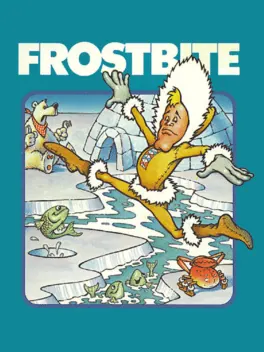
Frostbite
You're an Eskimo who wants to build an igloo to live in during the cold season. To do this, you must jump from ice-block to ice-block, while avoiding wildlife such as birds and crabs. Coming with contact with any of these will cause them to push you off the block and into the deadly water. Once you have built your igloo, you must enter it to proceed to the next level. Remember, you must build it before the temperature drops to 0°. You have four lives.
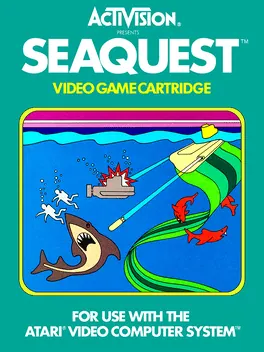
Seaquest
Your divers have collected treasure from the ocean floor. On their way back up to surface they are attacked by hostile fish, sharks and enemy submarines. It is, therefore, your task to collect your divers with your own submarine. While doing that you are not totally defenceless since your sub is able to fire bullets. But you have to watch out for your oxygen level which is shown at the bottom of the screen - once it is depleted, you die. So, every now and then you have to surface to replenish your oxygen supply. But you will lose one of the rescued divers if you surface with less than six frogmen onboard. After having rescued six divers, you move on to the next stage. As the game progresses, the then enemies become faster and more numerous.
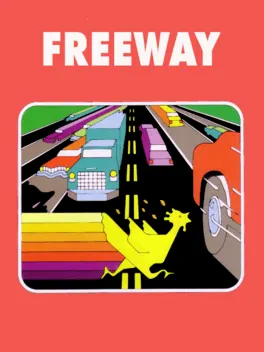
Freeway
Freeway is a video game designed by David Crane for the Atari 2600 video game console. It was published by Activision in 1981. One or two players control chickens who can be made to run across a ten lane highway filled with traffic in an effort to "get to the other side." Every time a chicken gets across a point is earned for that player. If hit by a car, a chicken is forced back either slightly, or pushed back to the bottom of the screen, depending on what difficulty the switch is set to. The winner of a two player game is the player who has scored the most points in the two minutes, sixteen seconds allotted. The chickens are only allowed to move up or down. A cluck sound is heard when a chicken is struck by a car. Comparisons are often made to Frogger, which has also features crossing a street filled with moving vehicles. Similarities did help sales when Frogger was popular in the arcades and a home version was not yet available. Freeway was made available on Microsoft's Game Room service for its Xbox 360 console and for Windows-based PCs on August 18, 2010.
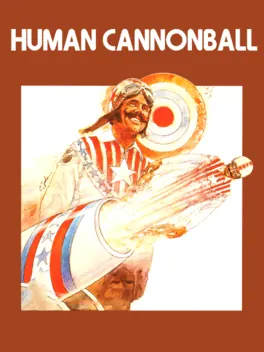
Human Cannonball
In Human Cannonball your goal is to fire a man out of a cannon and have him land in a bucket of water. To do this you need to adjust your cannon so the position, angle, and firing speed are just right. You score a point for each successful landing, and the game ends after seven attempts. Several game variations are included which allow you to have the position, angle and speed all set by the player, or have one or more of these in a fixed position, or have one or more of these randomly set by the computer. If you wish to make the game more challenging, you can also set a moving wall in front of the bucket which will make your timing more critical.
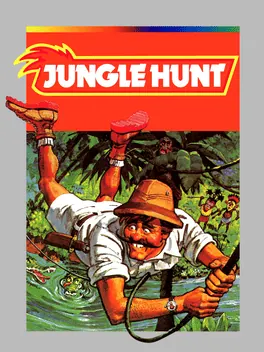
Jungle Hunt
Jungle Hunt is side-scrolling arcade game produced and released by Taito in 1982. It was initially released as Jungle King. Jungle Hunt is one of the first video games to use parallax scrolling. The player controls an unnamed jungle explorer sporting a pith helmet and a safari suit. The player attempts to rescue his girl from a tribe of hungry cannibals by swinging from vine to vine, swimming a crocodile-infested river, jumping over or ducking beneath rolling rocks, then releasing the girl before she is lowered into a boiling cauldron. Home versions were released for the Apple II, Atari 2600, Atari 5200, Atari 8-bit family, Commodore 64, ColecoVision, VIC-20, and IBM PC. The PC version was developed by Sierra On-Line and is incompatible with everything except an original IBM PC/XT with a CGA video card. In the Atari-ported versions the hero is named Sir Dudley, and the girl, married to Sir Dudley, is Lady Penelope.
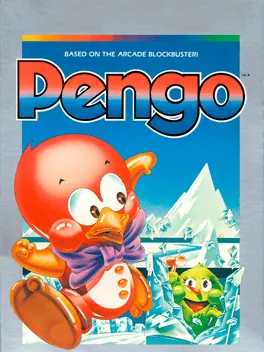
Pengo
The player controls Pengo, a red penguin that resides in the Antarctic. The game takes place in an overhead maze made of ice blocks, where Pengo fights the trolling, blob-like Sno-Bees. The objective of the game is for Pengo to survive a series of rounds by eliminating all Sno-Bees, while amassing bonuses by bringing together the three diamonds dispersed in the maze.
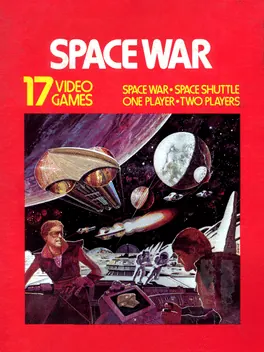
Space War
This video game is an Atari 2600 port of Spacewar!, the famous 1962 computer game by Steve Russell. The cartridge comes programmed with 17 game variations. Variations 1 to 13 are duels between two ships and 14 to 17 are for one player. In some of the variations the ships fight near a planet which has gravitational attraction. This concept was used in the Star Control series of games.
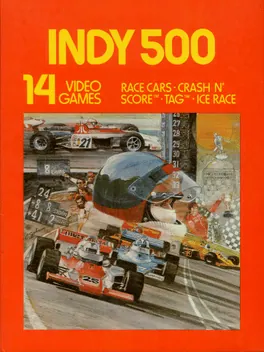
Indy 500
Indy 500 is a 1977 racing video game developed by Atari, Inc. for its Video Computer System (later known as the Atari 2600). It is themed around the Indianapolis 500, and is based on Atari's earlier 8-player arcade game, Indy 800. Indy 500 was one of the nine launch titles offered when the Atari 2600 went on sale in September 1977. Sears Tele-Games later re-released it as Race; no changes were made to the gameplay. Included with each game was a set of two driving controllers, which were identical in appearance to the 2600 paddle controller but could rotate indefinitely in either direction, among other differences.
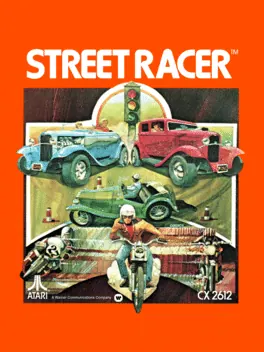
Street Racer
Street Racer is an action racing game for one to four players played from an overhead view. The screen is split into two lanes; in one or two player games, each player has a lane. In three and four player games, players must share the lanes. Each game has a two minute and sixteen second time limit, and your goal is to earn as many points as possible by the end of this time. In addition to the basic racing version, several other game variations are included as well.
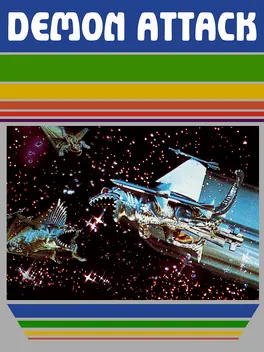
Demon Attack
Demon Attack is an arcade action game with gameplay similar to Space Invaders. You control a laser cannon at the bottom of the screen, and need to destroy wave after wave of brightly colored demons. The demons bounce around the screen in bizarre patterns, and try to destroy your cannon with bombs or lasers. When you shoot a demon, it will be replaced with another or will split into two smaller demons depending on which wave you are playing. When the required number of demons for the current round is finally destroyed, you can move on to the next, more difficult round.
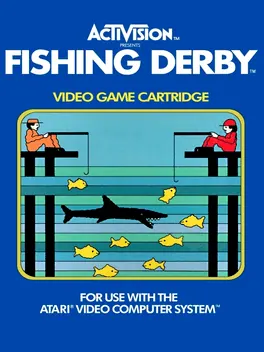
Fishing Derby
In Fishing Derby, two fishermen sit on opposite docks over a lake filled with fish (and a shark that passes through). Using the joystick the player is able to move his line left right and up and down in the water. When a fish is hooked, the line slowly comes up to the surface of the water. Pressing the fire button on the joystick reels in the fish faster. However, if both fishermen have fish hooked, only one person can reel theirs in (the one who hooked theirs first). The shark that roams the water will try to eat hooked fish before they surface. The objective for both fishermen is to reach 99 pounds of fish first. There are six rows of fish; the top two rows have 2 lb. fish, the middle two rows have 4 lb. fish, and the two bottom rows have 6 lb. fish. The more valuable fish sit at the bottom, but they are harder to bring in as they run a higher risk of being eaten by the shark. The game's two variants are simply single player and multi-player. In both games the objective is to reach 99 lb. of fish first.
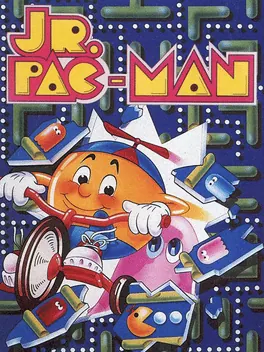
Jr. Pac-Man
The gameplay of Jr. Pac-Man is similar to that of its predecessors: The player controls the titular Jr. Pac-Man and scores points by eating all of the dots in the maze. Four ghosts roam the maze and attempt to capture him. The player can eat an energizer to turn the ghosts blue, making them vulnerable for a short time and allowing the player to eat them, sending their eyes back to their home base. When all the dots are cleared, a new maze is presented and gameplay resumes.

Stampede
The objective of Stampede is to round up all of the cattle you encounter. To do so, the player must lasso each one in order to capture it. The player is initially only allowed to let two cattle pass; if a third one slips by, the game is over. An important caveat to this is that the player gets one extra free pass for every 1,000 points scored. So, if a player were at 2,000 points and had not yet let any cattle pass, then he or she would be allowed to let four cattle pass before the fifth one ended the game (assuming he or she did not reach 3,000). This makes it possible for an expert player to repeatedly beat the game - as after about 5,000 points or so the game essentially "resets," and the same pattern is repeated.
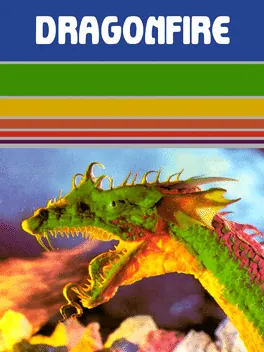
Dragonfire
Dragons have driven the Royal Court from the Castle "O we are lost, lost" laments the King. "Without our vast treasures we cannot raise an army 'gainst these accursed dragons. Our Kingdom must now languish under lizards!" "Nay, not so, my liege!" replied the young Prince. "None knows that Castle, those many bridges and storerooms, better than I. Give me leave and I shall loot those lizards of their plunder and restore my lord to his birthright." "Brave boy," said the King, fully pleased. "But," he added darkly, "beware dread dragonfire!"
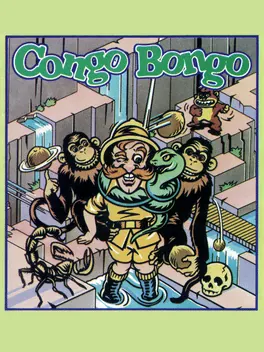
Congo Bongo
Congo Bongo is an isometric platform arcade game released by Sega in 1983. The game has come to be seen as Sega's answer to the highly successful Donkey Kong game that was released two years prior. The player takes the role of a red-nosed safari hunter who tries to catch an ape named "Bongo". The hunter seeks Bongo to exact revenge for an apparent practical joke in which Bongo set fire to the hunter's tent, giving him a literal "hotfoot". The game was named by Peter W. Gorrie who was the CFO of Sega at that time.