
Jogos para BBC Microcomputer System
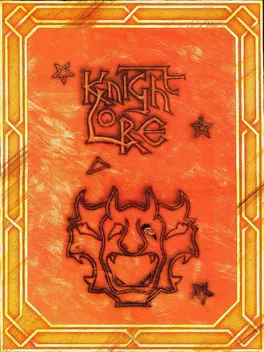
Knight Lore
Although the third game in the Sabreman series, it was the first completed and withheld due to fears that sales of Sabre Wulf would be affected. The player, as Sabreman, has forty days to collect objects throughout a castle and brew a cure to his werewolf curse. He turns into a werewolf at night, as indicated by an onscreen timer, and returns to human form during the day. Each room is depicted in monochrome on its own screen and consists of blocks to climb and obstacles to avoid while the player solves puzzles and retrieves items for the cure.
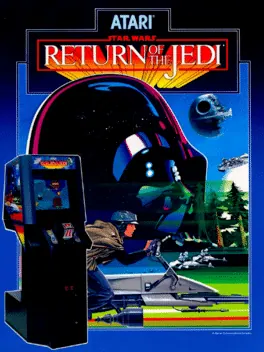
Star Wars: Return of the Jedi
The Return of the Jedi completes the Trilogy of games based on the Star Wars films. Each one is a conversion of the Arcade game and Return of the Jedi picks up the action of the movie where the rebel forces begin their attack against the Imperial Death Star. In the first lever you control Princess Leia on her Speederbike through the forest of Endor to safety of the Ewok village. You leave Leia there and go to another part of the forest to control Chewbacca's Scout Walker. There, Hans Solo is waiting to deactivate the shields protecting the Death Star. On the second and third levels, you control Chewbacca and Lando Calrissian as he flies the Millennium Falcon. Lando flies close to the Death Star fighting off a mighty attack from the T.I.E. fighters. The Millennium Falcon enters the Death Star and travels down a dangerous tube towards the central reactor. Blast the reactor and then turnaround to get away from the Death Star as it blows up.
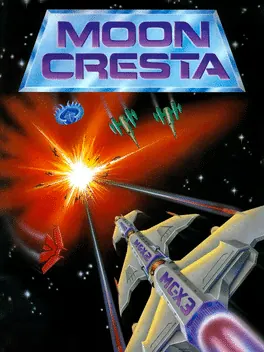
Moon Cresta
Moon Cresta is an arcade game released in 1980 by Nichibutsu. A moving starfield gives the impression of vertical scrolling, but the game is a fixed shooter in the vein of Namco's Galaxian. Incentive Software published a version of this arcade game for many 8-bit home computers of the time. Dempa also released a port of both Moon Cresta and Terra Cresta for the X68000. It was also released on the Wii Virtual Console in Japan on March 9, 2010 and PlayStation 4 (Arcade Archives) in 2014.

Chuckie Egg
Chuckie Egg is an action platformer featuring a turn-based multiplayer mode. As Hen-House Harry, the player must collect the twelve eggs positioned in each level, before a countdown timer reaches zero. In addition there are piles of seed which may be collected to increase points and stop the countdown timer for a while. The player starts with five lives, and an extra life is awarded every 10,000 points.
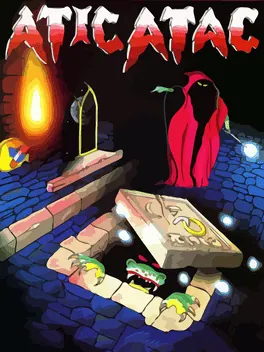
Atic Atac
The game takes place within a castle in which the player must seek out the "Golden Key of ACG" through unlocking doors and avoiding enemies. It was Ultimate's second game to require 48K of RAM; most of their previous games for the Spectrum ran on unexpanded 16K models. It was re released for Xbox One as part of the Rare Replay Collection.
Uridium
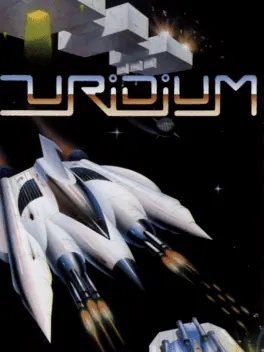
Uridium (released on the NES as The Last Starfighter) is a science fiction side-scrolling shoot 'em up originally designed by Andrew Braybrook for the Commodore 64, and later ported to other 8-bit machines. It consists of fifteen levels, each named after a metal element, with the last level being called Uridium (a fictional metallic element, not to be confused with the real metallic element iridium). The manual quotes Robert Orchard, who invented the name as saying "I really thought it existed".
Raid over Moscow
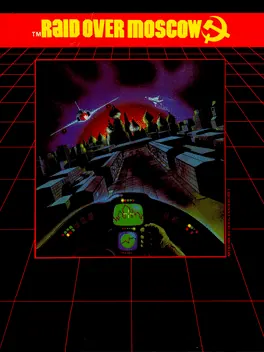
Released during the Cold War era, Raid Over Moscow is an action game in which the player (an American space pilot) has to stop three Soviet nuclear attacks on North America, then fight his way into and destroy a nuclear facility located in Moscow's Kremlin. According to the game's storyline, the United States is unable to respond to the attack directly due to the dismantlement of its nuclear arsenal.
The Way of the Exploding Fist
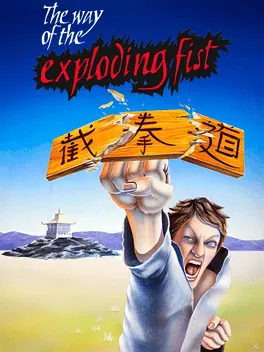
Discover Kung-Fu: The Way of the Exploding Fist (also known as Way of the Exploding Fist, The Way of the Exploding Fist), an excellent game of 1985 runnable on Amstrad CPC system. With side view, fixed / flip-screen perspective, the publisher Melbourne House had wonderful ideas around fighting, martial arts.
Hostages
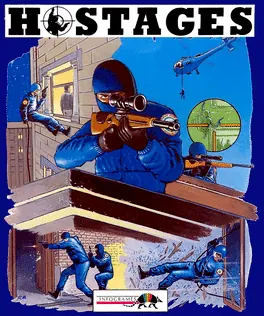
Terrorists have taken an embassy hostage and you have to bring in a 3 men strike team to rescue the civilians inside.
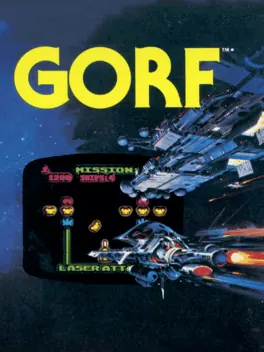
Gorf
Gorf actually consists in the Arcade version of five different types of space shooters. The first one ist basically is a Space Invaders clone. In the second one a formation of space ships is hovering at the top of the screen while single space ships will disengage from the formation and dive down at you. The third variant is a Glaxian clone and only available in the Arcade version. In the fourth mini-game the enemy will come out of a circular hyperspace field and attack you. After having destroyed four of your attackers the game proceeds to the fifth game stage. Here a huge mothership is dropping bombs at you from the top of the screen. You defeat the mothership with a well placed projectile hitting it between its two major sections. After that the game starts from the gebinning on a higher difficulty level.
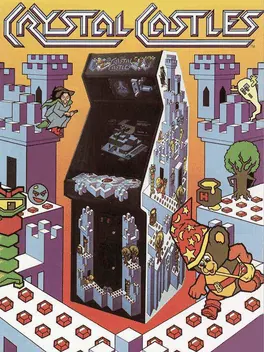
Crystal Castles
Crystal Castles is an arcade game released by Atari, Inc. in 1983. The player controls a cartoon bear by the name of Bentley Bear, who has to collect gems located throughout trimetric-projected rendered castles while avoiding enemies out to get him as well as the gems. Crystal Castles is notable for being one of the first arcade action games with an actual ending, whereas most games of the time either continued indefinitely, ended in what was termed a "kill screen" or simply just restarted from the first level, and to contain advance warp zones.
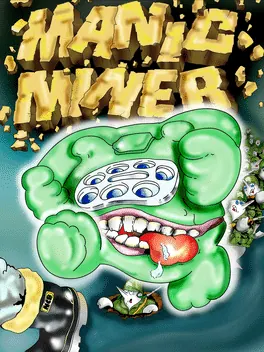
Manic Miner
Manic Miner is a platform video game originally written for the ZX Spectrum by Matthew Smith and released by Bug-Byte in 1983 (later re-released by Software Projects). It is the first game in the Miner Willy series and among the early titles in the platform game genre. The game itself was inspired by the Atari 800 game Miner 2049er. It has since been ported to numerous home computers and video game consoles.
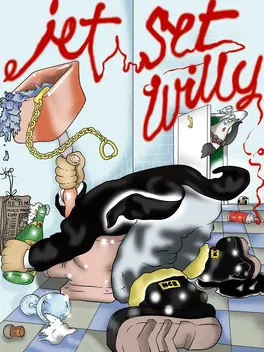
Jet Set Willy
Jet Set Willy is a flip-screen platform game in which the player moves the protagonist, Willy, from room to room in his mansion collecting objects. Unlike the screen-by-screen style of its prequel, the player can explore the mansion at will.
Asteroids Deluxe
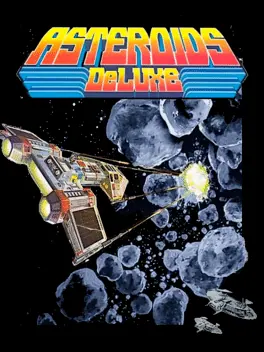
Like in the original Asteroids the objective is to score as many points as possible by destroying asteroids and flying saucers. The asteroids come in three different sizes. If the player fires at and hits a large asteroid, it breaks into medium size asteroids. If the player fires at and hits a medium asteroid, it breaks into small asteroids. If a player fires at and hits a small asteroid, it disappears. Different points are awarded for hitting each size of asteroid, and for hitting flying saucers. The player controls a ship that can rotate left and right, fire shots straight forward, and thrust forward. Asteroids Deluxe replaces the hyperspace feature with shields which deplete with use. Other differences include asteroids which rotate and a new enemy which is dubbed a "killer satellite" which would, when shot, break apart into three smaller ships that homed in on the player's position. The screen of the game is wrapped both vertically and horizontally so that if any object moves past the top edge of the screen it reappears on the bottom edge at the same lateral location, and if it moves past the left side of the screen, it reappears on the right side of the screen in the same vertical location. Asteroids Deluxe swaps vector graphics of the original for bitmaps. In 2007, AtariAge self-published a cart release of Asteroids Deluxe for the Atari 7800.
Last Ninja 2: Back with a Vengeance
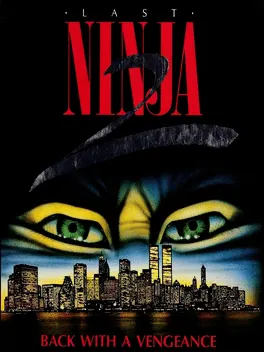
Once beaten, but not destroyed, the evil Shogun Kunitoki used all his mystic powers to transport himself through time and establish a new empire of tyranny in modern day Manhattan. Only you can stop him!
Jetpac
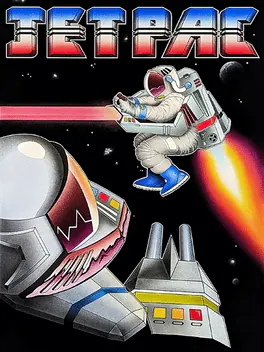
The 'Acme Interstellar Transport Company' is delivering spaceship kits to various planets in the solar system throughout the Galaxy; and as chief test pilot, all you have to do is assemble the Rockets, and thrust on to your next destination. As you don't often get the chance of a free trip across the Galaxy, this is a great opportunity to get rich! Stop off on several planets on your journey, collect the odd sack of precious gems, elements or gold, and take them back with you. Sounds simple doesn't it! But before you make yourself the richest person in the whole Universe, remember to refuel your Spaceship - with 6 fuel pods - every time you land on a planet. Any other goodies you collect are yours to keep. Upon landing, you will find yourself equipped with the very latest Hydrovac Jet Pac, which can automatically air lift almost any rocket stage, fuel pod or valuables that you care to land upon, and release them over the rocket ship base. Don't forget your mega-powerful, Quad Photon Laser Phasers can blast any nasty, mean aliens who might object to your visit.

Klax
Klax is a 1989 computer puzzle game designed by Dave Akers and Mark Stephen Pierce. The object is to line up colored blocks into rows of similar colors to make them disappear, to which the object of Columns is similar. Atari Games originally released it as a coin-op follow up to Tetris, about which they were tangled in a legal dispute at the time.
Robotron: 2084
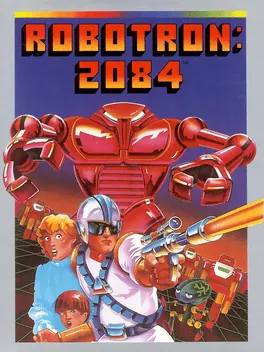
In 2084, man creates a species of super-advanced cyborgs known as Robotrons. Recognizing the imperfect nature of their creators, the Robotrons conclude that the inefficient human race must be exterminated. In Robotron: 2084, only you and a single family of clones remain. If mankind is to survive, you must destroy the Grunts, Brains, Enforcers, and Tanks - but avoid the indestructible Hulks at all cost. Can you withstand wave after wave of android invasion and rescue Mommy, Daddy, and Mikey... before it's too late?
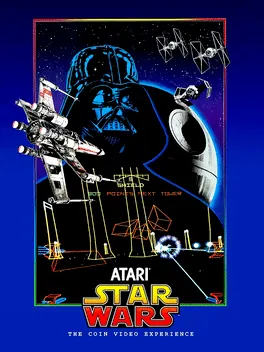
Star Wars
Star Wars is a first-person shoot 'em up based around the original Star Wars film. You take on the role of Luke Skywalker, aiming to destroy the Death Star - which, as any fan knows, involves attacking the 'weak spot' near the exhaust. To even get to this you have to pass swarms of TIE Fighters. Complete the game and it loops back around at ever-increasing difficulty. The game uses vector graphics, which allow lots of action at high speed on comparatively slow systems.
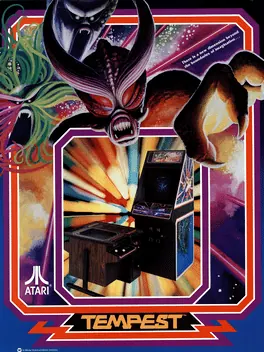
Tempest
Tempest is a 1981 arcade game by Atari Inc., designed and programmed by Dave Theurer. It takes place on a three-dimensional surface, sometimes wrapped into a tube, which is viewed from one end and is divided into a dozen or more segments or lanes. The player controls a claw-shaped spaceship (named Blaster) that crawls along the near edge of the playfield, moving from segment to segment. Tempest was one of the first games to use Atari's Color-QuadraScan vector display technology. It was also the first game to allow the player to choose their starting level (a system Atari dubbed "SkillStep"). This feature increases the maximum starting level depending on the player's performance in the previous game, essentially allowing the player to continue. An official port was released for the Atari ST. An official port that bears the Atari logo was released by Superior Software for the BBC Micro and Acorn Electron in 1985, and another by Electric Dreams for the ZX Spectrum and Amstrad CPC in 1987. Versions for the Atari 2600 and 5200 were in the works in Atari, Inc. during 1984, and unfinished prototypes exist for both of them.
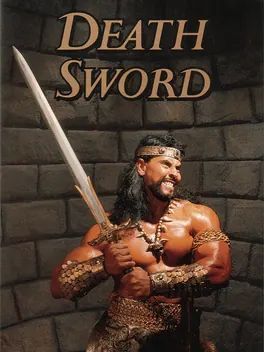
Death Sword
Barbarian: The Ultimate Warrior is a video game first released for Commodore 64 personal computers in 1987; the title was developed and published by Palace Software, and ported to other computers in the following months. The developers licensed the game to Epyx, who published it as Death Sword in the United States. Barbarian is a fighting game that gives players control over sword-wielding barbarians. In the game's two-player mode, players pit their characters against each other. Barbarian also has a single-player mode, in which the player's barbarian braves a series of challenges set by an evil wizard to rescue a princess.
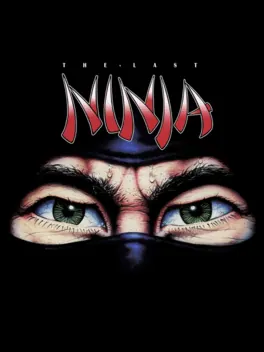
The Last Ninja
Brotherhood. Survival. Revenge. The evil Shogun Kunitoki and his henchmen have slaughtered the entire Brotherhood of White Ninja. You alone survive. The Shogun has taken possession of the Ninja Palace of Lin Fen and the sacred scrolls containing the ancient secrets of the Ninja. Only you- the Last Ninja- can avenge the Brotherhood and recapture the secrets of the Ninja. You must use all your fighting skills. Samurai warriors, masters of the martial arts, and the Shogun's guards lurk at every turn, ready to test their hand-to-hand combat skills against yours. You must be as wise as you are strong. Find your way through a magnificent landscape that unfolds in screen after screen of unparalleled graphics- from the lavish interior of the Ninja Palace to the depths of its foulest dungeons. Scale forbidding mountains; cross lakes and rivers. Master new and dangerous tasks, like Ninja magic. Search for the hidden weapons, food, and charms that you need to win the final battle- and all the battles in between. The way is long and dangerous. Start now. Kunitoki's warriors are already learning the Ninja ways.
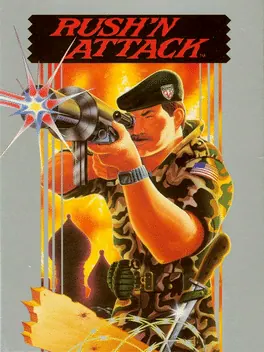
Rush'n Attack
A run & gun shooter by Konami, also known by the title Green Beret, in which the player takes the role of a soldier infiltrating a military base.
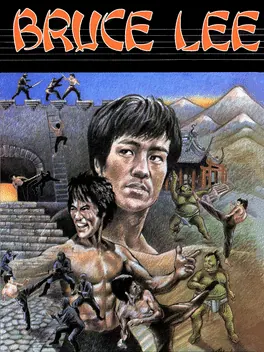
Bruce Lee
Bruce Lee is a video game designed by Ron J. Fortier, with graphics by Kelly Day and music by John A. Fitzpatrick. It was originally developed for the Atari 8-bit family and published in 1984 by Datasoft, along with a port for the Commodore 64. The game was converted to the ZX Spectrum and Amstrad CPC and published by U.S. Gold in the same year. An MSX version was published in 1985 by Comptiq. Bruce Lee is a platform game/beat 'em up hybrid, in which the player controls Bruce Lee.
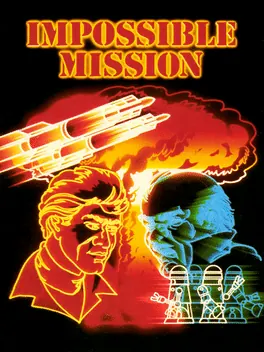
Impossible Mission
The situation: for three days have the strategic central computers of the great powers acted up. An unknown person manipulates their programmes; at the end of these programmes is the starting command for the intercontinental rocket. The countdown is on, only 6 hours keep the humanity from an atomic inferno. An unknown person? Only professor Elvin, the insane computer expert could crack the top secret start code, Elvin, who entrenches himself in his intangible subterraneous, guarded by 90 murderous robots, that until now had hunted down every intruder. No one who has ever set foot on the lift to Elvins cave labyrinth has returned back alive. The last hope: Special Agent 4125, the most cunning, toughest and most indiscriminate man, that the secret service can offer. Only ice cold reckoning and superior physical condition give this unarmed hero a tiny chance to avert the disaster in the last minute. The game: your task is to put a stop to evil Elvin Atombender's game. For this you have to enter in his laboratory, protected by a vault somewhere on his underground stronghold. To open the laboratory's door you need a nine letters password, each letter of which Elvin coded into a punchcard, just for cutting in four each one of them, painting them in different colors and hiding the resulting pieces everywhere in his base's furniture. So all you have to do is search into every object of every room for pieces of puzzle while surviving the robots, the pits and doctor Elvin's annoying voice, retrieve all the 36 pieces, put them together in groups of four, and head for the laboratory, where an unpleasant surprise waits you
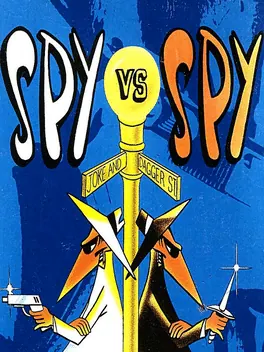
Spy vs Spy
The black spy and the white spy are out to outsmart each other before the time bell rings. Find the needed objects (money, passport, secret plans and airport door key) by searching rooms in the embassy, which include desks, file cabinets and other furniture. Foil your opponent by setting creative booby traps in the various rooms (a bomb in a dresser drawer, for instance). Traps can be disarmed with objects found in rooms (a water bucket from a firebox on the wall will disarm the bomb in the prior example). When all the items are together in the secret briefcase, head for the airport door.
Elite
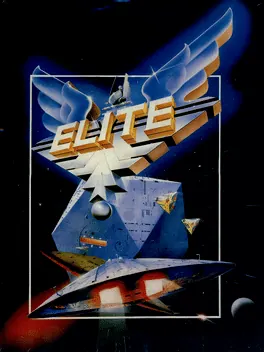
Elite is a space trading video game, written and developed by David Braben and Ian Bell and originally published by Acornsoft for the BBC Micro and Acorn Electron computers in September 1984. Elite's open-ended game model, and revolutionary 3D graphics led to it being ported to virtually every contemporary home computer system, and earned it a place as a classic and a genre maker in gaming history. The game's title derives from one of the player's goals of raising their combat rating to the exalted heights of "Elite". Elite was one of the first home computer games to use wire-frame 3D graphics with hidden line removal. It added graphics and twitch gameplay aspects to the genre established by the 1974 game Star Trader. Another novelty was the inclusion of The Dark Wheel, a novella by Robert Holdstock which gave players insight into the moral and legal codes to which they might aspire.
Spy Hunter
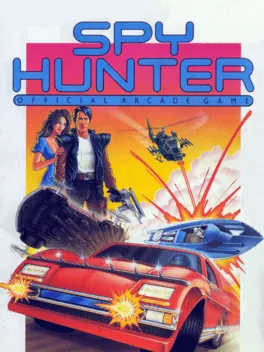
Originating in the arcades, Spy Hunter is a driving action game played from an overhead point of view. Your car is equipped with machine guns to help you get past the numerous enemies out on the road (be careful not to shoot any civilians, though!) Occasionally you will come across a weapons van, and if you drive into the back of the van your car becomes equipped with a second weapon (such as smoke screen, oil slick, or missiles). At several points the road splits and you can enter a boathouse which transforms your car into a boat temporarily. If you drive far enough the seasons change as well (watch out for icy conditions during winter!). The enemy cars will do anything to stop you, including running you off the road, firing guns from the back of a limo, or dropping bombs from a helicopter.
Pole Position
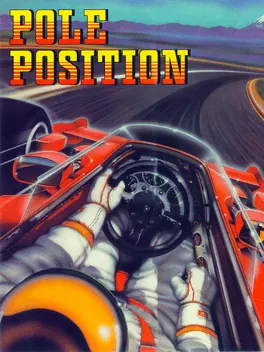
The very first racing game with the rear perspective camera and track based on real life.
Yie Ar Kung-Fu
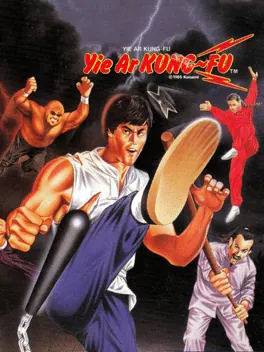
Yie Ar Kung-Fu is a 1985 fighting game developed and published by Konami. Along with 1984's Karate Champ, which influenced Yie-Ar Kung Fu, it is one of the games that established the basis for modern fighting games.
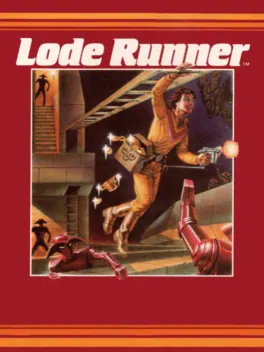
Lode Runner
Lode Runner is a 1983 puzzle video game, first published by Brøderbund. It is one of the first games to include a level editor, a feature that allows players to create their own levels for the game. This feature bolstered the game's popularity, as magazines such as Computer Gaming World held contests to see who could build the best level.
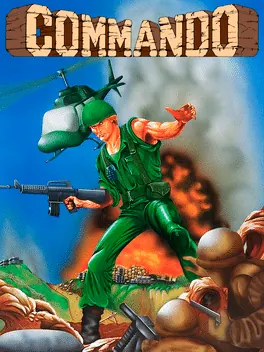
Commando
Several levels await your super-tough Commando in this arcade conversion. Armed with only a standard rifle and a few grenades you must take on hordes of enemies. Some are wandering around in the open, while others have picked out hiding places, which you must approach from certain angles. Trees, rivers and bridges create a varied combat-like terrain and must be incorporated into your thinking. Extra grenades can be collected, and will definitely be required, as they allow you to kill from distance and thus avoid some enemy shots.
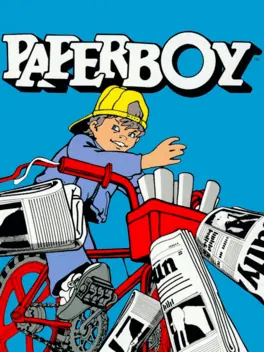
Paperboy
Paperboy is a 1985 arcade game by Atari Games originally developed in 1984 . The players take the role of a paperboy who delivers newspapers along a suburban street on his bicycle. The game was ported to numerous video game consoles and personal computers. Paperboy was innovative for its theme and novel controls. The player controls a paperboy on a bicycle delivering newspapers along a suburban street which is displayed in a cabinet perspective (or oblique projection) view. The player attempts to deliver a week of daily newspapers to subscribing customers, attempts to vandalize non-subscribers' homes and must avoid hazards along the street. Subscribers are lost by missing a delivery or damaging a subscriber's house.
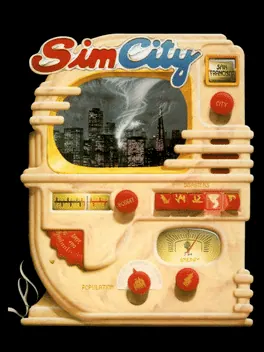
SimCity
SimCity, later renamed SimCity Classic, is a city-building simulation video game, first released on February 2, 1989, and designed by Will Wright for the Macintosh computer. SimCity was Maxis's second product, which has since been ported into various personal computers and game consoles, and spawned several sequels including SimCity 2000 in 1993, SimCity 3000 in 1999, SimCity 4 in 2003, SimCity DS, SimCity Societies in 2007, and SimCity in 2013. Until the release of The Sims in 2000, the SimCity series was the best-selling line of computer games made by Maxis.