
Jogos para DOS
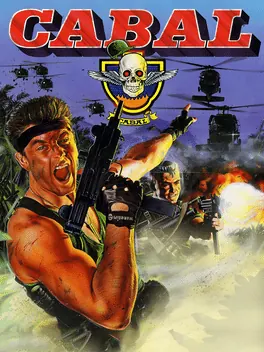
Cabal
Originating in the arcades, Cabal is a shooter where the protagonist runs back and forth along the bottom of the screen, ducking and dodging bullets and grenades from the enemy. The roll maneuver from the arcade was not implemented in the PC version. The player returns fire by moving a target around the screen which also moves the player character and may expose him to enemy fire.
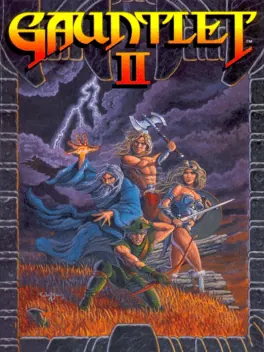
Gauntlet II
The gameplay is very similar to the original Gauntlet, a topdown dungeon crawl supporting up to four players. The biggest difference from the original game is that players can choose identical classes, instead of being limited to a particular one for each joystick; each player is differentiated by color. Thus, instead of having a "warrior", "wizard", and "valkyrie" (for instance), in Gauntlet II there could be a "red wizard", a "blue elf" and a "green warrior". In addition to the new "class" system, new level designs were added, including the possibility of encountering them in altered ways by having the play-field turned in steps of 90°. Other new features included the enemy "It", which upon contact would make a player "It" and draw all enemies towards him/her. The only way to release this curse is by touching another player or entering the exit, turning any level containing "It" into a fantasy filled game of tag. Other notable additions include the ability to ricochet shots off walls by means of a special pick-up, acid puddles that caused large, predetermined amounts of damage and a large dragon which would occupy multiple squares and require multiple hits to destroy. New level elements were also added, adding more variety to the original game. These included "all walls are invisible", "magic walls" which changed into monsters or items when hit, "stun tiles" which stunned the player, and fake exits. Another challenge in the game is the possibility to find a "secret room". This can be found by completing specific achievements within the level (e.g., "don't be fooled", means that you must find the real exit first). The secret room contains items such as food and magic potions (extra shot power, extra shot speed, extra magic power, extra speed, extra armor and extra fight power). This sequel was also the first to feature what is now known as the Gauntlet theme tune, which resembles a simplified Baroque fugue.
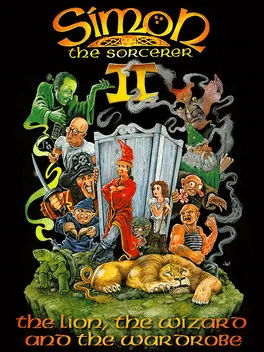
Simon the Sorcerer II: The Lion, the Wizard and the Wardrobe
The Evil wizard Sordid is brought back to life when a magic-book of his is set ablaze and thrown into the middle of a chalkboard pentagram by the father of Runt, a young boy wanting to become a mighty sorcerer. Sordid promises him that he can become his apprentice if he helps him exact his vengeance on Simon. Several months later, Sordid's Fortress of Doom is reconstructed and Sordid has a new robotic body. He sends a magical wardrobe to fetch Simon but it accidentally ends up on the doorstep of Calypso, the wizard Simon had to save in the last game. Simon then starts to look for a fuel called mucusade which he needs to power the wardrobe in order to get home.
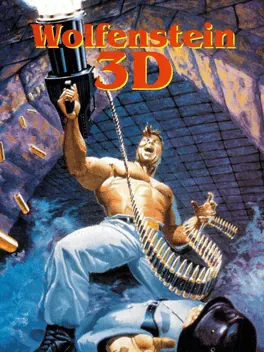
Wolfenstein 3D
Wolfenstein 3D is a first-person shooter presented with rudimentary 3D graphics and a follow-up to the top-down infiltration game Castle Wolfenstein. The game is broken up into levels, each of which is a flat plane divided into areas and rooms by a grid-based pattern of walls and doors, all of equal height. Each level is themed after Nazi bunkers and buildings. To finish a level, the player must traverse through the area to reach an elevator. Levels are grouped together into named episodes, with the final level focusing on a boss fight with a particularly difficult enemy. While traversing the levels, the player must fight Nazi guards and soldiers, dogs, and other enemies while managing supplies of ammunition and health. While later releases of the game included the Nocturnal Missions expansion, this initial release did not.
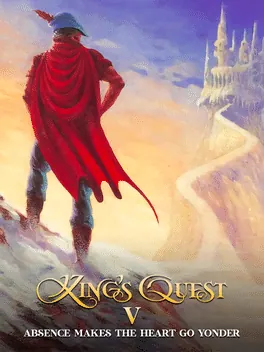
King's Quest V: Absence Makes the Heart Go Yonder!
King's Quest V: Absence Makes the Heart Go Yonder is an adventure game in the long-running King's Quest series. Players control King Graham as he embarks on a quest to rescue the Royal Family of Daventry, who have mysteriously disappeared. The game takes place in a fantasy world filled with magic and peril, where Graham must overcome obstacles and solve puzzles to progress. As the fifth installment in the series created by Roberta Williams, King's Quest V builds upon the graphical adventure game format that Williams pioneered, combining text and visuals to create an immersive storytelling experience. The game continues the legacy of the King's Quest series, which had become a popular and influential franchise in the computer gaming industry by the time of its release.
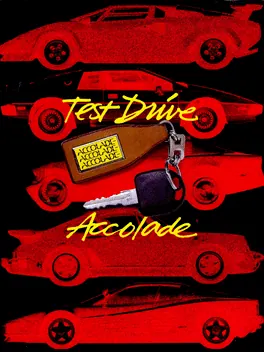
Test Drive
After you choose a car, you have to drive as fast as possible without crash and without getting caught by the cops. You are equipped with the radar detector so you are informed about the approaching trouble.
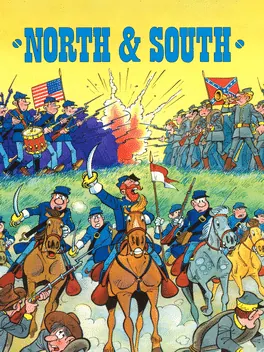
North & South
Your objective is ensure victory for your side by eliminating all the enemy armies. You will be controlling armies across all the combat zones of the Civil War. You may respect history or not, as you like. North and South does not try to reconstitute history and places playability over realism, it only tries to emulate the atmosphere and overall strategic conditions of the Civil War. Thus, as in reality, the player may choose to advance deep into the South or North, to attack in the center or to attempt a turning movement. This game can be played against computer or between two human opponents. You can also choose between a full strategic mode without the arcade parts or use the arcade mode during the fights, which allows you to directly control your own units.
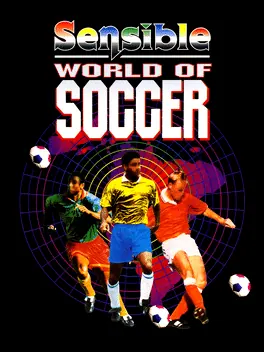
Sensible World of Soccer
Sensible World of Soccer is an enhanced version of Sensible Soccer. Virtually every important soccer league in the world is included in this game, with some countries not only having premier / first division, but 2nd, 3rd, and more divisions. All important international competitions are also included (club- and national-team based). The game has a career mode, where you may play up to 20 seasons as player manager or manager only. During a career as a coach you're not tied to one club / national team, meaning if you're good enough one (or more) big clubs make offers to you to coach their team. All teams featured in this game have real players (names, strengths, weaknesses, etc.) from the 1994/1995 season. The management part of the game allows you to buy any of these players (which number 24,000 in total) if you have enough money and a free slot in your team. Besides the player manger career, you may play friendly matches, single season of any competition, and custom competitions, which can be made from scratch or based on a real one. Teams participating in these competitions can be chosen from any country. All the teams may be played by human player or computer. The DOS version is based on Amiga version 1.1 with the data of season 1995/1996. 1.1 adds the ability to switch between player-manager and manager-only status before each match of a career and improved on-pitch skills enhanced for the player teams. Also the athletes' statistics improve by consistent goal-scoring.
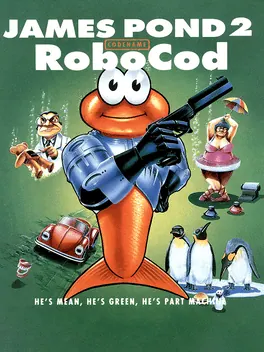
James Pond 2: Codename - RoboCod
In his second adventure James Pond must retrieve the toys Dr Maybe has stolen. Pond has been armed with an Inspector Gadget-style stretch device, which he can use to view higher areas or claw onto ceilings so as to slide across them. The gameplay takes place across worlds themed around particular types of toys, such as sporting goods, candy and aircraft. The levels scroll sideways, although a small amount of vertical movement is included. On each level Pond must collect 2 penguins and reach the exit, although there are usually multiple exits and lots of secret areas to explore. After completing each pair of two worlds (each of which has three sub levels), a boss must be faced.
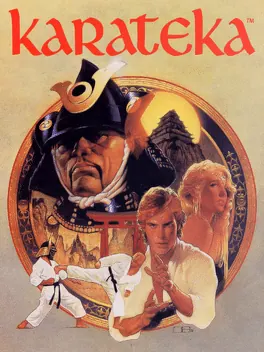
Karateka
Karateka is a 1984 beat'em up video game by Jordan Mechner, and was his first game created while attending Yale University. It was originally programmed for the Apple II, and was later ported to several other home computers and early gaming consoles. The game was published in North America by Brøderbund, and in Europe by Ariolasoft. The player controls an unnamed protagonist who is attempting to rescue his love interest, the Princess Mariko, from Akuma's castle fortress. The game exhibits a combination of a side-scrolling platform and fighting game elements. The player uses punches and kicks to defeat Akuma and his guards and make his way deeper into the fortress. The game, as with most at the time of development, lacked checkpoints or the ability to save the game, making it a challenge to complete in a single sitting. Karateka has been well-received, particularly for its realistic animations used for the game's characters. The game was considered a breakthrough success for Mechner, and would eventually result in his development of the Prince of Persia franchise. A high-definition remake, spearheaded by Mechner, was released as a downloadable title for the Xbox 360, Microsoft Windows, PlayStation 3, with planned ports for the iOS and Wii U systems.
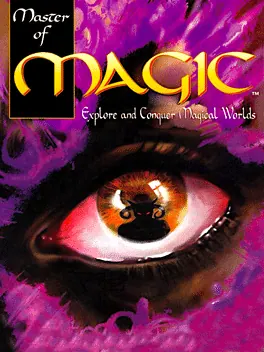
Master of Magic
You came to the world of Arcanus as a fledgling wizard. Sparsely equipped with but a spell or two, you begin as the ruler of a tiny hamlet and its people. With these raw materials, you must build a thriving city, explore the two worlds of Arcanus and Myrror, expand your empire and learn new spells. In time, you will meet other wizards, each rising from equally humble beginnings, each having the same goal as you, namely conquering the worlds. How well you allocate resources, make use of your races’ potentials, seize opportunities and negotiate with other wizards determines your eventual success. In the end, though, there can be only one Master of Magic!

Jungle Strike
A sequel to Desert Strike: Return to the Gulf (a best-seller released the previous year) and the second instalment in the Strike series. Jungle Strike retained its predecessor's core mechanics and expanded on the model with additional vehicles and settings. The game was well received by most critics upon release, with the Mega Drive release receiving critical acclaim from their respective reviewers. Publications praised its gameplay, strategy, design, controls and graphics, although there were some complaints regarding the interface and difficulty.
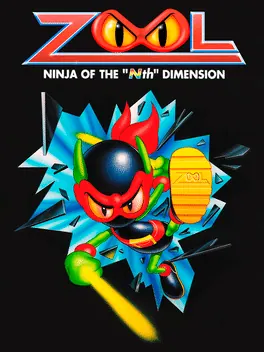
Zool: Ninja of the Nth Dimension
Zool is a fast-paced side-scrolling platformer. The protagonist can run, jump, climb walls, and shoot enemies. Power-ups for Zool are scattered across the levels. These include life-spending hearts, smart bombs, shields, more powerful jump-skill and a twin Zool. This "twin" makes imitates the original's motions a few seconds after he performs them.
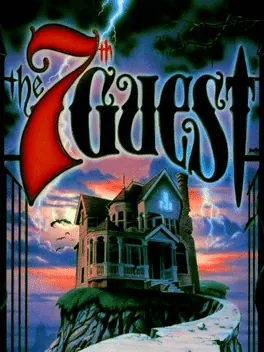
The 7th Guest
The 7th Guest is a horror adventure described as "the first Interactive Drama", with plentiful pre-rendered 3D graphics, live action video clips, and an original, orchestrated musical score. The atmosphere is dense, the puzzles difficult and the experience as a whole is completely horrifying.
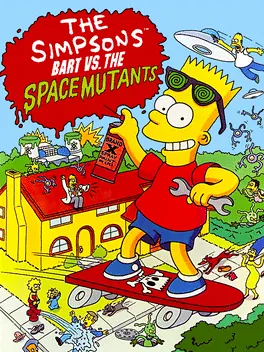
The Simpsons: Bart vs. The Space Mutants
Bart vs. The Space Mutants is a platform game where the player goes into the role of Bart Simpson (from the TV show The Simpsons) and must stop the Space Mutants from invading Springfield. On each of the five levels, Bart must collect (or get rid of) the ingredients that the Space Mutants are planning to use to build their machine, such as purple objects or balloons. He also has to collect enough "proof" of the aliens existence (brown coins left behind when they are jumped on), so his family members will help him when he meets a boss (characters such as Nelson and Sideshow Bob). This won't be easy since the Space Mutants are "using" human bodies as disguise. In order to discover who are the real Space Mutants, Bart must use his X-ray Specs.
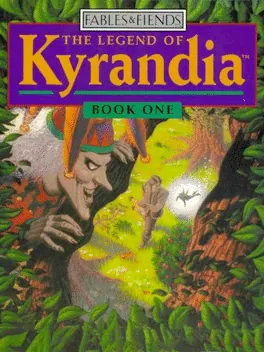
The Legend of Kyrandia
Kyrandia is a land of dark, mysterious forests, and sleeping dragons. A fantastic land where rubies grow on trees and magic abounds. Who would imagine that a land so idyllic would spawn a murderer so demented? Some say that the court jester, Malcolm, was mad to begin with. Others whisper in sly, conspiratorial tones that it was his burning desire to possess the precious Kyragem that slowly drove him to slay the peaceful King William. As the rightful prince of Kyrandia, you must pursue the elusive Malcolm to recover the powerful gemstone. Only then will you be able to reclaim the throne and restore harmony to the land of Kyrandia. The Legend of Kyrandia awaits you!
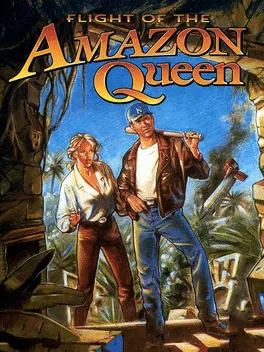
Flight of the Amazon Queen
Flight of the Amazon Queen follows a pilot for hire named Joe King who is hired to fly a famous actress to her next job, but ends up in a lightning storm and crashes deep in the Amazon Jungle. In the jungle, Joe uncovers a plot by a mad scientist to take over the world by creating an army of dinosaur women created from Amazon women.
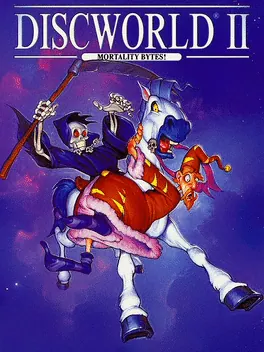
Discworld II: Mortality Bytes!
Discworld II: Mortality Bytes! is the second point-and-click adventure game based on Terry Pratchett's series of fantasy novels set on the mythical Discworld. The game was developed and produced in 1996 by Perfect Entertainment for the PC, and ported in 1997 for the PlayStation and Sega Saturn. It was published by Psygnosis for the PC and PlayStation, and by Sega for the Saturn (only in Europe). In Discworld II the player controls Rincewind the "wizzard" (voiced by Eric Idle, as in the previous game) who has been burdened with the task of coercing Death out of his impromptu retirement and back into his regular duties. The plot borrows from a number of Discworld books, most notably Reaper Man, Moving Pictures and Lords and Ladies. It all begins in a quiet Ankh-Morpork street, where Rincewind and The Librarian inexplicably fail to die from a nearby cart-bomb explosion. The odd event is not shared by them alone however: occurrences of the newly dead re-awakening and disturbing the populace are being reported all over the city, prompting the Archchancellor of Unseen University to halt his usual activities of feasting and merrymaking, and to take charge of the situation. Much to Rincewind's despair, the entirety of this process involves appointing him to the task of finding Death and convincing him to resume his work.
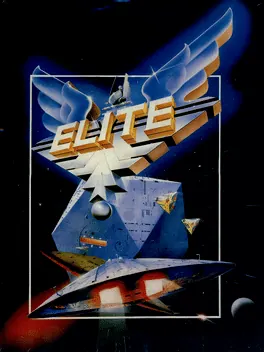
Elite
Elite is a space trading video game, written and developed by David Braben and Ian Bell and originally published by Acornsoft for the BBC Micro and Acorn Electron computers in September 1984. Elite's open-ended game model, and revolutionary 3D graphics led to it being ported to virtually every contemporary home computer system, and earned it a place as a classic and a genre maker in gaming history. The game's title derives from one of the player's goals of raising their combat rating to the exalted heights of "Elite". Elite was one of the first home computer games to use wire-frame 3D graphics with hidden line removal. It added graphics and twitch gameplay aspects to the genre established by the 1974 game Star Trader. Another novelty was the inclusion of The Dark Wheel, a novella by Robert Holdstock which gave players insight into the moral and legal codes to which they might aspire.
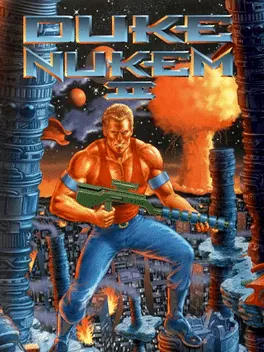
Duke Nukem II
Duke Nukem is back. Captured by an alien foe in the middle of promoting his best-selling book, “Why I’m So Great”, Duke must once more defeat the forces of evil to save himself from the knowledge-stealing Rigelatins, and ultimately prove his book’s namesake. In this sequel to the 1991 high-octane, bot-busting video game, Duke Nukem, the King of Action must blast, cannon, missile and flame his way to victory - a victory that would stop the secrets of both ass-kicking and bubblegum from falling into the wrong hands.
Stunts
Stunts (also known as 4D Sports Driving) is an early 3D racing video game developed by Distinctive Software, Inc.. The game places emphasis on racing on stunt tracks and features a track editor, it is clearly influenced by the earlier arcade game Hard Drivin' and has many similar elements to the game Stunt Driver which was released around the same time. In Stunts, players race a lap around the circuit, with the aim of completing the lap as quickly as possible without crashing. However, these laps often feature special track areas such as loops, jumps (including over tall buildings), slalom roads and corkscrews. The game area is restricted by a large fixed size square area defined and surrounded by a fence which the game is designed to prevent the player from leaving. Players can either race against the clock or choose between six different opponents; there is no support for real-time multiplayer. Stunts features 11 different drivable cars, with either automatic or manual transmission. Replays of races can be saved and reviewed. There are four camera views available during replay and actual driving, and the dashboard is an optional overlay on all views. It is also possible to continue the race from any point in the replay, however the time for that race will not be recorded. Another major feature of the game is the built-in track and terrain editor which allows the user to design arbitrary new tracks or modifications of existing tracks.[2] The cars can drive on paved roads, gravel roads, icy/snow roads, and grass if driving off the track — which all offer different levels of grip. The game has a relatively advanced pseudo-physics engine for its time which can simulate oversteer and understeer, grip is also proportional to the banking of a curve. The game features a 3D engine with flat shading and no textures, it uses polygonal graphics for most objects, including trees and road signs, there are few sprites. The resolution is 320×200 with 256 colors. There is an option to select high and low detail. The game is written for DOS and executes in real mode.[3] Stunts includes a form of copy protection. Each time after running the program, players must complete a specific phrase found in the game manual before being allowed to race. If the player fails to complete the phrase three times, the next race will still load. However, approximately four seconds into the race, the player is informed that he or she did not deactivate the car's security system, the car crashes, and the player is returned to the main menu.
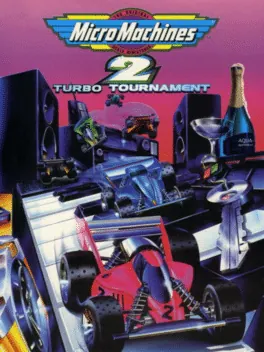
Micro Machines 2: Turbo Tournament
Micro Machines 2: Turbo Tournament featured cars that require different handling techniques for each course and also hovercraft and helicopters. There are different playing modes including "head-to-head", in which each player earns points by driving a full screen ahead of the opponent. TV presenter Violet Berlin features as a playable driver. The MS-DOS version featured a track editor. A selling point for the Sega Genesis/Mega Drive version was the J-Cart, a cartridge including two control ports, thus eliminating the need for a 4-player adaptor. It also included a 'pad-sharing' feature which allowed 2 players to share a single joypad; thus it enabled 8 players to compete simultaneously, on certain tracks.
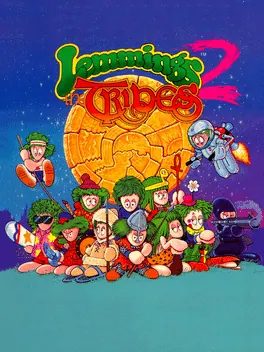
Lemmings 2: The Tribes
By now, you'll probably be aware of the horrible plight the Lemmings face. Not only do they have to leave their lovely little hovels for good,but they also have to escape their island before they perish in the Darkness that's coming. Your objective therefore is to save as many Lemmings as possible from each tribe and help them escape the Island. The DOS version has a different sounding soundtrack due to the different sound card, but is otherwise identical.
Ultima VII: The Black Gate
It has been two centuries since the Avatar last appeared in our good kingdom. Some have written that at last it is possible to interpret the tales of the Avatar as they should be, with the proper historical perspective. Some argue that as time moves on, the truth of what actually occurred will fade even further away and that we have a responsibility to preserve the legends as we now know them. However, most agree when it comes to a number of basic theories. While there are those who maintain that the stories of the Avatar are only myths, practically all credible scholars say that at least some elements of the Avatar’s tales are historical fact. In reality, one need look no further than the Isle of the Avatar to see very persuasive evidence that the Avatar did indeed exist - at least as a person if not as a spiritual being! It is most likely that there has been more than one Avatar. All of the writings insist that the Avatar who negotiated the peace between Britannia and the gargoyles is the one and same person who first appeared to vanquish the sorcerer Mondain those many years ago. While saying it is most unlikely, historians do not firmly deny the possibility of there having been only on Avatar. After all, our good sovereign monarch, wise Lord British, has himself displayed an amazing longevity! Whatever interpretation of history proves to be most accurate, it seems undeniable that the Avatar will not return to our fair kingdom. By all indications the age of magic is coming to an end. With the decline on reliability of mages, and with the kingdom turning away from the magical arts, it is doubtful that extreme danger - that which would require an Avatar’s aid to defeat it - will ever return to Britannia. And thankfully so. Upon us is the age of The Fellowship, in which one does not simply wait in anticipation for a heroic savior when a crisis occurs. In this less spectacular but more practical day, we are left to solve our problems with our own minds and our own will.
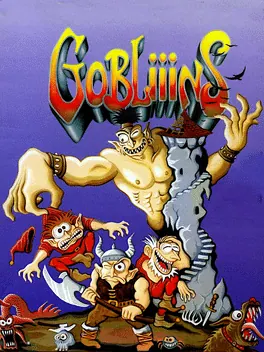
Gobliiins
Gobliiins is an adventure game where the player controls a team of three goblins: Oups, Ignatius and Asgard (Hooter, Dwayne, and BoBo in the US release) to find four magic components. A voodoo doll has turned their king Angoulafre mad and by collecting the components they can track down Niak the Wizard, the only one who can put things right. The player needs to solve various puzzles by combining the different skills of the three goblins. It's possible switch between them and control them separately. Most of the puzzles are based on coordinated actions. One can cast powerful but erratic spells, another can collect and use objects, and the last can hit things. Action icons are activated at the bottom of the screen. The game takes in 22 landscapes, each of which has puzzles which must be cleared. The characters have limited energy, which can be sapped by traps.
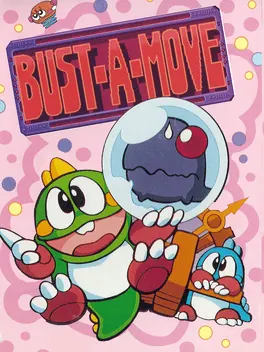
Bust-A-Move
Bust-A-Move (also known as Puzzle Bobble) is a real-time puzzle game in which the player controls a device called "pointer" at the bottom of the screen, aiming and releasing randomly colored bubbles upwards. Depending on the aiming, the bubbles may float up directly or bounce off the walls, changing their trajectory. The goal is to aim the bubbles in such a way that they will touch identically colored ones. When such bubbles form a group of three or more, they pop and disappear from the screen. If the ceiling of the area is covered by too many bubbles, it will gradually descend; the game is over when it nearly reaches the player-controlled pointer. Should the player fail to release the bubbles within a specific time limit, they will be released automatically, unaffected by the pointer's aiming.
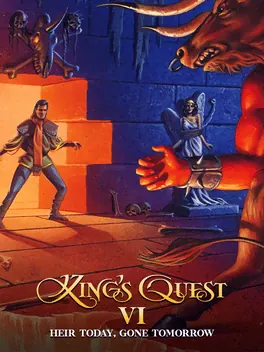
King's Quest VI: Heir Today, Gone Tomorrow
King's Quest VI: Heir Today, Gone Tomorrow is an adventure game set in the fictional Land of the Green Isles. Players control Prince Alexander as he navigates a series of diverse islands, each with unique themes inspired by various mythologies and literary works. The game begins with Alexander's shipwreck on the Isle of the Crown, where he discovers that Princess Cassima, whom he seeks, is being held captive by the scheming vizier Abdul Alhazred. To rescue Cassima and thwart the vizier's plans, Alexander must explore the kingdom, solve puzzles, and uncover secrets across multiple islands, including the Arabian Nights-themed Isle of the Crown, the Alice in Wonderland-inspired Isle of Wonder, and the mythological Isle of the Sacred Mountain. The game features a magic map for travel between islands and includes hidden areas that expand the narrative and gameplay possibilities.
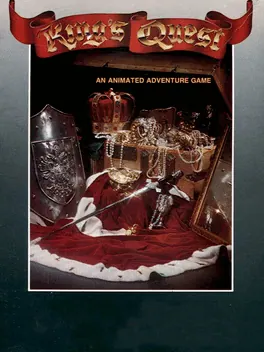
King's Quest: Quest for the Crown
King's Quest: Quest for the Crown is the first game in the King's Quest series. Players control Sir Graham, a knight of Daventry, who is tasked by King Edward to find three lost treasures to save the kingdom. The game takes place in a fairy tale-inspired world where Graham must explore, solve puzzles, and interact with various characters and creatures. Players navigate Graham through different locations, collecting items and using them to overcome obstacles. The game pioneered the graphic adventure genre, combining text commands with visual elements. As the inaugural title in the series, Quest for the Crown established many of the themes and gameplay elements that would become hallmarks of the King's Quest franchise, including its fantasy setting, puzzle-solving mechanics, and the character of Graham who would become a central figure in the series' lore.
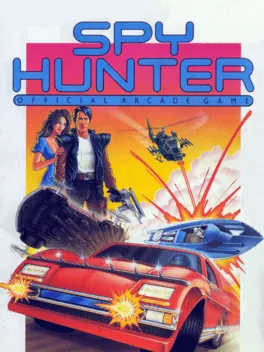
Spy Hunter
Originating in the arcades, Spy Hunter is a driving action game played from an overhead point of view. Your car is equipped with machine guns to help you get past the numerous enemies out on the road (be careful not to shoot any civilians, though!) Occasionally you will come across a weapons van, and if you drive into the back of the van your car becomes equipped with a second weapon (such as smoke screen, oil slick, or missiles). At several points the road splits and you can enter a boathouse which transforms your car into a boat temporarily. If you drive far enough the seasons change as well (watch out for icy conditions during winter!). The enemy cars will do anything to stop you, including running you off the road, firing guns from the back of a limo, or dropping bombs from a helicopter.
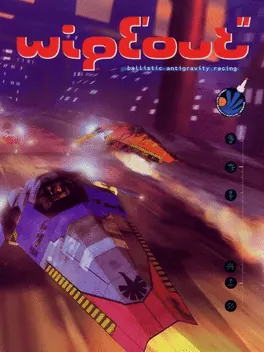
Wipeout
Wipeout is a racing game that is set in 2052, where players compete in the F3600 anti-gravity racing league. The game allows the player to pilot one of a selection of craft in races on several different tracks. There are four racing teams to choose from, and two ships for each team. Each ship has its distinct characteristics of acceleration, top speed, mass, and turning radius. By piloting their craft over power-up pads found on the tracks, the player can pick up various weapons and power-ups such as shields, turbo boosts, mines, shock waves, rockets, or missiles. The power-ups allow the player to either protect their craft or disrupt the competitors' craft.
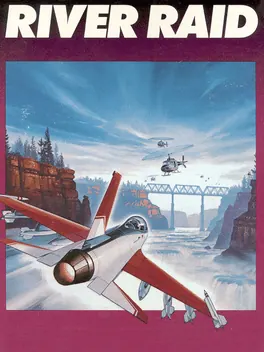
River Raid
Mission: Code Name River Raid. Jet down the river. Break the enemy blockade and blast the bridges to halt enemy troop advances. Terrain: Code Name River of No Return. An ever-changing, ever-challenging waterway. Expect huge islands, narrow channels and treacherous bays crawling with enemy choppers, tankers and jets. Weaponry: Code Name StratoStrafer. Your B1 StratoWing Assault Jet has been retrofitted with sophisticated, rapid-fire guided missiles. Your craft is super-sensitive to the stick. Accelerate, slow or bank radically with only a touch. Tactics: Jet low to the river to avoid radar. Stop periodically at depots to refuel. A warning claxxon will alert you. Top speed! Best of luck!

FIFA International Soccer
FIFA International Soccer is a 1993 association football video game developed by EA Canada's Extended Play Productions team and published by Electronic Arts. The game was released for the Sega Mega Drive/Genesis console in December 1993 and ported to numerous other systems in 1994. It is the first game in the FIFA series.
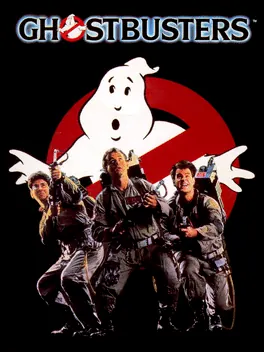
Ghostbusters
Ghostbusters is an action game that features an overhead-view and a side-view. From Ghostbusters HQ, the player must monitor a map of midtown Manhattan for "ghost alarms", as well as for casual, roaming spirits, and plot a route to the alarmed area. Once the route is plotted, the player then controls the purchased Ghostmobile as it drives through traffic. Here, the player is able to capture casual ghosts on the way if they are en route. When the haunted location is reached, the game switches to a side-view. Two of the Ghostbusters will take position, activate their proton beams, and toss a trap to the ground. The player must then use the two Ghostbusters to attempt to lead the ghost(s) over the placed trap. Once activated, the trap springs to capture any ghosts directly above it. A successful capture will earn the player money, which can then be used to purchase new Ghostbusters vehicles and new modifications for it. An unsuccessful capture will see the ghost fly away (after nastily sliming one of the Ghostbusters).
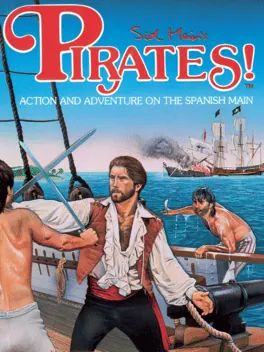
Sid Meier's Pirates!
You'll criss-cross your way along the 17th century Spanish Main in search of all-new adventures. You'll lead a crew of hot-blooded buccaneers into rollicking harbour towns. And risk your booty and your life plundering enemy ships! Hunt for magnificent treasures! Unravel the mysteries and clues of your adventure! Even battle your way through enemy waters on grueling rescue missions! Will you win your rightful place in history? Or will you end up shipwrecked on a distant island? The answer can only be found in the swashbuckling Pirates! Gold.
Batman
The movie of the decade is now the game of the year! Just when you thought you'd heard the last of his heinous cackling, The Joker is back in an all new action-adventure, based on the blockbuster movie - Batman. As the Dark Knight, only you can determine how the plot will unfold as you try to save Gotham City from certain doom. Even with the Batwing and all your wonderful toys, The Joker may just rewrite your script. So, rev up the Batmobile and get ready for the chase of your life.
Transport Tycoon
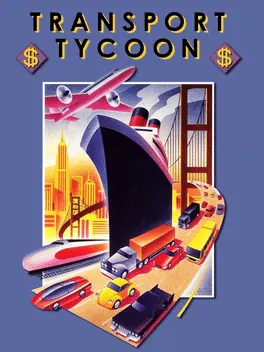
Released on PC in 1994. Developed by Chris Sawyer, and coded in X86 Assembly language, it was among the first in the relatively new 'tycoon' genre of games - simulations of business empires that the player founded, grew and took full control of. Transport Tycoon saw the player running their transport empire from 1930 to 2030, with rail, road, sea and air transport available to help the player's expansion of their business. New technologies are introduced to the player at historically accurate times, and players could see first-hand how advancements changed the way their businesses were run.