
Jogos para FM-7
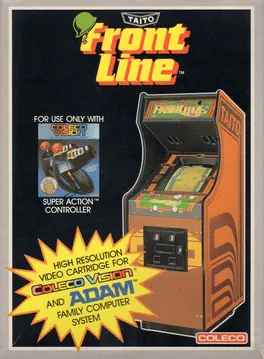
Front Line
Front Line is a vertically scrolling action game. Your mission is to infiltrate enemy territory and destroy their fortress. To reach the fortress, you will have to make your way through varied and dangerous terrain. Jungles, deserts, brush, and rocks all slow your progress, plus each area has numerous enemy fighters and tanks trying to stop you. To help get past these obstacles, you are armed with a machine gun and grenades; at some points in the game you may even come across an abandoned tank which you can control to increase your odds of survival. When you reach the end of the level and successfully destroy the fortress, the game will repeat at a higher level of difficulty. Gameplay is for one or two players, and four different skill levels are available.
Wizardry: Knight of Diamonds - The Second Scenario
Are you ready to take the next step into the world of Wizardry? A step so dangerous, the mere utterance of a spell can decimate the entire city of Llylgamyn. Knight of Diamonds is the Second Scenario in the Wizardry Master Series, the fantasy role-playing simulation for the Nintendo Entertainment System. In Wizardr Knight of Diamonds, only the bravest may venture through murky dungeons more dangerous than any ever encountered by earthly mortals. Only the most cunning may recover the magical Staff of Gailda and save the city of Llylgamyn.
The Ancient Land of Ys
The hero of Ys is an adventurous young swordsman named Adol Christin. As the story begins, he has just arrived at the Town of Minea, in the land of Esteria. He is called upon by Sara, a fortuneteller, who tells him of a great evil that is sweeping the land. Adol is informed that he must seek out the six Books of Ys. These books contain the history of the ancient land of Ys, and will give him the knowledge he needs to defeat the evil forces. Sara gives Adol a crystal for identification and instructs him to find her aunt in Zepik Village, who holds the key to retrieving one of the Books. With that, his quest begins.
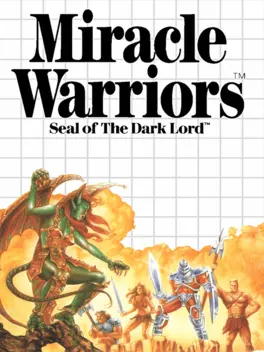
Miracle Warriors: Seal of the Dark Lord
Japanese RPG. Two editions exist, one for the MSX1 on cartridge, and one for the MSX2 on 3.5" diskette. The seal of the Dark Lord Terarin has been broken and Terarin has been unleashed into the world again. She has stolen the Golden Seal and opened pandora's box, unleashing evil creatures into the world. A young hero is tasked by a king to stop Terarin. He must step into footsteps of Iason, a shepherd that once accidentally unleashed Terarin and fought to seal the Dark Lord again. The hero must enlist the aid of three companions, Guy the warrior, Medi the amazon and Treo the pirate (called Turo in the manual) and find the three keys to Terarin's lair. To face the Dark Lord, they must find the mystical weapons and armor of old and then defeat Terarin and seal the Dark Lord from the world.
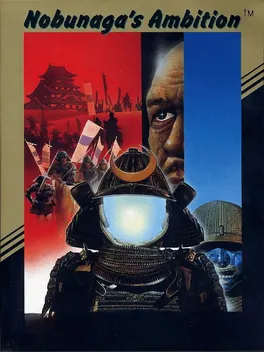
Nobunaga's Ambition
The second game in the series, previously released as Nobunaga's Ambition in the West. Players take on the role of one of the main characters of the period, Nobunaga Oda, Shingen Takeda, Kenshin Uesugi, or others and try to unite the 50 kingdoms of Japan, from Ezo in the north to Kyushu in the south, under their own rule.
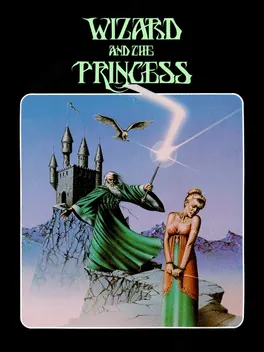
The Wizard and the Princess
Princess Priscilla has been kidnapped and the player seems to be the only valliant hero willing to rescue the damsel in distress. This is the second text adventure with illustrating graphics released by Sierra. Communicating with the game works via entering commands which tell the player's alter ego where to go and what to do. Since the parser is a very basic one it only understands two-word commands. Two years after its initial release, the game was renamed "Adventure in Serenia" for its PC release. This suggested sequel was, however, exactly the same game as in its previous incarnation.

New Rally-X
New Rally-X is a maze and driving arcade game that was released by Namco in 1981. It runs on similar hardware to that of its predecessor, and as its name suggests, it is a revised version of that title, which was released in the previous year. The only differences are that it has slightly enhanced graphics, easier gameplay, a new soundtrack, and a "Lucky Flag" (with the letter "L") that gives the player extra points for remaining fuel when collected, after which the round will continue if there are still flags remaining. The mazes are mostly identical, with some of the blocks from Rally-X changed into roads to reduce dead ends, and some different flag (and rock) locations. This title was manufactured in greater numbers and was much more popular in Japan than its predecessor.
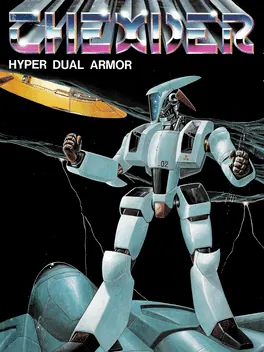
Thexder
Thexder is a robot capable of transforming into a jet whose job is to destroy the central computer to save the planet.15 stages are waiting you for in this shooting game.
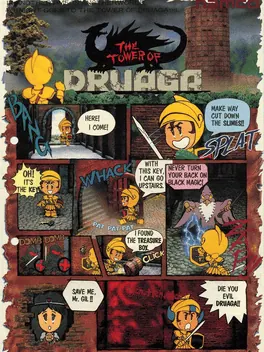
The Tower of Druaga
The story still's the same: Ishtar sends Gilgamesh up the 60 maze levels of the Druaga's tower to rescue Ki and retrieve the Blue Crystal Rod. He must find each level's key to proceed to the next one.
Hydlide
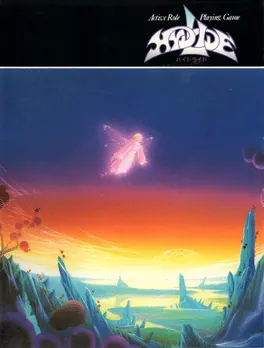
An evil demon named Varalys casts a curse upon the princess Ann, turning her into three fairies. You control Sir Jim and set out to find the fairies, and then slay Varalys. Only by vanquishing Varalys can the curse be lifted. Once the princess is restored the kingdom will be saved. The fighting is a little more in-depth than hack and slash. You can either fight with a defensive or offensive stance, or you can use magic spells.
Mystery House
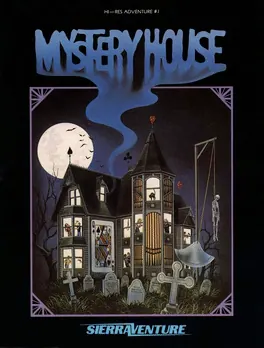
In the first graphic adventure game ever, the player along with seven other people is in an old mansion hunting for some jewels. All too soon it becomes obvious that someone is killing one member of the group after another. It is the player's task in this murder mystery to find out who the murderer is before the player is killed himself.
Soko-Ban
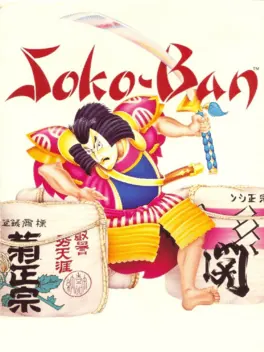
Sokoban ("warehouse keeper") is a is a classic puzzle game created in 1981 by Hiroyuki Imabayashi, and published in 1982 by Thinking Rabbit, a software house based in Takarazuka, Japan. In 1984 the ASCII Corporation published a version produced by Khaled Bentebal. It was the basis of numerous clones in the later years. It is set in a warehouse. On each level, the player must push crates (from square to square) to get them onto designated spots; once each crate is on a marked spot, the level is complete. Crates can only be pushed one at a time (so two crates next to each other cannot be pushed together), and cannot be pulled--so it's possible to get a crate stuck in a corner, where it cannot be retrieved! By the last levels, you must plan 40 steps in advance.

Nuts & Milk
Nuts & Milk is a platform-style puzzle game developed and published by Japanese software developer Hudson Soft in 1983. The game was released initially on the FM-7, MSX, NEC PC-8801, NEC PC-6001, and later to the Famicom in Japan. It was the first third party video game to be released on a Nintendo console.
Ultima II: The Revenge of the Enchantress
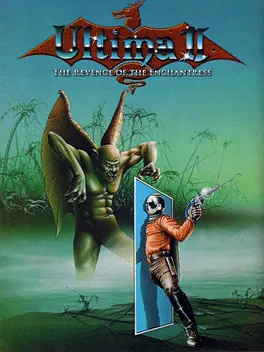
After obtaining aid from the lords of the realm in Ultima I, your character travels back in time, locates the mad wizard Mondain, slays him, and ends his reign of terror. In Ultima II: Revenge of the Enchantress, Mondain's protégé, Minax, who studied the mad wizard's teachings and writings, returns to wreak vengeance on the person who slew her teacher and lover -- you. And, instead of waiting for you to return to her native land of Sosaria, she wreaks havoc on your own Earth. Throughout Ultima II: Revenge of the Enchantress, your quest is quite different in scope from its predecessor. Earth is turned into a half-modern, half-fantasy world by the forces of magic and, as a result, things are much stranger than one might expect. As explained in the introduction, your tasks in the game are to "Battle strange creatures across the face of the Earth, search for clues in careless words spoken at the local pub, traverse deep, dark, deadly dungeons and tall, terrifying towers...and conquer Time itself to battle Minax the Enchantress."
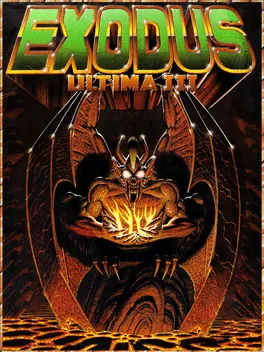
Ultima III: Exodus
Eons ago Lord British came unto the lands of Sosaria. Since that time it has been united under his rule as the Kingdom of Britannia and has gone through two major crises. A few years ago there were political upheavals among the city states of the kingdom. The ringleader of this political instability was Mondain, the Magician. Under his horrible rule, the people's lives were devastated. A valiant warrior was called forth from another world by Lord British. This warrior overthrew Mondain. Britania survived the first crisis. But peace in the Kingdom of Britannia did not last long. Minax, the Witch, a disciple of Mondain, became very powerful and ruled the world of darkness. Minax had power to sway the time axis of the universe. However, a legendary hero again came to the rescue, overthrew Minax, and brought peace back to the kingdom. Now, the Kingdom is about to face its third crisis. Rumours abound about a fiery island which has emerged in the southwestern seas. Little is known of the evil that dwells there. It is known only as Exodus.
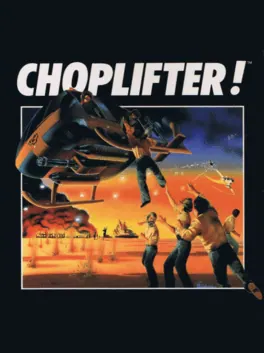
Choplifter!
Choplifter is military themed scrolling shooter where you play as a pilot. Take off from your home base and fly across a horizontally-scrolling playfield of rugged terrain to reach the enemy Bungelings' barracks. There, you must land and rescue a group of helpless hostages and return then to your base. To hinder your mission, the enemy will attack with an array of armaments including tanks, jets, and dangerous air mines. To complete a perfect game, you must rescue all of the 64 hostages.
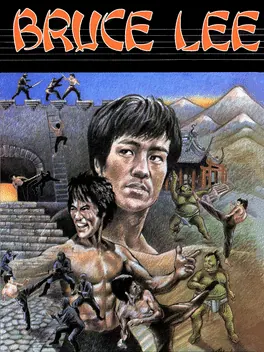
Bruce Lee
Bruce Lee is a video game designed by Ron J. Fortier, with graphics by Kelly Day and music by John A. Fitzpatrick. It was originally developed for the Atari 8-bit family and published in 1984 by Datasoft, along with a port for the Commodore 64. The game was converted to the ZX Spectrum and Amstrad CPC and published by U.S. Gold in the same year. An MSX version was published in 1985 by Comptiq. Bruce Lee is a platform game/beat 'em up hybrid, in which the player controls Bruce Lee.
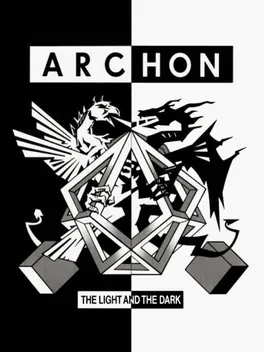
Archon
Archon: The Light and the Dark was a game developed by Free Fall Associates which loosely modeled the game of Chess, with a number of additions to the gameplay. It was programmed by Anne Westfall, and released originally for Atari 8-bit computers in 1983. It was quickly ported to a number of different systems, and was well-received.
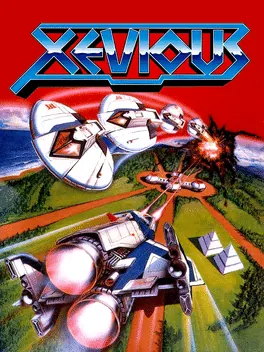
Xevious
It's a nightmare, but it's true! Research shows that we are the actual aliens on Earth, and the ruthless Xevions are the original inhabitants. Now the Xevions want Earth back -- minus humans! Their invasion forces are fierce -- the land is crawling with deadly Domogram Rovers; the sky is black with Toroid Patrol Fleets and Zoshi Death Squads. Our puny weapons offer no defense. Earth's only hope is our powerful new Solvalou Fighter Plane. Its pilot will have a single mission: Penetrate the enemy ranks and destroy the Xevious Mother Ship. The mission is dangerous. We can't guarantee success. But at this point, it's do or die! One small problem. We still need a pilot. Any volunteers?
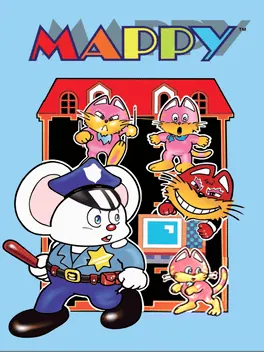
Mappy
The player guides Mappy the police mouse through the mansion of the cats called Mewkies (Meowky in the U.S. version) to retrieve stolen goods. The player uses a left-right joystick to move Mappy and a single button to operate doors. The mansion has six floors of hallways in which the stolen items are stashed.
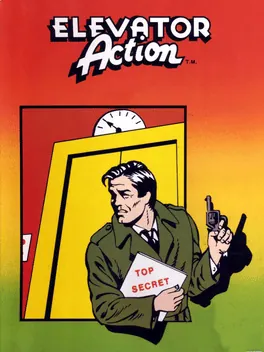
Elevator Action
Elevator Action is a 1983 arcade game by Taito. It debuted during the "Golden Age of Arcade Games". Innovative in gameplay, the game was very popular for many years. In the game, the player assumes the role of a spy who infiltrates a building filled with elevators. He must collect secret documents from the building and traverse the 30 floors of the building using an increasingly complex series of elevators. The player is pursued by enemy agents who appear from behind closed doors. These agents must be dealt with via force or evasion. Successful completion of a level involves collecting all the secret documents and traversing the building from top to bottom. In the lower floors of the building, the elevator systems are so complex that some puzzle-solving skills are needed. The game was available as a standard upright cabinet The controls consist of a 4-way joystick and two buttons, one for "shoot" and the other for jumping and kicking. The maximum number of players is two, alternating turns. The graphics are extremely simple, 2D color graphics and in-game music was composed by musician Yoshio Imamura. The game was followed by a sequel, Elevator Action II (also known as Elevator Action Returns).
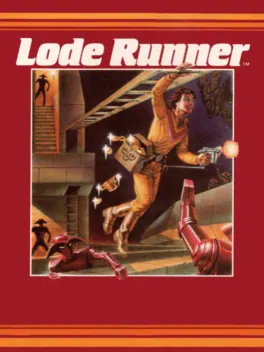
Lode Runner
Lode Runner is a 1983 puzzle video game, first published by Brøderbund. It is one of the first games to include a level editor, a feature that allows players to create their own levels for the game. This feature bolstered the game's popularity, as magazines such as Computer Gaming World held contests to see who could build the best level.
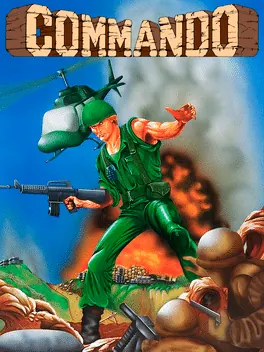
Commando
Several levels await your super-tough Commando in this arcade conversion. Armed with only a standard rifle and a few grenades you must take on hordes of enemies. Some are wandering around in the open, while others have picked out hiding places, which you must approach from certain angles. Trees, rivers and bridges create a varied combat-like terrain and must be incorporated into your thinking. Extra grenades can be collected, and will definitely be required, as they allow you to kill from distance and thus avoid some enemy shots.
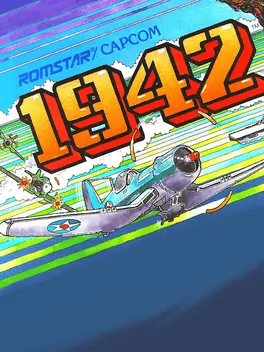
1942
1942 is a vertically scrolling shoot 'em up made by Capcom that was released for the arcade in 1984. The goal is to reach Tokyo and destroy the entire Japanese air fleet. The player pilots a plane dubbed the "Super Ace" . The player has to shoot down enemy planes; to avoid enemy fire, the player can perform a roll or "loop-the-loop". During the game the player may collect a series of power-ups, one of them allowing the plane to be escorted by two other smaller fighters in a Tip Tow formation.
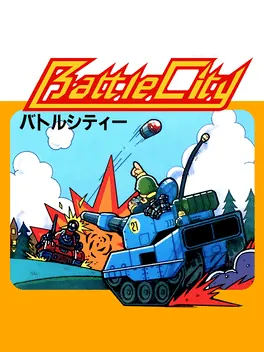
Battle City
Battle City, also known as Tank 1990 or Tank in some pirate multicart releases, is a multi-directional shooter video game for the Family Computer produced and published in 1985 by Namco. The game was later released for the Game Boy and was included in the Japanese version of Star Fox: Assault. It is a port of the arcade game Tank Battalion with additional features (including two player simultaneous play and a level edit feature). There was also a rendition for Nintendo's Vs. System arcade cabinets. The player, controlling a tank, must destroy enemy tanks in each level, which enter the playfield from the top of the screen. The enemy tanks attempt to destroy the player's base (represented on the map as a bird, eagle or Phoenix), as well as the human tank itself. A level is completed when the player destroys all 20 enemy tanks, but the game ends if the player's base is destroyed or the player loses all available lives.
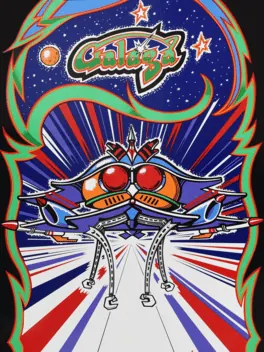
Galaga
The objective of Galaga is to score as many points as possible by destroying insect-like enemies. The player controls a starfighter that can move left and right along the bottom of the playfield. Enemies swarm in groups in a formation near the top of the screen, and then begin flying down toward the player, firing bombs at the fighter. The game ends when the player's last fighter is lost, either by colliding with an enemy or one of its bullets, or by being captured. Galaga introduces a number of new features over its predecessor, Galaxian. Among these is the ability to fire more than one bullet at a time, a count of the player's "hit/miss ratio" at the end of the game, and a bonus "Challenging Stage" that occurs every few levels, in which a series of enemies fly onto and out of the screen in set patterns without firing at the player's ship or trying to crash into it. These stages award a large point bonus if the player manages to destroy every enemy. Another gameplay feature new to Galaga is the ability for enemies to capture the player's fighter. While the player is in control of just one fighter, a "boss Galaga" (which takes two shots to kill) periodically attempts to capture the fighter using a tractor beam. If successful, the fighter joins the enemy formation. If the player has more lives remaining, play resumes with a new fighter. The captured fighter flies down with the enemy that captured it, firing upon the player just like normal enemies, and can be shot and destroyed. The player can free the fighter by destroying the boss Galaga while in flight, causing the captured fighter to link up with the player's current fighter, doubling his or her firepower but also making a target twice as large. Galaga has an exploitable bug that can cause the attackers to stop firing bullets at the player, due to a coding error. In addition, similar to the famous "Split-Screen bug" in Pac-Man, a bug exists in Galaga in which the game "rolls over" from Level 255 to Level 0. Depending on the difficulty setting of the machine, this can cause the game to stall, requiring that the machine be reset or power-cycled in order to start a new game.