
Jogos para PC-9800 Series
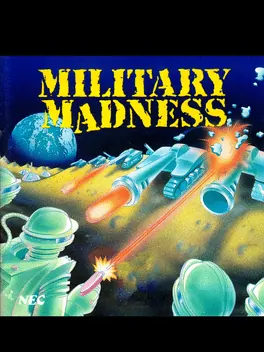
Military Madness
Military Madness (released as Nectaris in Japan) is a futuristic turn-based strategy war game. The year is 2089 and the setting is Earth’s moon, which yields many important resources. While the governments of Earth bicker over their staked claims on the moon, the evil Axis Empire launches a lunar military campaign and takes over the moon, using its factories to produce advanced weaponry, the most devastating of which is the SAM (Supreme Atomic Missile). As commander of the Allied forces, it is the player’s responsibility to lead what’s left of the Allied armies in a desperate offensive against the Axis Empire on the lunar surface before they can use the SAM to destroy Earth.
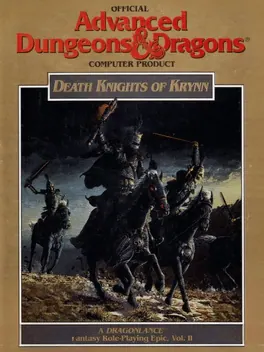
Death Knights of Krynn
Even after defeating Myrtani and putting an end to the draconian threat, evil still lurks in Krynn. Your daring group of adventurers now face a far greater danger...the threat of the dreaded lord Soth and his growing undead army, plotting to destroy all that is good in Krynn.
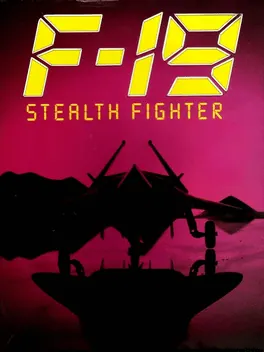
F-19 Stealth Fighter
F-19 STEALTH FIGHTER takes combat flying to new heights. With dazzling graphics and authentic, real-world scenarios. F-19 creates action-packed excitement that keeps you coming back for more! It's easy to learn, but satisfyingly tough to master.
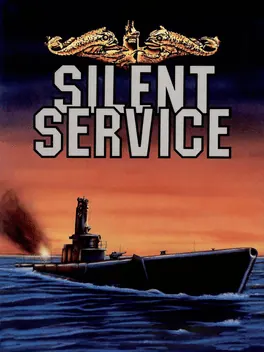
Silent Service
Exciting World War II Submarine Action in the South Pacific by Sid Meier. 0400 hours, Tuesday 1942... BATTLE STATIONS!! BATTLE STATIONS!! Enemy convoy identified on radar!! SILENT SERVICE, The Submarine Simulation, brings exciting action, great strategy, detailed graphics and an ultra-realistic simulation of a World War II U.S. submarine in the South Pacific. SILENT SERVICE's outstanding features include: all the critical battle stations 0 engine room, conning tower and ship's bridge; challenging and realistic combat versus single ships and heavily escorted convoys; and an infinite variety of situations using complete maps and charts for the entire South-west Pacific and a sophisticated and realistic attack plotting system. SILENT SERVICE is the most detailed and realistic submarine simulation for home computers. Player selected "reality levels" allow the player to customize complexity, and time scaling ensures that the actions and decisions are constantly required. SILENT SERVICE provides a wide selection of historical scenarios from individual attacks to patrol missions that bring challenge and fun to both the first time player and the experienced submarine veteran. Will you, as submarine captain, select a quiet patrol sector in the Marianas Islands, or choose the dangerous waters off the coast of Japan? Is the submerged daylight periscope attack best, or do you charge in on the surface at night using only radar bearing to guide you? Do you pick off the enemy with a single torpedo shot? These decisions and many more are yours to make as you take your place among the elite ranks of the SILENT SERVICE!
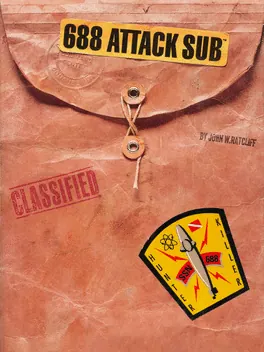
688 Attack Sub
688 Attack Sub is a classic modern submarine simulation which puts you in command of either the American Los Angeles or the Soviet Alfa class nuclear-powered submarines. Most of the systems you would expect such as sonar and periscope are featured and nicely presented in VGA. The game offers ten missions for both the Soviet and American side in a Cold War scenario, that grows progressively hotter. Nice to see that the two sides' submarines have their own graphic sets in the game, even with some pseudo-cyrillic labels on the Russian side.
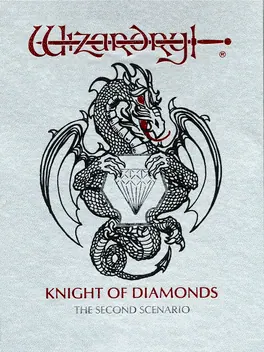
Wizardry: Knight of Diamonds - The Second Scenario
Are you ready to take the next step into the world of Wizardry? A step so dangerous, the mere utterance of a spell can decimate the entire city of Llylgamyn. Knight of Diamonds is the Second Scenario in the Wizardry Master Series, the fantasy role-playing simulation for the Nintendo Entertainment System. In Wizardr Knight of Diamonds, only the bravest may venture through murky dungeons more dangerous than any ever encountered by earthly mortals. Only the most cunning may recover the magical Staff of Gailda and save the city of Llylgamyn.
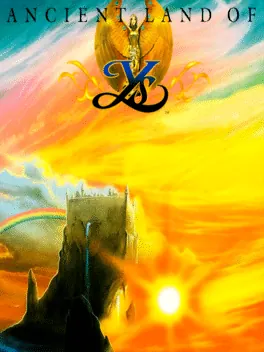
The Ancient Land of Ys
The hero of Ys is an adventurous young swordsman named Adol Christin. As the story begins, he has just arrived at the Town of Minea, in the land of Esteria. He is called upon by Sara, a fortuneteller, who tells him of a great evil that is sweeping the land. Adol is informed that he must seek out the six Books of Ys. These books contain the history of the ancient land of Ys, and will give him the knowledge he needs to defeat the evil forces. Sara gives Adol a crystal for identification and instructs him to find her aunt in Zepik Village, who holds the key to retrieving one of the Books. With that, his quest begins.
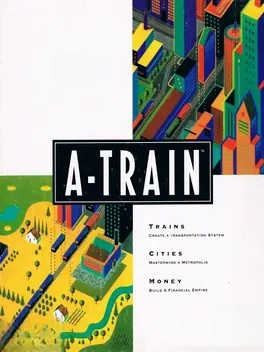
A-Train
You play the part of the head of a railroad company, with the aim of creating your own railroad empire, providing a successful mass transit system that will be an inspiration to the rest of the world. Another goal is to provide the impetus for your chosen city to develop. There are a number of different places to set up business each with different layouts and existing houses and businesses. The main money earners are passenger trains, that can be scheduled to pick up passengers at the times of day when the demand is high. However, in the long term you need the city to develop. This requires setting up trains that transport resources to where they are needed. These resources are used to build houses, and other buildings, increasing the number of passengers for your commuter trains. As the city develops, new businesses will spring up, such as stadiums, high rise office blocks, and ski resorts. You can also build your own businesses, the success of which will depend on the local population, the presence of competing businesses, and even the changes of the seasons, among other factors.
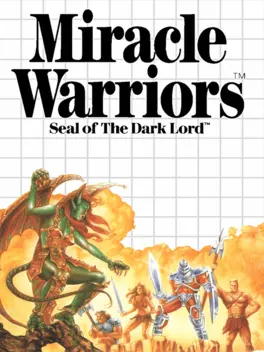
Miracle Warriors: Seal of the Dark Lord
Japanese RPG. Two editions exist, one for the MSX1 on cartridge, and one for the MSX2 on 3.5" diskette. The seal of the Dark Lord Terarin has been broken and Terarin has been unleashed into the world again. She has stolen the Golden Seal and opened pandora's box, unleashing evil creatures into the world. A young hero is tasked by a king to stop Terarin. He must step into footsteps of Iason, a shepherd that once accidentally unleashed Terarin and fought to seal the Dark Lord again. The hero must enlist the aid of three companions, Guy the warrior, Medi the amazon and Treo the pirate (called Turo in the manual) and find the three keys to Terarin's lair. To face the Dark Lord, they must find the mystical weapons and armor of old and then defeat Terarin and seal the Dark Lord from the world.

SimEarth: The Living Planet
SimEarth is a planet simulator - a model of a planet. It is a game, an educational toy, and an enjoyable tool. With SimEarth you can take over many included planets, or design and create your own. SimEarth treats the planet as a whole: life climate the atmosphere, and the planet itself - from dirt and rock to the molton core - all affect on each other. You will see your planet as a whole - from a satellite's point of view, at two levels of magnification. SimEarth can be played in two modes: game and experimental. In game mode, you will try to develop, manage, and preserve your planet within allotted energy budgets. In experimental mode, you are given enlimited energy to mold your planet. This allows you to set up any stage of development, and then introduce any new factors you want and see what happens. In this mode SimEarth is a "planetary spreadsheet." Your SimEarth planets will be poulates by electronic life-forms called SimEarthlings. Sim Earthlings range from single-celled plants and animals to intellegent species. Intellegent Simearthlings are not limited to Humans - or even Mammals. There can be intellegent Dinosaur SimEarthlings, intellegent Mollusk SimEarthlings, even intellegent Insects SimEarthlings - but only one intellegent life-form at a time. A single planet can be populated by billions of SimEarthling. Their welfare is in your hands.
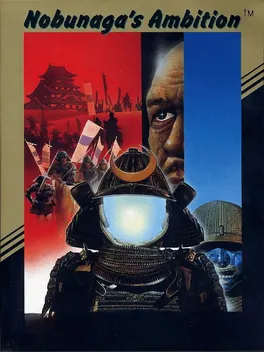
Nobunaga's Ambition
The second game in the series, previously released as Nobunaga's Ambition in the West. Players take on the role of one of the main characters of the period, Nobunaga Oda, Shingen Takeda, Kenshin Uesugi, or others and try to unite the 50 kingdoms of Japan, from Ezo in the north to Kyushu in the south, under their own rule.

F-15 Strike Eagle
F-15 Strike Eagle is an F-15 Strike Eagle combat flight simulator first released in 1985 by MicroProse. It is the first in the F-15 Strike Eagle series comprising also the sequels F-15 Strike Eagle II and F-15 Strike Eagle III.
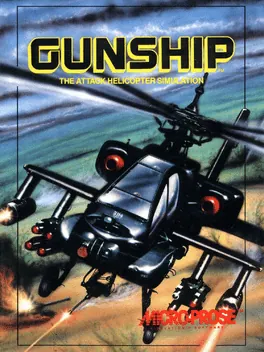
Gunship
After selection of region, style, and enemies, the pilot is assigned a primary mission and a secondary mission. These could include such objectives as "Destroy enemy headquarters" or "Support friendly troops" (i.e. destroy targets near friendly forces). The latter would be an easier mission, because the battle would be fought closer to friendly lines.
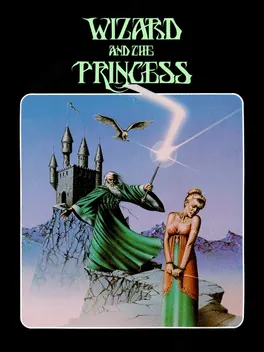
The Wizard and the Princess
Princess Priscilla has been kidnapped and the player seems to be the only valliant hero willing to rescue the damsel in distress. This is the second text adventure with illustrating graphics released by Sierra. Communicating with the game works via entering commands which tell the player's alter ego where to go and what to do. Since the parser is a very basic one it only understands two-word commands. Two years after its initial release, the game was renamed "Adventure in Serenia" for its PC release. This suggested sequel was, however, exactly the same game as in its previous incarnation.
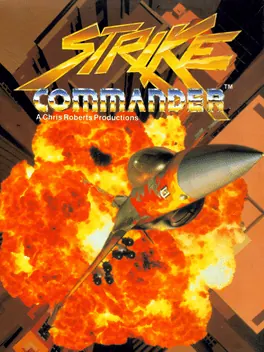
Strike Commander
After the success of the Wing Commander games, Chris Roberts and Origin turned their eye to developing a story-focused combat flight simulation. The result was Strike Commander.
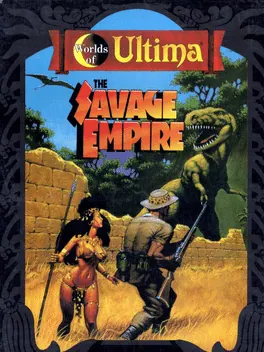
Worlds of Ultima: The Savage Empire
Savage Empire is Origin's first "Worlds of Ultima" release. It was made using basically the same engine as Ultima VI but with slightly different graphics. The game contains all of the elements of the other Ultimas, as well as some extra features that add to the experience. You are able to interact with the environment in a realistic manner... picking branches from trees, digging clay from a riverbank etc. Savage Empire also has a lot more character interaction than the previous Ultimas. Characters will jump into conversations whenever they feel they have something pertinent to add.
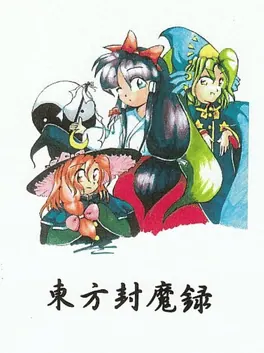
Touhou Fuumaroku: The Story of Eastern Wonderland
The Story of Eastern Wonderland casts the player as the Shrine Maiden Reimu Hakurei and offers three distinct attack types to choose from: a wide-range type with weak attack power, a mid-range type with moderate attack power and auto-targeting capabilities, and a narrow-range type with high attack power but lowered movement speed. The bombs also exhibit unique behavior depending on the type chosen. As the first danmaku shooting game in the Touhou Project, the Story of Eastern Wonderland introduces many features that are now hallmarks of the series as a whole: relatively small hit boxes, boss characters who are not much larger than the player character however are highly mobile, a power-up system, variable-worth point items, an unlockable Extra Stage, and a semi-complex scoring system. The game also marks the first appearance of Marisa Kirisame, who would become a major character in the series, appearing as often as Reimu Hakurei herself.
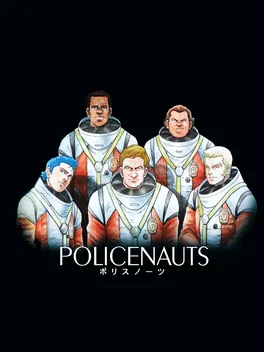
Policenauts
Policenauts is an interactive movie/graphic novel/adventure game with a hard science fiction storyline, written and directed by Hideo Kojima, and published by Konami. It was initially released for the PC-9821 computer platform in 1994, followed by remade versions for the 3DO in 1995, and the PlayStation and Sega Saturn in 1996. The game has never been officially released outside Japan, despite plans for an English localization of the Saturn version. On August 24, 2009 (in honor of the 46th birthday of the game designer, Hideo Kojima), an unofficial English translation patch was released onto the internet. The game is set in a primarily first person perspective and uses a point-and-click interface: the player can move the cursor and have the protagonist (Jonathan Ingram) analyze objects around his environment or talk to other characters in the game. Like in Snatcher, the game features shooting segments where the player must defend their character from incoming enemies. The player can use the shooting trainer at the police department to test their reflex and accuracy. There are numerous puzzles in the game, including an event where the player must dismantle a bomb by following their partner's instructions. The console versions of the game all include support for their respective mouse peripherals. The Saturn version features light gun support for the shooting segments. The game was notable for being an early example of extensive voice recording in video games. It also featured a theme revolving around space exploration and occasional full-motion video cut scenes. The gameplay was largely similar to Snatcher, but with the addition of a point-and-click interface and some first-person shooter segments. Policenauts also introduced summary screens, which act to refresh the player's memory of the plot upon reloading a save, an element Kojima would later use in Metal Gear Solid. The PlayStation version of Policenauts could also read the memory card and give some easter egg dialogues if a save file of Konami's dating sim Tokimeki Memorial is present, a technique Kojima would also later use in Metal Gear Solid.
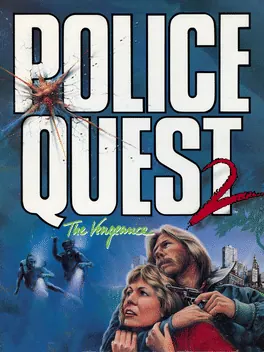
Police Quest II: The Vengeance
The second game released in the Police Quest franchise. It follows the adventures of Sonny Bonds after his recent promotion to the Homicide squad in the fictional town of Lytton, California in 1988.
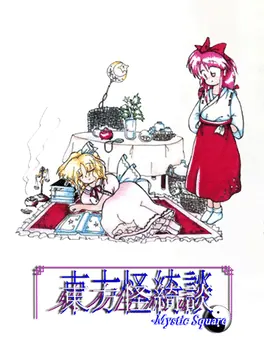
Touhou Kaikidan: Mystic Square
Mystic Square allows the player to select from among four unique protagonists, each hailing from one of the 2 prior danmaku shooting games in the series. Series mainstays Reimu Hakurei and Marisa Kirisame are joined by former enemies Mima and Yuuka Kazami for a journey reaching to the depths of the Makai. Mystic Square also marks the first appearance of Alice Margatroid as an opponent, who later stages a comeback in Perfect Cherry Blossom. Although limited by the PC-98 hardware, Mystic Square is the most refined of the PC-98 Touhou titles, and features gameplay quite similar to Windows Touhou games. It employs a variant of Lotus Land Story's Dream Bonus system, rewarding the player for taking risks (i.e. collecting point items from the top of the field area). Its rank system, however, is more lenient than Lotus Land Story's.
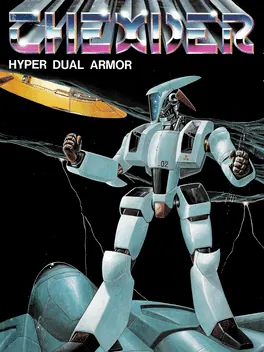
Thexder
Thexder is a robot capable of transforming into a jet whose job is to destroy the central computer to save the planet.15 stages are waiting you for in this shooting game.
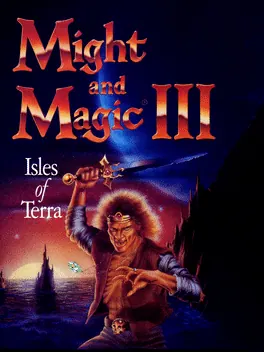
Might and Magic III: Isles of Terra
The third installment of the roleplaying series, with a multi-faceted plot full of twists and turns. Ease of use was central to the gameplay and interface, and the plot included piles of new twists and turns. Lead a party of adventurers to rendezvous with the legendary wizard Corak. From dark moldy dungeons, through corridors of hewn stone and timber, and onward to the lofty frozen peaks of Terra you will uncover the mysteries that surround the exotic islands in the Great Sea.
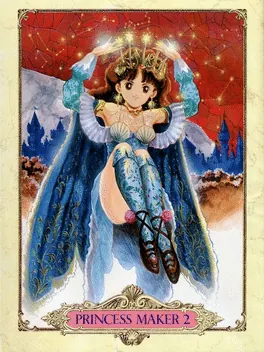
Princess Maker 2
In this fantasy game, the player takes role of a war hero who raises a girl to the age of 18. At the end of the game, the daughter goes into a line of work; what this work is, how much talent she has for it, her marital life, and her overall happiness all depend on the player's actions.
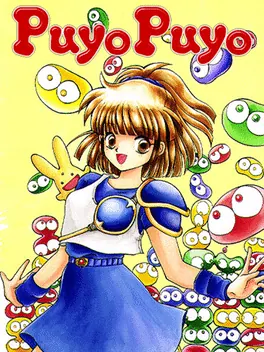
Puyo Puyo
Puyo Puyo (1992) is an enhanced version of the 1991 MSX2 and Famicom Disk System game of the same name. The game was developed for the Sega System C-2 arcade hardware and ported to a variety of consoles. Puyo Puyo is a puzzle game in which the player matches four or more "Puyo" of the same color together. This game is the precursor to an identically-titled arcade release. Puyo Puyo contains three modes: Endless, Mission, and Verses. In Endless Mode, players match Puyo until the top of their well is filled. If the player chooses, either a giant 2x2 green Puyo or Carbucle will periodically help the player clear space on their board. Mission mode gives the player several challenges to complete, such as clearing a set amount of Puyo or clearing all Puyo of a certain color. Verses mode allows players to battle each other.
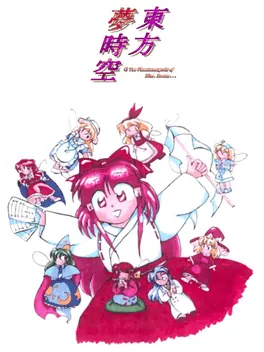
Touhou Yumejikuu: Phantasmagoria of Dim. Dream
This game is a vertical danmaku shooting game, where two characters engage in danmaku gameplay within individual and separate play areas (aka. split-screen). Upon meeting certain conditions, players are able to unleash a variety of character-specific Spell Attacks upon their opponents in an attempt to whittle down their remaining health points. In Story Mode, the player will face nine opponents, each more capable than the previous. Phantasmagoria of Dim.Dream also features a Match Play Mode where the player may face off against AI opponents or compete against other players, as well as watch AI vs. AI matches.

Touhou Gensoukyou: Lotus Land Story
This game features two playable characters to choose from, with two different attack types each. Reimu Hakurei can pepper a wide area of the screen with weaker attacks, while Marisa Kirisame relies on her power to compensate for her narrower attack spread. The bombs also exhibit unique behavior and damage amounts depending upon the character chosen. Lotus Land Story is the first game in the Touhou Project to feature bombs that auto-collect items, graze counting, the ability to move more slowly by holding the shift key, and a non-trivial scoring system that involves the collection of special dream items that boost the player's ultimate scoring potential. The game's scoring system also marks the series' first instance of score bonuses for the elimination of bullets following the defeat of mid-bosses and bosses.
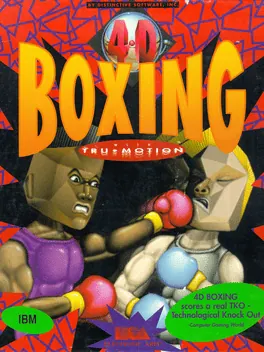
4-D Boxing
4-D Boxing leaves behind any pretences of being a pure arcade game based on boxing, and aims to recreate the sport in full detail. The graphics engine allows for multiple camera angles and viewpoints, and considerably detailed visuals. These required more advanced hardware than was common at the time, but a stick-figure mode was included as a compromise. The moves on offer include all the uppercuts and hooks of a real fight, and the players are designed to move realistically to implement them. You progress through the game by taking on a succession of increasingly difficult fighters, and get to train your boxer in between. Advanced action replays are included as well, so you can review all that happened.
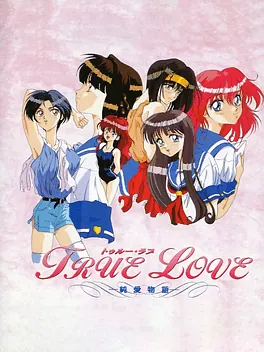
True Love
True Love is a Japanese bishoujo eroge visual novel with dating sim and adventure game elements released in 1995 which was later localized in Europe by Otaku Publishing and distributed in North America by JAST USA in 1999.
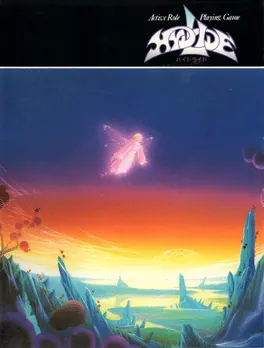
Hydlide
An evil demon named Varalys casts a curse upon the princess Ann, turning her into three fairies. You control Sir Jim and set out to find the fairies, and then slay Varalys. Only by vanquishing Varalys can the curse be lifted. Once the princess is restored the kingdom will be saved. The fighting is a little more in-depth than hack and slash. You can either fight with a defensive or offensive stance, or you can use magic spells.
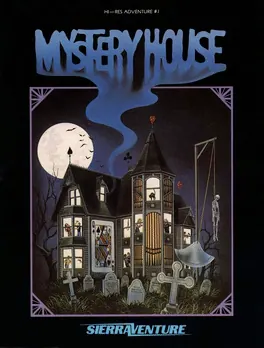
Mystery House
In the first graphic adventure game ever, the player along with seven other people is in an old mansion hunting for some jewels. All too soon it becomes obvious that someone is killing one member of the group after another. It is the player's task in this murder mystery to find out who the murderer is before the player is killed himself.
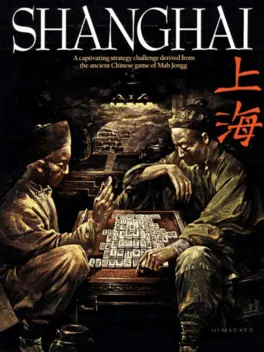
Shanghai
Shanghai is a computerized version of mahjong solitaire. After winning a game, the tiles reveal the three-dimensional blinking eye of a dragon behind the game screen. The Macintosh and Sega Master System version shows an animated dragon spitting fire.
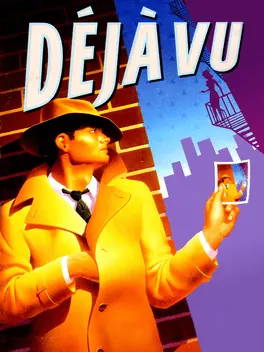
Déjà Vu: A Nightmare Comes True!!
Déjà Vu is a point-and-click adventure game that draws inspiration from "noir" detective novels that were popular in the 1940s.
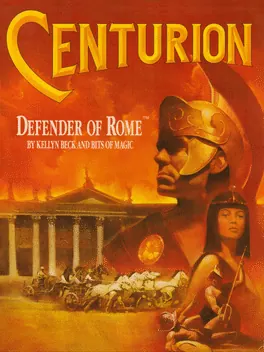
Centurion: Defender of Rome
The year is 275 B.C. Through conquest and careful diplomacy, the Roman republic has brought the petty kingdoms and city-states of Italia under its control. This is the moment at which the heirs of Romulus and Remus step onto the world stage. This is the humble beginning of an empire that will one day cover most of Europe, Asia Minor, and North Africa. As an ambitious young officer, you duty is to defend Rome. Your hope is to become Caesar. Your fate - to rule the world.

Ys: Wanderers from Ys
Adol Christin's long-time friend, Dogi, wishes to return to his home town of Redmont after hearing about strange disturbances that are happening there. Always looking for an adventure, Adol joins him and soon finds out the cause of this new evil. Ys: Wanderers from Ys breaks away from the "bumping into enemies" battle system of the first two games, allowing Adol to control his sword in a variety of directions. Beside changing the battle system, the game's perspective switches to a side-scrolling view, as opposed to the top-down one of the previous games. Adol also has the ability to jump now. New to the series is the use of magical rings, which give Adol different powering-up abilities such as healing and shielding. The game also uses various key items found along the way to solve minor puzzles and progress the story.
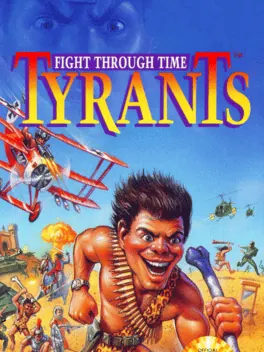
Tyrants: Fight Through Time
First you choose one out of four different characters to represent you, Scarlet (red army), Oberon (yellow army), Caesar (green army), or Madcap (blue army). The game is split into 10 levels - the first 9 are groups of 3 territories which can be completed in any order, while the final 'Mother of All Battles' has its own surprises. Land is mostly of sand, grass or ice. You start with 100 men and you can use whatever quantity you find necessary on each island. The rest men left will go to another level with another new 100. In the second half of the game you can freeze men to save them for the Mother of All Battles. Once you select your island and place for your HQ, you must do some research for better weapons and defences. On the roof of your buildings you can put protectors like archers, gunmen, boiling oil men, and later on even laser turrets. If you send a team of unarmed men into an unoccupied square, they will build an additional base there, with larger armies completing this more quickly. Later on higher levels, you'll also build mines and factories, as you'll need to dig a certain material for higher level weapons, depending on whether the area you're on is rich with a certain material or not. With each next level, you'll start from a higher technology level and be able to progress to one higher level up than at the previous level
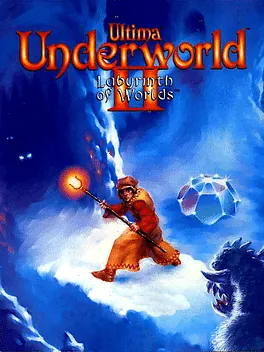
Ultima Underworld II: Labyrinth of Worlds
In an attempt to conquer the world, The Guardian encases Castle Britannia and its occupants--including the Avatar--in a giant blackrock gem. The game takes place one year after the events of Ultima 7: The Black Gate. To celebrate the defeat of the Guardian, Lord British invites the Avatar and his companions to his castle. However, in the night of the feast the Guardian attacks again, encasing the castle in a giant gem of blackrock. Deep in the sewers of the castle, another blackrock gem resides, being a teleporter to other worlds controlled by the Guardian. Now you, the Avatar, must travel to these worlds in order to free the castle from the Guardian's spell. This sequel to Ultima Underworld plays exactly as the original, except for a larger game world, a richer storyline and better graphics and sound.