
Jogos para Sega Saturn
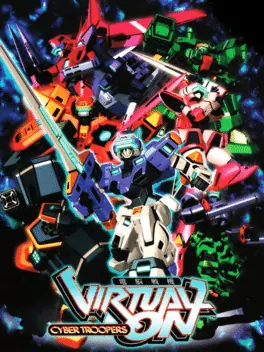
Cyber Troopers Virtual-On
Virtual-On is set up similar to a Versus fighting game. Two Virtuaroids (Mecha) face each other on a stage. The player(s) use a variety of firearms, explosives, melee weapons, and other techniques to destroy the enemy for a set number of rounds, usually a single battle, or best two out of three rounds, like fighting games. The game is made to be played with a two-joystick setup, known as the twin-sticks. Each stick is equipped with a trigger and a button on top of the stick.
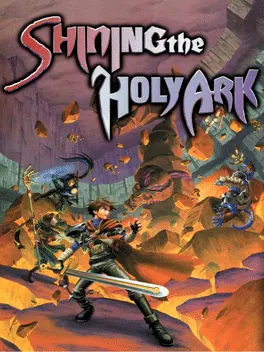
Shining the Holy Ark
As the capable mercenary Arthur, you must summon every ounce of your role-playing prowess and lead your comrades on a do-or-die hunt for the kingdom's sacred artifacts. It's the RPG you've been waiting for, loaded with enough Medieval monsters and challenging "four character" control to stretch your role playing skills far beyond your wildest imagination.
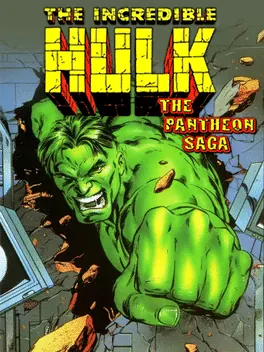
The Incredible Hulk: The Pantheon Saga
True to the comic books, the Hulk relies on no other weapons than his massive muscles to punch, kick and crush his enemies. When he has accumulated enough gamma energy, he may use powerful special moves like a Vortex Spin or the Floor Hammer. Rare bonus items also allow the Hulk to summon one of the four Pantheon team members Atalanta, Ulysses, Ajax and Hector to assist in the thick of battle.
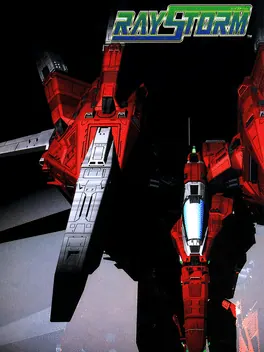
RayStorm
RayStorm is a scrolling shooter set hundreds of years in the future, and was one of the launch titles for the Sony PlayStation. RayStorm consists of eight stages where players must pilot their "R-Gray" spaceships shooting down anything that moves. Like all of the games in the Ray Series, enemies can be shot down with a primary weapon or by holding down a missile button to lock on to multiple enemies.
Sonic Wings Special
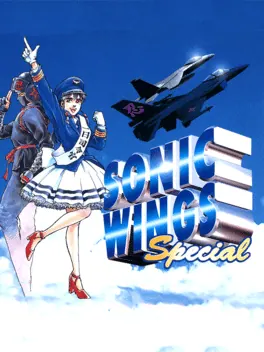
Sonic Wings Special is a 1996 vertical-scrolling shoot 'em up that combines the features in Sonic Wings, Sonic Wings 2, and Sonic Wings 3. It was ported to arcade as Sonic Wings Limited. The home console version adds new characters and endings, new bosses, updated graphics and unlockable planes. There are also Time Attack and 2-player modes. The game uses a branching stage system, so it is impossible to see all levels in one sitting. There is a total of 14 playable characters and many different endings (some of which are reused from previous games in the series). Overall the game has a comic feel. As of Summer 2012, the Android version of Sonic Wings Special has only 4 playable characters with 4 endings and 9 stages. However, the publisher is planning to add further elements of the original version.
Die Hard Arcade
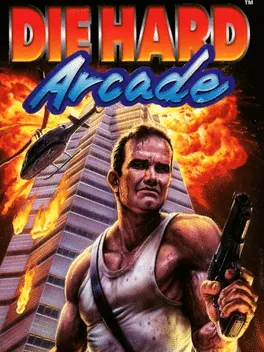
Die Hard Arcade is a beat 'em up for two players, who play as either John McClane or Chris Tompsen (Bruno Delinger and Cindy Holiday in the original Japanese version). Players fight their way through waves of enemies, using their fists, feet, and a variety of weapons that can be collected from enemies or the environment, from household items such as brooms and pepper shakers to high-damage missile launchers and anti-tank cannons. Most weapons are automatically lost at the end of each action scene, but hand guns can be retained so long as they have ammunition remaining. The typical level structure is a number of minions the player must defeat in many rooms, followed by a boss. Bosses can be anything from human minions of White Fang to spider robots. Quick Time Events are interspersed between many of the scenes. In these events, the player(s) may be running and turning a corner and they face an enemy, so they must perform a designated command to avoid being injured or to help defeat an enemy. In some cases failing a Quick Time Event will result in loss of health, as is usual for QTEs, but failing most will put the player characters into an additional action scene which they otherwise would not have to complete. Cut scenes are interspersed into the action.
WWF In Your House
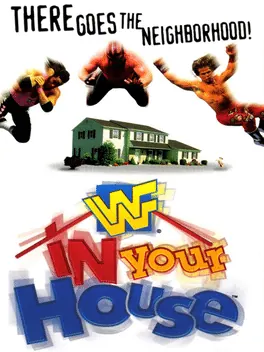
WWF In Your House is a successor to WWF WrestleMania: The Arcade Game. Like its predecessor, it is a hybrid of wrestling game and arcade versus fighter, with over-the-top, unrealistic moves. Concept and presentation are similar to Mortal Kombat games: digitized sprites are used to represent the wrestlers, and the game features finished moves that are performed before the final pin. There are a total of ten WWF wrestlers in the game: The British Bulldog, Goldust, Bret Hart, Owen Hart, Hunter Hearst Helmsley, Ahmed Johnson, Shawn Michaels, The Ultimate Warrior, The Undertaker, and Vader. A new four-player mode is available.
The Legend of Sword and Fairy
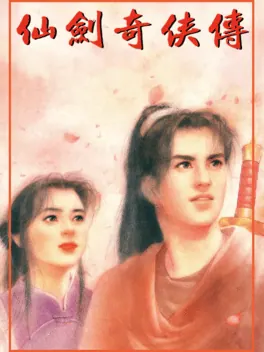
The Legend of Sword and Fairy is a role-playing video game developed by the Taiwanese company Softstar Entertainment and its subsidiaries. The game incorporates elements of wuxia, shenmo and fantasy. Since its release in 1995, the game has spawned a successful video game franchise in Taiwan and mainland China. It was also adapted into the 2005 Chinese television series Chinese Paladin.
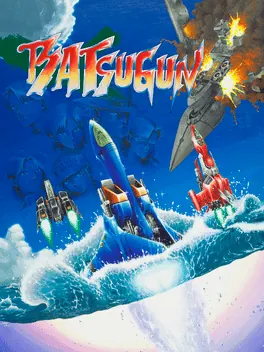
Batsugun
Batsugun is a vertically scrolling shoot 'em up video game created by the now-defunct Japanese game developer Toaplan. The title translates to "exceptional" or "extraordinary". It was the final game created before Toaplan's dissolution, and has been regarded as a key title in the development of the modern manic shooter, with elements of the game such as the size of the player's hitbox, the scale of their firepower, and the complexity of enemy bullet patterns all having an influence on future titles in the sub-genre. Members of the development team also went on to work on other successful manic shooters, most notably lead artist Junya Inoue.
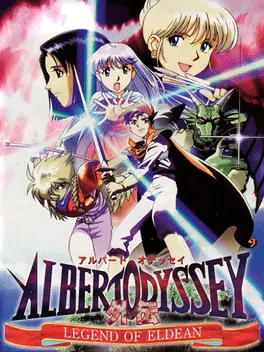
Albert Odyssey: Legend of Eldean
Albert Odyssey: Legend of Eldean is a role-playing video game developed by Sunsoft for the Super Nintendo, but cancelled and ported to the Sega Saturn. It is the first Albert Odyssey title to be released in English, as well as the first to feature traditional turn-based role-playing elements as opposed to tactical, strategy-based gameplay. Legend of Eldean was created as a "gaiden", or sidestory to the original titles, and contains back story, characters, and plot that are independent from earlier games in the series. The North American version received generally favorable reviews, with the game's translation invoking mixed criticism both for its overly-humorous tone and departure from the original Japanese dialogue.
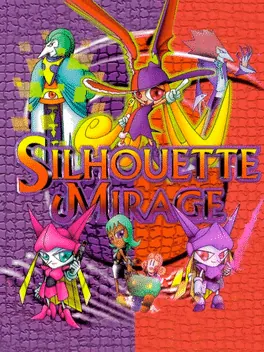
Silhouette Mirage
Silhouette Mirage is a side-scrolling action game. The basic gameplay is somewhat similar to that of Gunstar Heroes. The game's standout feature is the concept of the two attributes. Depending on the enemy's attributes and the type of attack used by Shyna, damage can be increased, and spirit (equivalent to magic power) can be absorbed from enemies. Shyna can dash, jump, crouch, slide, and grab enemies, executing combo attacks. It is also possible to master moves, acquire money, and purchase special creatures called "parasites", which teach Shyna various types of attacks.
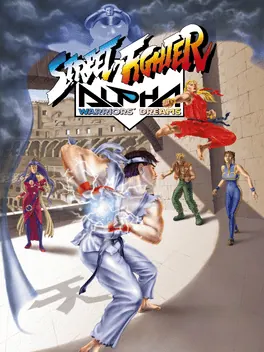
Street Fighter Alpha: Warriors' Dreams
This version of Street Fighter Alpha: Warriors' Dreams features an arranged soundtrack, a dedicated two-player Versus Mode and also a Training Mode allowing players to practice their techniques and combos on a non-hostile character.
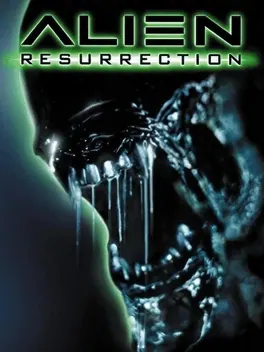
Alien Resurrection
Gameplay is standard FPS action, with limited ammo and plenty of hazards to detour around or find the switch to deactivate. The player switches between the four main characters at each level change, each with a slightly different set of abilities (Call has a motion tracker, Christie has his twin pistols from the film). Levels are based around keeping the Auriga running, and making their way through the ship to escape. This was to be Fox Interactive's last Sega Saturn game, but development was pulled on the Saturn version before it was completed. PC and Dreamcast ports of the game were also planned but were never developed due to the original title's poor sales.
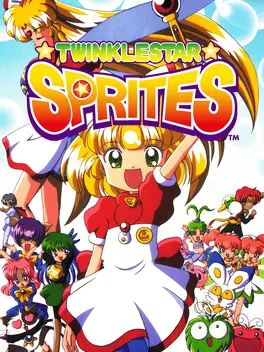
Twinkle Star Sprites
Twinkle Star Sprites is a 1996 competitive scrolling shooter arcade game originally created by ADK. It was ADK's last production for the Neo-Geo platform. The gameplay, which can be characterized as a combination of a fixed shooter and a versus puzzle game, uses combinations of shots, as well as timed power-ups to attempt to damage the opponent. These attacks also serve as counters to the opponent's attack.
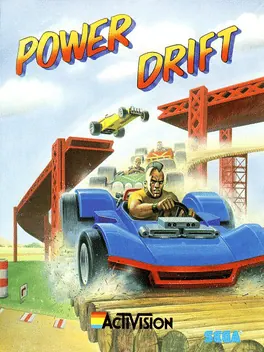
Power Drift
Power Drift is a kart racing game released in arcades by Sega in 1988. More technologically advanced than Sega's earlier 2.5D racing games, like Hang-On (1985) and Out Run (1986), in Power Drift the entire world and track consist of sprites. The upgraded hardware of the Sega Y Board allows individual sprites and the background to be rotated–even while being scaled–making the visuals more dynamic. Designed and directed by Yu Suzuki, the game was a critical and commercial success upon release in arcades. It was subsequently ported to various home computers in Europe by Activision in 1989, followed by a PC Engine port published in Japan by Asmik Ace in 1990. It was not released on Sega consoles until the Sega Ages release for the Sega Saturn in 1998.
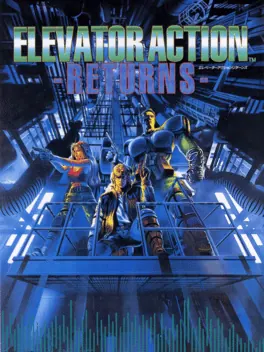
Elevator Action Returns
Elevator Action Returns, also known as Elevator Action II, is a 1994 run and gun arcade game developed and published by Taito. It is the sequel to Elevator Action (1983), featuring a much more gritty and realistic setting. Returns retains the elevator-based gimmick from the original, but expands the gameplay system and replaces the spy motif with a new scenario involving a paramilitary team fighting against a terrorist group.
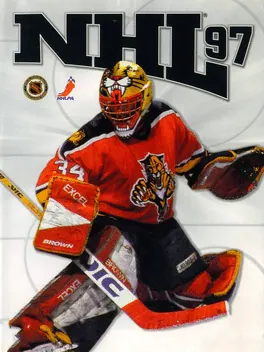
NHL 97
1997 edition of EA's NHL sport simulation series. Improvements in this edition come mostly in the graphical arena, with a refined version of the "virtual stadium" system that adds new camera angles (including the classical top-down one strangely missing from NHL 96), and polygonal players instead of the bitmap-based ones with motion-captured animations. Other extras include multiplayer support for up to 8 players through network or Gravis's GrIP system, the option to create new players and trade them around, and the usual amount of EA sports licensed multimedia flair, including an interesting "Goalie Mask Viewer" which lets you observe the elaboratedly decorated helmets of 30 goalies.
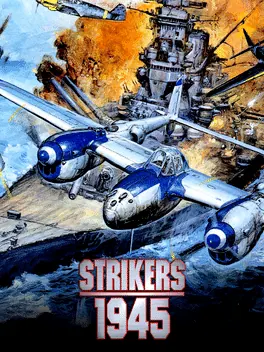
Strikers 1945
In 1945, the second world war ended. Soon, there was peace, but an organization of high-ranking military officers from all over the world form a global army known as CANY. Their mission was to conquer the world. CANY activity was found in areas like the Soviet Union, America, Japan, and even Germany. It is revealed that CANY had weapons never seen before from rockets to mechanical walkers. The world quickly formed a group of pilots and planes called the Strikers whose mission is to rid of CANY from the world.
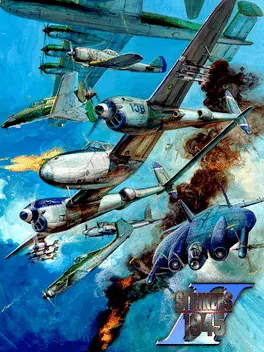
Strikers 1945 II
Continuing where the last game ended, the forces of CANY had been demolished by the previous Strikers' line-up. However, a small group known as the FGR stole the sources and technology responsible for the last events and planned to continue CANYs work by initiating world-warfare with massive mech technology. Once again, the Strikers are called into action.
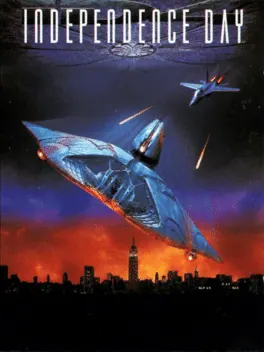
Independence Day
Independence Day is a combat flight simulator video game based on the 1996 film of the same name. The game was developed by Radical Entertainment, published by Fox Interactive and distributed by Electronic Arts for Microsoft Windows, PlayStation and Sega Saturn.
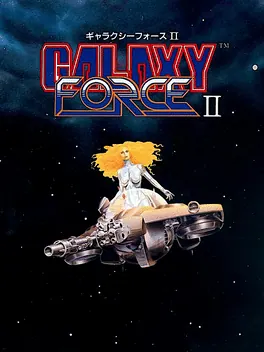
Galaxy Force II
The peaceful and prosperous solar system Junos was located at the end of the Milky Way. Those who called its five planets home had no idea what was about to happen... Halcyon, ruler of the Fourth Empire, had Junos marked as its final target in the galactic massacre, and had sent the bulk of his attacking force in with a single purpose – the elimination of all life forms in the system, and the construction of a gigantic fortress on each of the five planets from which to rule the galaxy. Galaxy Force II is not a true sequel to the orginal game but a an enhanced version of the original. It was released roughly two months after the release of the first part thus making it obsolete.
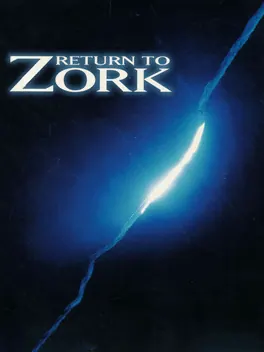
Return to Zork
Return to Zork: A mesmerizing interactive adventure of danger, intrigue and cunning.
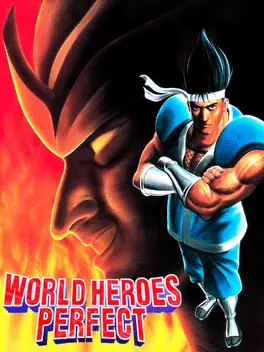
World Heroes Perfect
One year after both the conclusion of the World Heroes Battle Fest and the defeat of Zeus, invitations has been sent to the 16 fighters by Dr. Brown, informing them of a new World Heroes tournament that'll help finally settle the question of who's the strongest fighter in history. With the 16 fighters preparing themselves in order to finally determine on who's the strongest fighter in history, Zeus seeks to gain his revenge against those who had caused his downfall, but little does Zeus and the rest of the fighters know and realize that an old enemy from the past is also back and that he too has his own personal desire for revenge as well.
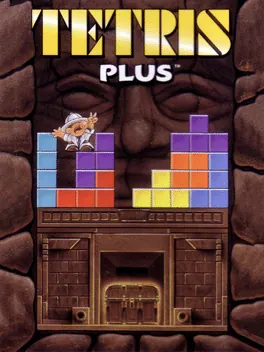
Tetris Plus
This is yet another updated version of Tetris which was released for PlayStation, Saturn, and Game Boy. This version features Classic mode, Puzzle mode, Versus mode, and Edit mode. In Puzzle mode, you must save the professor who climbs his way to the top. In order to do that, you must clear the blocks away and bring him to the bottom. Versus mode brings you head to head with another player. Edit mode allows you to create and save your own custom levels.
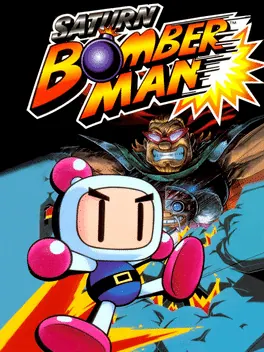
Saturn Bomberman
Saturn Bomberman is an action game by Hudson Soft for the Sega Saturn. The twelfth installment in the Bomberman series, it was first released in Japan on July 19, 1996, in Europe in May 1, 1997, and in North America in September 4, 1997. It is best known for its multiplayer functionality for up to ten players using multitaps. It received praise for its gameplay and multiplayer, but criticism for not advancing the Bomberman series enough. Saturn Bomberman can also connect to the Sega Saturn NetLink internet system, allowing two people from opposite ends of the earth to battle it out.
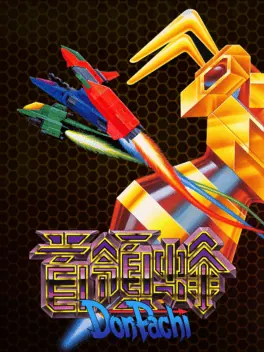
DonPachi
DonPachi is a 1995 vertical manic shoot-'em-up originally in arcades and was the first game from the developer Cave. Settings are mainly woodland and enemies are military vehicles and robots, culminating in the final boss, a huge robotic bee. One of three weapon configurations is chosen at start and then leveled up through dropped power-ups. DonPachi was ported to the Sega Saturn and Sony Playstation in 1996.

Revolution X
Revolution X is about the ol' Rock & Roll. There is an evil nation putting the youth down and banning our beloved rock music. Who you gonna call? Aerosmith! With the help of Aerosmith, the player must shoot his/her way through enemy infested levels, (light) guns blazing, collecting power-ups and releasing hostages. Almost all of the graphics are digitized and Aerosmith themselves are too! There are also lots of fmv videos.
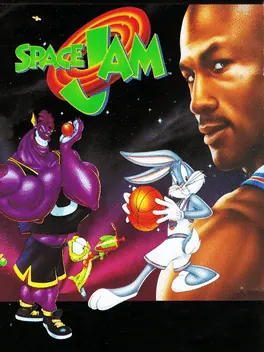
Space Jam
Based on the movie of the same name, Space Jam centres around an invasion of Looney Tunes land by tiny aliens. The fate of the Tunes is to be decided by a basketball game, and for this the aliens turn into the huge, evil Monstars. The game is about two thirds basketball sim and then minigames are stuck in to fill all the gaps. You can play as the Monstars or the Looney Tunes who have the help of Michael Jordan. The basketball games themselves come in two flavours, two-on-two and three-on-three.
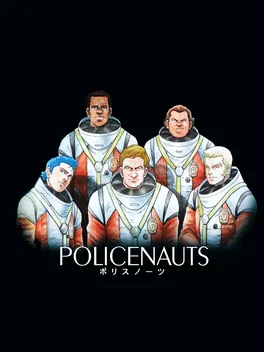
Policenauts
Policenauts is an interactive movie/graphic novel/adventure game with a hard science fiction storyline, written and directed by Hideo Kojima, and published by Konami. It was initially released for the PC-9821 computer platform in 1994, followed by remade versions for the 3DO in 1995, and the PlayStation and Sega Saturn in 1996. The game has never been officially released outside Japan, despite plans for an English localization of the Saturn version. On August 24, 2009 (in honor of the 46th birthday of the game designer, Hideo Kojima), an unofficial English translation patch was released onto the internet. The game is set in a primarily first person perspective and uses a point-and-click interface: the player can move the cursor and have the protagonist (Jonathan Ingram) analyze objects around his environment or talk to other characters in the game. Like in Snatcher, the game features shooting segments where the player must defend their character from incoming enemies. The player can use the shooting trainer at the police department to test their reflex and accuracy. There are numerous puzzles in the game, including an event where the player must dismantle a bomb by following their partner's instructions. The console versions of the game all include support for their respective mouse peripherals. The Saturn version features light gun support for the shooting segments. The game was notable for being an early example of extensive voice recording in video games. It also featured a theme revolving around space exploration and occasional full-motion video cut scenes. The gameplay was largely similar to Snatcher, but with the addition of a point-and-click interface and some first-person shooter segments. Policenauts also introduced summary screens, which act to refresh the player's memory of the plot upon reloading a save, an element Kojima would later use in Metal Gear Solid. The PlayStation version of Policenauts could also read the memory card and give some easter egg dialogues if a save file of Konami's dating sim Tokimeki Memorial is present, a technique Kojima would also later use in Metal Gear Solid.

Quarantine
You have to transport people in this dangerous area. When you see someone with a sign hovering over him, stop by and pick him up. The destination place is visible on your minimap. For every ride you get some money. When you have enough money go to the garage where you can upgrade your car with plenty of weapons.
Puyo Puyo SUN
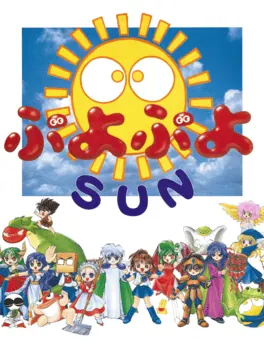
Satan has enlarged the sun in a devious attempt to get a perfect tan. Arle Nadja embarks on a quest to defeat him in this competitive puzzle game. This is the 3rd installment of the Puyo Puyo games series, and the sequel to Puyo Puyo Tsu. After the highly acclaimed success of its predecessor, Compile took a slightly more retro approach, so players had a more original feel to the game over that of Tsu. The name of Puyo Puyo SUN comes from a Japanese pun on san, and also indicates a new Puyo brought into the game. As Sun Puyo were used in this game, and the game itself is not only set on a tropical beach, but is the third in the series (san (三)) is the Japanese word for the number three), the name served multiple purposes. This game was released only in Japan. Following the arcade release, Puyo Puyo Sun was ported to the then-current home consoles. The Saturn version was released merely three months after the arcade release, while the other ports were released in late 1997 and throughout 1998. The Saturn, PlayStation, and Windows 95 versions feature fully voiced cutscenes unlike the original ST-V version.
Magical Drop II
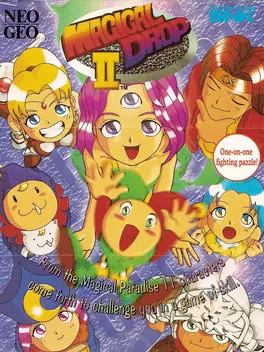
Magical Drop is played in a style and gameplay similar to Compile's (now Sega's) Puyo Puyo and Taito's Puzzle Bobble franchises; a "stack" of random colored bubbles descend from the top, and a player is defeated when a bubble hits the bottom. Bubbles can be picked up and dropped by the player's "clown" at the bottom, and are destroyed when three or more of the same color are put together on a single column. "Chains" are formed either when a single drop caused a chain reaction, or when more than one group of bubbles is destroyed in quick succession. The game is normally played with two players (one may be a computer opponent), and chains cause the opponent's stack to descend faster. There are 24 characters, all but the Black Pierrot being named after a tarot card (although the Strength card has been represented by two characters throughout the series). Different characters have different attack patterns. The columns of the opponent's stack will descend at different rates relative to each other depending on the character chosen. This causes a disjunction of colors that may make it more difficult for the other player to clear their stack. For example, with the character Devil, all the columns will descend at the same rate, whereas with Sun, the middle columns will descend faster than the others.
Shining Force III
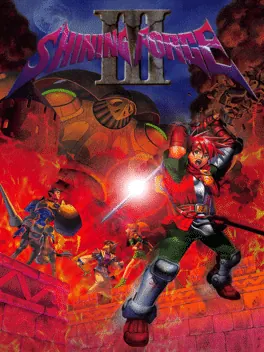
Shining Force III is a fantasy turn-based tactics role-playing video game designed for the Sega Saturn by Camelot Software Planning. It is a continuation of the Shining series. Comprising three separate but overlapping storylines, the Japanese version of Shining Force III was released in three volumes, known as: "Scenario 1 - God Warrior of the Kingdom", "Scenario 2 - Target: Child of God", and "Scenario 3 - "Bulzome Rising". In America and Europe, only Scenario 1 was released. The real ending to the game can only be viewed by completing all the games in the series.
Waku Waku 7
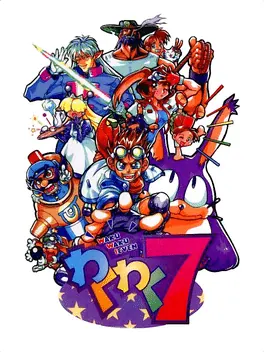
Waku Waku 7 is a SNK fighting game originally released for the Neo Geo MVS arcade system.
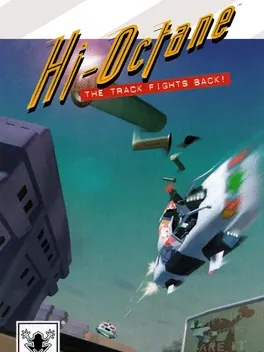
Hi-Octane
Hi-Octane is a racing/vehicular combat video game released in 1995 for the PC, PlayStation and Sega Saturn developed by Bullfrog and based upon their earlier Magic Carpet game code. It is notable amongst racing games for its wide and open tracks, and the resulting freedom offered to the player, and also for its excessive speed. It suffered in the marketplace due to thematic similarities with the better received Wipeout by Psygnosis and the generality of its graphics engine made for a very short depth of view compared to contemporary racing games. Hi-Octane is rumored to begin life as something several Bullfrog programmers coded in free time, and then decided to improve the game and market it under the auspices of Electronic Arts. Another version of the legend is: EA set Bullfrog under pressure to release Dungeon Keeper or Magic Carpet 2 - but they weren't able to. So they released Hi-Octane, a quickly done game. In a Gamasutra article it was mentioned that "PC and Saturn racing game Hi-Octane, was developed in just eight weeks using the Magic Carpet engine, as a way to “fill a quarter that didn't have enough revenue”.
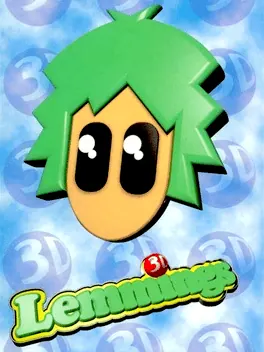
Lemmings 3D
Lemmings 3D is a puzzle video game released in 1995, developed by Clockwork Games and published by Psygnosis. The gameplay, like the original Lemmings game, requires the player to lead all the lemmings to their exit by giving them the appropriate "skills". It was the first Lemmings game to be rendered in 3D. It was released for DOS, PlayStation, and Sega Saturn, with all three releases being almost identical minus some performance differences.