
Jogos para Sharp X1
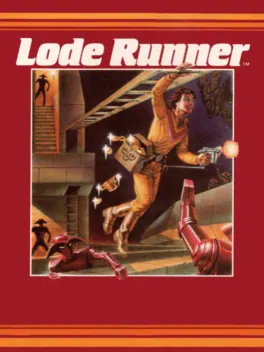
Lode Runner
Lode Runner is a 1983 puzzle video game, first published by Brøderbund. It is one of the first games to include a level editor, a feature that allows players to create their own levels for the game. This feature bolstered the game's popularity, as magazines such as Computer Gaming World held contests to see who could build the best level.
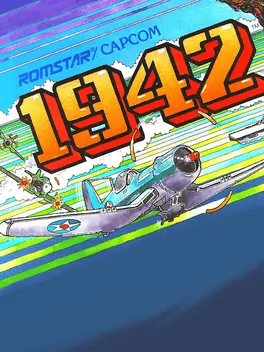
1942
1942 is a vertically scrolling shoot 'em up made by Capcom that was released for the arcade in 1984. The goal is to reach Tokyo and destroy the entire Japanese air fleet. The player pilots a plane dubbed the "Super Ace" . The player has to shoot down enemy planes; to avoid enemy fire, the player can perform a roll or "loop-the-loop". During the game the player may collect a series of power-ups, one of them allowing the plane to be escorted by two other smaller fighters in a Tip Tow formation.
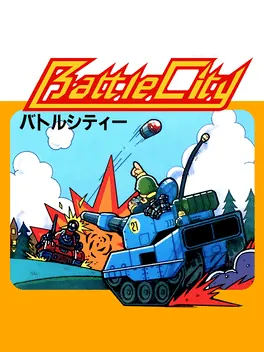
Battle City
Battle City, also known as Tank 1990 or Tank in some pirate multicart releases, is a multi-directional shooter video game for the Family Computer produced and published in 1985 by Namco. The game was later released for the Game Boy and was included in the Japanese version of Star Fox: Assault. It is a port of the arcade game Tank Battalion with additional features (including two player simultaneous play and a level edit feature). There was also a rendition for Nintendo's Vs. System arcade cabinets. The player, controlling a tank, must destroy enemy tanks in each level, which enter the playfield from the top of the screen. The enemy tanks attempt to destroy the player's base (represented on the map as a bird, eagle or Phoenix), as well as the human tank itself. A level is completed when the player destroys all 20 enemy tanks, but the game ends if the player's base is destroyed or the player loses all available lives.
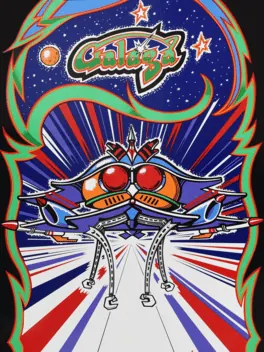
Galaga
The objective of Galaga is to score as many points as possible by destroying insect-like enemies. The player controls a starfighter that can move left and right along the bottom of the playfield. Enemies swarm in groups in a formation near the top of the screen, and then begin flying down toward the player, firing bombs at the fighter. The game ends when the player's last fighter is lost, either by colliding with an enemy or one of its bullets, or by being captured. Galaga introduces a number of new features over its predecessor, Galaxian. Among these is the ability to fire more than one bullet at a time, a count of the player's "hit/miss ratio" at the end of the game, and a bonus "Challenging Stage" that occurs every few levels, in which a series of enemies fly onto and out of the screen in set patterns without firing at the player's ship or trying to crash into it. These stages award a large point bonus if the player manages to destroy every enemy. Another gameplay feature new to Galaga is the ability for enemies to capture the player's fighter. While the player is in control of just one fighter, a "boss Galaga" (which takes two shots to kill) periodically attempts to capture the fighter using a tractor beam. If successful, the fighter joins the enemy formation. If the player has more lives remaining, play resumes with a new fighter. The captured fighter flies down with the enemy that captured it, firing upon the player just like normal enemies, and can be shot and destroyed. The player can free the fighter by destroying the boss Galaga while in flight, causing the captured fighter to link up with the player's current fighter, doubling his or her firepower but also making a target twice as large. Galaga has an exploitable bug that can cause the attackers to stop firing bullets at the player, due to a coding error. In addition, similar to the famous "Split-Screen bug" in Pac-Man, a bug exists in Galaga in which the game "rolls over" from Level 255 to Level 0. Depending on the difficulty setting of the machine, this can cause the game to stall, requiring that the machine be reset or power-cycled in order to start a new game.