
Jogos para Sharp X1
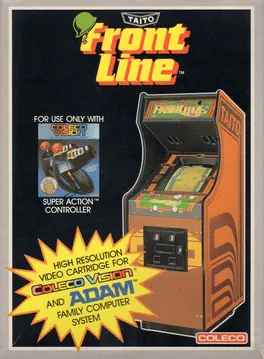
Front Line
Front Line is a vertically scrolling action game. Your mission is to infiltrate enemy territory and destroy their fortress. To reach the fortress, you will have to make your way through varied and dangerous terrain. Jungles, deserts, brush, and rocks all slow your progress, plus each area has numerous enemy fighters and tanks trying to stop you. To help get past these obstacles, you are armed with a machine gun and grenades; at some points in the game you may even come across an abandoned tank which you can control to increase your odds of survival. When you reach the end of the level and successfully destroy the fortress, the game will repeat at a higher level of difficulty. Gameplay is for one or two players, and four different skill levels are available.
Wizardry: Knight of Diamonds - The Second Scenario
Are you ready to take the next step into the world of Wizardry? A step so dangerous, the mere utterance of a spell can decimate the entire city of Llylgamyn. Knight of Diamonds is the Second Scenario in the Wizardry Master Series, the fantasy role-playing simulation for the Nintendo Entertainment System. In Wizardr Knight of Diamonds, only the bravest may venture through murky dungeons more dangerous than any ever encountered by earthly mortals. Only the most cunning may recover the magical Staff of Gailda and save the city of Llylgamyn.

The Ancient Land of Ys
The hero of Ys is an adventurous young swordsman named Adol Christin. As the story begins, he has just arrived at the Town of Minea, in the land of Esteria. He is called upon by Sara, a fortuneteller, who tells him of a great evil that is sweeping the land. Adol is informed that he must seek out the six Books of Ys. These books contain the history of the ancient land of Ys, and will give him the knowledge he needs to defeat the evil forces. Sara gives Adol a crystal for identification and instructs him to find her aunt in Zepik Village, who holds the key to retrieving one of the Books. With that, his quest begins.
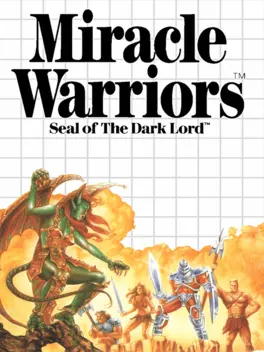
Miracle Warriors: Seal of the Dark Lord
Japanese RPG. Two editions exist, one for the MSX1 on cartridge, and one for the MSX2 on 3.5" diskette. The seal of the Dark Lord Terarin has been broken and Terarin has been unleashed into the world again. She has stolen the Golden Seal and opened pandora's box, unleashing evil creatures into the world. A young hero is tasked by a king to stop Terarin. He must step into footsteps of Iason, a shepherd that once accidentally unleashed Terarin and fought to seal the Dark Lord again. The hero must enlist the aid of three companions, Guy the warrior, Medi the amazon and Treo the pirate (called Turo in the manual) and find the three keys to Terarin's lair. To face the Dark Lord, they must find the mystical weapons and armor of old and then defeat Terarin and seal the Dark Lord from the world.
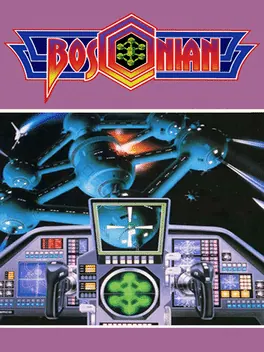
Bosconian
The object of Bosconian is to score as many points as possible by destroying enemy bases and ships. The player controls a small fighter ship that can move in eight directions and can fire both forward and backward. Each level consists of a number of green space stations that must all be destroyed to advance to the next level (a semi-transparent mini-map helps identify their location). Each station consists of six cannons arranged in a hexagon, surrounding a central core. The player must either destroy all six cannons or shoot the core to destroy a station, and in later levels the core is capable of defending itself. Additionally, the player must avoid or destroy asteroids, mines, and a variety of enemy missiles and ships that attempt to collide with the player's ship. Enemies occasionally launch formation attacks — destroying the leader causes all remaining enemies to disperse, but destroying all enemies in a formation scores extra bonus points. A spy ship (worth a random bonus value) also appears occasionally, which must be destroyed or the enemies will go berserk.

SimEarth: The Living Planet
SimEarth is a planet simulator - a model of a planet. It is a game, an educational toy, and an enjoyable tool. With SimEarth you can take over many included planets, or design and create your own. SimEarth treats the planet as a whole: life climate the atmosphere, and the planet itself - from dirt and rock to the molton core - all affect on each other. You will see your planet as a whole - from a satellite's point of view, at two levels of magnification. SimEarth can be played in two modes: game and experimental. In game mode, you will try to develop, manage, and preserve your planet within allotted energy budgets. In experimental mode, you are given enlimited energy to mold your planet. This allows you to set up any stage of development, and then introduce any new factors you want and see what happens. In this mode SimEarth is a "planetary spreadsheet." Your SimEarth planets will be poulates by electronic life-forms called SimEarthlings. Sim Earthlings range from single-celled plants and animals to intellegent species. Intellegent Simearthlings are not limited to Humans - or even Mammals. There can be intellegent Dinosaur SimEarthlings, intellegent Mollusk SimEarthlings, even intellegent Insects SimEarthlings - but only one intellegent life-form at a time. A single planet can be populated by billions of SimEarthling. Their welfare is in your hands.
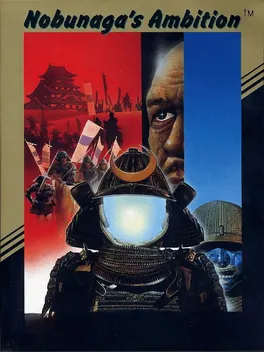
Nobunaga's Ambition
The second game in the series, previously released as Nobunaga's Ambition in the West. Players take on the role of one of the main characters of the period, Nobunaga Oda, Shingen Takeda, Kenshin Uesugi, or others and try to unite the 50 kingdoms of Japan, from Ezo in the north to Kyushu in the south, under their own rule.

Rally-X
Rally-X is a maze & driving arcade game, that was released by Namco in 1980 and licensed to Midway Games for US manufacture and distribution in 1981. It was ported to the SG-1000 in Taiwan.
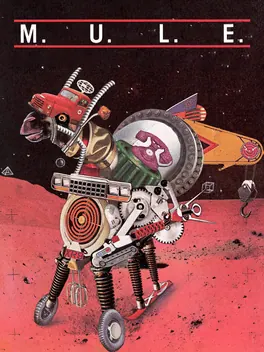
M.U.L.E.
M.U.L.E. is about four hopeful explorers trying to make a fortune on a virgin planet. This is done by producing various goods (Food, Energy, Smithore, Crystite). Each of these goods have their uses: if you don't have enough food, you will have less time during your turn. If you don't have enough energy, your output will be lower. If enough smithore isn't produced, there will be a shortage of M.U.L.E.s. Crystite is the big earner that can make or break your game. You start the game by selecting your race. Some are easier to play, some harder. There are three levels of difficulty, in the easiest the game only lasts 6 turns, but the real game is 12 turns. Crystite is not available at the easiest level. Each turn starts with land claim. Each player gets to choose a spot of land for themselves from the map. If two players choose the same spot, the player with less money wins. The map consists of different landscape. River is best for producing food, plains for energy, mountains for smithore. Crystite is hidden and must be first found by taking a land sample to the town. After the land claim each player takes turns in cultivating their land and do other tasks. They can buy M.U.L.E.s to start production on their land, sabotage other players by buying M.U.L.E.s and letting them loose, try to catch the Wumpus for cash and try to find crystite veins. The time to do these things depends on if the player has enough food. Finally the player goes to the casino and wins a small amount of money, depending on how much time was left.

New Rally-X
New Rally-X is a maze and driving arcade game that was released by Namco in 1981. It runs on similar hardware to that of its predecessor, and as its name suggests, it is a revised version of that title, which was released in the previous year. The only differences are that it has slightly enhanced graphics, easier gameplay, a new soundtrack, and a "Lucky Flag" (with the letter "L") that gives the player extra points for remaining fuel when collected, after which the round will continue if there are still flags remaining. The mazes are mostly identical, with some of the blocks from Rally-X changed into roads to reduce dead ends, and some different flag (and rock) locations. This title was manufactured in greater numbers and was much more popular in Japan than its predecessor.
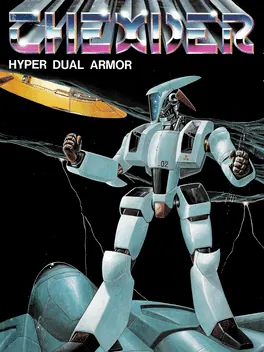
Thexder
Thexder is a robot capable of transforming into a jet whose job is to destroy the central computer to save the planet.15 stages are waiting you for in this shooting game.
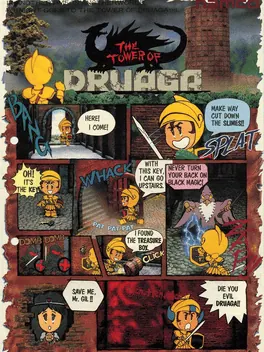
The Tower of Druaga
The story still's the same: Ishtar sends Gilgamesh up the 60 maze levels of the Druaga's tower to rescue Ki and retrieve the Blue Crystal Rod. He must find each level's key to proceed to the next one.

Hydlide
An evil demon named Varalys casts a curse upon the princess Ann, turning her into three fairies. You control Sir Jim and set out to find the fairies, and then slay Varalys. Only by vanquishing Varalys can the curse be lifted. Once the princess is restored the kingdom will be saved. The fighting is a little more in-depth than hack and slash. You can either fight with a defensive or offensive stance, or you can use magic spells.
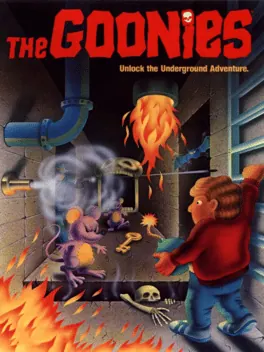
The Goonies
The Goonies is a 1986 platform game. The main theme for most of the game is a chiptune rendition of Cyndi Lauper's "The Goonies 'R' Good Enough". The game was previously released only in Japan, but was later released as an Arcade Playchoice-10 title in North America.
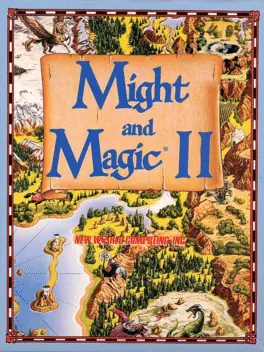
Might and Magic II: Gates to Another World
The Sequel to the successful Might and Magic I, it boasted better graphics, a larger world, but still pretty much the same game engine and presentation. Embark on a glorious journey then save the world of CRON and yourself. A balanced party is a necessity in this game. There are several locations and items that are restricted to certain genders, alignments, or races. A party made up of Good Human Males won't get you very far. Time plays a large role in this game. Time travel is a part of it, but on a more basic level, you will find that characters age as the game goes on. If you wait too long, your characters' statistics will change to reflect their aging.
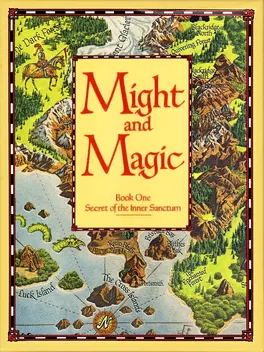
Might and Magic: Book One - The Secret of the Inner Sanctum
Feel the power... Experience the magic! Lead your party of hand-picked adventurers into the enchanted Land of Varn. From dark, moldy caverns through corridors of majestic castles, you'll travel in search of clues to unlock the Secret of the Inner Sanctum. Daring exploits of heroism and sorcery will keep you riveted for hours. Choose from a variety of extraordinary personalities and lead them on an adventure of a lifetime. Over 250 weapons and items and more than 92 mystical spells to use in your search for the Inner Sanctum. Battle legions of ravenous monsters as you travel through forests and islands shrouded in mystery.
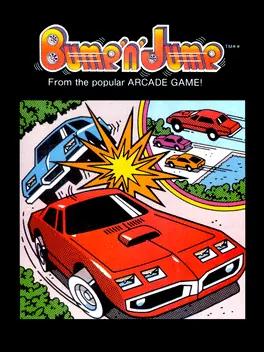
Bump 'n' Jump
Bump 'n' Jump is an overhead-view vehicular combat game developed by Data East and originally released in Japan as "Burnin' Rubber". The arcade version was available as both a dedicated board and as part of Data East's DECO Cassette System. It was distributed in North America by Bally Midway. The goal is to drive to the end of a level while bumping enemy vehicles into the sides of the track and jumping over large obstacles such as bodies of water. The arcade game was a commercial success in Japan and North America. The game was ported to the Atari 2600, Intellivision, ColecoVision, Nintendo Entertainment System, and Sharp X1. The Famicom version of Burnin' Rubber was published as "Buggy Popper" in Japan in 1986.
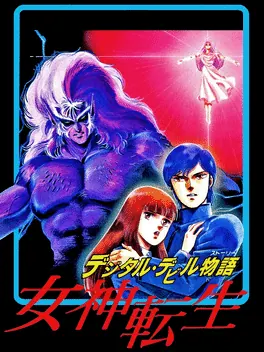
Digital Devil Story: Megami Tensei
Digital Devil Story: Megami Tensei is the first game of the Megami Tensei series of role-playing video games. It is based on the novel Digital Devil Story by Aya Nishitani. Although Atlus has published a majority of the series, the first two games were created by Atlus but published by Namco (known as Namcot at the time), after it bought the video game rights to the Japanese horror novel series by Aya Nishitani, the first named Digital Devil Story. This game is a role-playing video game that features extensive dungeon crawling and focuses heavily on demons, which have gone on to become a trademark of the series.
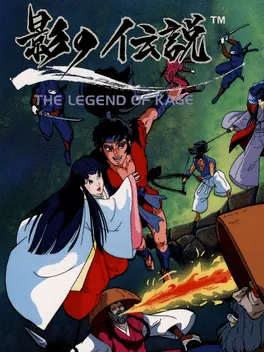
The Legend of Kage
The Legend of Kage is a 1985 arcade game by Taito and was released for several contemporary video game home systems in 1986. The player is armed with a kodachi shortsword and an unlimited amount of shuriken. Grabbing a crystal ball causes the player character's Kage's clothes to change to the next level in colour and thereby attain certain powers (bigger shuriken and/or faster speed); if Kage is hit while in green or orange clothes, he does not die but revert to his normal red clothes. Grabbing a scroll causes Kage to stand still and meditate for several seconds while approaching enemies drop to the ground dead (although the scrolls appear in the arcade version, the crystal balls do not). This MSX version was brought without a license to the SG-1000 in Taiwan.
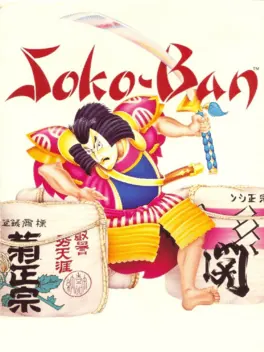
Soko-Ban
Sokoban ("warehouse keeper") is a is a classic puzzle game created in 1981 by Hiroyuki Imabayashi, and published in 1982 by Thinking Rabbit, a software house based in Takarazuka, Japan. In 1984 the ASCII Corporation published a version produced by Khaled Bentebal. It was the basis of numerous clones in the later years. It is set in a warehouse. On each level, the player must push crates (from square to square) to get them onto designated spots; once each crate is on a marked spot, the level is complete. Crates can only be pushed one at a time (so two crates next to each other cannot be pushed together), and cannot be pulled--so it's possible to get a crate stuck in a corner, where it cannot be retrieved! By the last levels, you must plan 40 steps in advance.

Nuts & Milk
Nuts & Milk is a platform-style puzzle game developed and published by Japanese software developer Hudson Soft in 1983. The game was released initially on the FM-7, MSX, NEC PC-8801, NEC PC-6001, and later to the Famicom in Japan. It was the first third party video game to be released on a Nintendo console.
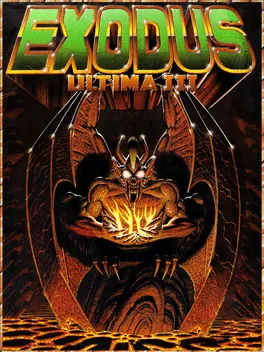
Ultima III: Exodus
Eons ago Lord British came unto the lands of Sosaria. Since that time it has been united under his rule as the Kingdom of Britannia and has gone through two major crises. A few years ago there were political upheavals among the city states of the kingdom. The ringleader of this political instability was Mondain, the Magician. Under his horrible rule, the people's lives were devastated. A valiant warrior was called forth from another world by Lord British. This warrior overthrew Mondain. Britania survived the first crisis. But peace in the Kingdom of Britannia did not last long. Minax, the Witch, a disciple of Mondain, became very powerful and ruled the world of darkness. Minax had power to sway the time axis of the universe. However, a legendary hero again came to the rescue, overthrew Minax, and brought peace back to the kingdom. Now, the Kingdom is about to face its third crisis. Rumours abound about a fiery island which has emerged in the southwestern seas. Little is known of the evil that dwells there. It is known only as Exodus.
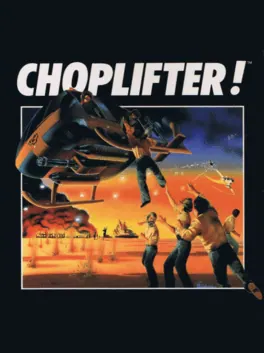
Choplifter!
Choplifter is military themed scrolling shooter where you play as a pilot. Take off from your home base and fly across a horizontally-scrolling playfield of rugged terrain to reach the enemy Bungelings' barracks. There, you must land and rescue a group of helpless hostages and return then to your base. To hinder your mission, the enemy will attack with an array of armaments including tanks, jets, and dangerous air mines. To complete a perfect game, you must rescue all of the 64 hostages.
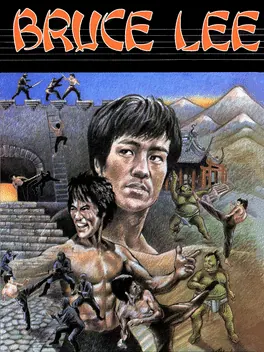
Bruce Lee
Bruce Lee is a video game designed by Ron J. Fortier, with graphics by Kelly Day and music by John A. Fitzpatrick. It was originally developed for the Atari 8-bit family and published in 1984 by Datasoft, along with a port for the Commodore 64. The game was converted to the ZX Spectrum and Amstrad CPC and published by U.S. Gold in the same year. An MSX version was published in 1985 by Comptiq. Bruce Lee is a platform game/beat 'em up hybrid, in which the player controls Bruce Lee.
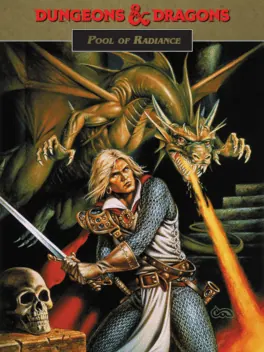
Advanced Dungeons & Dragons: Pool of Radiance
Located on the northern shore of the Moonsea in the Forgotten Realms, the fabled city of Phlan had been overrun by monsters led by a mysterious leader. Your quest: discover the identity of this evil force and rid Phlan of its scourge. Pool of Radiance represents the first in a line of software created by SSI in collaboration with TSR - the producer of the legendary Advanced Dungeons & Dragons fantasy role-playing system.
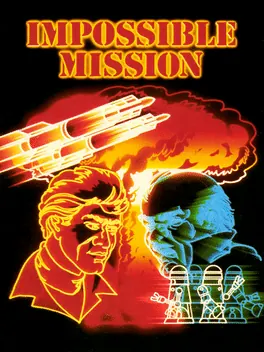
Impossible Mission
The situation: for three days have the strategic central computers of the great powers acted up. An unknown person manipulates their programmes; at the end of these programmes is the starting command for the intercontinental rocket. The countdown is on, only 6 hours keep the humanity from an atomic inferno. An unknown person? Only professor Elvin, the insane computer expert could crack the top secret start code, Elvin, who entrenches himself in his intangible subterraneous, guarded by 90 murderous robots, that until now had hunted down every intruder. No one who has ever set foot on the lift to Elvins cave labyrinth has returned back alive. The last hope: Special Agent 4125, the most cunning, toughest and most indiscriminate man, that the secret service can offer. Only ice cold reckoning and superior physical condition give this unarmed hero a tiny chance to avert the disaster in the last minute. The game: your task is to put a stop to evil Elvin Atombender's game. For this you have to enter in his laboratory, protected by a vault somewhere on his underground stronghold. To open the laboratory's door you need a nine letters password, each letter of which Elvin coded into a punchcard, just for cutting in four each one of them, painting them in different colors and hiding the resulting pieces everywhere in his base's furniture. So all you have to do is search into every object of every room for pieces of puzzle while surviving the robots, the pits and doctor Elvin's annoying voice, retrieve all the 36 pieces, put them together in groups of four, and head for the laboratory, where an unpleasant surprise waits you
Archon
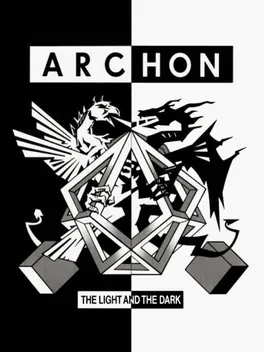
Archon: The Light and the Dark was a game developed by Free Fall Associates which loosely modeled the game of Chess, with a number of additions to the gameplay. It was programmed by Anne Westfall, and released originally for Atari 8-bit computers in 1983. It was quickly ported to a number of different systems, and was well-received.
Spy vs Spy
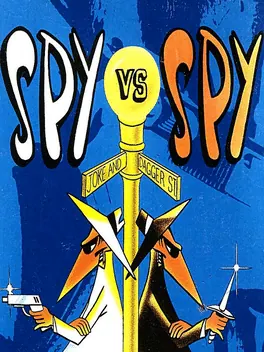
The black spy and the white spy are out to outsmart each other before the time bell rings. Find the needed objects (money, passport, secret plans and airport door key) by searching rooms in the embassy, which include desks, file cabinets and other furniture. Foil your opponent by setting creative booby traps in the various rooms (a bomb in a dresser drawer, for instance). Traps can be disarmed with objects found in rooms (a water bucket from a firebox on the wall will disarm the bomb in the prior example). When all the items are together in the secret briefcase, head for the airport door.
Xevious
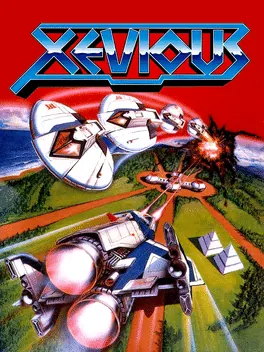
It's a nightmare, but it's true! Research shows that we are the actual aliens on Earth, and the ruthless Xevions are the original inhabitants. Now the Xevions want Earth back -- minus humans! Their invasion forces are fierce -- the land is crawling with deadly Domogram Rovers; the sky is black with Toroid Patrol Fleets and Zoshi Death Squads. Our puny weapons offer no defense. Earth's only hope is our powerful new Solvalou Fighter Plane. Its pilot will have a single mission: Penetrate the enemy ranks and destroy the Xevious Mother Ship. The mission is dangerous. We can't guarantee success. But at this point, it's do or die! One small problem. We still need a pilot. Any volunteers?

Golf
Golf is a game for the NES based on the sport of the same name. The golfer has been identified as Mario in supplemental material, albeit not wearing his traditional shirt and overalls. The gameplay of Golf is relatively simple. The player is given a ball, and a map on the right side of the screen shows the hole that they must hit the ball into. The obstacles on the way are also displayed on the map. The player will get more points depending on how many times they hit the ball to get it into the hole. Many different types of clubs are also available to choose from by pressing Up/Down on the + Control Pad.
Mappy
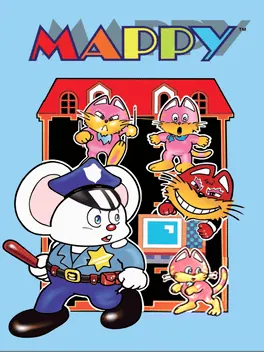
The player guides Mappy the police mouse through the mansion of the cats called Mewkies (Meowky in the U.S. version) to retrieve stolen goods. The player uses a left-right joystick to move Mappy and a single button to operate doors. The mansion has six floors of hallways in which the stolen items are stashed.

Fatal Fury Special
The GRANDMOTHER of all battles! 15 of the FATAL FURY series' top stars gather in the match of the millenium! Use the resurrected Geese Howard and Wolfgang Krauser in a dazzling arena! All you have ever wanted in a fighting game is here in FATAL FURY SPECIAL!

Tennis
Tennis is a sports game developed and released by Nintendo for the NES. In North America and Europe, Tennis was one of 18 launch games for the NES. A Game Boy version was also released. The game features single-player and two-player modes for singles and doubles matches, with either competitive or cooperative gameplay. A computerized opponent's artificial intelligence can be set to one of five difficulty levels. Mario referees the matches.

Fatal Fury 2
After Geese Howard's death in the original Fatal Fury, a mysterious nobleman becomes the sponsor of the new "King of Fighters" tournament. This time, the tournament is held worldwide with fighters around the globe competing. As the single player mode progresses, the mysterious challenger begins defeating the participants from the previous Fatal Fury game, searching for the man responsible for defeating Geese.

BurgerTime
BurgerTime is a 1982 arcade game created by Data East for its DECO Cassette System. The game's original title, Hamburger, was changed to BurgerTime before its introduction to the US. The player is chef Peter Pepper, who must walk over hamburger ingredients located across a maze of platforms while avoiding pursuing characters. The game was popular in arcades. In the US, Data East USA licensed BurgerTime for distribution by Bally Midway. The Data East and Midway versions are distinguished by the manufacturer's name on the title screen and by the marquee and cabinet artworks.

Elevator Action
Elevator Action is a 1983 arcade game by Taito. It debuted during the "Golden Age of Arcade Games". Innovative in gameplay, the game was very popular for many years. In the game, the player assumes the role of a spy who infiltrates a building filled with elevators. He must collect secret documents from the building and traverse the 30 floors of the building using an increasingly complex series of elevators. The player is pursued by enemy agents who appear from behind closed doors. These agents must be dealt with via force or evasion. Successful completion of a level involves collecting all the secret documents and traversing the building from top to bottom. In the lower floors of the building, the elevator systems are so complex that some puzzle-solving skills are needed. The game was available as a standard upright cabinet The controls consist of a 4-way joystick and two buttons, one for "shoot" and the other for jumping and kicking. The maximum number of players is two, alternating turns. The graphics are extremely simple, 2D color graphics and in-game music was composed by musician Yoshio Imamura. The game was followed by a sequel, Elevator Action II (also known as Elevator Action Returns).