
Jogos para Sharp X68000
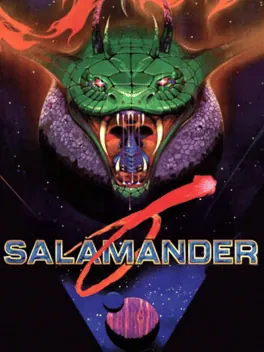
Salamander
Salamander is a scrolling shooter arcade game released by Konami as a spin-off to Gradius. It introduced a simplified power-up system, two-player cooperative gameplay and both horizontally and vertically scrolling stages. Some of these would later become the norm for future Gradius games.
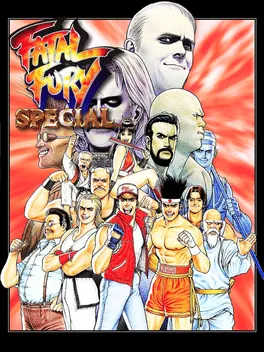
Fatal Fury Special
The GRANDMOTHER of all battles! 15 of the FATAL FURY series' top stars gather in the match of the millenium! Use the resurrected Geese Howard and Wolfgang Krauser in a dazzling arena! All you have ever wanted in a fighting game is here in FATAL FURY SPECIAL!
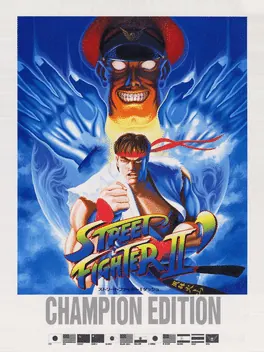
Street Fighter II: Champion Edition
Street Fighter II: Champion Edition is a competitive fighting game released for the arcades by Capcom in 1992. It was the first of several updated versions of the original Street Fighter II: The World Warrior. The main changes consisted of the addition of the Grand Masters (the final four computer-controlled opponents in the single-player mode) as playable characters and mirror matches (same character vs. matches). The fighting techniques of the eight main characters from the original game were also further refined to allowed for more balanced competitive play. Champion Edition was followed by Street Fighter II' Turbo: Hyper Fighting, released several months later.
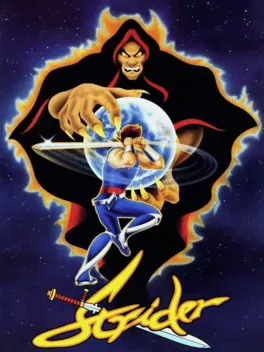
Strider
The controls of Strider consist of an eight-way joystick and two action buttons for attacking and jumping. The player controls Hiryu himself, whose main weapon is a tonfa-like plasma sword known as "Cypher". He can perform numerous acrobatic feats depending on the joystick/button combination used. Pressing the jump button while Hiryu is standing still will cause him to do a regular vertical jump, while pressing the jump button while pushing the joystick left or right will enable him to do a cartwheel jump. Hiryu can also slide under or through certain obstacles and enemies by first crouching down and then pressing the jump button. As well as his sliding move, both jumps can also be used to destroy weaker opponents. Hiryu is able to latch onto certain platforms, and climb across walls and ceilings using a metallic hook. While running down a sloped surface, Hiryu can gain enough momentum to allow him to do a longer cartwheel jump than usual. Numerous power-ups can be obtained from item boxes carried by certain enemies. These includes an extension to Hiryu's attack range that lasts for one hundred slashes, two types of health aids (represented by the kanji used to write Hiryu's name: 飛 and 飛竜), a max health extension (represented by the kanji 竜, the second character in Hiryu's name), an extra life, and a power-up that not only makes Hiryu invulnerable to attack but also increases his own attack abilities via shadow images of himself for 15 seconds.[3] Hiryu can also summon robotic companions known collectively as "options" that help him fight enemies. These consist of up to two mushroom-like droids, a saber-toothed tiger and a hawk, known individually as Option A, B and C respectively. The game has five stages: the Kazakh Soviet Socialist Republic (called "St. Petersburg" during the arcade game's attract sequence), the Siberian Wilderness, the Aerial Battleship Balrog (געלראב), the Amazonian Jungle, and the Grandmaster's lair itself, the Third Moon. Each of the stages is divided into a number of smaller sections, each with their own time limit and checkpoint location. The player has a three-point health gauge (which can be increased to five points with the health extensions. Hiryu will lose a life when either his health gauge is fully depleted, by moving him off the screen entirely (like falling into a bottomless pit) or when the game's timer reaches zero. It's Game Over when all of Hiryu's lives are lost, but the player can be given the opportunity to continue.
Super Hang-On
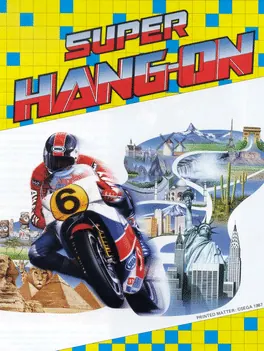
Super Hang-On is a 1987 motorcycle racing arcade game by Sega, and the sequel to the acclaimed Hang-On. A version of this game, in the full simulated-motorcycle cabinet used by the original Hang-On, was released in 1991 as Limited Edition Hang-On. It was also released for the Sega Mega Drive, Commodore Amiga, Atari ST, Macintosh, ZX Spectrum, Amstrad CPC and Commodore 64 in 1989. Super Hang-On was also released for the Sharp X68000 computer in Japan. The game also appeared on several Mega Drive compilations, namely Mega Games I (bundled with the console as Mega Drive Magnum Set), and Sega Genesis Six Pack. The arcade version was released on the Wii Virtual Console in Japan on September 14, 2010 and later for the other regions on May 3, 2012. A stereoscopic 3D version was released for the Nintendo 3DS eShop in Japan on March 27, 2013 and in North America and Europe on November 28, 2013.

Populous
Populous is a real-time strategy game where the player takes the role of a deity influencing the development of civilizations. You shape terrain, guide followers, and use natural disasters like floods, volcanoes, and earthquakes to influence or eliminate opposing tribes. The game features an isometric perspective and includes 500 levels (worlds), each with different challenges. Originally developed by Bullfrog and designed by Peter Molyneux, it is considered one of the earliest examples of the god-game genre.
Gradius
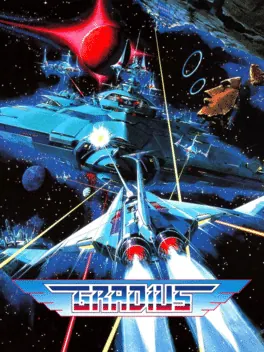
One of the defining characteristics of the Gradius series is the use of a "power meter." The power meter is powered by a power-up item, whose purpose, when collected, is to move a highlight to the next power-up on the power meter. When a power-up that the player wants becomes highlighted, he or she may activate it, also causing the highlight to reset.
Columns
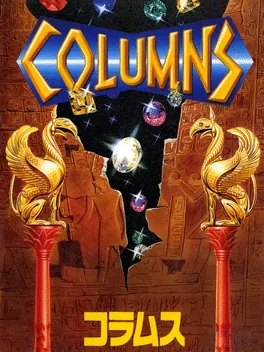
Go back in time to a bygone civilization: the ancient world of Phoenicia. There you will play a simple and captivating game where sparkling, rainbow-coloured jewels drop one after another. According to the ancient merchants, by arranging three or more of the same jewels horizontally, vertically or diagonally, you shall perform miracles.
Battle Chess
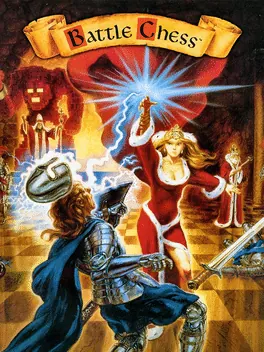
Battle Chess was developed by Interplay as their first project after severing ties with Electronic Arts. They designed it for the Amiga in 1988, and it was released on the majority of the other systems in the late 1980s and early 1990s as well. It was widely successful, and resulted in two follow-ups, many copy-cat games, and a remake for Steam on PC. The only significant criticism the game received was the weak chess AI, as it was not until the mid 1990s that chess ai began to consistently win against strong opponents.
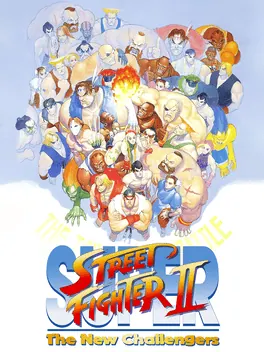
Super Street Fighter II: The New Challengers
Super Street Fighter II: The New Challengers is a 2D fighting game that expands the original Street Fighter II roster with four new characters: Cammy, Dee Jay, T. Hawk, and Fei Long. Players choose from 16 fighters, each with unique moves, to compete in one-on-one matches. The game introduces updated graphics, rebalanced gameplay, and new special moves, continuing the World Warrior Tournament storyline.
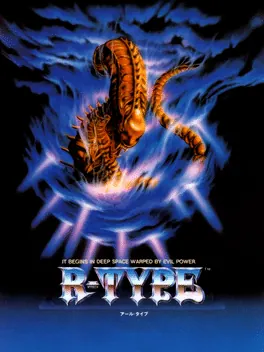
R-Type
R-Type is set in the 22nd century, and the player flies a futuristic fighter craft called the R-9a "Arrowhead", named for its shape, and because it is the ninth model in the 'R' series of fighter craft (but it is the first of the series to actually be used in combat; the previous models were all prototypes). The mission is to 'blast off and strike the evil Bydo Empire'. The R- in the series title originally stood for "ray", as in a ray of light. It was a reference to the many different types of ray-like weapons in the first R-Type. his was later retconned in R-Type Final to refer specifically to the production code as well as a term of endearment for the player fighter craft, the "Round Canopy". The original R-Type was well received by most gaming critics. However, it was also infamous for its relentless difficulty. It earned 7th place in IGN's Top 10 most difficult games to beat. The gameplay of R-Type is noticeably distinct among shoot 'em ups. Invariably the player will lose, not because of an inequality in firepower, but because of the design of the levels themselves. There is usually a 'correct' way to get through a level, but players must learn these by experience - i.e. by losing and restarting from earlier in the level. The game innovated with its weapon system compared to contemporary shooters, featuring a chargeable shot (beam-meter), and detachable 'force' pod; levels were designed to require different tactics and ideal weapons (air-air, diagonal, or air-ground laser).
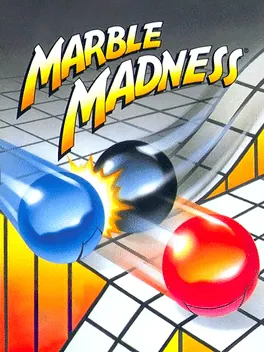
Marble Madness
Marble Madness is an isometric platform game in which the player manipulates an onscreen marble from a third-person perspective. The player controls the marble's movements with a trackball, though most home versions use game controllers with directional pads. The aim of the game is for the player to complete six maze-like, isometric race courses before a set amount of time expires. When a player completes a race, the remaining time is added to the next race's allotted time. The game also allows two players to compete against each other. Courses are populated with various objects and enemies designed to obstruct the player. As the game progresses, the courses become increasingly difficult and introduce more enemies and obstacles. Each course has a distinct visual theme. For example, the first race, titled "Practice", is a simple course that is much shorter than the others, while the fifth race, named "Silly", features polka-dot patterns and is oriented in a direction opposite from the other courses
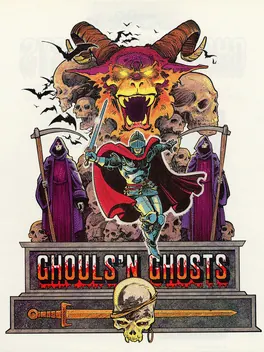
Ghouls 'n Ghosts
The gameplay for Ghouls 'n Ghosts is similar to that of Ghosts 'n Goblins. The player controls the knight Arthur, who must advance through a series of eerie levels and defeat a number of undead and demonic creatures in his quest to restore the souls stolen by Lucifer (Loki in the English-language Mega Drive and Sega Master System versions), including the soul of his lover, Princess Prin Prin. Along the way, Arthur can pick up a variety of weapons and armor to help him in his quest. While the core gameplay remains the same as its predecessor, the game now allows Arthur to fire directly upward and directly downward while in mid air. By jumping in certain spots, players can cause a treasure chest to erupt from the ground. By firing his weapon at the chest, players may uncover new weapons, gold armor or an evil magician that changes Arthur into an elderly man or a helpless duck. The gold armor allows players to charge up the weapon to release a powerful magical attack. Each weapon has its own special attack. There are five levels and Lucifer's chamber at the end, considered a sixth level in itself. To defeat the game, Arthur must complete level 1 to 5 twice. Upon completing level's 1 to 5 the first time, Arthur is taken back to level 1 again but this time a special weapon appears during the game. To enter Lucifer's chamber the player must have this special weapon equipped and defeat the penultimate boss.
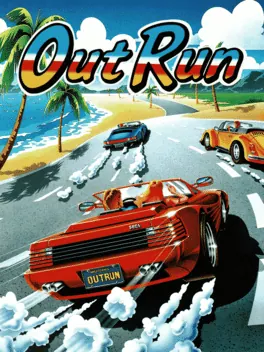
OutRun
OutRun is a racing game originating in the arcades. The player can race across varied terrain in a readily available Ferrari, complete with a female passenger, over a series of short tracks. Gameplay is viewed form just above and behind the car. The roads are full of sharp bends and hazards, contact with which can cause the car to roll and lose the player's time. On each section of track there is a fork in the road, allowing the player to choose which direction he or she wishes to go in. The player has to to complete five track sections in total, out of the fifteen in the game.
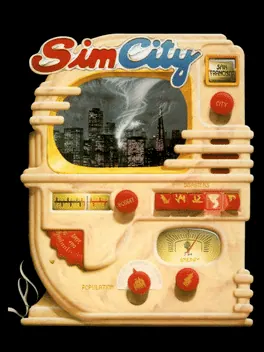
SimCity
SimCity, later renamed SimCity Classic, is a city-building simulation video game, first released on February 2, 1989, and designed by Will Wright for the Macintosh computer. SimCity was Maxis's second product, which has since been ported into various personal computers and game consoles, and spawned several sequels including SimCity 2000 in 1993, SimCity 3000 in 1999, SimCity 4 in 2003, SimCity DS, SimCity Societies in 2007, and SimCity in 2013. Until the release of The Sims in 2000, the SimCity series was the best-selling line of computer games made by Maxis.
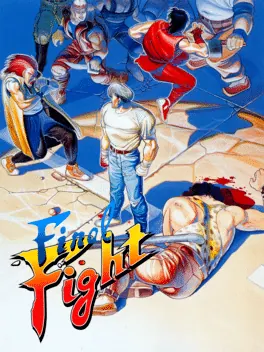
Final Fight
Final Fight is a side-scrolling beat-'em-up produced by Capcom. Final Fight can be played by up to two players simultaneously. Before the game begins, the player chooses between the three main characters: Haggar, Cody, and Guy. Each has his own fighting style and attributes. Health gauges are displayed for both player and enemy characters. The controls for Final Fight consist of an eight-way joystick and two buttons for attacking and jumping respectively. Pressing the attack button repeatedly when attacking an enemy or multiple enemies will cause the player character to perform a combo. The final blow of the combo can be changed to a throw if the player moves the joystick in the opposite direction just before landing it. The player can also perform a jump attack. Pressing the attack and jump buttons simultaneously allows the player to perform a special attack that strikes all surrounding enemies, but will drain a small portion of the player's health. Enemies can be grabbed simply by walking into one of them. When an enemy is grabbed, the player can perform a grab attack by pressing the attack button or perform a throw by tilting the joystick left or right. A thrown enemy can be tossed at another for additional damage. Items such as weapons, health recovery items, and items awarding extra points can be picked up by standing over one and pressing the attack button. Weapons have limited uses and will disappear if the player is disarmed by an enemy too much or when the player moves to a new area. Final Fight consists of six stages or "rounds", as well as two bonus rounds. Each round takes place in a different section of Metro City such as the Slums and the Subway, with most rounds featuring more than one level. At the end of each round the player will face a boss character unique to that round.