
Jogos para Sharp X68000
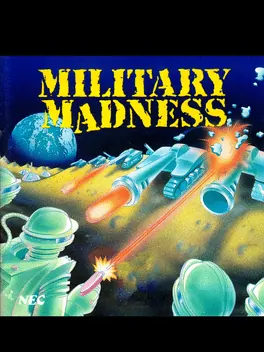
Military Madness
Military Madness (released as Nectaris in Japan) is a futuristic turn-based strategy war game. The year is 2089 and the setting is Earth’s moon, which yields many important resources. While the governments of Earth bicker over their staked claims on the moon, the evil Axis Empire launches a lunar military campaign and takes over the moon, using its factories to produce advanced weaponry, the most devastating of which is the SAM (Supreme Atomic Missile). As commander of the Allied forces, it is the player’s responsibility to lead what’s left of the Allied armies in a desperate offensive against the Axis Empire on the lunar surface before they can use the SAM to destroy Earth.
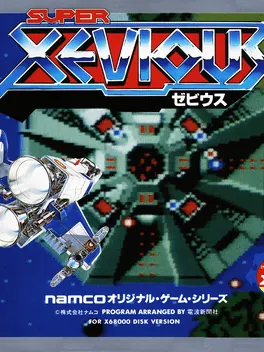
Super Xevious
The gameplay is very much like that of the original Xevious except this time it is a little more difficult. Several new enemies have also been introduced (including a silver Galaxian flagship, a rare silver Galaga "scorpion" ship, two jet planes, a helicopter, and a dark yellow Tank Battalion tank). Some of these enemies will reset the player's score back to 0 if they are destroyed - and the hidden "Sol Citadel" towers and Rally-X Special Flags are also located in different places.
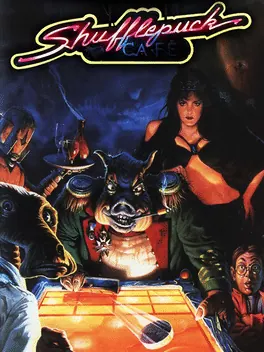
Shufflepuck Cafe
Shufflepuck Café is a computer air hockey game developed by Christopher Gross, Gene Portwood and Lauren Elliott for Brøderbund. There are two game modes. The player can compete in a tournament, playing against opponents who visit the Café, or can practice against each opponent to find out his/her/its weakness in a single-player match. There is a general storyline behind the Amiga version of the game in which the player is an inter-galactic salesman whose spaceship has broken down. He needs to find a telephone to call the breakdown service and get the spaceship fixed. Shufflepuck Café is the nearest place for miles, so he goes in to use their telephone. The main eight Shufflepuck players are standing in his way and will not let him get to the phone until he has beaten them all. Once all are defeated, the player gets in his spaceship and flies off into the distance.
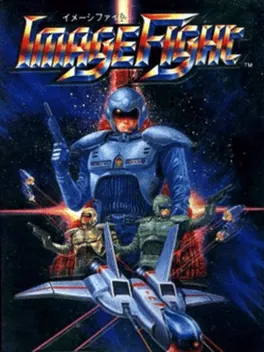
Image Fight
On a fateful day in 20XX, the Earth's moon exploded into four large fragments and a multitude of meteors. Aliens from afar had succeeded in destroying the West's moon base. One after another, mankind's other military industrial space complexes were being lost. What mankind dreaded had come to pass. Scores of unidentified fighters were in the area. In addition, the moon's main computer, still intact after the explosion, had a strange vegetation coiled around it. Their trademark evil exploits being a dead giveaway, invaders from the Boondoggle Galaxy had arrived to take over the Earth. To counter these evil forces, leading scientists from all over the globe created the "OF-1" Fightership. Combat pilots depart the Earth to fend off the invaders and earn everlasting glory.

Phalanx
A futuristic shooter, Phalanx is the name of the prototype starfighter flown by Wink Baufield, a genetically enhanced pilot. It is sent to protect and reclaim Delia IV, a planet in the Andromeda galaxy, which has been colonized by humans for interstellar research purposes. However, an unknown and powerful alien force has overtaken the planet, the military defenses have been completely overwhelmed, and all hope rests on the Phalanx. You fly through eight levels, first through various locations in Delia IV, and then you invade the aliens themselves. Like most shooters, you can upgrade your weapons by picking up bonus items dropped by enemy craft.
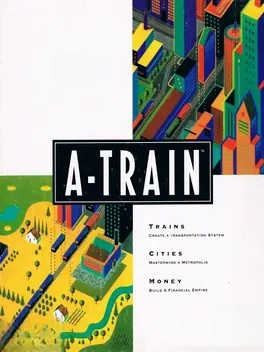
A-Train
You play the part of the head of a railroad company, with the aim of creating your own railroad empire, providing a successful mass transit system that will be an inspiration to the rest of the world. Another goal is to provide the impetus for your chosen city to develop. There are a number of different places to set up business each with different layouts and existing houses and businesses. The main money earners are passenger trains, that can be scheduled to pick up passengers at the times of day when the demand is high. However, in the long term you need the city to develop. This requires setting up trains that transport resources to where they are needed. These resources are used to build houses, and other buildings, increasing the number of passengers for your commuter trains. As the city develops, new businesses will spring up, such as stadiums, high rise office blocks, and ski resorts. You can also build your own businesses, the success of which will depend on the local population, the presence of competing businesses, and even the changes of the seasons, among other factors.
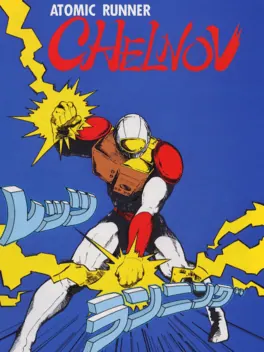
Atomic Runner Chelnov
The player takes the role of Chelnov, a coal miner who miraculously survives the malfunction and explosion of a nuclear power plant. Chelnov's body gains superhuman abilities due to the massive amount of radiation given off by the explosion, and a secret organization seeks to harness those abilities for its own evil purposes. Chelnov must battle and defeat the secret organization using his newfound abilities.

Viewpoint
One or two players (in hot-seat or cooperative mode) control a spaceship equipped with a laser cannon which can be charged (by holding the shooting button down) for a stronger blast. Besides the main weapon, three special weapons are available: a wall of fire which wipes the screen up in a wave, a nova-like blast and a circle of spherical-green homing missiles.
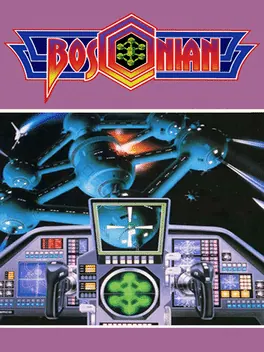
Bosconian
The object of Bosconian is to score as many points as possible by destroying enemy bases and ships. The player controls a small fighter ship that can move in eight directions and can fire both forward and backward. Each level consists of a number of green space stations that must all be destroyed to advance to the next level (a semi-transparent mini-map helps identify their location). Each station consists of six cannons arranged in a hexagon, surrounding a central core. The player must either destroy all six cannons or shoot the core to destroy a station, and in later levels the core is capable of defending itself. Additionally, the player must avoid or destroy asteroids, mines, and a variety of enemy missiles and ships that attempt to collide with the player's ship. Enemies occasionally launch formation attacks — destroying the leader causes all remaining enemies to disperse, but destroying all enemies in a formation scores extra bonus points. A spy ship (worth a random bonus value) also appears occasionally, which must be destroyed or the enemies will go berserk.
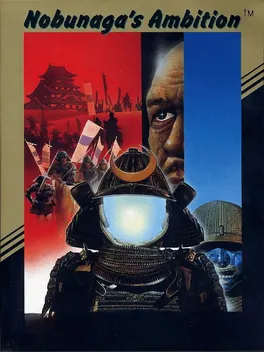
Nobunaga's Ambition
The second game in the series, previously released as Nobunaga's Ambition in the West. Players take on the role of one of the main characters of the period, Nobunaga Oda, Shingen Takeda, Kenshin Uesugi, or others and try to unite the 50 kingdoms of Japan, from Ezo in the north to Kyushu in the south, under their own rule.
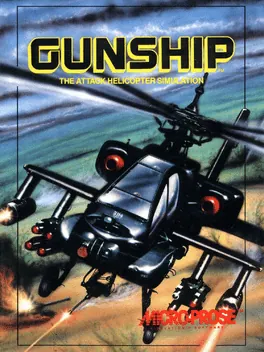
Gunship
After selection of region, style, and enemies, the pilot is assigned a primary mission and a secondary mission. These could include such objectives as "Destroy enemy headquarters" or "Support friendly troops" (i.e. destroy targets near friendly forces). The latter would be an easier mission, because the battle would be fought closer to friendly lines.
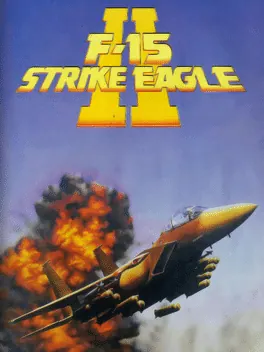
F-15 Strike Eagle II
The second in the series features campaigns in Lybia, the Persian Gulf, The Middle East and Vietnam, making for a total of 250,000 miles of potential action and danger. Primary and secondary aerial and ground-based targets must be destroyed on each of these. You are armed with a cannon, AMRAAM long-range air-to-air missile, Sidewinder short-range air-to-air missile, and the Maverick air-to-ground missile.
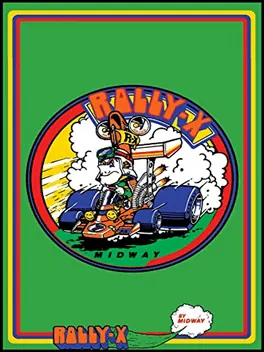
Rally-X
Rally-X is a maze & driving arcade game, that was released by Namco in 1980 and licensed to Midway Games for US manufacture and distribution in 1981. It was ported to the SG-1000 in Taiwan.
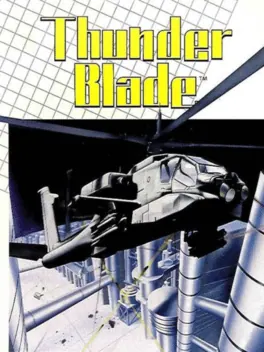
Thunder Blade
A helicopter shoot-'em-up developed by Sega. The Arcade version made use of Sega's 3D super scaler technology to create city environments where the buildings would appear to have depth. The subsequent home versions sadly lacked this feature.
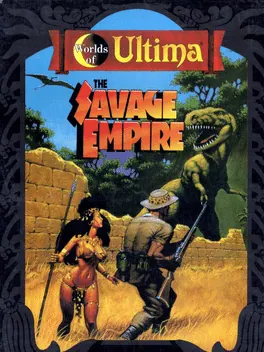
Worlds of Ultima: The Savage Empire
Savage Empire is Origin's first "Worlds of Ultima" release. It was made using basically the same engine as Ultima VI but with slightly different graphics. The game contains all of the elements of the other Ultimas, as well as some extra features that add to the experience. You are able to interact with the environment in a realistic manner... picking branches from trees, digging clay from a riverbank etc. Savage Empire also has a lot more character interaction than the previous Ultimas. Characters will jump into conversations whenever they feel they have something pertinent to add.
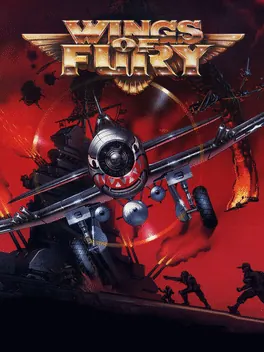
Wings of Fury
The game is a horizontally scrolling shooter set over a number of World War II missions. The player starts each mission by taking off from an aircraft carrier, which he/she has to protect from attacks by Japanese planes. The goal is to defeat the Japanese by destroying enemy bunkers, turrets and barracks on a series of islands and killing enemy soldiers either with bombs or by machine gun. The weapons to complete these objectives, besides machine guns, are a limited number of bombs, rockets and torpedoes. On some missions, the player must also sink Japanese vessels, such as destroyers, battleships, and aircraft carriers. The player has a finite amount of fuel and munitions, which can be replenished by returning to the carrier. The player's aircraft can be destroyed by accumulated damage from enemy fire or by crashing into the terrain.
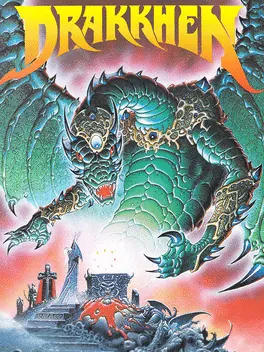
Drakkhen
The prophecy has been fulfilled. The world shall be ruled by the dragons. On an island far away, their lords prepare for the conquest of the lands. There is only one hope for mankind. The emperor sends out four heroes -- warriors and magicians -- to solve the puzzle of tears and prevent the invasion of the Drakkhen. Drakkhen is a role-playing game with a visual presentation that combines 3D landscapes and 2D interiors. The player's party will travel overland on a flat terrain made up of vectors, on which 2D objects are zoomed (The same type of engine was later used in Eternam). The player will encounter monsters and fight them in real-time combat, and discover the palaces of the dragon lords. Indoors, the player has to find a way through the maze of chambers, solving puzzles and defeating the minions of the Drakkhen. Party members are depicted in four status windows on the left side of the screen, thus allowing to see their current status and equipment at once.
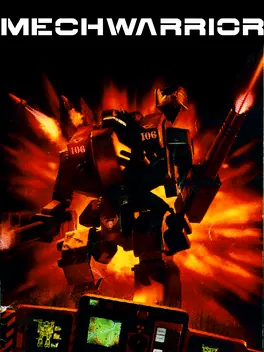
MechWarrior
MechWarrior is the first video game released in the BattleTech game series. MechWarrior was the first video game to offer the player a chance to pilot a BattleMech from the view of a pilot (a MechWarrior). With this game the player has a great deal of freedom when compared to many of the follow-up MechWarrior games, which include choosing missions, buying & selling 'Mechs and parts, hiring lance-mates, and traveling throughout the Inner Sphere. Underneath the major game mechanics, the player had the option of following a role playing style story arc that would unfold over a five-year (game time) period.

Shanghai
Shanghai is a computerized version of mahjong solitaire. After winning a game, the tiles reveal the three-dimensional blinking eye of a dragon behind the game screen. The Macintosh and Sega Master System version shows an animated dragon spitting fire.
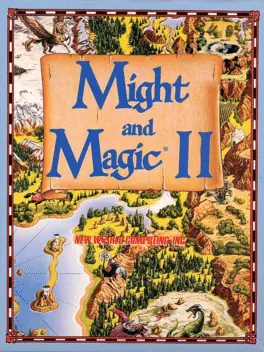
Might and Magic II: Gates to Another World
The Sequel to the successful Might and Magic I, it boasted better graphics, a larger world, but still pretty much the same game engine and presentation. Embark on a glorious journey then save the world of CRON and yourself. A balanced party is a necessity in this game. There are several locations and items that are restricted to certain genders, alignments, or races. A party made up of Good Human Males won't get you very far. Time plays a large role in this game. Time travel is a part of it, but on a more basic level, you will find that characters age as the game goes on. If you wait too long, your characters' statistics will change to reflect their aging.
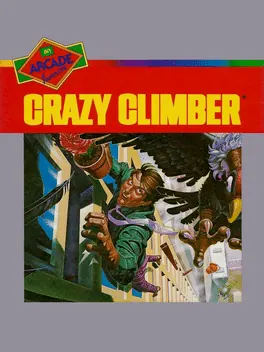
Crazy Climber
Crazy Climber is a coin-operated arcade game produced by Nichibutsu in 1980. It was also released in North America by Taito America Corporation by UA Ltd. in 1982 for the Emerson Arcadia 2001 and other video game consoles. It is one of Nichibutsu's most highly-acclaimed video games in its library. A precursor to the platform game genre, Crazy Climber was the first game revolving around climbing, specifically climbing buildings, before Nintendo's 1981 release Donkey Kong.
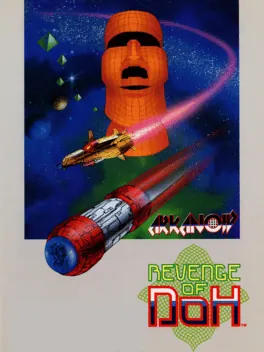
Arkanoid: Revenge of Doh
Arkanoid - Revenge of Doh (a.k.a. Arkanoid 2) is an arcade game released by Taito in 1987 as a sequel to Arkanoid. The mysterious enemy known as DOH has returned to seek vengeance on the Vaus space vessel. The player must once again take control of the Vaus (paddle) and overcome many challenges in order to destroy DOH once and for all. Revenge of Doh sees the player battle through 34 rounds, taken from a grand total of 64. NEW FEATURES: Revenge of Doh differs from its predecessor with the introduction of "Warp Gates". Upon completion of a level or when the Break ("B") pill is caught, two gates appear at the bottom of the play area, on either side. The player can choose to go through either one of the gates - the choice will affect which version of the next level is provided. The fire-button is only used when the Laser Cannons ("L") or Catch ("C") pill is caught. The game also features two new features for bricks. Notched silver bricks, like normal silver bricks, take several hits to destroy. However, after a short period of time after destruction, they regenerate at full strength. Fortunately, clearing a level does not require that any notched bricks be destroyed. Also, some bricks move from side to side as long as their left and/or right sides are not obstructed by other bricks. The US version features an entirely different layout for Level 1 that feature an entire line of notched bricks, with all colored bricks above it moving from side to side. The game features a mini-boss in the form of a giant brain, which will help you practice for DOH. Home versions of Revenge of DOH also featured a level editor, where players could create their own levels or edit and replace existing levels, with the exception of two levels: the mini-boss and DOH.
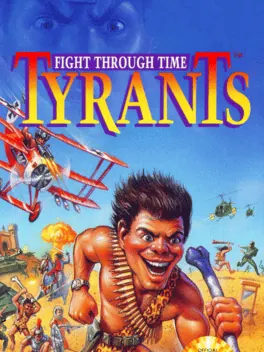
Tyrants: Fight Through Time
First you choose one out of four different characters to represent you, Scarlet (red army), Oberon (yellow army), Caesar (green army), or Madcap (blue army). The game is split into 10 levels - the first 9 are groups of 3 territories which can be completed in any order, while the final 'Mother of All Battles' has its own surprises. Land is mostly of sand, grass or ice. You start with 100 men and you can use whatever quantity you find necessary on each island. The rest men left will go to another level with another new 100. In the second half of the game you can freeze men to save them for the Mother of All Battles. Once you select your island and place for your HQ, you must do some research for better weapons and defences. On the roof of your buildings you can put protectors like archers, gunmen, boiling oil men, and later on even laser turrets. If you send a team of unarmed men into an unoccupied square, they will build an additional base there, with larger armies completing this more quickly. Later on higher levels, you'll also build mines and factories, as you'll need to dig a certain material for higher level weapons, depending on whether the area you're on is rich with a certain material or not. With each next level, you'll start from a higher technology level and be able to progress to one higher level up than at the previous level
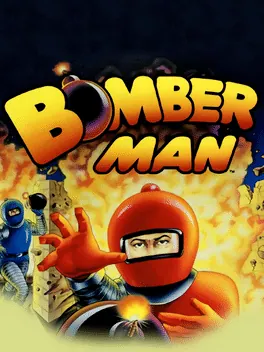
Bomberman
Bomberman is a 1990 action maze video game developed by Hudson Soft for the TurboGrafx-16. Belonging to the Bomberman franchise, it is a greatly expanded re-imagining of the first game in the series. In Europe, the game was released for the MS-DOS, Amiga and Atari ST, retitled as Dyna Blaster due to the European mainstream media associating the original title with terrorist bombings. A Commodore 64 version was advertised as well but never released.
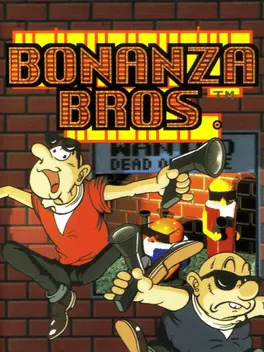
Bonanza Bros.
Just who are these guys? Mobo and Robo are the coolest villains you'll ever meet- they rob banks, museums (and innocent computer gamers of their sanity). One evening whilst watching TV a mysterious stranger appeared on screen. "Good Evening Boys I've got a job for you... My businesses are being robbed and I need you to test my security systems... Deliver the goods and I'll reward you." Take control of Mobo and Robo and guide them around the various establishments, collecting evidence on the way.
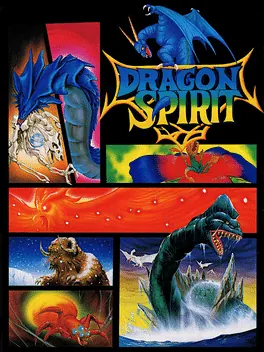
Dragon Spirit
Dragon Spirit is a vertical scrolling shooter arcade game that was released by Namco in 1987 and licensed to Atari Games for its American manufacture and distribution. In the kingdom of Mitgult, a serpent demon named Zawell escapes imprisonment after a thousand years, and kidnaps Princess Alicia. A soldier named Amul is chosen to rescue her and destroy Zawell. He points his sword skyward and transforms into a powerful blue dragon. He can breathe fire and drop bombs, as well as collect up to thirteen additional powers during his journey. Amul must fight nine of Zawell's mightiest beasts, one at the end of each stage, before facing Zawell himself.
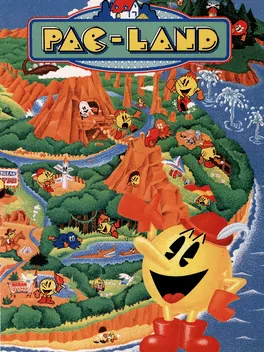
Pac-Land
Pac-Land itself is split into trips. In each of these trips the objective is to get the fairy (that is kept under Pac-man's hat) to Fairyland and also to return home to Pac-Man's house. The majority of the trip involves moving from left to right avoiding various obstacles such as the enemy ghosts, water spurts and quicksand traps. Each trip is divided into a number of rounds, the end of which provides Pac-Man with bonus points depending on how much time he has left and also his position in jumping at the end of each round. If the player runs out of time before finishing the round, Sue, the purple ghost, will speed up rapidly. The penultimate round of a trip ends with Pac-Man entering Fairyland and returning the fairy under his hat to the Fairy Queen. In return the Fairy Queen gives Pac-Man magic boots. For the final round of the trip, Pac-Man has to travel from right to left back home. For assistance he uses the magic boots, which allow him to jump repeatedly while in mid-air. Once Pac-Man completes the trip, he is greeted by Ms. Pac-Man and Baby Pac-Man. In the US release of the game, Pac-Man's cat and dog in the cartoon series, Sour Puss and Chomp-Chomp, are also there to welcome Pac-Man home. Pac-Man then begins his next trip following the same objectives as before, although the difficulty increases. As in the original Pac-Man, there are fruit which appear to eat for bonus points and power pellets to turn the ghosts blue and vulnerable. A hidden item (sometimes accidentally dropped by the ghosts) is a Flagship from Galaxian, which rewards 7650 points when collected (a reference to Namco's goroawase number of 765). The Galaxian Flagship is a long running cameo that appears in the Namco-made Pac-Man games. There are also hidden bonuses in the game, eating ghosts in a certain order will give extra time and pushing an obstacle in the opposite direction can give extra lives, invincibility, and balloons to collect for points and warps.
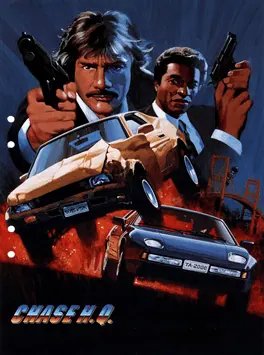
Chase H.Q.
At the start of each level the player is informed who they are pursuing, a great distance away: They must apprehend the criminal before their time limit expires. The criminal's car is constantly moving away, so if the player repeatedly crashes or drives too slowly, the criminal will escape. At some points during the game the road splits, and the correct turn must be taken, otherwise it will take longer to catch the criminal. When their vehicle is reached, the time limit is extended; the vehicle must be rammed a number of times until the criminal is forced to stop, then is arrested. The game includes five levels. As both the initial time limit to reach the criminal and the time extension to ram the criminal are just 60 seconds, the game is very short - a player who is able to finish the game on one credit will enjoy at most ten minutes of game-play. Interestingly enough when Nancy at Chase HQ (at the start of every level) calls on the radio the frequency is always 144.X (various)Mhz. This is actually the 2-meter band of amateur or ham radio frequencies. Although superficially similar in technology to Sega's Outrun, Chase HQ features significant technical advancements over that title in the presentation of perspective, hills and track splits.
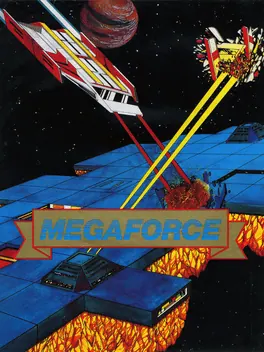
Mega Force
In the game, the player pilots a starship called the Final Star, while shooting various enemies and destroying enemy structures for points. Unlike later vertical scrolling shooters, like Toaplan's Twin Cobra, the Final Star had only two levels of weapon power, and no secondary weapons like missiles and/or bombs. Each stage in the game was named after a letter of the Greek alphabet. In certain versions of the game, there is an additional level called "Infinity" (represented by the infinity symbol) which occurs after Omega, after which the game repeats indefinitely.
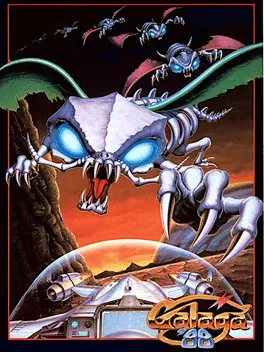
Galaga '88
The gameplay in Galaga '88 is built on the same premise as that of the original Galaga game, but is in many ways more complex and more difficult. The game is divided into a series of 29 Stages distributed through eight Worlds. The starship Galaga accelerates between Stages and Worlds and even to higher dimensions (go to the section on Dimensional Travel below to find out more). With the exception of the third and eighth, each World culminates in a Challenging Stage. There are six such stages to engage in any full game, and each begins with the on-screen announcement "That's Galactic Dancin'!" and has its own YM2151-generated song to which the enemy formations dance. In any given Challenging Stage, both the design of the enemies and their dancing formations shall vary according to the player's current Dimension. As in Galaga, the objective is to destroy all forty enemies before they fly away off the screen. However, refraining completely from touching any controls for the duration of a Challenging Stage awards a "secret bonus" ranging in value from 10000 to 25000 points, and equal to the "special bonus" which would have been awarded for destroying all forty enemy aliens instead. Galaga '88 introduces a variety of new enemies and behaviors. Most of these special enemies are worth varying amounts of bonus points when destroyed. Some enemies can combine into larger enemies which take multiple hits to destroy, while others arrive in eggs, explode in a shower of fireworks, grow with multiple hits, or sport armor which makes them invincible while in formation. Certain enemies drop small formations of tiny creatures that wiggle their way down the screen, and still others can act as escorts to incoming groups of enemies and then quickly dive at the player before leaving the game. Most stages also include various obstacles which appear once the enemy formation has been assembled. These can be destroyed with either one or several shots, and the first one on each stage will leave a "Warp Capsule". At the start of the game, the player can select how many Galaga starships to start with (one or two), affecting their number of remaining lives. The game ends after the final boss is defeated (or when the player's last ship is destroyed or captured) - in the latter case, the player can continue the game for an additional credit. The Game Over screen shows the player's hit-miss ratio and a visual representation of their progress. If the player reaches Stage 27, the game also shows a picture of the final boss (damaged if defeated, but silhouetted if not). If the arcade operator has set the "continue" option to "on", the player also cannot continue if he is defeated on Stages 27-29.
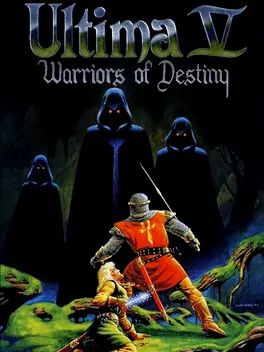
Ultima V: Warriors of Destiny
After a century of relative peace, the Avatar of Virtue is summoned back to the medieval kingdom of Britannia to deal with a new threat: the usurper Lord Blackthorn, a formerly honorable nobleman who has been corrupted by strange new creatures called the Shadowlords. After the recent disappearance of the true king, Lord British, the realm has fallen under martial law. Blackthorn now rules the land by brutally enforcing the eight Virtues upon the people of Britannia - corrupting their meaning in the process. The Avatar must gather together his former companions, now made outlaws by Blackthorn's regime, and venture forth to defeat the vile Shadowlords and recover the true king from the shadowy depths of the Underworld.
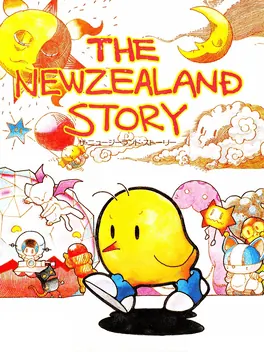
The NewZealand Story
Tiki, a sneaker-wearing kiwi who must save his lover Phee Phee and several of his other kiwi chick friends who have been kiwi-napped by a large blue leopard seal. The player has to navigate a scrolling maze-like level, at the end of which they release one of Tiki's kiwi chick friends trapped in a cage.
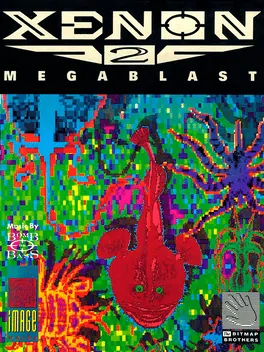
Xenon 2: Megablast
No-one likes a and loser. And no-one comes more universally despised than Xenites. For a thousand years they have been plotting revenge for their humiliating defeat in the last Galactic Conflict. Now the very fabric of time is in danger. The Xenites have planted five Time Bombs through history. Only you can save the day - not to mention the Universe. The last time you met it was a playground scrap. This time it is war.
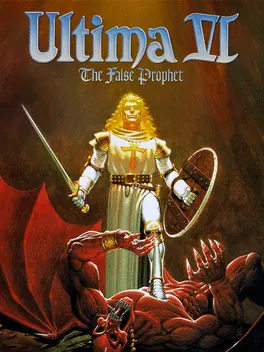
Ultima VI: The False Prophet
Ultima VI sees the player return to Britannia, at war with a race of gargoyles from another land, struggling to stop a prophecy from ending their race. The player must help defend Britannia against these gargoyles, and ultimately discover the secrets about both lands and its peoples.
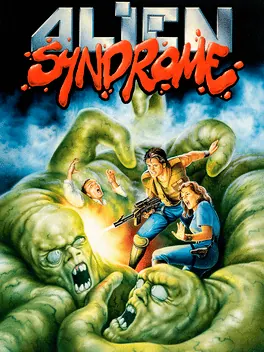
Alien Syndrome
The time bomb is set. It's the only sure way to get rid of these aliens. For good. They're vile. Vicious. And villainous. And they've infested our outcolony. They're holding hundreds of inhabitants hostage. Some of them your friends. So get in there. And get blasting. Inside, you'll find state-of-the-art weaponry. It's yours for the taking. There's sector after sector to purge. Each more intricate than the one before it. And there are Super Aliens to confront. Each more hideous than the one before it. Get the hostages out. And get as many aliens as you can. Before the blast gets all of you.
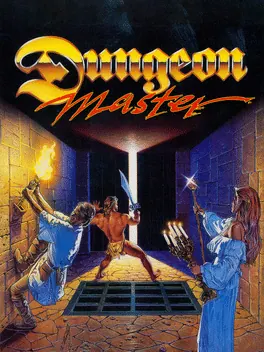
Dungeon Master
Dungeon Master established several new standards for role playing and computer games in general. Dungeon Master was a realtime game instead of the traditional turn-based approach that was prevalent until then. Instead of using text-based commands to interact with the environment, players directly manipulated objects and the environment by clicking the mouse in the enlarged first-person view. Abstract Dungeons and Dragons style experience points and levels were eschewed in favor of a system where the characters' skills were improved directly via using them. It also introduced some novel control methods including the spell casting system, which involved learning sequences of runes which represented the form and function of a spell's effect. For example, a fireball spell was created by mixing the fire symbol with the wing symbol. This kind of attention to detail and focus on the user interface was typical of the game and helped create an often captivating sense of craft and ingenuity. Other factors in immersiveness were the then-revolutionary use of sound effects to indicate when a creature was nearby, and (primitive) dynamic lighting.