
Jogos para ZX Spectrum
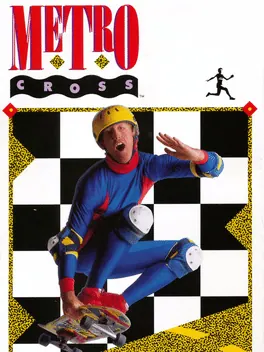
Metro-Cross
Metro-Cross is a platform arcade game that was released by Namco in 1985. It runs upon Namco Pac-Land hardware (but with a video system like that used in Dragon Buster, modified to support a 2048-color palette). It uses a Motorola M6809 microprocessor, with a Hitachi HD63701 sub-microprocessor (both running at 1.536 MHz) and Namco 8-channel waveform PSG for audio. The player must take control of a man known only as Runner, who is given a time limit to run through each of the game's thirty-two rounds while avoiding obstacles and collecting drink cans. The actual running happens automatically: the job of the player is to avoid the obstacles and collect the cans by moving the Runner with the stick and adjusting his speed accordingly. If the Runner finishes the round within the time limit, the remaining time will be awarded to him as bonus points and he will proceed to the next round. Every fourth round is special, using the remaining time from the three previous ones as additional time. However, if the Runner has not finished the round by the time the time limit runs out, he will be electrocuted and the game will immediately be over.
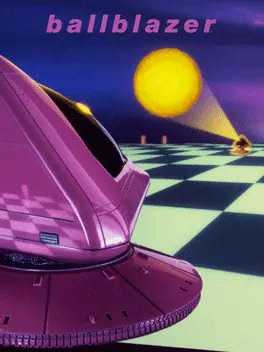
Ballblazer
Ballblazer is a 1984 computer game created by Lucasfilm Games (later LucasArts Entertainment). It was originally released for the Atari 8-bit systems, such as the Atari 800 and the Atari 5200. It was also ported to other popular platforms of the day, such as the Apple II, ZX Spectrum (by Dalali Software Ltd), Amstrad CPC, Commodore 64, Atari 7800, and the NES. The Atari 800 version was called Ballblaster during development - pirated versions of the game went by this name as well. The principal creator and programmer of Ballblazer was David Levine. In 1990, LucasArts and Rainbow Arts released a remake and follow-up to this game, called Masterblazer. This game was released for the Amiga, Atari ST, and PC DOS. A similar game inspired by Ballblazer called Space Football: One on One was developed and released by Triffix for the Super NES in 1992. Years later on March 31, 1997, a remake of the original titled Ballblazer Champions was released for the Sony PlayStation.
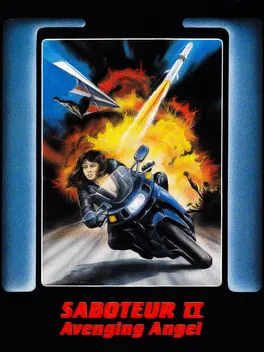
Saboteur II
Saboteur II: Avenging Angel is a sequel to the 1985 video game Saboteur. Saboteur II was one of the first action-adventure games to feature a female protagonist.
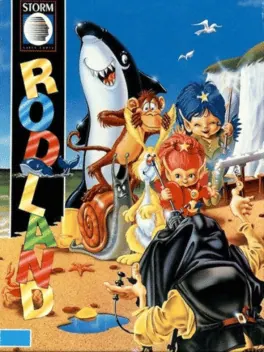
Rod-Land
The player(s) control one or two fairies called Tam and Rit armed with a magic wand (rod). Following the concept of Taito's Bubble Bobble, the rod doesn't kill the monsters directly, but only leaves them immobilized, crying. To kill them, the rod can grasp them in a magic force-field and the player can smash them down over her head until they disappear and leave a power-up behind. Each level is only one small screen composed of monsters, platforms, ladders and, later, tunnels. Unlike other games of the genre, the players can never jump, but have to use ladders. They can conjure one custom ladder above or below them in order to go to the appropriate platform. There can be only one such 'custom' ladder; therefore if the fairy summons it again, it will disappear from its previous position in order to appear again next to the fairy. This can be beneficial for the player, if a monster is climbing that ladder to approach her. The fairies' quest is to rescue their mother, trapped in a tower. In the sequel (part of the original arcade machine) they must venture into a pyramid, to stop an evil demon that is building a mobile fortress. The spirit of their departed father "guides" them at a couple of points. The ending implies that the demon in the pyramid was somehow responsible for their father's death.
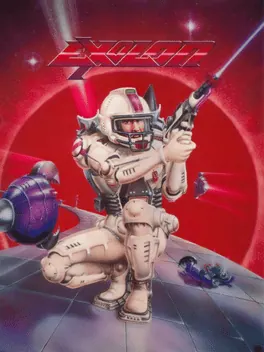
Exolon
Exolon is a classic side-scrolling action game developed by Hewson Consultants and released in 1987 for various 8-bit home computer platforms. Players control Vitorc, a space marine equipped with an armored exoskeleton suit, as he navigates through 125 screens of hostile alien terrain. The game's core gameplay revolves around precise shooting, strategic grenade use, and skillful maneuvering to overcome a relentless array of enemies and environmental hazards. Known for its high difficulty level, Exolon challenges players with fast-paced action that demands quick reflexes and careful planning. What sets Exolon apart is its distinctive visual style, which pushed the graphical boundaries of 8-bit computers in its era. The game features detailed sprites and backgrounds that create a unique sci-fi atmosphere, complemented by a pulsing soundtrack that enhances the immersive experience. This combination of challenging gameplay, striking visuals, and atmospheric audio helped Exolon stand out in the late 1980s gaming landscape, earning it a cult following among retro gaming enthusiasts. Despite its simple premise, the game's intense action and memorable presentation have secured its place as a notable title in the history of side-scrolling shooters.
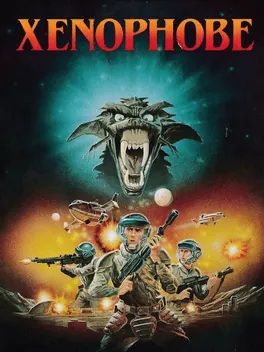
Xenophobe
Xenophobe is a 1987 arcade game and the goal of each level is to defeat all the aliens before time runs out. Levels may contain more than one floor, and players use elevators or holes to move between floors to defeat all of the aliens. Players can also pick up more powerful weapons and other items to help in their eradication of the aliens.
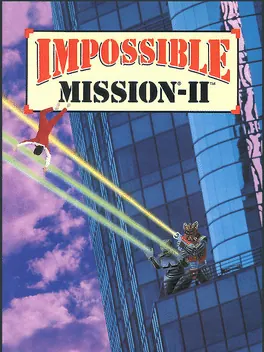
Impossible Mission II
You have 8 hours to prevent Elvin, a psychotic genius from destroying the world in this sequel to the highly successful Impossible Mission. Enter Elvin's tower fortress, avoid his robots, assemble security combinations for each tower, recover musical sequences and tie them together into a full melody to reach Elvin's central control room.

Continental Circus
Continental Circus, released as Continental Circuit in North America, is a racing simulation arcade game, created and manufactured by Taito in 1987. It was later ported to various home computers in 1989, including the Amiga, Amstrad CPC, Atari ST, Commodore 64, MSX and ZX Spectrum. It was then released in 2005 for the PlayStation 2, Xbox and PC as part of Taito Legends. The arcade version of this game comes in both upright and sit-down models, both of which feature shutter-type 3D glasses hanging above the player's head. According to Computer and Video Games in 1988, it was "the world's first three dimensional racing simulation." The home conversions of Continental Circus lack the full-on 3D and special glasses of the arcade version, or the detailed graphics, but retain the essential gameplay structure.
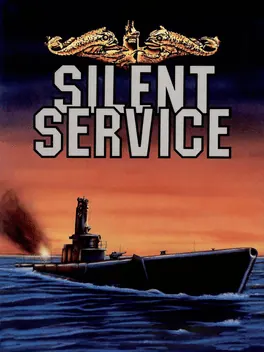
Silent Service
Exciting World War II Submarine Action in the South Pacific by Sid Meier. 0400 hours, Tuesday 1942... BATTLE STATIONS!! BATTLE STATIONS!! Enemy convoy identified on radar!! SILENT SERVICE, The Submarine Simulation, brings exciting action, great strategy, detailed graphics and an ultra-realistic simulation of a World War II U.S. submarine in the South Pacific. SILENT SERVICE's outstanding features include: all the critical battle stations 0 engine room, conning tower and ship's bridge; challenging and realistic combat versus single ships and heavily escorted convoys; and an infinite variety of situations using complete maps and charts for the entire South-west Pacific and a sophisticated and realistic attack plotting system. SILENT SERVICE is the most detailed and realistic submarine simulation for home computers. Player selected "reality levels" allow the player to customize complexity, and time scaling ensures that the actions and decisions are constantly required. SILENT SERVICE provides a wide selection of historical scenarios from individual attacks to patrol missions that bring challenge and fun to both the first time player and the experienced submarine veteran. Will you, as submarine captain, select a quiet patrol sector in the Marianas Islands, or choose the dangerous waters off the coast of Japan? Is the submerged daylight periscope attack best, or do you charge in on the surface at night using only radar bearing to guide you? Do you pick off the enemy with a single torpedo shot? These decisions and many more are yours to make as you take your place among the elite ranks of the SILENT SERVICE!
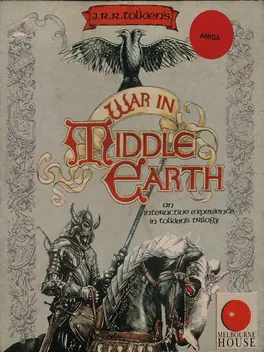
J.R.R. Tolkien's War in Middle Earth
J.R.R. Tolkien's War in Middle Earth is the 16-bit game with additional adventuring features compared to the 8-bit version, loosely depicting the events of the One Ring from the Shire to Mt. Doom. The game starts with the three hobbits: Frodo, Sam, and Pippin surrounded by nine individual units of Nazgul near the Shire. Although the first task is to travel to Rivendell, the player is free to decide how heroes and armies progress, despite the in-game conventional storyline.
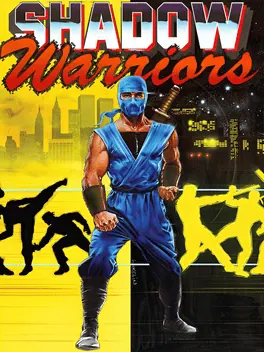
Shadow Warriors
Shadow Warriors is a port of the Arcade game Ninja Gaiden for home computers by Ocean.
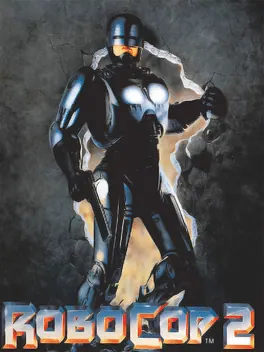
RoboCop 2
RoboCop 2 is a series of video games published in the 1990s by Ocean and Data East for various home computers and video game consoles. They are based on the movie of the same name. Three different games were produced, each produced on two systems. The version for the Commodore 64 and NES was a simple left-to-right scrolling platformer, in which RoboCop was required to collect/destroy at least two-thirds of the drug "nuke" in each level and arrest two-thirds of the suspects by running into them (in contrast to shooting them). If RoboCop does not manage to attain the required amounts of nuke or number of arrests then he has two chances in the game to prove his efficiency at a shooting range. If he succeeds, he may continue onto the next level. If he fails, or if both chances at the shooting range are already used up, he must repeat the level. The version for the ZX Spectrum and Amstrad CPC was also a platform game, but one that offered movement in both directions (vertically and horizontally) as well as into various areas providing an element of exploration. There were also a number of puzzle sub-games that had to be completed to progress in the game. The version for the 16-bit Commodore Amiga and Atari ST was similar in nature to the 8-bit Spectrum and Amstrad CPC versions, but contained completely different levels to take advantage of the extra power offered by these computers. There was also an arcade-only version of RoboCop 2, developed and published in 1991 by Data East (who still held the rights to create arcade games based on the franchise), which allowed up to two players at once (one controlling the original RoboCop, the other controlling a slightly purple-hued clone). The game followed the basic premise of the movie, but had some major sequential differences.
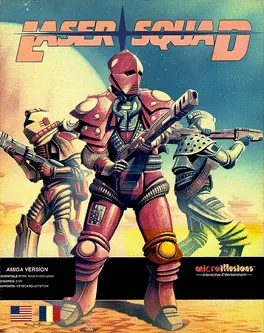
Laser Squad
Laser Squad is a turn-based tactics war game where the player completes objectives such as rescue or retrieval operations, or simply eliminating all of the enemy by taking advantage of cover, squad level military tactics, and careful use of weaponry. The squad's team members are maneuvering around a map one at a time, taking actions such as move, turn, shoot, pick up and so on that use up the unit's action points. More heavily laden units may tire more easily, and may have to rest to avoid running out of action points more quickly in subsequent turns. Morale also plays a factor; a unit witnessing the deaths of his teammates can panic and run out of the player's control. Including the expansion pack, there are seven scenarios in total, each one with its own difficulty settings and squad allocation Laser Squad originally came with five mission scenarios, with an expansion pack released for the 8-bit versions, containing a further two scenarios. Reaction from gaming magazines was positive, gaining it high review rating and several accolades. The legacy of the game can be seen in other titles like the X-COM series, especially the acclaimed UFO: Enemy Unknown which was also created by Julian Gollop and was initially conceived as a sequel to Laser Squad
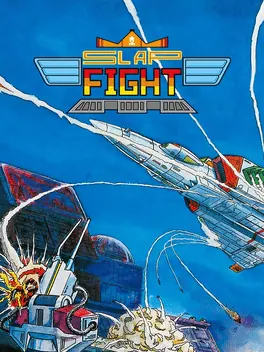
Slap Fight
A.L.C.O.N (Allied League of Cosmic Nations), also known as Slap Fight, is a vertically scrolling shooter developed by Toaplan.
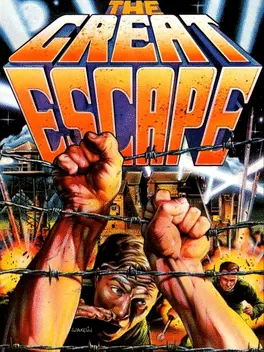
The Great Escape
The Great Escape is an isometric action-adventure game. Controlling a prisoner of war in a German camp, your goal is to break out undetected. There are numerous ways to freedom - back doors, cracked fences, even underground tunnels. However, you have to plan your escape while obeying the strict rules of the camp.
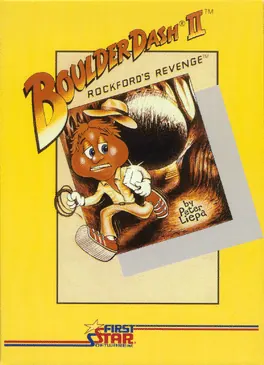
Boulder Dash II: Rockford's Revenge
In part two of the "Boulder Dash" series, game design hasn't changed compared to part one, so you still have to mine diamonds while avoiding falling rocks and cave monsters of all sorts. As in part one, later levels become more difficult because many puzzle elements are added.
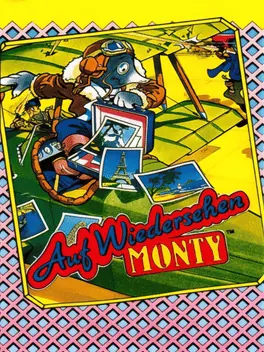
Auf Wiedersehen Monty
Monty On the Run is a platform-style game featuring Monty Mole, a coal thief fleeing across Europe to escape the Intermole agency. Players navigate Monty through 80 screens representing European landmarks, using various movement techniques like super-leaps and ceiling suspension. The goal is to collect Eurocheques and plane tickets while avoiding hazards. The game incorporates unique elements such as drunkenness effects from wine bottles and aerial combat sequences. As the third main entry in the Monty Mole series, it builds upon the gameplay mechanics of its predecessors while introducing new challenges and environments.
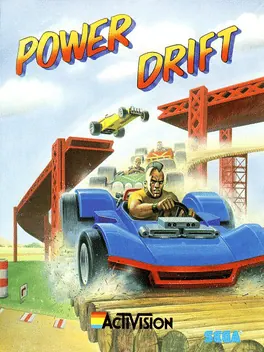
Power Drift
Power Drift is a kart racing game released in arcades by Sega in 1988. More technologically advanced than Sega's earlier 2.5D racing games, like Hang-On (1985) and Out Run (1986), in Power Drift the entire world and track consist of sprites. The upgraded hardware of the Sega Y Board allows individual sprites and the background to be rotated–even while being scaled–making the visuals more dynamic. Designed and directed by Yu Suzuki, the game was a critical and commercial success upon release in arcades. It was subsequently ported to various home computers in Europe by Activision in 1989, followed by a PC Engine port published in Japan by Asmik Ace in 1990. It was not released on Sega consoles until the Sega Ages release for the Sega Saturn in 1998.

Nigel Mansell's World Championship Racing
Timing smiled on Gremlin with this licensed Formula 1 simulation, as Nigel's long quest for a championship had finally come good. The game was pitched somewhere in between a full-blown simulation like F1 GP and action games like Continental Circus. Only 12 cars were in each race, which could last from between 3 and 20 laps. Before each race you can customize wing downforce, gear ratio, tyre selection and fuel load choices – pitstops are a standard feature of the longer races. The 16-bit versions include a unique 'Improve With Mansell' mode, in which a digitized version of Nigel's head appears in the top corner of the screen, offering instructions and praise.
Back to the Future Part II
It's time to go back... Great Scott! Returning from the year 2015, Doc Emmet Brown has some bad news for Marty McFly... His future's in danger unless he can put things right. Guide Marty through five levels in this exciting interpretation of the smash-hit film. Can you assure a safe future for Marty? Or will Biff ensure there's no future at all?
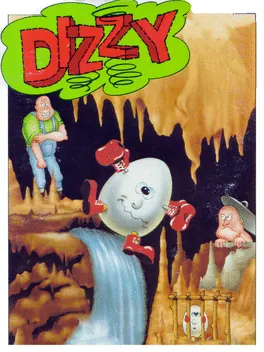
Dizzy: The Ultimate Cartoon Adventure
Dizzy: The Ultimate Cartoon Adventure was the first in the Dizzy series of games which would spawn many more Europe-wide bestselling titles.
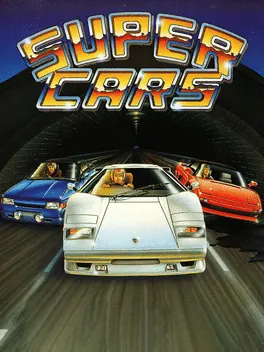
Super Cars
Super Cars is a top-view racing game from Gremlin Interactive, who later produced the Lotus series of games. Stylistically, the game is influenced by Super Sprint. There are 9 tracks at each of the 4 difficulty levels, which can be raced in any order (although the last track you race is made harder than usual). In the races you win money, which can be spent on temporary handling and power upgrades, plus armour plating and front/rear shooting missiles that can knock out other racers. The player must finish in the top 3 of each race to progress - initially there are 4 computer opponents, but more are added as you progress through the game. The car can be upgraded throughout the game via the shop section. The player is given an initial price, but also a number of options of things to say to the salesman - with the right combination, the price will drop.
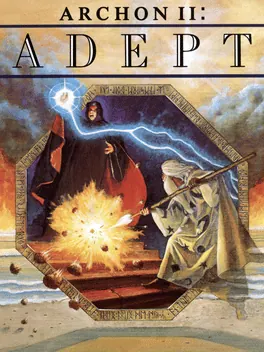
Archon II: Adept
Archon 2 or also Adept is the successor of the successful Electronic Arts classic Archon. As already seen in Archon, an apocalyptic fight takes place in a fantasy surrounding, now not between "light" and "dark" but between "order" and "chaos". It all happens in a game area which is divided into 4 elemental layers. In the center is the earth layer, it is surrounded by the water layer and this is surrounded by the air layer. The outer layer is made of fire. Opposite to its forerunner the players start in Adept only with one magician ("Adept") per layer. All the other creatures have to be conjured in the course of the game. Evocations and other spells cost energy, which is renewed by occupying energy points on the game area with your own creatures. The more points you occupy, the more energy you get. Every side possesses 4 own elemental beings, which have a special force when they are on their corresponding layer. Moreover 4 different demons can be conjured from both sides, which can fight independently from the chosen element. Many of these creatures can use a shooting attack, but they have also lots of special attacks. When two figures meet on a field, here also the screen is zoomed and a fight for life and death starts. The winner claims the hard-fought field. Dependent on the layer you are fighting on, the battlefield has different obstacles such as slowing-down lakes, shoot destracting swirls, flame walls or simply walls ready. The only exception are the two void fields, here no terrain is used
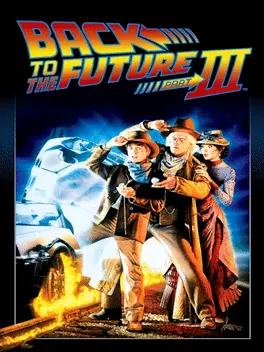
Back to the Future Part III
There's no time like the past and there's no time to lose! Great Scott! Doc's flashed himself back to 1885, into the arms of his future bride Clara Clayton, and right into the hands of Hill Valley's most vicious varmint, Buford "Mad Dog" Tannen. And Marty's learned that Doc is just a few days away from being deep sixed. So saddle up the DeLorean and bring Doc back to the future before he makes a no-return ride to Boot Hill. Jump, shoot and duck past runaway suitcases, trunks, chicken crates, vultures, Indians, boulders, logs and more. Power up with three way shooting shotguns to get through the Indians arrows and cavalry's bullets. Keep an eye on the clock as you blast away at cutouts of Buford and his gang, flying geese, bonus ducks and more. You're cornered by Buford's bad guys so whip those pie trays and try to take them out. Punch, crawl, duck and jump across the racing rail cars to get to the DeLorean. Play both leading roles - Doc and Marty - during this fun, pistol packin' arcade action adventure inspired by the scenes from the smash hit movie. Four part rescue chase has you racing across the plains dodging danger, and galloping through a gauntlet of enemy crossfire to save Doc's sweetheart, Clara. Take aim at the first person perspective Shooting Gallery. Practice mowing down Mad Dog, his cronies and a wild western assortment of fast moving targets. It's tin vs. lead as you pit your supply of pie trays against Buford's gang and their six shooters. Atop the speeding hijacked train you'll have to save your own caboose while collecting speed logs. It's the trickiest obstacle course ever to ride the rails.
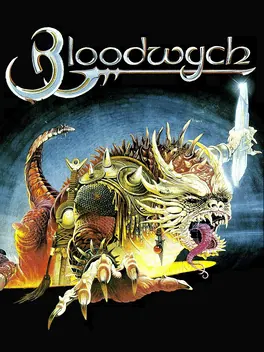
Bloodwych
The land of Trazere was once ruled by the powerful and benevolent organization of mages known as Bloodwych. Governed by the Grand Dragon, the Bloodwych supervised over the balance in the land, protecting it from evil and driving it to prosperity. However, the second-in-command of Bloodwych, named Zendick, turned against his group, banished his opponents to the astral plane, and began working on a mad plan - summon the ultimate evil, the Lord of Entropy. The player controls the champion of Trazere, whose ultimate goal is to stop Zendick and restore peace in the country. Bloodwych is an RPG in the style of Dungeon Master and Eye of the Beholder, being a 3D first-person maze-like game. This game's distinguishing feature is the two-player split screen support, allowing simultaneous playing on one computer. Each player controls a party of four characters. The four basic classes are warrior, mage, adventurer, and thief; however, each class also has sub-classes, which are represented by four different colors. These colors come into play also when the characters learn and combine spells.
Knight Lore
Although the third game in the Sabreman series, it was the first completed and withheld due to fears that sales of Sabre Wulf would be affected. The player, as Sabreman, has forty days to collect objects throughout a castle and brew a cure to his werewolf curse. He turns into a werewolf at night, as indicated by an onscreen timer, and returns to human form during the day. Each room is depicted in monochrome on its own screen and consists of blocks to climb and obstacles to avoid while the player solves puzzles and retrieves items for the cure.
Wizball
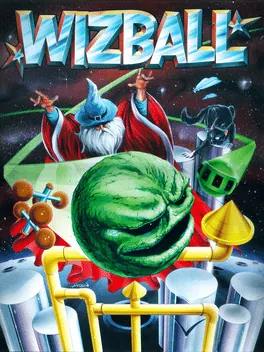
Wizball is a scrolling shooter in similar vein to Gradius with an additional collection dynamic. It is a horizontally scrolling game taking place over eight levels, which involves navigating around a landscape and shooting at sprites. However, the aim of the game is to collect droplets of coloured paint to colour the level. Each level starts off as monochromatic, drawn in three shades of grey, and needs three colours (red, blue, and green) to be collected to complete it. The player, a wizard who has taken the form of a green ball, can navigate between the levels through portals. At first the wizard only has access to the first three levels, but completing levels gains access to further levels. Each level has bouncing spheres of a different colours, and shooting them releases droplets, which may be collected. At the same time, each level needs a different colour to be added, which can be composed by collecting sufficient quantities of the correct colours. On later levels, the spheres of paint start shooting bullets, further adding to the challenge. The wizard himself is not capable of collecting paint droplets, and is initially capable of very limited movement, bouncing up and down at a fixed rate, with the player only controlling a speed of rotation, and thus how fast it will move horizontally after next touching the ground. Collecting green pearls (which appear when some sprites have been shot) gives the player tokens which can be used to "buy" enhancements, such as greater control over movement and improved firepower, and also a companion known as Catellite. Catellite (ostensibly the wizard's cat) is also spherical in form. It normally follows the wizard, but it can also be moved independently by holding down the fire button whilst moving the joystick (which also renders the wizard uncontrollable). Only Catellite is capable of collecting paint droplets; the player has to use it to do so. In the two-player mode, Catellite is controlled by the second player. As well as droplets of colours, sometimes droplets of other colours also appear, having various effects. These include: Light blue - causes a "filth raid", where a wave of fast-moving enemies appear, shooting bullets at the player. Grey - changes Catellite into an "Indestructacat", making it invulnerable to enemies. White - gives an extra life. Purple - changes Catellite into a "mutant cat", causing it to disobey the player's controls. Black - causes "freaky bits", turning most of the scenery black.
Star Wars: Return of the Jedi
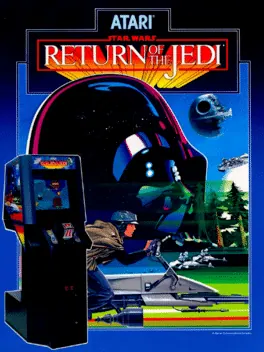
The Return of the Jedi completes the Trilogy of games based on the Star Wars films. Each one is a conversion of the Arcade game and Return of the Jedi picks up the action of the movie where the rebel forces begin their attack against the Imperial Death Star. In the first lever you control Princess Leia on her Speederbike through the forest of Endor to safety of the Ewok village. You leave Leia there and go to another part of the forest to control Chewbacca's Scout Walker. There, Hans Solo is waiting to deactivate the shields protecting the Death Star. On the second and third levels, you control Chewbacca and Lando Calrissian as he flies the Millennium Falcon. Lando flies close to the Death Star fighting off a mighty attack from the T.I.E. fighters. The Millennium Falcon enters the Death Star and travels down a dangerous tube towards the central reactor. Blast the reactor and then turnaround to get away from the Death Star as it blows up.
B.C.'s Quest for Tires
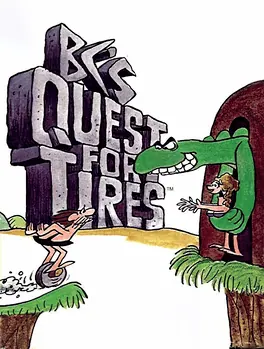
Cute Chick is in trouble! She is being held captive by the dinosaur, and it is up to Thor to ride his trusty wheel to the rescue. There are many obstacles in the way which Thor will need to jump and duck, including rocks, trees, rivers, lava pits, cliffs, and of course Fat Broad. When you duck, the character bounces up and down, so don't duck too soon. BC's Quest For Tires is a side scrolling action game resembling Moon Patrol in some ways, featuring characters from the comic strip BC.
F-15 Strike Eagle
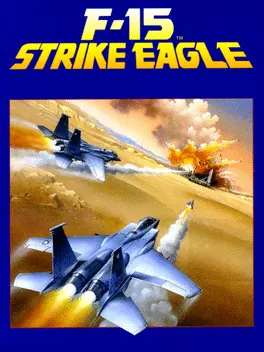
F-15 Strike Eagle is an F-15 Strike Eagle combat flight simulator first released in 1985 by MicroProse. It is the first in the F-15 Strike Eagle series comprising also the sequels F-15 Strike Eagle II and F-15 Strike Eagle III.
Hard Drivin'
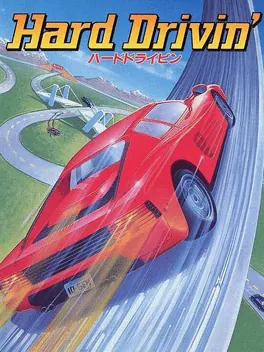
Hard Drivin' is a 3D arcade hit from Atari Games. You are in control of a high-performance sports car. Your objective is to race around the course as fast as possible and hit as many checkpoints as possible. If you hit a checkpoint you gain extra time to go farther. You will see traffic on the road both in your direction and coming down the opposite direction, so be careful when you pass... The course has two sections: speed track, and stunt track. Speed track is longer, but you can usually achieve higher speeds. Stunt track requires you to perform several stunts such as jumping bridges, driving through a loop, and so on. Crashing the car has no serious consequences and indeed shows a replay of your crash from a cinematic angle. Admire your crash head-on into the cement truck, or clipping the minivan, or flying off the bridge in the wrong angle... You lose several seconds as your car is "reset" and you get up to speed again. The home conversions retain most of the then-advanced 3D graphics but lack the force-feedback that was in the arcade version.
Gunship
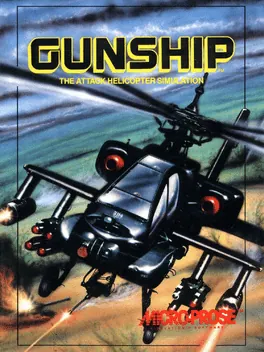
After selection of region, style, and enemies, the pilot is assigned a primary mission and a secondary mission. These could include such objectives as "Destroy enemy headquarters" or "Support friendly troops" (i.e. destroy targets near friendly forces). The latter would be an easier mission, because the battle would be fought closer to friendly lines.
Crack Down
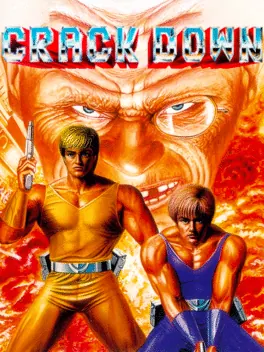
Ben and Andy, the two top Special Service agents have accepted a very dangerous assignment – the elimination of Mr.K and his Artificial Life System. Mr. K plans to rid the earth of human life forms using the killer robots he’s created, and no one but Ben and Andy can stop him!
Captain Blood
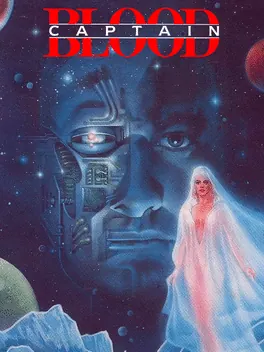
Five clones scattered throughout the galaxy, draining your life force. You must find and assimilate them before the ship's auto-bionic functions take over completely... and render you inhuman. Death-defying flights through hyperspace and dangerous terrain lead to strange worlds with alien inhabitants: Migrax, Croolis-Ulv, and the beautiful and beguiling Torka. They have the information you need to find and destroy your clones- if you're clever enough to get it.
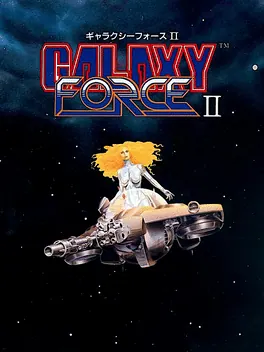
Galaxy Force II
The peaceful and prosperous solar system Junos was located at the end of the Milky Way. Those who called its five planets home had no idea what was about to happen... Halcyon, ruler of the Fourth Empire, had Junos marked as its final target in the galactic massacre, and had sent the bulk of his attacking force in with a single purpose – the elimination of all life forms in the system, and the construction of a gigantic fortress on each of the five planets from which to rule the galaxy. Galaxy Force II is not a true sequel to the orginal game but a an enhanced version of the original. It was released roughly two months after the release of the first part thus making it obsolete.
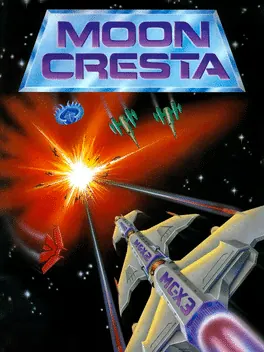
Moon Cresta
Moon Cresta is an arcade game released in 1980 by Nichibutsu. A moving starfield gives the impression of vertical scrolling, but the game is a fixed shooter in the vein of Namco's Galaxian. Incentive Software published a version of this arcade game for many 8-bit home computers of the time. Dempa also released a port of both Moon Cresta and Terra Cresta for the X68000. It was also released on the Wii Virtual Console in Japan on March 9, 2010 and PlayStation 4 (Arcade Archives) in 2014.