
Jogos para ZX Spectrum
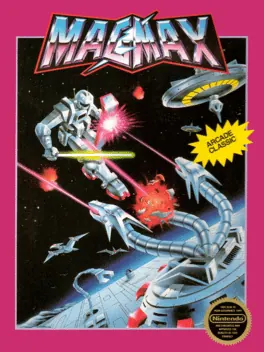
MagMax
A horizontal scrolling shooter, players control the title hover ship in an attempt to completely construct the ship into a giant robot and to destroy any enemies attempting to stop it. The three-headed mechanical dragon found as a boss character in the game, known as Babylon, strongly resembles Mecha-King Ghidorah from the Godzilla franchise.

Fantasy World Dizzy
Dizzy and Daisy strolled through the enchanted forest without a care in the world...but suddenly the Evil King's trolls seized poor Daisy! She was sent to Wizard Weird's Tallest Tower, while Dizzy was dragged away and thrown into the deepest, darkest, dankest, of the King's Dungeons in the bowels of Fantasy World. Dizzy was firghtened! Who knew what fate awaited him...and he still hadn't done this week's homework! But then he remembered that he had a fresh green apple that he had planned to give to his teacher to escape detention, and he cheered up. And there was some bread and water on the table! A cunning plan began to brew in his mind... But Dizzy can't do everything on his own...you must help him!

Chuckie Egg
Chuckie Egg is an action platformer featuring a turn-based multiplayer mode. As Hen-House Harry, the player must collect the twelve eggs positioned in each level, before a countdown timer reaches zero. In addition there are piles of seed which may be collected to increase points and stop the countdown timer for a while. The player starts with five lives, and an extra life is awarded every 10,000 points.
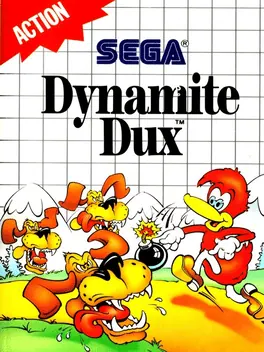
Dynamite Düx
Side-scrolling beat 'em ups in which you must rescue a trapped female friend are nothing unusual. Where this one stands out, however, is the setting of your character as a duck called Bin, and with motion having a clear waddling appearance. The enemies to fight are all from the animal kingdom, but somewhat warped - crocodiles with boxing moves and cows armed with rocket packs for example. Bin has six levels to clear before he can rescue Lucy from Archaca's clutches.
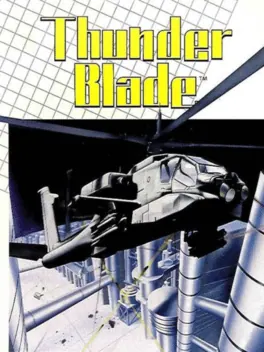
Thunder Blade
A helicopter shoot-'em-up developed by Sega. The Arcade version made use of Sega's 3D super scaler technology to create city environments where the buildings would appear to have depth. The subsequent home versions sadly lacked this feature.
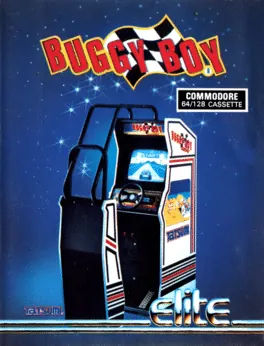
Buggy Boy
Buggy Boy is a race game, but not just an ordinary race game. There are five different routes, offroad, north, east, west, south. The offroad course loops around back to the start, the others are long runs with a distinct beginning and ending. You must complete each leg before the time runs out. Along the way you can pick up all kinds of bonuses. The colored flags are 30 points each, collect all colors in the order as indicated at the top of the screen to get 1000 bonus points. There are several gates the give you 100, 250 or 500 points, and a time gate. Drive through a time gate to collect it, you receive two seconds extra time upon completing a leg. Occasionally there will be a soccer ball on the road, hit it and it will fly away and you get 2000 points. There are bridges and tunnels, be careful not to fall off the bridge into the water or crash into the tunnel wall. There also are obstacles like boulders, logs and fences. If you hit them it will cost you valuable seconds off your leg time. But if you hit a log or small stone just right, the buggy will ride on two wheels until you hit something again.
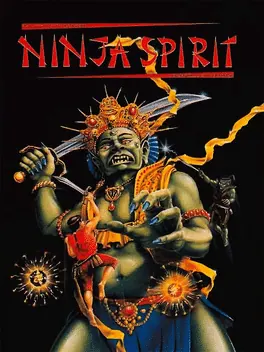
Ninja Spirit
There are a total of seven stages varying from woodlands, wastelands, swamps, temples and cliffs. Each stage begins with the player slashing his way to the end, until he confronts a level boss. The ninja is always armed with the sword Righteous Cloud which can be fluidly used to attack in all directions. Extra weapons include the Swirling Leaf (shurikens), the Bamboo Thunder (bombs), and the Rising Dragon (kusarigama). There are also several powerup items, such as one unleashing multiple ninja ghosts to assist the player.
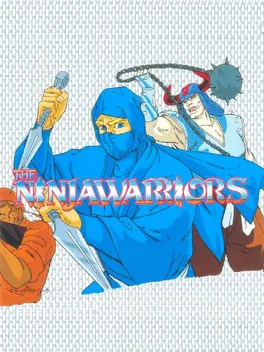
The Ninja Warriors
The Ninja Warriors presents side-scrolling hand-to-hand combat. Players take control of Kunoichi or Ninja and fight wave after wave of Banglar forces across five levels.
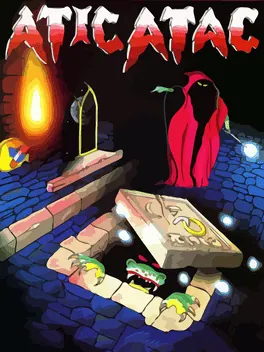
Atic Atac
The game takes place within a castle in which the player must seek out the "Golden Key of ACG" through unlocking doors and avoiding enemies. It was Ultimate's second game to require 48K of RAM; most of their previous games for the Spectrum ran on unexpanded 16K models. It was re released for Xbox One as part of the Rare Replay Collection.
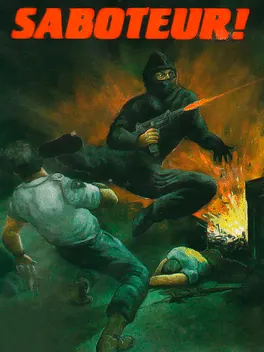
Saboteur!
Saboteur! is the classic retro game hit made by Clive Townsend in 1985 for the ZX Spectrum 8-bit computer. In 1985 Saboteur! received the prestigious award "The Crash Smash" from Crash magazine and was high-rated with a 93% score. Now after 36 years MobileFabric in collaboration with Clive Townsend have prepared the special remastered version of Saboteur! for iOS devices. In the game you'll experience the original mission from 1985 version. Additionally the story will continue with new levels and enemies. Now you'll be able to know more about Saboteur and his dark and secret story.
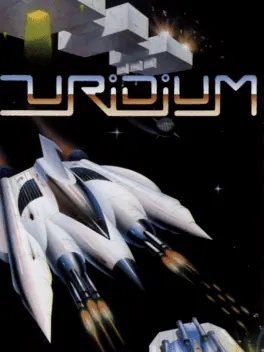
Uridium
Uridium (released on the NES as The Last Starfighter) is a science fiction side-scrolling shoot 'em up originally designed by Andrew Braybrook for the Commodore 64, and later ported to other 8-bit machines. It consists of fifteen levels, each named after a metal element, with the last level being called Uridium (a fictional metallic element, not to be confused with the real metallic element iridium). The manual quotes Robert Orchard, who invented the name as saying "I really thought it existed".
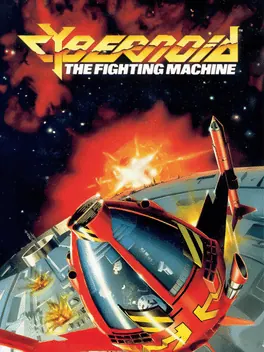
Cybernoid: The Fighting Machine
Cybernoid: The Fighting Machine is a shoot 'em up developed and published in 1987 by Hewson Consultants for the ZX Spectrum, and was then ported to the Amstrad CPC, Atari ST, Commodore 64, NES, and Amiga. It was programmed by Raffaele Cecco. The Sinclair ZX Spectrum and Atari ST versions featured a main theme by Dave Rogers, while the Commodore C64 version (later released on the Wii's Virtual Console service) featured a completely different theme by Jeroen Tel.
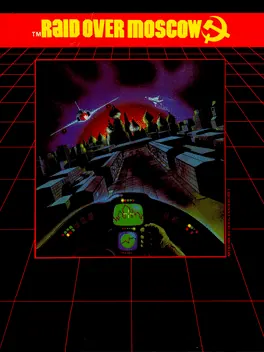
Raid over Moscow
Released during the Cold War era, Raid Over Moscow is an action game in which the player (an American space pilot) has to stop three Soviet nuclear attacks on North America, then fight his way into and destroy a nuclear facility located in Moscow's Kremlin. According to the game's storyline, the United States is unable to respond to the attack directly due to the dismantlement of its nuclear arsenal.
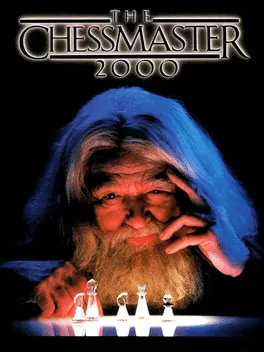
The Chessmaster 2000
The Chessmaster 2000 is the most powerful computer chess program in the world today and the friendliest! It draws from a mammoth opening library of over 71,000 moves - the world's largest. In mid-game, it displays amazing combinations of classical and modern strategy. At end game it calls further upon the world's newest and finest computer chess algorithm to mount virtuoso tactics.
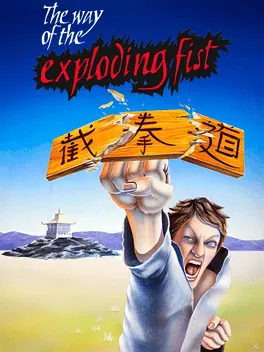
The Way of the Exploding Fist
Discover Kung-Fu: The Way of the Exploding Fist (also known as Way of the Exploding Fist, The Way of the Exploding Fist), an excellent game of 1985 runnable on Amstrad CPC system. With side view, fixed / flip-screen perspective, the publisher Melbourne House had wonderful ideas around fighting, martial arts.
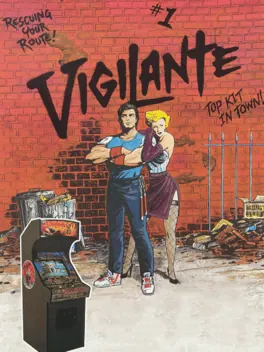
Vigilante
On the baddest streets of the city they know your name. You are lean and mean... the karate master they call the Vigilante! Your turf was left alone. Your friends and neighbors lived in peace. Until the Rogue gang got too big for their britches. You chilled, hoping things wouldn't get too rough. No such luck. They've taken your girlfriend Maria, and there's only one thing you can do... get her back... anyway you can! You have fists of steel! Legs like pistons! And courage that just won't quit! You will need all three because the Rogues are waiting with knives, guns and a whole bunch of nasty punks. And you'll have to fight fast. If the Rogues make it back to their headquarters before you rescue Maria, all hope will be lost. But catch them first and you'll fight the leader of the Rogues. Win Maria... and your turf... will remain safe. Feel any pressure? No way. You're the Vigilante!

Dragonfire
Dragons have driven the Royal Court from the Castle "O we are lost, lost" laments the King. "Without our vast treasures we cannot raise an army 'gainst these accursed dragons. Our Kingdom must now languish under lizards!" "Nay, not so, my liege!" replied the young Prince. "None knows that Castle, those many bridges and storerooms, better than I. Give me leave and I shall loot those lizards of their plunder and restore my lord to his birthright." "Brave boy," said the King, fully pleased. "But," he added darkly, "beware dread dragonfire!"
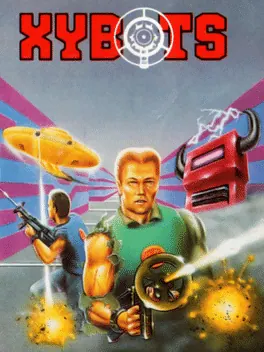
Xybots
Xybots is a sci-fi shooter with pseudo-3D environments explored from a third-person perspective. The game can be played by one or two players; the two-player mode takes place on a split screen. The hero(es) must move through a series of Gauntlet-style underground mazes, killing the bad guys and collecting health and other bonuses from flying saucers. It's designed to be played co-operatively, although bullets from one player can harm the other.
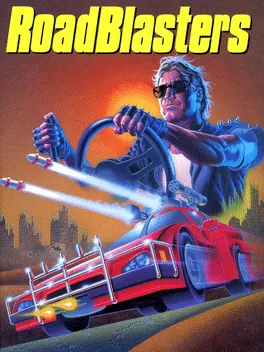
RoadBlasters
The objective of the game is to complete all 50 rallies without running out of fuel. There is no limit to how many vehicles a player can receive to complete a rally, as long as they have fuel. However, the destruction of the vehicle will subtract a small amount from the player's fuel tank. In the arcade, Genesis and Lynx versions, players could start the game at a higher rally, with additional opportunities to jump several levels from time to time. Players can continue their game from where they left off; however, the player has only one chance to complete the 50th and final rally. For completing the final rally the player gets one million points as a bonus. Players can get fuel in four ways: green globes, red globes, a checkpoint, and the rally point.
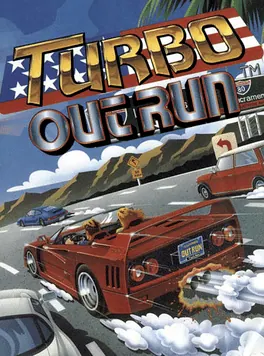
Turbo OutRun
The sequel to OutRun features similar basic gameplay to the original, with the action viewed from behind the car, and the challenge being to complete each stage within the time limit. Contact can cause the car to spin, slow down or even flip; in each case you will lose time. There are 16 stages set across the US, gradually moving from east to west, all depicted differently visually. After every 4 levels, you go into a shop screen, with a choice of upgrades. As the title implies, you now have a turbo booster installed, which speeds up the car, although over-use can cause the engine to overheat, and it is not recharged until each shop section. You have 5 continues, and failure to complete the course within the time limit costs you one.
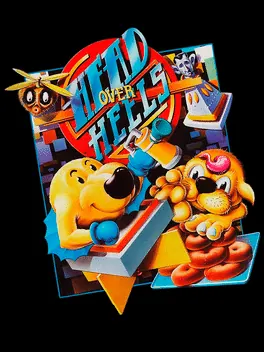
Head Over Heels
Two distinct characters called Mr Head and Mr Heels are played in this arcade adventure. They are separated at the shoulders but capable of joining together to maximize their abilities in some situations (but reduce them in others, so they can be split again). The game is presented from an isometric perspective, and presents the characters with a number of puzzles involving switches, jumps and climbs. The levels are 3 dimensional, and the characters must collect crowns as they progress. Objects can be picked up and manipulated as necessary.
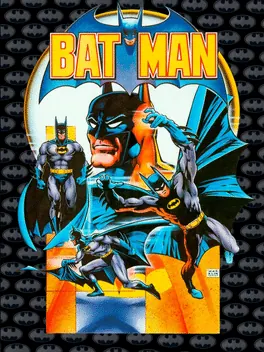
Batman
Batman is a 1986 3D isometric action-adventure game by Ocean Software for the Amstrad PCW, Amstrad CPC, ZX Spectrum, and MSX and MSX2 microcomputers, and the first Batman game ever developed. Upon release, the game received favorable reviews, and received a sequel two years later, titled Batman: The Caped Crusader.
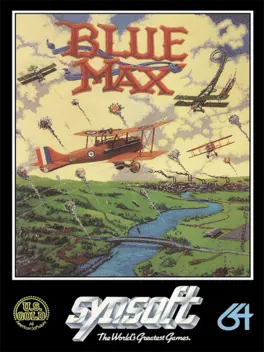
Blue Max
Blue Max is a video game developed and published by Synapse Software, originally released for the Commodore 64 and Atari 8-bit computers in 1983. In 1984 it was ported to the ZX Spectrum by U.S. Gold. in 1987 Atari Corp. published it in cartridge form for the then-new Atari XEGS. The player controls a Sopwith Camel biplane during World War I, attempting to shoot down enemy planes and bomb targets on the diagonally scrolling terrain. It has strong similarities to the arcade game Zaxxon. The game is named after the medal Pour le Mérite, informally known as Blue Max. Its theme song is "Rule, Britannia!". In 1984, Synapse released a sequel called Blue Max 2001 with a futuristic sci-fi setting, but otherwise similar in style to the original game.
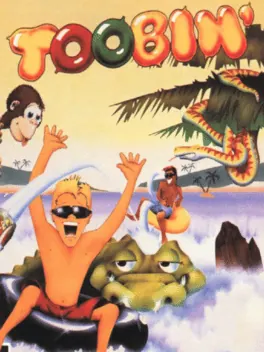
Toobin'
Toobin' involves Biff and Jet racing their way down the rapids of a river, riding on tires. You rotate your tyre left or right, and drift as the current sends you, making sure to avoid the banks of the river, and the dividing lines in the middle. Hazards include crocodiles, stray logs and branches, and fishermen - you are armed with a limited supply of tin cans to take care of these. There are gates to slide through on the way down - these give you a points bonus. Each level has a strict time limit to adhere to, although there's a kickin' party at the end if you succeed.
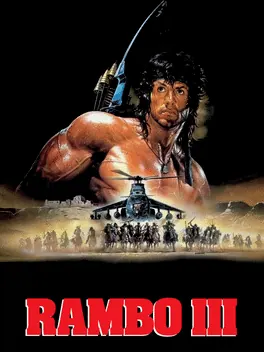
Rambo III
Rambo III is a series of video games based on the film of the same name. Like in the film, their main plots center on former Vietnam-era Green Beret John Rambo being recalled up to duty one last time to rescue his former commander, Colonel Sam Trautman, who was captured during a covert operation mission in Soviet Union-controlled Afghanistan. The console versions are developed and published by Sega, the PC DOS version was developed by Ocean and published by Taito and Ocean developed and published the rest (Atari ST, Amiga, Spectrum, C64, Amstrad). Taito also released an arcade game based on the film.
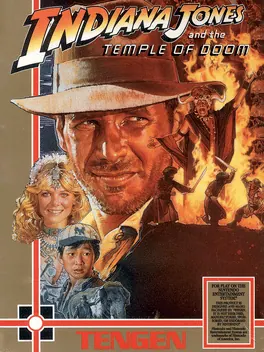
Indiana Jones and the Temple of Doom
As Indy, the player must complete several cycles of the following three types of levels: 1.Mine level: Whip your way through a mine in order to free children that are held captive. Use your whip to swing across chasms, climb ladders, ride along conveyor belts and defend yourself against attacks from Thuggee guards, bats, snakes and the fireball-throwing Mola ram. Escape with the mine cart after you've freed all children. 2.Mine cart level: Pick the right route through a network of tracks while riding in a mine cart. Avoid potholes, broken tracks & guards in carts and safely reach the end of the track. 3.Temple level: Make your way to the altar and grab the Sankara stone while Mola Ram, bats and Thuggee guards attack you. Watch out for that lava.
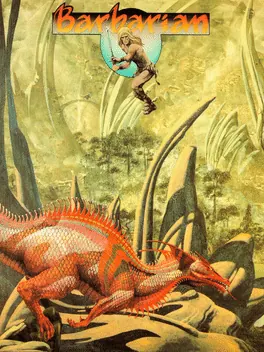
Barbarian
Welcome to the world of Barbarian. In this world you control our hero "Hegor". Once the game has started you will see him standing in the marsh. Using the mouse, jouystick or keyboard (or all three simultaneously) you issue commands that control his actions. Thus enabling you to explore the world of Durgan. You should always remember that Barbarian features context sensitive animation which allows the same commands to do different things depending on the situation Hegor is involved in. In order to complete the game you must locate and destroy the crystal which is the source of the evil power of Necron. Once the crystal has been destroyed the volcano in which Durgan is located will start to erupt making it imperative that you reach the surface again before it blows.
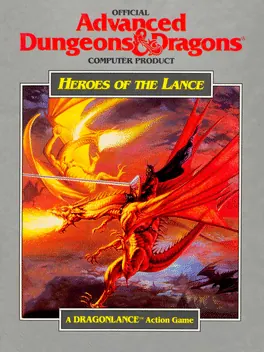
Advanced Dungeons & Dragons: Heroes of the Lance
Heroes of the Lance is a side-scrolling action game. The game used actual Dungeons & Dragons statistics, with statistics for the characters exactly as they were in the rule books. Eight heroes from the Dragonlance novels series must be assembled for the quest, and only one is visible on the screen at a time; when one on-screen hero dies, the next in line appears.
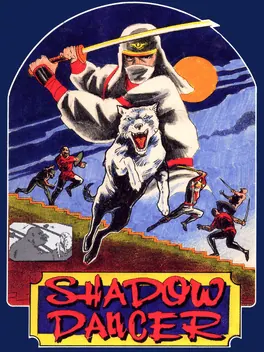
Shadow Dancer
Shadow Dancer is an action platform game developed by Sega for the Sega System 18 arcade system in 1989. A port of the game was published by Sega for the Sega Master System, and ports to several home computers were published by U.S. Gold. It was the first sequel to Shinobi, alongside The Revenge of Shinobi. A similar game titled Shadow Dancer: The Secret of Shinobi was released for the Sega Mega Drive, which features an entirely different set of stages. A terrorist group is planting numerous time bombs throughout the city. The player, a ninja master accompanied by a canine partner, sets out on four missions to dismantle the bombs and destroy the criminal syndicate behind these acts.
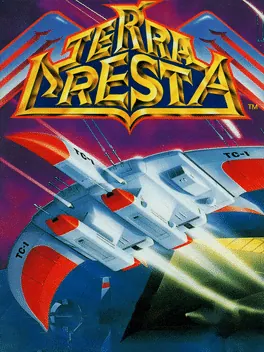
Terra Cresta
Terra Cresta is a vertically scrolling shoot 'em up. The player controls a ship, initially with limited firepower. Numbered pods appear containing further parts of the ship that will increase firepower. These additional parts combine with the player's ship to increase its firepower, and the final module transforms it into a fiery phoenix which is invulnerable for a certain period of time. Once the ship has multiple sections, the player may also split it, allowing it to fire in multiple directions. The player begins with three lives and it is possible to play with either one or two players.

World Games
World Games is an Olympics-style sports game with arcade-oriented gameplay. The events players can compete in include: •Barrel jumping •Bull riding •Caber toss •Cliff diving •Log rolling •Platform diving •Pole vault •Skiing •Sumo wrestling •Weightlifting
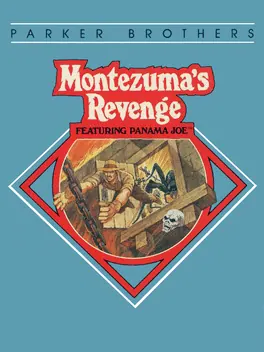
Montezuma's Revenge featuring Panama Joe
PANAMA JOE, That’s what they call him ‘round these parts; though no one knows his real name or where he comes from. But one thing’s for sure, PANAMA JOE’s a daredevil from the word “go!” No risk’s too great if the reward’s large enough. Winning. That’s what’s the most important to him. And more times than not, that’s exactly what he does. Because he’s tough, clever – resourceful. And sometimes, downright pig-headed! Though occasionally (ah-hum), he’s been known to get in over his head. Luckily, he’s got a knack for getting himself out of hot water as quickly as he gets into it! Let’s hope MONTEZUMA’S REVENGE is one of those times.
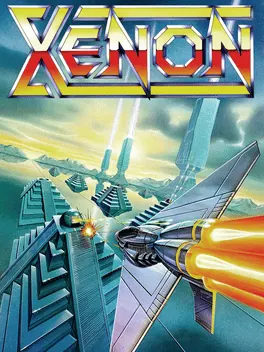
Xenon
Xenon is a 1988 vertical scrolling shooter computer game, developed by The Bitmap Brothers and published by Melbourne House which was then owned by Mastertronic. Xenon was followed in 1989 by Xenon 2: Megablast. The player assumes the role of Darrian, a future space pilot called into action by a mayday report from his superior on a nebula space station. As of late, the colonies of mankind have been under attack by mysterious and violent aliens called the Xenites and it is finally time for Darrian to engage them. Unlike most scrolling shooters, the player can move in any direction instead of straight up. The player craft has two modes, a flying plane and a ground tank. The transition between crafts can be initiated at almost any time during play (except during the mid- and end-of-level boss sections, as well as certain levels where a certain mode is forced), and the mode chosen depends on the nature of the threat the player faces. Destroying some enemies released power-ups the player could catch to enhance their ship.
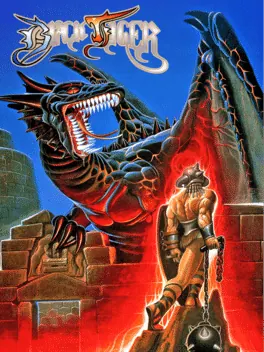
Black Tiger
Black Tiger, known in Japan as Black Dragon, is a 1987 action game released for the arcades by Capcom. A barbarian hero jumps and fights his way through a variety of colourful, enemy-packed levels. The sprawling, eight-way scrolling, two-dimensional levels are packed with hidden bonuses to encourage and reward exploration. Though a percentage of these bonuses consist of dubious and often self-evident "advice", most come in the form of "Zenny coins", currency that allows the player to buy such items as an upgrade to their weapons and armour, keys for treasure chests, and anti-poisoning potions. Special items that reveal coins, upgraded armour, full vitality, extra lives, extra time, or simply bonus points may be found by attacking certain walls. The player's vitality bar will also increase up to three times as a reward for reaching score benchmarks.
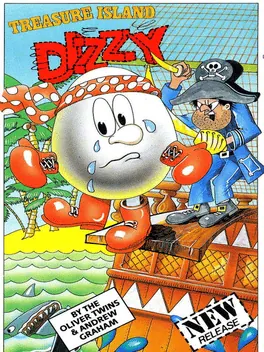
Treasure Island Dizzy
Treasure Island Dizzy is a computer puzzle game published in 1988. Treasure Island Dizzy was the second game in the Dizzy series, and is the sequel to Dizzy - The Ultimate Cartoon Adventure.
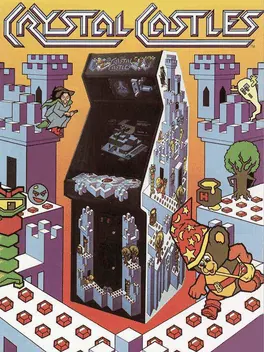
Crystal Castles
Crystal Castles is an arcade game released by Atari, Inc. in 1983. The player controls a cartoon bear by the name of Bentley Bear, who has to collect gems located throughout trimetric-projected rendered castles while avoiding enemies out to get him as well as the gems. Crystal Castles is notable for being one of the first arcade action games with an actual ending, whereas most games of the time either continued indefinitely, ended in what was termed a "kill screen" or simply just restarted from the first level, and to contain advance warp zones.