
Jogos para Arcade
Strider
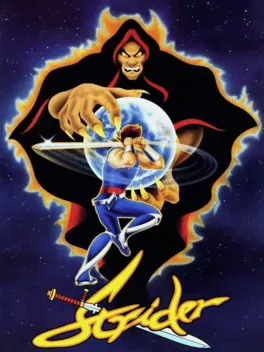
The controls of Strider consist of an eight-way joystick and two action buttons for attacking and jumping. The player controls Hiryu himself, whose main weapon is a tonfa-like plasma sword known as "Cypher". He can perform numerous acrobatic feats depending on the joystick/button combination used. Pressing the jump button while Hiryu is standing still will cause him to do a regular vertical jump, while pressing the jump button while pushing the joystick left or right will enable him to do a cartwheel jump. Hiryu can also slide under or through certain obstacles and enemies by first crouching down and then pressing the jump button. As well as his sliding move, both jumps can also be used to destroy weaker opponents. Hiryu is able to latch onto certain platforms, and climb across walls and ceilings using a metallic hook. While running down a sloped surface, Hiryu can gain enough momentum to allow him to do a longer cartwheel jump than usual. Numerous power-ups can be obtained from item boxes carried by certain enemies. These includes an extension to Hiryu's attack range that lasts for one hundred slashes, two types of health aids (represented by the kanji used to write Hiryu's name: 飛 and 飛竜), a max health extension (represented by the kanji 竜, the second character in Hiryu's name), an extra life, and a power-up that not only makes Hiryu invulnerable to attack but also increases his own attack abilities via shadow images of himself for 15 seconds.[3] Hiryu can also summon robotic companions known collectively as "options" that help him fight enemies. These consist of up to two mushroom-like droids, a saber-toothed tiger and a hawk, known individually as Option A, B and C respectively. The game has five stages: the Kazakh Soviet Socialist Republic (called "St. Petersburg" during the arcade game's attract sequence), the Siberian Wilderness, the Aerial Battleship Balrog (געלראב), the Amazonian Jungle, and the Grandmaster's lair itself, the Third Moon. Each of the stages is divided into a number of smaller sections, each with their own time limit and checkpoint location. The player has a three-point health gauge (which can be increased to five points with the health extensions. Hiryu will lose a life when either his health gauge is fully depleted, by moving him off the screen entirely (like falling into a bottomless pit) or when the game's timer reaches zero. It's Game Over when all of Hiryu's lives are lost, but the player can be given the opportunity to continue.
Buster Bros.
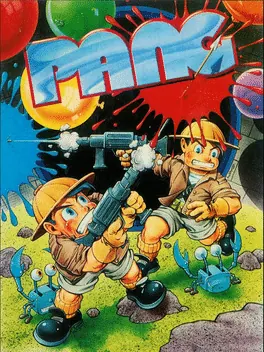
Pang, originally released in Japan as Pomping World and in North America as Buster Bros., is a 1989 arcade action game developed by Mitchell Corporation. Its core gameplay is similar to the 1983 Japanese MSX game Cannon Ball, also released that year for the ZX Spectrum as Bubble Buster. Players embark on a round-the-world quest to destroy bouncing balloons that are threatening landmarks and cities across the globe. The game features 50 stages set in 17 locations, including Mt. Fuji, Mt. Keirin, the Temple of the Emerald Buddha, Angkor Wat, Ayers Rock, the Taj Mahal, Leningrad, Paris, London, Barcelona, Athens, Egypt, Kenya, New York, Maya ruins, Antarctica, and Easter Island. Later versions added additional locations. Each stage includes a background depicting local landmarks, along with a unique arrangement of blocks, some destructible, some permanent, and some hidden with bonus items. Stages begin with balloons of various sizes; the largest balloons split into smaller ones three times before disappearing after the fourth hit. Players start with a single harpoon, though special weapons can drop when balloons are popped. At certain points, food items worth bonus points may also appear. Contact with any balloon results in the loss of a life. In two-player mode, if both players touch a balloon at the same time, only Player 1 loses a life. Similarly, when both reach a bonus or weapon simultaneously, only Player 1 collects it. Players begin with three to five lives depending on dip switch settings, with extra lives awarded upon reaching specific score thresholds. A stage is cleared when all balloons are destroyed, and the game concludes after all stages are completed, ending with the heroes driving their jeep into the sunset on an Easter Island beach.
Virtua Cop
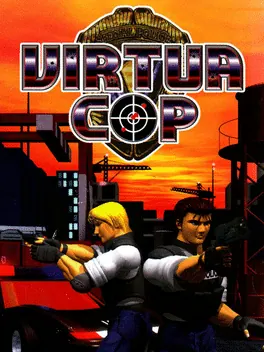
Players assume the role of police officers in a first-person perspective and use a light gun to shoot criminals and advance through the game, with penalties for shooting civilians. The players could also shoot powerups that grants him a weapon or a life. The weapon is lost if the player is hit, but not if he shoots a civilian. Virtua Cop was notable for its use of polygonal graphics, which were subsequently used in both House of the Dead and Time Crisis, instead of the two dimensional sprites that were popular for previous games in the same genre. It is also notable for being one of the first games to allow the player to shoot through glass. Its name derived from this graphical style, which was previously used in Virtua Fighter, Virtua Striker and Virtua Racing.
Super Hang-On
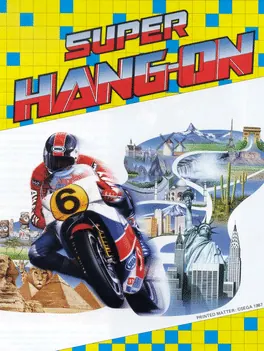
Super Hang-On is a 1987 motorcycle racing arcade game by Sega, and the sequel to the acclaimed Hang-On. A version of this game, in the full simulated-motorcycle cabinet used by the original Hang-On, was released in 1991 as Limited Edition Hang-On. It was also released for the Sega Mega Drive, Commodore Amiga, Atari ST, Macintosh, ZX Spectrum, Amstrad CPC and Commodore 64 in 1989. Super Hang-On was also released for the Sharp X68000 computer in Japan. The game also appeared on several Mega Drive compilations, namely Mega Games I (bundled with the console as Mega Drive Magnum Set), and Sega Genesis Six Pack. The arcade version was released on the Wii Virtual Console in Japan on September 14, 2010 and later for the other regions on May 3, 2012. A stereoscopic 3D version was released for the Nintendo 3DS eShop in Japan on March 27, 2013 and in North America and Europe on November 28, 2013.
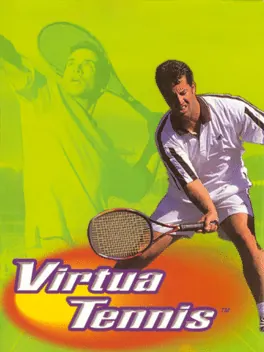
Virtua Tennis
Virtua Tennis is a tennis game in which it is possible to control one of eight licensed players and uncover the secret stars. As well as the traditional arcade mode, you can play in the exhibition mode, with four-player action via doubles play. Once you've mastered those modes, take on the world in the world circuit mode, with unique training games, different challenges and shops to buy clothing, equipment, stages and playing partners.
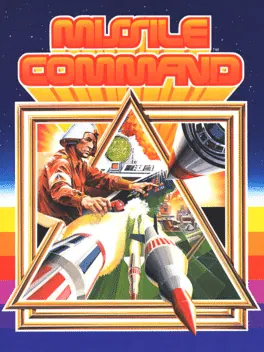
Missile Command
As a regional commander of three anti-missile batteries, the player must defend six cities in their zone from being destroyed. The player's six cities are being attacked by an endless hail of ballistic missiles, some of them even splitting like multiple independently targetable reentry vehicles (MIRVs). New weapons are introduced in later levels: smart bombs that can evade a less than perfectly targeted missile, and bomber planes and satellites that fly across the screen and launch missiles of their own.
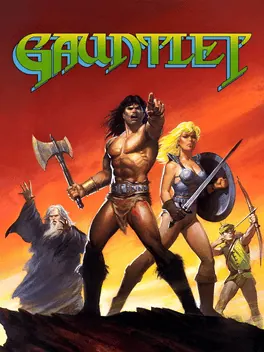
Gauntlet
The players, up to four at once in the arcade version, select among four playable fantasy-based characters; Thor the Warrior, Merlin the Wizard, Thyra the Valkyrie, or Questor the Elf. Each character has his or her own unique strength and weaknesses. For example, the Warrior is strongest in hand-to-hand combat, the Wizard has the most powerful magic, the Valkyrie has the best armour and the Elf is the fastest in movement. Upon selecting a playable character, the gameplay is set within a series of top-down, third-person perspective mazes where the object is to find and touch the designated exit in every level. An assortment of special items can be located in each level that increase player's character's health, unlock doors, gain more points and magical potions that can destroy all of the enemies on screen. The enemies are an assortment of fantasy-based monsters, including ghosts, grunts, demons, lobbers, sorcerers and thieves. Each enters the level through specific generators, which can be destroyed. While there are no bosses in the game, the most dangerous enemy is "Death", who can not only drain a character's health, but is difficult to destroy. As the game progresses, higher levels of skill are needed to reach the exit, with success often depending on the willingness of the players to cooperate by sharing food and luring monsters into places where they can be engaged and slaughtered more conveniently. While contact with enemies reduces the player's health, it also slowly drains on its own, thus creating a time limit. When a character's health reaches zero, that character dies. The character can be revived in place with full health by spending a game credit (i.e. inserting a coin) within a certain short time window after it died. This allows even the least proficient players to keep playing indefinitely, if they are willing to keep inserting coins.
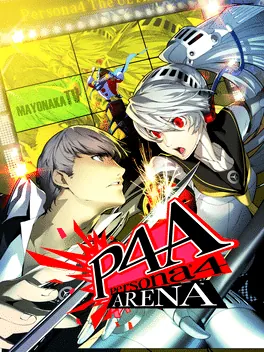
Persona 4 Arena
Persona 4 Arena is a fighting video game developed for Japanese arcades and later ported to home consoles. Based on Atlus' Persona role-playing game series, Arena serves as a direct sequel to Persona 4 and features characters from its predecessor, Persona 3. Atlus wrote the story to the game while Arc System Works handled the gameplay.
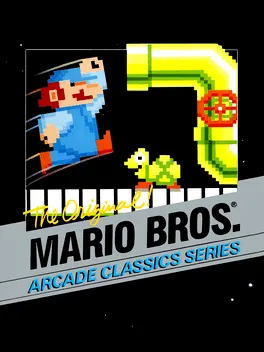
Mario Bros.
The first port of Mario Bros. was developed by Nintendo for the Famicom and later released in American under the Arcade Classics series. It follows most of the features of the arcade game, and adds a difficulty setting. This version would be the most re-released version in future consoles.
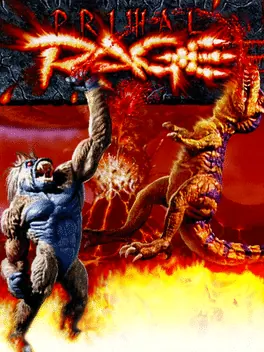
Primal Rage
Primal Rage is a one-on-one fighting game featuring dinosaurs and giant apes as the fighters. The graphics are done with digitized stop-motion animation. Gameplay is similar to Mortal Kombat in that it is viewed from a side perspective, and features deadly finishing moves at the end of the match.
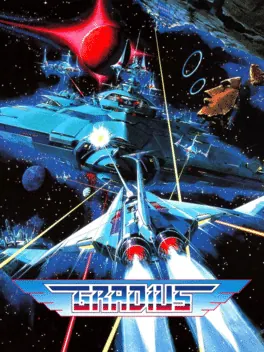
Gradius
One of the defining characteristics of the Gradius series is the use of a "power meter." The power meter is powered by a power-up item, whose purpose, when collected, is to move a highlight to the next power-up on the power meter. When a power-up that the player wants becomes highlighted, he or she may activate it, also causing the highlight to reset.
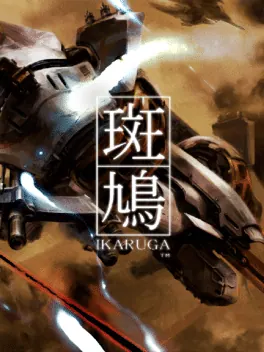
Ikaruga
In this vertical scrolling spaceship shooter, you control a ship that can change its polarity at will. As blue/white, the ship can easily destroy red/black enemies, and vice versa. Bullets of your polarity can be collected to fuel your energy gauge, but those opposite will kill you. Destroying an enemy ship causes them to fire revenge bullets which can be absorbed and fired back by the player. Different difficulties exist to change exactly how you interact with polarized points, or how they appear. It is the spiritual successor to Radiant Silvergun, featuring similar level and boss design, as well as it's buddhism inspired themes and aesthetics. Both are directed by Hiroshi Iuchi, who also composed Ikaruga's soundtrack.
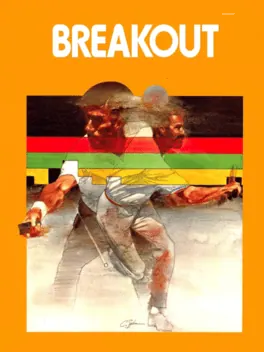
Breakout
The objective of the game is to destroy a multilayered wall of bricks at the top the screen. Upon hitting the bricks with a ball which bounces off of a paddle at the bottom of the screen the bricks are destroyed. If the player misses the ball with his horizontally moveable paddle the ball is lost. After loosing five balls the game is over.
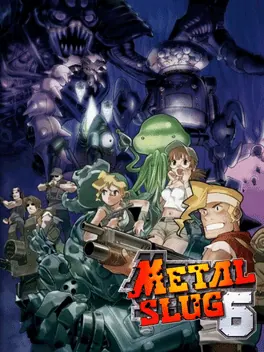
Metal Slug 6
Metal Slug 6 returns to the Rebel-Martian alliance featured in Metal Slugs 2, X, and 3, but on a much broader scale. Rather than repeating the previous games' events of the Martians breaking the alliance and the Rebels assisting the player in turn, the player now teams up with the Rebels and Martians to combat an even greater threat. Metal Slug 6 introduces a new play mechanic dubbed the 'Weapon Stock System'. Two gun power-ups can now be carried at the same time. Players can switch between the two weapons, or simply put them both away in favor of the default weapon. When obtaining a new weapon power-up, it will automatically occupy the inactive slot, or, if both are holstered, replace the less recent weapon of the two. The score is now multiplied by powers of 2. The faster the speed at which enemies are killed, the higher the power, as a meter at the bottom of the screen shows. When it says "Max" enemies and destructible objects will drop coins for an extra high score.
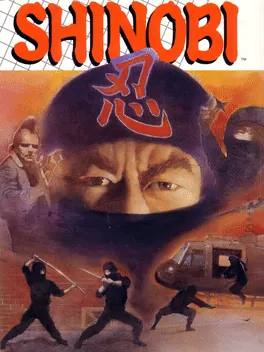
Shinobi
The five missions in the game are each three or four stages long. Several hostages are being held in each stage; Joe must rescue all of them before he is allowed to finish the stage. The last stage in each mission has no hostages, but instead features a powerful boss character whom Joe must defeat. After completing each of the first four missions the player is taken to a bonus stage, where he can earn an extra life if he is able to kill all of the ninjas leaping towards him. Completing the fifth mission ends the game. Also, once the fifth mission begins, continues are no longer allowed; the player has to finish the game with however many lives he has left at that point. If the player earns a place on the high score board, the number of credits it took him to get that score is displayed along with his score. Joe's standard weapons are an unlimited supply of shuriken, along with punches and kicks when attacking at close range. One hostage per stage gives him a power-up. When powered-up, his throwing stars are replaced by a gun that fires large, explosive bullets, and his close-range attack becomes a katana slash. Joe can also perform "ninja magic," which may be used only once per stage and kills (or damages, in the case of bosses) all enemies on the screen. The game also allows the enemies to hide behind boxes or use shields to block Musashi's shurikens.[4] Joe can be killed with one hit, provided he is hit by a projectile or melee attack, but if he does not find himself in those situations, the player can touch regular enemies and just be pushed back without being damaged. Since most enemies appear in the same place on each level, it is possible to master the game by memorizing their locations and devising patterns to defeat them. At the end of each stage, the player receives score bonuses based on performance. Completing the stage without using ninja magic or without using any throwing stars or bullets earns the player a point bonus. The player has three minutes to complete each stage; remaining time at the end of the stage is also converted to bonus points and added to the player's score.

Doodle Jump
In Doodle Jump, the aim is to guide a four-legged animal called "The Doodler" up a never-ending series of platforms without falling.
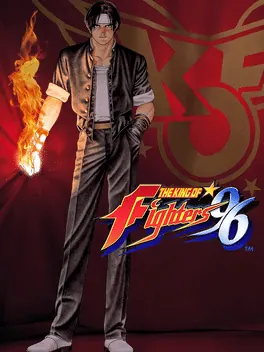
The King of Fighters '96
The King of Fighters '96 is a 1996 fighting game. It is the third game in The King of Fighters series, following The King of Fighters '95. SNK's flagship series returns for another year. Many of the changes in this year's KOF release come in the form of improved graphics, sound effects, music and totally redone character sprites. The gameplay of the system has been altered with the addition of "Rush" multi-hit combos and new moves for practically every character. The storyline of the series receives heavy focus in this release with the Orochi Saga swinging into high-gear. The King of Fighters '96 has 27 regular characters plus 2 boss characters (who can be unlocked with the use of a code). Newcomers to the tournament include Mr. Big from the Art of Fighting series, the bosses from Fatal Fury (Wolfgang Krauser and Geese Howard), and completely original characters like Leona Heidern, Mature and Vice. Other features carried over from the previous year include the ability to choose between the default "Team Fighting" mode or the traditional "Single Fighter" style of gameplay, plus the "Versus" and "Survival" gameplay modes.
Marvel Super Heroes vs. Street Fighter
Now you can choose your favorite heroes from the worlds of Street Fighter and Marvel Super Heroes to face off in a head-to-head battle for supremacy. Dive into the action to perform outrageous moves and link together amazing Chain Combos... then delight in their devastating results! Marvel Super Heroes vs. Street Fighter combines two incredible universes to create an entirely new legend of heroic proportions.
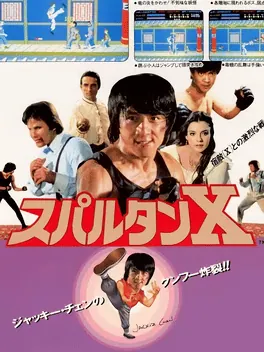
Spartan X
Spartan X, known in North America by the Kung-Fu Master port, is a 1984 beat 'em up arcade game developed and published in Japan by Irem. It was later published in North America by Data East, without the movie license. The Japanese version was based on the Jackie Chan movie Wheels on Meals, known as Spartan X in Japan, and credited "Paragon Films Ltd., Towa Promotion", who produced the film upon which it was based. The game is considered by many to be the first beat 'em up video game, and contains elements of Bruce Lee's Game of Death.
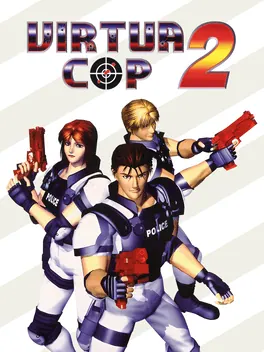
Virtua Cop 2
During the events of the first, the original Virtua Cops, Michael "Rage" Hardy and James "Smarty" Cools shut down the E.V.I.L Inc. criminal empire. Three of its leaders, King, Boss, and Kong are all in the maximum security federal pen. And the final, fourth member of the E.V.I.L Inc. gang, international terrorist Joe Fang is believed to have been killed in a helicopter crash, though his body was never found. After the downfall of E.V.I.L Inc., a comprehensive investigation of their black market and gun-running activities was launched in the Virtua City bank. Last year it looked as though the Virtua Squad had finally put an end to the E.V.I.L Syndicate’s reign of crime over Virtua City. The gangleaders were all either behind bars, in intensive care, or under 6 feet of dirt. And the Virtua City Police Special Investigations Unit got a new member in the shape of Janet Marshall, an expert in criminal psychology profiling. Then trouble started brewing in unlikely places.... The vice-president of the Virtua City Bank was killed in shady circumstances that were only officially termed "accidental". And the swollen accounts of the now-defunct E.V.I.L Syndicate, which he had been suspected of laundering, were emptied overnight. The missing funds amounted to more than the GNP of most small countries. Meanwhile, on the other side of town, alarms break the quiet and calm of the Virtua City air. A daring daylight raid on the biggest jeweler’s in the state! And at the site of the new subway construction, there’s been an unusual amount of unexplained activity involving some very suspicious-looking materiel. Looks like the E.V.I.L is reborn.
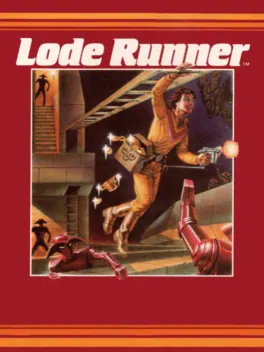
Lode Runner
Lode Runner is a 1983 puzzle video game, first published by Brøderbund. It is one of the first games to include a level editor, a feature that allows players to create their own levels for the game. This feature bolstered the game's popularity, as magazines such as Computer Gaming World held contests to see who could build the best level.
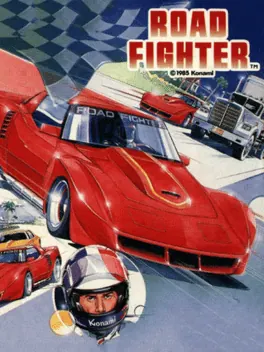
Road Fighter
Road Fighter is a car-based arcade game developed by Konami and released in 1984. It also was the first car racing game from Konami. The goal is to reach the finish line within the stages without running out of time, hitting other cars or running out of fuel (fuel is refilled by hitting a special type of car). The game also spawned two sequels in its time, Midnight Run: Road Fighter 2 in 1995 and Winding Heat in 1996, respectively. A Japan-only rebooted sequel was also released in 2010, 14 years after Winding Heat.
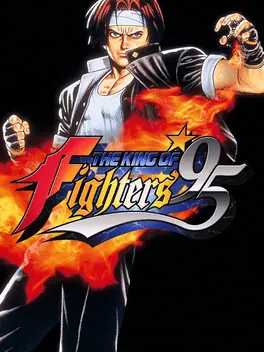
The King of Fighters '95
The King of Fighters '95 is a 1995 fighting game produced by SNK for the Neo Geo arcade and home console. It is the sequel to The King of Fighters '94 and the second game in The King of Fighters series. It is also the first game in the series to be ported to other home consoles besides the Neo Geo AES and Neo-Geo CD, with versions released for the PlayStation, Sega Saturn and Game Boy. It was also rereleased in The King of Fighters Collection: The Orochi Saga in 2008 for the PlayStation 2, PlayStation Portable and Wii. The King of Fighters '95 introduces Kyo Kusanagi's rival Iori Yagami, and firmly places Kyo as the main character for the rest of the series. The gameplay of The King of Fighters '95 is essentially unchanged from the previous title, though it does introduce the "team edit" concept which would remain as a standard feature of the series. Using the "team edit" feature, it is possible to create a totally customized team using any of the available fighters, or use one of the default teams if you wish.
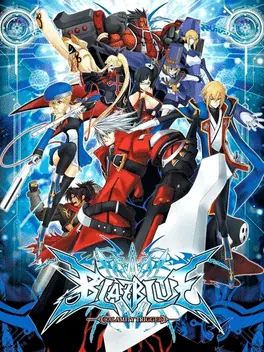
BlazBlue: Calamity Trigger
BlazBlue: Calamity Trigger is a fighting game developed by Arc System Works in 2008 and is the first game in the BlazBlue series. The game was originally developed for Japanese arcades and later received console and PC ports. The game is a traditional 2D fighter where two characters participate in a duel. Every character has a weak, medium and strong attack, as well as an "unique" technique, called a Drive attack, which is different for each character. Various combos can be performed by every character through careful input of regular and Drive attacks.
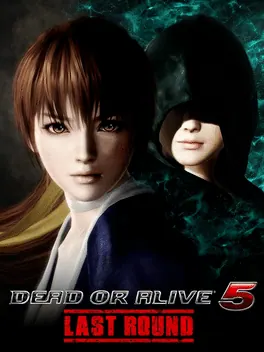
Dead or Alive 5 Last Round
Dead or Alive 5 Last Round is a fighting game developed. It is the third updated version of the 2012 game Dead or Alive 5, following the 2013 games Dead or Alive 5 Plus and Dead or Alive 5 Ultimate. Dead or Alive 5 Last Round features all the content from Dead or Alive 5 Ultimate, adding new costumes and customizable hairstyles, as well as two new characters and two new stages. The PlayStation 4 and Xbox One versions received upgraded graphics, running at 1080p resolution and 60 frames per second. These two version also use the new game engine called Soft Engine and designed to better depict "softness" of characters' bodies.
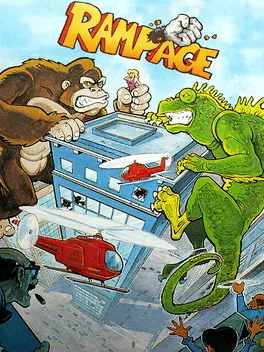
Rampage
Rampage is a game where players control giant monsters/mutated humans. Players must smash buildings while destroying vehicles such as tanks, planes, and trains to advance to the next level. Smashing windows will sometimes reveals items of interest that the player may use.
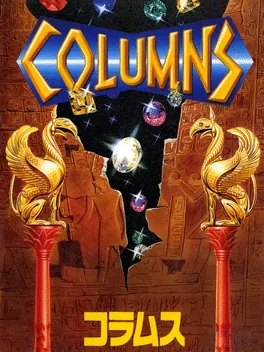
Columns
Go back in time to a bygone civilization: the ancient world of Phoenicia. There you will play a simple and captivating game where sparkling, rainbow-coloured jewels drop one after another. According to the ancient merchants, by arranging three or more of the same jewels horizontally, vertically or diagonally, you shall perform miracles.
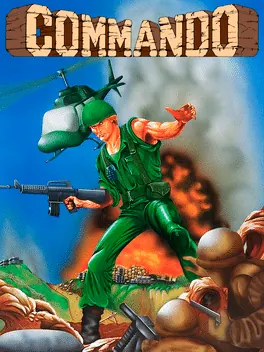
Commando
Several levels await your super-tough Commando in this arcade conversion. Armed with only a standard rifle and a few grenades you must take on hordes of enemies. Some are wandering around in the open, while others have picked out hiding places, which you must approach from certain angles. Trees, rivers and bridges create a varied combat-like terrain and must be incorporated into your thinking. Extra grenades can be collected, and will definitely be required, as they allow you to kill from distance and thus avoid some enemy shots.
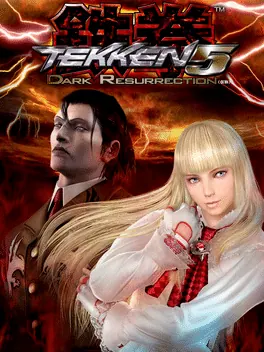
Tekken 5: Dark Resurrection
Tekken: Dark Resurrection is an updated version of Tekken 5 developed by Namco and released in arcades in 2005. It adds new characters, balance adjustments, and expanded customization options. The game retains the series’ 3D fighting mechanics, where players compete in one-on-one battles using a variety of moves and combos. It was later released on the PlayStation Portable and PlayStation 3 with additional content and online features.
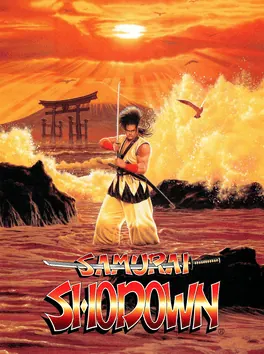
Samurai Shodown
In early Japan, a man named Shiro Tokisada Amakusa preaches a heretic religion. Little does anyone know that Amakusa is really a servant of the evil Ambrosia, who took over Amakusa's body. Ambrosia wishes to shroud the world in darkness. Now, choose between 12 warriors (and 3 bonus characters) to fight for the honor of destroying Amakusa, and fulfilling a mission.
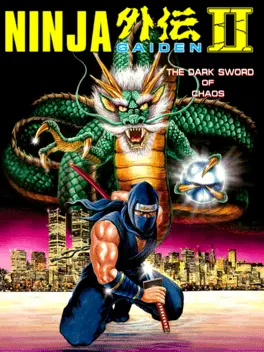
Ninja Gaiden II: The Dark Sword of Chaos
The Ninja Ryu is back to avenge the death of his father, and stop the Evil Ashtar. A year has passed since Ryu last faced his arch enemy, and still the activity down at the bottom of the realm of darkness continues. Ashtar, the evil lord who secretly controls Jaquio, is again on the move, and it is up to Ryu, the "Ninja Dragon" to put a stop to it. Use all of the secrets of the real Ninjitsu, along with the exciting audio and visual special effects and be drawn into the fantasy world of Ninja Gaiden II The Dark Sword Of Chaos.
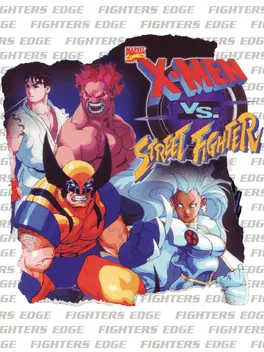
X-Men vs. Street Fighter
X-Men vs. Street Fighter is a fighting game originally released as a coin-operated arcade game in 1996. It is Capcom's third fighting game to feature Marvel Comics characters and the first game to match them against their own, with characters from Marvel's X-Men franchise being matched against the cast from the Street Fighter series. It was the first game to blend a tag team style of combat with the Street Fighter gameplay, as well as incorporating elements from Capcom's previous Marvel-themed fighting games, X-Men: Children of the Atom and Marvel Super Heroes.
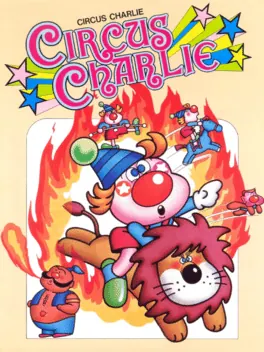
Circus Charlie
An action/platform game in which the player controls a clown named Charlie who partakes in various circus attractions.
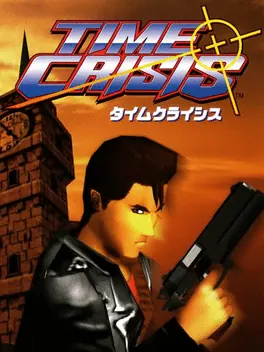
Time Crisis
Time Crisis is a light gun shooter arcade game released by Namco in December 1995. It was later ported for the PlayStation in 1997, bundled with the Guncon light gun controller. Time Crisis is a three-dimensional first person rail shooter similar to Virtua Cop and The House of the Dead installments, in which the player holds a light gun and goes through the motions of firing at on-screen enemies. Time Crisis is best known for its cover system, in which players can duck behind cover to avoid enemy fire and reload his weapon. There are three stages, each consisting of three areas and a boss battle. Unique features are described here in: A foot pedal which performs multiple functions: when the pedal is released, the player takes cover to conserve hit points while reloading the gun. While the pedal is released, the player cannot attack. In console conversions, a button command replicates the foot pedal's functions. The player loses a life if he/she is hit by a direct bullet or obstacle whilst not taking cover, with the game ending if he/she loses all lives. A light gun (introduced in Point Blank) which utilized a special memory chip to synchronize areas of the screen's image as the player rotates the gun around. The light gun also features a blowback function which simulates real-life gun recoil. A countdown timer, recharged by clearing an area of enemies. As running down the clock causes an instant game over, the player must take risks, shooting enemies rapidly and hiding only when necessary. A time extension is rewarded when an area is passed and there are also time bonuses awarded for shooting certain enemies quickly. The PlayStation port features an exclusive side-story mode, in which the player's performance, such as how quickly he can clear an area, affects the path he takes through the game, resulting in multiple possibilities.
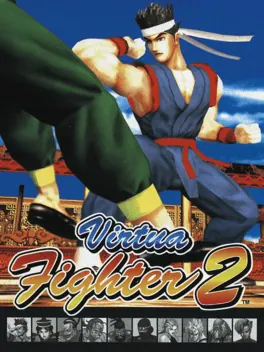
Virtua Fighter 2
Virtua Fighter 2 is a fighting video game developed by Sega. It is the sequel to Virtua Fighter (1993) and the second game in the Virtua Fighter series. It was created by Sega's Yu Suzuki-headed AM2 and was released for arcades in 1994. Ports were later released for various platforms.
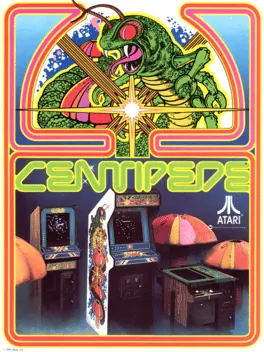
Centipede
Centipede is a vertically-oriented shoot 'em up arcade game produced by Atari, Inc. in 1980. The game was designed by Ed Logg along with Dona Bailey, one of the few female game programmers in the industry at this time. It was also the first arcade coin-operated game to have a significant female player base. The player defends against swarms of insects, completing a round after eliminating the centipede that winds down the playing field.