
Jogos para Arcade

Hogan's Alley
Hogan's Alley is a 1984 video game by Nintendo. It was one of the first games to use a light gun as an input device. The game presents players with "cardboard cut-outs" of villains and innocent civilians. The player must shoot the villains and spare the innocent people.
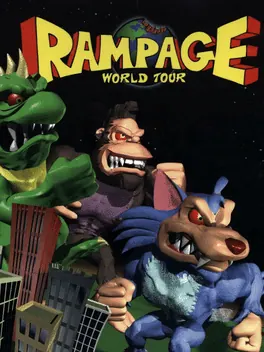
Rampage World Tour
Rampage World Tour is a updated version of the classic Rampage. Rampage World Tour starts off at Scumlabs International where three lab technicians, George, Lizzy, and Ralph have mutated in an accident involving toxic waste. George has turned into a gigantic ape, Lizzy a gigantic lizard or dinosaur, and Ralph some sort of gigantic wolf. The three destroy the lab they previously worked at and then embark on a path of destruction encompassing the entire globe.
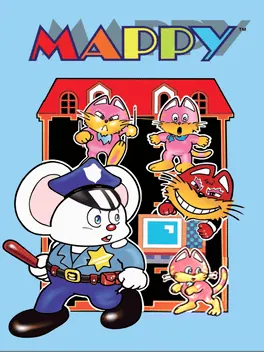
Mappy
The player guides Mappy the police mouse through the mansion of the cats called Mewkies (Meowky in the U.S. version) to retrieve stolen goods. The player uses a left-right joystick to move Mappy and a single button to operate doors. The mansion has six floors of hallways in which the stolen items are stashed.
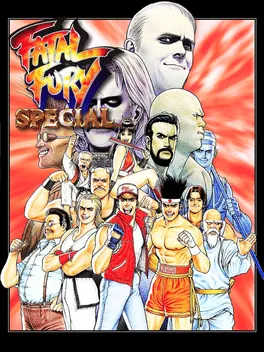
Fatal Fury Special
The GRANDMOTHER of all battles! 15 of the FATAL FURY series' top stars gather in the match of the millenium! Use the resurrected Geese Howard and Wolfgang Krauser in a dazzling arena! All you have ever wanted in a fighting game is here in FATAL FURY SPECIAL!
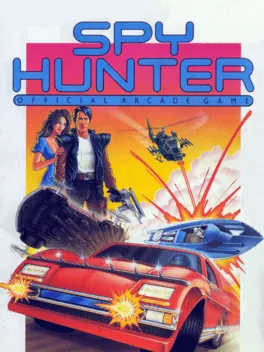
Spy Hunter
Originating in the arcades, Spy Hunter is a driving action game played from an overhead point of view. Your car is equipped with machine guns to help you get past the numerous enemies out on the road (be careful not to shoot any civilians, though!) Occasionally you will come across a weapons van, and if you drive into the back of the van your car becomes equipped with a second weapon (such as smoke screen, oil slick, or missiles). At several points the road splits and you can enter a boathouse which transforms your car into a boat temporarily. If you drive far enough the seasons change as well (watch out for icy conditions during winter!). The enemy cars will do anything to stop you, including running you off the road, firing guns from the back of a limo, or dropping bombs from a helicopter.
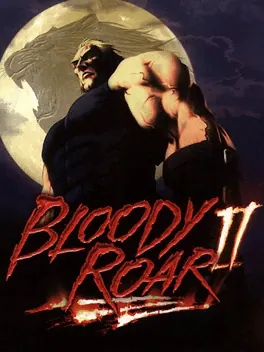
Bloody Roar 2
Bloody Roar 2, is a brawler arcade game developed by Eighting/Raizing in 1999. (Also known as Bloody Roar 2: Bringer of the New Age in Japan/Europe and Bloody Roar II: The New Breed in the United States.) Bloody Roar series differs from other fighting games as every character has a beast mode that can be used to use new attacks, recover some of lost health and generally to be faster and/or more powerful with their attacks.
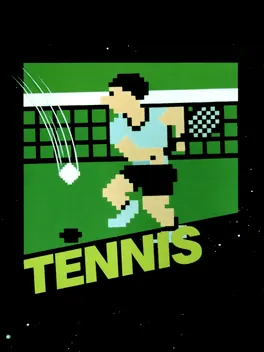
Tennis
Tennis is a sports game developed and released by Nintendo for the NES. In North America and Europe, Tennis was one of 18 launch games for the NES. A Game Boy version was also released. The game features single-player and two-player modes for singles and doubles matches, with either competitive or cooperative gameplay. A computerized opponent's artificial intelligence can be set to one of five difficulty levels. Mario referees the matches.
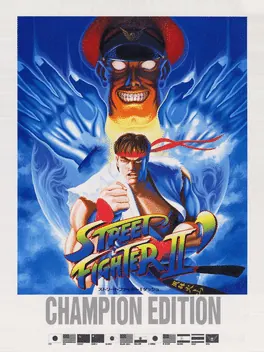
Street Fighter II: Champion Edition
Street Fighter II: Champion Edition is a competitive fighting game released for the arcades by Capcom in 1992. It was the first of several updated versions of the original Street Fighter II: The World Warrior. The main changes consisted of the addition of the Grand Masters (the final four computer-controlled opponents in the single-player mode) as playable characters and mirror matches (same character vs. matches). The fighting techniques of the eight main characters from the original game were also further refined to allowed for more balanced competitive play. Champion Edition was followed by Street Fighter II' Turbo: Hyper Fighting, released several months later.
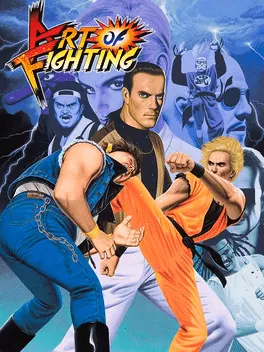
Art of Fighting
This fighting game began the story of the Sakazaki family and Robert Garcia. Yuri Sakazaki has been abducted by Mr. Big to punish her father, Takuma, and her brother, Ryo. To rescue her, Ryo and Robert must take on numerous enemies around South Town, eventually reaching the mysterious Mr. Karate. The passion of the game’s creators is evident in the unique game play elements introduced. These include an energy gauge that is depleted every time a fighter uses a special maneuver, Desperation Attacks that are usable only when a fighter’s health is low, and camera zooming that adjusts on the fly as fighters move around the stage. All these features ensure that players use strategy and tactics, rather than simply mash buttons. Adding to the mix are little touches such as characters showing cuts when they are injured and voice-over samples during cut scenes. Can you perfect the art of fighting and save Yuri?
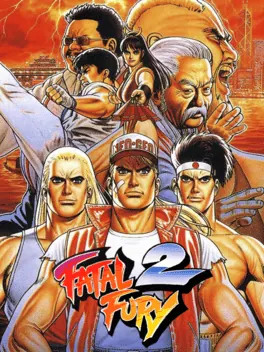
Fatal Fury 2
After Geese Howard's death in the original Fatal Fury, a mysterious nobleman becomes the sponsor of the new "King of Fighters" tournament. This time, the tournament is held worldwide with fighters around the globe competing. As the single player mode progresses, the mysterious challenger begins defeating the participants from the previous Fatal Fury game, searching for the man responsible for defeating Geese.

Bloody Roar
Bloody Roar, known as Bloody Roar: Hyper Beast Duel in Europe and Japan, is a fighting video game originally developed by Raizing (now Eighting) as an arcade game. It was later adapted for the PlayStation by Hudson Soft and published by Sony Computer Entertainment for the PlayStation. The arcade version was released on July 7, 1997 and was titled Beastorizer in North America. The PlayStation version was released in Japan on November 6, 1997, in North America (under the title Bloody Roar) on October 31, 1997 and in Europe on March 1998. Bloody Roar is the first game in the Bloody Roar video game series and was followed by four sequels on multiple platforms. The game's story centers on a group of warriors known as "zoanthropes", who have the power to transform into half-human half-animal "Beasts", and the Tylon Corporation, and underground organization that seeks to use zoanthropes as mind-controlled weapons. The game received generally positive reviews from critics for its originality and graphics, while the audio received mixed opinions. The game's success resulted in its re-release for The Best range on October 14, 1999. The game was re-released on the PlayStation Network in North America on August 20, 2009.
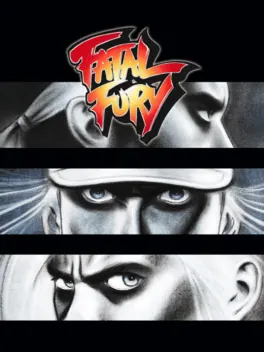
Fatal Fury
Fatal Fury is a fighting game developed by SNK and released for arcades in 1991. Players choose from a roster of martial artists and compete in one-on-one battles using punches, kicks, and special moves. The game introduced a two-plane fighting system that allows characters to move between foreground and background lanes. Its story follows Terry Bogard and his allies as they challenge the crime lord Geese Howard.
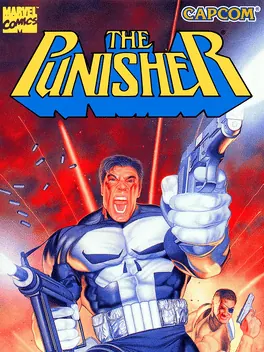
The Punisher
The Punisher is a 1993 beat 'em up arcade game. It stars the Marvel Comics' anti-hero the Punisher and co-stars S.H.I.E.L.D. agent Nick Fury as the second player's character as they embark on a mission to kill the crime lord the Kingpin and bring down his organization. Whilst following the same general formula as Capcom's previous beat 'em ups, the game has a range of usable weapons and a comics-style presentation.
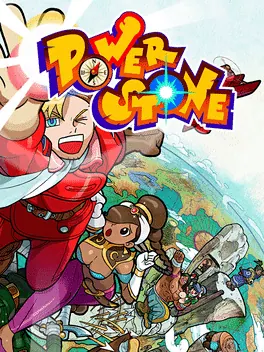
Power Stone
Power Stone is a fully 3D arena fighting game series made by Capcom. Power Stone was initially released on the Sega NAOMI hardware and later ported to the Dreamcast. In Japan Power Stone was adapted also into a manga, as well as a 26 episodes anime series.
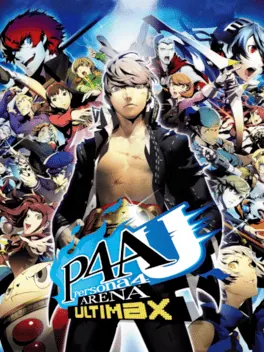
Persona 4 Arena Ultimax
Persona 4 Arena Ultimax is a fighting video game developed by Arc System Works and Atlus. It is the direct sequel to Persona 4 Arena, which is itself a follow-up to the role-playing game Persona 4. The game was originally released in Japanese arcades on November 28, 2013, and later ported to home consoles. Unlike the previous game, it is not region locked.
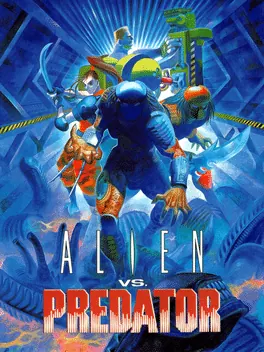
Alien vs. Predator
Alien vs. Predator is a 1994 beat 'em up video game developed and released by Capcom for the CPS-2 arcade game system. It is based on the science fiction franchise of the same name. Introducing an original fighter to the game: Lt. Kurosawa, the players take control of up to three from the selection of four cyborgs and Predator characters in a battle against the Xenomorph hordes and rogue human soldiers.
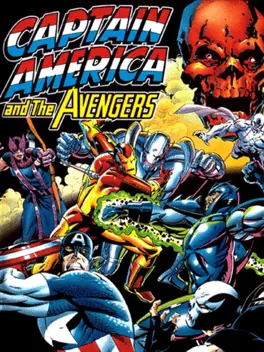
Captain America and the Avengers
Captain America and the Avengers is an arcade game released by Data East in 1991. It features the Marvel Comics characters The Avengers in a side-scrolling brawling and shooting adventure to defeat the evil Red Skull.
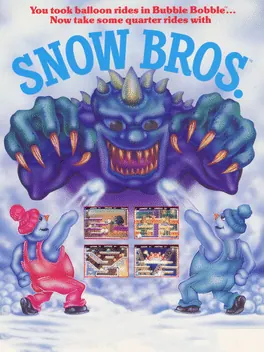
Snow Bros.
The gameplay of Snow Bros is similar to Bubble Bobble, released in 1986. The game supports up to two players, with each player taking the part of one of two snowmen Nick and Tom. Each player can throw snow at the enemies. The player must throw snow at each enemy until it is completely covered, when it turns into a snowball. An enemy partially covered in snow cannot move until it shakes it off. Once an enemy has been turned into a snowball, the player can roll it. The snowball will re-bound off walls, until eventually shattering against a wall. Any enemies the snowball rolls into are eliminated and other stationary snowballs start rolling when the rolling snowball touches them. If the player manages to take out all of the enemies with kicking one snowball (this one snowball may be used to make others bounce around as well and increase the chances to pull this trick off), money in the form of large green bills will fall from the sky. These disappear in a very short amount of time but are worth 10,000 points each, the most the player can get as a bonus. Every tenth level there is a boss. Each boss can sustain being hit a number of times. In Sega Genesis port, after the 50th level, you play as one of the snow castle princesses. When a player bowls an enemy over, it may drop a potion bottle. The color of the potion lets the player know what special power-up he or she will acquire.
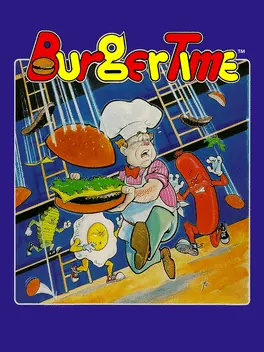
BurgerTime
BurgerTime is a 1982 arcade game created by Data East for its DECO Cassette System. The game's original title, Hamburger, was changed to BurgerTime before its introduction to the US. The player is chef Peter Pepper, who must walk over hamburger ingredients located across a maze of platforms while avoiding pursuing characters. The game was popular in arcades. In the US, Data East USA licensed BurgerTime for distribution by Bally Midway. The Data East and Midway versions are distinguished by the manufacturer's name on the title screen and by the marquee and cabinet artworks.
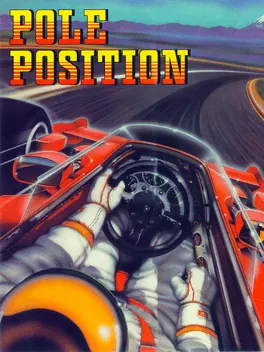
Pole Position
The very first racing game with the rear perspective camera and track based on real life.
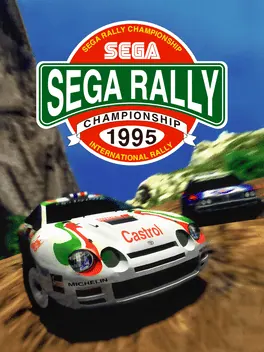
Sega Rally Championship
Sega Rally Championship is a 1994 arcade racing game developed by AM5 on the Sega Model 2 board. The unique selling point of Sega Rally was the ability to drive on different surfaces (including asphalt, gravel and mud), with different friction properties, with the car's handling changing accordingly. As the first racing game to incorporate this feature, Sega Rally is considered to be one of the milestones in the evolution of the racing game genre. The music for the arcade game was composed by Takenobu Mitsuyoshi, while the Sega Saturn port's soundtrack was done by Naofumi Hataya and the Guitar were played by Joe Satriani.
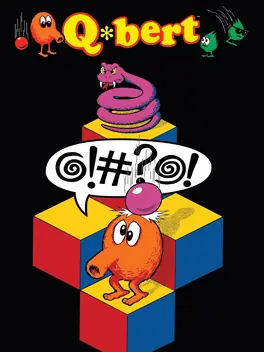
Q*bert
Q*bert was a popular arcade game that was released on a large number of consoles in the early 1980s. It was developed and published by Gottlieb, and became their most successful game. The concept serves as a precursor to the isometric platformer genre, where the title character must work to turn all cubes to a certain colour in a psuedo-3D world, made 3D through isometric graphics in the same way that the Penrose Stairs was made. The game was widely successful and has become a highly recognizable brand of the 1980s gaming era.
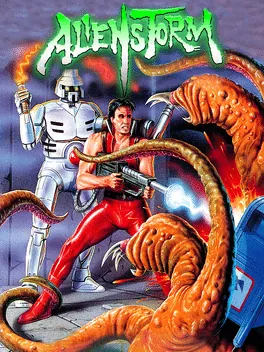
Alien Storm
Alien Storm is a side-scrolling beat 'em up. The game resembles Golden Axe, with a similar artistic style, three playable characters (a man, a woman, and a novelty character) and pick-up or power-up special attacks. The player (one player only on the Master System version, up to two players on the Mega Drive version, three on the arcade version) selects from the three different characters to embark upon a quest to save the Earth from an alien invasion. All of the Busters are playable from the beginning of the game. There are 6 missions to complete (8 in the Mega Drive version) with several stages, and each mission has the player blasting aliens, from the streets to the mother ship, where the mother of all aliens can be found. This task becomes increasingly difficult with each new mission, and the aliens are capable of hiding inside objects such as plants, postboxes, trashcans, drums, and other items. Each mission has an objective such as rescuing people or destroying an UFO. When dealing with a few aliens, flying heads will appear, which can be shot to collect life or energy. Energy is used specifically to power the energy based attacks of the player's weapon (such as flames or electricity) and to use the much more powerful special weapons. In a similar format as other early Sega arcade games, each character has unlimited usage of various short-range attacks, i.e. punches, kicks. Along with these standard attacks, each character has their own individual weapon (Garth's weapon that shoots lightning is replaced with a flame weapon in the Master System version). Special attacks are also included, and vary depending on the character chosen at the start of the game. For instance, Garth summons an U.S. Air Force starship that drops bombs across the street (in the Master System version he has Karen's special, a ballistic missile strike). Scooter will teleport out of his present location and leave a series of bombs that will blow up on the appearance of aliens, after which he will re-appear (in the Mega Drive version he just explodes, leaving his head, which his new body returns to retrieve). Karen calls down a nuclear missile, which incinerates every foe on the screen. However, a large amount of energy is depleted by using each character's special attack, and cannot be used if the energy of the player's character is too low. There are few bosses in the game. The arcade original only features a single boss that has three distinct forms. The Mega Drive port has two of these forms as two separate bosses. At the end of each mission, the side-scrolling gameplay shifts to either a shooting gallery perspective where the player must take out the aliens that pop out of various locations, similar to the bonus stages of Shinobi and Shadow Dancer, both also by Sega, or a running section that is similar to the side scrolling mode but plays like a horizontal shooter instead with projectile weapons.
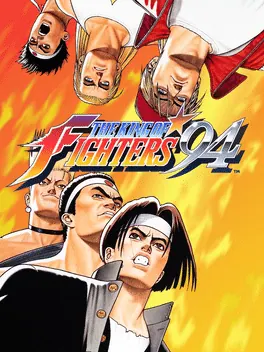
The King of Fighters '94
Rugal Bernstein is an incredibly rich and notorious arms and drug trafficker, as well as an incredibly skilled and ruthless fighter. Having become bored with the lack of competition, Rugal decides to host a new King of Fighters tournament. Rugal has his secretary travel to eight destinations around the world and invite fighters to his new tournament. Unlike the previous KOF tournaments depicted in the Fatal Fury series, the new King of Fighters is a team tournament, with eight teams of three, each representing a different nationality, participating this time. Most characters come from other SNK games, such as Team Italy, which is composed of three heroes from the original Fatal Fury: Terry Bogard, Andy Bogard and Joe Higashi. The two heroes from Art of Fighting (Ryo Sakazaki and Robert Garcia) are featured along with their mentor and Ryo's father (Takuma Sakazaki) make up Team Mexico. Team Korea features Kim Kaphwan from Fatal Fury 2 as the leader of two convicts he's trying to reform Chang Koehan and Choi Bounge, while Team England is a mix of female fighters from Fatal Fury 2 (Mai Shiranui) and the Art of Fighting series (Yuri Sakazaki, King). The two heroes from Psycho Soldier (Athena Asamiya and Sie Kensou) form Team China along with their mentor, Chin Gentsai. Similarly, Team Brazil features the heroes from Ikari Warriors (Ralf and Clark) along with their commanding officer Heidern. Additionally, the game features two teams composed entirely of original characters: Team Japan featuring Kyo Kusanagi, Benimaru Nikaido and Goro Daimon, and Team USA composed of Heavy D!, Lucky Glauber and Brian Battler.
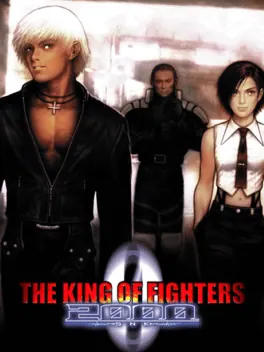
The King of Fighters 2000
The final King of Fighters game released by SNK in its original state, The King of Fighters 2000 expands on the story and gameplay presented in The King of Fighters '99. This year's tournament is sponsored by the Ikari Warriors in an attempt to discover more about the NESTS organization, and to derail the plans of potential NESTS agents K' and Maxima. Not everything is as straight-forward as it usually is, however, and even the Ikari Warriors themselves are at risk of being betrayed from within by the end of the tournament. The King of Fighters 2000 features an improved Striker call system with the Active Striker System, which allows the player to call his Striker character in any situation, whether he is attacking or being attacked by the opponent, allowing him to use their strikers in combos. Moreover, in addition to the numerous nostalgic SNK characters returning as Another and Maniac Strikers, KOF 2000 welcomes newcomers such as Ramon, Vanessa, Seth, Lin, Hinako Shijo, and Kula Diamond.
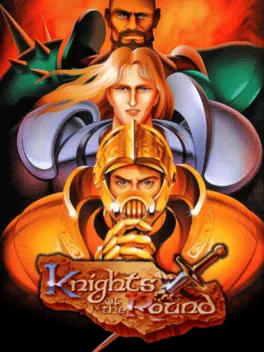
Knights of the Round
The gameplay is very similar to other Capcom beat 'em ups, such as Final Fight and Capcom's previous hack-and-slash fantasy title The King of Dragons. There are seven stages, each with its own boss and a variety of generic enemies that try to stop the players' progress. The fights rely strongly on blocking ability, which is triggered by pressing the attack button, then pressing the joystick away as the opponent strikes. If successful, the player gains a few seconds of invincibility with which to counter-attack. However, if no one strikes the player's character while holding the block, they will tire and drop their guard, making them vulnerable to attack. Blocking is vital in certain cases, since some bosses will be vulnerable only after their attack has been blocked by the player. As in most beat 'em ups, a desperation attack is performed by pressing both the attack and jump buttons simultaneously. This knocks out most enemies on the screen, but the player loses a little bit of health every time he uses it.
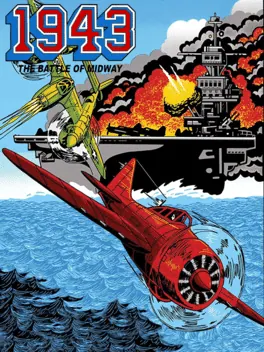
1943: The Battle of Midway
The game is set in the Pacific theater of World War II, off the coast of the Midway Atoll. The goal is to attack the Japanese Air Fleet that bombed the players' American Aircraft Carrier, pursue all Japanese Air and Sea forces, fly through the 16 levels of play, make their way to the Japanese battleship Yamato and destroy her. 11 Levels consist of an Air-to-Sea battle (with a huge battleship or an aircraft carrier as an End-Level Boss), while 5 levels consist of an all-aerial battle against a squadron of Japanese Bombers and a Mother Bomber that needs to be destroyed. As in 1942, players pilot a P-38. Two buttons are used: one for regular attacks (with several weapons) and one for special actions that executes either a loop like in 1942 or one of three special attacks that damage the plane. Unlike 1942, the player only has one life, with one refillable energy meter. Destroying a complete formation of red enemy planes will result in a power-up, such as a health boost or a temporary special weapons which replaces the default twin gun.
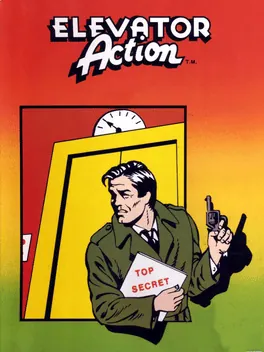
Elevator Action
Elevator Action is a 1983 arcade game by Taito. It debuted during the "Golden Age of Arcade Games". Innovative in gameplay, the game was very popular for many years. In the game, the player assumes the role of a spy who infiltrates a building filled with elevators. He must collect secret documents from the building and traverse the 30 floors of the building using an increasingly complex series of elevators. The player is pursued by enemy agents who appear from behind closed doors. These agents must be dealt with via force or evasion. Successful completion of a level involves collecting all the secret documents and traversing the building from top to bottom. In the lower floors of the building, the elevator systems are so complex that some puzzle-solving skills are needed. The game was available as a standard upright cabinet The controls consist of a 4-way joystick and two buttons, one for "shoot" and the other for jumping and kicking. The maximum number of players is two, alternating turns. The graphics are extremely simple, 2D color graphics and in-game music was composed by musician Yoshio Imamura. The game was followed by a sequel, Elevator Action II (also known as Elevator Action Returns).
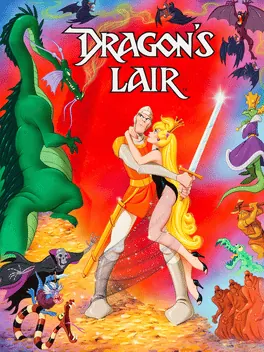
Dragon's Lair
Haven't heard of Dragon's Lair?! Well, you play the heroic Dirk the Daring, a valiant knight on a quest to rescue the fair princess from the clutches of an evil dragon! Originally released in the summer of 1983, Dragon's Lair has solidified itself as a cultural icon in gaming.
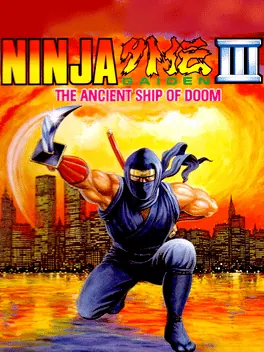
Ninja Gaiden III: The Ancient Ship of Doom
Thrilling new cinema screen! Follow the story of Ryu's epic adventure through Tecmo's movie-like Cinema Screen Animation. As you complete each level, a new part of the story unfolds. Exciting new powers and weapons! Over the years Ninja Ryu's fighting skills have improved to include fantastic new powers and weapons. Action-packed Ninja adventure! Can you get Ryu through his most challenging adventure as he battles the hideous ancient forces of darkness to save mankind? The Ultimate Ninja Challenge!
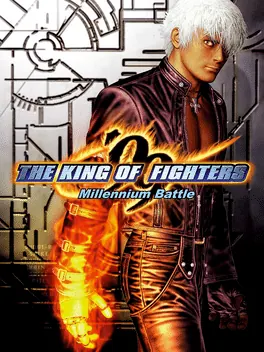
The King of Fighters '99: Millennium Battle
"The King of Fighters '99: Millennium Battle" is the sixth game in The King of Fighters series by SNK. Unlike in previous games of the series, there are four characters per team instead of three, with the fourth serving as a "Striker", a fighter whose function is only to enter a match, attack the opponent and leave without replacing their teammates. In total, there are seven teams, each containing four characters, four Team Edit characters and a boss.
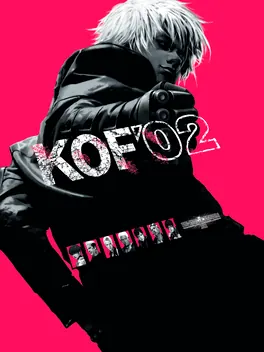
The King of Fighters 2002
The game brings back the team play composed by three characters each that was a tradition in previous games. The game has also several important changes in the gameplay, like the "Free Cancel System" or "Max Mode System", the "Quick Emergency Evasion" and "Quick MAX Mode Activation", aside from the countless changes in each character's special moves and their properties.
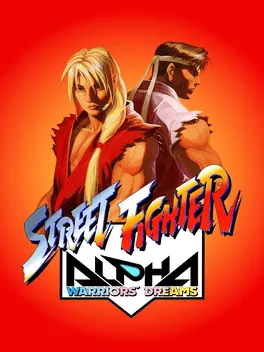
Street Fighter Alpha: Warriors' Dreams
Street Fighter Alpha: Warriors' Dreams was the first all new Street Fighter game produced by Capcom since the release of Street Fighter II. It introduces several new features, expanding on the Super Combo system previously featured in Super Street Fighter II Turbo with graphics drawn in the same animated style Capcom employed in Darkstalkers. Street Fighter Alpha revamps the Super Combo system introduced in Super Street Fighter II Turbo by adding a three-level Super Combo gauge that fills in as the player performs regular and special moves.
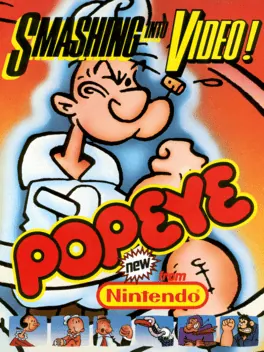
Popeye
Popeye is a 1982 arcade game developed and released by Nintendo based on the Popeye cartoon characters licensed from King Features Syndicate. In Popeye, two players can alternate playing or one player can play alone. The top five highest scores are kept along with the player's three initials. Popeye was available in standard and cocktail configurations.
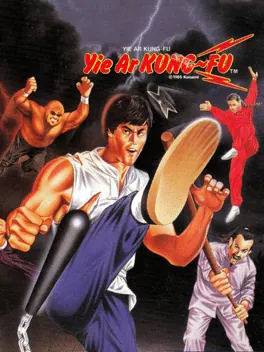
Yie Ar Kung-Fu
Yie Ar Kung-Fu is a 1985 fighting game developed and published by Konami. Along with 1984's Karate Champ, which influenced Yie-Ar Kung Fu, it is one of the games that established the basis for modern fighting games.
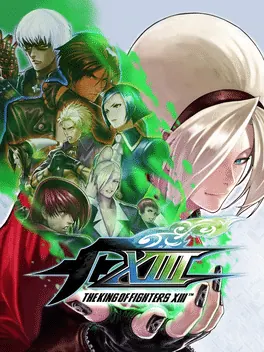
The King of Fighters XIII
The King of Fighters XIII is a fighting game in the The King of Fighters series. The game is set after the events from The King of Fighters XI and is also the conclusion of Ash Crimson's story arc, which started in The King of Fighters 2003. It follows another King of Fighters tournament secretly hosted by Those From the Distance Land, the organization behind the events from the two prior games that are trying to break the seal of the demon Orochi and take its power.