
Jogos para Arcade
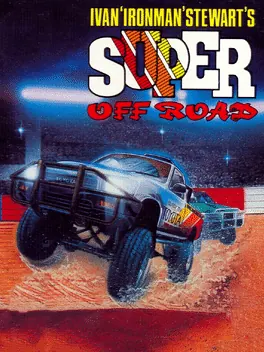
Ivan ''Ironman'' Stewart's Super Off Road
Enter the world of off-road racing as 4 vehicles will face each other, on a series of tracks which are based around flipped and reversed versions of a core selection. Fame, glory and bikini clad women await your victories and the taste of dirt awaits if you fail. Let a computer car beat you and you lose one of your 3 credits. Successful races bring more money, which can be used to soup up their machine. Boosts to top speed, grip and acceleration can be purchased, and your nitro boost must be kept topped up. If you are desperate for upgrades, you can buy into your spare credits. Only your off-road driving abilities will be enough to pull you to first place in these races. Play alone or with up to 3 other players (depending on the version) in this classic arcade game.
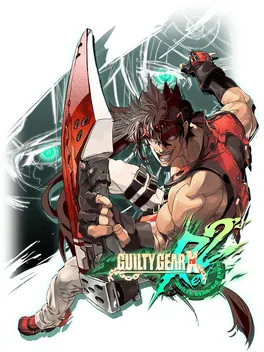
Guilty Gear Xrd: Rev 2
Guilty Gear Xrd Rev 2 is a standalone expansion of Guilty Gear Xrd Revelator and is also available as DLC for that game.
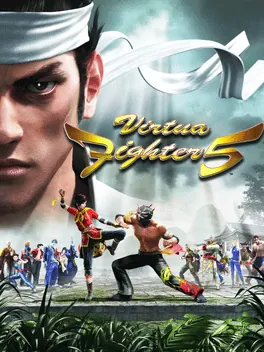
Virtua Fighter 5
Virtua Fighter 5 features an all-star cast of 17 fighters, including characters from the previous iterations along with two new characters named El Blaze and Eileen. The game delivers fast-paced, adrenaline-pumping action as players head into battle, taking on a host of popular characters. Players not only achieve victory by defeating highly-skilled opponents, but also by competing for prizes which earn them in-game money allowing them to buy many items at in-game shop. These items allow players to customize their ultimate warrior and become the top Virtua Fighter.
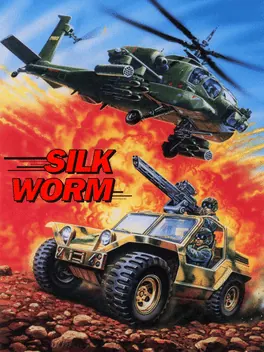
Silk Worm
Silkworm is a classic horizontally-scrolling shoot-em-up. The main difference between this game and many other side-scrolling shoot-em-ups is that you will be on land as well as in the air. The first player would play as a helicopter, but if a second player joins the game, they would play as a jeep. Both players would have to protect each other as well as themselves. After a certain number of kills, a "goose" helicopter would form on the screen. If the players managed to destroy it they would get a weapon's powerup. This would go on throughout the entire game, and a "goose" could appear even during the fight with the end-of-level baddie.
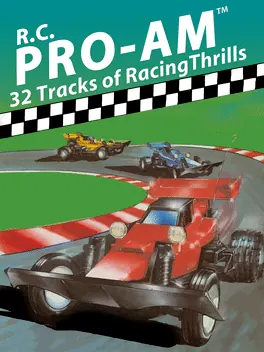
R.C. Pro-Am
Presented in an overhead isometric perspective, a single player races a radio-controlled car around a series of tracks. The objective of each track is to qualify for the next race by placing in the top three racers. Players collect items to improve performance, and they must avoid a variety of hazards such as rain puddles and oil slicks. It is an example of a racing game which features vehicular combat, in which racers can use missiles and bombs to temporarily disable opposing vehicles. The game distanced itself from earlier racing titles by using an overhead, instead of a first-person, perspective. Reviews have cited it as inspiration for future games such as Super Off Road, Rock n' Roll Racing, and the Mario Kart series. It has appeared in many "top games of all time" lists and is regarded as one of the best titles in the NES library.
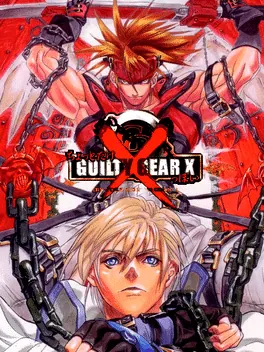
Guilty Gear X
Guilty Gear X is the sequel to 1998's Guilty Gear, a 2D fighting game for the Sony PlayStation that became extremely popular in Japan. Featuring beautiful hand-drawn artwork and animation, as well as balanced, fun, high-energy gameplay, Guilty Gear X aspires to be the king of 2D fighters. The goal in Guilty Gear X is simple: get your opponent's Life Bar down to zero within the allotted time to win. Winning a round nets you a point; getting two points will win you the match. There are 14 different characters to choose from, each with their own personal style and moves. There might even be some hidden ones, too...
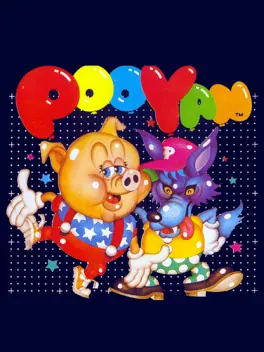
Pooyan
Pooyan is a classic arcade game manufactured by Stern Electronics under license from Konami in 1982. In it, the player controls "Mama", a pig whose babies have been kidnapped by a group of wolves.
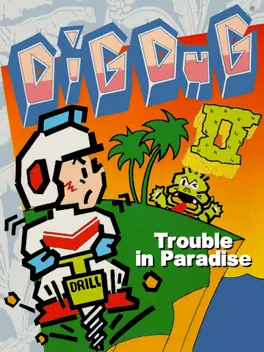
Dig Dug II: Trouble in Paradise
DIG DUG has decided to chill out from the pressures of the real world by taking a long overdue vacation on a beautiful Caribbean island. "At last," he thinks to himself, "sun, sand, surf, and no more hassles from those miserable pests Pooka and Fygar!" Lying in a hammock between the graceful palm trees, he drifts off into a blissful dream of beautiful bikini clad native girls catering to his every wish. But just when he thinks he's got it made in the shade, along come his troublesome enemies to turn his peaceful paradise into a tropical nightmare. Help DIG DUG rid the island of these irritating intruders and bring tranquility back to his vacation by the sea!
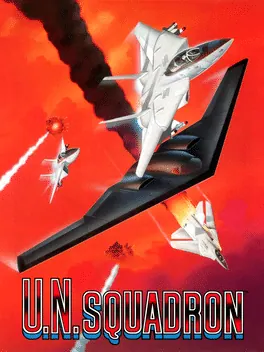
U.N. Squadron
Side-scrolling shoot-em-up, in a similar style to such games as Gradius, R-Type and Scramble. The aim is to wipe out the enemy, which has gathered around the allied airspace of 'Area 88', in a series of military aircraft-based scenarios. You choose one of three unique pilots; Shin Kazama, Micky Schymon or Greg Gates, each with varying abilities at damage repair, weapon handling and flying skill, and engage the enemy over a series of challenging missions. The player starts out with the weakest plane, the F8E Crusader, which can only be armed with a very basic range weapons. But, through completing various missions, enough cash can be raised to purchase higher-quality aircraft. These superior planes are more agile, have improved resilience to damage and have a greater range of fire. Furthermore, the more advanced fighters can be armed with superior special weapons, such as napalm. The missions include attacks on sand bases, the nuclear submarine 'Seavet' and enemy supply camps, as well as seeing off groups of airborne 'bandits' who swarm-in on Area 88. The enemy is plentiful, and the pace is frantic. Shoot at everything on the screen that moves, and the allied forces might just come out on top......
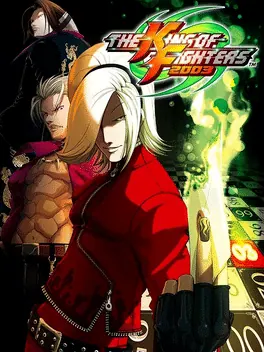
The King of Fighters 2003
The King of Fighters 2003 is the tenth game in The King of Fighters series. It is the last game of the series to be based on the Neo-Geo MVS hardware, and the first game in the series that was developed and published under the SNK Playmore custody. It is also the first chapter of the "Tales of Ash Saga", the third story arc of the series, and the last game of the series with the year's release in the title.
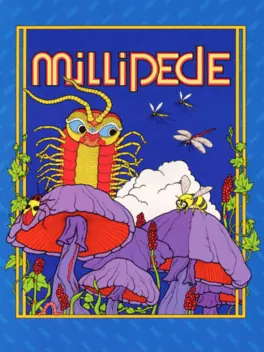
Millipede
Millipede is a 1982 arcade game by Atari, Inc. and is the sequel to the arcade hit, Centipede. The objective of the game is to score as many points as possible by destroying all segments of the millipede as it moves toward the bottom of the screen, as well as destroying and avoiding other enemies. The game is played with a trackball and a single fire button, which can be held down for rapid-fire. The game is over when the player's last life is lost.
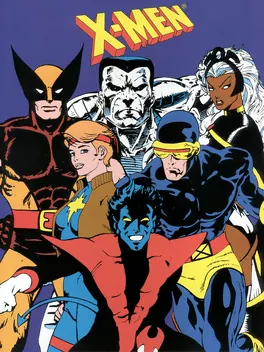
X-Men
An arcade brawler starring six X-Men characters. It was the only brawler to allow up to 6 simultaneous players on one arcade machine.
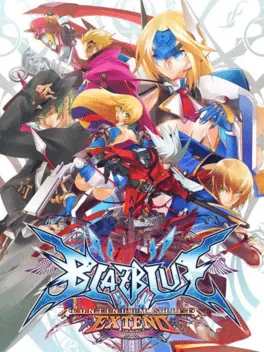
BlazBlue: Continuum Shift Extend
BlazBlue: Continuum Shift Extend is a 2D fighting game and the enhanced version of BlazBlue: Continuum Shift II. The game features an updated version of Calamity Trigger's Story Mode called Blazblue Calamity Trigger Reconstruction; the inclusion of Relius Clover as a playable character; four new stories for Platinum, Makoto, Valkenhayn, and Relius; a new Unlimited Mars game mode; hidden Distortion Drives for every playable character's Unlimited form; and further balance tweaks.
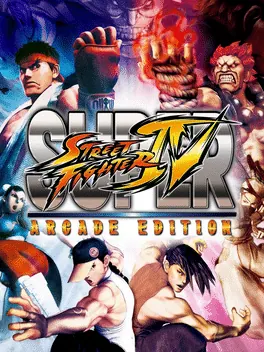
Super Street Fighter IV: Arcade Edition
An arcade version of Super Street Fighter IV was released by Capcom in December 2010, titled Super Street Fighter IV: Arcade Edition. Arcade Edition added Yun, Yang, Evil Ryu and Oni to the roster, as well as changes to the existing characters.
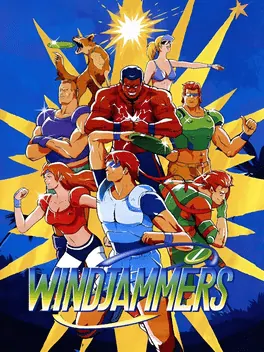
Windjammers
Windjammers (also known as Flying Power Disc in Japan) is a fast paced sports arcade game released by Data East on the Neo Geo arcade system in 1994 and later on the Wii Virtual Console in Japan on June 22, 2010. Following the bankruptcy of Data East, the intellectual rights for this game were acquired by Paon. It was delisted in Japanese Virtual Console for the Wii on December 24, 2013, making it the only delisted Neo Geo game for the Wii Virtual Console. The game mechanics are essentially the same as Pong or air hockey, where players continuously shoot the disc at the goal zone of the opponent attempting to score. The game can be played against the computer or in a 2 player versus.
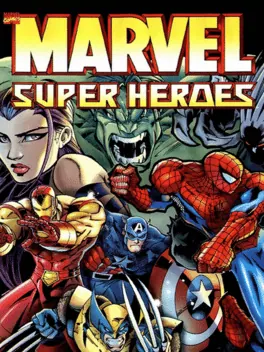
Marvel Super Heroes
Marvel Super Heroes is a 2D fighting game and the second Capcom title to feature characters from the Marvel comic universe. Each character starts with a set of gems. These can be activated during a fight to improve speed, power and defence, or provide special abilities to create crushing stone walls, open up a rift in space, or reverse the opponent's controls. The use of the gems is inspired by the The Infinity Gauntlet comic book series.
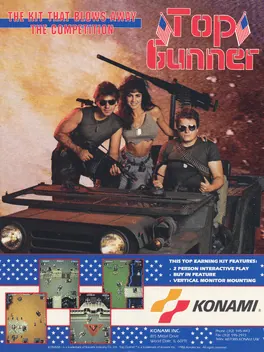
Top Gunner
Overhead run'n gun-style shoot-'em-up. You play as jeep driver and gunner rescuing POWs. More commonly known as Jackal outside the US.
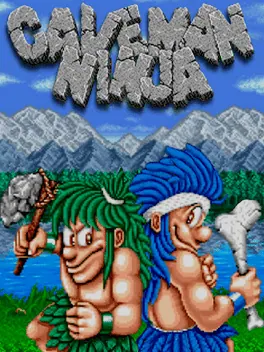
Caveman Ninja
Back in the distant past (way back - like when “rock and roll” was just rock and fast food was dinner you couldn’t catch), lived two cave dudes named Joe and Mac. Whether it was dinosaur demolition or pterodactyl hang-glidin’, life for the boys was pretty cool. Cool, that is, until a bogus bunch of neanderthal nerds crashed their village and scared off all the cave-babes. Now the cave-babes are out there - SOMEWHERE, lost and reeeeally lonely… so what are you waitin’ for? It’s up to Joe and Mac to get ‘em back. * Fight flying pterodactyls in one or two-player simultaneous play. * 12 cliff-hangin’ levels with more than 6 bonus levels to find… * Amazing arcade graphics will keep you clubbin’ to find your babes… * Joe & Mac’s pre-hysterical escapades will keep you comin’ back for more!
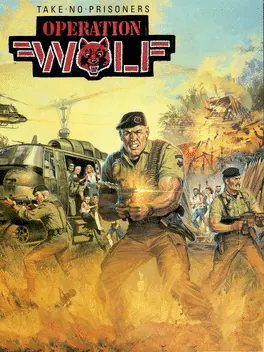
Operation Wolf
In the steamy jungles of South America, heavily armed extremists are holding innocent civilians prisoner. Little do these terrorists know that real terror is about to land on their front porch! The sound of rotor blades and staccato bursts of gunfire echo through the valleys. Terrorists be warned! Operation Wolf is going to teach you what terror is all about! Operation Wolf consists of six missions, which are displayed on the Operations Map Screen. A mission is completed when all enemy forces are reduced to zero. The current level is completed when you escape from the airport with the prisoners. Your injury level increases when the enemy hits you. The game automatically ends if the injury indicator on the right side of the screen becomes completely red. You can reduce your injury level by getting power drinks.
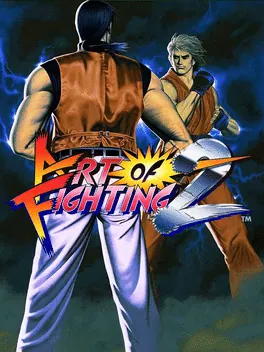
Art of Fighting 2
The second installment in the AoF series added the "rage gauge"; similar to the "spirit system" of its predecessor, it limited the use and effectiveness of special attacks. The game's story is set a year after the original. Geese Howard, a rising star in South Town's criminal underworld, calls fighters to the city for a new tournament, "The King of Fighters." Howard was the final boss and series villain of SNK's other fighting game franchise Fatal Fury (though he is a secret boss in this game), whose story took place over a decade after the events of Art of Fighting. Art of Fighting 2 was the only time Yuri Sakazaki was a playable character in the series. It also marked the only time that she donned her trademark outfit, which was made famous in The King of Fighters series. This game also marks the debut of Takuma Sakazaki without his Mr. Karate persona, as well as Eiji Kisaragi, who both appear in the King of Fighters series. Ryuhaku Todo, the first boss in the original AOF, is the only character dropped; all characters are playable from the beginning. The final boss is always Mr. Big, though as mentioned earlier, an extra match will be played against Geese Howard if the player unlocks him through good performance. This game is also notorious for its difficulty, with it being referred in many fighting circles as having some of the toughest opponent AI in a fighting game.
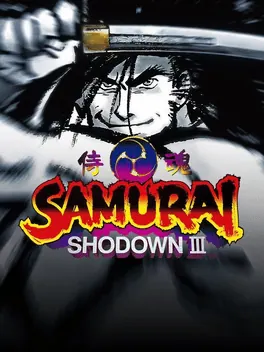
Samurai Shodown III
Samurai Shodown III was to be the start of a bold new direction for the franchise. The most obvious difference between this game and the others in the series is the notably darker aesthetic. The more light-hearted characters (Earthquake, Cham Cham, and Gen-an to name a few) from the previous games have been excised, and even the kabuki master, Kyoshiro Senryo, received a redesign, transforming him from a flamboyant stage performer into a grim-faced, muscular man. All of the characters have been completely redrawn. The animation is very smooth for all characters, another departure from the graphical style of the second game.
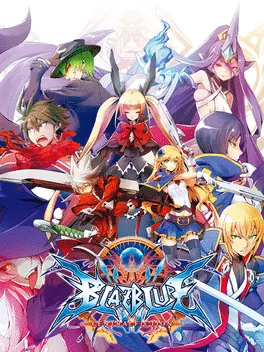
BlazBlue: Central Fiction
BlazBlue: Central Fiction is a 2D fighting game developed by Arc System Works. It is the fourth game to the BlazBlue series, and is set after the events of BlazBlue: Chrono Phantasma. The game adds Naoto Kurogane and Hibiki Kohaku as playable characters. BlazBlue: Central Fiction marks the conclusion of the story surrounding protagonist Ragna the Bloodedge.
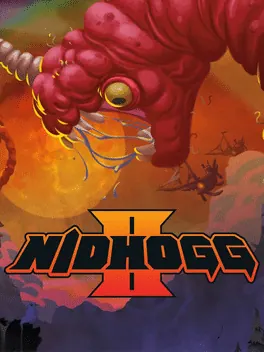
Nidhogg 2
Return of the wurm! The next installment of the epic award-winning dueling tug-of-war is coming! Destroy your opponents with all new moves and weapons across ten different arenas.
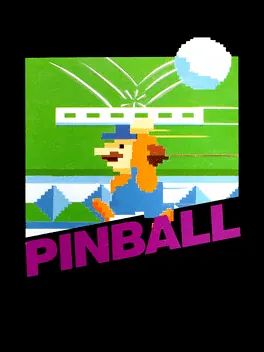
Pinball
Pinball is a game where the player controls the paddles of a virtual pinball machine. The game has two screens to represent the traditional pinball table and one for a bonus mode. Play begins when the player launches a ball with the plunger from first screen through the top of the screen to the second screen. Play will move to the first screen if the ball falls through the bottom of the top screen and will return to the top screen if the ball is hit back through the space at the top of the first screen. If the ball falls through the hole to the right bottom at the top level, the player will enter a mini-game featuring Mario and Lady. The player controls the paddles on either screen to deflect the ball to keep it from falling off the bottom of the lower screen.
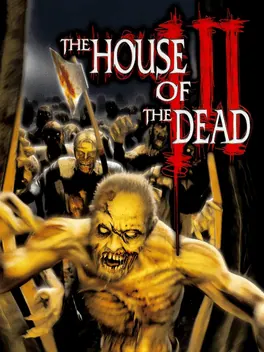
The House of the Dead III
The House of the Dead III is a 2002 light gun arcade game with a horror zombie-survival theme, and the third installment to the House of the Dead series of video games, developed by Wow Entertainment and Sega. It was later ported to the Xbox in 2003, Microsoft Windows in 2005, the Wii in 2008 in a compilation with The House of the Dead 2, and PlayStation 3 in 2012 with PlayStation Move support. The game continues the story of the previous games and introduces new gameplay concepts such as story branching. The game's protagonist is Lisa Rogan, daughter of Thomas Rogan, the first game's main character, and players control Lisa, G, or Daniel Curien.
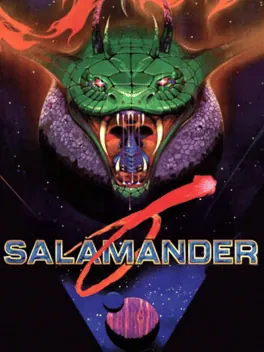
Salamander
Salamander is a scrolling shooter arcade game released by Konami as a spin-off to Gradius. It introduced a simplified power-up system, two-player cooperative gameplay and both horizontally and vertically scrolling stages. Some of these would later become the norm for future Gradius games.
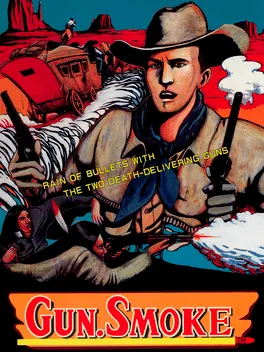
Gun.Smoke
Gun.Smoke is very similar to Commando, another Capcom game, but with several differences. Whereas Commando is a run and gun game, this game is a scrolling shooter in which the screen scrolls upward automatically and players only have three ways to shoot, using three buttons for left, right, and center shooting. However, a player can also change the way the gunman shoots through button combinations. A player can still die by getting shot or struck by enemies like in Commando but improve protection by getting special items, including a horse, for protection up to three hits; boots, for speed of movement; bullets, for faster shots; and rifles, for shot length. These items are found by shooting barrels and rifles, boots, and bullets can stock up to five. It was brought to the Sega Master System in South Korea without a license by Prosoft in 1990.
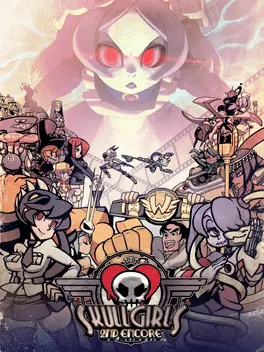
Skullgirls: 2nd Encore
Skullgirls 2nd Encore is a beautifully hand-animated, fast-paced 2D fighting game that puts players in control of fierce warriors in an extraordinary Dark Deco world. Each of the 14 wildly original characters features unique gameplay mechanics and plenty of personality.
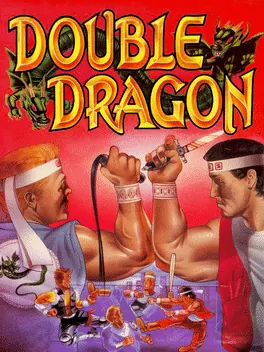
Double Dragon
The NES version of Double Dragon takes a wide range of liberties with the interpretation. The entire graphical style is more in line with Technōs’ Kunio-kun series, with characters that go for exaggerated expression rather than gritty realism. The biggest change, however, was reserved for the moveset. You start the game with only the punch, kick and headbutt available – all the other moves are obtained via an RPG-lite style experience system. Hitting enemies is now rewarded with a certain amount of experience points depending on the attack, and each time the counter goes above 999, you’re awarded an additional heart, which extends the range of possible actions. Two hearts add the uppercut and roundhouse kick combo finishers, and with three Billy can perform the jump kick maneuver. The fourth heart unlocks access to grappling moves.
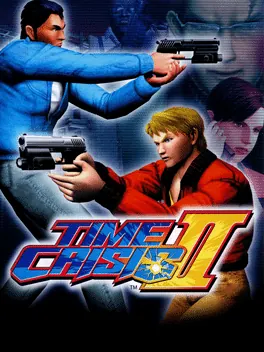
Time Crisis II
Time Crisis II is a light gun arcade game and the second installment in the Time Crisis series. It introduces co-operative multiplayer to the franchise. The game was first released in arcades in April 1998, with an enhanced port released on the PlayStation 2 in October 2001, bundled with the GunCon 2 controller.
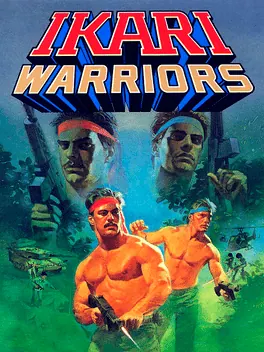
Ikari Warriors
Ikari Warriors is a vertically scrolling action game. One or two players fight their way through a variety of terrain, such as jungles, rivers, and ruins. Along the way different weapons can be found, including machine guns, grenades, and rocket launchers.
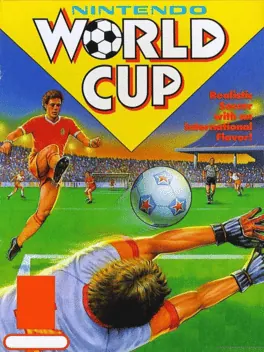
Nintendo World Cup
The eyes of the world are upon you. National pride is at stake. Only seconds left and the crowd rises in anticipation of the greatest upset in soccer history. The horn sounds and you've won it all! The coveted world cup trophy is yours! Pick your team and plan your game strategy. Use advanced super moves like the Bicycle Kick or the Super Header. Choose from 13 teams, representing countries from around the world. Defeat your opponents and you're on your way to the prestigious world cup final. Bring the excitement of international soccer home with Nintendo World Cup!
Blades of Steel
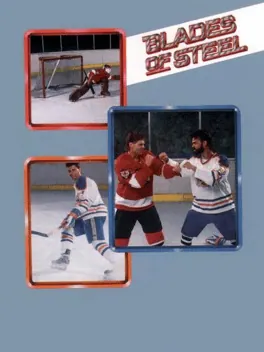
From the opening Face-Off it's six on six pro-style hockey at its best. Their are eight teams for you to captain: Los Angeles, New York, Vancouver, Montreal, Edmonton, Minnesota, Toronto and Chicago. You can challenge a friend, or take on a multi-talented computer squad. You can also choose from three difficulty levels - Junior, College and Pro. Throughout the game, you'll constantly be tested by every intense element of championship hockey, from Penalty and Overtime Scenes to Knockout Smash-Hit Fight Scenes. Speed, strength, quickness and instinct are talents you must possess if you plan to prevail, especially when the anger flares, gloves come off and fists start flying. It's hard hitting action at its toughest. And you'll soon learn that in this league nothing's ever given to you, and before you can reach your goals - you have to score them. You've gotta master the artful skill of a finesse player and the bone crushing brutality of an enforcer. You'd better be versatile as well, because you must skillfully control your forwards, centers, defensemen and even the goalie, who'll defend the net against unrelenting Power Plays (which will occur if you lose a fight and have your battered carcass banned to the Penalty Box).
Cabal
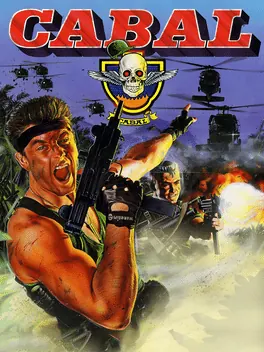
Originating in the arcades, Cabal is a shooter where the protagonist runs back and forth along the bottom of the screen, ducking and dodging bullets and grenades from the enemy. The roll maneuver from the arcade was not implemented in the PC version. The player returns fire by moving a target around the screen which also moves the player character and may expose him to enemy fire.
Gauntlet II
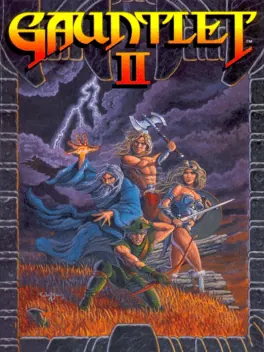
The gameplay is very similar to the original Gauntlet, a topdown dungeon crawl supporting up to four players. The biggest difference from the original game is that players can choose identical classes, instead of being limited to a particular one for each joystick; each player is differentiated by color. Thus, instead of having a "warrior", "wizard", and "valkyrie" (for instance), in Gauntlet II there could be a "red wizard", a "blue elf" and a "green warrior". In addition to the new "class" system, new level designs were added, including the possibility of encountering them in altered ways by having the play-field turned in steps of 90°. Other new features included the enemy "It", which upon contact would make a player "It" and draw all enemies towards him/her. The only way to release this curse is by touching another player or entering the exit, turning any level containing "It" into a fantasy filled game of tag. Other notable additions include the ability to ricochet shots off walls by means of a special pick-up, acid puddles that caused large, predetermined amounts of damage and a large dragon which would occupy multiple squares and require multiple hits to destroy. New level elements were also added, adding more variety to the original game. These included "all walls are invisible", "magic walls" which changed into monsters or items when hit, "stun tiles" which stunned the player, and fake exits. Another challenge in the game is the possibility to find a "secret room". This can be found by completing specific achievements within the level (e.g., "don't be fooled", means that you must find the real exit first). The secret room contains items such as food and magic potions (extra shot power, extra shot speed, extra magic power, extra speed, extra armor and extra fight power). This sequel was also the first to feature what is now known as the Gauntlet theme tune, which resembles a simplified Baroque fugue.
Xevious
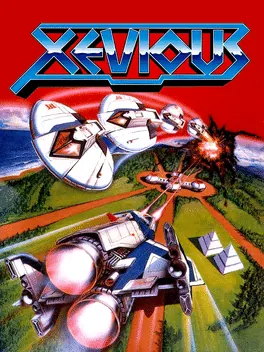
It's a nightmare, but it's true! Research shows that we are the actual aliens on Earth, and the ruthless Xevions are the original inhabitants. Now the Xevions want Earth back -- minus humans! Their invasion forces are fierce -- the land is crawling with deadly Domogram Rovers; the sky is black with Toroid Patrol Fleets and Zoshi Death Squads. Our puny weapons offer no defense. Earth's only hope is our powerful new Solvalou Fighter Plane. Its pilot will have a single mission: Penetrate the enemy ranks and destroy the Xevious Mother Ship. The mission is dangerous. We can't guarantee success. But at this point, it's do or die! One small problem. We still need a pilot. Any volunteers?