
Jogos para Arcade
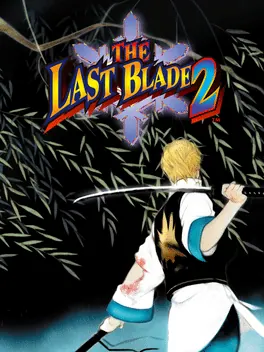
The Last Blade 2
The Last Blade 2 is a 2D fighting game which features anime-style characters that fight each other with swords, clubs, and even fishing poles. These characters pull off their special moves with that 'quarter-circle-to-half-circle' and 'double-half-circle' controller motions, reminiscent of Street Fighter.
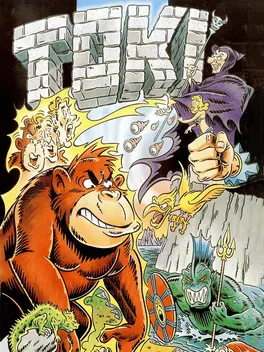
Toki
The hero of the game is a young jungle-man named Toki. One day the evil wizard Dr. Stark kidnaps his girlfriend Wanda. When Toki tries to save her, he is turned into a monkey! Now Toki has to find Dr. Stark in his palace, rescue Wanda, and become a human being again!
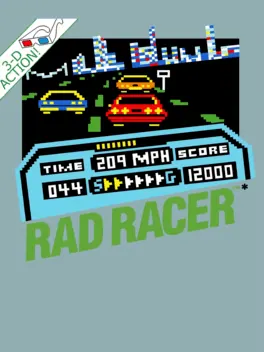
Rad Racer
This is no ordinary game pak. This is Rad Racer. Nintendo's thrilling 3-D video game Rad Racer comes action-packed with revolutionary 3-D technology and 3-D glasses (they're free inside) that will have you really believing you're in the middle of a cross-country rally race - cruising along at 200 miles per hour! Rad Racer takes you through 8 treacherous race courses including the Los Angeles Nightway, the San Francisco Highway and the Grand Canyon. Choose the Ferrari and you'll enter a Super Machine competition where you'll race against Corvettes and Lamborghinis. Select the F-1 Machine and you'll compete against incredibly fast cars. Whether it's Ferrari or F-1, 3-D or regular mode, Rad Racer's hairpin curves, daredevil turns and realistic action will bring home all the fun and excitement of real rally racing. Think you're up to it? Then drivers, start your engines. It's Rad Racer!
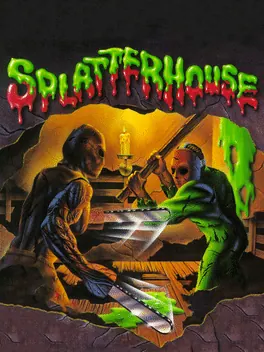
Splatterhouse
Splatterhouse is a sidescrolling beat 'em up video game in which the player controls Rick, a parapsychology student who is trapped inside West Mansion. After his resurrection by the Terror Mask, Rick makes his way through the mansion, fighting off hordes of creatures in a vain attempt to save his girlfriend Jennifer from a grisly fate. Players of this game will also recognize a number of western horror film influences, such as Friday the 13th and Evil Dead 2. Similar to many sidescrolling beat 'em up games, Rick can only move in a two-dimensional environment. The playing field does not feature a three-dimensional area, a feature that was added later in the series with Splatterhouse 3. He has the ability to jump and can punch and kick. Rick also has a Special Attack, where he will perform a drop kick that sends him skidding along the ground, damaging any enemies he hits. Rick can also perform a low kick, low punch, and jumping attacks, as well as pick up and use various weapons placed in the levels. All of the levels consist of walking left to right, with occasional auto-scrolling segments. However, alternative pathways through sections of the house are possible by falling down through holes or jumping up onto ladders. In this way, branching gameplay is possible, if only prevalent in the middle levels. Levels culminate in boss fights that take place in a single room. Unlike traditional side-scrolling fighters, boss fights have varying objectives and styles. Unlike most arcade games in the genre, Splatterhouse sends players back to checkpoints after losing lives or reaching game over, discouraging "credit feeding" as a method of overcoming the various challenges.
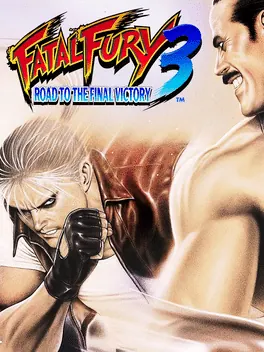
Fatal Fury 3: Road to the Final Victory
An adaptation of the Neo-Geo fighting game. 2-D scrolling one-on-one fighter with pseudo-3D aspects (that allows for players to "escape" holds, throws, and other attacks). Part of the incredibly-popular SNK fighting game pantheon...
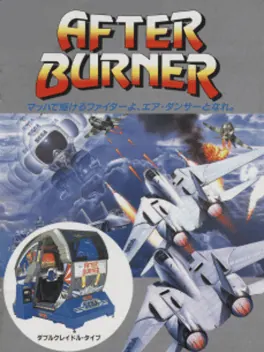
After Burner
Muster up all the skill, reflexes and guts you've got. Because inside your F-14 Thunder Cat, you're going to need all that - and more. Blast laser-directed, anti-aircraft fire at enemy planes. Dodge heat-seeking missiles with fancy flywork, like dips, turns and barrel rolls. Come head to head with the infamous Flying Fortresses (the toughest of all enemies) and dogfight your way through, to a nanosecond of safety. And if you make it far enough, a fuel tanker will be waiting for you. Dock successfully and you'll replenish valuable energy and ammunition. So get your adrenaline pumping and grab your joystick. Then take to the skies. You're not going to believe what's up there!
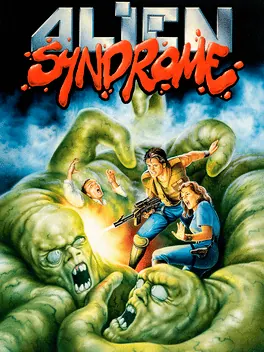
Alien Syndrome
The time bomb is set. It's the only sure way to get rid of these aliens. For good. They're vile. Vicious. And villainous. And they've infested our outcolony. They're holding hundreds of inhabitants hostage. Some of them your friends. So get in there. And get blasting. Inside, you'll find state-of-the-art weaponry. It's yours for the taking. There's sector after sector to purge. Each more intricate than the one before it. And there are Super Aliens to confront. Each more hideous than the one before it. Get the hostages out. And get as many aliens as you can. Before the blast gets all of you.
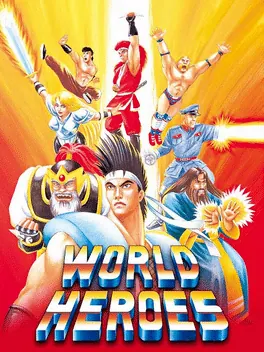
World Heroes
Are you ready for a fierce battle in an ultra-deathmatch!? Who is the greatest hero in the world? You will find out today! A scientist has created a time machine that eight heroes will travel through time with to prove who is the greatest fighter of all time!
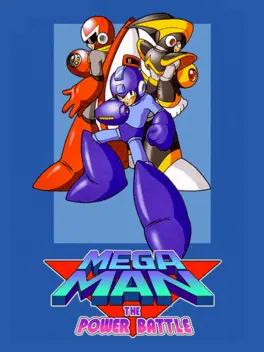
Mega Man: The Power Battle
Mega Man: The Power Battle, known in Japan as Rockman: The Power Battle, is an arcade video game and a spin-off title for the Mega Man series. It was released in Japan in 1995 and was followed by a sequel, Mega Man 2: The Power Fighters, the following year.
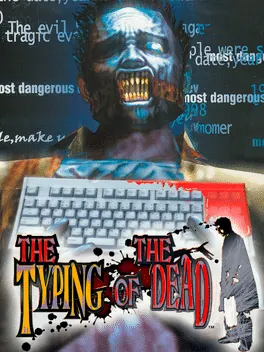
The Typing of the Dead
The Typing of the Dead is an arcade game that was developed by WOW Entertainment and published by Sega for the NAOMI hardware. The game was released in Japanese arcades in 1999 and was ported to the Sega Dreamcast in 2001 by Smilebit. A Windows version was released in 2000 and a PlayStation 2 port followed in 2004. The Typing of the Dead is a modification of Sega's 1998 light gun arcade game The House of the Dead 2 in which the gun is replaced by a computer keyboard. The player takes the role of a secret agent in a zombie-infested Venice and must quickly type letters, words and phrases in order to kill fast-advancing enemies.
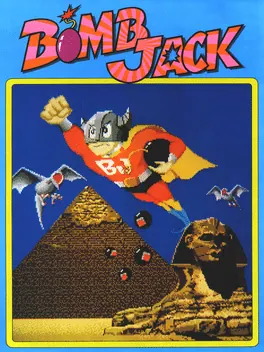
Bomb Jack
The player controls Jack, a superhero who can leap and glide. Someone has planted 24 bombs at famous tourist sites (the Sphinx and Great Pyramids, the Acropolis, Neuschwanstein Castle in Bavaria, and two cityscapes resembling Miami Beach and Hollywood, which appear only as screen backgrounds rather than unique game locations). Jack must fly around the screen to collect the bombs. Each screen uses a different configuration of platforms upon which Jack may run and jump. Eventually, the levels reoccur a number of times with increasing difficulty.
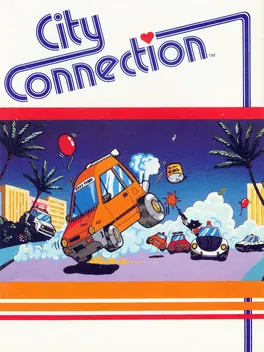
City Connection
City Connection is a 1-2 player comedic racing adventure platform game in which you control a car that can never be stopped. The object of the game is to drive through a series of cities and paint every part of the roads in each city as proof of your visit to that city. City Connection was remarkable for its time in that each location had its own background and music which was a variation on the main theme of the game. There are twelve locations: Manhattan, the Grand Canyon, Easter Island, Paris, Neuschwanstein Castle, London, Sydney, Egyptian temples, and cities in India, Holland, China and Japan.
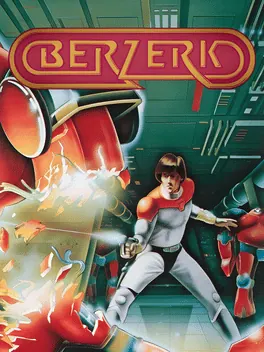
Berzerk
Maneuver your humanoid through the electrified mazes of robot filled rooms. You many kill off the first group of robots but initial success does not mean survival...future groups begin firing at your! Added danger lurks when Evil Otto enters. He can jump the maze walls and squash you if you linger too long!
Dance Dance Revolution
Dance Dance Revolution (ダンスダンスレボリューション Dansu Dansu Reboryūshon?), abbreviated DDR and also known as Dancing Stage in earlier games in Europe and Australasia, and some other games in Japan, is a music video game series produced by Konami. Introduced in Japan in 1998 as part of the Bemani series, and released in North America and Europe in 1999, Dance Dance Revolution is the pioneering series of the rhythm and dance genre in video games. Players stand on a "dance platform" or stage and hit colored arrows laid out in a cross with their feet to musical and visual cues. Players are judged by how well they time their dance to the patterns presented to them and are allowed to choose more music to play to if they receive a passing score. Dance Dance Revolution has been given much critical acclaim for its originality and stamina in the video game market. There have been dozens of arcade-based releases across several countries and hundreds of home video game console releases, promoting a music library of original songs produced by Konami's in-house artists and an eclectic set of licensed music from many different genres. The DDR series has inspired similar games such as Pump It Up by Andamiro and In the Groove by Roxor
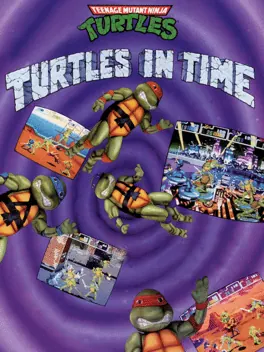
Teenage Mutant Ninja Turtles: Turtles in Time
The original arcade version of Teenage Mutant Ninja Turtles: Turtles in Time, which is shorter than the latter console version.
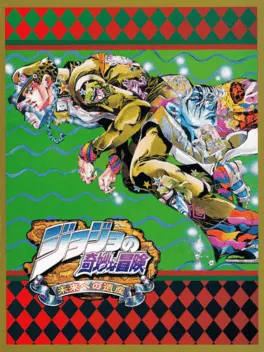
JoJo's Bizarre Adventure: Heritage for the Future
JoJo's Bizarre Adventure: Heritage for the Future is the updated version of JoJo's Bizarre Adventure game released in 1998 on arcade by Capcom. It became the sixth and last game released for the CPS-3 board.
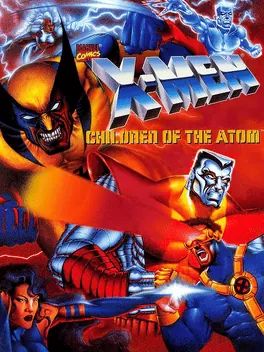
X-Men: Children of the Atom
X-Men: Children of the Atom is an arcade game featuring characters licensed from Marvel Comics. Timed with the popularity of the mid-1990s X-Men animated series, the game incorporates voice actors from the show reprising their respective roles. The gameplay involves one-on-one fighting matches, where players face off against different characters in the game. The ultimate challenge comes in the form of battles against Juggernaut and Magneto.
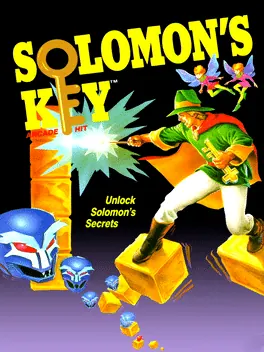
Solomon's Key
Solomon's Key is a puzzle game developed by Tecmo in 1986 for arcade release on custom hardware based on the Z80 chipset. The game is generally recognized as one of the most difficult games to appear on the NES. The player, controlling a sorcerer known only as Dana must overcome unlimited enemy spawning, challenging level designs, a countdown timer, instant death from any physical contact with enemies, and limited ways to dispatch enemies.
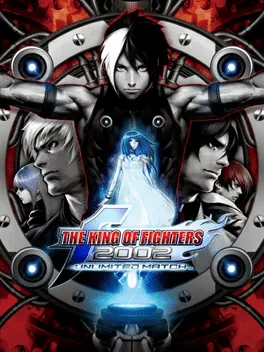
The King of Fighters 2002: Unlimited Match
The King Of Fighters 2002 Unlimited Match is a remake of the original The King of Fighters 2002: Challenge to Ultimate Battle. The game now has many new features, including all new music, completely redesigned stages, and many more characters.
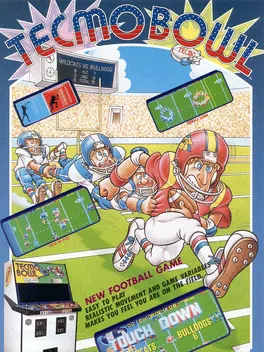
Tecmo Bowl
A side-scrolling, four-player American football game that can be played as two-on-two, one-on-two, etc. The game is somewhat primitive in that there is no play pattern selection; only the receiver can be selected before play begins. One player controls the QB, the other plays the wide receiver/running back.
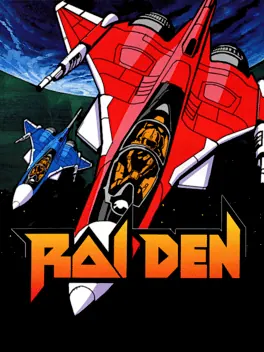
Raiden
Raiden consists of eight vertical scrolling missions where the player maneuvers the Raiden craft dodging and destroying enemy robots, buildings, ground targets, and aircraft. There are bombs and missile powerups as well as collectable medals which add to the score. When player dies, the fighter's fragments become projectiles that damage enemies. After defeating the Stage 8 boss, the mission is completed, and player receives 1 million points for each completed loop. Afterwards, it will start back to Stage 1. This time around, enemies shoot faster and at a more rapid rate.
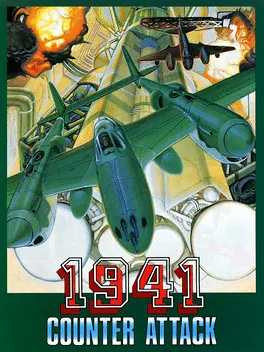
1941: Counter Attack
The year: 1941. The place: 20,000 feet in the air over the North Atlantic. Lightning flashes across the skies of war-torn Europe. Your mission: beat back the imperial forces before they can use their new weapon! In 1941: Counter Attack, the goal is to shoot down enemy airplanes and collect weapon power-ups. It is the prequel to 1942, and the third game in the 19XX series.
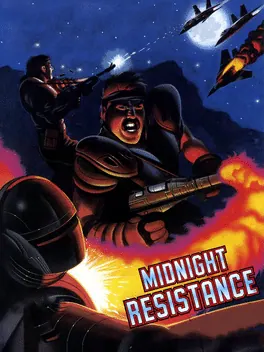
Midnight Resistance
Midnight Resistance is a side-scrolling action shooting game produced by Data East for the arcades in 1989. The game was ported by Data East to the Sega Mega Drive in 1990 and by Ocean Software to various home computer platforms during the same year. The game is set in a dystopian future where the player controls a member of a resistance movement who goes on a mission to rescue his kidnapped family from a mad scientist.
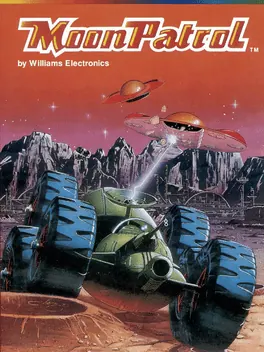
Moon Patrol
Moon Patrol is a side-scrolling shooter that puts players at the controls of a six-wheeled moon rover that can jump and shoot. The goal is to move through the entire course as quickly as possible while shooting enemies for additional points. Cannons are mounted on the front and top of the vehicle, and both fire simultaneously when the fire button is pressed. Rocks, mines, and pits in the course prevent you from just holding to the right for maximum speed. Rocks and mines can be shot, but pits must be jumped. Some enemies fire shots that create new pits in the course, forcing players to react quickly.
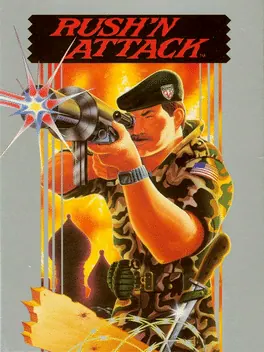
Rush'n Attack
A run & gun shooter by Konami, also known by the title Green Beret, in which the player takes the role of a soldier infiltrating a military base.
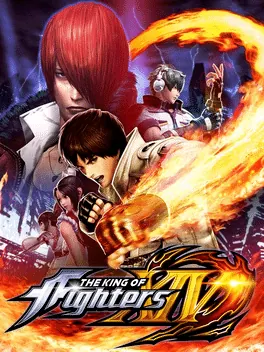
The King of Fighters XIV
Game visuals have evolved into 3D graphics, however "KOF XIV" keeps the classic 2D gameplay and "3-on-3 TEAM BATTLE" game system that has made the series such a big success over the years. The first chapter of a brand new "KOF Saga", which welcomes a plethora of returning characters as well as newcomers, now begins!
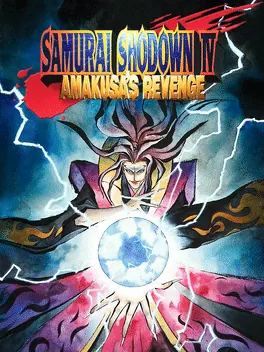
Samurai Shodown IV: Amakusa's Revenge
Samurai Shodown IV: Amakusa's Revenge, also known as Samurai Spirits: Amakusa's Descent in Japan, is the fourth in SNK's flagship Samurai Shodown series of fighting games. Chronologically, it is the second and final chapter of a story between Samurai Shodown and Samurai Shodown II, with Samurai Shodown III being the first chapter.
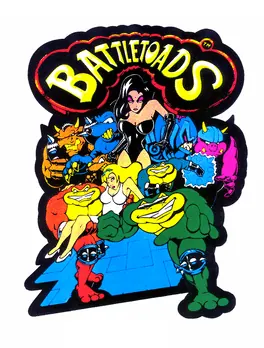
Battletoads
Up to three players, as the Battletoads, brawl aliens and mutant rodents through six levels to save the universe from the Dark Queen. The game also includes vertical and bonus levels. Each Toad has its own signature attack, and as customary for the series, players can knock enemies towards the screen, breaking the fourth wall. Rare took greater liberties with violence and gore in Battletoads Arcade since the product was not destined for home consoles. It was Rare's first game to use the 3D graphics technology that was implemented in Donkey Kong Country and Killer Instinct. Although the game playtested well and appeared financially viable, the publisher hesitated to release the game. A port for the Super Nintendo was in production but canceled. The game received its console debut when it was emulated in the 2015 Rare Replay, a compilation of games from Rare's history for the Xbox One.
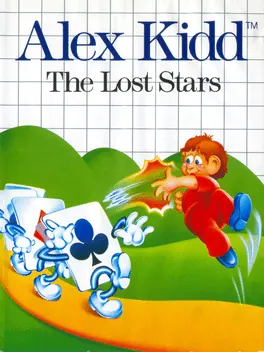
Alex Kidd: The Lost Stars
Alex Kidd: The Lost Stars features Alex Kidd and Stella searching for the twelve Zodiac signs.
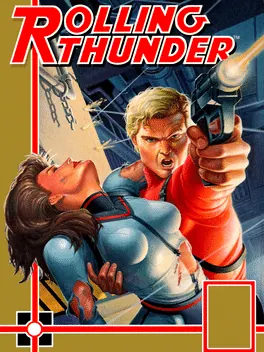
Rolling Thunder
Rolling Thunder is a run and gun/action arcade game that was released by Namco in 1986 and licensed to Atari Games for US manufacture and distribution. It runs upon Namco System 86 hardware, and was later converted for the Sinclair ZX Spectrum, the Commodore 64, the Amstrad CPC, the Atari ST, the Commodore 64, and the Nintendo Family Computer. It was also featured in Namco Museum Encore. The player takes control of "Albatross", a member of the WCPO's (World Crime Police Organization) "Rolling Thunder" espionage unit. Albatross's mission is to save a missing female agent named Leila Blitz from a secret society named Geldra located in New York City. Albatross must travel through two different segments or "stories", both comprised of five stages, for a total of ten game stages. On each stage, Albatross can enter doors, to hide and take cover from enemies, as well jump over to higher or lower floors with rails, including stairs. Albatross begins this game armed with a standard-issue pistol, which can be substituted with a fully automatic assault rifle that allows for continuous firing by holding down the firing button. Albatross can gain ammunition for either weapon, by entering doors which are marked "bullets" or "arms". Despite the presence of a life meter, Albatross can only take two physical hits from the enemy: a single hit drains half of the meter, and he will be killed instantly when struck by a projectile attack such as enemy bullets or lasers. (However, all bullets can be blocked by your own).
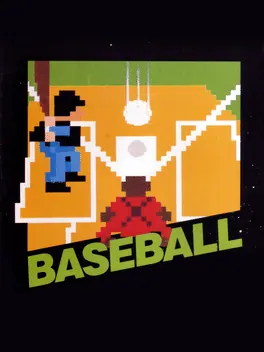
Baseball
The simply titled game "Baseball" was developed by Nintendo in 1983 for the Nintendo Family Computer, and was one of the very first games released for the Famicon. It was also included as one of the 18 games released for the Nintendo Entertainment System's original launch in the United States.
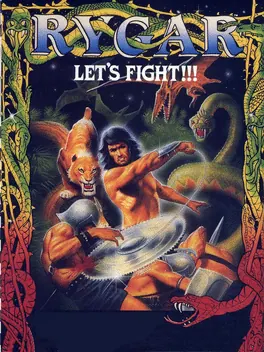
Rygar
An evil being known as Ligar is about to conquer the land of Argool. Such is his power that no living creature dares to cross paths with him. But the legendary warrior Rygar rises from his grave to restore peace and justice. Armed with his famed weapon Diskarmor, Rygar begins to traverse the vast lands that lead to the lair of the demon, as his minions are trying in vain to stop him...
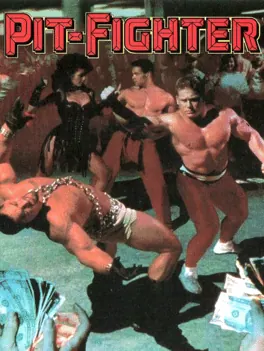
Pit-Fighter
The gameplay is similar to Taito's Violence Fight and SNK's Street Smart. The player must jump, punch, and kick their opponent until his/her energy runs out. If the player presses all three of the buttons at a time, the character will perform a "super move". The player begins Pit-Fighter by choosing one of the three playable characters, who all have different moves, speed, and power. In the player select screen in the arcade version, each player has a color to select the fighters with: for player one it's blue, for player two it's red and for player three it's yellow. As many as three people can play at a time, but there will be extra opponents to fight during any of this game's 15 different matches. Every third fight is a bonus round known as a Grudge Match.[1] In a Grudge Match, the player must fight against a CPU controlled clone of his or her fighter (if playing alone) or the other players in a multiplayer game. Getting knocked down three times eliminates a player from the Grudge Match, the winner is the last man standing. Losing the Grudge Match does not eliminate a player, but the winner gets bonus money. The final battle, the "Championship Match", is between the player and the mysterious entity that taunts between matches every once in a while, the Masked Warrior. If more than one person is playing the game before this match, they must fight each other to the death until only one becomes victorious and can fight him. Sometimes during matches the player will come across foreign objects such as knives, crates, sticks, motorcycles, and bar stools that can be thrown at you or your opponent. The player may also come across a power-up known as the "power pill". If the player or the opponent grab this item, one will become temporarily stronger and take less damage from hits. At times even the crowd will interfere in the fights. Two characters, known as Knife Man (Milt Loper) and Knife Woman (Dianne Bertucci), will come out of the crowd and stab the player with their daggers. The player can take these nuisances out with one hit. Sometimes there is also a fat bearded man with a stick. If the player knocks him down, the player can take the stick and use it against the current opponent. The audience will also push any fighter that ends up among them, and stays there more than a few seconds. They will be forced back into the fighting area.
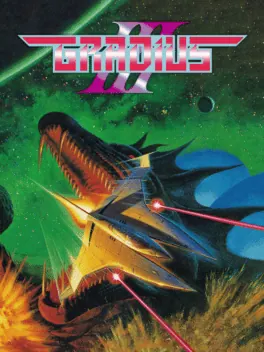
Gradius III
In the darkest reaches of infinite space, pure evil lies in wait ... The Dark Forces led by the god of destruction, Bacterian, prepare to launch a massive onslaught against the planet Gradius. Possessing unstoppable power, the Dark Forces threaten to plunge the Universe into total war and complete annihilation. Their invasion force smashes the Gradius defenses, and the surrounding planets soon fall like dominoes. Now Bacterian's evil grasp reaches for the heart of the resistance...planet Gradius itself... To counter the oncoming threat the United Gradius World Forces gather all their fighter craft. Half of them form a defensive net - the other half a strike team. But they are badly outnumbered and The Dark Forces easily tear through their thin frontline. No fighters survive the slaughter.... In a last gasp move, the United Gradius World Forces send out two fighters, previously considered too dangerous for combat missions: The InterDimensional VIC VIPER fighters. The Fighters take off for the heart of darkness to join the fray that will decide the fate of the Universe...
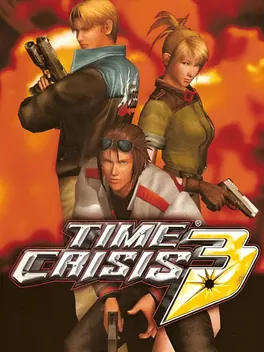
Time Crisis 3
The third installment in Namco's light gun shooting franchise, Time Crisis 3 offers exciting, fast-paced shooting action by the world renowned VSSE agents as they fight to save an innocent nation from total annihilation. Choose from four weapons--machine gun, handgun, shotgun, and grenade-- to blast your way past enemies. Practice your sharpshooting skills in Sniper Combat and multiple gameplay modes. The game also includes multiple gameplay modes, a new playable character, and the original Time Crisis. It's time to warm up that trigger finger and step into the action.
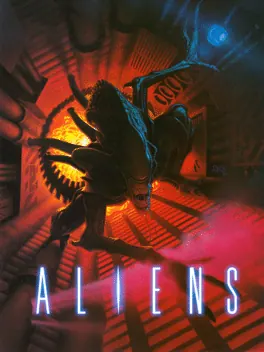
Aliens
Aliens is an arcade game based loosely on the 1986 movie Aliens. You and a friend play female Marines and you must explore and destroy all aliens who have taken over a now abandoned space settlement LV426 Acheron. If you can find any survivors try to rescue them. As well as your normal gun there are other weapons that can be used to help you. A Caterpillar P-5000 can also be found and used. Aliens is mainly a side view horizontal shooter where the screen scrolls as you move from left to right. Some parts of the game require you to look behind the hero firing into the screen as aliens come towards from the distance as well as moving in other directions like in a lift. You can also be driving into the screen trying to shoot aliens.