
Jogos para Arcade
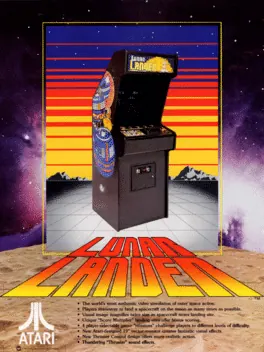
Lunar Lander
Lunar Lander is an arcade game released by Atari, Inc. in 1979, which uses a vector monitor to display vector graphics. The object is to pilot a lunar landing module to a safe touchdown on the moon.
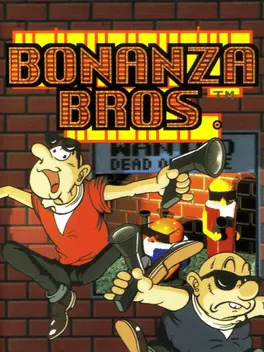
Bonanza Bros.
Just who are these guys? Mobo and Robo are the coolest villains you'll ever meet- they rob banks, museums (and innocent computer gamers of their sanity). One evening whilst watching TV a mysterious stranger appeared on screen. "Good Evening Boys I've got a job for you... My businesses are being robbed and I need you to test my security systems... Deliver the goods and I'll reward you." Take control of Mobo and Robo and guide them around the various establishments, collecting evidence on the way.
Klax
Klax is a 1989 computer puzzle game designed by Dave Akers and Mark Stephen Pierce. The object is to line up colored blocks into rows of similar colors to make them disappear, to which the object of Columns is similar. Atari Games originally released it as a coin-op follow up to Tetris, about which they were tangled in a legal dispute at the time.
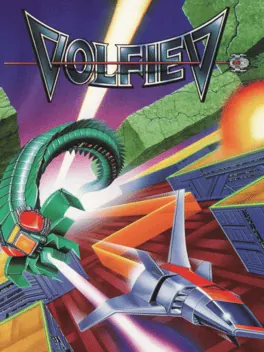
Volfied
Once in the game, using the arrow keys you can move the 'Scanner' ship around the 'Shield Line' at the parameter of the playing area. While moving around this edge the ship is protected from the aliens by a shield indicated by a glowing circle around the ship. This shield is not infinite and care should be taken to complete each level as quickly as possible. A counter indicates the level of shield that you have: when it reaches zero then any contact with an alien is deadly whether you are on the 'Shield Line' or not. The idea of the game is to cut areas out of the screen without touching any of the aliens. This is done by pressing the SPACE key which initiates the 'Laser Cutter' and moving off the 'Shield Line' and rejoining it somewhere else. While you are in the process of drawing a line, your shield is inactive and touching an alien is fatal. Similarly, if one of the aliens touches the line then it will send a charge down the line towards you and you must quickly return to the safety of the edge before it reaches you. When you rejoin the 'Shield Line' the area that does not contain the 'Boss' alien will be filled (points are gained by trapping the other aliens) and the 'Shield Line' will be adjusted to surround the area that is left. The level is completed when a certain percentage of the total area has been filled in. This percentage starts at 80% but may increase in the later levels.
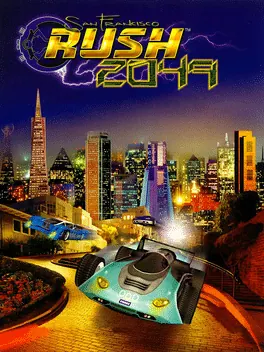
San Francisco Rush 2049
San Francisco Rush 2049 is the third game in the Rush series, sequel to San Francisco Rush and Rush 2: Extreme Racing USA. The game features a futuristic representation of San Francisco and an arcade-style physics engine. It also features a multiplayer mode for up to four players and Rumble Pak support on the Nintendo 64 port. A major difference in game play compared to predecessors in the series is the ability to extend wings from the cars in midair and glide. As with previous titles in the franchise, Rush 2049 features a stunt mode in which the player scores points for complex mid-air maneuvers and successful landings. There is also a multiplayer deathmatch battle mode. There are six race tracks, four stunt arenas, eight battle arenas, and one unlockable obstacle course named The Gauntlet. The single player race mode places emphasis on outlandish and death-defying shortcuts in each track. The game has a soundtrack mostly comprising techno music.
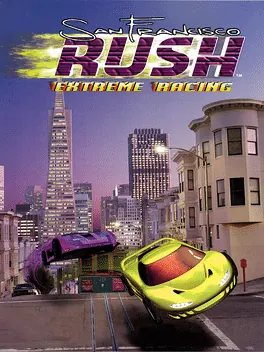
San Francisco Rush: Extreme Racing
San Francisco Rush: Extreme Racing is the first game in the Rush series. Tne N64 version contains six regular tracks and two hidden tracks. The regular tracks can be run in either reverse or mirrored modes and feature added collectible hidden keys throughout the track that can be used to unlock hidden vehicles. It also contains a Practice Mode and a Death Race mode where the game ends if the player crashes. The N64 port of Rush also includes a Circuit Mode and a save system for Fast Times, circuit progress, and hidden keys that the player can find on secret spots to unlock new cars.
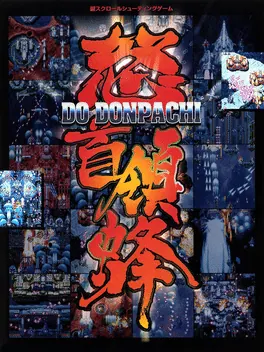
DoDonPachi
Compared to DonPachi, DoDonPachi is generally known for introducing new gameplay elements while improving or changing existing ones. The overall background of the game, unlike following sequels, remains more or less centered around a supposed invasion by a mysterious race of mechanized aliens, which the player is called to face throughout its run. However, more sinister and shocking secrets lie beneath the surface, accessible only to those brave and skilled enough to clear the entire game.
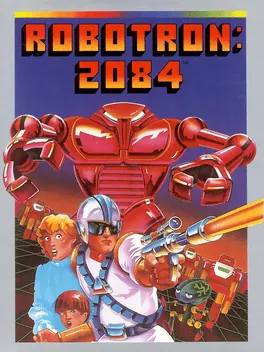
Robotron: 2084
In 2084, man creates a species of super-advanced cyborgs known as Robotrons. Recognizing the imperfect nature of their creators, the Robotrons conclude that the inefficient human race must be exterminated. In Robotron: 2084, only you and a single family of clones remain. If mankind is to survive, you must destroy the Grunts, Brains, Enforcers, and Tanks - but avoid the indestructible Hulks at all cost. Can you withstand wave after wave of android invasion and rescue Mommy, Daddy, and Mikey... before it's too late?
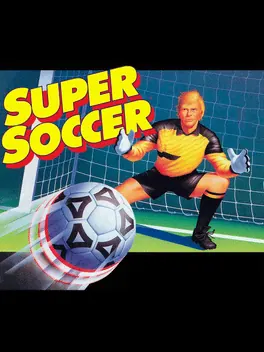
Super Soccer
Let's play soccer - the world's favorite sport! In Super Soccer you can choose between an Exhibition mode and a Tournament mode. While the first mode lasts a single game only the Tournament mode challenges you with 16 consecutive games, facing the Nintendo Allstar Team in the final round. The field is shown in a top-down perspective. Scrolling is done by Mode 7 chip. Difficulty varies with the opponent team, ranging from easy to hard in later games in the tournament. After winning a match in the tournament mode, you will be rewarded witch a code in order to pick up the game in the same round of the tournament later on.
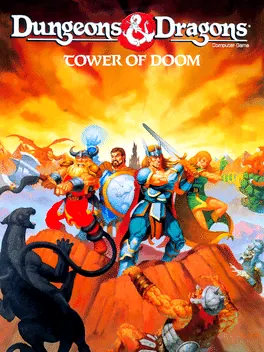
Dungeons & Dragons: Tower of Doom
Tower of Doom is a side-scrolling arcade game featuring four different characters (cleric, dwarf, elf, fighter) fighting iconic Dungeons & Dragons monsters. Bosses include a troll that regenerates unless burned, a large black dragon, the dreaded Shadow Elf (Mystara's equivalent of the drow), a beholder, the optional superboss Flamewing (a great wyrm red dragon) and the final boss Deimos (an archlich). At points in the game the players are presented with a choice of paths to take to continue progress. Each path goes to a different area, and it is impossible to visit every area in a single play. The gameplay is more technical than the average on beat'em up games. In addition to the usual basic attacks and jumping it includes blocking, strong attacks, turning attacks, dashing attacks, crouching and evading. It also requires the use of careful tactics, as most enemies have the same abilities as the heroes and can out-range them, too. Daggers, hammers, arrows and burning oils can be used as throwing weapons, and many enemies have similar weapons. Spells can be used by means of magical rings or by the two playable spellcasters (a cleric and an elf).
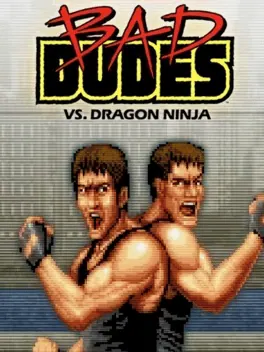
Bad Dudes vs. Dragon Ninja
Bad Dudes Vs. DragonNinja, often referred to simply as Bad Dudes (on the American NES port of the arcade original), and known in Japan simply as DragonNinja is a 1988 arcade game developed and published by Data East. It was also ported to many computer and game console home systems. Bad Dudes is a side-scrolling beat 'em up where the players are set in the role of the titular duo tasked with rescuing "President Ronnie" from ninja kidnappers. It was met with commercial success, and a generally positive to mixed critical reception. It has since become widely known for its general premise and introductory cut scene.
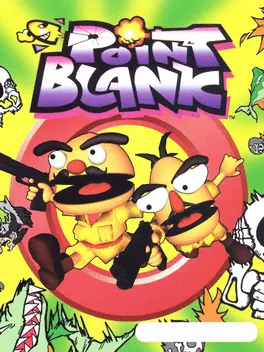
Point Blank
Point Blank is a first-person arcade shooter developed by Namco. Players use two attached light guns to hit targets onscreen; missions require speed, quick judgment or pinpoint accuracy. The game consists of non-violent, all-ages, shooting contests like shooting targets, shooting cardboard targets, etc.
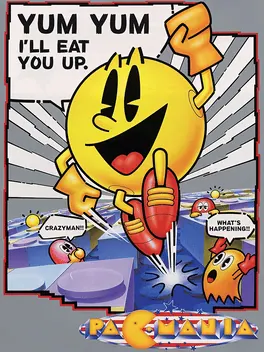
Pac-Mania
Pac-Mania is a variation on the game Pac-Man. You need to guide Pac-Man around a maze and eat all of the dots on the board in order to proceed on to the next round. Numerous, multi-colored ghosts also roam the maze trying to stop you. If you eat one of the power pellets in the maze, the ghosts will temporarily turn blue and run from you. Pac-man can earn bonus points by eating the ghosts when they are in this state. The maze is now in 3-D and is larger than screen which will scroll to follow the action. To help get out of tight spots, Pac-Man now has the ability to jump. But be careful, because some of the ghosts have learned this trick as well and you could end up in a mid air collision!
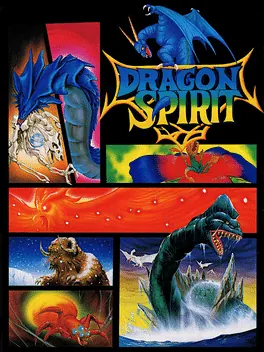
Dragon Spirit
Dragon Spirit is a vertical scrolling shooter arcade game that was released by Namco in 1987 and licensed to Atari Games for its American manufacture and distribution. In the kingdom of Mitgult, a serpent demon named Zawell escapes imprisonment after a thousand years, and kidnaps Princess Alicia. A soldier named Amul is chosen to rescue her and destroy Zawell. He points his sword skyward and transforms into a powerful blue dragon. He can breathe fire and drop bombs, as well as collect up to thirteen additional powers during his journey. Amul must fight nine of Zawell's mightiest beasts, one at the end of each stage, before facing Zawell himself.
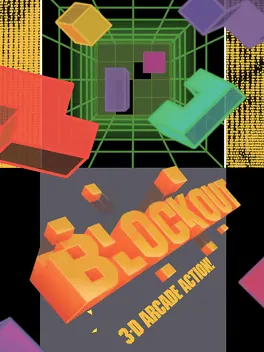
Blockout
Blockout is a puzzle videogame, created in 1989 by Polish developer - California Dreams, designed by Aleksander Ustaszewski and Mirosław Zabłocki. The game is the logical extension of Tetris into the third dimension. In Tetris, the player manipulates a set of tetrominoes which fall into a two-dimensional pit (seen from the side). The aim is to solve a real-time packing problem by forming complete rows, which then disappear and score points. Poor play leads to incomplete rows, caused by inefficient arrangements of tiles; these rows do not disappear, giving the player progressively less space and less time to play subsequent pieces. Similarly, in Blockout, the player manipulates a set of polycubes which fall into a three-dimensional pit (seen from above; the pieces appear in the foreground and fall away). The pieces can be rotated around all three axes, and moved horizontally and vertically. The aim is to form complete layers.
Pitfall II: The Lost Caverns
Pitfall II: The Lost Caverns is the sequel to Pitfall and was released for a variety of systems during the mid-1980s including the SG-1000 in 1985. It was also ported to Sega System 1 arcade hardware by Sega. Gameplay is similar to the original game, but the levels are more maze-like. Sega's version of Pitfall II was tweaked significantly from its western counterparts released for the Atari 2600, ColecoVision etc. The gameplay is largely the same, but there are many additions. These include a Lives system, mine-carts, balloons, and a final Demon boss. The increased specifications of System 1 hardware means the arcade version is much more detailed and allows the player to see more of the maze at one time. The SG-1000 version is directly inspired by the arcade game, and though cannot match the same level of graphical quality, it is arguably the nicest looking home port of the game.
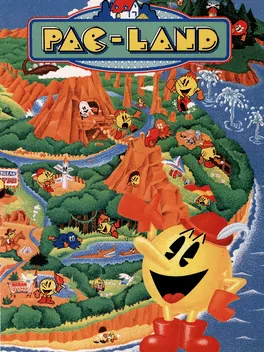
Pac-Land
Pac-Land itself is split into trips. In each of these trips the objective is to get the fairy (that is kept under Pac-man's hat) to Fairyland and also to return home to Pac-Man's house. The majority of the trip involves moving from left to right avoiding various obstacles such as the enemy ghosts, water spurts and quicksand traps. Each trip is divided into a number of rounds, the end of which provides Pac-Man with bonus points depending on how much time he has left and also his position in jumping at the end of each round. If the player runs out of time before finishing the round, Sue, the purple ghost, will speed up rapidly. The penultimate round of a trip ends with Pac-Man entering Fairyland and returning the fairy under his hat to the Fairy Queen. In return the Fairy Queen gives Pac-Man magic boots. For the final round of the trip, Pac-Man has to travel from right to left back home. For assistance he uses the magic boots, which allow him to jump repeatedly while in mid-air. Once Pac-Man completes the trip, he is greeted by Ms. Pac-Man and Baby Pac-Man. In the US release of the game, Pac-Man's cat and dog in the cartoon series, Sour Puss and Chomp-Chomp, are also there to welcome Pac-Man home. Pac-Man then begins his next trip following the same objectives as before, although the difficulty increases. As in the original Pac-Man, there are fruit which appear to eat for bonus points and power pellets to turn the ghosts blue and vulnerable. A hidden item (sometimes accidentally dropped by the ghosts) is a Flagship from Galaxian, which rewards 7650 points when collected (a reference to Namco's goroawase number of 765). The Galaxian Flagship is a long running cameo that appears in the Namco-made Pac-Man games. There are also hidden bonuses in the game, eating ghosts in a certain order will give extra time and pushing an obstacle in the opposite direction can give extra lives, invincibility, and balloons to collect for points and warps.
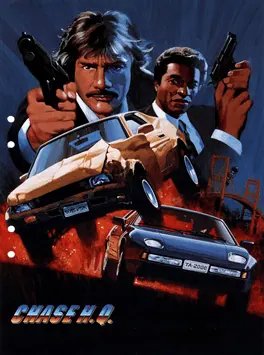
Chase H.Q.
At the start of each level the player is informed who they are pursuing, a great distance away: They must apprehend the criminal before their time limit expires. The criminal's car is constantly moving away, so if the player repeatedly crashes or drives too slowly, the criminal will escape. At some points during the game the road splits, and the correct turn must be taken, otherwise it will take longer to catch the criminal. When their vehicle is reached, the time limit is extended; the vehicle must be rammed a number of times until the criminal is forced to stop, then is arrested. The game includes five levels. As both the initial time limit to reach the criminal and the time extension to ram the criminal are just 60 seconds, the game is very short - a player who is able to finish the game on one credit will enjoy at most ten minutes of game-play. Interestingly enough when Nancy at Chase HQ (at the start of every level) calls on the radio the frequency is always 144.X (various)Mhz. This is actually the 2-meter band of amateur or ham radio frequencies. Although superficially similar in technology to Sega's Outrun, Chase HQ features significant technical advancements over that title in the presentation of perspective, hills and track splits.
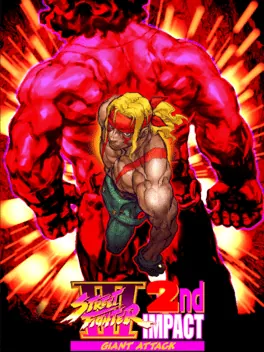
Street Fighter III 2nd Impact: Giant Attack
2nd Impact brought back all the characters from the first game and introduced two new ones: Hugo and Urien. Yang, who was an alternate version of Yun in the first game, became his own character with his own set of special moves and super arts. Akuma also returned as a secret computer-controlled challenger and selectable character. Thus the playable character roster increased to 14. In addition to the regular Akuma, a non-playable computer-controlled version named "Shin Akuma" also appears in the single-player mode.
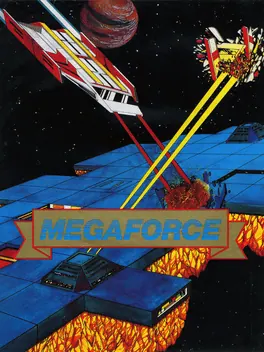
Mega Force
In the game, the player pilots a starship called the Final Star, while shooting various enemies and destroying enemy structures for points. Unlike later vertical scrolling shooters, like Toaplan's Twin Cobra, the Final Star had only two levels of weapon power, and no secondary weapons like missiles and/or bombs. Each stage in the game was named after a letter of the Greek alphabet. In certain versions of the game, there is an additional level called "Infinity" (represented by the infinity symbol) which occurs after Omega, after which the game repeats indefinitely.
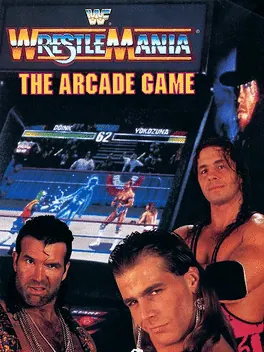
WWF WrestleMania: The Arcade Game
WWF WrestleMania (also known on console versions as WWF WrestleMania: The Arcade Game) is a professional wrestling arcade game released by Midway Manufacturing Co. in 1995. It is based on the World Wrestling Federation (WWF) professional wrestling promotion. The game featured digitized representations of eight WWF performers who are pitted against each other in fast-paced matches inspired by Midway's Mortal Kombat games. Commentary is provided by Vince McMahon and Jerry Lawler, who also appear in the game sitting at the announcers' table to the right of the ring. Acclaim, who published the console versions of the game, developed a follow-up, WWF in Your House for the PlayStation, Sega Saturn, and DOS.
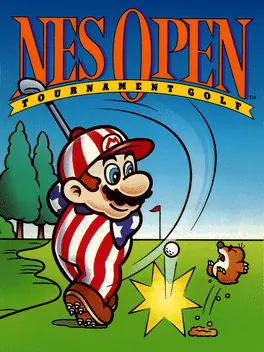
NES Open Tournament Golf
NES Open Tournament Golf is an NES game featuring Mario characters. As the name of the game implies, it is a golf game and was one of the first golfing games in the Mario series. You can play a round of golf on one of three different courses. One or two players can play in the U.S., Japan, or the U.K. and choose a stroke or match play game. Gameplay is from two point of views, starting with an overhead view allowing you to set up the shot and choose a club, then switching to a 3-D point of view. Hitting the ball uses the common power meter where tapping the button starts the meter, tap the button a second time to select the amount of power in the shot, then tap the button a third time to select the amount of slice or hook.
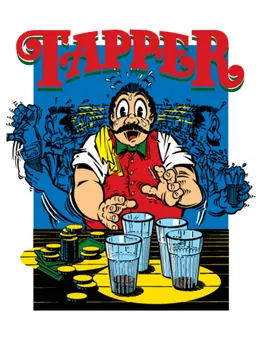
Tapper
Tapper is a 1983 arcade game released by Bally Midway. The goal of the game is to serve beer and collect empty mugs and tips. Upon failing, the bartender skids along the table out of frame, while upon victory he drinks a beer of his own.
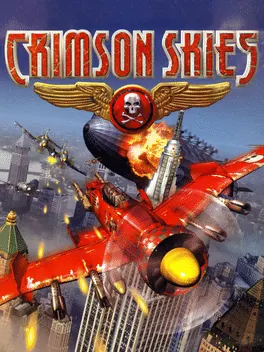
Crimson Skies
The series is set within an alternate history of the 1930s invented by Weisman and McCoy. Within this divergent timeline, the United States has collapsed, and air travel has become the most popular mode of transportation in North America; as a result, air pirates thrive in the world of Crimson Skies. In describing the concept of Crimson Skies, Jordan Weisman stated he wanted to "take the idea of 16th century Caribbean piracy and translate into a 1930s American setting."
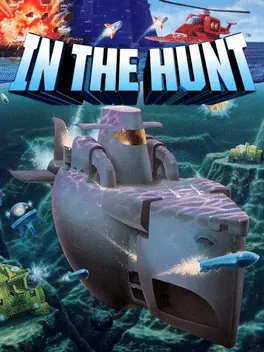
In the Hunt
In the Hunt is a horizontal scrolling shooter arcade game by Irem. It was released in 1993 and later ported to the Sega Saturn, the PlayStation and Windows 95 for the PC by Kokopeli.
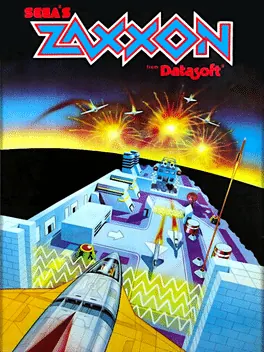
Zaxxon
Zaxxon is a 1982 isometric shooter arcade game developed and released by Sega. The game gives the player the experience of flying a fighter craft through a fortress while shooting at enemy entities (missiles, enemy gunfire, etc.) The object of the game is to hit as many targets as possible without being shot down or running out of fuel, which can be replenished paradoxically, by blowing up fuel drums.
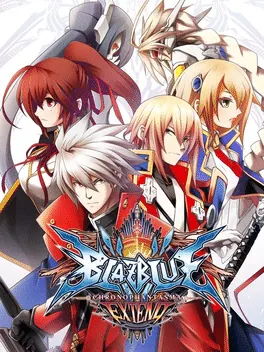
BlazBlue: Chrono Phantasma Extend
BlazBlue: Chrono Phantasma Extend (formerly dubbed as BlazBlue: Chrono Phantasma 2.0 in Arcade version) is a 2D fighting game and the enhanced version of BlazBlue: Chrono Phantasma. Chrono Phantasma Extend adds two additional characters: Lambda-11 and Celica A. Mercury. The console release introduced extra story modes, such as the beach scenario from the Playstation Vita version of Chrono Phantasma, a new story based on the BlazBlue: Remix Heart manga, and additional scenarios for certain characters such as Kokonoe, Kagura, and Bullet. For the localized version of Extend, Library Mode reintroduced from the Japanese release. The Playstation Vita version of Chrono Phantasma Extend also adds dual audio to the Story Mode, which was not present in the original Vita release.
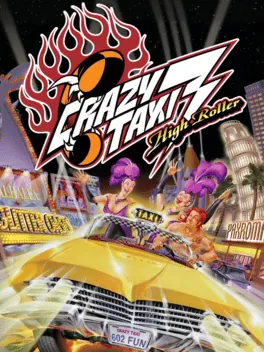
Crazy Taxi 3: High Roller
After New York, what city could be screwy enough for a CRAZY TAXI game? You guessed it, an amped-up version of Las Vegas serves as the backdrop for this chapter in this ultra-tense driving game. As with previous series installments, the object of the game is to collect as much fare money as possible by picking up and delivering passengers at record speeds. You'll have to create a few shortcuts of your won in order to win, and that will mean causing a few crashes and knocking down a few buildings.
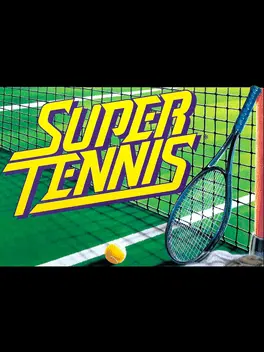
Super Tennis
Super Tennis is a 1991 tennis video game for the Super NES. It released at early points in the Super Nintendo's shelf lives and utilized mode 7.

Real Bout Fatal Fury Special
The supreme trial of strength awaits! 19 of Fatal Fury's hottest heroes collide! One year since the fearsome conclusion to "Real Bout", the hungry wolves ready themselves for a new battle, "Real Bout Special" - the paramount pugilistic proving ground! The game retains the cast of the original Real Bout, with the addition of Tung Fu Rue, Cheng Sinzan, Laurence Blood and Wolfgang Krauser from Fatal Fury Special, with Krauser serving as the new final boss. Geese Howard, who was killed off in the end of the original Real Bout, appears in this game as a hidden final boss in a special "Nightmare Match" and as an unlockable playable character in the home versions. The game also features hidden "extra" versions of Tung Fu Rue, Billy Kane, Blue Mary, and Andy Bogard, for a total of 23 (24 if counting Geese) characters.
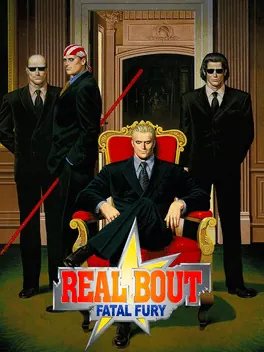
Real Bout Fatal Fury
Real Bout changes the play controls from the previous Fatal Fury games, reducing the number of attack buttons from four to three: a standard Punch and Kick button, a "Strong Attack" button which can be either a stronger punch or kick attack, depending on the character. The game retains the three-plane "oversway" system from Fatal Fury 3, which features a main lane for fighting, with foreground and background planes used to avoid attacks or leap towards the opponent. A dedicated button is now used to make an "oversway" (or change plane) towards the background or foreground. Real Bout introduces a Power Gauge, which fills up as the player performs normal or special techniques against their opponent or defend themselves, similar to many super move gauges featured in other fighting games. The Power Gauge allows players to perform one of three types of Special Techniques, depending of the level of the Power Gauge. Real Bout also introduces stages with ring-outs, a gameplay feature previously introduced in 3D fighting games such as Virtua Fighter. If the player performs certain attacks on their opponent while next to the boundaries, the character will eventually destroy the barrier keeping the opponent in the ring and be able to knock them out of the stage for an easy win.
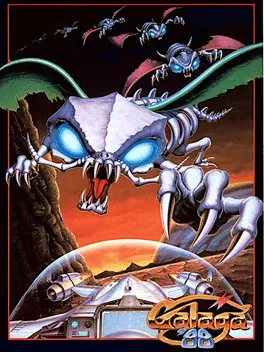
Galaga '88
The gameplay in Galaga '88 is built on the same premise as that of the original Galaga game, but is in many ways more complex and more difficult. The game is divided into a series of 29 Stages distributed through eight Worlds. The starship Galaga accelerates between Stages and Worlds and even to higher dimensions (go to the section on Dimensional Travel below to find out more). With the exception of the third and eighth, each World culminates in a Challenging Stage. There are six such stages to engage in any full game, and each begins with the on-screen announcement "That's Galactic Dancin'!" and has its own YM2151-generated song to which the enemy formations dance. In any given Challenging Stage, both the design of the enemies and their dancing formations shall vary according to the player's current Dimension. As in Galaga, the objective is to destroy all forty enemies before they fly away off the screen. However, refraining completely from touching any controls for the duration of a Challenging Stage awards a "secret bonus" ranging in value from 10000 to 25000 points, and equal to the "special bonus" which would have been awarded for destroying all forty enemy aliens instead. Galaga '88 introduces a variety of new enemies and behaviors. Most of these special enemies are worth varying amounts of bonus points when destroyed. Some enemies can combine into larger enemies which take multiple hits to destroy, while others arrive in eggs, explode in a shower of fireworks, grow with multiple hits, or sport armor which makes them invincible while in formation. Certain enemies drop small formations of tiny creatures that wiggle their way down the screen, and still others can act as escorts to incoming groups of enemies and then quickly dive at the player before leaving the game. Most stages also include various obstacles which appear once the enemy formation has been assembled. These can be destroyed with either one or several shots, and the first one on each stage will leave a "Warp Capsule". At the start of the game, the player can select how many Galaga starships to start with (one or two), affecting their number of remaining lives. The game ends after the final boss is defeated (or when the player's last ship is destroyed or captured) - in the latter case, the player can continue the game for an additional credit. The Game Over screen shows the player's hit-miss ratio and a visual representation of their progress. If the player reaches Stage 27, the game also shows a picture of the final boss (damaged if defeated, but silhouetted if not). If the arcade operator has set the "continue" option to "on", the player also cannot continue if he is defeated on Stages 27-29.
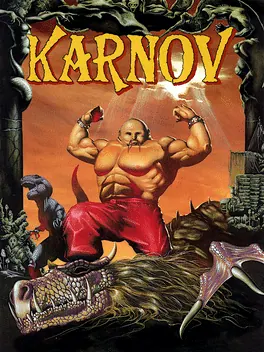
Karnov
Karnov is a 1987 platform arcade game. It is the debut of Data East's mascot of the same name. After Data East became defunct due to bankruptcy in 2003, Paon, a company comprising former Data East staff, acquired the rights to Karnov, along with multiple other Data East games. In the game, players take control of the title character Jinborov Karnovski, or "Karnov" for short. Karnov is a strongman popularly illustrated as being from an unspecified part of the Soviet Union's Central Asian republics as shown on the original arcade flyer and again in Karnov's Revenge.
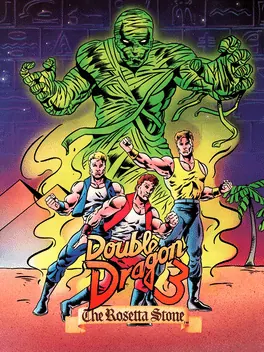
Double Dragon 3: The Rosetta Stone
The final game in the original trilogy. Billy and Jimmy Lee are returning from martial arts training when their paths cross a fortune teller. She tells them of a great evil in Egypt, their strongest adversary yet, and how the Rosetta Stones can aid them. This game features weapon shops where Billy and Jimmy can buy power-ups, tricks, energy and extra lives to aid them in their quest. Power-ups make Billy and Jimmy twice their size, increasing their damage done and range of attack. The character graphics have changed, moving away from cartoon style graphics to more realistic looking characters.
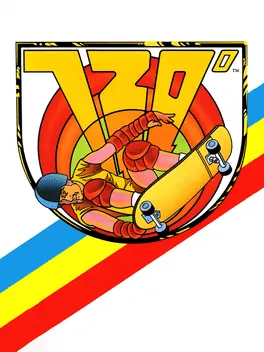
720 Degrees
720 Degrees is a 1986 arcade game by Atari Games. 720°, a skateboarding game, is notable in that along with BMX Simulator, it is one of the first extreme sports video games, and has a unique timed structure that requires the player score points in order to keep the game going.
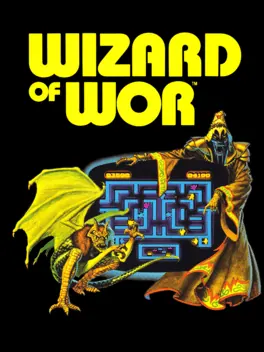
Wizard of Wor
Wizard of Wor is an action-oriented game for one or two players. The game takes the form of several maze-like dungeons infested with monsters. The players' characters, called Worriors, have to kill all the monsters. Player one has yellow Worriors, on the right, and player two has blue Worriors, on the left. In a two-player game, the players are also able to shoot each other's Worriors, earning bonus points and causing the other player to lose a life. Team-oriented players can successfully advance through the game by standing back-to-back (such as in a corner) and firing at anything that comes at them.