
Jogos para Arcade
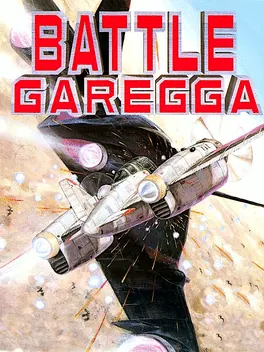
Battle Garegga
Battle Garegga is a vertically scrolling shoot'em up arcade game. The storyline takes place in a sort of diesel punk versions of the 1940s. Main heroes are brothers Brian and Jason — the sons of genius designer who want to destroy the evil Federation. Players control planes (4 air crafts to choose), fly forward, collect items and shoot to enemies. Unlike in most other scrolling shooter games, where bullets are brightly colored to distinguish from the background, bullets are realistically colored, making it difficult for players to see them. As a bonus, by entering a code, you can unlock four of the characters from Mahou Daisakusen.
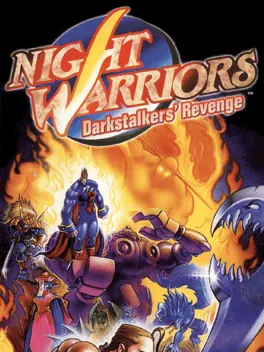
Night Warriors: Darkstalkers' Revenge
The Darkstalkers return and now crave the fury of a good night fight. In this head-to-head fighting challenge, creatures from your darkest nightmares battle for eternal control fo the night. Treacherous, classic favorites take on 4 new challengers for total domination. Donovan, the Dark Hunter. Huitzil, the Killer Machine. Hsien-Ko, the Chinese Ghost. And Pyron, the ultimate Alien ruler. The battle has never been as intense, with faster speeds, more captivating moves and even more incredible graphics. Night Warriors; the game of your dreams, and nightmares.
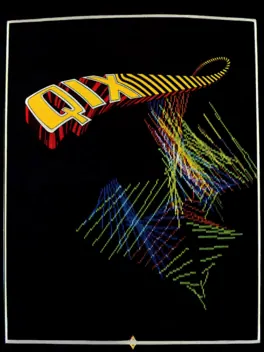
Qix
Draw boxes to claim as much screen as possible without getting in the path of the "Qix" and "Sparx". Draw slower for more points and hope that you have enough coins. Simple but very addicting!
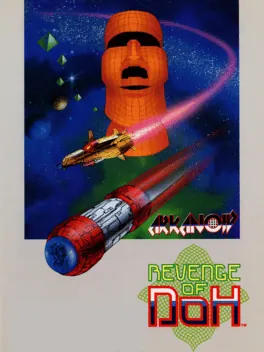
Arkanoid: Revenge of Doh
Arkanoid - Revenge of Doh (a.k.a. Arkanoid 2) is an arcade game released by Taito in 1987 as a sequel to Arkanoid. The mysterious enemy known as DOH has returned to seek vengeance on the Vaus space vessel. The player must once again take control of the Vaus (paddle) and overcome many challenges in order to destroy DOH once and for all. Revenge of Doh sees the player battle through 34 rounds, taken from a grand total of 64. NEW FEATURES: Revenge of Doh differs from its predecessor with the introduction of "Warp Gates". Upon completion of a level or when the Break ("B") pill is caught, two gates appear at the bottom of the play area, on either side. The player can choose to go through either one of the gates - the choice will affect which version of the next level is provided. The fire-button is only used when the Laser Cannons ("L") or Catch ("C") pill is caught. The game also features two new features for bricks. Notched silver bricks, like normal silver bricks, take several hits to destroy. However, after a short period of time after destruction, they regenerate at full strength. Fortunately, clearing a level does not require that any notched bricks be destroyed. Also, some bricks move from side to side as long as their left and/or right sides are not obstructed by other bricks. The US version features an entirely different layout for Level 1 that feature an entire line of notched bricks, with all colored bricks above it moving from side to side. The game features a mini-boss in the form of a giant brain, which will help you practice for DOH. Home versions of Revenge of DOH also featured a level editor, where players could create their own levels or edit and replace existing levels, with the exception of two levels: the mini-boss and DOH.
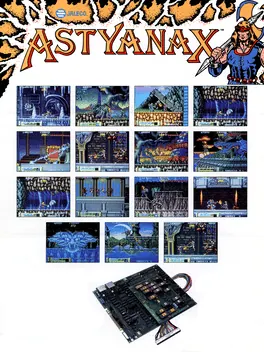
Astyanax
Astyanax is a side-scrolling platform action game set in a fantasy world. The hero sets out to slay the evil wizard terrorizing the land. He is armed with an ax and also has a magic lightning spell that can be powered-up two times. Magic upgrades and health potions can be found in small stone pillars. The player needs to beat monsters in a number of locales, jumping across pits and fighting bosses at the end of stages. Two-palyer co-op is supported, with the second player being palette-swap of Player 1. The game was designed by Tokuhiro Takemori who previously worked on Legendary Axe, and the basic game mechanic is similar -- in order to deal heavy blow with the axe the player needs to stop swinging it for a while. The NES version released after the Arcade game, while generally having same gameplay, features completely different level layouts, enemy designs and story.
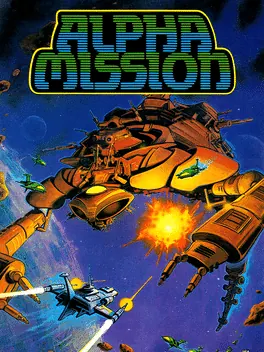
Alpha Mission
Alpha Mission is a vertical scrolling shooter that has similarities to Xevious, with the use of air-to-air and air-to-ground weapons.
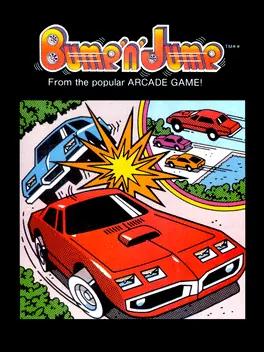
Bump 'n' Jump
Bump 'n' Jump is an overhead-view vehicular combat game developed by Data East and originally released in Japan as "Burnin' Rubber". The arcade version was available as both a dedicated board and as part of Data East's DECO Cassette System. It was distributed in North America by Bally Midway. The goal is to drive to the end of a level while bumping enemy vehicles into the sides of the track and jumping over large obstacles such as bodies of water. The arcade game was a commercial success in Japan and North America. The game was ported to the Atari 2600, Intellivision, ColecoVision, Nintendo Entertainment System, and Sharp X1. The Famicom version of Burnin' Rubber was published as "Buggy Popper" in Japan in 1986.
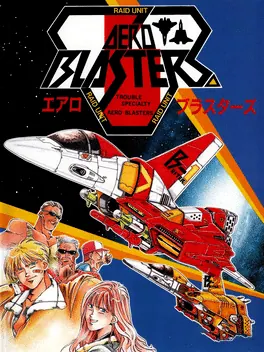
Air Buster
Air Buster has its roots in such scrolling shoots as R-Type, Gradius and Truxton. Its two-player simultaneous action is a relatively unique twist on the genre.
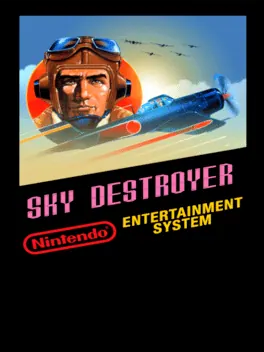
Sky Destroyer
Sky Destroyer is a rail shooter video game in which the player controls a WWII Japanese monoplane. The pilot is required to destroy enemies to clear stages. It was released by Taito Corporation in 1985 for video arcades as well as for the Family Computer.
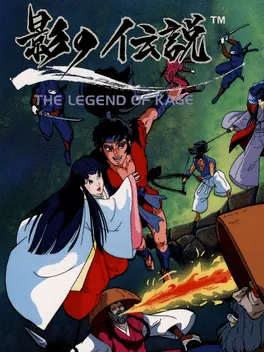
The Legend of Kage
The Legend of Kage is a 1985 arcade game by Taito and was released for several contemporary video game home systems in 1986. The player is armed with a kodachi shortsword and an unlimited amount of shuriken. Grabbing a crystal ball causes the player character's Kage's clothes to change to the next level in colour and thereby attain certain powers (bigger shuriken and/or faster speed); if Kage is hit while in green or orange clothes, he does not die but revert to his normal red clothes. Grabbing a scroll causes Kage to stand still and meditate for several seconds while approaching enemies drop to the ground dead (although the scrolls appear in the arcade version, the crystal balls do not). This MSX version was brought without a license to the SG-1000 in Taiwan.
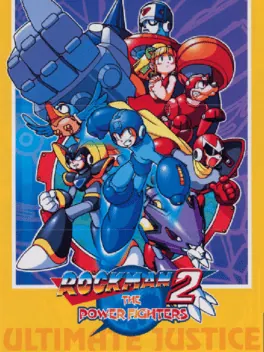
Mega Man 2: The Power Fighters
It's a disaster: Doctor Light's lab has been attacked by Doctor Wily, and stolen some crucial parts for robots. And, if it weren't bad enough already, he has taken Roll as a hostage! Mega Man and Proto Man go to stop Wily and stumble upon Duo, the big alien robot, who is willing to help. And Bass, still angry that Wily has revived more Robot Masters, again teams up with the good side to destroy the enemies...
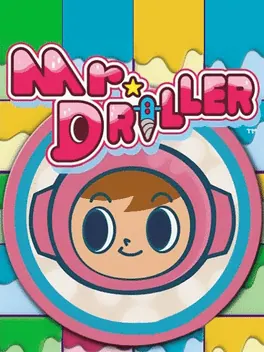
Mr. Driller
Mr. Driller is an arcade puzzle game developed by Namco and first released in 1999. Players control a driller who descends through layers of colored blocks, clearing paths while managing a limited air supply. Blocks disappear when four or more of the same color are connected, creating strategic challenges as the screen scrolls upward. The game emphasizes quick decision-making and careful planning under time pressure. It became known for its simple mechanics, increasing difficulty, and bright visual style.
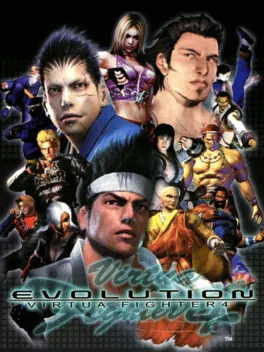
Virtua Fighter 4: Evolution
Evolution was an updated version of Virtua Fighter 4. The game introduced two new characters and adjusted every other character as well. The two new characters were the Judoka-assassin, Goh Hinogami and the Muay Thai boxer Brad Burns. With the addition of Brad Burns, Vanessa Lewis's alternate Muay Thai style from Virtua Fighter 4 was removed and replaced with a Vale Tudo "Offensive" style; making her a solely Vale Tudo brawler. All of the stages were adjusted. For example, Lei-Fei's stage in Virtua Fighter 4 previously took place during sunset, in Evolution it takes place during the morning.

Sega Bass Fishing
Explore the exciting sport of Bass fishing! Based on the Dreamcast hit, motor out to eight different fishing locations to catch the biggest and baddest Bass possible! Choose between fourteen different lures, and compete in four tournaments. Start off as an amateur, and work your way up to the pros in the Masters Classic tournament. Get hooked!
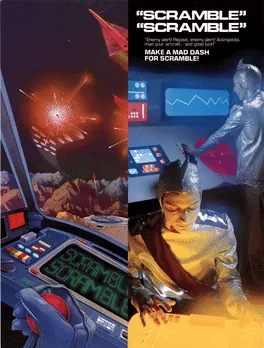
Scramble
The player controls an aircraft, referred to in the game as a "Jet," and has to guide it across a scrolling terrain, battling obstacles along the way. The ship is armed with a forward-firing weapon and bombs; each weapon has its own button. The player must avoid colliding with the terrain and other enemies, while simultaneously maintaining its limited fuel supply which diminishes over time. More fuel can be acquired by destroying fuel tanks in the game. The game is divided into six sections, each with a different style of terrain and different obstacles. There is no intermission between each section; the game simply scrolls into the new terrain. Points are awarded based upon the number of seconds of being alive, and on destroying enemies and fuel tanks. In the final section, the player must destroy a "base". Once this has been accomplished, a flag denoting a completed mission is posted at the bottom right of the screen. The game then continues by returning to the first section once more, with a slight increase in difficulty.
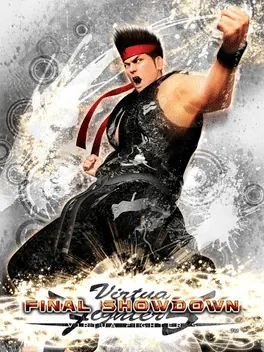
Virtua Fighter 5: Final Showdown
The fifth entry in SEGA's fighting game series. Once again, the real-time level of visual detail and character animation has been upped to the most advanced levels, with next-generation lighting and detail on the fighters and environments. Players will be able to customize their characters by selecting from various patterned costumes and a wide range of attachable items that can be placed onto each fighter's various body parts. Players will not only achieve victory by defeating highly-skilled opponents, but will also compete for prizes and earn in-game money through the match to buy many items at an in-game shop. Virtua Fighter 5: Final Showdown contains a full overhaul of Virtua Fighter 5's mechanics, balance and animations, along with new game modes, new dynamic fighting arenas, a massive collection of customizable character items and new characters.
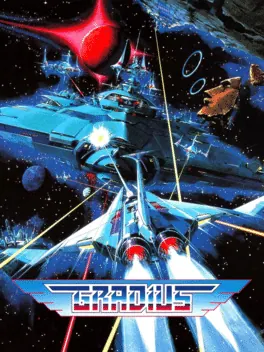
Gradius
The NES port of Gradius.
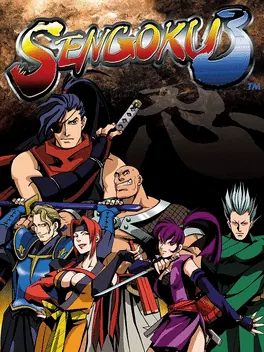
Sengoku 3
The game takes a greater departure from its predecessors in both story and presentation. The heroes are now members of a ninja clan who have to dispatch an evil emperor before he is released. Players can choose which character they want for the first time, each having their own strengths and weaknesses. Two bosses that confront the player can also be playable after a certain chapter of the game, allowing players to re-select their character if they wish.
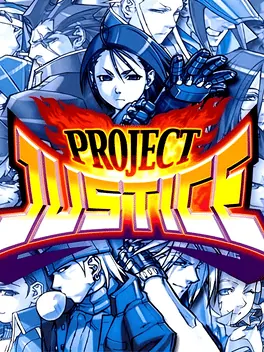
Project Justice
Project Justice is the sequel to Rival Schools: United By Fate. Project Justice's fighting system is lifted from the original Rival Schools, with some notable changes. The game continues to be a team fighter, but has teams of three characters instead of two. This allows another Team-Up attack to be used in a fight, but also adds a new type of attack, the Party-Up, initiated by pressing any three attack buttons. The Party-Up is a three-person attack that varies based on what school the character initiating the attack is from. The additional partner also allows players to cancel an opponent's Team-Up Special by inputting a Team-Up command of their own. This initiates a short fighting sequence between one character from each team. If the person initiating the sequence gets the first successful hit in during the sequence before time runs out, the Team-Up they are caught in will be canceled, and the game switches back to the main fight; if the opposing player gets the first hit or time runs out, the Team-Up continues as usual. Additionally, the 'vigor' meter in Project Justice is limited to 5 levels (down from 9 in Rival Schools), with Party-Ups requiring all 5 levels, Team-Ups continuing to cost two levels, and any attempts (successful or not) to cancel a Team-Up costing one level. Also carrying over from the first game, the Dreamcast port of Project Justice in Japan includes a character creation mode that allows a player to create their own fighters who can be used in all modes except for single-player. However, the character creation in Project Justice is packaged as a board game, taking place during an inter-school festival, rather than a date sim game like in Rival Schools. As with School Life Mode in the original Rival Schools, though, this boardgame is not included in non-Japanese ports of Project Justice due to the amount of time it would take to translate the mode. Instead, several unlockable sub-characters were included in these ports, built from the character creation parts in the Japanese version.
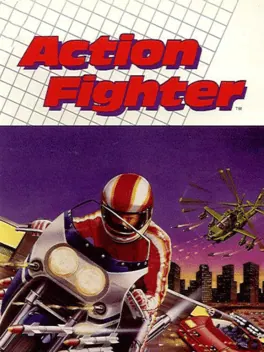
Action Fighter
Take to the streets or take to the skies. Because Action Fighter is the incredible, transformable combat vehicle. You start out on a customized cycle. Built with enough speed and power to jump over water and overtake enemies. Then, by finding the right parts along the way, you'll change your cycle into a supercharged, state-of-the-art sports car. Next, add two turbojets to make your car airborne. And take to the skies. Down hyped-up helicopters and jet spaceships from above. And no matter which vehicle you're manning- or who you're after- get ready to stand by for action!
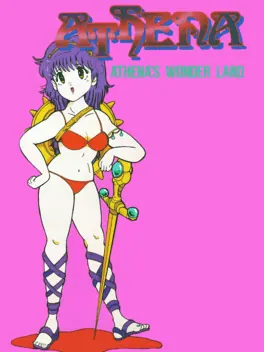
Athena
Athena is a 1986 side-scrolling platform game developed and published by SNK, in which players control Princess Athena as she traverses a series of mythological worlds in an effort to return to her own realm. The gameplay centers on navigating platform-based stages, defeating enemies, and collecting weapons, armor, and power-ups that enhance the protagonist’s abilities and survivability.
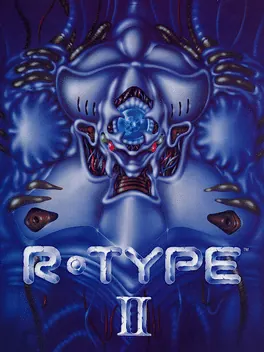
R-Type II
The game is the sequel to R-Type, which was first released as an arcade game in 1987 and profoundly influenced later shooting games with its charge shots, unique weaponry, and grotesque enemies. Hudson Soft ported the later 4 levels of the original R-Type to the PC Engine with the title R-Type II, but the Hudson release is unrelated to the game described in this article. The player controls a ship called the R-9C (or R-9 Custom), which is an improved version of its predecessor game's ship; the R-9. The ship's design was changed slightly, and the wave cannon was given homing capabilities. Two new types of weapons (the Search Laser and Shotgun Laser) were added, bringing the total number of weapon types up to five. A new anti-ground unit bomb was also added to the missile inventory. Though the number of levels was decreased from the prequel, the number of enemies, their durability, and the number of bullets they shoot were greatly increased. Enemy movements and terrain were also made trickier, bringing the game's difficulty up considerably. The same revival system is used as in the prequel, where the player is brought back to a checkpoint whenever their ship is destroyed. The controls are mostly unchanged from R-Type, where the 8-way joystick controls the ship's movement, and the shot button fires the ship's main beam. The other button is used to equip or unequip Force; the series' most unusual innovation. Pressing down the shot button causes the blue beam gauge to fill up, and releasing the button causes a wave beam to travel a certain distance depending on the length of time the button was pressed down. If the button is pressed down until the blue gauge is fully charged, a red gauge appears and fills up quickly. Filling up the red gauge causes it to flash blue and red, releasing the shot button at this point shoots an even more powerful beam. Unlike the normal beam that only travels in a straight line, the newly added Shotgun Laser beam explodes in multiple directions after traveling a short distance. This shot causes heavy damage if the player can target a single enemy with it. However, holding the button down after the gauge is flashing causes the beam to return to the normal transverse beam (the gauge alternates between flashing and returning to the normal state while the button is held down), so the player must release the button at the right timing in order to successfully target enemies. The other newly added beam, the Search Laser, is semi-homing, and can bend at angles up to 45°.
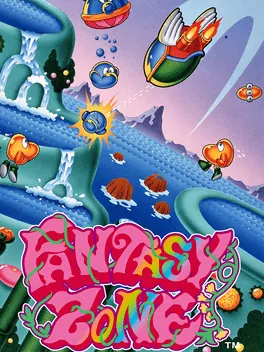
Fantasy Zone
The Fantasy Zone is a solar system consisting of eight brightly colored, fantastic planets. The evil Menons are trying to take over all of the planets in the Fantasy Zone by using misappropriated foreign currency to build their forces. It is the player's job to recover all of the coins and save the solar system! Fantasy Zone is an arcade style shooter for one or two players. The goal is to destroy all of the creatures on each planet and collect as many of the lost coins as possible. At the end of each level is a large enemy that will have to be defeated before moving on to the next world. At various points in the game, the player will be able to find a parts shop, which allows purchasing improvements for his spaceship, including better weapons and faster engines.
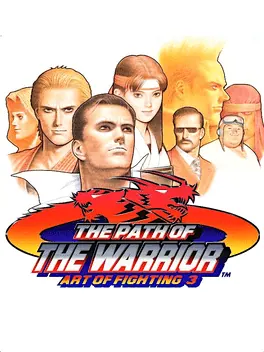
Art of Fighting 3: The Path of The Warrior
In this third and final entry in the Art of Fighting series, the story shifts from Ryo Sakazaki to his best friend and rival, Robert Garcia, as he ventures into Mexico to try and locate Freia Lawrence, a childhood friend, who asked for his help. However, he leaves without the consent of The Garcia Foundation, which sends an agent named Karman Cole to get him back. But not everything is as simple as it looks... because Robert is not the only one looking for Freia. Art of Fighting 3: The Path of The Warrior features ten playable characters with different fighting styles, a completely new fighting system based on joystick and button combinations, and incredibly detailed graphics and animation.
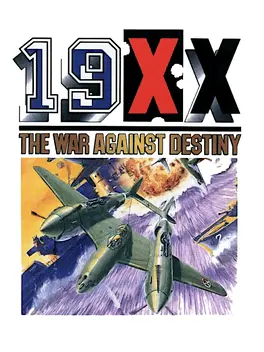
19XX: The War Against Destiny
19XX: The War Against Destiny is a vertical scrolling shooter arcade game made by Capcom in 1995 (copyrighted in 1996). The game is the 4th of a series of World War II vertical shooters made by Capcom. The story takes place before a fictional war (Hence, the 19XX) as a lone pilot tries to defeat an entire army/evil organization from starting another World War, which soon escalates to a nuclear apocalypse.
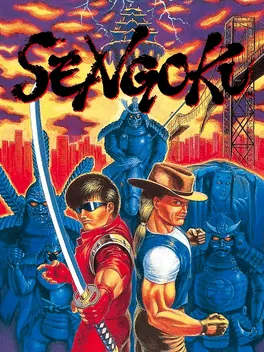
Sengoku
Sengoku is a side scrolling action game where the player takes the role of a super warrior who must battle against ghosts from the past bent on taking over the present.
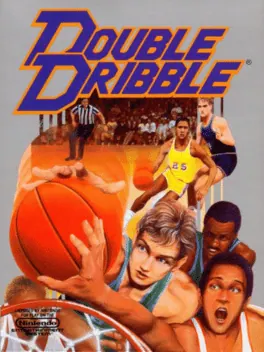
Double Dribble
Double Dribble was the second basketball arcade game developed and released in 1986 by Konami, following Super Basketball. Much of the game's popularity came from its animation sequences showing basketball players performing slam dunks, as well as The Star-Spangled Banner theme during attract mode, which was the first arcade game to feature the national anthem. These were uncommon in video games at the time of Double Dribble's release. While successful in the arcades, the game became and remained popular and remembered when it was ported to the Nintendo Entertainment System in 1987.

Super Monaco GP
A superb Formula One racing game from Sega that took sprite-scaled graphics to a whole new level. The game's single track offered a very reasonable representation of the famous Monaco Grand Prix circuit. Players could chose to race with one of three different skill/gear settings : Beginner : Automatic Gears Intermediate : 4-Speed Manual gears Professional : 7-Speed Manual Gears Before entering the Grand Prix, a qualification lap had to be completed. In the event of qualifying, the qualifying time determined the player's position on the starting grid. During the race itself, checkpoints had to be reached within a set time, or the race was over.
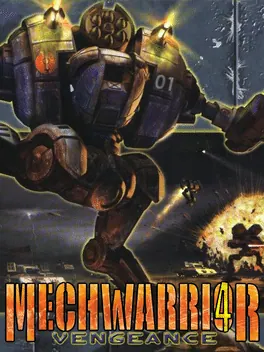
MechWarrior 4: Vengeance
MechWarrior 4: Vengeance is a computer game developed by FASA Interactive and published by Microsoft. It was released on November 22, 2000. This game is the fourth game in MechWarrior series. It takes place in BattleTech universe where the pinnacle of all war machines are huge, heavily armed robots called BattleMechs. The player pilots one of these "'Mechs" and uses variety of available weapons (autocannons, lasers, missiles, and more) to battle enemy 'Mechs, tanks and other vehicles. An expansion pack, MechWarrior 4: Black Knight, was released in 2001, and a subsequent stand-alone expansion, MechWarrior 4: Mercenaries, was released on November 7, 2002.
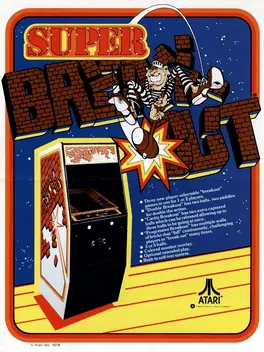
Super Breakout
Super Breakout is an arcade game released by Atari in 1978. It utilizes a Motorola M6502 (running up at 375 KHz) and, as the name suggests, is the sequel to Breakout, which was released two years earlier. There are three different modes to choose from: Double Breakout, the playfield for which contains in fifty-two orange blocks (5-14 points), fifty-two green blocks (1-6 points), two paddles and two balls, Cavity Breakout, which contains in forty-four orange blocks (7-21 points), and fifty-two green blocks (1-9 points), one paddle, and three balls (the second and third of which have to be freed before they come into play) and Progressive Breakout which contains fifty-two blue blocks (7 points) and fifty-two green blocks (5 points), one paddle, and one ball - and the blocks shall be lowered down towards the paddle, at a rate determined by the number of times the ball lands on your paddle, but as the ball destroys them, additional rows of blocks shall appear at the top of the screen and be lowered down towards the paddle at an increasing rate. This is also the only mode for which it's possible for a player to receive an infinite amount of points by playing, but the score display shall roll over at 10000.
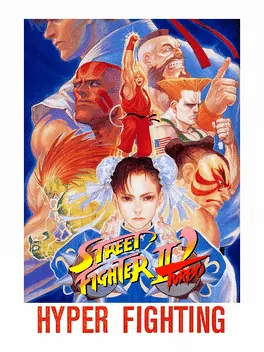
Street Fighter II' Turbo: Hyper Fighting
Street Fighter II Turbo: Hyper Fighting is a competitive fighting game released for the arcade by Capcom in 1992. It is the third game in the Street Fighter II sub-series of Street Fighter games following Street Fighter II: Champion Edition. Released less than a year after the previous installment, Hyper Fighting introduced a faster playing speed and new special moves for certain characters, as well as further refinement to the character balance. Hyper Fighting is the final arcade game in the Street Fighter II series to use the original CP System hardware. It was distributed as an upgrade kit designed to be installed into Champion Edition printed circuit boards. The next game in the series, Super Street Fighter II, uses the CP System's successor, the CP System II.
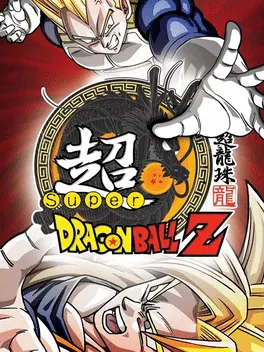
Super Dragon Ball Z
Based on the arcade game, this is a fighting game in the Dragon Ball Z universe, developed by Craft and Master (whose team members include former Street Fighter producer Noritaka Funamizu. Super DBZ is a cell-shaded fighter featuring your favorite Dragon Ball characters. Each character has his own special abilities, with Frieza making use of warps and Trunks using swords for up-close attacks. The game uses a four button setup. Two buttons are reserved for strong and weak attacks. One button is used for guarding with another used for making your character jump. The guard and jump button can be pressed together to execute a dash move. Super DBZ features both ground-based and air-based fighting. Stages are multi-layered, and you can move between different areas, taking the fight to an area that's more advantageous to your character.
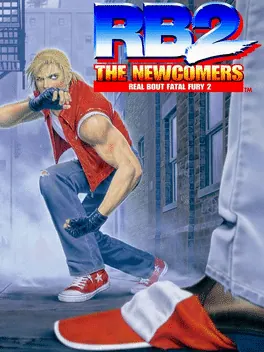
Real Bout Fatal Fury 2: The Newcomers
Real Bout 2 revamps the two-line battle system from Real Bout Special. Instead of fighting in either two lines, the player is now forced to fight in a main line, while the second line is a "sway line" used to avoid attacks (similar to the original Real Bout). The one-line trap stages last seen in Fatal Fury Special also return.
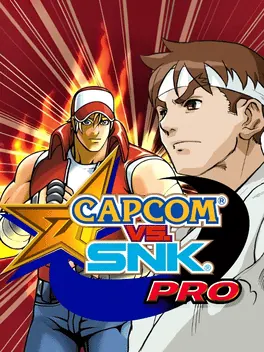
Capcom vs. SNK: Millennium Fight 2000 Pro
An updated version of the original Capcom vs. SNK titled Capcom vs. SNK Pro was released on the Arcade Sega NAOMI GD-ROM hardware (2000), Dreamcast (2001) and PlayStation (2002), the latter suffering from slight load times between rounds and downgraded graphics and sound due to hardware limitations. New additions included Joe Higashi (from Fatal Fury) and Dan Hibiki (from Street Fighter Alpha), new moves for existing characters, and new modes of play.
Battle Circuit
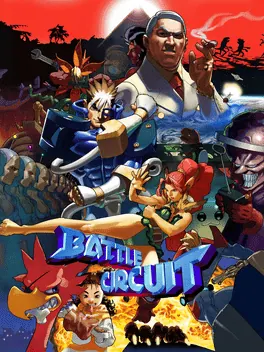
Battle Circuit is a 2D side scrolling beat'em up drawn in a comic (manga) style in a futuristic science fiction setting. A group of bounty hunters must capture the mad scientist Dr. Saturn with a giant head. The roster of heroes has 5 characters for the player to choose from: Cyber Blue, a human bounty hunter with cybernetic attachments to his body; Captain Silver, a humanoid shape-shifting hunter who has ability to project ice particles from his body; Pink Ostrich, a large, sentient, pink ostrich, who is always accompanied by its owner, a young girl named Pola Abdul; Yellow Iris, a part-time fashion model with claws and Alien Green, a space creature looking like a giant, moving plant. Gameplay is quite typical for the genre, like in Final Fight, Streets of Rage, or Cadillacs and Dinosaurs - players go right, beat the enemies (player has access to various attacks), collect bonuses and money, and fight against bosses, for example Dr. Saturn and his robots. Players' abilities can be expanded by purchasing special "upgrade discs" after the completion of levels using coins obtained from dead enemies.
Yo! Noid
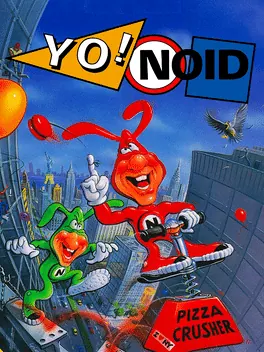
Yo! Noid, known is a 2D action platform game developed by Now Production and published by Capcom for the Nintendo Entertainment System. The game was first released in Japan as Kamen no Ninja Hanamaru on March 16, 1990 and was localized in the United States to promote the Noid, the claymation mascot of Domino's Pizza in the late 1980s. The game is also released as part of Nintendo's PlayChoice-10 series and featured in the Japanese TV show GameCenter CX.