
Jogos para Arcade
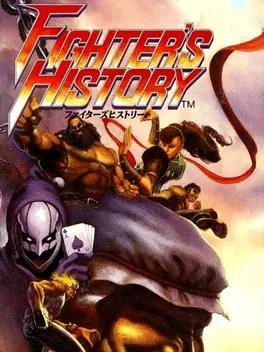
Fighter's History
Fighter's History is a 1993 arcade fighting game developed and published by Data East. It's the inaugural game in the Fighter's History series. The main unique feature of the Fighter's History is its weak point system, which allows the player to temporarily stun an opponent by repeatedly hitting their weak point. Fighter's History became infamous for being the subject of a lawsuit against Data East by Capcom, who claimed the game is too similar to its hit title, Street Fighter II, and as such is copyright infringement on its property. The case was found in Data East's favor however, as the court found that the copied elements were scenes a faire, elements necessary for depicting the scenario. The game was later ported to the Super Nintendo Entertainment System in 1994, and followed by a sequel Karnov's Revenge for Neo Geo. There are three different gameplay modes are available. CPU Battle is the traditional arcade mode, where the player select a character and try to complete the game by beating all of the other fighters. In survival mode, the player select a team of five characters to go up against another team. And finally versus mode, where the player can go up against his friends.
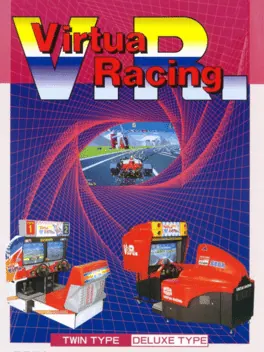
Virtua Racing
This game was the first game released for the Sega Model 1 arcade platform, and also the first to use the name "Virtua" in its title (something which would be followed by numerous Sega arcade games, including Virtua Fighter, Virtua Cop and Virtua Tennis. It is considered a milestone in 3D graphics and the racing genre, and acts as a foundation for most modern racing games.
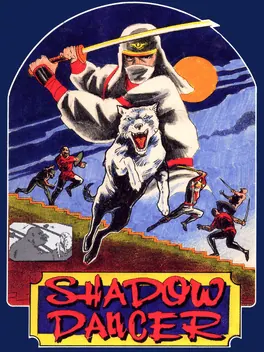
Shadow Dancer
Shadow Dancer is an action platform game developed by Sega for the Sega System 18 arcade system in 1989. A port of the game was published by Sega for the Sega Master System, and ports to several home computers were published by U.S. Gold. It was the first sequel to Shinobi, alongside The Revenge of Shinobi. A similar game titled Shadow Dancer: The Secret of Shinobi was released for the Sega Mega Drive, which features an entirely different set of stages. A terrorist group is planting numerous time bombs throughout the city. The player, a ninja master accompanied by a canine partner, sets out on four missions to dismantle the bombs and destroy the criminal syndicate behind these acts.
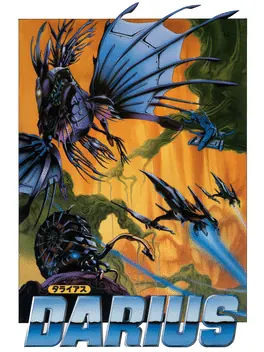
Darius
Darius is a two-dimensional horizontally scrolling shoot 'em up set in a fictional future. Uniquely among shoot 'em ups, the game's screen is three times wider than conventional size, and the arcade cabinet uses an arrangement of three screens to accommodate it. The player controls an ornate fighter spacecraft, named the Silver Hawk, and must navigate through scrolling terrain while battling a variety of fighter craft, ground vehicles, turrets, and other obstacles throughout the game's stages (referred to as zones in the game). The ship's arsenal consists of forward-firing missiles, aerial bombs and a protective force field, all of which can be upgraded by power-ups (in the form of large, colored orbs) that are dropped by specially-colored enemies throughout the game's zones. When the player reaches the end of a zone, a boss appears, which must be defeated to proceed. Once the boss of a zone is destroyed, the player is given a choice of which zone to play next via a branching path. While there are 28 zones in total, only seven can be played in a single run. A Sega Mega Drive port was produced in 2019 that is pre-installed in the Mega Drive Mini as a bonus game.
Cadash
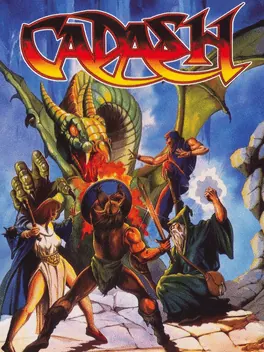
Cadash is an early example of what would become a fairly common trend in Japanese-made arcade games of the early 1990s: the "platform-RPG". Cadash borrows many principles of Zelda II: The Adventure of Link's gameplay, combining side-scrolling platform action with an RPG system of statistics, levels, money and magic. Four characters can play at once in the arcade version, and up to two players may select from four different characters in the console versions: fighter, mage, priestess, and ninja, each with different attacks, statistics and skills. Players then proceed through each level, killing monsters and bosses, collecting keys to unlock doors and collecting gold and experience. Gold is also taken from slain foes and treasure chests. Villages sell items, weapons, armor and (in the console versions) extra lives, with each village encountered providing better equipment. Some villagers and benevolent creatures will also provide information. The arcade version has a limited game time, which can be extended by buying progressively more expensive hourglasses at shops, or by picking up rare bonuses. In shops, and in hidden places, are medicinal herbs which restore 10 HP if brought to zero, and antidotes which cure poison inflicted by specific foes. There are also two elixirs in the game that act like medicinal herbs, except that they restore all HP. There are five stages in the game. Stages one, two and four consist of two worlds, above and below ground. Stage three consists of three worlds. Stage five is set entirely within Castle Cadash. The environments differ significantly, from pleasant meadows to caves, and from forests to underwater environments. Some foes encountered in these levels are derived from common mythology while others are completely made up for the game.
1944: The Loop Master
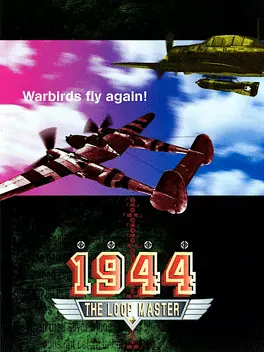
The game takes place in the heated battles of 1944 during the Second World War as a super ace pilot attempts to defeat an entire army. The game operates and plays like most standard shooters. The objective of every level is to shoot enemy planes, tanks, trains, turrets, battleships, and defeat the boss after each level. Unlike its predecessor, 19XX: The War Against Destiny, the game plays more like the early games in the series.
Guilty Gear Isuka
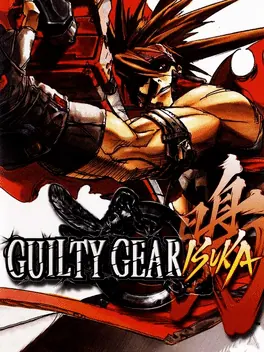
A new Gear arises, its name Leopaldon. As they threaten to lay waste to the world, you prepare to mount your offense. The good news? You won't have to face them alone. Guilty Gear Isuka introduces the brand new mechanic of cooperative gameplay to the tried and true fighting madness of the Guilty Gear XX series. With support for up to four local players (either on teams or as lone wolves), Guilty Gear has never seen more hectic action.Key FeaturesA Cast of Misfits - The colorful characters of Guilty Gear XX #Reload return for an encore, and are joined by newcomers A.B.A and Robo-Ky Mk. II! On top of the 23 characters available by default, who knows if there are even more waiting to be uncovered... Beat-Em-Up Action - Isuka goes from fighter to brawler when you dive into GG Boost Mode. Punch/kick/cut/grapple your way through waves of formidable opponents, and feel free to invite a friend to help; two-player co-op can give you that extra edge you need. Make an Abomination - Newcomer Robo-Ky Mk. II can be retrofitted with the moves of other characters, making him the ultimate doppelganger. Brutal command grabs, a projectile or two, almost nothing is verboten when it comes to the murderous art of imitation. Beautiful Characters and Environments - From the tiniest bounty hunter to the largest brute, from sunny beaches to moonlit cemetaries, Guilty Gear Isuka's sprite art oozes character. Jaw-Dropping Heavy Metal Soundtrack - From the mind and frets of Guilty Gear creator Daisuke Ishiwatari comes some of the most intense rock you'll ever roman cancel to. Buyers of Guilty Gear Isuka on Steam will receive a digital copy of the Official Soundtrack for free!
The Goonies
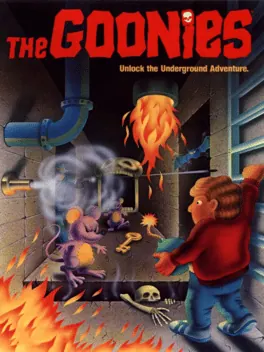
The Goonies is a 1986 platform game. The main theme for most of the game is a chiptune rendition of Cyndi Lauper's "The Goonies 'R' Good Enough". The game was previously released only in Japan, but was later released as an Arcade Playchoice-10 title in North America.
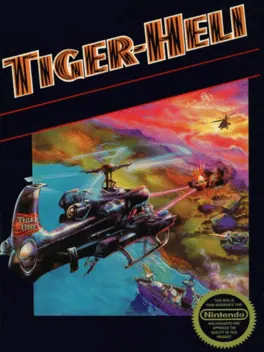
Tiger Heli
Tiger Heli was one of the first games developed by Toaplan and published by Taito Corporation in 1985. It is a predecessor to Twin Cobra. The player controls a helicopter named Tiger Heli taking out various enemies along the way.
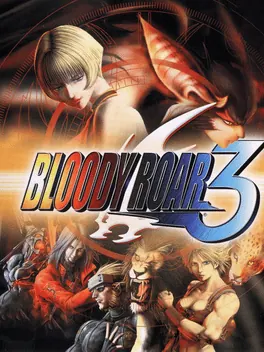
Bloody Roar 3
Bloody Roar 3 pits 12 outlandish combatants against each other in one of the most ambitious 3D fighting games to grace the PlayStation 2. Returning from Hudson's widely acclaimed PS1 titles are Stun, Long and Jenny, each of who brings a unique fighting skill to the arena. During each bout, players build an energy bar based on the number of successful kicks and punches they land on their opponent. As the bar fills, players can then morph their combatant into terrifying manimals from beasts such as lions and tigers to moles. The morph, in turn, unlocks a secondary control system specifically designed with each creature's combat moves and appearance in mind. In effect, this offers players two distinct combat types within one game.
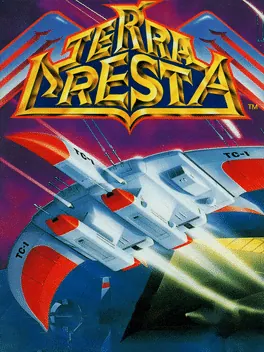
Terra Cresta
Terra Cresta is a vertically scrolling shoot 'em up. The player controls a ship, initially with limited firepower. Numbered pods appear containing further parts of the ship that will increase firepower. These additional parts combine with the player's ship to increase its firepower, and the final module transforms it into a fiery phoenix which is invulnerable for a certain period of time. Once the ship has multiple sections, the player may also split it, allowing it to fire in multiple directions. The player begins with three lives and it is possible to play with either one or two players.
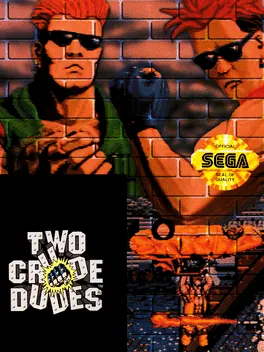
Two Crude Dudes
Two Crude Dudes is a 1991 beat 'em up arcade game produced by Data East. The game was later ported to the Sega Genesis in 1992. Outside Japan, the port was released under the name Two Crude Dudes. In Japan, the game was titled: Crude Buster. In the game, players control one of two mercenaries hired by the U.S. government to stop the terrorist organization "Big Valley". Their objective is to retake control of a ruined New York City from Big Valley after a nuclear explosion the group caused.
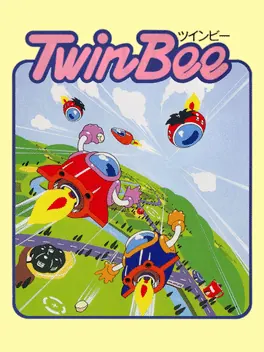
TwinBee
TwinBee is a cartoon-themed vertical-scrolling shoot 'em up game. It was the very first game to run on Konami's Bubble System hardware. TwinBee was later re-released on PSP as part of TwinBee Portable collection, DS as part of Konami Classics Series: Arcade Hits, PC and Xbox 360 through Game Room service, and PlayStation 4, Nintendo Switch, Xbox One and PC as part of Arcade Classics Anniversary Collection.
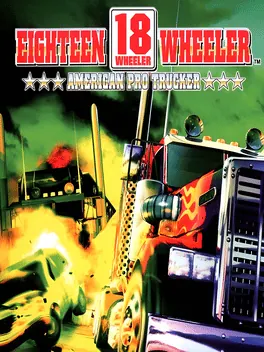
18 Wheeler: American Pro Trucker
The main purpose of the game is to make it to the finish line with the truck's cargo. Players are given a set amount of time, but can ram into special vans that will add three seconds to the timer. There are several characters to choose from, each with a unique truck and attributes. The game starts out in Key West and players travel across the United States, ending in San Francisco. After Stage 1, the game gives the player a choice of trailer. One trailer is harder to haul, but provides a bigger payoff while the other choice is easier to haul but provides a smaller payoff. Money is deducted from the total when the trailer is hit. Players can sound the truck's horn to make other cars on the road yield and slipstream behind large vehicles to gain a momentary speed boost. In addition to the time limit, players also compete with the "Lizard Tail", a rival trucker. Crossing the finish line before the Lizard Tail yields additional money. In between levels, players can park the truck in a mini game to earn more cash.

Sega Rally 2
Sega Rally 2 is the sequel to Sega Rally Championship. It was released in 1998 in the arcades and was later ported to the Dreamcast and PC.

Kung Fu
The NES port of Spartan X for the Famicom, which is itself a port of the Arcade game Spartan X.
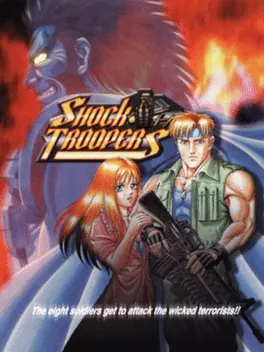
Shock Troopers
Shock Troopers is a 1-2 player game where players select one of eight characters to play as. Each character has their own attack. Players also have to choose one of three routes to take. The object of the game is to go toward the end of the level and defeat the end-of-level boss, which is usually a huge vehicle. Crates that are scattered throughout the levels can be broken into to reveal new weapons and power-ups. There is a team mode where players have to select three characters. The characters can be switched on-the-fly during gameplay, which is useful if one of them is badly injured. Players can use the other teammates until life-ups can be found.
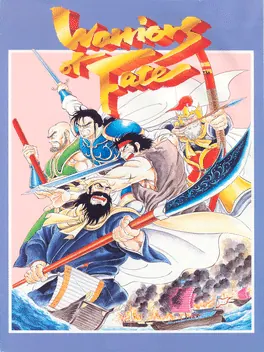
Warriors of Fate
Warriors of Fate is a beat'em up with nine stages. Each contains large mobs including spearman, archers, strongmen, bomb-wielding opponents, and at least one boss. Using two buttons, Attack and Jump, the characters all have standard moves typical of Capcom side-scrollers of the day. There is also a variety of weapons in the game which can be picked up. As with most side-scrollers, food is used to replenish health and can be found in various breakable containers in the game level. One notable feature of the game is the ability to summon a warhorse which adds more attacks to the characters, generally involving pole-arms. Most characters are given a special wrestling throw of their own, like in Final Fight and The Punisher. In the Japanese version, the game follows Liu Bei's plight in Jingzhou from the Romance of the Three Kingdoms, a history-based novel from China, set in the Three Kingdoms period as Cao Cao sets to invade his lands. In the English adaptation, however, the Three Kingdoms theme was lost, and most names have been changed to names of Mongolian origin.
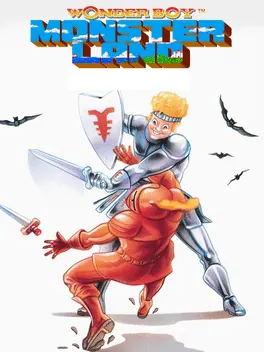
Wonder Boy: Monster Land
Wonder Boy: Monster Land is an action role-playing platform video game developed by Westone. It was released by Sega for the arcades in 1987 and for the Sega Master System in 1988 as a sequel to the 1986 game Wonder Boy, taking place eleven years after the events in the previous game.
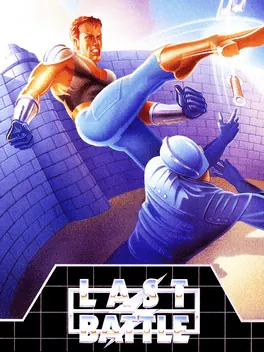
Last Battle
Last Battle: Legend of the Final Hero is a side-scrolling action game similarly to its predecessor Black Belt. The player takes control of Aarzak (Kenshiro in the Japanese original), who fights against his enemies using his punches and kicks. Aarzak can attack while standing, jumping, and crouching, for a total of six basic attacks. In addition to his life gauge, Aarzak has a power-up meter that will gradually fill as he defeats enemies. When the meter reaches a certain point (depending on the stage), Aarzak will transform into a super-powered state, allowing him to perform rapid punches and kicks for the rest of the stage. The game's levels (with the exception of boss battles and maze stages) feature a time limit at the lower-right corner of the screen; but unlike other time limits, instead of killing the character immediately when it reaches, it will instead gradually drain the player's life gauge until the player completes the level. The game is divided into four stages or chapters, each featuring several levels. After completing a level the player will be shown a map which displays the player's current location and the paths they can take. Most of the levels are linear side-scrolling segments where the player must simply walk from one to side to the other while fighting every enemy who gets in the way. Other levels are dungeon mazes in which the player must figure out the correct path to the goal while avoiding traps. The player will encounter various allies throughout the game that will increase Aarzak's offensive or defensive strength, or replenish their health. The game features several one-on-one encounters with bosses as well. The player must sometime complete levels in a certain order in order to finish a chapter. 'Last Battle' is also notorious amongst gamers for its harsh difficulty throughout. The original Japanese version is based on the Fist of the North Star mangas/animes. During the translation process all references to Fist of the North Star were removed - similar to its predecessor Black Belt.
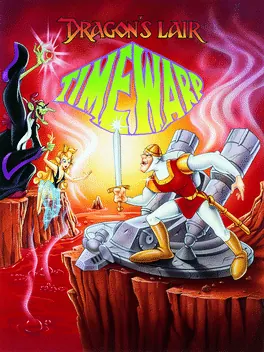
Dragon's Lair II: Time Warp
Dragon's Lair II: Time Warp, the followup to Don Bluth's arcade classic Dragon's Lair, can now be enjoyed on your PC. This fully arcade authentic version includes all of the original scenes you've come to enjoy, and even the unreleased Director's Cut ending not seen in the arcades. Other bonuses include a full watch feature to sit back and enjoy Don Bluth's stunning animation.
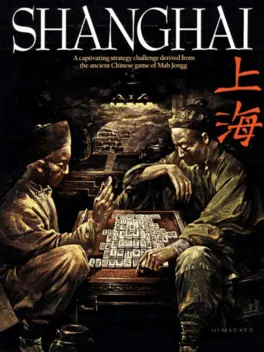
Shanghai
Shanghai is a computerized version of mahjong solitaire. After winning a game, the tiles reveal the three-dimensional blinking eye of a dragon behind the game screen. The Macintosh and Sega Master System version shows an animated dragon spitting fire.
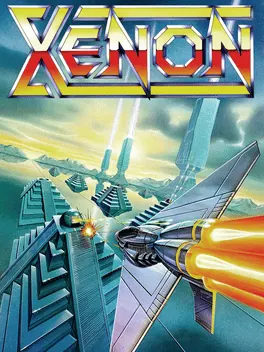
Xenon
Xenon is a 1988 vertical scrolling shooter computer game, developed by The Bitmap Brothers and published by Melbourne House which was then owned by Mastertronic. Xenon was followed in 1989 by Xenon 2: Megablast. The player assumes the role of Darrian, a future space pilot called into action by a mayday report from his superior on a nebula space station. As of late, the colonies of mankind have been under attack by mysterious and violent aliens called the Xenites and it is finally time for Darrian to engage them. Unlike most scrolling shooters, the player can move in any direction instead of straight up. The player craft has two modes, a flying plane and a ground tank. The transition between crafts can be initiated at almost any time during play (except during the mid- and end-of-level boss sections, as well as certain levels where a certain mode is forced), and the mode chosen depends on the nature of the threat the player faces. Destroying some enemies released power-ups the player could catch to enhance their ship.
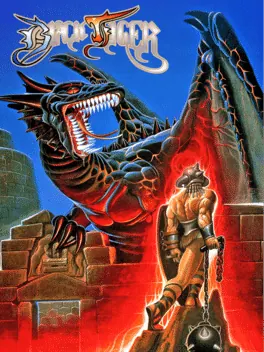
Black Tiger
Black Tiger, known in Japan as Black Dragon, is a 1987 action game released for the arcades by Capcom. A barbarian hero jumps and fights his way through a variety of colourful, enemy-packed levels. The sprawling, eight-way scrolling, two-dimensional levels are packed with hidden bonuses to encourage and reward exploration. Though a percentage of these bonuses consist of dubious and often self-evident "advice", most come in the form of "Zenny coins", currency that allows the player to buy such items as an upgrade to their weapons and armour, keys for treasure chests, and anti-poisoning potions. Special items that reveal coins, upgraded armour, full vitality, extra lives, extra time, or simply bonus points may be found by attacking certain walls. The player's vitality bar will also increase up to three times as a reward for reaching score benchmarks.
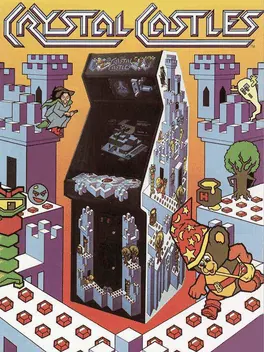
Crystal Castles
Crystal Castles is an arcade game released by Atari, Inc. in 1983. The player controls a cartoon bear by the name of Bentley Bear, who has to collect gems located throughout trimetric-projected rendered castles while avoiding enemies out to get him as well as the gems. Crystal Castles is notable for being one of the first arcade action games with an actual ending, whereas most games of the time either continued indefinitely, ended in what was termed a "kill screen" or simply just restarted from the first level, and to contain advance warp zones.
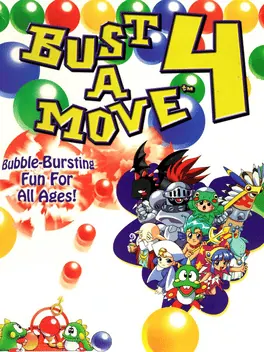
Bust-a-Move 4
Puzzle Bobble 4 (also known as Bust-a-Move 4 in North America and Europe) is the third sequel to the video game Puzzle Bobble and is the final appearance of the series on the Arcade, PlayStation and Dreamcast. The game is also the final title to be recognizably similar in presentation to the original. Building upon the success of Puzzle Bobble 3, the game adds a pulley system that requires two sets of bubbles, attached to either side of a rope hanging across two pulleys. The game contains a story mode for single player play. In total, the game features 640 levels. The console version features a level editor to either create and save a level, set a succession of levels, or to create an unlimited amount of extra levels and stages. It also has an alternative "story mode".
Flicky
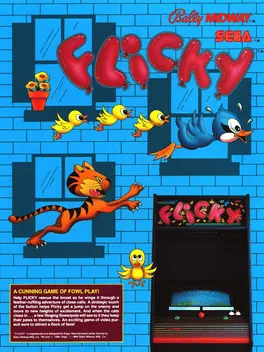
Flicky is an arcade game made by Sega. First released in arcades in 1984, Flicky was also released at the time for the SG-1000, and then ported to the MSX and Japanese computers Sharp X1, Fujitsu FM-7 and NEC PC-8801. It was later ported to the Sega Mega Drive/Genesis in 1991. Flicky was designed by Yoji Ishii, who was with Sonic Team until August 1999, when he formed Artoon, his own company.
Crazy Climber
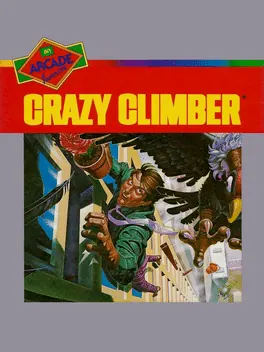
Crazy Climber is a coin-operated arcade game produced by Nichibutsu in 1980. It was also released in North America by Taito America Corporation by UA Ltd. in 1982 for the Emerson Arcadia 2001 and other video game consoles. It is one of Nichibutsu's most highly-acclaimed video games in its library. A precursor to the platform game genre, Crazy Climber was the first game revolving around climbing, specifically climbing buildings, before Nintendo's 1981 release Donkey Kong.
Wonder Boy III: Monster Lair
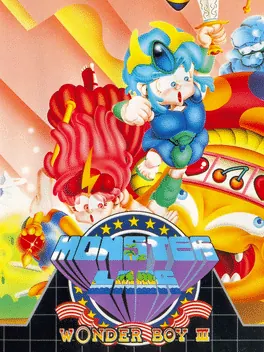
The monsters are attacking the quiet town of Xenobia. Guide Leo and Priscilla to wipe out the monsters using the Legendary Weapons.
Gain Ground
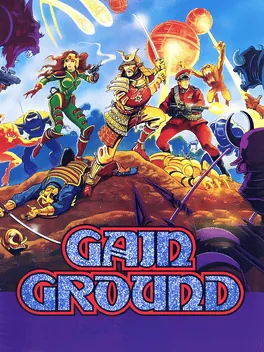
In Gain Ground, players control one of a set of characters at a time. There are twenty characters, each with different weapons. To beat a level, players must reach the exit point with at least one character or destroy all enemies on the level before time runs out. Littered across the level are captive characters, which can be rescued by walking over, then escorting the controlled character to the exit point. If a player controlled character is killed, that character turns into a captive, except that they will disappear if the next active player controlled character dies, exits the level without them, or the player has no characters left in their party. The game is over when all controlled characters in the party are killed without any reaching the exit. However, there are three continues which allow a player to restart the level with their original three characters. There are 40 levels in the arcade version of the game. The Master System and the Genesis/Mega Drive have 50 levels in the game.
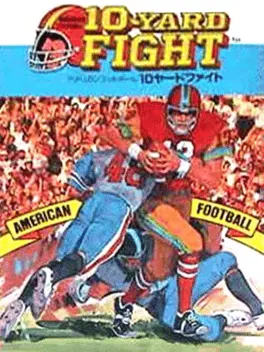
10-Yard Fight
The game is viewed in a top-down perspective and is vertical scrolling. The player does not select plays for either offense or defense. On offense, the player simply receives the ball upon the snap and either attempt to run with the quarterback, toss the ball to a running back, or throw the ball to the one long distance receiver - basically the option offense. On defense, the player chooses one of two players to control, and the computer manipulates the others. The ball can also be punted or a field goal can be attempted. 10-Yard Fight has five levels of difficulty; from easiest to most difficult: high school, college, professional, playoff, and Super Bowl. If the player wins both halves of an "accelerated real time" 30-minute half at an easier level, the player advanced to the next level of difficulty, like a career mode.
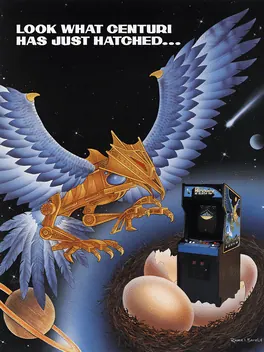
Phoenix
In this shoot 'em up the player has to fight off four assault waves consisting of different enemy types until he reaches a huge UFO. After destroying the protective plates guarding the UFO's pilot in his cockpit the player can kill the pilot. The game starts anew with harder enemies.
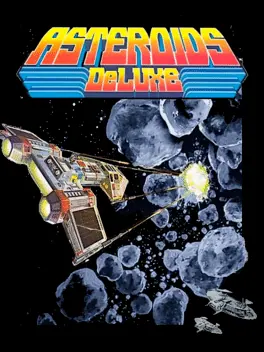
Asteroids Deluxe
Like in the original Asteroids the objective is to score as many points as possible by destroying asteroids and flying saucers. The asteroids come in three different sizes. If the player fires at and hits a large asteroid, it breaks into medium size asteroids. If the player fires at and hits a medium asteroid, it breaks into small asteroids. If a player fires at and hits a small asteroid, it disappears. Different points are awarded for hitting each size of asteroid, and for hitting flying saucers. The player controls a ship that can rotate left and right, fire shots straight forward, and thrust forward. Asteroids Deluxe replaces the hyperspace feature with shields which deplete with use. Other differences include asteroids which rotate and a new enemy which is dubbed a "killer satellite" which would, when shot, break apart into three smaller ships that homed in on the player's position. The screen of the game is wrapped both vertically and horizontally so that if any object moves past the top edge of the screen it reappears on the bottom edge at the same lateral location, and if it moves past the left side of the screen, it reappears on the right side of the screen in the same vertical location. Asteroids Deluxe swaps vector graphics of the original for bitmaps. In 2007, AtariAge self-published a cart release of Asteroids Deluxe for the Atari 7800.
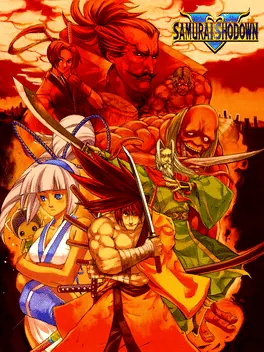
Samurai Shodown V
Samurai Shodown V brings back the classic side-scrolling action with a completely new storyline, new characters and new moves. A samurai's quest to prove himself against the Shogun leads to a gathering of the world's greatest warriors to compete for the right to be named the greatest.
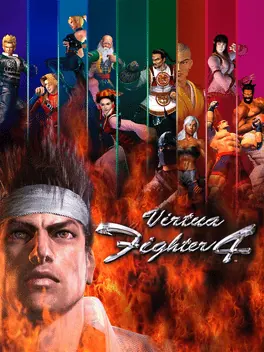
Virtua Fighter 4
Virtual Fighter 4 is the fourth game in the Virtua Fighter series. In Japan, Virtua Fighter 4 is famous for spearheading and opening the market for internet functionality in arcades. VF.NET started in Japan in 2001, and since companies have created their own arcade networks, e-Amusement by Konami, NESiCAxLive by Taito and Square Enix, and ALL.Net by Sega and Bandai Namco.
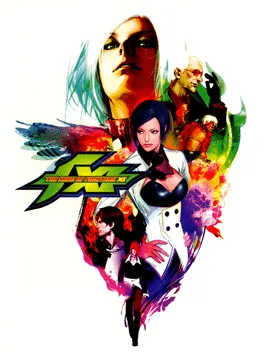
The King of Fighters XI
The eleventh game in the KOF series following The King of Fighters 2003. According to Sega: 'For over 10 years, the King of Fighters series has been the choice of game players around the world. The 11th team of fighters continues this tradition. KOF11 is suited for one to two players, with continuous buy-in. Choose from 33 fighters, including 4 new characters. A fifth control button was added to enhance your skills by delivering a devastating blow to your opponent, if hit at the right time. A New Skill Gauge performs a variety of tag-off moves and new attacks. A player can also custom construct a Three-Fighter Tag-Team by selecting three choice combatants.'