
Jogos para Arcade
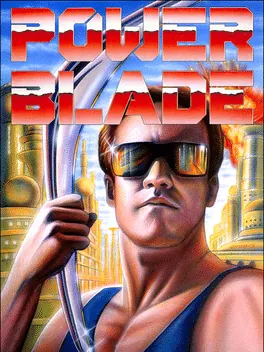
Power Blade
22nd CENTURY WARRIOR! When New Earth's Master Computer is attacked by aliens, only NOVA, lord of the ancient Power Blade, can hope to battle through to Control Center and restore the Database!
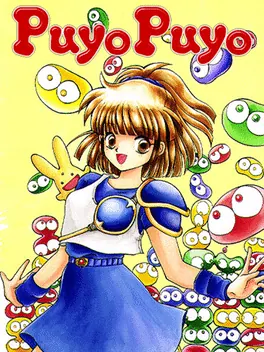
Puyo Puyo
Puyo Puyo (1992) is an enhanced version of the 1991 MSX2 and Famicom Disk System game of the same name. The game was developed for the Sega System C-2 arcade hardware and ported to a variety of consoles. Puyo Puyo is a puzzle game in which the player matches four or more "Puyo" of the same color together. This game is the precursor to an identically-titled arcade release. Puyo Puyo contains three modes: Endless, Mission, and Verses. In Endless Mode, players match Puyo until the top of their well is filled. If the player chooses, either a giant 2x2 green Puyo or Carbucle will periodically help the player clear space on their board. Mission mode gives the player several challenges to complete, such as clearing a set amount of Puyo or clearing all Puyo of a certain color. Verses mode allows players to battle each other.
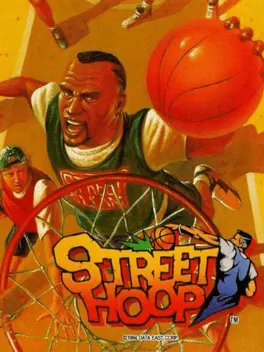
Street Hoop
Street Hoop, known in Japan as Dunk Dream and known in North America as Street Slam, is a basketball video game developed by Data East for Neo-Geo, released in 1994. The game features three-on-three basketball match-ups with a variety of different teams.
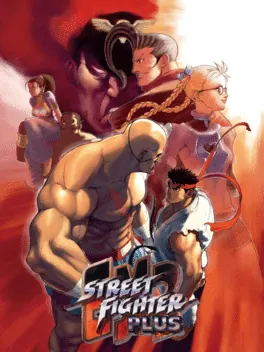
Street Fighter EX2 Plus
Conquering the World of 3-D Fighters! Capcom’s all-time, leading fighting flagship series once again goes 3-D with Street Fighter EX2 Plus, the sequel to the top-selling Street Fighter EX Plus for the PlayStation game console. Loaded with new enhancements, modes of play and an expanded cast of characters, Street Fighter EX2 Plus delivers amazing 3-D graphics, lightning fast animation and Capcom’s signature gameplay. Play one-on-one with a buddy or create your own unique Street Fighter team using up to five fighters. Once you’ve perfected your moves, edit your replay data to create and star in your own movie. • The improved sequel to the best-selling, Street Fighter EX Plus • 3-D fighting action with amazing 3-D graphics, lightning fast animation and Capcom signature game mechanics • Loaded with new play features like the Excel Move, Meteor Combo Super Attack, Guard Break and the Super Cancel • 23 selectable characters from the Street Fighter universe • 7 Modes of gameplay – Arcade Mode, Versus Mode, Practice Mode, Training Mode, Trial Mode, Director Mode and Bonus Mode • Featured in the Capcom Edge frequent buyers program
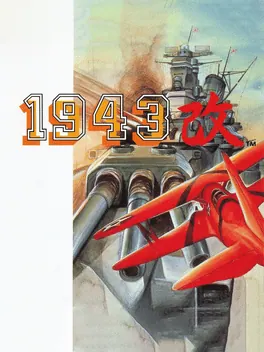
1943 Kai: Midway Kaisen
This updated version was released exactly one year after the original game's debut. 1943 Kai is an enhanced, "wild" version of 1943 that was made only available in Japan under the name 1943 Kai: Midway Kaisen (or 1943改: ミッドウェイ海戦). Most of the graphics and sounds have been reworked, the weapons have been made more extreme and some fairly strange things (laser-firing WWII planes and ships that run on ground) have been added. The trademark P-38 has been replaced with a biplane, the Boeing-Stearman Model 75.
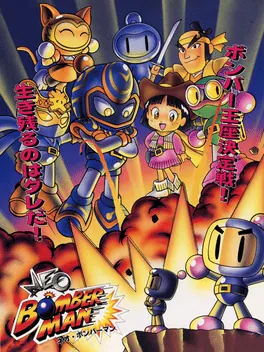
Neo Bomberman
The gameplay consists of walking through maze-like areas filled with monsters with a goal of opening the gate leading to the next area. Playing as a bomberman, the player can lay bombs to destroy all of the monsters, which will subsequently open the gate. Destroying blocks in the maze may uncover useful items including remote control bombs, accelerators, hearts, and increased firing range. Neo Bomberman includes Bosses that appear after each zone. Each zone is harder than the last, some featuring new traps and level obstacles such as conveyor belts.
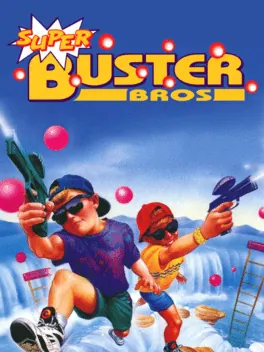
Super Buster Bros.
Super Pang is an adventure for one or two players that takes the player around the world, aiming to rid the planet of a terrible foe: seemingly innocuous-looking bubbles. The main portion of the game is Tour mode, where the player visits a series of different levels representing different countries of the world. Each player's character is armed with a gun, which shoots a vertical cable. If this hits a bubble, it will cause it to split in two. Upgrades allow two cables to be shot at once, or the ability to stick a cable to the ceiling where it will cling for a few seconds, bursting any bubble that hits it. Players must clear each screen of bubbles before progressing to the next one. The largest bubbles will have 4 degrees of splitting before clearing. Many level layouts have ladders, barriers and breakable bricks in part of the screen, affecting movement of both the player and the bubbles. Faster bubbles in the shape of diamonds also bounce around the screen going any which way rather than bouncing in predictable arcs like the other bubbles. Several power-up tokens are also available, offering features such as splitting all bubbles down to their minimal size, freezing the bubbles for a few seconds, and various different weapons. Monsters also enter the screen periodically, which hit the bubbles and take them down a size, and can often be directed by the cable weapon. In addition to the main Tour mode, the game also features Panic mode, in which a succession of bubbles are thrown at at the players. As the player progresses, the amount of bubbles required to reach the next level also increases, similar to scoring on Tetris.
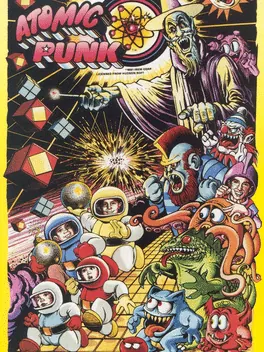
Atomic Punk
Atomic Punk (alternatively known as Dynablaster or Bomberman) is an arcade game featuring a single and multiplayer mode. In the year 2091, robot contests have gained popularity. Only the strongest robot can survive.
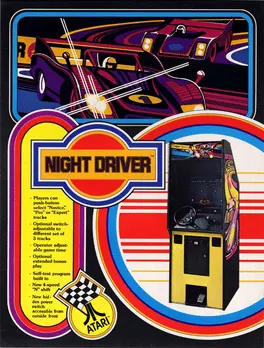
Night Driver
The player controls a car which must be driven along a road at nighttime without crashing into the sides of the road as indicated by road side reflectors. The game is controlled with a single pedal for gas, a wheel for steering and a four-selection lever for gear shifting. The coin operated game had a choice of three difficulties, novice, pro, and expert, from which the player could choose at game start. The turns were sharper and more frequent on the more difficult tracks. As play progresses, the road gets narrower and more winding.
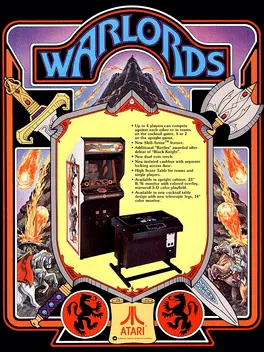
Warlords
Warlords is an arcade game released by Atari, Inc. in 1980. The game resembles a combination of Breakout and Quadrapong (an early Atari arcade game) in the sense that not only can up to 4 players play the game at the same time, but also the "forts" in the four corners of the screen are brick walls that could be broken with a flaming ball. Warlords uses spinner controllers for player control, and came in both an upright 2 player version and a 4 player cocktail version. The upright version uses a black and white monitor, and reflects the game image onto a mirror, with a backdrop of castles, giving the game a 3D feel. The upright version only supports up to two simultaneous players, which move through the levels as a team. The cocktail version is in color, and supports 1-4 players. 3-4 player games are free-for-all's where the game ends as soon as one player wins. 1-2 player games play identical to the upright version.

Outlaw
A home console port of 1976 Outlaw for the Atari 2600 by then-Atari employee David Crane. This version is more directly comparable to Midway's Gun Fight, allowing two players to engage in a shoot-out using 2600's joysticks. There are also multiple types of play that differ slightly from the arcade game, including target practice and versions with obstacles that must be shot around or shot through.
T2: The Arcade Game
As the title states, this is the home conversion of the arcade rail-shooter based on the film Terminator 2: Judgement Day. Up to two players shoot through future and present levels as robotic killers reprogrammed to serve the human resistance. Both players wield a machine gun with infinite ammo that lowers its firing rate (overheats) as it is continuously fired. A secondary weapon (missile launchers in the future, shotguns in the present) has limited ammo but deals heavy damage. Powerups inside the game world include secondary weapon ammo and coolant for the machine guns, and are shot to be collected. T2: The Arcade Game features seven levels based on specific scenes or general concepts in the film. The first four levels act as a prelude, as the player guns down waves of metal Terminators across a post-apocalyptic Battlefield, a besieged Human Hideout, and through the security checkpoints of the enemy supercomputer SkyNet. After destroying the computer, players travel back in time to protect John and Sarah Connor, while also destroying every scrap of SkyNet research at the headquarters of its manufacturer. From there, players must fend off the indestructible T-1000 until the final showdown in the Steel Mill. Assets from the movie are used when possible, such as voice clips from Arnold Schwarzenegger, and close-up digital stills of Robert Patrick for the final battle against the T-1000. The Genesis and SNES versions also support lightguns (the Menacer and Super Scope, respectively).

Fate/unlimited codes
Fate/unlimited codes is a fighting video game based on the visual novel Fate/stay night.
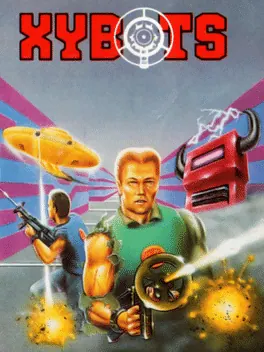
Xybots
Xybots is a sci-fi shooter with pseudo-3D environments explored from a third-person perspective. The game can be played by one or two players; the two-player mode takes place on a split screen. The hero(es) must move through a series of Gauntlet-style underground mazes, killing the bad guys and collecting health and other bonuses from flying saucers. It's designed to be played co-operatively, although bullets from one player can harm the other.
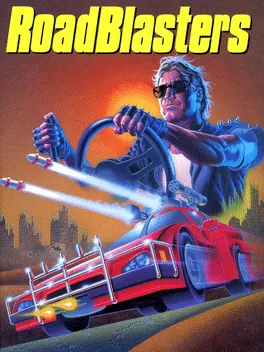
RoadBlasters
The objective of the game is to complete all 50 rallies without running out of fuel. There is no limit to how many vehicles a player can receive to complete a rally, as long as they have fuel. However, the destruction of the vehicle will subtract a small amount from the player's fuel tank. In the arcade, Genesis and Lynx versions, players could start the game at a higher rally, with additional opportunities to jump several levels from time to time. Players can continue their game from where they left off; however, the player has only one chance to complete the 50th and final rally. For completing the final rally the player gets one million points as a bonus. Players can get fuel in four ways: green globes, red globes, a checkpoint, and the rally point.
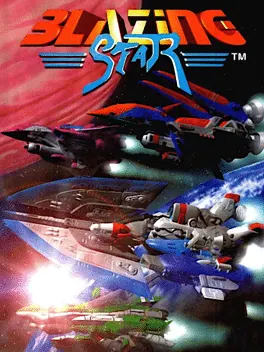
Blazing Star
Blazing Star is a scrolling shooter video game for the Neo Geo home game system. It is the sequel to the acclaimed Neo Geo shooter Pulstar, which was itself a close cousin to the R-Type franchise. A typically hefty Neo Geo ROM at 346 Mb, the game makes extensive use of pseudo-3D prerendered sprites, brief anime and CGI cutscenes (mostly during the intro sequence), and frequent Engrish voice samples and captions. While Blazing Star was superior in many respects to previous shooter games, some fans compare it unfavorably with Pulstar on the basis that Blazing Star was overly easy and there are those that prefer the simpler 2D sprite look over the prerendered sprites that came to dominate many of the more recent shoot-em-ups.
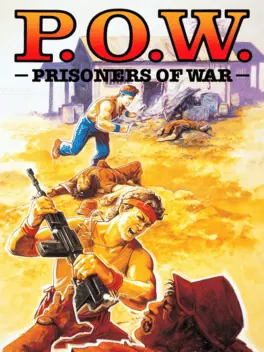
P.O.W.: Prisoners of War
The arcade version of Prisoners of War can be played by up to two players simultaneously, In La Havana, Cuba Player 1 controls a prisoner dressed in blue named Snake, while Player 2 controls one in red named Bart. The objective is to escape from the enemy's base by fighting their way through four stages filled with numerous soldiers trying to impede the player's escape. The stages consist of a POW camp, a warehouse, a jungle, and the enemy's base. Enemies includes foot soldiers, commandos, and green berets. The controls consists of an eight-way joystick for moving the character and three action buttons for punching, kicking, and jumping. here are also three special attacks performed by pressing two buttons in combination: a jump kick (jump, and then kick), a back punch (jump and punch simultaneously), and a headbutt (punch and kick simultaneously). The player can also pick up one of two weapons dropped by defeated enemies: a throwing knife and a machine gun. When wielding the machine gun, the player can fire it by pressing the kick button or conserve its ammo by pressing the punch button to gun whip enemies.
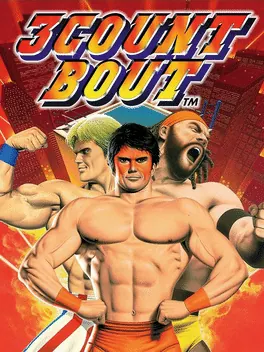
3 Count Bout
3 Count Bout is a one-on-one fighting game. Choose from ten wrestlers who have their own power attacks. There are ten rounds in the game, and each one of them has you fighting other wrestlers that are much tougher than the previous ones. You defeat each one by biting, kicking, and performing other moves to the point where their damage meter is empty. But just because it is empty doesn't mean that you win. You have to pin him for the infamous-three count. Also features competitive play and tag match battles. 3 Count Bout by SNK Corporation attempts to take you into the world of professional wrestling by giving you control of one of many different wrestlers as you fight both in the ring and in the seedy underworld in your quest to become an accomplished wrestling champion. Choose from one of ten different characters, each with his own strengths and weaknesses, and employ your wrestling moves using a combination of three buttons. There are also a number of hidden moves and combinations which can be unlocked for even greater variety in the gameplay. When you have your opponent on the mat, keep him there until the count of three and you've won the match. In two-player mode, you can either take on your opponent in a match or wrestle tag team. This game uses the Neo-Geo MVS cartridge system.
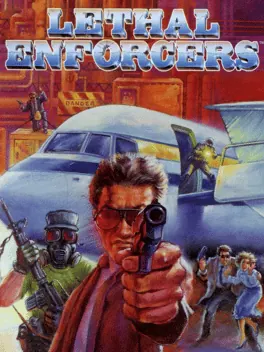
Lethal Enforcers
Pick up your pistol and be the cop you need to be in order to rid the streets of the criminals out to make your day hell. Aim wisely and quickly, otherwise your lives will be lost quickly in this 1st person arcade shooter, cleaning up the streets. The higher the difficulty level, the more crimes there will be to eliminate, but watch out for the other weapons that can help you along the way. Go straight into the mayhem, practice in the targeting range or have a friend back you up in two player mode. Use a gun accessory or play with the gamepad.
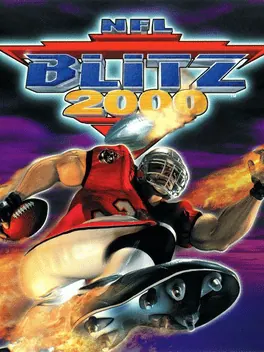
NFL Blitz 2000
It's back and it's better than ever! NFL Blitz 2000 adds 4-player support, new offensive and defensive plays, realistic weather conditions, new stadiums and a Tournament mode! Customize offensive and defensive plays to your liking. Call audibles at the line of scrimmage. You've got control now! Passing made easy with new "Blitz Passing" for one-touch long bombs! "ON-FIRE" mode gives super power performance to your players! With non-stop action and a "pick-it-up-and-play" learning curve, NFL BLITZ 2000 is THE game for every football fan!
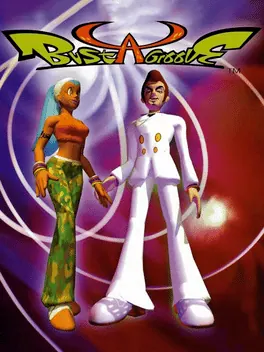
Bust A Groove
Bust a Groove is a hybrid music/fighting game combined PaRappa the Rapper-like rhythm-based gameplay with fighting game elements, including special moves designed to damage the opponent and a focus on head-to-head competitive play.
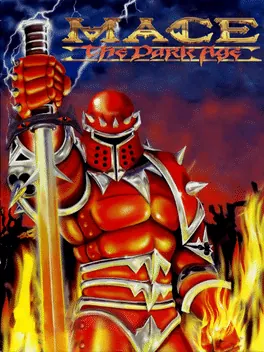
Mace: The Dark Age
Mace: The Dark Age is a fighting video game released by Atari for arcade machines in 1997 and ported by Midway to the Nintendo 64 in 1997. The game is similar to Bio F.R.E.A.K.S. and the Mortal Kombat series. Like in Mortal Kombat, when a character wins both rounds, they can perform an execution move on the enemy. Methods included severing an opponent's limbs and torso (Al Rashid), beheading (The Executioner), repeated stabbing (Koyasha), impaling the opponent with a sword (Lord Deimos), breaking an opponent's back by hoisting them on top of a Viking helmet and throwing them to the ground, causing their body to explode (Ragnar), and some more far-fetched methods including pulling out an opponent's heart (Xiao Long), shrinking (Namira), transforming the opponent into a chicken (Taria), and entering an opponent's body and bursting them from inside (Dregan). Note: Heavily borrowing from the arcade game Soul Edge (1995)--first of the Souls Series. Which borrowed heavily from the framework WeaponLord (1995) laid out. Visual Concepts (developers of WeaponLord) would send builds of the game to Namco (the publisher of WeaponLord) to playtest.
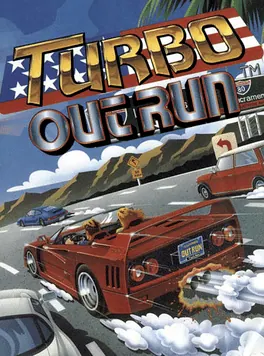
Turbo OutRun
The sequel to OutRun features similar basic gameplay to the original, with the action viewed from behind the car, and the challenge being to complete each stage within the time limit. Contact can cause the car to spin, slow down or even flip; in each case you will lose time. There are 16 stages set across the US, gradually moving from east to west, all depicted differently visually. After every 4 levels, you go into a shop screen, with a choice of upgrades. As the title implies, you now have a turbo booster installed, which speeds up the car, although over-use can cause the engine to overheat, and it is not recharged until each shop section. You have 5 continues, and failure to complete the course within the time limit costs you one.
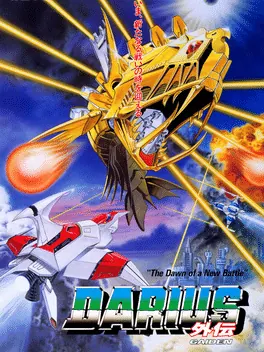
Darius Gaiden
Darius Gaiden is a two-dimensional shoot'em up. The player controls a space ship named the Silver Hawk and must guide it through scrolling stages, destroying enemies and avoiding obstacles along the way. The ship is armed with forward-firing missiles, aerial bombs and a protective force-field, all of which can be upgraded by various power-ups that are dropped by specially-colored enemies when they are destroyed by the player. New to the Silver Hawk's arsenal in Darius Gaiden is the 'black hole bomb.' When fired, the black hole bomb will create a large vortex in the center of the screen, which sucks in enemies and projectiles on the screen for a short moment, until it explodes into a powerful ball of lightning that inflicts massive damage onto every enemy on the screen. Another feature introduced Darius Gaiden is the ability to capture minibosses, who appear in every stage. Each miniboss has a small, circular ball placed on them that, after receiving enough damage, will detach and float away, causing the miniboss to turn idle. If the player collects the ball, the miniboss will follow and aid the player. After a brief period of time, or the player loses a life, the miniboss will explode. A few months following release, update to the arcade version was later released entitled "Darius Gaiden Extra Edition". This version of arcade game contains rearranged levels, as well as automatically-enabled auto fire, two extra weapon power levels (bigger wave shot and a bigger red wave shot as well) and an all-stage mode which can be accessed by starting the game in 2P side.

Neo Turf Masters
Neo Turf Masters is a golf video game by Nazca for the Neo Geo, released in 1996. This is also one of the first two titles by Nazca, the other being the popular Metal Slug before & between being acquired by SNK. The game is a fast paced, arcade-style golf game. Players choose from two game modes, stroke play for one or two players, and match play for two players only. Competing on one of four fictional golf courses located in the United States, Japan, Australia and Germany, players choose from one of six players with different attributes: "Young Hero" (George Spinner, USA) "Technician" (Thomas Stewart, United Kingdom) "Veteran" (Frank Adams, Australia) "Shot Maker" (Robert Landolt, Germany) "Power Golfer" (Fernando Almeida, Brazil) "Putt Master" (Toyoshige Takeno, Japan) Unlike many golf games of the era which used a two-click swing system to determine the hook or slice of the ball, Neo Turf Masters uses a single click for the power of the shot, and a second for the height of the shot; hook and slice are selected with buttons B and C before making the shot. This makes the game much easier to pick up and play well than its contemporaries, but it compensates for this reduced difficulty with fiendish (if somewhat unrealistic) course layouts and highly variable wind.
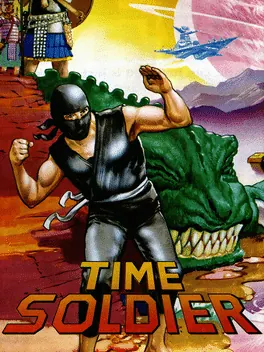
Time Soldiers
Travel throughout various time periods to save your fellow comrades. Collect power-ups to help you defeat a variety of enemies and end-bosses. Uses rotary joysticks to allow player to fire in a variety of directions.
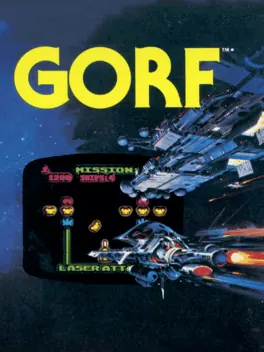
Gorf
Gorf actually consists in the Arcade version of five different types of space shooters. The first one ist basically is a Space Invaders clone. In the second one a formation of space ships is hovering at the top of the screen while single space ships will disengage from the formation and dive down at you. The third variant is a Glaxian clone and only available in the Arcade version. In the fourth mini-game the enemy will come out of a circular hyperspace field and attack you. After having destroyed four of your attackers the game proceeds to the fifth game stage. Here a huge mothership is dropping bombs at you from the top of the screen. You defeat the mothership with a well placed projectile hitting it between its two major sections. After that the game starts from the gebinning on a higher difficulty level.
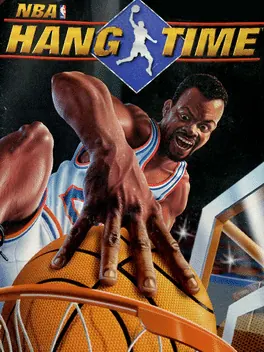
NBA Hangtime
Hangtime was the third basketball game by the original development team behind the NBA Jam series. The title was changed due to the NBA Jam name being acquired by Acclaim Entertainment, the publisher of the games for the home market. Acclaim's NBA Jam Extreme was released the same year as Hangtime. Features introduced in Hangtime included character creation, alley oops and double dunks. A software update known as NBA Maximum Hangtime was released for the arcades later in the life cycle.
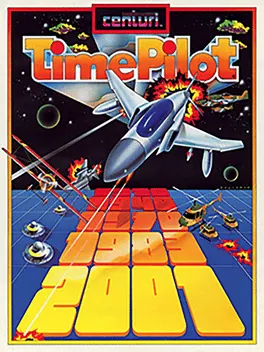
Time Pilot
Time Pilot is a multi-directional scrolling shooter and free-roaming aerial combat arcade game designed by Yoshiki Okamoto, released by Konami in 1982, and distributed in the United States by Centuri. Debuting in the golden age of video arcade games, it is a time travel themed game that allowed the player's plane to freely move across open air space that can scroll indefinitely in all directions. The Killer List of Videogames included Time Pilot in its list of top 100 arcade games of all time. The player assumes the role of a pilot of a futuristic fighter jet, trying to rescue fellow pilots trapped in different time eras. The player must fight off hordes of enemy craft and defeat the mother ship (or "boss") present in every level. The background moves in the opposite direction to the player's plane, rather than the other way around; the player's plane always remains in the center.

BlazBlue: Continuum Shift
BlazBlue: Continuum Shift is a fighting game developed by Arc System Works as a direct sequel to BlazBlue: Calamity Trigger. BlazBlue: Continuum Shift retains the traditional 2D fighter gameplay of two characters participating in a duel on a two dimensional plane and features a selection of new playable characters.
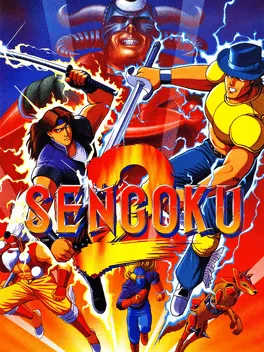
Sengoku 2
In Sengoku 2, a warrior from the future is summoned by a prophetic princess to feudal Japan, where an evil monarch has gained supernatural powers to control the dead. The player must battle through armies of reanimated souls to restore peace to a land where the weak have fallen prey to the strong.
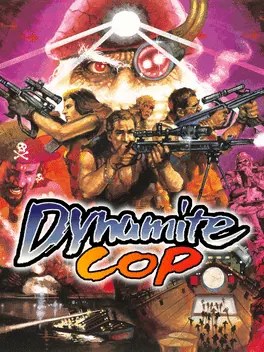
Dynamite Cop
A beat 'em up video game published by Sega and initially released in arcades on Sega Model 2 hardware. It is the sequel to the 1996 game, Dynamite Deka which was released outside Japan as Die Hard Arcade. The game was ported to the Dreamcast and released internationally in 1999, this time without the Die Hard license. A third sequel, Asian Dynamite, was released only in arcades.
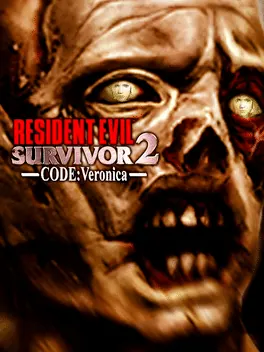
Resident Evil Survivor 2 Code: Veronica
Resident Evil Survivor 2 Code: Veronica is a first-person shooter video game and the second installment in the Gun Survivor series. As in most lightgun games, the objective is to make it through an environment while shooting enemies. It is somewhat less typical in that you have full roaming control over your character rather than being stuck on rails. More unusually, a timer begins as you enter each area. If the timer runs out before you leave, Nemesis will appear and chase you.
Stargate
Arcade shooter where you protect humans from being captured by aliens. Created by Eugene Jarvis and Larry DeMar, it is a sequel to Defender which was released earlier in the year. Some home ports of Stargate were renamed to Defender II for legal reasons.
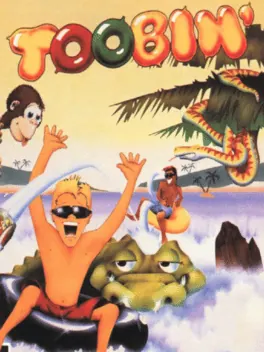
Toobin'
Toobin' involves Biff and Jet racing their way down the rapids of a river, riding on tires. You rotate your tyre left or right, and drift as the current sends you, making sure to avoid the banks of the river, and the dividing lines in the middle. Hazards include crocodiles, stray logs and branches, and fishermen - you are armed with a limited supply of tin cans to take care of these. There are gates to slide through on the way down - these give you a points bonus. Each level has a strict time limit to adhere to, although there's a kickin' party at the end if you succeed.
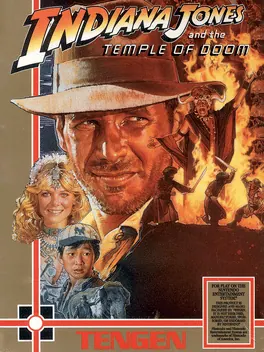
Indiana Jones and the Temple of Doom
As Indy, the player must complete several cycles of the following three types of levels: 1.Mine level: Whip your way through a mine in order to free children that are held captive. Use your whip to swing across chasms, climb ladders, ride along conveyor belts and defend yourself against attacks from Thuggee guards, bats, snakes and the fireball-throwing Mola ram. Escape with the mine cart after you've freed all children. 2.Mine cart level: Pick the right route through a network of tracks while riding in a mine cart. Avoid potholes, broken tracks & guards in carts and safely reach the end of the track. 3.Temple level: Make your way to the altar and grab the Sankara stone while Mola Ram, bats and Thuggee guards attack you. Watch out for that lava.