
Jogos para Arcade
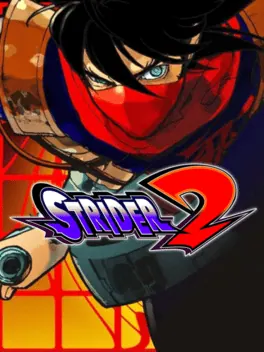
Strider 2
Strider 2, released in arcades and on the Sony Playstation in 2000, is the sequel to the popular arcade and multiplatform game Strider. This game is considered the true sequel to the original Strider, rather than Strider Returns. Strider Returns is not considered a part of the series, as it was not developed by Capcom, it was exclusive to the west, and most people hated it. Strider 2, on the other hand, was very well received. Unfortunately, despite being hailed by critics and series fans, Strider 2 did not sell well. The Playstation version of the game included the original Strider on a separate disc, for those who had never played it to become accomodated with the series. In the United States, there was a printing error for the game that swapped the labelling of each CD, so the Strider 2 disc was labelled Strider, and the Strider disc was labelled Strider 2.
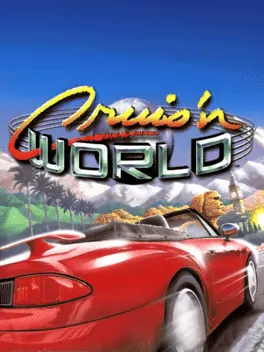
Cruis'n World
Cruis'n World is the 1996 sequel to the 1994 arcade racer Cruis'n USA. As the title implies, Cruis'n World allows players to race on various tracks around the world. The game also features more cars than Cruis'n USA. This game introduced stunts to the Cruis'n series. They served to dodge obstacles, take close curves and so. If the stunt makes the vehicle fly in the air, the game gives the player extra seconds of time. The game also uses small rocket boosts to speed up. The game was later released on the Nintendo 64 in 1998, being the best received of the Cruis'n ports.
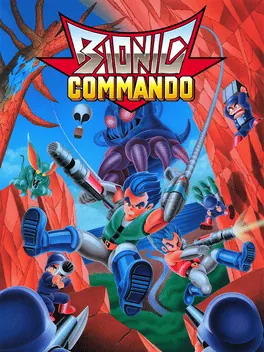
Bionic Commando
For two years, your people have struggled against the relentless onslaught of invading forces. With your army reduced to a handful and your artillery depleted, further resistance seems impossible. But in a hidden underground laboratory, a team of scientists has at least perfected a new kind of fighting machinery: a bionic arm that extends and contracts, providing unheard-of strength and maneuverability. Combined with an arsenal of rapid-fire, armor-piercing, and heat-seeking weaponry, this will put the power of an entire army in the hands of one man... one carefully chosen soldier, who has what it takes to become a new breed of unstoppable commando... a Bionic Commando. And you are that soldier! Your mission will take you through the heavily-patrolled wilderness surrounding the enemy headquarters, and into the very heart of the fortress itself. Even to the most courageous soldier, it would seem an impossible challenge. But there has never been a soldier like the Bionic Commando!
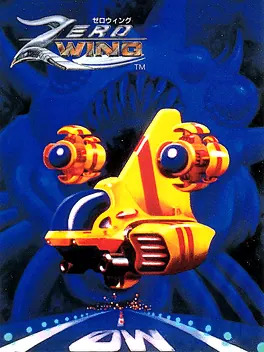
Zero Wing
Zero Wing is a side-scrolling shoot 'em up arcade game, notable for a poorly translated English version for Sega Mega Drive (Genesis) that spawned the "All your base are belong to us" Internet meme. Gameplay includes novel features such as being able to 'tractor' enemy ships, using them to shield your own.
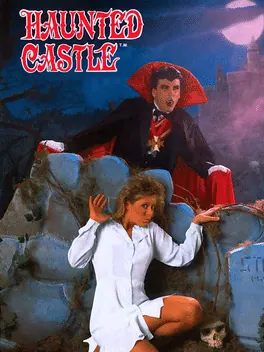
Haunted Castle
Count Dracula sleeps for a long hundred of years. During this time, peace exists at the village and Dracula is nothing but a mere legend. However, one day a young couple named Simon and Serena were celebrating their wedding at the village's church. The couple were enveloped with happiness, as the wedding bells rang, their future seemed blessed... Suddenly, the empty sky was covered with dark clouds and with a rolling thunder that shook the earth, Dracula has once again awakened. Asking for the beautiful girl's blood, he flew down during the middle of the wedding and suddenly took the bride with him. Now in order to save Serena, Simon heads to the demon castle
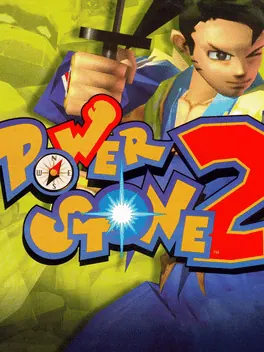
Power Stone 2
is a multiplayer fighting game that built on the innovative gameplay introduced by its predecessor, Power Stone. Power Stone 2 allows up to four players to choose from multiple characters and utilize items such as tables, chairs, and rocks in battle. There are four different modes available for the game 1-on-1: Much like the original Power Stone, a two-character storyline game. Arcade: A four-character storyline game, with two characters advancing each round. Original: Multiplayer mode, with free choice of characters and stages. Adventure: An unpredictable storyline game, where players can collect items, cards and money. Power Stone 2 offers five interactive 3-D stages to begin with, plus the two boss stages which players can also access in Original mode. All but the Original mode is played out like a storyline, where two battles are fought on the regular stages, followed by the Pharaoh Walker boss, then another battle, and ending with the Dr. Erode boss stage. Three extra stages may be unlocked for Original mode by meeting certain requirements in Arcade mode, as well as a desert area stage, which is essentially the Pharaoh Walker boss stage, but without the boss. Though each player has their own set of default ground and air attacks, the character can execute more powerful fusion attacks after collecting three Power Stones and transforming. Power Stone 2 does not offer an opportunity to block, although tapping on the control pad just before an enemy attacks will cause you to dodge. Most of the stages are dynamic and will change as the battle progresses. For example, the airplane stage starts out on a warplane. After a set amount of time, the plane will fall apart, forcing all the players to battle while skydiving toward the ground. Shortly after, the players will fall onto a floating platform, where the remainder of the battle will be held. This, in essence, creates three sub-stages within a single one. Each stage is also littered with item boxes, which hold a random item that a player has acquired and unlocked in Adventure mode or created in the Item Shop. They may also contain Power Stones. Items are extremely diverse. Damaging items range from guns, flamethrowers, gigantic hammers, a wide assortment of swords, to bear traps, roller blades, and even a magazine that can be thrown. Non-damaging items include food that will replenish health, shields for defense, elixirs for invisibility, adhesive sprays to slow your opponents, and wings for extra jumps. Cards that can be used to mix items can also be found in Adventure mode. Furthermore, most stages also have their own collection of unique items and fixtures that the player can use. For example, the submarine level comes with turrets, small planes to drop bombs, and icebergs to throw at opponents. Each level is also highly interactive, as players can use many of the stage elements themselves. All players can also gain extra height by jumping off a wall.
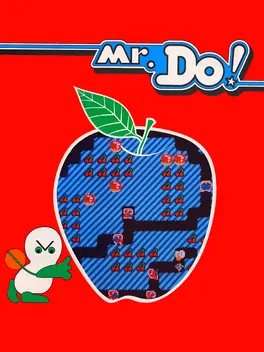
Mr. Do!
Mr. Do! is an arcade game created by Universal in 1982. Similar in some ways to Namco's popular Dig Dug title, Mr. Do! was also popular and saw release on a variety of home video game consoles and systems. It is the first game in the Mr. Do series, and was released both as a standalone game and as a conversion kit (released by Taito Corp.) for existing arcade cabinets. It was one of the first arcade games to be released as a conversion kit, and went on to sell 30,000 units in the United States. It was also a popular choice on the 1983 video arcade-based game show Starcade.
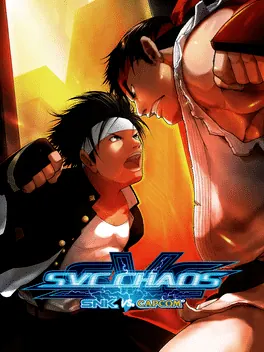
SNK vs. Capcom: SVC Chaos
SNK vs. Capcom: SVC Chaos primarily utilizes the command system of The King of Fighters series, incorporating light/strong kicks, punches, cancels and charging attacks. Unlike its predecessor, Capcom vs. SNK 2, this game lacks both air guards and a "groove system", instead focusing on quicker gameplay. Characters are provided with a basic 3-level bar system for executing super-special attacks with basic filling options attributed to strikes and damage. Additionally, the sprites from the various series received new models and some special effects were changed in the command lists (for example, the player cannot increase the damage of the Zujou Sashi used by Choi Bounge by tapping the buttons anymore).
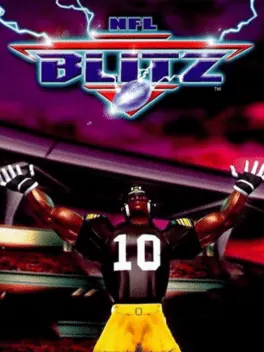
NFL Blitz
NFL Blitz takes the idea of a normal football video game and turns it on its head with fewer players, bigger hits, and lots of personality.
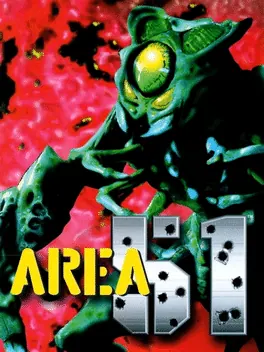
Area 51
Area 51 is a light gun arcade game released by Atari Games. It takes its name from the Area 51 military facility.
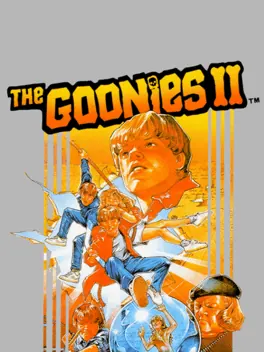
The Goonies II
The Goonies II features two modes of play: platform and first-person. Most of the game is played as the former as the player works through a non-linear map. The player moves Mikey to new areas of the map by ladders or doors that may act as warp zones. Several different types of zones are found in the game, each with distinct enemies, graphics and music.
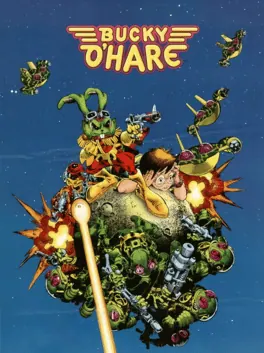
Bucky O'Hare
This video game is based on the cartoon television series Bucky O'Hare and the Toad Wars under license from Hasbro, Inc. While it is generally classified as a scrolling fighting game, utilizing a Final Fight-esque landscape, the player's character is also armed with a laser gun, adding in elements of a scrolling shooter. However, if the character is extremely close to an enemy, he will throw out his fists to attack - a precursor to the characters featured in Metal Slug, who use knives in close combat. Much like the cartoon, Bucky O'Hare features colorful animation, and voice actors from the series were hired to participate in the game's cut scenes. The player chooses from five protagonists: Bucky O'Hare, the heroic rabbit captain of the space ship Righteous Indignation; Jenny, an "Aldebaran cat" and telepath; Dead-Eye Duck, a four-armed mallard; Willy, a kid from earth that replaced their engineer, and Blinky, a one-eyed android. As in the television series, the characters must stop the Toad Empire from invading extraterrestrial planets and enslaving their peoples; to do so they must shoot their way through an army of brainwashed toads to destroy their evil leader, a computer program known as "Komplex" and release the "Interplanetary Life Force." The enemies, among them Al Negator, Toadborg, Total Terror Toad, a "Cyborg Spider", the various varieties of Toad Storm Troopers, the Toads' Air Marshall, and "Komplex-2-Go" who featured in the comic book and cartoon series continuities.
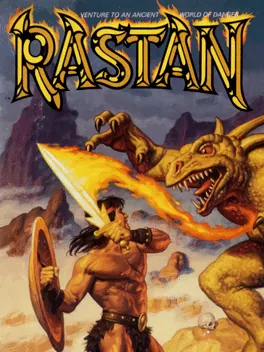
Rastan
Rastan is a fantasy-themed side-scrolling action game originally released for the arcades in 1987. The controls of Rastan consist of an eight-way joystick and two buttons for attacking and jumping. Using the joystick in combination with either button, the player can determine the height of Rastan's jumps and the direction in which he swings his weapon. The game uses a health gauge system along with limited lives, although certain obstacles will instantly kill Rastan regardless of how much health he has left.
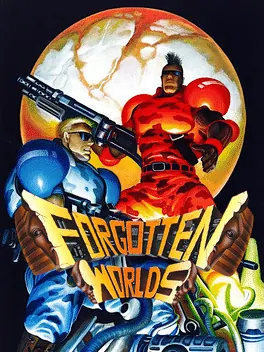
Forgotten Worlds
Forgotten Worlds can be played by up to two players simultaneously. The player controls a flying muscle-bound soldier armed with a rifle with unlimited ammo. The Player 1 character is equipped with a long-range automatic rifle, while Player 2 has a short-range wide shot. The controls in the original coin-op version consists of an eight-way joystick for moving the character in the air while flying and a unique rotatable button known as the "roll switch".Rotating the switch left or right allows the player to adjust their character's aim in one of sixteen directions, while pressing it causes the player character to shoot his gun. This allows for the player to move their character anywhere while keeping their aim in one direction. Pressing the switch rapidly will cause the character to perform a "megacrush" attack will destroy all on-screen enemies, but at the expense of a portion of their vitality gauge. The player character is accompanied by a satellite module orbiting near him that will provide backup firepower every time the player fires their gun. Like the main character, the satellite can also be rotated with the roll switch. Rotating the character while firing will only rotate the aim of the satellite, while rotating the character without firing will not only rotate the satellite's aim, it will also move its relative position around the player. The player can obtain blue-colored coins known as "zennies" from defeating enemies throughout the game. The zennies are used as currency to obtain new power-up items from shops located at certain points in each stage. When the player enters an item shop, they are given a choice of the items available and a limited time to make any purchase they wish. These items consists primarily of new weapons for the satellite module, but also includes a health kit to restore lost vitality, an armor that allows the player to sustain additional damage, and even tips on how to defeat the boss awaiting at the end of the current stage. Forgotten Worlds consists of five stages with a total of eight bosses. The player will lose if their vitality gauge runs out, but will be given a chance to continue.
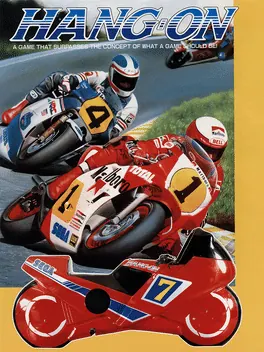
Hang-On
Hang-On is an arcade game designed by Yu Suzuki and released by Sega in 1985. In the game, the player controls a motorcycle against time and other computer-controlled bikes. It was one of the first arcade games to use 16-bit graphics and Sega's "Super Scaler" technology that allowed pseudo-3D sprite-scaling at high frame rates. It also introduced a motion-controlled arcade cabinet, where the player's body movement on a large motorbike-shaped cabinet corresponds with the player character's movements on screen, inspiring arcade games that followed and anticipating the modern motion control trend.
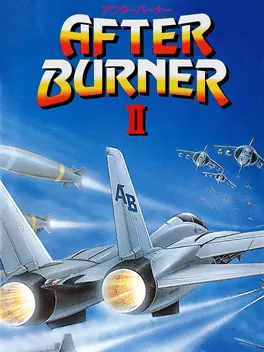
After Burner II
After Burner II is an arcade-style flight game released by Sega in 1987. It is the second game in the After Burner series. In the game, players fly a F-14 Tomcat jet fighter, gunning down enemies while avoiding incoming fire. Like OutRun, another Sega arcade game, After Burner II came in several versions, the most famous being a large, servo actuated, sit-down cabinet which resembled a cockpit and moved according to the motion of the plane onscreen. The cockpit would bank in the same direction the on-screen aircraft was banking. There was also a more basic upright cabinet version.
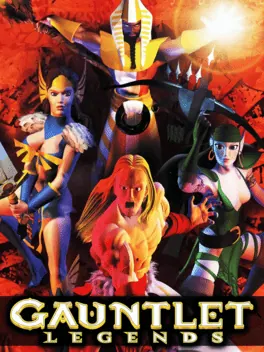
Gauntlet Legends
Gauntlet Legends is an arcade game released in 1998 by Atari Games. It is a fantasy themed hack and slash styled dungeon crawl game, a sequel to 1985's popular Gauntlet and 1986's Gauntlet II and marks the final game in the series to be produced by Atari Games. Its unusual features for an arcade game included passwords and characters that could be saved, enabling players to play over the course of a long period.
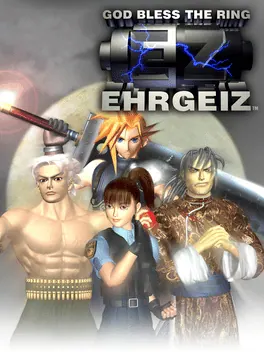
Ehrgeiz
Ehrgeiz is a 3D fighting game that features some characters from Final Fantasy VII. Cloud Strife and Tifa Lockhart are playable in the arcade and the PlayStation versions, and Sephiroth, Yuffie Kisaragi, Vincent Valentine and Zack Fair were added to the PlayStation version's roster. Ehrgeiz differs from most 3D fighting games by drawing heavily from the concepts of wrestling games and Dream Factory's own Tobal series, which allow for full 360-degree movement and do not require fighters to be facing each other at all times.

Melty Blood Actress Again Current Code
The Sega RingWide and Windows port of Melty Blood Actress Again, originally for the PS2, updated with new characters, a rebalanced roster and some gameplay tweaks. It is the last game in the original Melty Blood series which follows the events of Tsukihime. Melty Blood Actress Again Current Code is an anime fighter with a strong emphasis on movement and featuring Moon styles, giving each of the 31 characters in the roster three different movesets with differing system mechanics. The Arcade mode has the same story as Actress Again, with the addition of new stories for characters new to Current Code (Powered Ciel and Archetype-Earth), duo characters who were without one (Neco & Mech and Kohaku & Mech), and Riesbyfe Stridberg, who gained an unlockable alternative route.
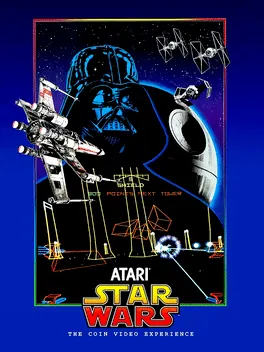
Star Wars
Star Wars is a first-person shoot 'em up based around the original Star Wars film. You take on the role of Luke Skywalker, aiming to destroy the Death Star - which, as any fan knows, involves attacking the 'weak spot' near the exhaust. To even get to this you have to pass swarms of TIE Fighters. Complete the game and it loops back around at ever-increasing difficulty. The game uses vector graphics, which allow lots of action at high speed on comparatively slow systems.
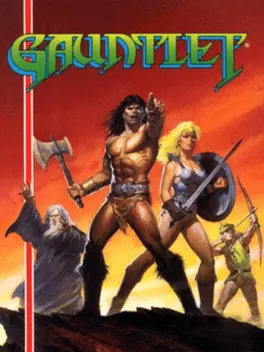
Gauntlet
The NES port of the classic arcade title Gauntlet, which itself made it to Arcades via the PlayChoice-10 machine.
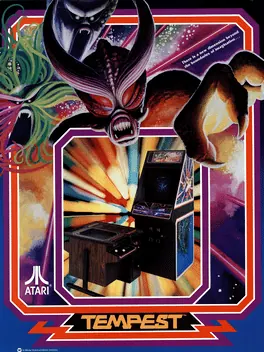
Tempest
Tempest is a 1981 arcade game by Atari Inc., designed and programmed by Dave Theurer. It takes place on a three-dimensional surface, sometimes wrapped into a tube, which is viewed from one end and is divided into a dozen or more segments or lanes. The player controls a claw-shaped spaceship (named Blaster) that crawls along the near edge of the playfield, moving from segment to segment. Tempest was one of the first games to use Atari's Color-QuadraScan vector display technology. It was also the first game to allow the player to choose their starting level (a system Atari dubbed "SkillStep"). This feature increases the maximum starting level depending on the player's performance in the previous game, essentially allowing the player to continue. An official port was released for the Atari ST. An official port that bears the Atari logo was released by Superior Software for the BBC Micro and Acorn Electron in 1985, and another by Electric Dreams for the ZX Spectrum and Amstrad CPC in 1987. Versions for the Atari 2600 and 5200 were in the works in Atari, Inc. during 1984, and unfinished prototypes exist for both of them.
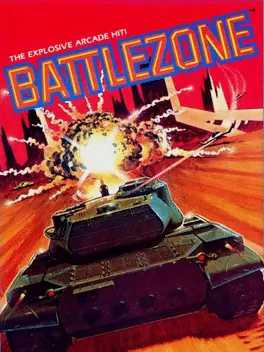
Battlezone
Battlezone is an arcade game from Atari released in November 1980. It displays a wireframe view (using vector graphics rather than raster graphics) on a horizontal black and white (with green and red sectioned color overlay) vector monitor. Due to its novel gameplay and look, this game was very popular for many years. Throughout the 1980s, Battlezone was ported to several home computer systems (usually on the Atarisoft label), including the Apple II, the Commodore 64, the Sinclair ZX Spectrum, and the Atari XEGS. The Atari ST port contains large parts of the original 6502 code which is emulated in real time. An Atari 2600 port was also released, but has colored raster graphics due to limitations and the view is behind the tank rather than inside it.
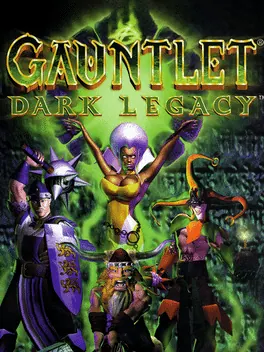
Gauntlet Dark Legacy
Gauntlet Dark Legacy is the follow-up to Gauntlet Legends and another installment in the long-running Gauntlet series of hack-and-slash action games. As with all the Gauntlet games, you play a medieval fantasy character who, along with allies if you have them, fights his or her way through hordes of evil creatures on the never ending quest for more gold and perhaps even an eventual goal. This version contains the characters and levels from Gauntlet Legends, plus the new characters and levels from the Dark Legacy arcade game, with a few extra levels thrown in. There are eight characters to initially choose from: the mighty Warrior, the deadly Valkyrie, the quick-footed Archer, the powerful Wizard, the spellcasting Sorceress, the stalwart Knight, the valiant Dwarf, and the chaotic Jester. Although there are similarities between characters from the two games, each character looks and plays differently. In addition, there are eight alternative-modes for these characters to unlock, plus dozens of secret characters to obtain. With a multi-tap, up to four players can play, with rules governing how much they can hurt each other. Unlike the original Gauntlets, the levels you'll face take place in various terrain from forests to mountains to volcanic plains. Many of the monsters are familiar to old fans of the series, but there are some new blood among the ranks of evil, including some rather large foes.
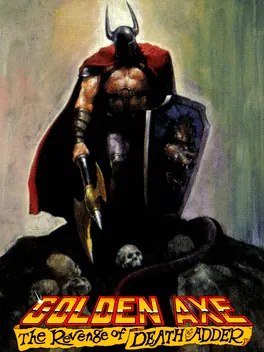
Golden Axe: The Revenge Of Death Adder
Golden Axe: The Revenge of Death Adder is a side-scrolling arcade hack 'n' slash game released in 1992 by Sega. It was the first 32-bit game in the series. It still remains an arcade exclusive as of 2010. The player characters are Goah the giant, Stern the barbarian, Dora the Kentauride, and Little Trix, a young elf lad who carries a pitchfork. None of the characters from the first game are playable, although Gilius Thunderhead from the first game rides on Goah's back. The main enemy is once again Death Adder.
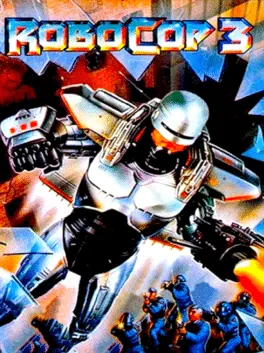
RoboCop 3
RoboCop 3 is a side-scrolling platform shooter. You get missions (such as rescuing your colleagues who are being kept hostages), which are divided into several smaller levels. The levels usually consist of several platforms, and are heavily populated by enemies who shoot at you. You can gather special repair kits, which will be used to restore your health after you've completed a level. "RoboCop 3" is more of a shooter than its predecessors, having more and tougher enemies.
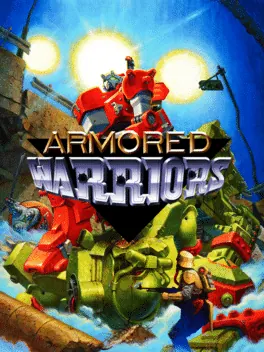
Armored Warriors
In the year 2281, the war spanning half a century over territory between the United World Forces and the Raian Kingdom had at last come to an end. But this peace was not to last. A year after a truce was signed between the two forces, former Raian army captain Azrael, who has converted himself into a cyborg in an attempt to become "the perfect warrior", has marshalled several thousand other cyborgs and declared war against the Raian Kingdom. Robbing mobile weapons from the army, this group of rogues has invaded the Raian capital of Merkid and has begun to abduct the civilians. The United World Government, receiving an emergency message from the planet Raia, has but one choice: to organize and dispatch an army formed around its elite corps, a squadron of warriors called "Bloody Armor", to eradicate the enemy forces and rescue the civilians. And so, in October 2282, the United World Forces begin to launch its attack upon the planet Raia. The most intense battle in human history is about to begin...
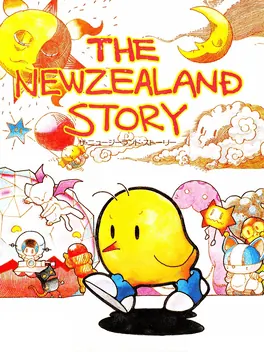
The NewZealand Story
Tiki, a sneaker-wearing kiwi who must save his lover Phee Phee and several of his other kiwi chick friends who have been kiwi-napped by a large blue leopard seal. The player has to navigate a scrolling maze-like level, at the end of which they release one of Tiki's kiwi chick friends trapped in a cage.
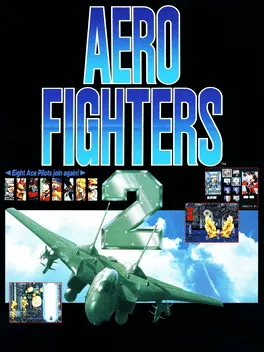
Aero Fighters 2
The game is played with two buttons, with the A button firing projectiles from the plane and the B button launching a special bomb attack which uses a bomb from a limited stock of bombs. Power projectiles can be obtained by destroying buildings and armored enemy planes. There are two types of Power projectiles: "P" Power projectiles, that increases the plane's firepower by one level, and "F" Power projectiles, that increases the plane's firepower to the maximum level instantly. The maximum level only lasts for a limited amount of shots. When certain ground enemies and buildings are destroyed, money bonuses appear which give a random amount of points each. When the player reaches the end of the stage, the player has to face a boss ship.
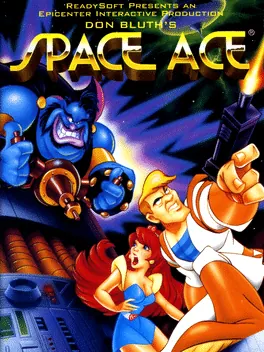
Space Ace
In Space Ace you play the heroic Ace who must stop the evil Commander Borf from taking over the Earth! Borf plans to reduce all of humankind to infants and take over the planet.
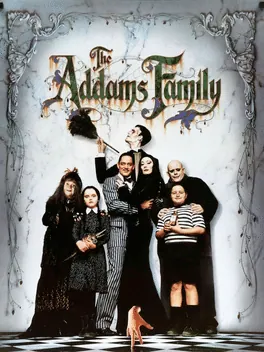
The Addams Family
Creepy, Kooky, Ooky, Spooky! Morticia has been kidnapped! Uncle Fester has lost his memory and has fallen under the spell of Abigail Craven, a conniving character who is anxious to lay her greedy hands on the Addams' hidden fortune. Having recruited a misled Uncle Faster, and assisted by her cohorts, Tully and The Judge, she managers to capture and imprison the other members of the Addams Family within the huge Addams Mansion! Only Gomez can save the day by freeing his son Pugsley, his daughter Wednesday, and Granny- and by restoring Uncle Fester's memory. Accomplishing these tasks is daunting enough, but then Gomez must seek out Morticia in the underground vaults of the Addams Mansion and confront the evil Judge in a kooky and spooky climax!
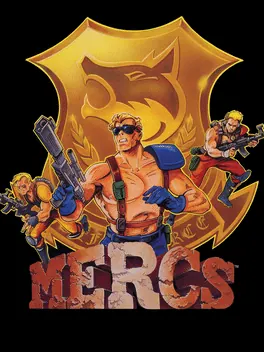
Mercs
The players are members of a covert counter-terrorist team of mercenaries known as the "Wolf Force". The aim of the game was to rescue the former President from rebels in the fictional African country of Zutula, which bears resemblance to the apartheid regime in South Africa. The game has six main levels, plus the final level where your mission is to rescue the former U.S. president from the Hercules Transport. The game's arsenal include real-world machine guns, shot guns, flame throwers, and grenade launchers. Several missions even have pilotable vehicles available.
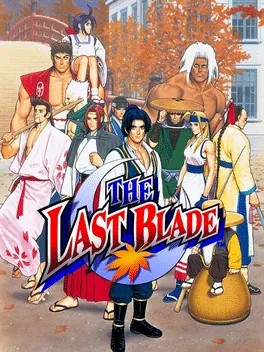
The Last Blade
The Last Blade is a fighting game developed and published by SNK and released in arcades in 1997. It is set in a fictional version of late 19th-century Japan and features a roster of sword-wielding characters. The game uses a weapon-based combat system with selectable fighting styles that emphasize speed or power. Its presentation draws heavily on historical themes and traditional Japanese aesthetics.
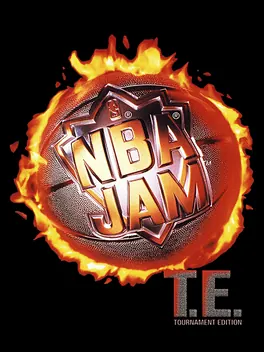
NBA Jam Tournament Edition
NBA Jam Tournament Edition brings you more senses-shattering slam dunking excitement than ever! More than twice as many NBA superstars, more than double the secret characters, Hot Spots, Super Jam Power-Ups, battery back-up and - OH MY - nine all-new rim-rattling slam dunks plus all the original jams! NBA JAM Tournament Edition... it's on FIRE!
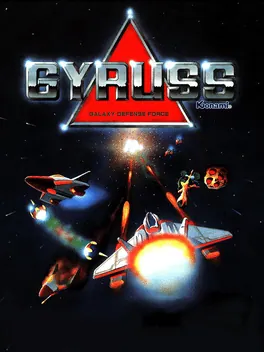
Gyruss
Gyruss is a shoot 'em up video arcade game developed by Konami, and released in 1983. It was designed by Yoshiki Okamoto, who had earlier created Time Pilot for Konami. Gyruss was licensed to Centuri in the United States, and was ported to numerous games consoles and home computers. It follows in the tradition of space war games such as Space Invaders and Galaga. Gyruss was the second and last game Yoshiki Okamoto designed for Konami, after Time Pilot. Due to pay disputes, he was fired after the release of this game, and soon joined Capcom, where he would write 1942 and the first Street Fighter game. The game's background music is an electronic, fast-paced arrangement of J. S. Bach's Toccata and Fugue in D minor, BWV 565; this particular arrangement is similar in sound to "Toccata", a rock arrangement by the UK-based instrumentalist group Sky. Gyruss is notable for using stereo sound, which according to the bonus material for Konami Arcade Classics, was achieved by utilizing discrete audio circuits. The game used three microprocessors: two Z80 microprocessors and one 6809, as well as an 8039 microcontroller. For the sound, five AY-3-8910 PSG sound chips and a DAC. Gyruss was released in both upright and cocktail cabinets. R.Hirst "KOO", M.Jones, "BOX" and the Elliott Brother's are arguably considered some of the best Gyruss players of the 1990's.
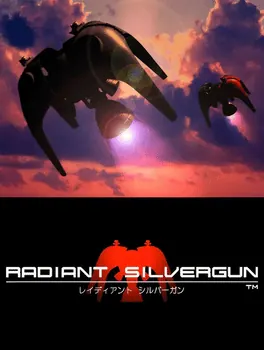
Radiant Silvergun
Unlike in most other shoot 'em ups, there are no power-ups. All weapons are available from the start. Weapons can 'level up', however, becoming more powerful as the player uses them to score points. There are a selection of 7 weapons that can be used at any given time: The game is designed so that there is almost always a 'right' weapon for any situation. The bosses in the game are designed so that they have multiple 'sections' which, if all destroyed before the 'core' of the boss, will award the players with point bonuses. Being able to apply the right weapons on any different boss is key to obtaining these bonuses. For example, a boss may have two sections located on either side of the screen. You could immediately go up to one and begin shooting it with a vulcan, or you could hover in the centre and hit both at the same time with the side bombs. This would increase your chance of obtaining the bonus before the time limit runs out and the boss self-destructs. The game rewards players for "chaining" enemies of just one of three colors, red, blue, or yellow. Whenever the player kills three enemies that are of the same color, who can obtain a points bonus. This also facilitates faster upgrading of weapons.