
Jogos para Arcade
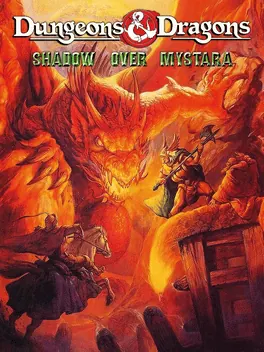
Dungeons & Dragons: Shadow over Mystara
Shadow over Mystara is a side-scrolling beat-'em-up with role-play elements that make it stand out from other similar games released at the time. In addition to the original four heroes found in its predecessor, Dungeons & Dragons: Tower of Doom (Cleric, Dwarf, Elf and Fighter), Shadow of Mystara adds a Thief and a Magic-User to the selection. Furthermore, with the inclusion of two separate versions of each character's sprite set, the game allows up to two players to select the same character (in Tower of Doom each of the characters could only be selected once), effectively giving the game 12 "different" characters to choose from. The two Clerics and two Magic Users also have subtle differences within their spell books. The controls are using four buttons: Attack, Jump, Select (brings up a small inventory ring around the character allowing the player to choose what item is set in the Use slot) and Use. The Cleric, Elf and Magic-User also have two extra rings for their spells, with the Jump button used to switch from ring to ring. While the game uses the same kick harness as the previous game, the Select and Use buttons are reversed. Shadow over Mystara also introduced a selection of special moves which are executed by moving the joystick and tapping the buttons in certain combinations, in a way similar to the Street Fighter series. The characters (except for the Magic-User) have a Dashing Attack as well as a Rising Attack which can be used to combo monsters or even juggle them in the air. Most characters (again, with the exception of the Magic-User and also Cleric) also have a Megacrush, a move common to nearly all of Capcom side-scrollers, which damages all enemies standing close enough to the character but in turn also damaging the player themselves.
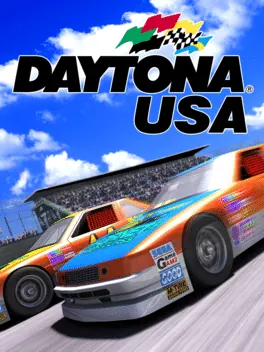
Daytona USA
The player is put behind the wheel of a stock car (known as the Hornet), with the choice of three tracks as well as an automatic or manual transmission. The player's objectives are to outrun the competing cars, and complete the race before time runs out.
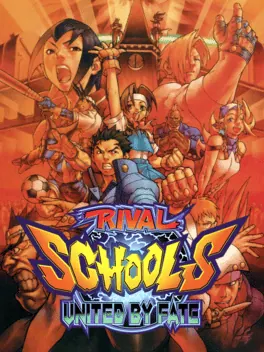
Rival Schools: United by Fate
The main fighting game is best described as a polygonal Marvel vs. Capcom game, with some notable differences. Control wise, the game varies from other Capcom fighting games by only having four buttons (two punches and two kicks, which is closer to the SNK game format) rather than the standard six. A player chooses a team of two characters, and fights against another two character team. The actual fights, however, are one-on-one fights, with the partner only participating by being called in when a player has enough 'vigor' for a Team Up attack, done by pressing a punch and kick button of the same pressure. The Team Ups would be some kind of double team attack by the character and partner, or (for most female characters' Team Ups) would heal the main character or give them more vigor. After the end of a round, a player (win or lose) has a choice to fight the next round with the partner from the previous round, or to keep their main character in play. The 'vigor' meter (essentially a super meter) could go up to 9 levels, with Team Ups costing two levels and super moves from a single person all costing one level of vigor. Much like the Marvel vs. Capcom games, launchers can be done that allow air combos to be performed, with all characters having universal low and high launchers. The game also had a few defensive techniques. Tardy Counters acted much like Alpha Counters from Street Fighter Alpha, allowing a player to immediately counter-attack from a blocking position. However, the restrictions on Tardy Counters are very lax; any hard normal, special or super attack can be used to Tardy counter (Alpha counters are only limited to certain special moves for each character), and Tardy Counters do not cost any extra vigor to perform (Alpha Counters required at least a level of Super Combo gauge to do). Attack Cancels allowed a player to cancel an incoming hit simply by timing their own hit with the attack, which would cancel out both attacks (though it does not nullify the remaining hits of a multi-hit move). Also, one additional level of vigor is awarded.

Cruis'n USA
Cruis'n USA is an arcade racing game originally released in 1994. It was developed by Midway Games and published and distributed by Nintendo. It is the first game in the Cruis'n series and features locations around the United States.
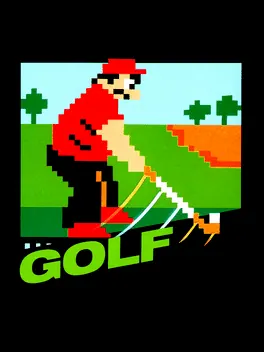
Golf
Golf is a game for the NES based on the sport of the same name. The golfer has been identified as Mario in supplemental material, albeit not wearing his traditional shirt and overalls. The gameplay of Golf is relatively simple. The player is given a ball, and a map on the right side of the screen shows the hole that they must hit the ball into. The obstacles on the way are also displayed on the map. The player will get more points depending on how many times they hit the ball to get it into the hole. Many different types of clubs are also available to choose from by pressing Up/Down on the + Control Pad.
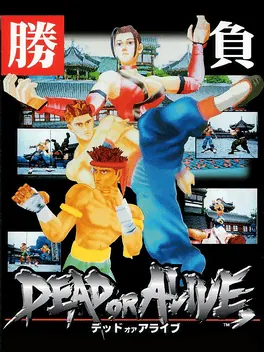
Dead or Alive
Dead or Alive is a 1996 arcade fighting game by Tecmo for the Sega Model 2 (2A CRX and 2B CRX) arcade hardware and the first game in their Dead or Alive franchise. It was ported to the Sega Saturn in 1997. A limited edition was also released for the Saturn which came with an art book. An enhanced port including new characters was released for PlayStation, and later backported for arcade under the title "Dead or Alive++".
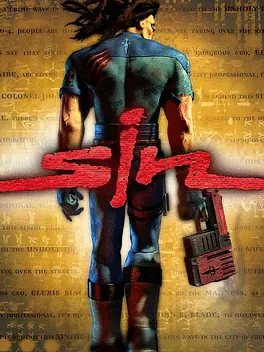
SiN
When the CEO of SinTEK Industries begins injecting the streets with a DNA-altering drug, it's time to reassess the laws of morality. When the same twisted biochemist plans to conquer the world with her army of mutated abominations, it's time to rewrite the golden rule. You are Colonel John Blade, head of the most prominent private protection agency in Freeport. Elexis Sinclaire is waging her holy war against the security industry...and you along with it. You've made a religion out of fighting crime. Now you're going to make Elexis pay for her sins.
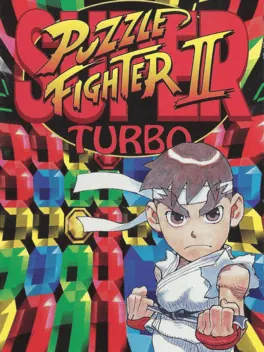
Super Puzzle Fighter II Turbo
The game's title is a parody of Super Street Fighter II Turbo (or Super Street Fighter II X in Japan), as there are no other Puzzle Fighter games, and the game includes music and interface elements spoofing the Street Fighter Alpha and Darkstalkers games. It was a response to SEGA's popular Puyo Puyo 2 that has been sweeping Japanese arcade. A HD-remake version titled Super Puzzle Fighter II Turbo HD Remix, is available for purchase on Microsoft's Xbox Live Arcade and Sony's PlayStation Network.
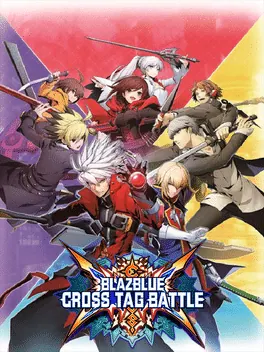
BlazBlue: Cross Tag Battle
"THE COLLISION IS INEVITABLE! THE IMPACT WILL BE UNAVOIDABLE! An unrivaled clash of explosive proportions! The beloved BlazBlue franchise Crosses universes, Tags in fan favorites, and Battles it out in BlazBlue: Cross Tag Battle! Created through an all-star collaboration between BlazBlue, Atlus’ Persona, French Bread’s Under Night In-Birth, and Rooster Teeth’s hugely popular RWBY web series, Cross Tag Battle celebrates the fighting genre for pros and newcomers alike! Choose your team in fast paced 2v2 team battles filled with the craziness you’ve come to love from BlazBlue, with all the tight mechanics, smooth gameplay, and gorgeous 2D graphics you expect from Arc System Works."
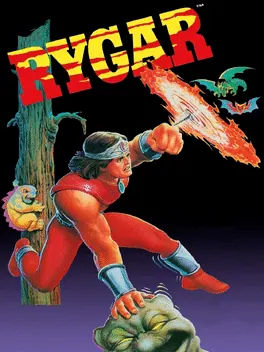
Rygar
An open-world action-adventure game for the Nintendo Entertainment System that features a barbarian warrior with a distinctive "diskarmor" weapon. It is distinct from the original 1986 Arcade game Rygar, which saw numerous home console ports.
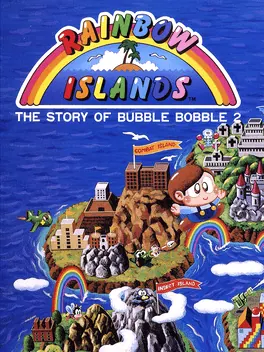
Rainbow Islands: The Story of Bubble Bobble 2
Rainbow Islands is a 1987 arcade game developed and published by Taito. The arcade version was licensed to Romstar for North American manufacturing and distribution. The game is subtitled "The Story of Bubble Bobble 2" and is the sequel to Taito's hit game Bubble Bobble from the previous year. It is the second of four arcade games in the Bubble Bobble series. The game was ported for numerous home computers and game consoles.
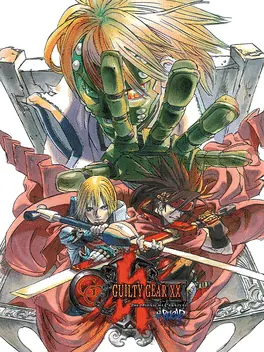
Guilty Gear X2 #Reload
As humanity endeavored to better themselves, they created the biological marvel known as Gears. Originally intended as the next step of human evolution, they were instead fitted for war and turned against their own creators.
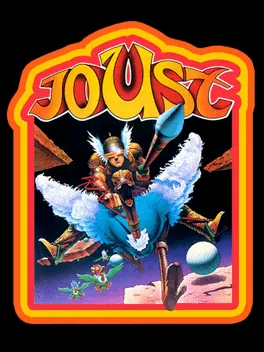
Joust
Joust is an arcade game developed by Williams Electronics and released in 1982. It is a platform game that features two-dimensional (2D) graphics. The player uses a button and joystick to control a knight riding a flying ostrich. The object is to progress through levels by defeating groups of enemy knights riding buzzards.
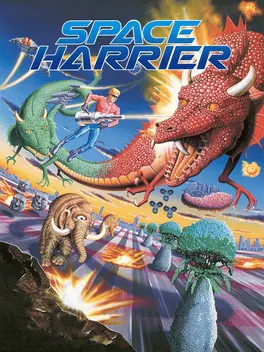
Space Harrier
Run… fly… dodge those obstacles, but return fire on wave after wave of attacking aliens. Armed with a really big gun, you have to defend yourself against the alien hordes using your wits to navigate around the screen. But watch out for those end of level bosses! Originating in the arcades, Space Harrier is a third-person rail shooter with pseudo-3D graphics, set in the same world as Fantasy Zone. The lone titular hero fights aliens with a fireball-launching cannon, which can also be used to transform the hero into a flying rocket. The protagonist is constantly in motion, but the speed of his movement can be regulated by the player.
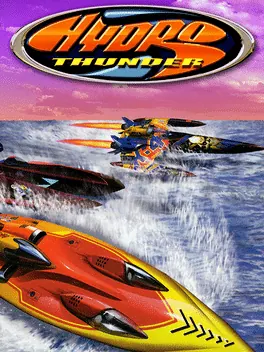
Hydro Thunder
The gameplay of Hydro Thunder consists of racing high-tech speedboats through treacherous environments, from the cold seas of the Arctic Circle, to a post-apocalyptic, flooded version of New York City.
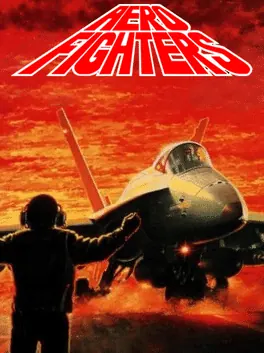
Aero Fighters
There are eight stages in this game. The beginning stages consists of randomly chosen areas from nations of unselected fighters (assuming those fighters have nations). If Rabio or Lepus is chosen, all four rival nation stages become playable. After completing all rival nation stages, there are four more stages. Player and team-specific endings occur after completing the first loop. After completing the 2nd loop, the ending consists of all pilot pairs giving a speech, with the second pilot in the last pair giving a cheat code.
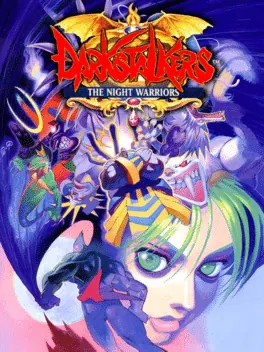
Darkstalkers: The Night Warriors
The DarkStalkers have been unleashed! All the creatures from your darkest dreams have materialized to wage an eternal war for domination of the night. The fate of all humanity rests on who wins this epic struggle. You control the power of your favorite supernatural monster to combine their special attacks and unique abilities in a head to head fighting challenge. It's a fierce and brutal conflict for supremacy in the monster hit of the year!
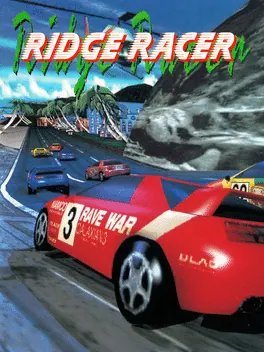
Ridge Racer
Ridge Racer was initially released on the Namco System 22 arcade system board and was later ported to the PlayStation console. It is the first title in the long-running Ridge Racer series of games released for arcades and home consoles. The game's objective is to finish in first place in a series of races. Ridge Racer was among the first racing games to utilise polygon graphics to its full potential.
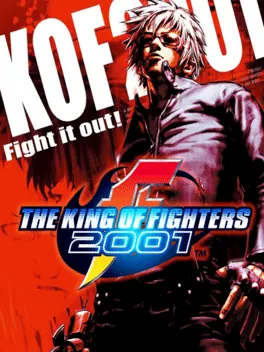
The King of Fighters 2001
The King of Fighters 2001 is the eighth game in The King of Fighters series, the third and final part of the "Nests Chronicles" story arc, and the first game produced following the closure of the original SNK. KOF 2001 kept the Striker assist system from the previous two KOF games, but added a new twist to it - the ability to adjust how many Strikers a team could have. While teams in 1999 and 2000 were limited to selecting one teammate as an assist, now teams could have up to 3 assist characters, or none at all.

Wild Gunman
Wild Gunman is a light gun shooter game created by Nintendo.
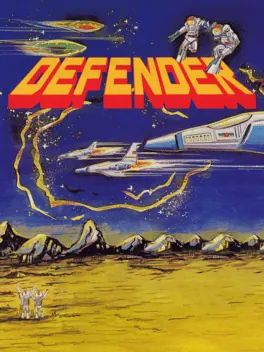
Defender
Defender is an arcade video game developed released by Williams Electronics in 1980. A shooting game featuring two-dimensional (2D) graphics, the game is set on a fictional planet where the player must defeat waves of invading aliens while protecting astronauts. Development was led by Eugene Jarvis, a pinball programmer at Williams; Defender was Jarvis's first video game project, and drew inspiration from Space Invaders and Asteroids. Williams planned to display the game at the Amusement & Music Operators Association (AMOA) trade show, though development delays resulted in the team working on the game up until the show started. Defender was commercially successful, selling over 55,000 units to become the company's best selling arcade game. Praise among critics focused on the game's audio-visuals and gameplay. It is frequently listed as one of Jarvis's best contributions to the video game industry, as well as one of the most difficult video games. Defender was ported to numerous platforms, inspired the development of other games, and was followed by sequels and many imitations.
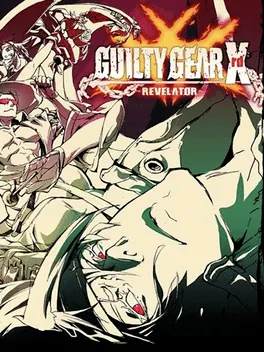
Guilty Gear Xrd: Revelator
Guilty Gear Xrd: Revelator is a Japanese fighting game and the updated version of Guilty Gear Xrd: Sign. The updated version adds new characters Jack-O, Johnny, and Jam Kuradoberi, as well as updated mechanics, balancing, systems, M.O.M. Mode, and more.
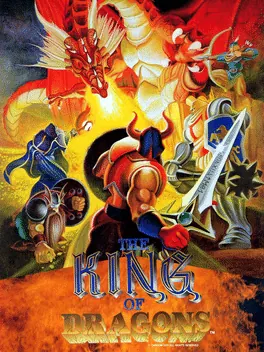
The King of Dragons
The game has 16 levels, though many are quite short. Much like Capcom's Knights of the Round, King of Dragons features an role-playing video game-like level advancement system. Points scored for killing monsters and picking up gold count towards experience, and the character gains levels at regular intervals. With each level, the character's health bar increases, other attributes such as range improve, and the character also becomes invulnerable for a few seconds. Along the way, different weapon and armor upgrades for each character may also be picked up. King of Dragons features a simple control system that consists of a single attack button, and a jump button. By pressing both buttons, the character unleashes a magical attack that strikes all enemies in screen (its strength varies according to the character used) at the expense of losing energy. The fighter, cleric and dwarf can also use their shield to block certain attacks by tilting the joystick back right before the impact. This is one of the many Capcom games to feature the yashichi power-up item. There are three such power-ups hidden throughout the game, each giving the player an extra continue.
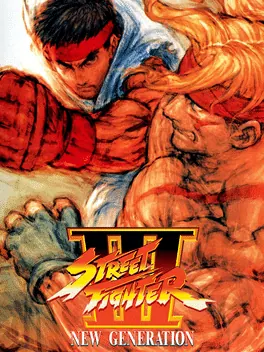
Street Fighter III: New Generation
Street Fighter III: New Generation is a fighting game in Capcom's Street Fighter series, originally released as coin-operated arcade game in 1997. Street Fighter III was produced for the CD-ROM-based CP System III hardware, which allowed for more elaborate 2D graphics than the CPS II-based Street Fighter Alpha games (the previous incarnation of the Street Fighter series), while revamping many of the play mechanics. The game, which was designed as a direct sequel to Street Fighter II, initially discarded every previous character except for Ryu and Ken (hence the "New Generation" subtitle), introducing an all-new roster led by Alex.
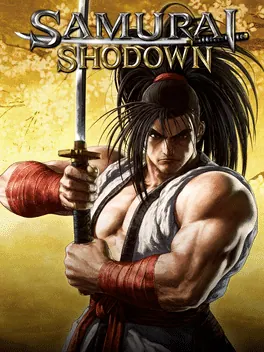
Samurai Shodown
"A brand new title from SNK! A new Samurai Shodown is on the horizon! Since its birth in 1993, the Samurai Shodown series has been known as the premier weapon based versus fighting games, and was essential in cultivating the weapon based fighting game genre. As the first new release in the series in more than 10 years, Samurai Shodown is aiming to yet again push boundaries and deliver some serious samurai action! Developed using Unreal Engine 4 and utilizing a unique brushstroke graphical style to match the Japanese roots of the series, Haohmaru, Nakoruru, Galford and a whole cast of other popular characters will battle once again for victory!"
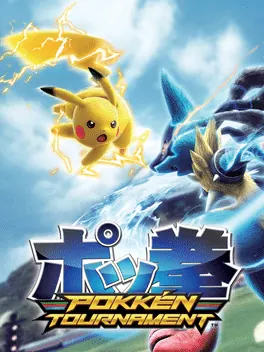
Pokkén Tournament
Pokkén Tournament was developed with BANDAI NAMCO Entertainment, Inc., the producers of one of the top achievements in fighting games, the Tekken series. True to its legacy, this game brings tight gameplay and incredible control to never-before-seen battles between Pokémon. The gameplay is designed to be enjoyed by a wide range of people—even those who have never played a fighting game or an action game before can easily pick it up and play! Key Word: Pokke, pokkén, pokken, poken, pokén
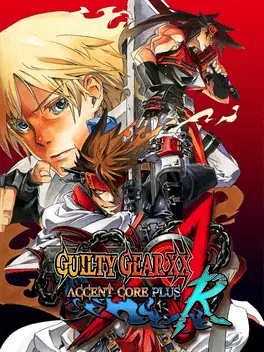
Guilty Gear XX Accent Core Plus R
Ultimate battle action, and the epitome of the GUILTY GEAR XX series now on Steam! Bonus soundtracks included!
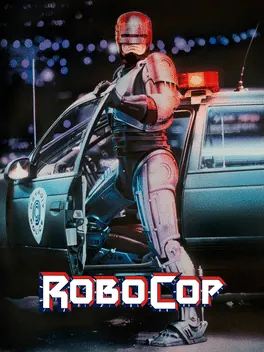
RoboCop
In the game, a player controls RoboCop who advances through various stages that are taken from the 1987 movie. The bonus screen is a target shooting range that uses a first-person perspective.
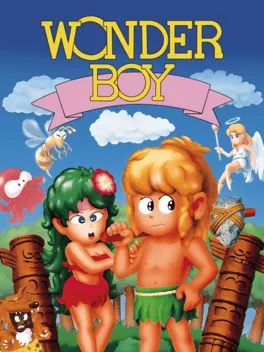
Wonder Boy
Wonder Boy is a 1986 platformer video game published by Sega and developed by Escape (now known as Westone Bit Entertainment). It was the first in the long-running Wonder Boy series of games and was followed up by five sequels, Wonder Boy in Monster Land, Wonder Boy III: Monster Lair, Wonder Boy III: The Dragon's Trap, Wonder Boy in Monster World and Monster World IV. It was also the basis for the Adventure Island series.
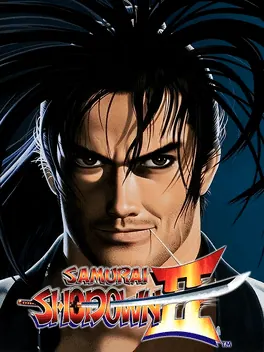
Samurai Shodown II
One of SNK's legendary fighting game series has made a return! In Samurai Shodown II, you can take on one of the roles of 15 warriors as you fight your way through the land to defeat the evil Mizuki! Slash, kick, and slice your opponents in half...do whatever it takes...live by the sword, and die by its blade.
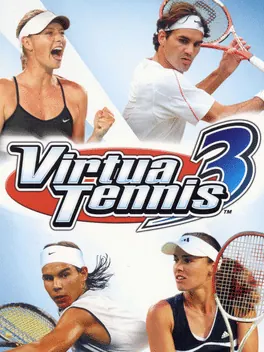
Virtua Tennis 3
Virtua Tennis 3 (Sega Professional Tennis: Power Smash 3 in Japan) is the second arcade game sequel to Sega's tennis game franchise, Virtua Tennis. The arcade version of Virtua Tennis 3 is powered by the PC-based Sega Lindbergh arcade system board. Ports for the PC, Xbox 360, PlayStation Portable and PlayStation 3 consoles are also available with a traditional collection of tennis minigames that the home versions of Virtua Tennis are known for. In 2009, Sega updated and re-created Virtua Tennis 3 in Virtua Tennis 2009.
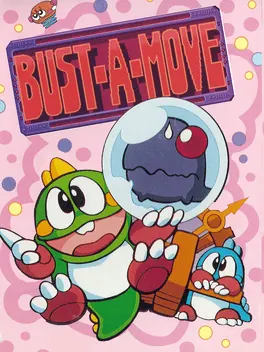
Bust-A-Move
Bust-A-Move (also known as Puzzle Bobble) is a real-time puzzle game in which the player controls a device called "pointer" at the bottom of the screen, aiming and releasing randomly colored bubbles upwards. Depending on the aiming, the bubbles may float up directly or bounce off the walls, changing their trajectory. The goal is to aim the bubbles in such a way that they will touch identically colored ones. When such bubbles form a group of three or more, they pop and disappear from the screen. If the ceiling of the area is covered by too many bubbles, it will gradually descend; the game is over when it nearly reaches the player-controlled pointer. Should the player fail to release the bubbles within a specific time limit, they will be released automatically, unaffected by the pointer's aiming.
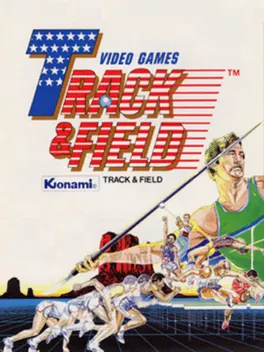
Track & Field
Track & Field is an Olympic-themed arcade game. The simple gameplay, based on quick repeating button presses, set the basics for sequels and similar games in the genre for the next decades.
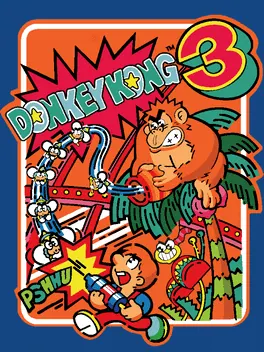
Donkey Kong 3
Stanley is a bugman. Donkey Kong has taken refuge in his greenhouse and it is now up to Stanley to stop the ape from stirring up any more insects that will soon destroy his flowers. Stanley saves the flowers by spraying bug spray on Donkey Kong.
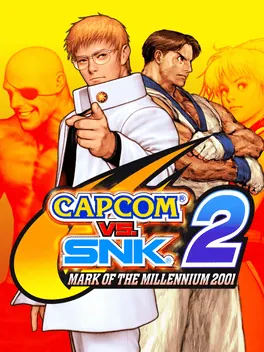
Capcom vs. SNK 2: Mark of the Millennium 2001
Capcom vs. SNK 2: Mark of the Millennium 2001 (Millionaire Fighting 2001 in Japan) is the sequel to the fighting game Capcom vs SNK, and the sixth game in the Capcom's VS. Series. This game was released on Sega NAOMI hardware in the arcade. It was later released for the Sega Dreamcast (Japan only) PlayStation 2 and Playstation 3 (as a Playstation 2 Classics title in the PlayStation Network), with the GameCube and Xbox receiving an updated version called Capcom vs. SNK 2 EO.
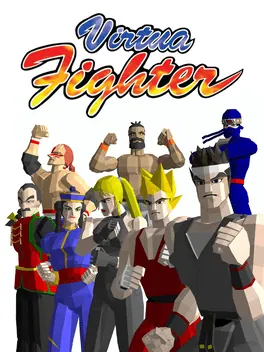
Virtua Fighter
A classic fighting game by Sega, considered one of the first 3D fighting games.