
Jogos para Arcade
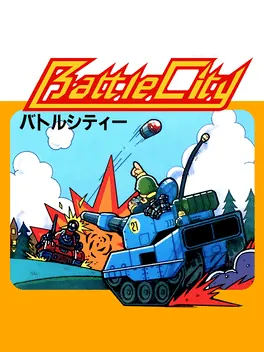
Battle City
Battle City, also known as Tank 1990 or Tank in some pirate multicart releases, is a multi-directional shooter video game for the Family Computer produced and published in 1985 by Namco. The game was later released for the Game Boy and was included in the Japanese version of Star Fox: Assault. It is a port of the arcade game Tank Battalion with additional features (including two player simultaneous play and a level edit feature). There was also a rendition for Nintendo's Vs. System arcade cabinets. The player, controlling a tank, must destroy enemy tanks in each level, which enter the playfield from the top of the screen. The enemy tanks attempt to destroy the player's base (represented on the map as a bird, eagle or Phoenix), as well as the human tank itself. A level is completed when the player destroys all 20 enemy tanks, but the game ends if the player's base is destroyed or the player loses all available lives.
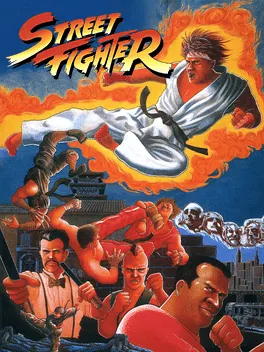
Street Fighter
Street Fighter is the first fighting game produced by Capcom and the very first game in the Street Fighter series. While it did not achieve the same popularity as its sequels when it was first released, the original Street Fighter introduced some of the conventions made standard in later games such as attack buttons and special command-based techniques.
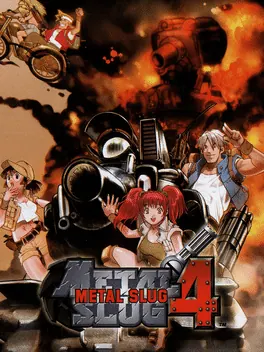
Metal Slug 4
One year after the events of Metal Slug 3, the world is trembling under the new threat of a mysterious but deadly cyber virus that threatens to attack and destroy any nation's military computer system. With Tarma and Eri unable to help due to their own assignments in the matter, Marco and Fio are called in to investigate the situation and are joined by two newcomers, Nadia and Trevor. In their investigation, the group discovers that a terrorist organization known as Amadeus is behind the nefarious plot and that they head into battle against Amadeus' forces, hoping to destroy the cyber virus before it gets the chance to wipe out the entire world's military computer system
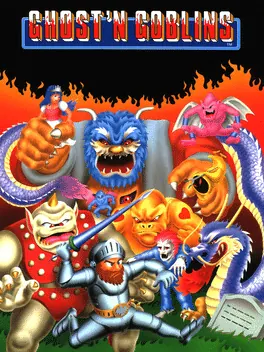
Ghosts 'n Goblins
Ghosts 'n Goblins is a platform game where the player controls a knight, named Sir Arthur, who must defeat zombies, ogres, demons, cyclops, dragons and other monsters in order to rescue Princess Prin Prin, who has been kidnapped by Satan, king of Demon World. Along the way the player can pick up new weapons, bonuses and extra suits of armor that can help in this task. The game is often considered very difficult by arcade standards and is commonly regarded as one of the most difficult games ever released. The game is considered by Gametrailers.com to be the world's second most difficult game ever made. The player can only be hit twice before losing a life (the first hit takes away Arthur's armor, and the player must continue on in his underwear until completing the level, or finding replacement armor). If the player loses a life, he is returned to the start of the level, or the halfway point if he has managed to get that far. Furthermore, each life can only last a certain length of time (generally around three minutes), the clock being reset at the start of a level. If the clock does run out, the player instantly loses that life. After defeating the final boss, but only with the cross weapon (if the player does not have the cross weapon, they will be prompted that it is needed to defeat the boss and restart at the beginning of level 5 and must repeat round 5 and 6 again regardless if the weapon is obtained immediately or not) for the first time the player is informed that the battle was "a trap devised by Satan". The player must then replay the entire game on a higher difficulty level to reach the genuine final battle.
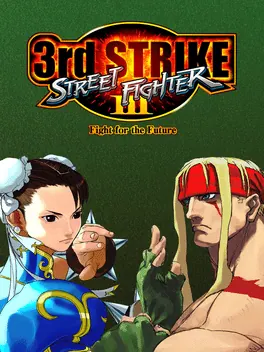
Street Fighter III: 3rd Strike
Street Fighter III: 3rd Strike is the second follow-up to Street Fighter III. The game increased the character roster by adding five new characters and also added further refinements to the previous game's play mechanics and rules. All the returning characters from the previous Street Fighter III games were given new stages, endings, and voice actors for certain characters, continuing the overall storyline from where the first two games left off.
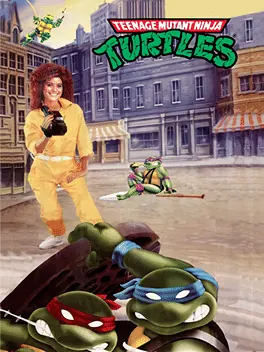
Teenage Mutant Ninja Turtles
NOTE: This is the original 4-Player Arcade release, not the NES Title. The player chooses from one of the four Ninja Turtles: Leonardo, Michelangelo, Donatello, and Raphael. After Shredder kidnaps the Turtles' friend April O'Neil and their mentor Splinter, they must give chase, save their comrades, and defeat the evil Shredder. The player chooses from one of the four Ninja Turtles: Leonardo, Michelangelo, Donatello, and Raphael. Depending on the version of the game, the characters are either, chosen at the start of the game or assigned by control panel. After Shredder kidnaps the Turtles' friend April O'Neil and their mentor Splinter, they must give chase, save their comrades, and defeat the evil Shredder. Up to four players (two in some versions) can take control of any of the Turtles. Donatello has slower attacks but a longer range, Michelangelo and Raphael have faster attacks but a shorter range, and Leonardo is a well-rounded Turtle with average range and speed. The eight-way joystick controls the movements of the Turtle, the jump button makes them jump and the attack button makes them hit in front of them using their weapon. In addition to this, some combinations are possible. The Turtles can throw Foot soldiers overhead, and by pressing the jump and attack buttons, a special attack is performed. Raphael rolls along the ground and finishes with a kick, while the other Turtles do a sweeping jump attack with their weapons. Turtles can also spring off the wall in certain areas. Enemies can be defeated more quickly by slamming them into walls or solid objects. Many objects such as traffic cones, parking meters, fire hydrants and exploding oil drums can be hit or damaged with attacks in order to help defeat nearby enemies. In the attract mode, the game showed the first part of the cartoon opening, along with a portion of the Teenage Mutant Ninja Turtles theme song. Most of the enemies the Turtles face are the Foot Soldiers, all color-coded to indicate their attack patterns and weapon of choices. Some enemies, such as the standard purple-clad Foot Soldiers and Roadkill Rodney robots, have the ability to restrain the Turtles' mobility and drain their health, leaving the player open to attack for other enemies. The bosses in the game include Rocksteady and Bebop (individually at first in that order, and later the two of them together), Baxter Stockman, Granitor, General Traag, Krang, and Shredder himself.
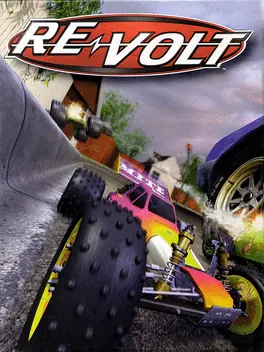
Re-Volt
Re-Volt is an R/C car racing game from Acclaim, originally released in 1999. Re-Volt features great gameplay, realistic physics that still hold up to this day and bright and colorful visuals. It's a game aimed at people who just want to play a funky arcade racing game as well as for people who seek a more competitive challenge. It's meant for all ages and occasions: Play for yourself or in the local network with friends, or even online!
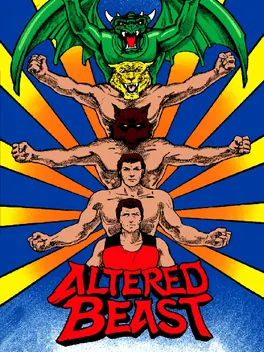
Altered Beast
Altered Beast is a 1988 beat 'em up video game developed by Team Shinobi and published by Sega for arcades. Set in Ancient Greece, the game follows a Roman centurion who is resurrected by the Olympian god Zeus to rescue his daughter Athena from Neff, the demonic ruler of the underworld. By collecting three power-ups in a level, the player character can transform into one of five mythical beasts. In the original arcade, the end credits are interspersed with images of actors in costumes for the different characters and monsters of the game, implying the whole game was a film production.
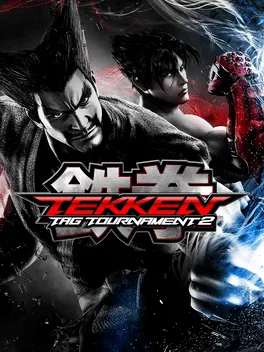
Tekken Tag Tournament 2
The console release added new characters and stages.
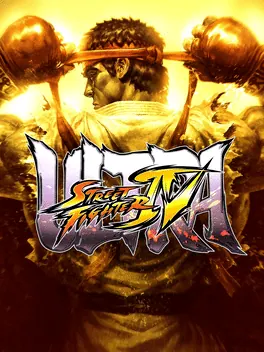
Ultra Street Fighter IV
The world’s greatest fighting game evolves to a whole new level with Ultra Street Fighter IV. Continuing the tradition of excellence the series is known for, five new characters and six new stages have been added for even more fighting mayhem, with rebalanced gameplay and original modes topping off this ultimate offering.
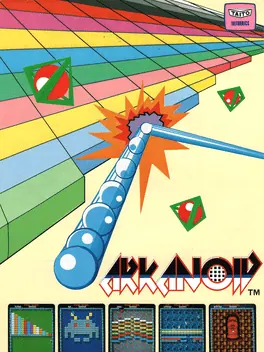
Arkanoid
Arkanoid is an arcade game developed by Taito in 1986. It expanded upon Atari's Breakout games of the 1970s by adding power-ups, different types of bricks, and a variety of level layouts. The title refers to a doomed "mothership" from which the player's ship, the Vaus, escapes.
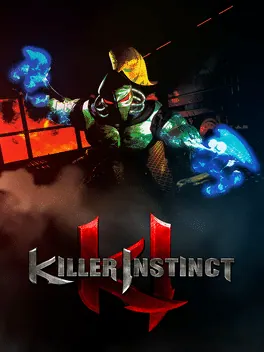
Killer Instinct
Killer Instinct is a fighting game developed by Rare and published by Midway and Nintendo. It was released as an arcade game in the fall of 1994 and, the following year, ported to the Super Nintendo Entertainment System (SNES) and the Game Boy. The game's plot involves an all-powerful corporation organising a fighting tournament. The story was adapted in a limited comic book series published under the short-lived Acclaim Comics imprint. Killer Instinct features several gameplay elements unique to fighting games of the time. Instead of fighting enemies in best-of-three rounds bouts, each player has two life bars. The player that depletes the other player's life bars first wins the match. The game also introduced "auto-doubles", a feature which allows players to press a certain sequence of buttons to make characters automatically perform combos on opponents. Also featured in the game are "combo breakers", special defensive moves that can interrupt combos.
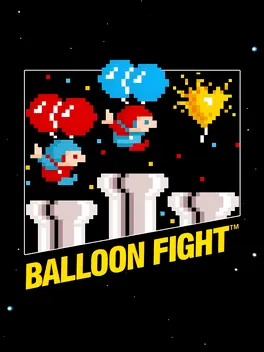
Balloon Fight
Balloon Fight was developed and released by Nintendo, being the console port of the Arcade game VS. Balloon Fight (which was developed at the same time by another team, but released first). It was ported onto numerous other systems, and has more recently been released on the Nintendo Wii U. The game allowed for 1 player and 2 player gameplay, providing cooperative play to get past each stage.
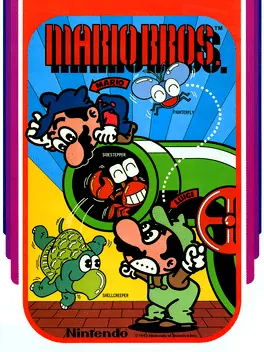
Mario Bros.
Mario Bros. is an arcade game published by Nintendo and developed by Shigeru Miyamoto. The platform puzzle which first introduced Luigi to the world has both single and multiplayer action with two differing game types, but with the same objective. Crabs, turtles and fighter flies must be cleared out by jumping underneath the platform they sit on, then kicking them away. Each level is cleared when a set number of coins is collected. For the two player mode, the first to collect the set amount of coins wins.
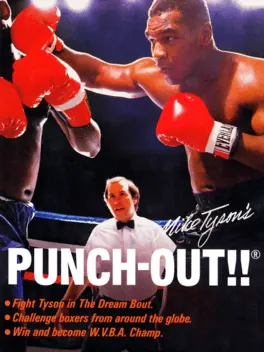
Mike Tyson's Punch-Out!!
Punch-Out!!, originally released in North America as Mike Tyson's Punch-Out!!, is a boxing sports fighting video game for the Nintendo Entertainment System (NES) developed and published by Nintendo in 1987. Part of the Punch-Out!! series, it is a port of both the Punch-Out!! and Super Punch-Out!! arcade games (particularly the latter) with some variations. Punch-Out!! features a boxer known as Little Mac working his way up the professional boxing circuits, facing a series of colorful, fictional boxers, leading to a final fight with real-life boxer, the then-World Heavyweight Champion, which is Mike Tyson in the original version and Mr. Dream in the later version. Little Mac has a limited repertoire compared to most of his opponents. His punches are limited to left and right jabs, left and right body blows, and a powerful uppercut. The uppercut can only be used once the player earns a star, which is typically accomplished by counter-punching the opponent directly before or after certain attacks are launched. The player can acquire up to three stars. To perform the uppercut, the player needs to press the start button once a star is earned. To defend, Mac can dodge left or right, duck, and block punches by putting up his guard. Little Mac also has a heart meter, which decreases by three upon being struck by an opponent and one upon blocking an attack or an opponent blocking/dodging the player's attack. When the heart meter decreases to zero, Little Mac temporarily turns pink and appears exhausted, leaving the player unable to attack but still able to dodge or block. At this point, Mac can regain some hearts (and his normal color palette) only by avoiding the opponent's punches. He immediately loses all of his hearts upon being knocked down, but can regain some by getting up. A bout can end by knockout (KO), if a fighter is unable to get up within ten seconds after being knocked down; by technical knockout (TKO), if a fighter is knocked down three times in one round; or by decision, if the bout lasts three full rounds without a clear winner. In order to win by decision, the player must accumulate higher than a certain point total by punching the opponent and/or knocking him down (different boxers require different point totals to win by decision). However, some bouts cannot be won in this manner and will automatically result in a loss for the player if the opponent is not knocked out. Mac can only get up three times during any one bout; if he is knocked down a fourth time, he will be unable to rise and thus lose by knockout. When Mac loses his first bout to a ranked opponent, he will have a chance to fight a rematch. However, if he loses a Title Bout, he will fall in the rankings - one place for the Minor or Major Circuits, two places for the World Circuit. Losing a rematch causes him to fall one place (unless he is already at the bottom of his circuit), forcing him to fight his way back up. A third loss (not necessarily a consecutive one) ends the game. The exception is the final fight against Mike Tyson/Mr. Dream; a loss to them automatically results in a game over.
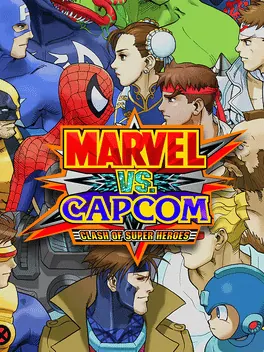
Marvel vs. Capcom: Clash of Super Heroes
Marvel vs. Capcom: Clash of Super Heroes is the fifth Marvel Comics-licensed fighting game by Capcom and the third game in the Marvel vs. Capcom series. In contrast to X-Men vs. Street Fighter and Marvel Super Heroes vs. Street Fighter, the game features characters from numerous Capcom franchises such as Mega Man and Strider, rather than just Street Fighter characters. The game takes place within the Marvel comic continuity, as Professor Charles Xavier calls out for heroes to stop him before he merges with the consciousness of Magneto and becomes the being known as Onslaught, the final boss.
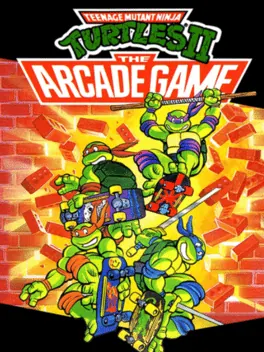
Teenage Mutant Ninja Turtles II: The Arcade Game
This version includes two new levels (the first part of Scene 3 and all of Scene 6), which feature new enemy characters, including two new bosses: Tora (a dog-like "blizzard beast") and Shogun (a robotic samurai), both characters created for the game. Most of the original stages from the arcade version were extended as well and the second half of Scene 3, the parking garage stage, replaces the arcade version's end battle with Bebop and Rocksteady with a battle against the mutated fly form of Baxter Stockman.
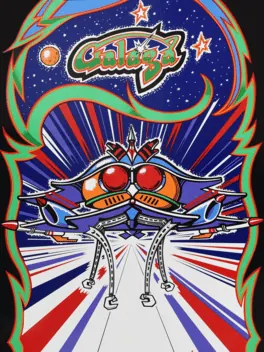
Galaga
The objective of Galaga is to score as many points as possible by destroying insect-like enemies. The player controls a starfighter that can move left and right along the bottom of the playfield. Enemies swarm in groups in a formation near the top of the screen, and then begin flying down toward the player, firing bombs at the fighter. The game ends when the player's last fighter is lost, either by colliding with an enemy or one of its bullets, or by being captured. Galaga introduces a number of new features over its predecessor, Galaxian. Among these is the ability to fire more than one bullet at a time, a count of the player's "hit/miss ratio" at the end of the game, and a bonus "Challenging Stage" that occurs every few levels, in which a series of enemies fly onto and out of the screen in set patterns without firing at the player's ship or trying to crash into it. These stages award a large point bonus if the player manages to destroy every enemy. Another gameplay feature new to Galaga is the ability for enemies to capture the player's fighter. While the player is in control of just one fighter, a "boss Galaga" (which takes two shots to kill) periodically attempts to capture the fighter using a tractor beam. If successful, the fighter joins the enemy formation. If the player has more lives remaining, play resumes with a new fighter. The captured fighter flies down with the enemy that captured it, firing upon the player just like normal enemies, and can be shot and destroyed. The player can free the fighter by destroying the boss Galaga while in flight, causing the captured fighter to link up with the player's current fighter, doubling his or her firepower but also making a target twice as large. Galaga has an exploitable bug that can cause the attackers to stop firing bullets at the player, due to a coding error. In addition, similar to the famous "Split-Screen bug" in Pac-Man, a bug exists in Galaga in which the game "rolls over" from Level 255 to Level 0. Depending on the difficulty setting of the machine, this can cause the game to stall, requiring that the machine be reset or power-cycled in order to start a new game.
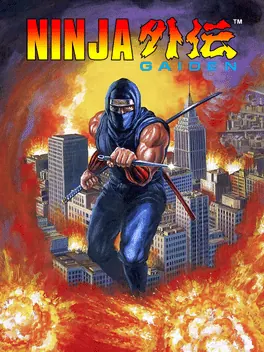
Ninja Gaiden
Ninja Action! The stage is set for conspiracy, mystery and evil in America. Come with Ninja Ryu as he takes you on his fateful journey. Tecmo's unique cinema display system develops the story stage by stage. You piece together the puzzle, while watching the movie-like graphics. Decide what action to take. Use the secret sword and items collected during the action scenes to fight your way to the goal!
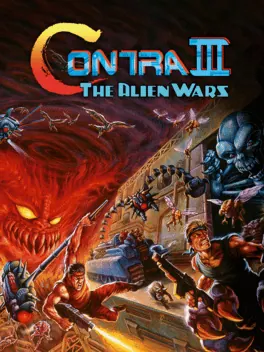
Contra III: The Alien Wars
This game is action from beginning to end, do not think that you will have a moment of peace, even because Aliens are at war with planet earth, and resting will be your least concern.
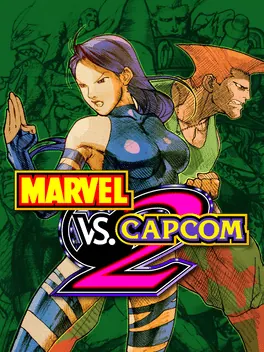
Marvel vs. Capcom 2: New Age of Heroes
Marvel vs. Capcom 2: New Age of Heroes is the fourth game in the Marvel vs. Capcom series of fighting games. The player's controls were simplified to make the gameplay more accessible to the wider audience of casual players and the button configuration was trimmed down to 4 main buttons and 2 assist buttons. The game also features a different air-combo system and 3 on 3 tag, compared to the 2 on 2 tag from previous games in the series.
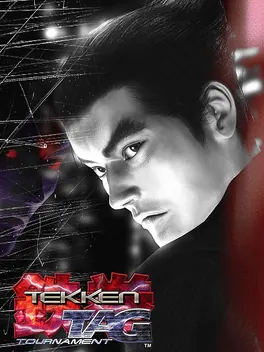
Tekken Tag Tournament
Tekken Tag Tournament is an update of Tekken 3 and is the fourth installment in the popular Tekken fighting game series. It is not canonical to the Tekken storyline however.
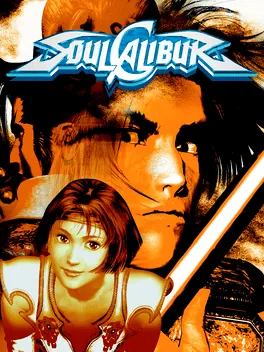
SoulCalibur
SoulCalibur is a weapon-based 3D fighting game developed by Project Soul and produced by Namco. It is the second game in the Soul series, preceded by Soul Edge (1996). Originally released in arcades in 1998, it ran on the Namco System 12 hardware. In 1999 it was ported to the Dreamcast with improved graphics and new features. The North American version was released in September 1999 as a launch title for the Dreamcast and was part of the successful launch of the new console. It became available as a downloadable title on Xbox 360's Xbox Live Marketplace in 2008. The title brought many innovations to the fighting game genre that include a heavy emphasis on weapons and a unique eight-way movement system. Soulcalibur is widely regarded as one of the best Dreamcast titles and is one of the most critically acclaimed fighting games of all time.
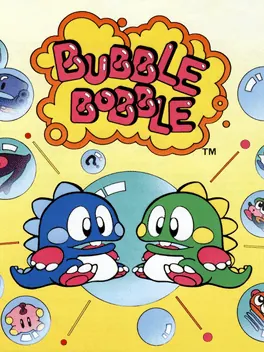
Bubble Bobble
In the game, each player controls one of the two Bubble Dragons, Bub and Bob. The player can move along platforms, as well as jump to those above and to the side, similar to most platform games. The player can also blow bubbles. These can trap enemies, who are defeated if the bubble is then burst by the player's spiny back. Bubbles that contain enemies can be popped at the same time resulting in different foods being projected around the level. Each enemy trapped in a bubble equates to a different food. Food is consumed and transferred to points (an increasing scale of 1000 points is awarded for each enemy burst in tandem with another meaning: one enemy burst equals one food item worth 1000 points, two enemies burst equals two food items worth 1000 and 2000 points, three enemies burst equals three food items worth 1000, 2000 and 4000 points, and so on), which results in earning lives. These same bubbles also float for a time before bursting, and can be jumped on, allowing access to otherwise inaccessible areas. Players progress to the next level once all enemies on the current level are defeated. Enemies turn "angry" — becoming pink-colored and moving faster — if they are the last enemy remaining, escape from a bubble after being left too long or a certain amount of time has been spent on the current level. A monster will also become angry if either player collects a skull (the only negative item in the game), and the monster is hit by the resulting comet crossing the screen (however, this is a rare occurrence). After a further time limit expires, an additional invincible enemy appears for each player, actively chasing them using only vertical and horizontal movements. These do not need to be defeated to complete the level, and disappear once a player's life is lost. Contact with enemies and their projectiles (rocks, lasers, fireballs, etc.) results in death.
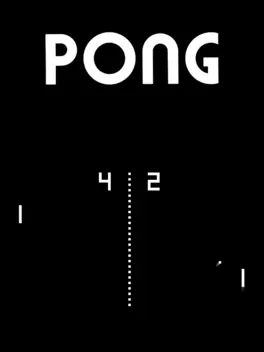
Pong
Pong is a table tennis-themed twitch arcade video game with simple two-dimensional graphics. It was the first sports arcade video game and one of the earliest arcade video games in history, helping to establish the video game industry along with the Magnavox Odyssey. Soon after its release, several companies began producing games that closely mimicked its gameplay.
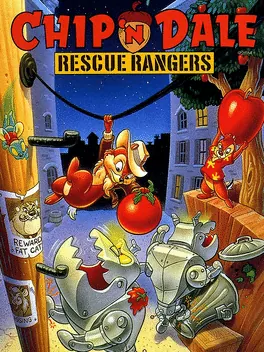
Disney's Chip 'n Dale Rescue Rangers
Chip 'n Dale Rescue Rangers is a platformer video game developed and published by Capcom based on the Disney animated series of the same name. Originally released for the Nintendo Entertainment System in Japan and North America in 1990, it came to Europe the next year, and was ported to the Nintendo PlayChoice-10 arcade system. It sold approximately 1.2 million copies worldwide.
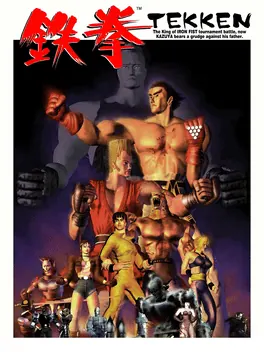
Tekken
Tekken is a fighting game and the first entry in what would become the Tekken series and franchise. It was one of the earliest 3D animated fighting games applying many of the concepts found in Virtua Fighter by Sega. Contrary to traditional fighting games that involve inputting commands as rapidly and accurately as possible, Tekken slows the action down by emphasizing rhythm, strategy and deception over speed.
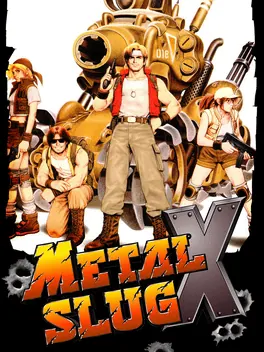
Metal Slug X
Metal Slug X is upgraded version of Metal Slug 2 (Metal Slug 2: Super Vehicle-001/I), which was released in March 1999 for the Neo Geo MVS. It fixed slowdown problems from the original game, and increased the difficulty. Metal Slug X also introduced some new elements to the game system.
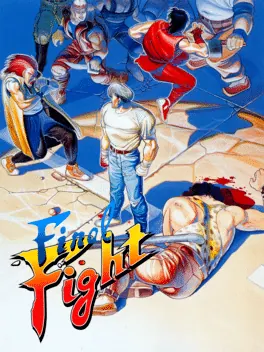
Final Fight
Final Fight is a side-scrolling beat-'em-up produced by Capcom. Final Fight can be played by up to two players simultaneously. Before the game begins, the player chooses between the three main characters: Haggar, Cody, and Guy. Each has his own fighting style and attributes. Health gauges are displayed for both player and enemy characters. The controls for Final Fight consist of an eight-way joystick and two buttons for attacking and jumping respectively. Pressing the attack button repeatedly when attacking an enemy or multiple enemies will cause the player character to perform a combo. The final blow of the combo can be changed to a throw if the player moves the joystick in the opposite direction just before landing it. The player can also perform a jump attack. Pressing the attack and jump buttons simultaneously allows the player to perform a special attack that strikes all surrounding enemies, but will drain a small portion of the player's health. Enemies can be grabbed simply by walking into one of them. When an enemy is grabbed, the player can perform a grab attack by pressing the attack button or perform a throw by tilting the joystick left or right. A thrown enemy can be tossed at another for additional damage. Items such as weapons, health recovery items, and items awarding extra points can be picked up by standing over one and pressing the attack button. Weapons have limited uses and will disappear if the player is disarmed by an enemy too much or when the player moves to a new area. Final Fight consists of six stages or "rounds", as well as two bonus rounds. Each round takes place in a different section of Metro City such as the Slums and the Subway, with most rounds featuring more than one level. At the end of each round the player will face a boss character unique to that round.
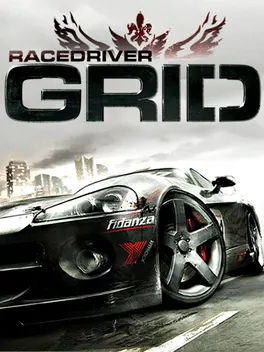
Race Driver: Grid
Discover a stunning world of motor sport brought to life, from racing muscle cars through the iconic streets of San Francisco and competing in the legendary 24 hours of Le Mans to drifting around the docks of Yokohama. Jump behind the wheel of exhilarating racing cars in the most aggressive, spectacular wheel-to-wheel races you've ever experienced.
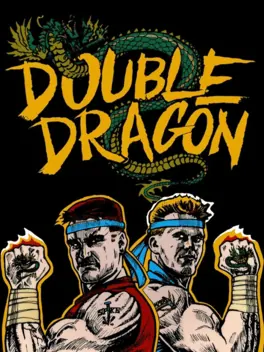
Double Dragon
Double Dragon is a 1987 beat 'em up video game developed by Technōs Japan and distributed by Taito for arcades across Asia, North America and Europe. It is the first title in the Double Dragon franchise. The player character has a repertoire of martial arts techniques which they can perform using the joystick and three action buttons (kick, jump, and punch) individually or in combination. Techniques range from basic punches and kicks to more elaborate manoeuvres like hair-grabbing moves and elbow strikes. When playing with another player, one can assist the other by grabbing their partner's opponent from behind. Caution should be taken, though, as some enemies can do the same thing to the players. The player begins the game with a certain number of extra lives and a life gauge which depletes as the player takes hits. If the life gauge runs out or the time limit reaches zero, the player will lose a life. There is a small variety of enemy characters that the player will face through the course of the game. Certain enemies carry melee weapons, which can be knocked out of their hands and picked up to use against them. Available weapons include baseball bats, whips, throwing knives, and dynamite; in addition, rocks, oil drums, and boxes can be found in certain places. The game is divided into four stages or "missions," consisting of a city slum, a factory, the woods, and the gang's hideout. The game normally ends if a single player defeats the final boss alone. However, if two players complete the game together, they are forced to fight each other to determine who will win Marian's affections.
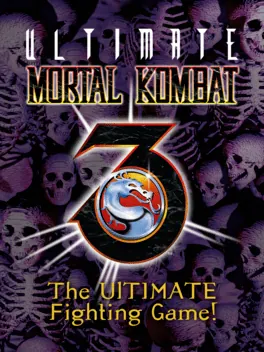
Ultimate Mortal Kombat 3
Ultimate Mortal Kombat 3 combines the best of all the Mortal Kombats into a single cartridge. 23 playable characters are immediately available, such as Reptile, Cyrax, Scorpion, Sub-Zero, Jax, Katana, Sonya, and more. There are two bosses that are unlockable, as well as additional characters and a variety of new levels, some of which are interactive. Players can go against the computer one-on-one, two-on-two, or take part in the 8-fighter tournament.
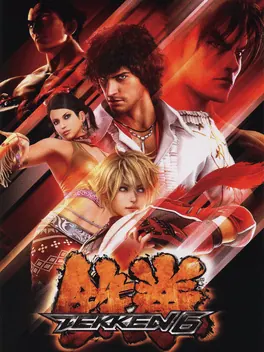
Tekken 6
Tekken 6 is a fighting game developed and published by Bandai Namco Games. It is the seventh main installment in the Tekken franchise. It was released in Japanese arcades on November 26, 2007 as the first game running on the PlayStation 3-based System 357 arcade board. The game received an update, subtitled Bloodline Rebellion, a year later.
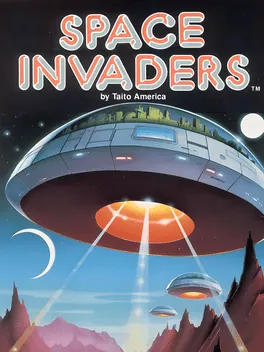
Space Invaders
Space Invaders is an arcade video game developed by Tomohiro Nishikado and released in 1978. It is one of the earliest shooting games and the aim is to defeat waves of aliens with a laser cannon to earn as many points as possible.
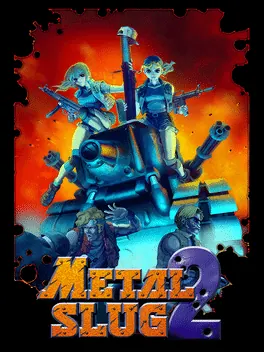
Metal Slug 2
“METAL SLUG 2”, the 2nd entry in SNK’s emblematic 2D run & gun action shooting game returns to the battlefield on the Steam gaming platform!
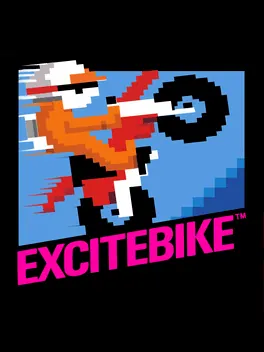
Excitebike
Excitebike is a motocross racing video game franchise made by Nintendo. It first debuted as a game for the Famicom in Japan in 1984 and as a launch title for the NES in 1985. It is the first game of the Excite series.