
Jogos para DOS
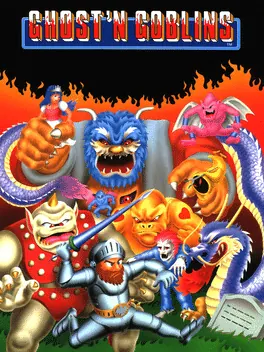
Ghosts 'n Goblins
Ghosts 'n Goblins is a platform game where the player controls a knight, named Sir Arthur, who must defeat zombies, ogres, demons, cyclops, dragons and other monsters in order to rescue Princess Prin Prin, who has been kidnapped by Satan, king of Demon World. Along the way the player can pick up new weapons, bonuses and extra suits of armor that can help in this task. The game is often considered very difficult by arcade standards and is commonly regarded as one of the most difficult games ever released. The game is considered by Gametrailers.com to be the world's second most difficult game ever made. The player can only be hit twice before losing a life (the first hit takes away Arthur's armor, and the player must continue on in his underwear until completing the level, or finding replacement armor). If the player loses a life, he is returned to the start of the level, or the halfway point if he has managed to get that far. Furthermore, each life can only last a certain length of time (generally around three minutes), the clock being reset at the start of a level. If the clock does run out, the player instantly loses that life. After defeating the final boss, but only with the cross weapon (if the player does not have the cross weapon, they will be prompted that it is needed to defeat the boss and restart at the beginning of level 5 and must repeat round 5 and 6 again regardless if the weapon is obtained immediately or not) for the first time the player is informed that the battle was "a trap devised by Satan". The player must then replay the entire game on a higher difficulty level to reach the genuine final battle.
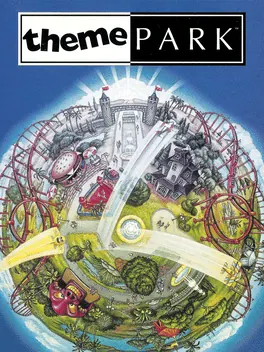
Theme Park
You have inherited a fortune from an eccentric aunt and her will states the money can be spend building the world largest and most profitable theme park. Create a wonderful theme part full of thrilling rides and greasy - but delicious - food and start to make the loads of money. You are a lucky one who can create the best theme park ever made plus make a fortune. Your park will be compared to 40 rivals all over the world every year. Your goal is to become the best park in all categories.
MDK
The game tells the story of Kurt Hectic, a janitor who reluctantly must attempt to save Earth from an alien invasion of gigantic strip mining city-size vehicles named "Minecrawlers". These Minecrawlers are not only removing all of earth's natural resources, but are also crushing any people and cities that get in their way. Aided by his boss, the (possibly) insane inventor/scientist Dr. Fluke Hawkins, and a genetically engineered robotic two-legged/four-armed dog named Bones (although he prefers Max), Kurt must infiltrate each Minecrawler, and fight his way to the pilot, whom he must then kill before returning to Hawkins' in-orbit space station, the Jim Dandy.
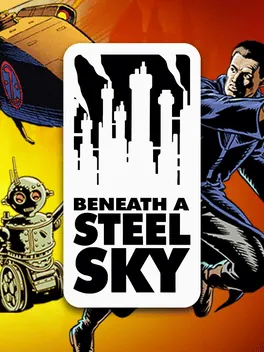
Beneath a Steel Sky
Beneath a Steel Sky is a cyberpunk, point and click, adventure game. You assume the role of Robert Foster and embark on a quest to make the world a better place, along with your robot companion Joey.
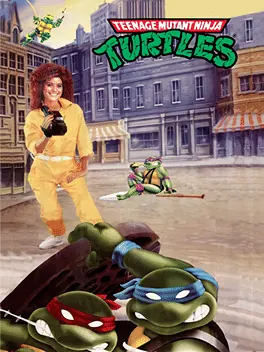
Teenage Mutant Ninja Turtles
NOTE: This is the original 4-Player Arcade release, not the NES Title. The player chooses from one of the four Ninja Turtles: Leonardo, Michelangelo, Donatello, and Raphael. After Shredder kidnaps the Turtles' friend April O'Neil and their mentor Splinter, they must give chase, save their comrades, and defeat the evil Shredder. The player chooses from one of the four Ninja Turtles: Leonardo, Michelangelo, Donatello, and Raphael. Depending on the version of the game, the characters are either, chosen at the start of the game or assigned by control panel. After Shredder kidnaps the Turtles' friend April O'Neil and their mentor Splinter, they must give chase, save their comrades, and defeat the evil Shredder. Up to four players (two in some versions) can take control of any of the Turtles. Donatello has slower attacks but a longer range, Michelangelo and Raphael have faster attacks but a shorter range, and Leonardo is a well-rounded Turtle with average range and speed. The eight-way joystick controls the movements of the Turtle, the jump button makes them jump and the attack button makes them hit in front of them using their weapon. In addition to this, some combinations are possible. The Turtles can throw Foot soldiers overhead, and by pressing the jump and attack buttons, a special attack is performed. Raphael rolls along the ground and finishes with a kick, while the other Turtles do a sweeping jump attack with their weapons. Turtles can also spring off the wall in certain areas. Enemies can be defeated more quickly by slamming them into walls or solid objects. Many objects such as traffic cones, parking meters, fire hydrants and exploding oil drums can be hit or damaged with attacks in order to help defeat nearby enemies. In the attract mode, the game showed the first part of the cartoon opening, along with a portion of the Teenage Mutant Ninja Turtles theme song. Most of the enemies the Turtles face are the Foot Soldiers, all color-coded to indicate their attack patterns and weapon of choices. Some enemies, such as the standard purple-clad Foot Soldiers and Roadkill Rodney robots, have the ability to restrain the Turtles' mobility and drain their health, leaving the player open to attack for other enemies. The bosses in the game include Rocksteady and Bebop (individually at first in that order, and later the two of them together), Baxter Stockman, Granitor, General Traag, Krang, and Shredder himself.
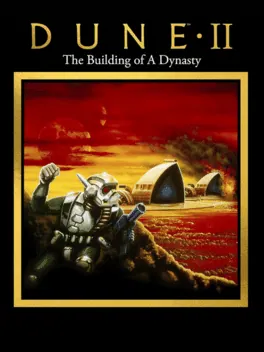
Dune II: The Building of a Dynasty
Dune II is often considered the first mainstream modern real-time strategy game and established many conventions of the genre. Even though set in Frank Herbert's famous Dune universe, the game is only loosely connected to the plot of any of the books or the films based from them. Controlling either of the three Houses, the player must fight a number of battles against the other Houses. In the early levels, the goal is simply to earn a certain number of credits, while in the later missions, all enemies must be destroyed. The single resource in the game is the Spice, which must be collected by harvesters. The spice is converted to credits in a refinery, which are then spent to construct additional buildings and units. There are two terrain types: buildings can only be constructed on stone, while the Spice is only found on sand. However, units moving on sand attract the large sandworms of Dune, who are virtually indestructible and can swallow even large units whole. As levels progress, new and more advanced buildings and units are made available, including structures like a radar station, a repair facility or defense turrets and, for units, various ground troops, light vehicles and tanks. Each House can construct one unique special unit, and, after building a palace improvement, can unleash a unique palace effect.
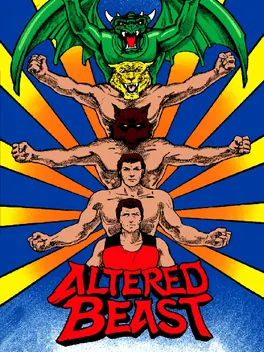
Altered Beast
Altered Beast is a 1988 beat 'em up video game developed by Team Shinobi and published by Sega for arcades. Set in Ancient Greece, the game follows a Roman centurion who is resurrected by the Olympian god Zeus to rescue his daughter Athena from Neff, the demonic ruler of the underworld. By collecting three power-ups in a level, the player character can transform into one of five mythical beasts. In the original arcade, the end credits are interspersed with images of actors in costumes for the different characters and monsters of the game, implying the whole game was a film production.
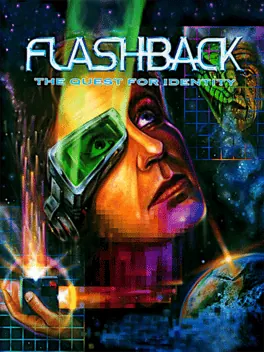
Flashback: The Quest for Identity
Throughout the 20th century, an unprecedented political and economic crisis afflicted Earth, leading to the systematic disabling of it's programme to conquer outer space through lack of funding. The highest priority now was to carryout research into new energy sources, preservation of the enviro- ment and maintenance of the cultural heritage. However, at the dawn of the 21st century, provision of considerable funds from an unknown source released by the politicians of the new, unified government, permitted a return to the space research programme. The conquest began gradually with the construction of huge, manned artificial satellites. Several lunar bases were created with the view to becoming future Earth colonies within the solar system. The considerable advancements made together with the supply of increasingly greater sums of money allowed man to explore, even as far as the planet Titan. You play the part of Conrad Hart, controlling his every move through the 6 levels of the game. During your quest, you will come across many different friends and foes whom you may wish to help or vanquish using your gun. you will have to complete many challenges in order to restore your lost memory. Each level features its own unique graphics and hazards, linked by cinematic animation sequences.

The Dig
In the dead of space, something is alive. A deep space adventure by Sean Clark in collaboration with filmmaker Steven Spielberg. You've saved the Earth from Total Destruction. Now, Can you save yourself? An asteroid the size of a small moon is on a crash course toward Earth, and only NASA veteran Boston Low has the expertise to stop it. Along for the ride are award-winning journalist Maggie Robbins and internationally renowned geologist Ludger Brink. Once the wayward asteroid is nuked into a safe orbit, the trio conducts a routine examination of the rocky surface. What they uncover is anything but routine. Low, Brink and Robbins unwittingly trigger a mechanism that transforms the asteroid into a crystal-like spacecraft. The team is hurled across the galaxy to a planet so desolate, Brink is moved to name it Cocytus, after the 9th circle of Hell in Dante's Inferno. The bleak landscape was obviously once home to a highly enveloped civilization, with remnants of sophisticated architecture, advanced technology and an intricate network of underground tunnels. But no Cocytans. Who were the original inhabitants of this once rich empire-turned-wasteland? What are those apparitions that mysteriously appear from time to time? Why have Low, Robbins and Brink been brought to this place? And how can Low keep his team from unraveling in the face of such uncertainly? To return to Earth, the must dig for answer, both on the planet's surface and deep within themselves. From the combined talents of LucasArts and legendary filmmaker Steven Spielberg comes an epic adventure that plunges headlong into the very core of the unknown. And takes you with it.
Mortal Kombat Trilogy
Mortal Kombat Trilogy features the same gameplay and story as Mortal Kombat 3, but adds characters and stages from the other three arcade games, including Ultimate Mortal Kombat 3. Some completely new characters were also introduced. New additions to the game included the "Aggressor" bar, a meter that fills during the course of the match and temporarily makes a player character faster and stronger. It also features the Brutality, a long combination of attacks that ends with the opponent exploding.

X-COM: UFO Defense
X-COM: UFO Defense is a strategy game that combines tactical combat with base management and global defense. Players lead an international organization tasked with defending Earth from an alien invasion. The game unfolds on two levels: a global view where players manage resources, research alien technology, and intercept UFOs, and a tactical combat mode where squad-based battles occur. Players recruit and train soldiers, build bases, and develop new weapons and equipment based on recovered alien technology. Missions involve turn-based combat against aliens in various environments, with permadeath adding tension to each engagement. As the alien threat escalates, players must balance research, defense, and offensive operations to protect Earth's nations from panic and alien infiltration. X-COM: UFO Defense's blend of strategic depth, tactical combat, and atmospheric tension creates a compelling gameplay experience in the face of a global alien threat.
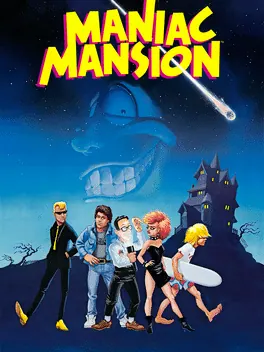
Maniac Mansion
Maniac Mansion is a 1987 graphic adventure video game developed and published by Lucasfilm Games. It follows teenage protagonist Dave Miller as he attempts to rescue his girlfriend from a mad scientist, whose mind has been enslaved by a sentient meteor. The player uses a point-and-click interface to guide Dave and two of his six playable friends through the scientist's mansion while solving puzzles and avoiding dangers. Gameplay is nonlinear, and the game must be completed in different ways based on the player's choice of characters. Initially released for the Commodore 64 and Apple II, Maniac Mansion was Lucasfilm Games' first self-published product.
SimCity
SimCity, later renamed SimCity Classic, is a city-building simulation video game, first released on February 2, 1989, and designed by Will Wright for the Macintosh computer. SimCity was Maxis's second product, which has since been ported into various personal computers and game consoles, and spawned several sequels including SimCity 2000 in 1993, SimCity 3000 in 1999, SimCity 4 in 2003, SimCity DS, SimCity Societies in 2007, and SimCity in 2013. Until the release of The Sims in 2000, the SimCity series was the best-selling line of computer games made by Maxis.
Heroes of Might and Magic II: The Succession Wars
Heroes of Might and Magic II: The Succession Wars is a turn-based strategy video game developed by Jon Van Caneghem through New World Computing and published in 1996 by the 3DO Company. The game is the second installment of the Heroes of Might and Magic series and is typically credited as the breakout game for the series. Heroes II was voted the sixth-best PC game of all time by PC Gamer in May 1997.
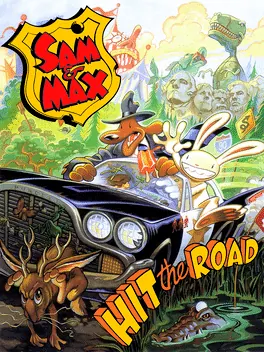
Sam & Max Hit the Road
Sam & Max Hit the Road is a graphic adventure video game released by LucasArts during the company's adventure games era. The game was originally released for MS-DOS in 1993 and for Mac OS in 1995. A 2002 re-release included compatibility with Windows. The game is based on the comic characters of Sam and Max, the "Freelance Police", an anthropomorphic dog and "hyperkinetic rabbity thing". The characters, created by Steve Purcell, originally debuted in a 1987 comic book series. Based on the 1989 Sam & Max comic On the Road, the duo take the case of a missing bigfoot from a nearby carnival, traveling to many Americana tourist sites to solve the mystery.
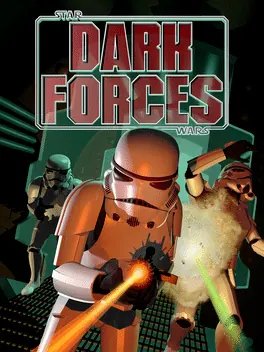
Star Wars: Dark Forces
The Empire stretches its evil clutches across the galaxy, consuming planets with devastating results. Through many struggles, the Rebel Alliance has learned of a new Imperial battle station, the Death Star, with enough power to destroy an entire planet. The evil Empire is secretly building a massive army to complete their arsenal of domination and render their reign of terror unstoppable. Kyle Katarn, a formal Imperial Stormtrooper must join the Rebel Alliance's covert operations division, and re-take the Empire from the inside, one battle at a time. Unlike many other Doom-based games, Star Wars: Dark Forces attempted a realistic approach: the missions followed a specific storyline, sometimes cut up by scenes to progress the narrative. Each mission had its own briefing and objective. The levels were designed to represent actual bases, mines, facilities, and other known places from the Star Wars universe, like Star Destroyer interiors, Jabba's ship, Coruscant, etc.
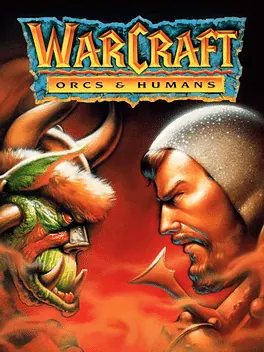
Warcraft: Orcs & Humans
Warcraft: Orcs & Humans is the first game in the Warcraft series developed by Blizzard Entertainment. The Orcish hordes are summoned through the dark portal to the peaceful human Kingdom of Azeroth. When the two races meet each other, a terrible war ensues. Only one race can dominate the land. Players can choose to play as either the Humans or the Orcs. There are 12 scenarios for each race with mostly a single objective: destroy the enemy. As with most RTS games of the same era, a lot of time is spent collecting resources and building structures to make/upgrade different types of units.
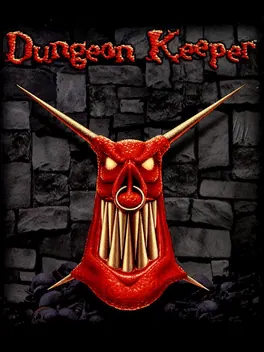
Dungeon Keeper
Dungeon Keeper is a strategy video game in which the player attempts to build and manage a dungeon or lair while protecting it from invading 'hero' characters intent on stealing the player's accumulated treasures and killing various monsters. This was Peter Molyneux's final project with Bullfrog before he left the company in August 1997 to form Lionhead Studios. The player uses a mouse, represented in-game as a hand, to interact with a bar on the left-hand side of the screen, allowing them to select which rooms to build and which spells to cast. The player can also use the hand to pick up creatures and objects in the dungeon and carry them around, allowing for tactics such as gathering an assault force and dropping off the creatures en masse once a foothold has been established. The hand also allows the player to "slap" objects and thereby interact with them: creatures will hurry up when slapped, some traps will be triggered and prisoners in the Torture Chamber can be tortured. The main game view is in isometric perspective; this view can be zoomed and rotated. The player also has the option of possessing one of their creatures, and seeing the dungeon from that creature's first-person perspective, as well as using their attacks and abilities. The map is divided into a grid of rectangles, most of which are invisible. A smaller part of the map is shown as a minimap in the top left corner of the screen. A world map is also available, and at the beginning of the game the player is allocated one of the 20 regions of a fictional, idyllic country to destroy. As the player progresses through these regions, each of which represents a level of the game, the areas previously conquered will appear ransacked, twisted, and evil. Before starting a new level, the Mentor will tell the player about the current region and its attributes. After completing a level, the Mentor will talk about the "improvement" of the destroyed region: "The streets run with the blood of the slain. Screams of pain and howls of anguish rip the night air like a vengeful siren's song. This really is somewhere you can take the kids for the weekend." The Dungeon Heart represents the Dungeon Keeper's own link to the world. If it is destroyed, the player loses the level, and must restart. Along with the heart, the player begins with a small number of imps, the generic work force for all dungeon activities: they can dig tunnels into the surrounding soil, capture enemy rooms and Portals, mine gold and gems, set traps, and even attack when desperate or threatened. Slapping creatures forces them to work faster for a while, but removes some of their health and happiness. Once the Imps are busily working, the player must then set up a basic infrastructure: Lairs for monsters, a Hatchery (where chickens, which serve as food for the minions, are bred), and a Treasury for storing gold. After connecting the dungeon to a "Portal", monsters will arrive. As the game progresses, the player moves along a technology tree, unlocking further rooms. The dungeon has a fleshed-out ecology: some creatures are natural enemies. Flies and Spiders are often found at odds with one another, while a Horned Reaper, if it has gone berserk, will attack all creatures in its path. The goals for each level are fairly straightforward: they generally fall along the lines of eliminating the heroic force or destroying all other Dungeon Keepers on the level.
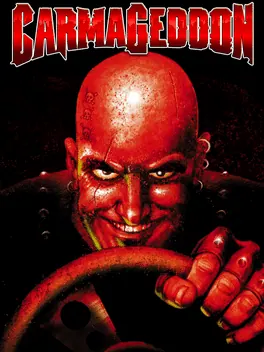
Carmageddon
Take the wheel as Max Damage as you plow scores of vehicles unlucky enough to be in your way in Carmageddon, an action racing game. Your soundtrack will be the sound of crunching metal, the splatter of motor oil on the windshield, and the screams of skidding tires. With a white-knuckled grip on the wheel, you'll have the choice of 23 crash mobiles (from a terrifying monster truck to a high octane Dragster) and 30+ levels of hellish fury and motorized terror.

Full Throttle
Full Throttle is a computer adventure game developed and published by LucasArts. It was designed by Tim Schafer, who would later go on to design Grim Fandango, Psychonauts and Brütal Legend. The game features voice actors Roy Conrad and Mark Hamill. It was released on April 30, 1995. It is the tenth game to use the SCUMM adventure game engine.
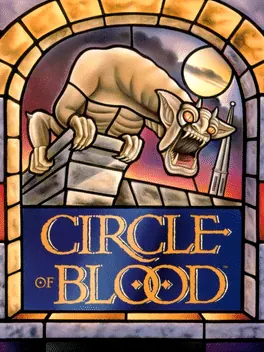
Circle of Blood
Circle of Blood is a 2D adventure game played from a third-person perspective. The player uses a point-and-click interface to interact with the environment and to guide protagonist George Stobbart through the game's world. To solve puzzles and progress in the game, the player collects items that may be combined with one another, used on the environment, or given to non-player characters. The protagonist converses with NPCs via dialogue trees presented through "conversation icons" to learn about the game's puzzles and plot. Clues and other information are obtained by clicking on items in the inventory and on objects in the environment. The player navigates with a map, to which new locations are added as the story unfolds. Unlike in most adventure games at the time, the protagonist's death is possible, after which the player starts from the last save point.
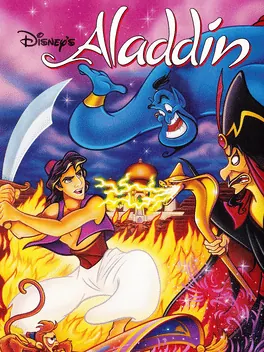
Disney's Aladdin
Disney's Aladdin is a platform video game developed by Virgin Interactive based on the 1992 motion picture of the same name. This version released on Genesis/Mega Drive, DOS, and various PC platforms.
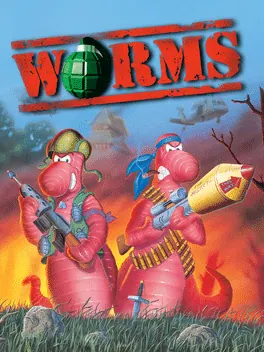
Worms
Worms is a turn-based strategy game that combines tactical decision-making with elements of randomness. Players control teams of worms and take turns using a wide range of weapons and tools to defeat opposing teams, resulting in varied gameplay outcomes. The game offers numerous possible strategies and scenarios, contributing to high replayability. While the basic mechanics are simple, players may require some time to become familiar with controls, weapons, and tactics. Worms supports both single-player and multiplayer modes. Team17 planned on producing Worms for the Virtual Boy back in 1995. Though after a few weeks, they cancelled this plan due to the lack of interest of the publisher and the expected failure of the Virtual Boy.

SimCity 2000
It has all the features, flexibility, art, animation, and power you need to create an environment of your dreams. Choose from a selection of bonus cities and scenarios to rule or ruin as you please. Build schools, libraries, hospitals, zoos, prisons, power plants, and much more... Lay down roads, railways, and highways. Explore the underground layer and build subways and utilities without compromising your aesthetics. Customize different buildings or design your own graphics sets from scratch. This is the ultimate classic Maxis city-building and management simulation. If this game were any more realistic, it'd be illegal to turn it off!
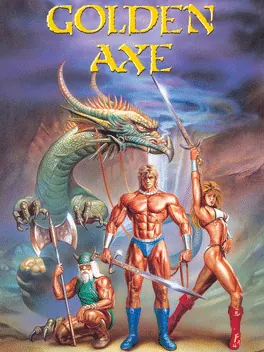
Golden Axe
Progress is made through the game by fighting through Death Adder's henchmen, including men armed with clubs and maces, skeleton warriors, and knights. Players are able to attack using their weapon, jump and cast spells that hurt all enemies on the screen. The force of this magic depends on the number of "bars" of magic power currently available. The bars are filled by collecting blue 'magic potions' attained by kicking little sprites who then drop the potions. These sprites appear during regular levels and during bonus stages in between levels. The male warrior Ax is able to cast earth spells. The dwarf Gilius, casts lightning spells and the female warrior Tyris casts fire magic. Each character has a different number of maximum magic bars and varying ranges of attack. Various steeds known as bizarrians are found in the game. These can be ridden when the enemy rider is knocked off, or if one is found dormant. The least powerful steed is known as the Cockatrice, which can be used to knock down enemies with a swipe of its tail. The more powerful dragon, which can either shoot fireballs or breathe fire, is found later in the game.

Theme Hospital
Theme Hospital is a business simulation game developed by Bullfrog Productions and published by Electronic Arts in 1997, in which the player designs and operates a hospital. Like most of Bullfrog's games, Theme Hospital is permeated by an eccentric sense of humour. The game is the thematic successor to Theme Park, a game also produced by Bullfrog. The game was a massive commercial success, selling over 4 million copies worldwide.
Mortal Kombat 3
Mortal Kombat 3 brings new elements to the 2D fighting series: multi-level playfields, "Dial-A-Combo" attacks, a "Run" button to speed up the battles, and "Vs." codes, which unlock new powers and abilities once both players enter a code sequence in pre-match-up screens. Also included are more stage fatalities and finishing moves as each warrior attempts to go one-on-one with the Centaurian enforcer Motaro, and Shao Kahn himself.
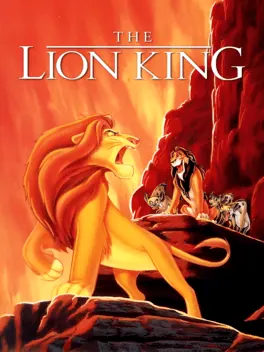
The Lion King
The Lion King brings to life the majesty and mystery of Africa through the tale of Simba, a lion cub faced with the challenging transition to maturity. Believing himself to be responsible for his father's death, Simba enters the wilderness - where he finds salvation with Pumbaa the warthog and Timon the meerkat, and his education begins. Take control of the young cub Simba and, through interaction as detailed as the lust terrain, guide him safely through.
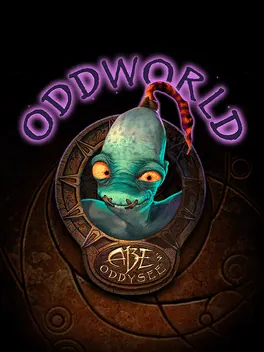
Oddworld: Abe's Oddysee
Oddworld: Abe's Oddysee is the first game set in the fictional Oddworld universe. It is a platformer with puzzle-solving elements, focusing on the portrayal of a weak, underpowered character in a grim and hostile world, who has to rely on his cunning to outwit enemies and overcome hazards. The game has pre-rendered background graphics and uses CG movies of similar style to advance the story between the levels. The main character Abe is almost completely helpless: he cannot use weapons and is usually instantly killed by his brutal enemies if he confronts them directly. For this reason, most of the game involves careful exploration, timed movement, sneaking, and outsmarting the foes through various means: throwing stones to confuse them, luring them into traps, etc. Abe can run, jump, climb, tiptoe, crouch, and roll; in most areas these actions are essential to his survival. A few stages involve Abe riding a large animal known as Elum. Abe's only special power is chanting, which he can use to stun certain enemies for a while or possess them. When Abe possess an enemy he gains his abilities: for example, possessing the body or a ferocious Slig allows the player to shoot from his machine gun, communicate with other creatures of his kind, and even commit suicide, clearing the way for Abe.
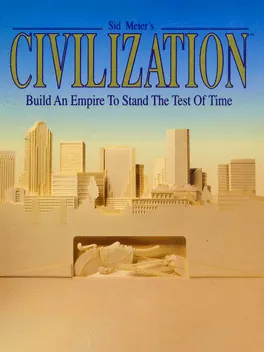
Sid Meier's Civilization
Sid Meier's Civilization is a turn-based strategy computer game created by Sid Meier for MicroProse in 1991.The game's objective is "...to build an empire that would stand the test of time". The game begins in 4000 BC, and the players attempt to expand and develop their empires through the ages until modern and near-future times. It is also known simply as Civilization.
Mortal Kombat
Mortal Kombat is a side-scrolling fighting game. Fighting is set as one-on-one combat, allowing each player to perform a variety of punches, kicks, and special moves in order to defeat their opponent. When the opponent faces their second round loss, the winner can perform a finishing move called a "Fatality" on the loser. The Fatality is a move unique to each fighter that graphically kills the loser in a blood-soaked finale.
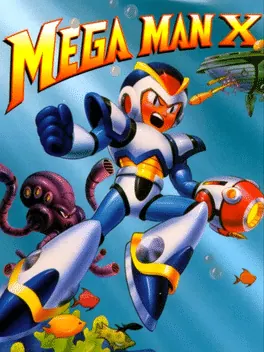
Mega Man X
Mega Man X, known as Rockman X in Japan, is the first game of the Mega Man X series. It was the first spin-off of the classic Mega Man series and made its debut on the Super Famicom/SNES, initially released in 1993. It was ported to the PC in 1995, and to Android and iOS devices in 2011. It was re-released as part of Mega Man X Collection in January 2006, then later re-released in Mega Man X Legacy Collection in July 2018. The game takes place in the year 21XX (early 22nd century), a century after the conclusion of the classic Mega Man series, and stars a new main character named X.
Mortal Kombat II
Mortal Kombat II is a fighting game originally developed by Midway for arcades in 1993. It serves as the second main installment in the Mortal Kombat franchise and follows the success of its predecessor by enhancing the gameplay and further developing the original game's mythos. Mortal Kombat II introduces more varied finishing moves and several iconic characters, such as Kitana, Mileena, Kung Lao, the hidden character Noob Saibot, and the series' recurring villain, Shao Kahn.
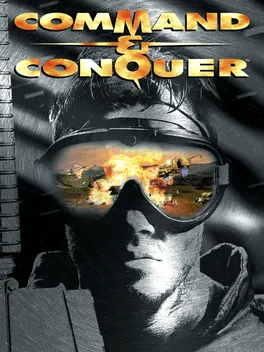
Command & Conquer
Experience the game that started it all! Enter a gritty, high-tech world and take advantage of electronic intelligence and covert surveillance to determine who reigns supreme. Join either the forces of the Global Defense Initiative (GDI) or the Brotherhood of Nod as you build bases, muster forces and dominate your enemies. All for the love of power. Play as the Brotherhood and obey the charismatic Kane’s every command or take control of GDI forces as they seek to save the world from Kane’s ambition. Gather Tiberium to produce tanks, infantry and more to decide the fate of the world.
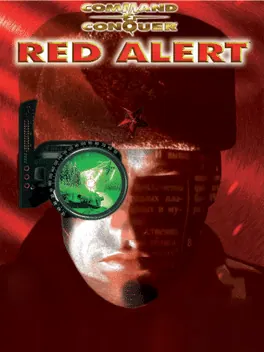
Command & Conquer: Red Alert
Travel to an alternate universe where dark experiments have permanently altered time. Or have they? Soviet tanks crush city after city while Allied cruisers shell bases. Spies lurk, landmines await, and strange new technologies aid both sides in the struggle for ultimate control. In this parallel reality, the mighty Soviet Empire has begun to “liberate” all of Europe. Cities fall and countries collapse before the overwhelming might of the Red Storm. The Allies are scrambling to meet the onslaught, but they have been caught by surprise. Red Alert puts the fate of the world in your hands!
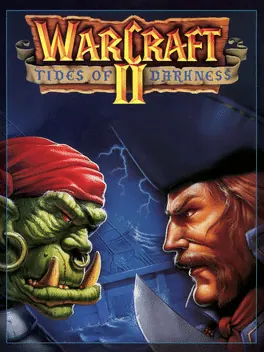
Warcraft II: Tides of Darkness
Warcraft II: Tides of Darkness is a Strategy video game published by Blizzard Entertainment released on 1995 for MS-DOS. Warcraft 2 is a successor of the popular Warcraft real-time strategy game. The game contains many improvements over the previous version in graphics, sounds and playability. The Multiplayer was also greatly improved allowing up to 8 players in the marvelous multiplayer skirmish.