
Jogos para MSX
Front Line
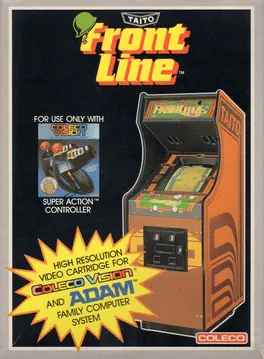
Front Line is a vertically scrolling action game. Your mission is to infiltrate enemy territory and destroy their fortress. To reach the fortress, you will have to make your way through varied and dangerous terrain. Jungles, deserts, brush, and rocks all slow your progress, plus each area has numerous enemy fighters and tanks trying to stop you. To help get past these obstacles, you are armed with a machine gun and grenades; at some points in the game you may even come across an abandoned tank which you can control to increase your odds of survival. When you reach the end of the level and successfully destroy the fortress, the game will repeat at a higher level of difficulty. Gameplay is for one or two players, and four different skill levels are available.
Ballblazer
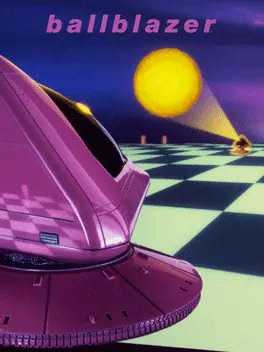
Ballblazer is a 1984 computer game created by Lucasfilm Games (later LucasArts Entertainment). It was originally released for the Atari 8-bit systems, such as the Atari 800 and the Atari 5200. It was also ported to other popular platforms of the day, such as the Apple II, ZX Spectrum (by Dalali Software Ltd), Amstrad CPC, Commodore 64, Atari 7800, and the NES. The Atari 800 version was called Ballblaster during development - pirated versions of the game went by this name as well. The principal creator and programmer of Ballblazer was David Levine. In 1990, LucasArts and Rainbow Arts released a remake and follow-up to this game, called Masterblazer. This game was released for the Amiga, Atari ST, and PC DOS. A similar game inspired by Ballblazer called Space Football: One on One was developed and released by Triffix for the Super NES in 1992. Years later on March 31, 1997, a remake of the original titled Ballblazer Champions was released for the Sony PlayStation.

Continental Circus
Continental Circus, released as Continental Circuit in North America, is a racing simulation arcade game, created and manufactured by Taito in 1987. It was later ported to various home computers in 1989, including the Amiga, Amstrad CPC, Atari ST, Commodore 64, MSX and ZX Spectrum. It was then released in 2005 for the PlayStation 2, Xbox and PC as part of Taito Legends. The arcade version of this game comes in both upright and sit-down models, both of which feature shutter-type 3D glasses hanging above the player's head. According to Computer and Video Games in 1988, it was "the world's first three dimensional racing simulation." The home conversions of Continental Circus lack the full-on 3D and special glasses of the arcade version, or the detailed graphics, but retain the essential gameplay structure.
J.R.R. Tolkien's War in Middle Earth
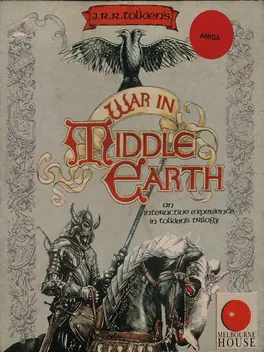
J.R.R. Tolkien's War in Middle Earth is the 16-bit game with additional adventuring features compared to the 8-bit version, loosely depicting the events of the One Ring from the Shire to Mt. Doom. The game starts with the three hobbits: Frodo, Sam, and Pippin surrounded by nine individual units of Nazgul near the Shire. Although the first task is to travel to Rivendell, the player is free to decide how heroes and armies progress, despite the in-game conventional storyline.
Exerion
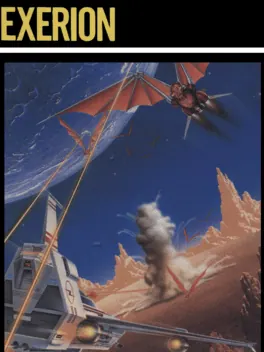
Exerion is a vertical shoot 'em up released by Jaleco in 1983 and licensed to Taito for distribution in the United States. Screenshot from arcade version Exerion is a shoot 'em up game featuring parallax effects and inertia simulation, something notable for 1983. The player travels around strange scenarios shooting aliens. The player has two types of guns: fast single shot (limited) or slow double shot (unlimited). In 1984, along with the MSX1 port of the original, a sequel was released titled Exerion II: Zorni for the MSX1, with similar gameplay to the original. There were plans for an NES release of this game. In 1987, the game was followed by the semi-sequel titled Exerizer, also known as Sky Fox.
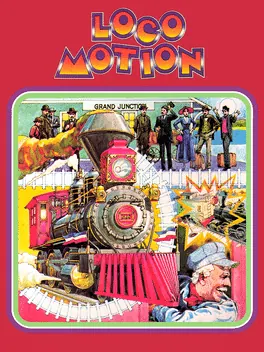
Loco-Motion
Loco-Motion is basically an updated version of a sliding block puzzle game where the player can move pieces horizontally or vertically within a frame to complete a picture. However, the presence of a constantly moving locomotive complicates matters. The player controls the playfield and the aim is to guide the locomotive around the tracks to collect the passengers waiting at the stations located around the edges of the screen. The player uses a joystick to slide a piece of the track into the vacant square. The locomotive is always moving, but the player has the option of making it move faster to get to the passengers more quickly by using a button next to the joystick. The player must avoid crashing the locomotive into the dead-end barricades (shown as a yellow 'X'), and also ensure that it does not run into the edge of the gap or a barrier at the playfield edge, either of which costs a life.
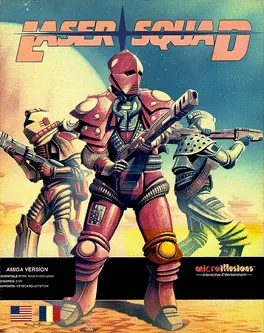
Laser Squad
Laser Squad is a turn-based tactics war game where the player completes objectives such as rescue or retrieval operations, or simply eliminating all of the enemy by taking advantage of cover, squad level military tactics, and careful use of weaponry. The squad's team members are maneuvering around a map one at a time, taking actions such as move, turn, shoot, pick up and so on that use up the unit's action points. More heavily laden units may tire more easily, and may have to rest to avoid running out of action points more quickly in subsequent turns. Morale also plays a factor; a unit witnessing the deaths of his teammates can panic and run out of the player's control. Including the expansion pack, there are seven scenarios in total, each one with its own difficulty settings and squad allocation Laser Squad originally came with five mission scenarios, with an expansion pack released for the 8-bit versions, containing a further two scenarios. Reaction from gaming magazines was positive, gaining it high review rating and several accolades. The legacy of the game can be seen in other titles like the X-COM series, especially the acclaimed UFO: Enemy Unknown which was also created by Julian Gollop and was initially conceived as a sequel to Laser Squad
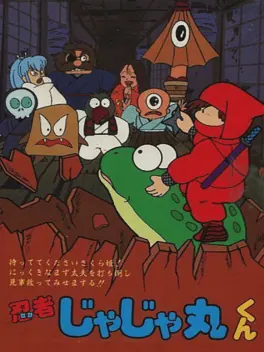
Ninja JaJaMaru-kun
The game stars the brother of Ninja-kun (from Ninja-Kid). Princess Sakura has been kidnapped by Damazu-Dayuu, and because Ninja-Kun is away on a journey, the task falls to young JaJaMaru-kun. In the game, the player starts with three lives and can only run, jump and throw shurikens. The game is divided into stages, each with four floors and eight enemies. Sakura-Hime and Damazu are placed, unreachable, at the top of the screen. Enemies use various projectiles, one of which will cause the player to lose a life. If JaJaMaru-kun lands on top of an enemy, it will simply be temporarily stunned and vice versa. Once an enemy is defeated and offscreen, a spirit will appear and ascend to the top of the screen. It can be collected before it has disappeared to receive points, which vary depending on the enemy. Sakura will sometimes drop petals that the player can collect, and Damazu will sometimes run around, dropping bombs. To advance to the next stage, the player must defeat all eight enemies by using shurikens. Some bricks yield items. They include: A cart that temporarily makes JaJaMaru-kun invincible and faster. Projectiles and enemies will also be destroyed if touched. A bottled substance that makes JaJaMaru temporarily invincible and able to walk through enemies. A red ball that increases speed. Bombs (which must be avoided). Coins that yield various amounts of points. An extra life. If all three types of power-ups are collected, Gamapa-kun, a giant frog, will be summoned, which is completely invincible and able to eat all enemies. If three of Sakura's petals are collected, the player will go to a bonus stage in which JaJaMaru-kun is on the bottom and Damazu at the top. Damazu drops bombs, and the player throws shurikens upward. If the player manages to hit Damazu, bonus points are awarded. If the JaJaMaru-kun is hit by a bomb, he goes on to the next stage. Initially the game was released exclusively in Japan, but it came to the rest of the world for the first time in 2007 as part of the Wii virtual console, as well as for Nintendo Switch Online in 2021.
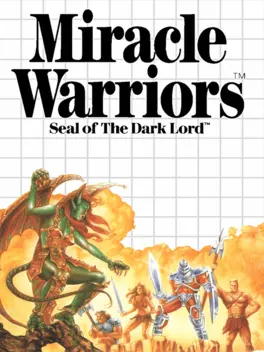
Miracle Warriors: Seal of the Dark Lord
Japanese RPG. Two editions exist, one for the MSX1 on cartridge, and one for the MSX2 on 3.5" diskette. The seal of the Dark Lord Terarin has been broken and Terarin has been unleashed into the world again. She has stolen the Golden Seal and opened pandora's box, unleashing evil creatures into the world. A young hero is tasked by a king to stop Terarin. He must step into footsteps of Iason, a shepherd that once accidentally unleashed Terarin and fought to seal the Dark Lord again. The hero must enlist the aid of three companions, Guy the warrior, Medi the amazon and Treo the pirate (called Turo in the manual) and find the three keys to Terarin's lair. To face the Dark Lord, they must find the mystical weapons and armor of old and then defeat Terarin and seal the Dark Lord from the world.
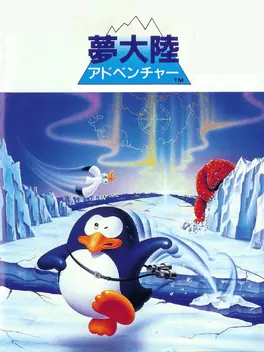
Penguin Adventure
Penguin Adventure: the main character - a male penguin - must save the penguin princess from a sickness that has spread across the penguin world. The cure to the sickness can be found in the Golden Apple of the Golden Apple Tree. In this action packed game, you take control of the male penguin and travel across the lands and seas in search of the Golden Apple, fighting different types of enemies including bats, thunder-striking clouds, and environmental obstacles such as rocks, until finally reaching the princess. The stages feature different types of landscapes such as forests, mountains, caves, and water stages. As you fight your way through, you can also catch flying fish which you can trade at the different types of shops for new equipments and a weapon.
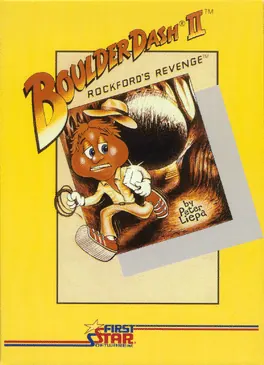
Boulder Dash II: Rockford's Revenge
In part two of the "Boulder Dash" series, game design hasn't changed compared to part one, so you still have to mine diamonds while avoiding falling rocks and cave monsters of all sorts. As in part one, later levels become more difficult because many puzzle elements are added.
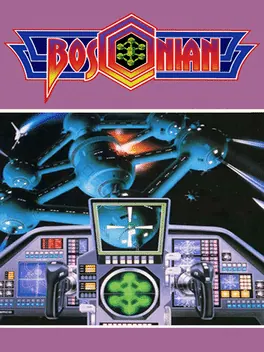
Bosconian
The object of Bosconian is to score as many points as possible by destroying enemy bases and ships. The player controls a small fighter ship that can move in eight directions and can fire both forward and backward. Each level consists of a number of green space stations that must all be destroyed to advance to the next level (a semi-transparent mini-map helps identify their location). Each station consists of six cannons arranged in a hexagon, surrounding a central core. The player must either destroy all six cannons or shoot the core to destroy a station, and in later levels the core is capable of defending itself. Additionally, the player must avoid or destroy asteroids, mines, and a variety of enemy missiles and ships that attempt to collide with the player's ship. Enemies occasionally launch formation attacks — destroying the leader causes all remaining enemies to disperse, but destroying all enemies in a formation scores extra bonus points. A spy ship (worth a random bonus value) also appears occasionally, which must be destroyed or the enemies will go berserk.
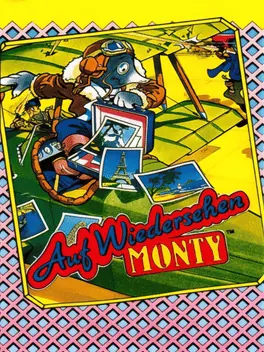
Auf Wiedersehen Monty
Monty On the Run is a platform-style game featuring Monty Mole, a coal thief fleeing across Europe to escape the Intermole agency. Players navigate Monty through 80 screens representing European landmarks, using various movement techniques like super-leaps and ceiling suspension. The goal is to collect Eurocheques and plane tickets while avoiding hazards. The game incorporates unique elements such as drunkenness effects from wine bottles and aerial combat sequences. As the third main entry in the Monty Mole series, it builds upon the gameplay mechanics of its predecessors while introducing new challenges and environments.
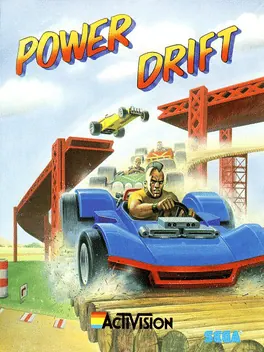
Power Drift
Power Drift is a kart racing game released in arcades by Sega in 1988. More technologically advanced than Sega's earlier 2.5D racing games, like Hang-On (1985) and Out Run (1986), in Power Drift the entire world and track consist of sprites. The upgraded hardware of the Sega Y Board allows individual sprites and the background to be rotated–even while being scaled–making the visuals more dynamic. Designed and directed by Yu Suzuki, the game was a critical and commercial success upon release in arcades. It was subsequently ported to various home computers in Europe by Activision in 1989, followed by a PC Engine port published in Japan by Asmik Ace in 1990. It was not released on Sega consoles until the Sega Ages release for the Sega Saturn in 1998.
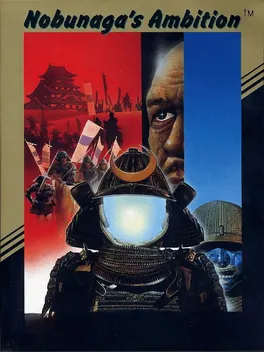
Nobunaga's Ambition
The second game in the series, previously released as Nobunaga's Ambition in the West. Players take on the role of one of the main characters of the period, Nobunaga Oda, Shingen Takeda, Kenshin Uesugi, or others and try to unite the 50 kingdoms of Japan, from Ezo in the north to Kyushu in the south, under their own rule.
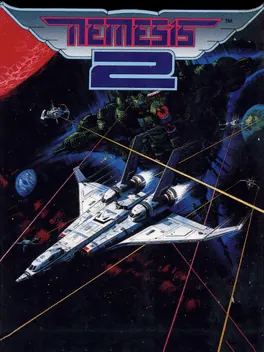
Nemesis 2
The Director General of Space Science Agency Dr. Venom was exiled to Planet Sard for a failed coup d'état. In the year 6665, he escapes and invades Planet Nemesis and the seven planets it controls with the help of Bacterion. The Nemesis High Council sends James Burton, ex-pilot of the Vic Viper, to pilot Metalion and attack Dr. Venom and the Bacterion invaders.
Knight Lore
Although the third game in the Sabreman series, it was the first completed and withheld due to fears that sales of Sabre Wulf would be affected. The player, as Sabreman, has forty days to collect objects throughout a castle and brew a cure to his werewolf curse. He turns into a werewolf at night, as indicated by an onscreen timer, and returns to human form during the day. Each room is depicted in monochrome on its own screen and consists of blocks to climb and obstacles to avoid while the player solves puzzles and retrieves items for the cure.
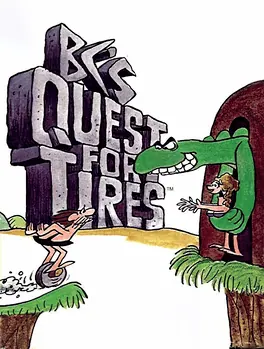
B.C.'s Quest for Tires
Cute Chick is in trouble! She is being held captive by the dinosaur, and it is up to Thor to ride his trusty wheel to the rescue. There are many obstacles in the way which Thor will need to jump and duck, including rocks, trees, rivers, lava pits, cliffs, and of course Fat Broad. When you duck, the character bounces up and down, so don't duck too soon. BC's Quest For Tires is a side scrolling action game resembling Moon Patrol in some ways, featuring characters from the comic strip BC.
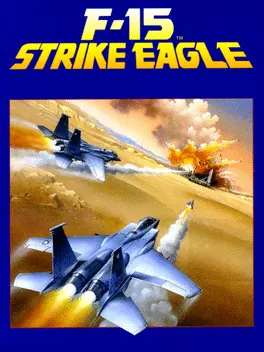
F-15 Strike Eagle
F-15 Strike Eagle is an F-15 Strike Eagle combat flight simulator first released in 1985 by MicroProse. It is the first in the F-15 Strike Eagle series comprising also the sequels F-15 Strike Eagle II and F-15 Strike Eagle III.
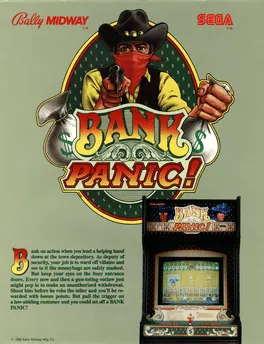
Bank Panic
Bandits are holding up a bank and have taken people hostage, and as a gunslinger, it's your job to shoot them. The bank has 12 doors, and the bandits are behind each one of them. When they pull a gun out at you when you open a door, you have only a few seconds to shoot them before they shoot you. If you shoot them too early (ie: before he sticks his gun out at you), it is considered unfair, and you won't score any points, but if you're too late, he'll shoot you and you lose one of your three lives.If you waste too much time, a bandit will come out from one of the doors and stick dynamite on it. You must then shoot the dynamite to get rid of it. If you're lucky, either a man or a woman will throw you a bag of gold coins. If you shoot any of these people by accident, you also lose a life. More often than not, the person will throw his/her hands up, saying "I haven't got anything". That's when they will be replaced by bandits. Some men will carry three to five pieces of gold on top of their heads, and shooting at all of the gold will award you with a bag of gold coins. Others will be tied up with rope. If you shoot the rope, there's more money for you, because not only will you receive one bag of gold coins, but you'll get three bags of gold coins.
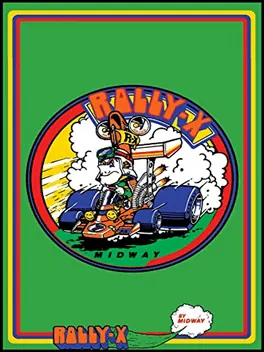
Rally-X
Rally-X is a maze & driving arcade game, that was released by Namco in 1980 and licensed to Midway Games for US manufacture and distribution in 1981. It was ported to the SG-1000 in Taiwan.

Chuckie Egg
Chuckie Egg is an action platformer featuring a turn-based multiplayer mode. As Hen-House Harry, the player must collect the twelve eggs positioned in each level, before a countdown timer reaches zero. In addition there are piles of seed which may be collected to increase points and stop the countdown timer for a while. The player starts with five lives, and an extra life is awarded every 10,000 points.
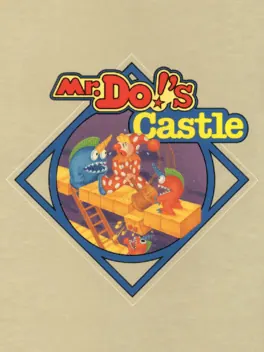
Mr. Do!'s Castle
Mr. Do!, that king of arcade clowns, is in a bit of a bind - again! This time, a pack of pesky unicorns is trampling the bricked hallways of his castle. Help Mr. Do! rid his dwelling of these crafty, quick-changing (and deadly) creatures with the skillful swing of a hammer. Sometimes a quick clobber to the head will do it. Or maybe a well chosen brick knocked out from above. If you can't stop these critters, then break a hole in the floor to slow 'em down. It's up to you to know when to fight - or when to flee! Tension mounts as you hurry Mr. Do! through the castle's maze, grabbing keys along the way. Only when Mr. Do! has collected all the keys can he unlock the castle door, and open up an extra chance to beat these nasty critters!
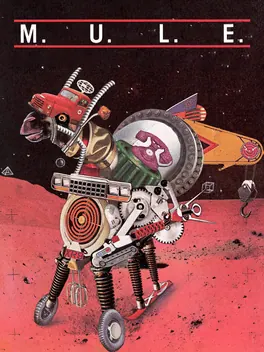
M.U.L.E.
M.U.L.E. is about four hopeful explorers trying to make a fortune on a virgin planet. This is done by producing various goods (Food, Energy, Smithore, Crystite). Each of these goods have their uses: if you don't have enough food, you will have less time during your turn. If you don't have enough energy, your output will be lower. If enough smithore isn't produced, there will be a shortage of M.U.L.E.s. Crystite is the big earner that can make or break your game. You start the game by selecting your race. Some are easier to play, some harder. There are three levels of difficulty, in the easiest the game only lasts 6 turns, but the real game is 12 turns. Crystite is not available at the easiest level. Each turn starts with land claim. Each player gets to choose a spot of land for themselves from the map. If two players choose the same spot, the player with less money wins. The map consists of different landscape. River is best for producing food, plains for energy, mountains for smithore. Crystite is hidden and must be first found by taking a land sample to the town. After the land claim each player takes turns in cultivating their land and do other tasks. They can buy M.U.L.E.s to start production on their land, sabotage other players by buying M.U.L.E.s and letting them loose, try to catch the Wumpus for cash and try to find crystite veins. The time to do these things depends on if the player has enough food. Finally the player goes to the casino and wins a small amount of money, depending on how much time was left.
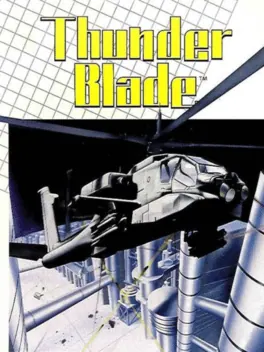
Thunder Blade
A helicopter shoot-'em-up developed by Sega. The Arcade version made use of Sega's 3D super scaler technology to create city environments where the buildings would appear to have depth. The subsequent home versions sadly lacked this feature.
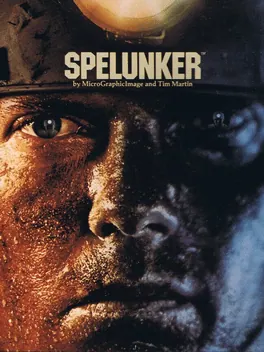
Spelunker
A miner has to find the exit to a world of wonders that is deep in the ground. During his journey he has to collect bombs to destroy rocks in his way, collect keys to open doors and pick up little potions that refresh his timer. Treasure chests can be opened for bonus items.
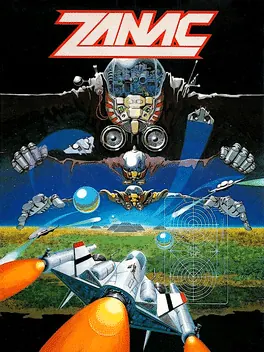
Zanac
The "system" was created by an organic intelligence body many milleniums ago and began attacking the human race. The earth was thrown into turmoil with only one hope for salvation. Fighter model AFX-6502 ZANAC was perfected by the 256th Riot Fleet to ward off the enemy system. It's your job, as ZANAC, to save the human race. Using eight special weapons and secret power forces buried along the way, guide ZANAC through 12 screens of enemy creatures to victory.
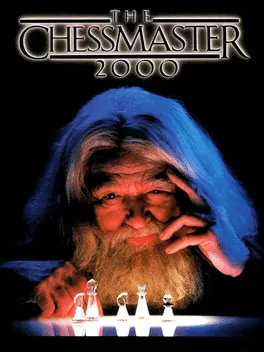
The Chessmaster 2000
The Chessmaster 2000 is the most powerful computer chess program in the world today and the friendliest! It draws from a mammoth opening library of over 71,000 moves - the world's largest. In mid-game, it displays amazing combinations of classical and modern strategy. At end game it calls further upon the world's newest and finest computer chess algorithm to mount virtuoso tactics.
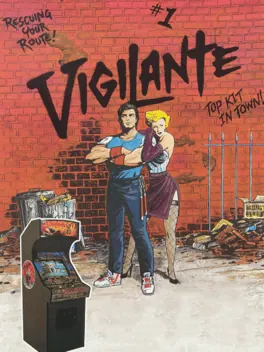
Vigilante
On the baddest streets of the city they know your name. You are lean and mean... the karate master they call the Vigilante! Your turf was left alone. Your friends and neighbors lived in peace. Until the Rogue gang got too big for their britches. You chilled, hoping things wouldn't get too rough. No such luck. They've taken your girlfriend Maria, and there's only one thing you can do... get her back... anyway you can! You have fists of steel! Legs like pistons! And courage that just won't quit! You will need all three because the Rogues are waiting with knives, guns and a whole bunch of nasty punks. And you'll have to fight fast. If the Rogues make it back to their headquarters before you rescue Maria, all hope will be lost. But catch them first and you'll fight the leader of the Rogues. Win Maria... and your turf... will remain safe. Feel any pressure? No way. You're the Vigilante!
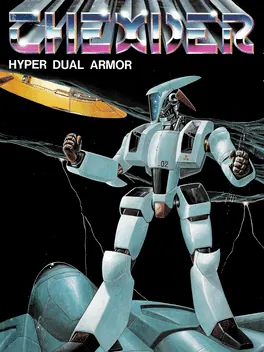
Thexder
Thexder is a robot capable of transforming into a jet whose job is to destroy the central computer to save the planet.15 stages are waiting you for in this shooting game.
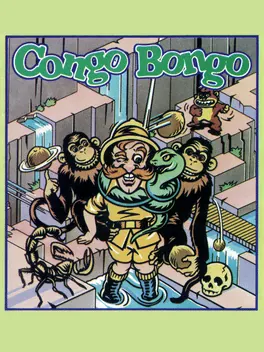
Congo Bongo
Congo Bongo is an isometric platform arcade game released by Sega in 1983. The game has come to be seen as Sega's answer to the highly successful Donkey Kong game that was released two years prior. The player takes the role of a red-nosed safari hunter who tries to catch an ape named "Bongo". The hunter seeks Bongo to exact revenge for an apparent practical joke in which Bongo set fire to the hunter's tent, giving him a literal "hotfoot". The game was named by Peter W. Gorrie who was the CFO of Sega at that time.
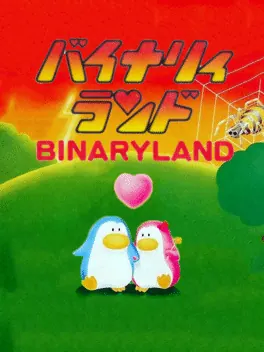
Binary Land
Binary Land is a puzzle video game developed by Hudson Soft in 1983 for the MSX, FM-7, NEC PC-6001, NEC PC-8801, and in 1985 for the Famicom. The MSX version saw release in Japan by Kuma Computers Ltd in 1984. While the Famicom version has a grand total of 99 levels; there is no ending screen implemented in the game.
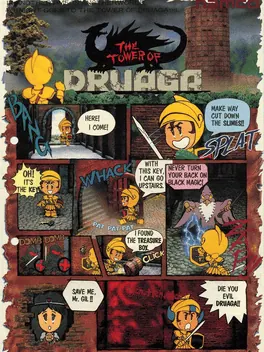
The Tower of Druaga
The story still's the same: Ishtar sends Gilgamesh up the 60 maze levels of the Druaga's tower to rescue Ki and retrieve the Blue Crystal Rod. He must find each level's key to proceed to the next one.
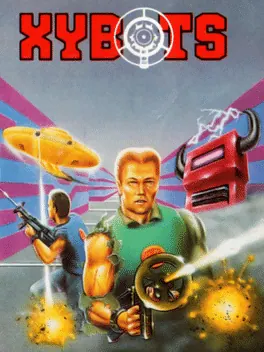
Xybots
Xybots is a sci-fi shooter with pseudo-3D environments explored from a third-person perspective. The game can be played by one or two players; the two-player mode takes place on a split screen. The hero(es) must move through a series of Gauntlet-style underground mazes, killing the bad guys and collecting health and other bonuses from flying saucers. It's designed to be played co-operatively, although bullets from one player can harm the other.
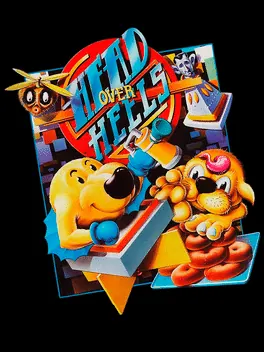
Head Over Heels
Two distinct characters called Mr Head and Mr Heels are played in this arcade adventure. They are separated at the shoulders but capable of joining together to maximize their abilities in some situations (but reduce them in others, so they can be split again). The game is presented from an isometric perspective, and presents the characters with a number of puzzles involving switches, jumps and climbs. The levels are 3 dimensional, and the characters must collect crowns as they progress. Objects can be picked up and manipulated as necessary.
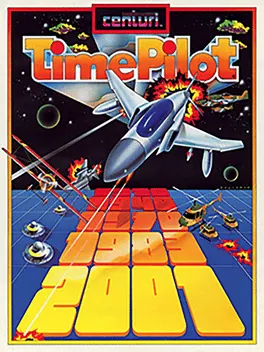
Time Pilot
Time Pilot is a multi-directional scrolling shooter and free-roaming aerial combat arcade game designed by Yoshiki Okamoto, released by Konami in 1982, and distributed in the United States by Centuri. Debuting in the golden age of video arcade games, it is a time travel themed game that allowed the player's plane to freely move across open air space that can scroll indefinitely in all directions. The Killer List of Videogames included Time Pilot in its list of top 100 arcade games of all time. The player assumes the role of a pilot of a futuristic fighter jet, trying to rescue fellow pilots trapped in different time eras. The player must fight off hordes of enemy craft and defeat the mother ship (or "boss") present in every level. The background moves in the opposite direction to the player's plane, rather than the other way around; the player's plane always remains in the center.