
Jogos para MSX
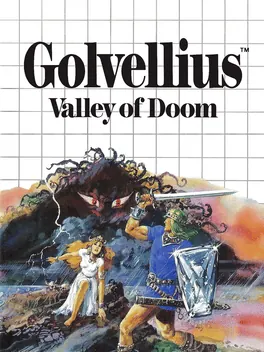
Golvellius: Valley of Doom
Enter the world of Golvellius. Where demons rule the valley of water...and control the creatures of land, sea and air. Where almost everyone stands against you. There is only one way in...and no way out except victory or death! It's an adventure that will take you across deserts and mountains, oceans and forests...through eerie graveyards and caves filled with danger and surprise. Golvellius has a PASSWORD SAVE feature that lets you keep all your possessions. So you never have to start an adventure empty handed!
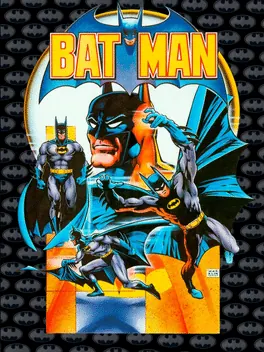
Batman
Batman is a 1986 3D isometric action-adventure game by Ocean Software for the Amstrad PCW, Amstrad CPC, ZX Spectrum, and MSX and MSX2 microcomputers, and the first Batman game ever developed. Upon release, the game received favorable reviews, and received a sequel two years later, titled Batman: The Caped Crusader.
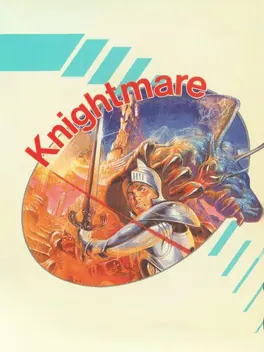
Knightmare
Knightmare, known in Japan as Majou Densetsu (魔城伝説 , Demon Castle Legend?), is a 1986 MSX vertical scrolling shooter computer game. The player is a knight, Popolon, who has to fight his way through several levels to defeat Hudnos and rescue Aphrodite. Knightmare was an innovative upward-scrolling shoot 'em up game on the MSX system released as game cartridge. The top-view graphics were considered very sophisticated for its time, similar to other MSX games such as Nemesis and Penguin Adventure. Konami also released a slightly altered version that could be bought from LINKS network. (Japanese "internet replacement" of the 80's) In this version you could submit high scores to online server. It was brought without a license to the SG-1000 in Taiwan.
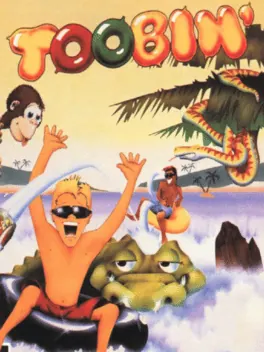
Toobin'
Toobin' involves Biff and Jet racing their way down the rapids of a river, riding on tires. You rotate your tyre left or right, and drift as the current sends you, making sure to avoid the banks of the river, and the dividing lines in the middle. Hazards include crocodiles, stray logs and branches, and fishermen - you are armed with a limited supply of tin cans to take care of these. There are gates to slide through on the way down - these give you a points bonus. Each level has a strict time limit to adhere to, although there's a kickin' party at the end if you succeed.
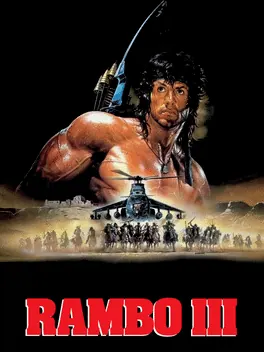
Rambo III
Rambo III is a series of video games based on the film of the same name. Like in the film, their main plots center on former Vietnam-era Green Beret John Rambo being recalled up to duty one last time to rescue his former commander, Colonel Sam Trautman, who was captured during a covert operation mission in Soviet Union-controlled Afghanistan. The console versions are developed and published by Sega, the PC DOS version was developed by Ocean and published by Taito and Ocean developed and published the rest (Atari ST, Amiga, Spectrum, C64, Amstrad). Taito also released an arcade game based on the film.
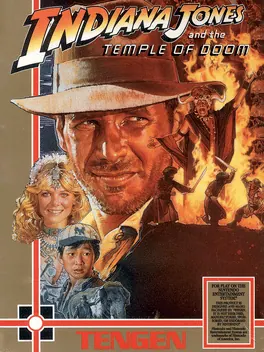
Indiana Jones and the Temple of Doom
As Indy, the player must complete several cycles of the following three types of levels: 1.Mine level: Whip your way through a mine in order to free children that are held captive. Use your whip to swing across chasms, climb ladders, ride along conveyor belts and defend yourself against attacks from Thuggee guards, bats, snakes and the fireball-throwing Mola ram. Escape with the mine cart after you've freed all children. 2.Mine cart level: Pick the right route through a network of tracks while riding in a mine cart. Avoid potholes, broken tracks & guards in carts and safely reach the end of the track. 3.Temple level: Make your way to the altar and grab the Sankara stone while Mola Ram, bats and Thuggee guards attack you. Watch out for that lava.
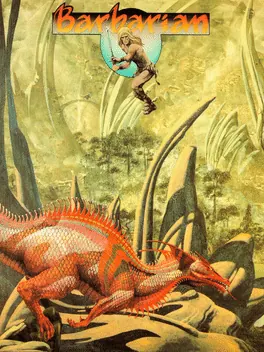
Barbarian
Welcome to the world of Barbarian. In this world you control our hero "Hegor". Once the game has started you will see him standing in the marsh. Using the mouse, jouystick or keyboard (or all three simultaneously) you issue commands that control his actions. Thus enabling you to explore the world of Durgan. You should always remember that Barbarian features context sensitive animation which allows the same commands to do different things depending on the situation Hegor is involved in. In order to complete the game you must locate and destroy the crystal which is the source of the evil power of Necron. Once the crystal has been destroyed the volcano in which Durgan is located will start to erupt making it imperative that you reach the surface again before it blows.
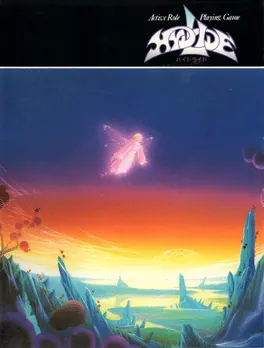
Hydlide
An evil demon named Varalys casts a curse upon the princess Ann, turning her into three fairies. You control Sir Jim and set out to find the fairies, and then slay Varalys. Only by vanquishing Varalys can the curse be lifted. Once the princess is restored the kingdom will be saved. The fighting is a little more in-depth than hack and slash. You can either fight with a defensive or offensive stance, or you can use magic spells.
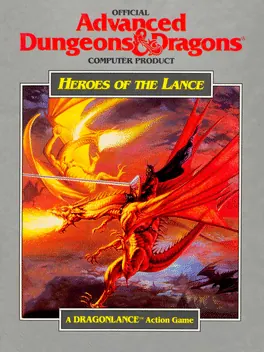
Advanced Dungeons & Dragons: Heroes of the Lance
Heroes of the Lance is a side-scrolling action game. The game used actual Dungeons & Dragons statistics, with statistics for the characters exactly as they were in the rule books. Eight heroes from the Dragonlance novels series must be assembled for the quest, and only one is visible on the screen at a time; when one on-screen hero dies, the next in line appears.

World Games
World Games is an Olympics-style sports game with arcade-oriented gameplay. The events players can compete in include: •Barrel jumping •Bull riding •Caber toss •Cliff diving •Log rolling •Platform diving •Pole vault •Skiing •Sumo wrestling •Weightlifting
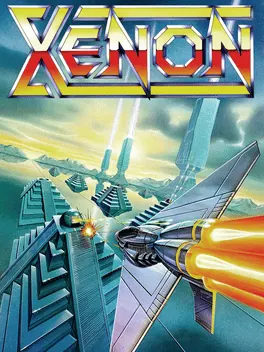
Xenon
Xenon is a 1988 vertical scrolling shooter computer game, developed by The Bitmap Brothers and published by Melbourne House which was then owned by Mastertronic. Xenon was followed in 1989 by Xenon 2: Megablast. The player assumes the role of Darrian, a future space pilot called into action by a mayday report from his superior on a nebula space station. As of late, the colonies of mankind have been under attack by mysterious and violent aliens called the Xenites and it is finally time for Darrian to engage them. Unlike most scrolling shooters, the player can move in any direction instead of straight up. The player craft has two modes, a flying plane and a ground tank. The transition between crafts can be initiated at almost any time during play (except during the mid- and end-of-level boss sections, as well as certain levels where a certain mode is forced), and the mode chosen depends on the nature of the threat the player faces. Destroying some enemies released power-ups the player could catch to enhance their ship.
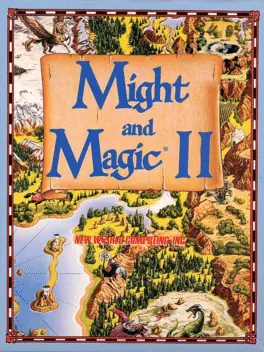
Might and Magic II: Gates to Another World
The Sequel to the successful Might and Magic I, it boasted better graphics, a larger world, but still pretty much the same game engine and presentation. Embark on a glorious journey then save the world of CRON and yourself. A balanced party is a necessity in this game. There are several locations and items that are restricted to certain genders, alignments, or races. A party made up of Good Human Males won't get you very far. Time plays a large role in this game. Time travel is a part of it, but on a more basic level, you will find that characters age as the game goes on. If you wait too long, your characters' statistics will change to reflect their aging.
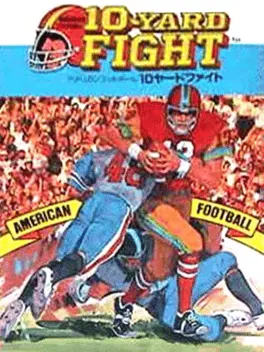
10-Yard Fight
The game is viewed in a top-down perspective and is vertical scrolling. The player does not select plays for either offense or defense. On offense, the player simply receives the ball upon the snap and either attempt to run with the quarterback, toss the ball to a running back, or throw the ball to the one long distance receiver - basically the option offense. On defense, the player chooses one of two players to control, and the computer manipulates the others. The ball can also be punted or a field goal can be attempted. 10-Yard Fight has five levels of difficulty; from easiest to most difficult: high school, college, professional, playoff, and Super Bowl. If the player wins both halves of an "accelerated real time" 30-minute half at an easier level, the player advanced to the next level of difficulty, like a career mode.
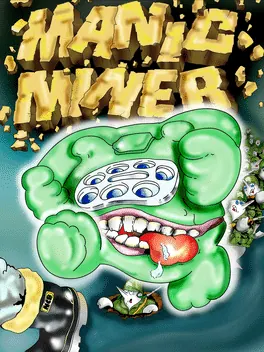
Manic Miner
Manic Miner is a platform video game originally written for the ZX Spectrum by Matthew Smith and released by Bug-Byte in 1983 (later re-released by Software Projects). It is the first game in the Miner Willy series and among the early titles in the platform game genre. The game itself was inspired by the Atari 800 game Miner 2049er. It has since been ported to numerous home computers and video game consoles.
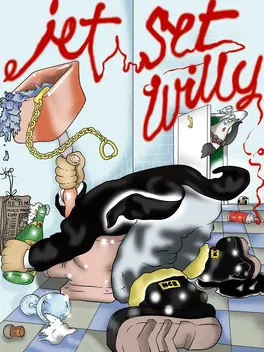
Jet Set Willy
Jet Set Willy is a flip-screen platform game in which the player moves the protagonist, Willy, from room to room in his mansion collecting objects. Unlike the screen-by-screen style of its prequel, the player can explore the mansion at will.
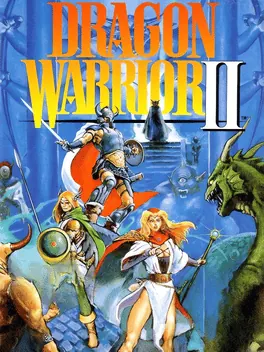
Dragon Warrior II
Dragon Warrior II is an early top-down RPG that expands and improves on its predecessor. Unlike the first game, Dragon Warrior II allows the player to join forces with two other characters, a magic-using princess and a wizard-warrior prince. Also including expanded monster battles involving up to 6 creatures and a much larger world, Dragon Warrior II is an important step in the evolution of the Dragon Warrior series.
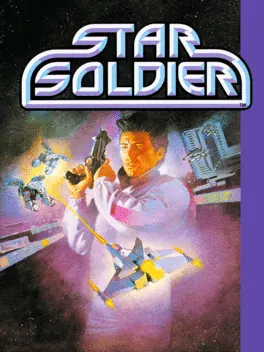
Star Soldier
Star Soldier is a 1986 vertically scrolling shooter video game developed and published by Hudson Soft for the Nintendo Entertainment System and MSX. It is the first game in the Star Soldier series. The player pilots the starship "Caesar", traveling through space stations occupied by powerful supercomputers known as "Starbrains" who threaten the galactic empire. Star Soldier greatly resembles the earlier arcade game Star Force. The MSX version of the game was brought to the SG-1000 in Taiwan.
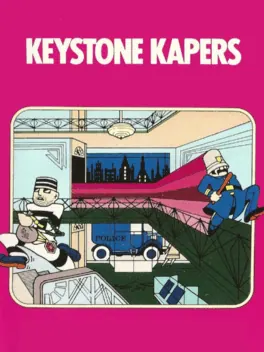
Keystone Kapers
Flash! Harry Hooligan, notorious con-artist, thief and all around-not-a-nice-person, has escaped!! He is now at large and in the vicinity of Southwick‘s Emporium. At this moment, Hooligan is failing every attempt to end his felonious freedom. On the scene is Keystone Kelly, the pride of the men in blue. Officer Kelly, what’s it like in there?” Oh, ‘tis o cryin' shame! Shenanigans like yo wouldn‘t believe! Dastardly deeds that defy description! That rogue is hurlin' everything in reach! Shopping carts, biplanes, beachballs- everything but cathedral radios. LOOK OUT! It's a cathedral radiol! Gotta go! I mean to recover the loot and bust that brute!" Will that double-dyed hoodlum keep Keystone in triple trouble, or will YOU help the greatest gumshoe going catch that no good galoot?? Grab your billyclubs and joysticks! lt's curtains now, Hooligan!"
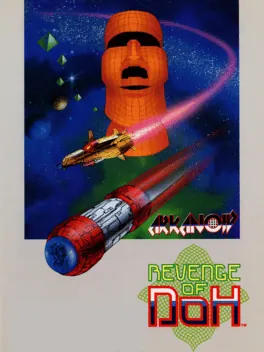
Arkanoid: Revenge of Doh
Arkanoid - Revenge of Doh (a.k.a. Arkanoid 2) is an arcade game released by Taito in 1987 as a sequel to Arkanoid. The mysterious enemy known as DOH has returned to seek vengeance on the Vaus space vessel. The player must once again take control of the Vaus (paddle) and overcome many challenges in order to destroy DOH once and for all. Revenge of Doh sees the player battle through 34 rounds, taken from a grand total of 64. NEW FEATURES: Revenge of Doh differs from its predecessor with the introduction of "Warp Gates". Upon completion of a level or when the Break ("B") pill is caught, two gates appear at the bottom of the play area, on either side. The player can choose to go through either one of the gates - the choice will affect which version of the next level is provided. The fire-button is only used when the Laser Cannons ("L") or Catch ("C") pill is caught. The game also features two new features for bricks. Notched silver bricks, like normal silver bricks, take several hits to destroy. However, after a short period of time after destruction, they regenerate at full strength. Fortunately, clearing a level does not require that any notched bricks be destroyed. Also, some bricks move from side to side as long as their left and/or right sides are not obstructed by other bricks. The US version features an entirely different layout for Level 1 that feature an entire line of notched bricks, with all colored bricks above it moving from side to side. The game features a mini-boss in the form of a giant brain, which will help you practice for DOH. Home versions of Revenge of DOH also featured a level editor, where players could create their own levels or edit and replace existing levels, with the exception of two levels: the mini-boss and DOH.
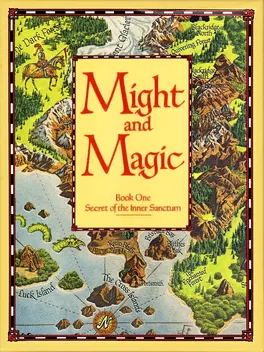
Might and Magic: Book One - The Secret of the Inner Sanctum
Feel the power... Experience the magic! Lead your party of hand-picked adventurers into the enchanted Land of Varn. From dark, moldy caverns through corridors of majestic castles, you'll travel in search of clues to unlock the Secret of the Inner Sanctum. Daring exploits of heroism and sorcery will keep you riveted for hours. Choose from a variety of extraordinary personalities and lead them on an adventure of a lifetime. Over 250 weapons and items and more than 92 mystical spells to use in your search for the Inner Sanctum. Battle legions of ravenous monsters as you travel through forests and islands shrouded in mystery.
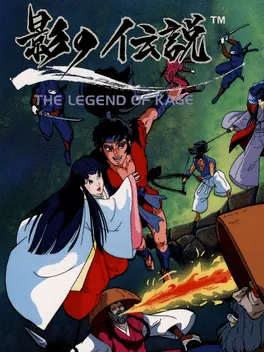
The Legend of Kage
The Legend of Kage is a 1985 arcade game by Taito and was released for several contemporary video game home systems in 1986. The player is armed with a kodachi shortsword and an unlimited amount of shuriken. Grabbing a crystal ball causes the player character's Kage's clothes to change to the next level in colour and thereby attain certain powers (bigger shuriken and/or faster speed); if Kage is hit while in green or orange clothes, he does not die but revert to his normal red clothes. Grabbing a scroll causes Kage to stand still and meditate for several seconds while approaching enemies drop to the ground dead (although the scrolls appear in the arcade version, the crystal balls do not). This MSX version was brought without a license to the SG-1000 in Taiwan.
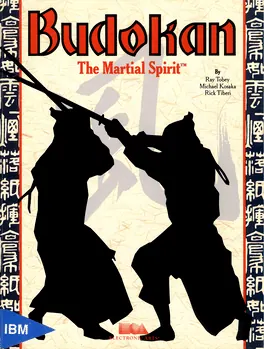
Budokan: The Martial Spirit
Walk the path of the warrior. Learn four classic martial arts- Karate, Kendo, Nunchaku and Bo. Combine power and grace into a dangerous black belt mix. Enter Tobiko Ryu Dojo. Your journey to the Bodokan begins here. Are you willing to endure the hard training it takes to be called a master? Tobiko Sensei observes your every action. Go to him for words on tactics, strategy, and guidance. Put your philosophy into action. Say hello to Goro-San. If you survive him, eleven others are ready to teach you the zen of defeat. If you don't, it's konban-wa (goodnight!). Do you fast attack for quick points or store up your ki (energy) for the devastating blow? Better decide before his Yari answers for you. Authentic Japanese/Okinawan martial arts- all arts and weapons based on real life. Unique player interface allows for over 25 moves per style. Twelve authentic martial arts styles, including Yari, Tonfa, Kusari-gama and Naginata.
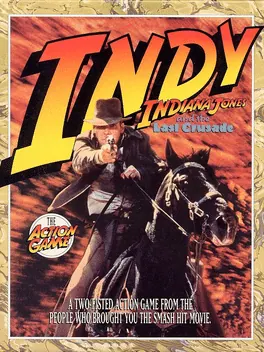
Indiana Jones and the Last Crusade: The Action Game
Indiana Jones and the Last Crusade: The Action Game is a side-scrolling action title based on the 1989 film of the same name. Players control Indiana Jones through various levels that loosely follow the movie’s plot, including iconic locations like the catacombs and the Zeppelin. Gameplay focuses on platforming, basic combat, and item collection, with limited lives and high difficulty. The graphics and sound vary across platforms, with the Amiga and Atari ST versions generally offering the most polished presentation.
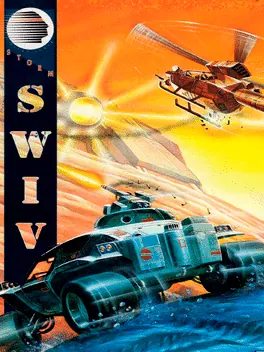
SWIV
SWIV is a vertical scrolling shooter and an unofficial follow-up to Sales Curve's conversion of the side scroller Tecmo arcade game Silkworm. One player controls a helicopter and the other a jeep, with the jeep transforming into a boat when the vehicles pass over water. As well as a host of blaster fodder the game also includes a mid-level enemy inspired by the "Goose" enemy from the earlier title Silkworm. Pieces of this enemy would fly onto the screen and assemble into one vehicle before commencing to fire at the players' vehicles. When destroyed the "goose" would drop power-ups.
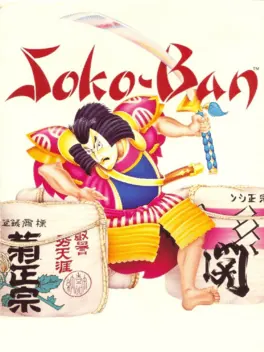
Soko-Ban
Sokoban ("warehouse keeper") is a is a classic puzzle game created in 1981 by Hiroyuki Imabayashi, and published in 1982 by Thinking Rabbit, a software house based in Takarazuka, Japan. In 1984 the ASCII Corporation published a version produced by Khaled Bentebal. It was the basis of numerous clones in the later years. It is set in a warehouse. On each level, the player must push crates (from square to square) to get them onto designated spots; once each crate is on a marked spot, the level is complete. Crates can only be pushed one at a time (so two crates next to each other cannot be pushed together), and cannot be pulled--so it's possible to get a crate stuck in a corner, where it cannot be retrieved! By the last levels, you must plan 40 steps in advance.

Nuts & Milk
Nuts & Milk is a platform-style puzzle game developed and published by Japanese software developer Hudson Soft in 1983. The game was released initially on the FM-7, MSX, NEC PC-8801, NEC PC-6001, and later to the Famicom in Japan. It was the first third party video game to be released on a Nintendo console.
Klax
Klax is a 1989 computer puzzle game designed by Dave Akers and Mark Stephen Pierce. The object is to line up colored blocks into rows of similar colors to make them disappear, to which the object of Columns is similar. Atari Games originally released it as a coin-op follow up to Tetris, about which they were tangled in a legal dispute at the time.
Bad Dudes vs. Dragon Ninja
Bad Dudes Vs. DragonNinja, often referred to simply as Bad Dudes (on the American NES port of the arcade original), and known in Japan simply as DragonNinja is a 1988 arcade game developed and published by Data East. It was also ported to many computer and game console home systems. Bad Dudes is a side-scrolling beat 'em up where the players are set in the role of the titular duo tasked with rescuing "President Ronnie" from ninja kidnappers. It was met with commercial success, and a generally positive to mixed critical reception. It has since become widely known for its general premise and introductory cut scene.
Pitfall II: The Lost Caverns
Pitfall II: The Lost Caverns is the sequel to Pitfall and was released for a variety of systems during the mid-1980s including the SG-1000 in 1985. It was also ported to Sega System 1 arcade hardware by Sega. Gameplay is similar to the original game, but the levels are more maze-like. Sega's version of Pitfall II was tweaked significantly from its western counterparts released for the Atari 2600, ColecoVision etc. The gameplay is largely the same, but there are many additions. These include a Lives system, mine-carts, balloons, and a final Demon boss. The increased specifications of System 1 hardware means the arcade version is much more detailed and allows the player to see more of the maze at one time. The SG-1000 version is directly inspired by the arcade game, and though cannot match the same level of graphical quality, it is arguably the nicest looking home port of the game.
Mega Force
In the game, the player pilots a starship called the Final Star, while shooting various enemies and destroying enemy structures for points. Unlike later vertical scrolling shooters, like Toaplan's Twin Cobra, the Final Star had only two levels of weapon power, and no secondary weapons like missiles and/or bombs. Each stage in the game was named after a letter of the Greek alphabet. In certain versions of the game, there is an additional level called "Infinity" (represented by the infinity symbol) which occurs after Omega, after which the game repeats indefinitely.
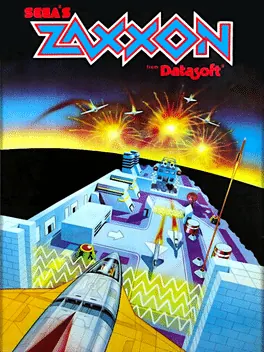
Zaxxon
Zaxxon is a 1982 isometric shooter arcade game developed and released by Sega. The game gives the player the experience of flying a fighter craft through a fortress while shooting at enemy entities (missiles, enemy gunfire, etc.) The object of the game is to hit as many targets as possible without being shot down or running out of fuel, which can be replenished paradoxically, by blowing up fuel drums.

The Duel: Test Drive II
The Duel: Test Drive II is a cross-platform racing game developed by Distinctive Software and published by Accolade in 1989. It is the second entry in the Test Drive series of video games.
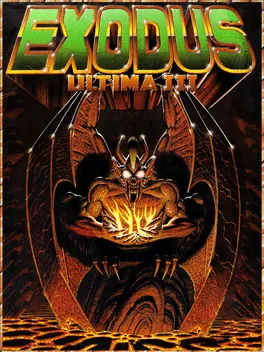
Ultima III: Exodus
Eons ago Lord British came unto the lands of Sosaria. Since that time it has been united under his rule as the Kingdom of Britannia and has gone through two major crises. A few years ago there were political upheavals among the city states of the kingdom. The ringleader of this political instability was Mondain, the Magician. Under his horrible rule, the people's lives were devastated. A valiant warrior was called forth from another world by Lord British. This warrior overthrew Mondain. Britania survived the first crisis. But peace in the Kingdom of Britannia did not last long. Minax, the Witch, a disciple of Mondain, became very powerful and ruled the world of darkness. Minax had power to sway the time axis of the universe. However, a legendary hero again came to the rescue, overthrew Minax, and brought peace back to the kingdom. Now, the Kingdom is about to face its third crisis. Rumours abound about a fiery island which has emerged in the southwestern seas. Little is known of the evil that dwells there. It is known only as Exodus.
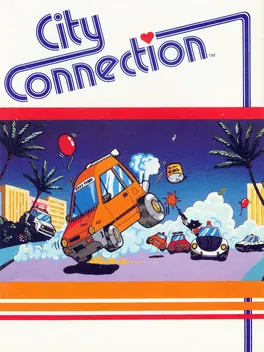
City Connection
City Connection is a 1-2 player comedic racing adventure platform game in which you control a car that can never be stopped. The object of the game is to drive through a series of cities and paint every part of the roads in each city as proof of your visit to that city. City Connection was remarkable for its time in that each location had its own background and music which was a variation on the main theme of the game. There are twelve locations: Manhattan, the Grand Canyon, Easter Island, Paris, Neuschwanstein Castle, London, Sydney, Egyptian temples, and cities in India, Holland, China and Japan.
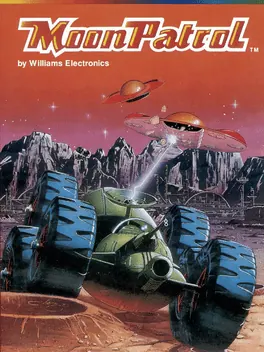
Moon Patrol
Moon Patrol is a side-scrolling shooter that puts players at the controls of a six-wheeled moon rover that can jump and shoot. The goal is to move through the entire course as quickly as possible while shooting enemies for additional points. Cannons are mounted on the front and top of the vehicle, and both fire simultaneously when the fire button is pressed. Rocks, mines, and pits in the course prevent you from just holding to the right for maximum speed. Rocks and mines can be shot, but pits must be jumped. Some enemies fire shots that create new pits in the course, forcing players to react quickly.
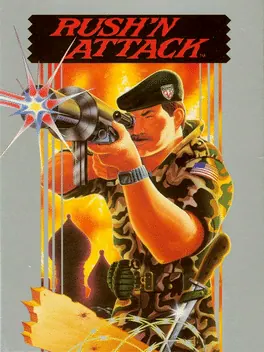
Rush'n Attack
A run & gun shooter by Konami, also known by the title Green Beret, in which the player takes the role of a soldier infiltrating a military base.