
Jogos para MSX
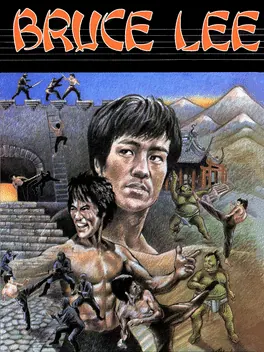
Bruce Lee
Bruce Lee is a video game designed by Ron J. Fortier, with graphics by Kelly Day and music by John A. Fitzpatrick. It was originally developed for the Atari 8-bit family and published in 1984 by Datasoft, along with a port for the Commodore 64. The game was converted to the ZX Spectrum and Amstrad CPC and published by U.S. Gold in the same year. An MSX version was published in 1985 by Comptiq. Bruce Lee is a platform game/beat 'em up hybrid, in which the player controls Bruce Lee.
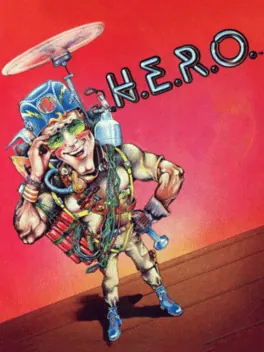
H.E.R.O.
There is trouble in the mines! Volcanic activity has trapped numerous miners, and it is your job to save them. As Roderick Hero, you need to make your way through the dangerous mineshaft avoiding the dangerous creatures and lava, and find out where the miners are located before you run out of energy. To help on your mission, Roderick Hero has several useful types of equipment. A prop pack will allow you to hover and fly around the mineshaft and (hopefully) avoid the many dangers within. Your helmet features a short range microlaser beam which can be used to destroy the bats, spiders, snakes, and other creatures you'll encounter in the mines. From time to time, your path through the mine may be blocked by stone or lava walls. You begin each mission with six sticks of dynamite which can be used to destroy these obstacles (be careful you don't blow yourself up, though!) If you run out of dynamite, your laser beam can also be used to destroy the walls, though this will take longer and use up more energy. As the levels progress, the mine shaft will become longer and more maze-like, creatures will more frequently block the path, and lava walls and pools will appear which are dangerous to the touch.
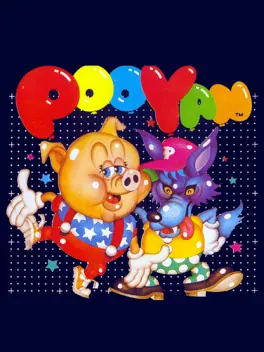
Pooyan
Pooyan is a classic arcade game manufactured by Stern Electronics under license from Konami in 1982. In it, the player controls "Mama", a pig whose babies have been kidnapped by a group of wolves.
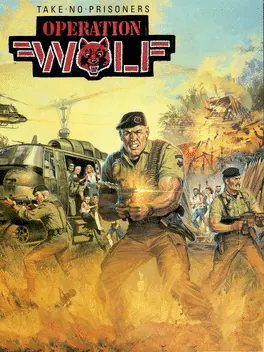
Operation Wolf
In the steamy jungles of South America, heavily armed extremists are holding innocent civilians prisoner. Little do these terrorists know that real terror is about to land on their front porch! The sound of rotor blades and staccato bursts of gunfire echo through the valleys. Terrorists be warned! Operation Wolf is going to teach you what terror is all about! Operation Wolf consists of six missions, which are displayed on the Operations Map Screen. A mission is completed when all enemy forces are reduced to zero. The current level is completed when you escape from the airport with the prisoners. Your injury level increases when the enemy hits you. The game automatically ends if the injury indicator on the right side of the screen becomes completely red. You can reduce your injury level by getting power drinks.
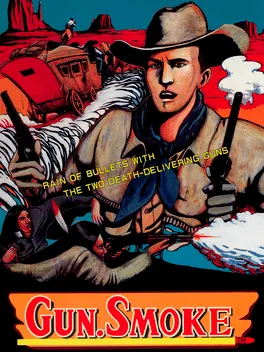
Gun.Smoke
Gun.Smoke is very similar to Commando, another Capcom game, but with several differences. Whereas Commando is a run and gun game, this game is a scrolling shooter in which the screen scrolls upward automatically and players only have three ways to shoot, using three buttons for left, right, and center shooting. However, a player can also change the way the gunman shoots through button combinations. A player can still die by getting shot or struck by enemies like in Commando but improve protection by getting special items, including a horse, for protection up to three hits; boots, for speed of movement; bullets, for faster shots; and rifles, for shot length. These items are found by shooting barrels and rifles, boots, and bullets can stock up to five. It was brought to the Sega Master System in South Korea without a license by Prosoft in 1990.
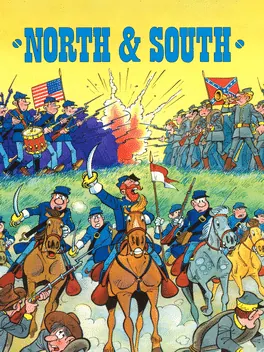
North & South
Your objective is ensure victory for your side by eliminating all the enemy armies. You will be controlling armies across all the combat zones of the Civil War. You may respect history or not, as you like. North and South does not try to reconstitute history and places playability over realism, it only tries to emulate the atmosphere and overall strategic conditions of the Civil War. Thus, as in reality, the player may choose to advance deep into the South or North, to attack in the center or to attempt a turning movement. This game can be played against computer or between two human opponents. You can also choose between a full strategic mode without the arcade parts or use the arcade mode during the fights, which allows you to directly control your own units.
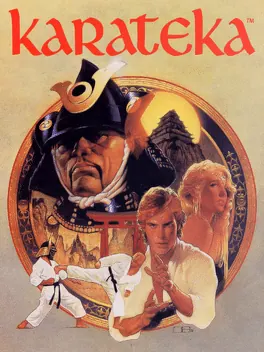
Karateka
Karateka is a 1984 beat'em up video game by Jordan Mechner, and was his first game created while attending Yale University. It was originally programmed for the Apple II, and was later ported to several other home computers and early gaming consoles. The game was published in North America by Brøderbund, and in Europe by Ariolasoft. The player controls an unnamed protagonist who is attempting to rescue his love interest, the Princess Mariko, from Akuma's castle fortress. The game exhibits a combination of a side-scrolling platform and fighting game elements. The player uses punches and kicks to defeat Akuma and his guards and make his way deeper into the fortress. The game, as with most at the time of development, lacked checkpoints or the ability to save the game, making it a challenge to complete in a single sitting. Karateka has been well-received, particularly for its realistic animations used for the game's characters. The game was considered a breakthrough success for Mechner, and would eventually result in his development of the Prince of Persia franchise. A high-definition remake, spearheaded by Mechner, was released as a downloadable title for the Xbox 360, Microsoft Windows, PlayStation 3, with planned ports for the iOS and Wii U systems.
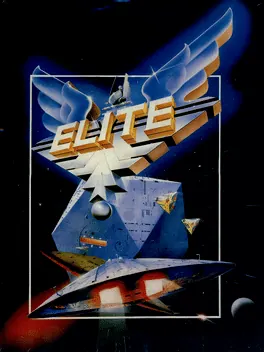
Elite
Elite is a space trading video game, written and developed by David Braben and Ian Bell and originally published by Acornsoft for the BBC Micro and Acorn Electron computers in September 1984. Elite's open-ended game model, and revolutionary 3D graphics led to it being ported to virtually every contemporary home computer system, and earned it a place as a classic and a genre maker in gaming history. The game's title derives from one of the player's goals of raising their combat rating to the exalted heights of "Elite". Elite was one of the first home computer games to use wire-frame 3D graphics with hidden line removal. It added graphics and twitch gameplay aspects to the genre established by the 1974 game Star Trader. Another novelty was the inclusion of The Dark Wheel, a novella by Robert Holdstock which gave players insight into the moral and legal codes to which they might aspire.
Dragon Warrior
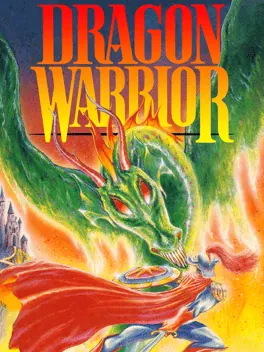
All is darkness. The Dragonlord has captured the Princess and stolen Erdrick's powerful ball of light. You are Erdrick's heir. To you has fallen the most dangerous task— to rescue the King's daughter and recover the mystical ball of light. Your mission is deadly, but it is your fate. Prophets have foretold your coming. Three keepers await your journey, each ready to aid you with a mystic item of great power. Gather the three objects. Scribes will record your deeds. Use cunning and wisdom to choose your commands. Gain experience, weapons and armor as you battle your way through the world. Rest if you must. Search out the Dragonlord's lair and face your destiny. In this role-playing adventure, you are the Dragon Warrior!
Mappy
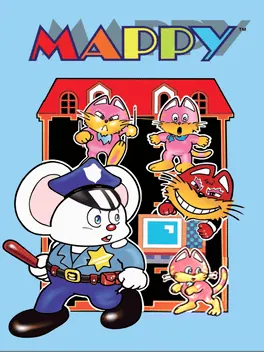
The player guides Mappy the police mouse through the mansion of the cats called Mewkies (Meowky in the U.S. version) to retrieve stolen goods. The player uses a left-right joystick to move Mappy and a single button to operate doors. The mansion has six floors of hallways in which the stolen items are stashed.
River Raid
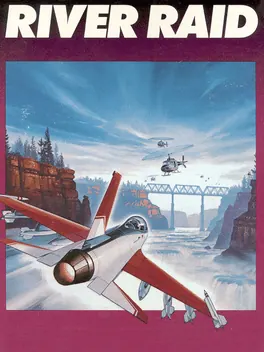
Mission: Code Name River Raid. Jet down the river. Break the enemy blockade and blast the bridges to halt enemy troop advances. Terrain: Code Name River of No Return. An ever-changing, ever-challenging waterway. Expect huge islands, narrow channels and treacherous bays crawling with enemy choppers, tankers and jets. Weaponry: Code Name StratoStrafer. Your B1 StratoWing Assault Jet has been retrofitted with sophisticated, rapid-fire guided missiles. Your craft is super-sensitive to the stick. Accelerate, slow or bank radically with only a touch. Tactics: Jet low to the river to avoid radar. Stop periodically at depots to refuel. A warning claxxon will alert you. Top speed! Best of luck!
Ghostbusters
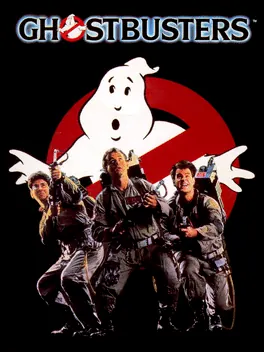
Ghostbusters is an action game that features an overhead-view and a side-view. From Ghostbusters HQ, the player must monitor a map of midtown Manhattan for "ghost alarms", as well as for casual, roaming spirits, and plot a route to the alarmed area. Once the route is plotted, the player then controls the purchased Ghostmobile as it drives through traffic. Here, the player is able to capture casual ghosts on the way if they are en route. When the haunted location is reached, the game switches to a side-view. Two of the Ghostbusters will take position, activate their proton beams, and toss a trap to the ground. The player must then use the two Ghostbusters to attempt to lead the ghost(s) over the placed trap. Once activated, the trap springs to capture any ghosts directly above it. A successful capture will earn the player money, which can then be used to purchase new Ghostbusters vehicles and new modifications for it. An unsuccessful capture will see the ghost fly away (after nastily sliming one of the Ghostbusters).
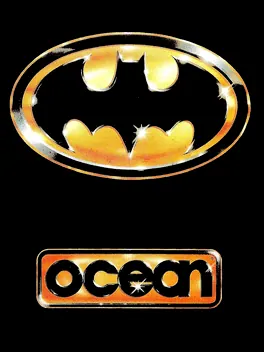
Batman
The movie of the decade is now the game of the year! Just when you thought you'd heard the last of his heinous cackling, The Joker is back in an all new action-adventure, based on the blockbuster movie - Batman. As the Dark Knight, only you can determine how the plot will unfold as you try to save Gotham City from certain doom. Even with the Batwing and all your wonderful toys, The Joker may just rewrite your script. So, rev up the Batmobile and get ready for the chase of your life.
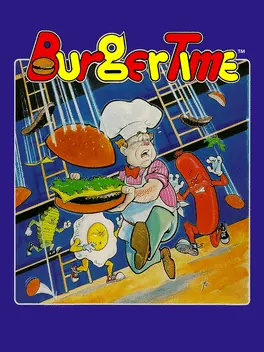
BurgerTime
BurgerTime is a 1982 arcade game created by Data East for its DECO Cassette System. The game's original title, Hamburger, was changed to BurgerTime before its introduction to the US. The player is chef Peter Pepper, who must walk over hamburger ingredients located across a maze of platforms while avoiding pursuing characters. The game was popular in arcades. In the US, Data East USA licensed BurgerTime for distribution by Bally Midway. The Data East and Midway versions are distinguished by the manufacturer's name on the title screen and by the marquee and cabinet artworks.
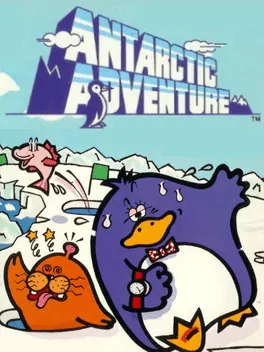
Antarctic Adventure
Antarctic Adventure is a video game developed by Konami in 1983 for MSX, and later for video game consoles, such as NES. The player takes the role of an Antarctic penguin, racing to disparate research stations owned by different countries in Antarctica. The gameplay is similar to Sega's Turbo, but plays at a much slower pace, and features platform game elements. The penguin, later named Penta, must reach the next station before time runs out while avoiding sea lions and breaks in the ice. Throughout the levels, fish jump out of ice holes and can be caught for bonus points. The game, like many early video games, has no ending – when the player reaches the last station, the game starts from the first level again, but with increased difficulty.
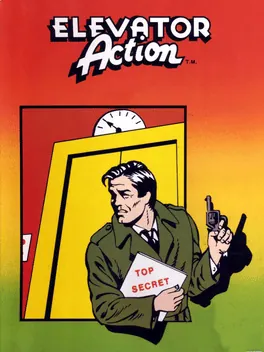
Elevator Action
Elevator Action is a 1983 arcade game by Taito. It debuted during the "Golden Age of Arcade Games". Innovative in gameplay, the game was very popular for many years. In the game, the player assumes the role of a spy who infiltrates a building filled with elevators. He must collect secret documents from the building and traverse the 30 floors of the building using an increasingly complex series of elevators. The player is pursued by enemy agents who appear from behind closed doors. These agents must be dealt with via force or evasion. Successful completion of a level involves collecting all the secret documents and traversing the building from top to bottom. In the lower floors of the building, the elevator systems are so complex that some puzzle-solving skills are needed. The game was available as a standard upright cabinet The controls consist of a 4-way joystick and two buttons, one for "shoot" and the other for jumping and kicking. The maximum number of players is two, alternating turns. The graphics are extremely simple, 2D color graphics and in-game music was composed by musician Yoshio Imamura. The game was followed by a sequel, Elevator Action II (also known as Elevator Action Returns).
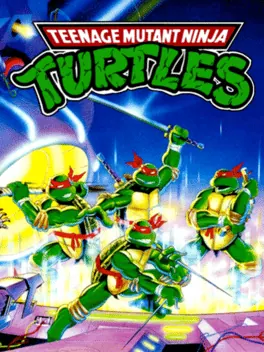
Teenage Mutant Ninja Turtles
A Port of "Teenage Mutant Ninja Turtles" for home computers. Teenage Mutant Ninja Turtles is an action-platform game. It is based on the first Teenage Mutant Ninja Turtles animated series which began airing in late 1987.
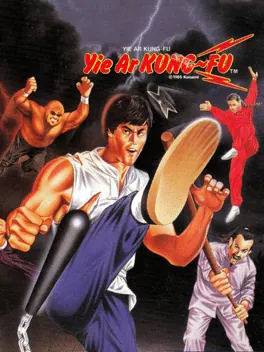
Yie Ar Kung-Fu
Yie Ar Kung-Fu is a 1985 fighting game developed and published by Konami. Along with 1984's Karate Champ, which influenced Yie-Ar Kung Fu, it is one of the games that established the basis for modern fighting games.
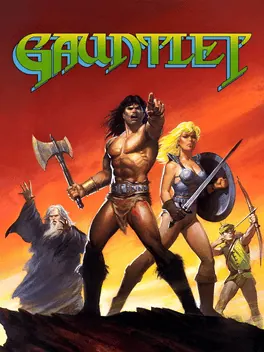
Gauntlet
The players, up to four at once in the arcade version, select among four playable fantasy-based characters; Thor the Warrior, Merlin the Wizard, Thyra the Valkyrie, or Questor the Elf. Each character has his or her own unique strength and weaknesses. For example, the Warrior is strongest in hand-to-hand combat, the Wizard has the most powerful magic, the Valkyrie has the best armour and the Elf is the fastest in movement. Upon selecting a playable character, the gameplay is set within a series of top-down, third-person perspective mazes where the object is to find and touch the designated exit in every level. An assortment of special items can be located in each level that increase player's character's health, unlock doors, gain more points and magical potions that can destroy all of the enemies on screen. The enemies are an assortment of fantasy-based monsters, including ghosts, grunts, demons, lobbers, sorcerers and thieves. Each enters the level through specific generators, which can be destroyed. While there are no bosses in the game, the most dangerous enemy is "Death", who can not only drain a character's health, but is difficult to destroy. As the game progresses, higher levels of skill are needed to reach the exit, with success often depending on the willingness of the players to cooperate by sharing food and luring monsters into places where they can be engaged and slaughtered more conveniently. While contact with enemies reduces the player's health, it also slowly drains on its own, thus creating a time limit. When a character's health reaches zero, that character dies. The character can be revived in place with full health by spending a game credit (i.e. inserting a coin) within a certain short time window after it died. This allows even the least proficient players to keep playing indefinitely, if they are willing to keep inserting coins.
Breakout
The objective of the game is to destroy a multilayered wall of bricks at the top the screen. Upon hitting the bricks with a ball which bounces off of a paddle at the bottom of the screen the bricks are destroyed. If the player misses the ball with his horizontally moveable paddle the ball is lost. After loosing five balls the game is over.
Shinobi
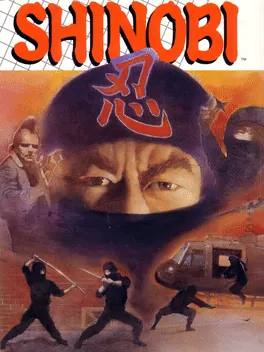
The five missions in the game are each three or four stages long. Several hostages are being held in each stage; Joe must rescue all of them before he is allowed to finish the stage. The last stage in each mission has no hostages, but instead features a powerful boss character whom Joe must defeat. After completing each of the first four missions the player is taken to a bonus stage, where he can earn an extra life if he is able to kill all of the ninjas leaping towards him. Completing the fifth mission ends the game. Also, once the fifth mission begins, continues are no longer allowed; the player has to finish the game with however many lives he has left at that point. If the player earns a place on the high score board, the number of credits it took him to get that score is displayed along with his score. Joe's standard weapons are an unlimited supply of shuriken, along with punches and kicks when attacking at close range. One hostage per stage gives him a power-up. When powered-up, his throwing stars are replaced by a gun that fires large, explosive bullets, and his close-range attack becomes a katana slash. Joe can also perform "ninja magic," which may be used only once per stage and kills (or damages, in the case of bosses) all enemies on the screen. The game also allows the enemies to hide behind boxes or use shields to block Musashi's shurikens.[4] Joe can be killed with one hit, provided he is hit by a projectile or melee attack, but if he does not find himself in those situations, the player can touch regular enemies and just be pushed back without being damaged. Since most enemies appear in the same place on each level, it is possible to master the game by memorizing their locations and devising patterns to defeat them. At the end of each stage, the player receives score bonuses based on performance. Completing the stage without using ninja magic or without using any throwing stars or bullets earns the player a point bonus. The player has three minutes to complete each stage; remaining time at the end of the stage is also converted to bonus points and added to the player's score.
Michael Jackson's Moonwalker
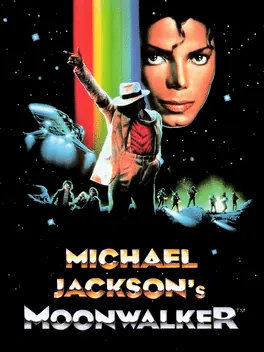
Several video games based on the 1988 Michael Jackson film Moonwalker. U.S. Gold published various games for home computers, released in 1989, whilst Sega developed two similarly themed beat 'em up video games in 1990; one released for arcades and another released for the Mega Drive/Genesis and Master System.
Lode Runner
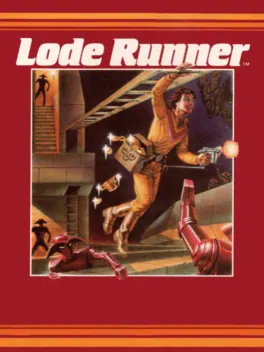
Lode Runner is a 1983 puzzle video game, first published by Brøderbund. It is one of the first games to include a level editor, a feature that allows players to create their own levels for the game. This feature bolstered the game's popularity, as magazines such as Computer Gaming World held contests to see who could build the best level.
Road Fighter
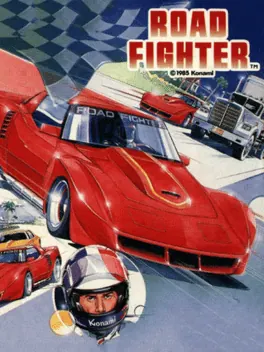
Road Fighter is a car-based arcade game developed by Konami and released in 1984. It also was the first car racing game from Konami. The goal is to reach the finish line within the stages without running out of time, hitting other cars or running out of fuel (fuel is refilled by hitting a special type of car). The game also spawned two sequels in its time, Midnight Run: Road Fighter 2 in 1995 and Winding Heat in 1996, respectively. A Japan-only rebooted sequel was also released in 2010, 14 years after Winding Heat.
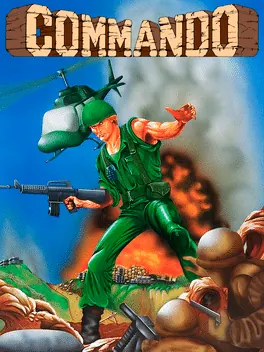
Commando
Several levels await your super-tough Commando in this arcade conversion. Armed with only a standard rifle and a few grenades you must take on hordes of enemies. Some are wandering around in the open, while others have picked out hiding places, which you must approach from certain angles. Trees, rivers and bridges create a varied combat-like terrain and must be incorporated into your thinking. Extra grenades can be collected, and will definitely be required, as they allow you to kill from distance and thus avoid some enemy shots.
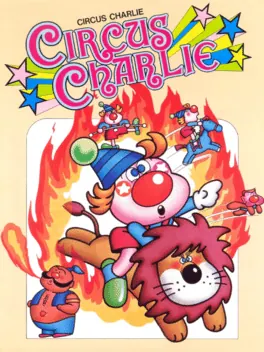
Circus Charlie
An action/platform game in which the player controls a clown named Charlie who partakes in various circus attractions.
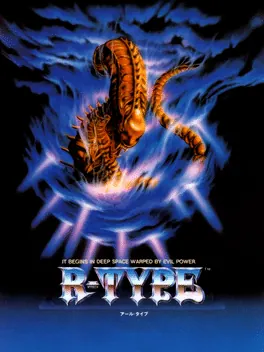
R-Type
R-Type is set in the 22nd century, and the player flies a futuristic fighter craft called the R-9a "Arrowhead", named for its shape, and because it is the ninth model in the 'R' series of fighter craft (but it is the first of the series to actually be used in combat; the previous models were all prototypes). The mission is to 'blast off and strike the evil Bydo Empire'. The R- in the series title originally stood for "ray", as in a ray of light. It was a reference to the many different types of ray-like weapons in the first R-Type. his was later retconned in R-Type Final to refer specifically to the production code as well as a term of endearment for the player fighter craft, the "Round Canopy". The original R-Type was well received by most gaming critics. However, it was also infamous for its relentless difficulty. It earned 7th place in IGN's Top 10 most difficult games to beat. The gameplay of R-Type is noticeably distinct among shoot 'em ups. Invariably the player will lose, not because of an inequality in firepower, but because of the design of the levels themselves. There is usually a 'correct' way to get through a level, but players must learn these by experience - i.e. by losing and restarting from earlier in the level. The game innovated with its weapon system compared to contemporary shooters, featuring a chargeable shot (beam-meter), and detachable 'force' pod; levels were designed to require different tactics and ideal weapons (air-air, diagonal, or air-ground laser).
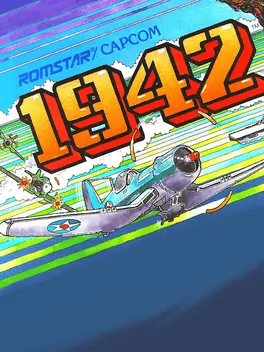
1942
1942 is a vertically scrolling shoot 'em up made by Capcom that was released for the arcade in 1984. The goal is to reach Tokyo and destroy the entire Japanese air fleet. The player pilots a plane dubbed the "Super Ace" . The player has to shoot down enemy planes; to avoid enemy fire, the player can perform a roll or "loop-the-loop". During the game the player may collect a series of power-ups, one of them allowing the plane to be escorted by two other smaller fighters in a Tip Tow formation.
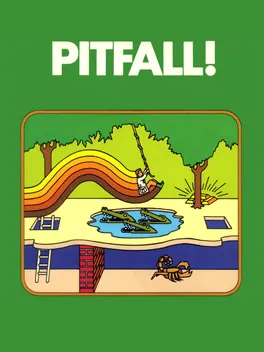
Pitfall!
Pitfall! is a video game designed by David Crane for the Atari 2600 and released by Activision in 1982. The player controls Pitfall Harry and is tasked with collecting all the treasures in a jungle within 20 minutes while avoiding obstacles and hazards.
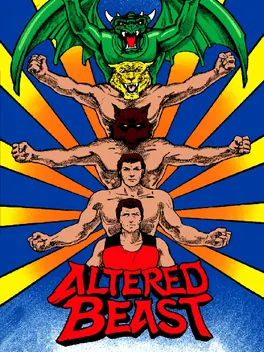
Altered Beast
Altered Beast is a 1988 beat 'em up video game developed by Team Shinobi and published by Sega for arcades. Set in Ancient Greece, the game follows a Roman centurion who is resurrected by the Olympian god Zeus to rescue his daughter Athena from Neff, the demonic ruler of the underworld. By collecting three power-ups in a level, the player character can transform into one of five mythical beasts. In the original arcade, the end credits are interspersed with images of actors in costumes for the different characters and monsters of the game, implying the whole game was a film production.
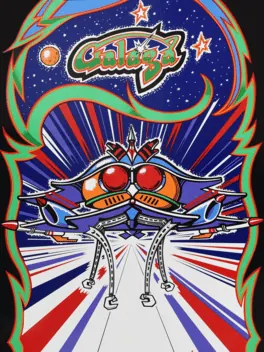
Galaga
The objective of Galaga is to score as many points as possible by destroying insect-like enemies. The player controls a starfighter that can move left and right along the bottom of the playfield. Enemies swarm in groups in a formation near the top of the screen, and then begin flying down toward the player, firing bombs at the fighter. The game ends when the player's last fighter is lost, either by colliding with an enemy or one of its bullets, or by being captured. Galaga introduces a number of new features over its predecessor, Galaxian. Among these is the ability to fire more than one bullet at a time, a count of the player's "hit/miss ratio" at the end of the game, and a bonus "Challenging Stage" that occurs every few levels, in which a series of enemies fly onto and out of the screen in set patterns without firing at the player's ship or trying to crash into it. These stages award a large point bonus if the player manages to destroy every enemy. Another gameplay feature new to Galaga is the ability for enemies to capture the player's fighter. While the player is in control of just one fighter, a "boss Galaga" (which takes two shots to kill) periodically attempts to capture the fighter using a tractor beam. If successful, the fighter joins the enemy formation. If the player has more lives remaining, play resumes with a new fighter. The captured fighter flies down with the enemy that captured it, firing upon the player just like normal enemies, and can be shot and destroyed. The player can free the fighter by destroying the boss Galaga while in flight, causing the captured fighter to link up with the player's current fighter, doubling his or her firepower but also making a target twice as large. Galaga has an exploitable bug that can cause the attackers to stop firing bullets at the player, due to a coding error. In addition, similar to the famous "Split-Screen bug" in Pac-Man, a bug exists in Galaga in which the game "rolls over" from Level 255 to Level 0. Depending on the difficulty setting of the machine, this can cause the game to stall, requiring that the machine be reset or power-cycled in order to start a new game.