
Jogos para PC-8800 Series
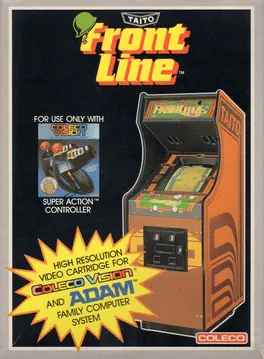
Front Line
Front Line is a vertically scrolling action game. Your mission is to infiltrate enemy territory and destroy their fortress. To reach the fortress, you will have to make your way through varied and dangerous terrain. Jungles, deserts, brush, and rocks all slow your progress, plus each area has numerous enemy fighters and tanks trying to stop you. To help get past these obstacles, you are armed with a machine gun and grenades; at some points in the game you may even come across an abandoned tank which you can control to increase your odds of survival. When you reach the end of the level and successfully destroy the fortress, the game will repeat at a higher level of difficulty. Gameplay is for one or two players, and four different skill levels are available.
Wizardry: Knight of Diamonds - The Second Scenario
Are you ready to take the next step into the world of Wizardry? A step so dangerous, the mere utterance of a spell can decimate the entire city of Llylgamyn. Knight of Diamonds is the Second Scenario in the Wizardry Master Series, the fantasy role-playing simulation for the Nintendo Entertainment System. In Wizardr Knight of Diamonds, only the bravest may venture through murky dungeons more dangerous than any ever encountered by earthly mortals. Only the most cunning may recover the magical Staff of Gailda and save the city of Llylgamyn.

The Ancient Land of Ys
The hero of Ys is an adventurous young swordsman named Adol Christin. As the story begins, he has just arrived at the Town of Minea, in the land of Esteria. He is called upon by Sara, a fortuneteller, who tells him of a great evil that is sweeping the land. Adol is informed that he must seek out the six Books of Ys. These books contain the history of the ancient land of Ys, and will give him the knowledge he needs to defeat the evil forces. Sara gives Adol a crystal for identification and instructs him to find her aunt in Zepik Village, who holds the key to retrieving one of the Books. With that, his quest begins.
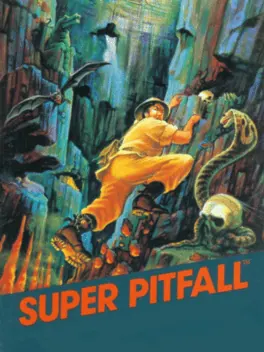
Super Pitfall
Pitfall Harry returns to adventuring in this "Super" sequel to Pitfall! and Pitfall II: Lost Caverns. Harry’s mission: to recover the famed Raj Diamond, and also to rescue his niece Rhonda and loyal lion sidekick, Quickclaw. Now armed with a gun, Harry must navigate some 270 screens of 8-bit action-platforming. Valuable items will be collected along the way to aid your quest, but beware: dangers also abound, from snakes and spiders to falling rocks and boiling lava!
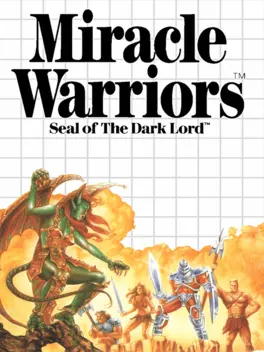
Miracle Warriors: Seal of the Dark Lord
Japanese RPG. Two editions exist, one for the MSX1 on cartridge, and one for the MSX2 on 3.5" diskette. The seal of the Dark Lord Terarin has been broken and Terarin has been unleashed into the world again. She has stolen the Golden Seal and opened pandora's box, unleashing evil creatures into the world. A young hero is tasked by a king to stop Terarin. He must step into footsteps of Iason, a shepherd that once accidentally unleashed Terarin and fought to seal the Dark Lord again. The hero must enlist the aid of three companions, Guy the warrior, Medi the amazon and Treo the pirate (called Turo in the manual) and find the three keys to Terarin's lair. To face the Dark Lord, they must find the mystical weapons and armor of old and then defeat Terarin and seal the Dark Lord from the world.
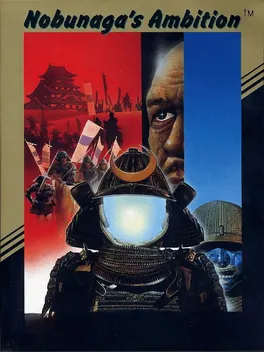
Nobunaga's Ambition
The second game in the series, previously released as Nobunaga's Ambition in the West. Players take on the role of one of the main characters of the period, Nobunaga Oda, Shingen Takeda, Kenshin Uesugi, or others and try to unite the 50 kingdoms of Japan, from Ezo in the north to Kyushu in the south, under their own rule.

F-15 Strike Eagle
F-15 Strike Eagle is an F-15 Strike Eagle combat flight simulator first released in 1985 by MicroProse. It is the first in the F-15 Strike Eagle series comprising also the sequels F-15 Strike Eagle II and F-15 Strike Eagle III.
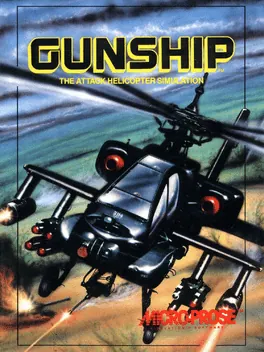
Gunship
After selection of region, style, and enemies, the pilot is assigned a primary mission and a secondary mission. These could include such objectives as "Destroy enemy headquarters" or "Support friendly troops" (i.e. destroy targets near friendly forces). The latter would be an easier mission, because the battle would be fought closer to friendly lines.
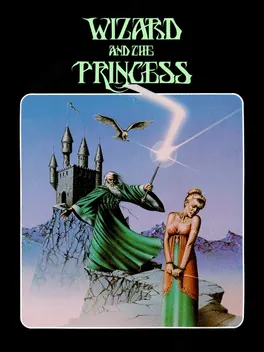
The Wizard and the Princess
Princess Priscilla has been kidnapped and the player seems to be the only valliant hero willing to rescue the damsel in distress. This is the second text adventure with illustrating graphics released by Sierra. Communicating with the game works via entering commands which tell the player's alter ego where to go and what to do. Since the parser is a very basic one it only understands two-word commands. Two years after its initial release, the game was renamed "Adventure in Serenia" for its PC release. This suggested sequel was, however, exactly the same game as in its previous incarnation.
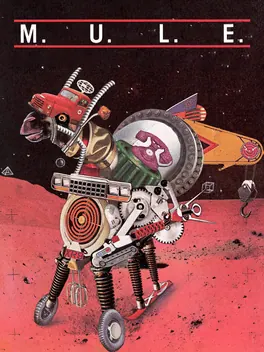
M.U.L.E.
M.U.L.E. is about four hopeful explorers trying to make a fortune on a virgin planet. This is done by producing various goods (Food, Energy, Smithore, Crystite). Each of these goods have their uses: if you don't have enough food, you will have less time during your turn. If you don't have enough energy, your output will be lower. If enough smithore isn't produced, there will be a shortage of M.U.L.E.s. Crystite is the big earner that can make or break your game. You start the game by selecting your race. Some are easier to play, some harder. There are three levels of difficulty, in the easiest the game only lasts 6 turns, but the real game is 12 turns. Crystite is not available at the easiest level. Each turn starts with land claim. Each player gets to choose a spot of land for themselves from the map. If two players choose the same spot, the player with less money wins. The map consists of different landscape. River is best for producing food, plains for energy, mountains for smithore. Crystite is hidden and must be first found by taking a land sample to the town. After the land claim each player takes turns in cultivating their land and do other tasks. They can buy M.U.L.E.s to start production on their land, sabotage other players by buying M.U.L.E.s and letting them loose, try to catch the Wumpus for cash and try to find crystite veins. The time to do these things depends on if the player has enough food. Finally the player goes to the casino and wins a small amount of money, depending on how much time was left.

New Rally-X
New Rally-X is a maze and driving arcade game that was released by Namco in 1981. It runs on similar hardware to that of its predecessor, and as its name suggests, it is a revised version of that title, which was released in the previous year. The only differences are that it has slightly enhanced graphics, easier gameplay, a new soundtrack, and a "Lucky Flag" (with the letter "L") that gives the player extra points for remaining fuel when collected, after which the round will continue if there are still flags remaining. The mazes are mostly identical, with some of the blocks from Rally-X changed into roads to reduce dead ends, and some different flag (and rock) locations. This title was manufactured in greater numbers and was much more popular in Japan than its predecessor.
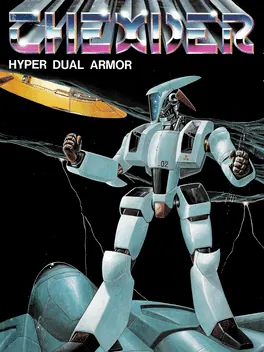
Thexder
Thexder is a robot capable of transforming into a jet whose job is to destroy the central computer to save the planet.15 stages are waiting you for in this shooting game.

Hydlide
An evil demon named Varalys casts a curse upon the princess Ann, turning her into three fairies. You control Sir Jim and set out to find the fairies, and then slay Varalys. Only by vanquishing Varalys can the curse be lifted. Once the princess is restored the kingdom will be saved. The fighting is a little more in-depth than hack and slash. You can either fight with a defensive or offensive stance, or you can use magic spells.
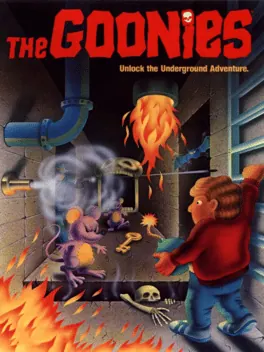
The Goonies
The Goonies is a 1986 platform game. The main theme for most of the game is a chiptune rendition of Cyndi Lauper's "The Goonies 'R' Good Enough". The game was previously released only in Japan, but was later released as an Arcade Playchoice-10 title in North America.
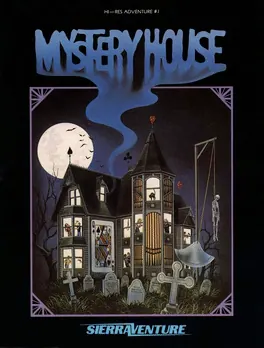
Mystery House
In the first graphic adventure game ever, the player along with seven other people is in an old mansion hunting for some jewels. All too soon it becomes obvious that someone is killing one member of the group after another. It is the player's task in this murder mystery to find out who the murderer is before the player is killed himself.
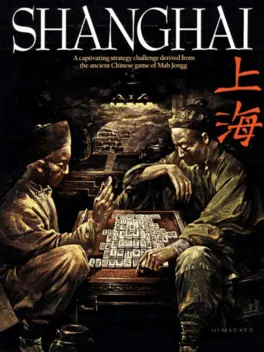
Shanghai
Shanghai is a computerized version of mahjong solitaire. After winning a game, the tiles reveal the three-dimensional blinking eye of a dragon behind the game screen. The Macintosh and Sega Master System version shows an animated dragon spitting fire.

Déjà Vu: A Nightmare Comes True!!
Déjà Vu is a point-and-click adventure game that draws inspiration from "noir" detective novels that were popular in the 1940s.
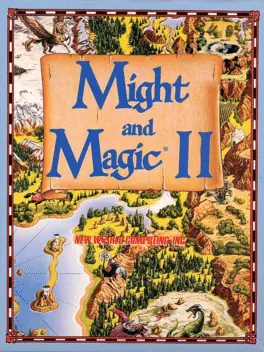
Might and Magic II: Gates to Another World
The Sequel to the successful Might and Magic I, it boasted better graphics, a larger world, but still pretty much the same game engine and presentation. Embark on a glorious journey then save the world of CRON and yourself. A balanced party is a necessity in this game. There are several locations and items that are restricted to certain genders, alignments, or races. A party made up of Good Human Males won't get you very far. Time plays a large role in this game. Time travel is a part of it, but on a more basic level, you will find that characters age as the game goes on. If you wait too long, your characters' statistics will change to reflect their aging.

Ys: Wanderers from Ys
Adol Christin's long-time friend, Dogi, wishes to return to his home town of Redmont after hearing about strange disturbances that are happening there. Always looking for an adventure, Adol joins him and soon finds out the cause of this new evil. Ys: Wanderers from Ys breaks away from the "bumping into enemies" battle system of the first two games, allowing Adol to control his sword in a variety of directions. Beside changing the battle system, the game's perspective switches to a side-scrolling view, as opposed to the top-down one of the previous games. Adol also has the ability to jump now. New to the series is the use of magical rings, which give Adol different powering-up abilities such as healing and shielding. The game also uses various key items found along the way to solve minor puzzles and progress the story.
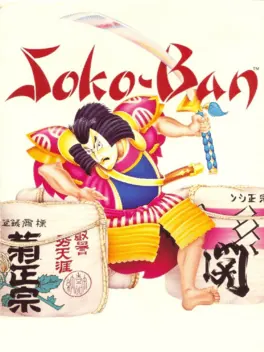
Soko-Ban
Sokoban ("warehouse keeper") is a is a classic puzzle game created in 1981 by Hiroyuki Imabayashi, and published in 1982 by Thinking Rabbit, a software house based in Takarazuka, Japan. In 1984 the ASCII Corporation published a version produced by Khaled Bentebal. It was the basis of numerous clones in the later years. It is set in a warehouse. On each level, the player must push crates (from square to square) to get them onto designated spots; once each crate is on a marked spot, the level is complete. Crates can only be pushed one at a time (so two crates next to each other cannot be pushed together), and cannot be pulled--so it's possible to get a crate stuck in a corner, where it cannot be retrieved! By the last levels, you must plan 40 steps in advance.

Nuts & Milk
Nuts & Milk is a platform-style puzzle game developed and published by Japanese software developer Hudson Soft in 1983. The game was released initially on the FM-7, MSX, NEC PC-8801, NEC PC-6001, and later to the Famicom in Japan. It was the first third party video game to be released on a Nintendo console.
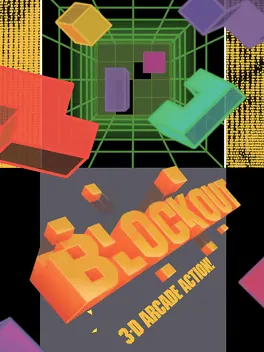
Blockout
Blockout is a puzzle videogame, created in 1989 by Polish developer - California Dreams, designed by Aleksander Ustaszewski and Mirosław Zabłocki. The game is the logical extension of Tetris into the third dimension. In Tetris, the player manipulates a set of tetrominoes which fall into a two-dimensional pit (seen from the side). The aim is to solve a real-time packing problem by forming complete rows, which then disappear and score points. Poor play leads to incomplete rows, caused by inefficient arrangements of tiles; these rows do not disappear, giving the player progressively less space and less time to play subsequent pieces. Similarly, in Blockout, the player manipulates a set of polycubes which fall into a three-dimensional pit (seen from above; the pieces appear in the foreground and fall away). The pieces can be rotated around all three axes, and moved horizontally and vertically. The aim is to form complete layers.
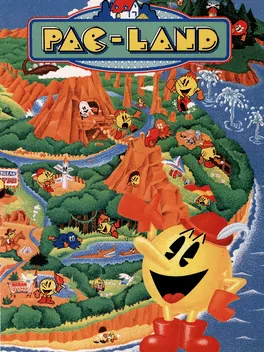
Pac-Land
Pac-Land itself is split into trips. In each of these trips the objective is to get the fairy (that is kept under Pac-man's hat) to Fairyland and also to return home to Pac-Man's house. The majority of the trip involves moving from left to right avoiding various obstacles such as the enemy ghosts, water spurts and quicksand traps. Each trip is divided into a number of rounds, the end of which provides Pac-Man with bonus points depending on how much time he has left and also his position in jumping at the end of each round. If the player runs out of time before finishing the round, Sue, the purple ghost, will speed up rapidly. The penultimate round of a trip ends with Pac-Man entering Fairyland and returning the fairy under his hat to the Fairy Queen. In return the Fairy Queen gives Pac-Man magic boots. For the final round of the trip, Pac-Man has to travel from right to left back home. For assistance he uses the magic boots, which allow him to jump repeatedly while in mid-air. Once Pac-Man completes the trip, he is greeted by Ms. Pac-Man and Baby Pac-Man. In the US release of the game, Pac-Man's cat and dog in the cartoon series, Sour Puss and Chomp-Chomp, are also there to welcome Pac-Man home. Pac-Man then begins his next trip following the same objectives as before, although the difficulty increases. As in the original Pac-Man, there are fruit which appear to eat for bonus points and power pellets to turn the ghosts blue and vulnerable. A hidden item (sometimes accidentally dropped by the ghosts) is a Flagship from Galaxian, which rewards 7650 points when collected (a reference to Namco's goroawase number of 765). The Galaxian Flagship is a long running cameo that appears in the Namco-made Pac-Man games. There are also hidden bonuses in the game, eating ghosts in a certain order will give extra time and pushing an obstacle in the opposite direction can give extra lives, invincibility, and balloons to collect for points and warps.
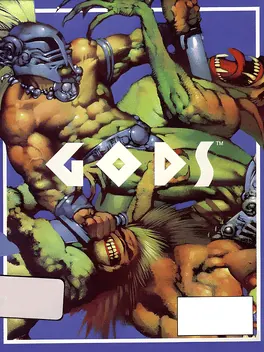
Gods
Who would have thought that a man would be so foolish or so daring as to accept a challenge set down by the Gods? And yet one came forward to claim the right to test his skills and strengths against a city so legendary its name alone struck fear in the hearts of all who heard it spoken.
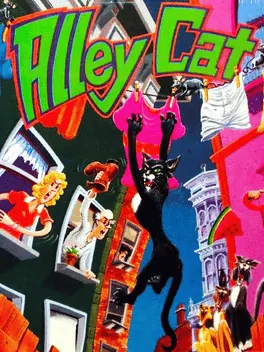
Alley Cat
Alley Cat is an early video game in which the player controls a cat, navigating an alley screen and various challenge rooms. The player must enter a room and complete the objective inside, while avoid hazards such as objects being thrown out of windows, wandering dogs, giant spiders and the broomstick.
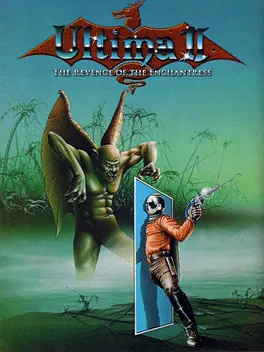
Ultima II: The Revenge of the Enchantress
After obtaining aid from the lords of the realm in Ultima I, your character travels back in time, locates the mad wizard Mondain, slays him, and ends his reign of terror. In Ultima II: Revenge of the Enchantress, Mondain's protégé, Minax, who studied the mad wizard's teachings and writings, returns to wreak vengeance on the person who slew her teacher and lover -- you. And, instead of waiting for you to return to her native land of Sosaria, she wreaks havoc on your own Earth. Throughout Ultima II: Revenge of the Enchantress, your quest is quite different in scope from its predecessor. Earth is turned into a half-modern, half-fantasy world by the forces of magic and, as a result, things are much stranger than one might expect. As explained in the introduction, your tasks in the game are to "Battle strange creatures across the face of the Earth, search for clues in careless words spoken at the local pub, traverse deep, dark, deadly dungeons and tall, terrifying towers...and conquer Time itself to battle Minax the Enchantress."
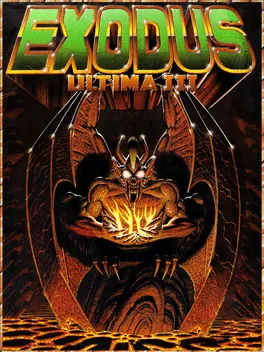
Ultima III: Exodus
Eons ago Lord British came unto the lands of Sosaria. Since that time it has been united under his rule as the Kingdom of Britannia and has gone through two major crises. A few years ago there were political upheavals among the city states of the kingdom. The ringleader of this political instability was Mondain, the Magician. Under his horrible rule, the people's lives were devastated. A valiant warrior was called forth from another world by Lord British. This warrior overthrew Mondain. Britania survived the first crisis. But peace in the Kingdom of Britannia did not last long. Minax, the Witch, a disciple of Mondain, became very powerful and ruled the world of darkness. Minax had power to sway the time axis of the universe. However, a legendary hero again came to the rescue, overthrew Minax, and brought peace back to the kingdom. Now, the Kingdom is about to face its third crisis. Rumours abound about a fiery island which has emerged in the southwestern seas. Little is known of the evil that dwells there. It is known only as Exodus.
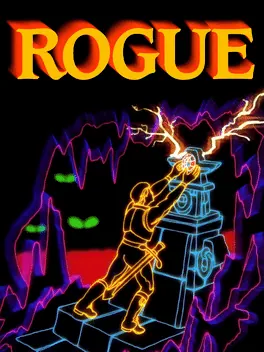
Rogue
Rogue is a dungeon crawling video game first developed by Michael Toy and Glenn Wichman around 1980. It was a favorite on college Unix systems in the early to mid-1980s, in part due to the procedural generation of game content.
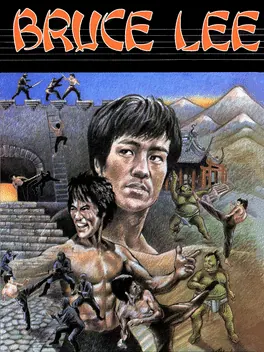
Bruce Lee
Bruce Lee is a video game designed by Ron J. Fortier, with graphics by Kelly Day and music by John A. Fitzpatrick. It was originally developed for the Atari 8-bit family and published in 1984 by Datasoft, along with a port for the Commodore 64. The game was converted to the ZX Spectrum and Amstrad CPC and published by U.S. Gold in the same year. An MSX version was published in 1985 by Comptiq. Bruce Lee is a platform game/beat 'em up hybrid, in which the player controls Bruce Lee.
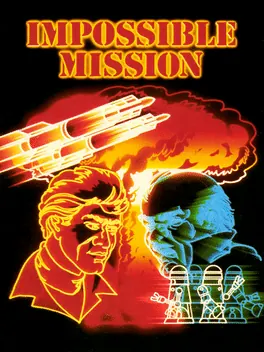
Impossible Mission
The situation: for three days have the strategic central computers of the great powers acted up. An unknown person manipulates their programmes; at the end of these programmes is the starting command for the intercontinental rocket. The countdown is on, only 6 hours keep the humanity from an atomic inferno. An unknown person? Only professor Elvin, the insane computer expert could crack the top secret start code, Elvin, who entrenches himself in his intangible subterraneous, guarded by 90 murderous robots, that until now had hunted down every intruder. No one who has ever set foot on the lift to Elvins cave labyrinth has returned back alive. The last hope: Special Agent 4125, the most cunning, toughest and most indiscriminate man, that the secret service can offer. Only ice cold reckoning and superior physical condition give this unarmed hero a tiny chance to avert the disaster in the last minute. The game: your task is to put a stop to evil Elvin Atombender's game. For this you have to enter in his laboratory, protected by a vault somewhere on his underground stronghold. To open the laboratory's door you need a nine letters password, each letter of which Elvin coded into a punchcard, just for cutting in four each one of them, painting them in different colors and hiding the resulting pieces everywhere in his base's furniture. So all you have to do is search into every object of every room for pieces of puzzle while surviving the robots, the pits and doctor Elvin's annoying voice, retrieve all the 36 pieces, put them together in groups of four, and head for the laboratory, where an unpleasant surprise waits you
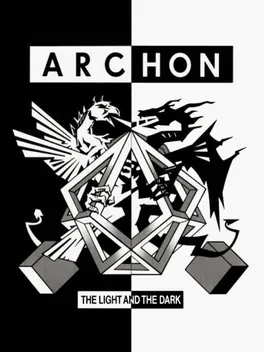
Archon
Archon: The Light and the Dark was a game developed by Free Fall Associates which loosely modeled the game of Chess, with a number of additions to the gameplay. It was programmed by Anne Westfall, and released originally for Atari 8-bit computers in 1983. It was quickly ported to a number of different systems, and was well-received.
Spy vs Spy
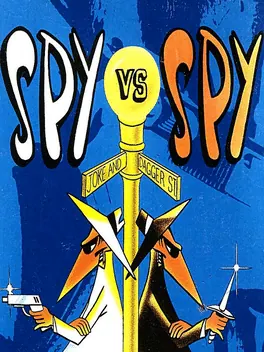
The black spy and the white spy are out to outsmart each other before the time bell rings. Find the needed objects (money, passport, secret plans and airport door key) by searching rooms in the embassy, which include desks, file cabinets and other furniture. Foil your opponent by setting creative booby traps in the various rooms (a bomb in a dresser drawer, for instance). Traps can be disarmed with objects found in rooms (a water bucket from a firebox on the wall will disarm the bomb in the prior example). When all the items are together in the secret briefcase, head for the airport door.
Xevious
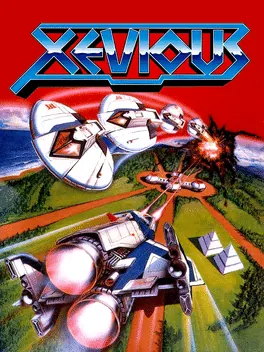
It's a nightmare, but it's true! Research shows that we are the actual aliens on Earth, and the ruthless Xevions are the original inhabitants. Now the Xevions want Earth back -- minus humans! Their invasion forces are fierce -- the land is crawling with deadly Domogram Rovers; the sky is black with Toroid Patrol Fleets and Zoshi Death Squads. Our puny weapons offer no defense. Earth's only hope is our powerful new Solvalou Fighter Plane. Its pilot will have a single mission: Penetrate the enemy ranks and destroy the Xevious Mother Ship. The mission is dangerous. We can't guarantee success. But at this point, it's do or die! One small problem. We still need a pilot. Any volunteers?
Mappy
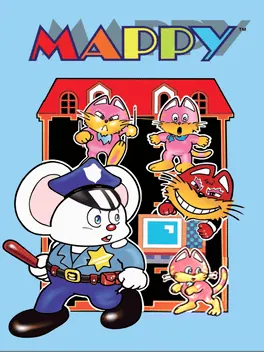
The player guides Mappy the police mouse through the mansion of the cats called Mewkies (Meowky in the U.S. version) to retrieve stolen goods. The player uses a left-right joystick to move Mappy and a single button to operate doors. The mansion has six floors of hallways in which the stolen items are stashed.

Tennis
Tennis is a sports game developed and released by Nintendo for the NES. In North America and Europe, Tennis was one of 18 launch games for the NES. A Game Boy version was also released. The game features single-player and two-player modes for singles and doubles matches, with either competitive or cooperative gameplay. A computerized opponent's artificial intelligence can be set to one of five difficulty levels. Mario referees the matches.
BurgerTime
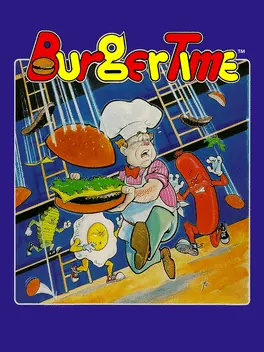
BurgerTime is a 1982 arcade game created by Data East for its DECO Cassette System. The game's original title, Hamburger, was changed to BurgerTime before its introduction to the US. The player is chef Peter Pepper, who must walk over hamburger ingredients located across a maze of platforms while avoiding pursuing characters. The game was popular in arcades. In the US, Data East USA licensed BurgerTime for distribution by Bally Midway. The Data East and Midway versions are distinguished by the manufacturer's name on the title screen and by the marquee and cabinet artworks.