
Jogos para Atari ST/STE
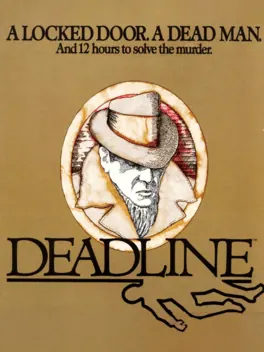
Deadline
Deadline is an interactive fiction computer game published by Infocom in 1982. Written by Marc Blank, it was one of the first murder mystery interactive fiction games. Like most Infocom titles, Deadline was created using ZIL, which allowed the easy porting of the game to popular computer platforms of the time such as the Apple II and the Commodore 64. It is Infocom's third game. The player's character in Deadline is an unnamed police detective, summoned to a sprawling Connecticut estate to investigate the apparent suicide of wealthy industrialist Marshall Robner. At first, it seems a very straightforward case: the body was discovered in the library, which had been locked from the inside, and the cause of death was an overdose of his prescribed antidepressants. But something just doesn't feel right. Could someone have killed Robner for his money? Did he make an enemy through his business dealings? Or was there some other motive? With the able assistance of level-headed Sgt. Duffy, the player has twelve hours to solve the case before it is closed forever.
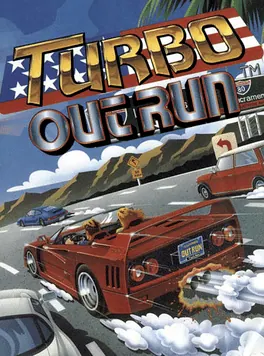
Turbo OutRun
The sequel to OutRun features similar basic gameplay to the original, with the action viewed from behind the car, and the challenge being to complete each stage within the time limit. Contact can cause the car to spin, slow down or even flip; in each case you will lose time. There are 16 stages set across the US, gradually moving from east to west, all depicted differently visually. After every 4 levels, you go into a shop screen, with a choice of upgrades. As the title implies, you now have a turbo booster installed, which speeds up the car, although over-use can cause the engine to overheat, and it is not recharged until each shop section. You have 5 continues, and failure to complete the course within the time limit costs you one.
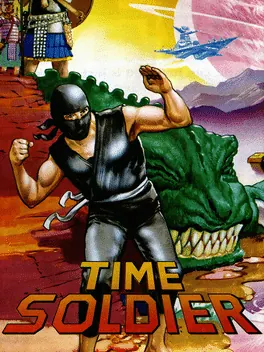
Time Soldiers
Travel throughout various time periods to save your fellow comrades. Collect power-ups to help you defeat a variety of enemies and end-bosses. Uses rotary joysticks to allow player to fire in a variety of directions.
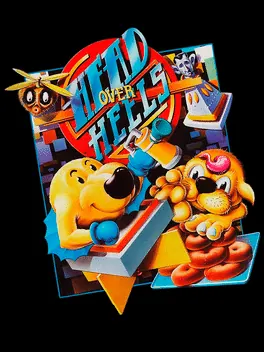
Head Over Heels
Two distinct characters called Mr Head and Mr Heels are played in this arcade adventure. They are separated at the shoulders but capable of joining together to maximize their abilities in some situations (but reduce them in others, so they can be split again). The game is presented from an isometric perspective, and presents the characters with a number of puzzles involving switches, jumps and climbs. The levels are 3 dimensional, and the characters must collect crowns as they progress. Objects can be picked up and manipulated as necessary.
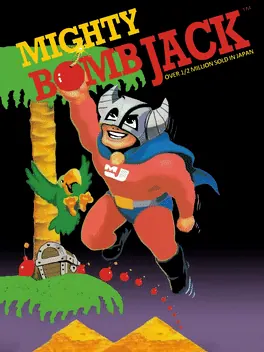
Mighty Bomb Jack
A platform game where the main character travels throughout various levels collecting bombs. The hero of the game, Jack, must make his way through 16 levels of a pyramid in order to defeat the demon Belzebut and rescue the royal Pamera family.Each level is split into two parts an action zone and a Royal Palace room. The mechanics and level designs of the Royal Palace rooms are directly lifted from the games prequel, Bomb Jack. Action zones can be split up into several portions, and contain power-ups usually hidden in treasure chests such as money bags, Mighty Coins and Mighty Drinks. Mighty Coins allow Jack to change colors blue allows Jack to open orange treasure chests, orange allows him to open any treasure chest by simply touching it from the side, and green transforms all enemies on the screen into coins for 5 seconds. Mighty Drinks add 10 seconds to the games timer. Secret passages can also be found in the action zones, activated by finding a Sphinx in a visible or hidden treasure chest.To prevent the player from becoming too greedy, the game automatically sends the player to a Torture Room if they obtain more than 9 Mighty Coins or 99 seconds on the games timer. The only way to escape a Torture Room without losing a life is to complete a number of jumps, which are counted down on the screen. Once the player exits the torture room, Jack automatically loses all Mighty Coins, the timer is reset to 60 seconds, and the game recommences from the beginning of the current level.A Royal Palace room NES version.A Vs. Series version of the game was released in 1986 for the Japanese market not to be confused with the original dedicated arcade version. Differences between the original and vs. series versions include adding a two-player mode, changing the locations of some secret passages and removing a warp trick in the Royal Palace rooms. In the NES version, Jack could warp forward to the next Royal Palace room if he touched the first lit bomb in the current room after the other 23 bombs were collected however, if Jack died in the warping process, he would be sent back to the beginning of the level from which the trick commenced.Mighty Bomb Jack also had a guest appearance on Tecmo Super Bowl, during the halftime show in the Super Bowl
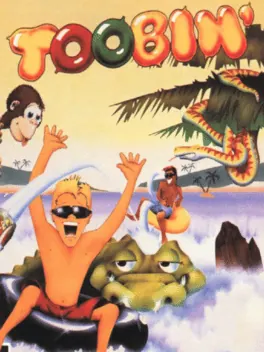
Toobin'
Toobin' involves Biff and Jet racing their way down the rapids of a river, riding on tires. You rotate your tyre left or right, and drift as the current sends you, making sure to avoid the banks of the river, and the dividing lines in the middle. Hazards include crocodiles, stray logs and branches, and fishermen - you are armed with a limited supply of tin cans to take care of these. There are gates to slide through on the way down - these give you a points bonus. Each level has a strict time limit to adhere to, although there's a kickin' party at the end if you succeed.
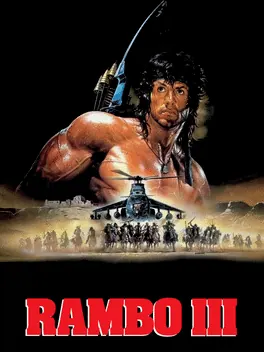
Rambo III
Rambo III is a series of video games based on the film of the same name. Like in the film, their main plots center on former Vietnam-era Green Beret John Rambo being recalled up to duty one last time to rescue his former commander, Colonel Sam Trautman, who was captured during a covert operation mission in Soviet Union-controlled Afghanistan. The console versions are developed and published by Sega, the PC DOS version was developed by Ocean and published by Taito and Ocean developed and published the rest (Atari ST, Amiga, Spectrum, C64, Amstrad). Taito also released an arcade game based on the film.
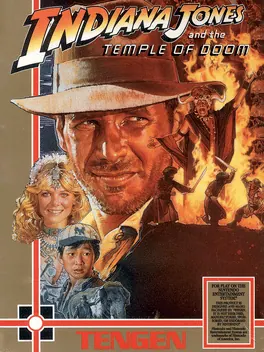
Indiana Jones and the Temple of Doom
As Indy, the player must complete several cycles of the following three types of levels: 1.Mine level: Whip your way through a mine in order to free children that are held captive. Use your whip to swing across chasms, climb ladders, ride along conveyor belts and defend yourself against attacks from Thuggee guards, bats, snakes and the fireball-throwing Mola ram. Escape with the mine cart after you've freed all children. 2.Mine cart level: Pick the right route through a network of tracks while riding in a mine cart. Avoid potholes, broken tracks & guards in carts and safely reach the end of the track. 3.Temple level: Make your way to the altar and grab the Sankara stone while Mola Ram, bats and Thuggee guards attack you. Watch out for that lava.
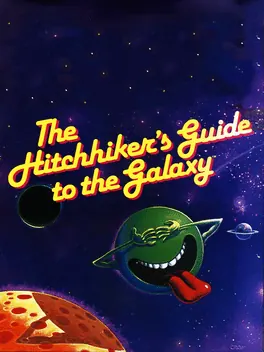
The Hitchhiker's Guide to the Galaxy
The Hitchhiker’s Guide to the Galaxy is a classic Interactive Fiction game. Though divergent from the source material, the main characters, locations, and concepts are here. Unlike the book, death can come quickly if Arthur fails to observe his surroundings, collect inventory, talk to people, and consult the Guide. Don't panic!
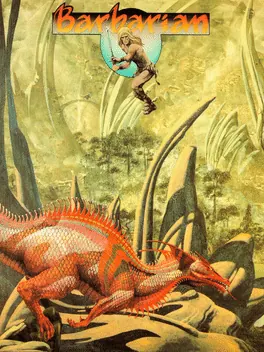
Barbarian
Welcome to the world of Barbarian. In this world you control our hero "Hegor". Once the game has started you will see him standing in the marsh. Using the mouse, jouystick or keyboard (or all three simultaneously) you issue commands that control his actions. Thus enabling you to explore the world of Durgan. You should always remember that Barbarian features context sensitive animation which allows the same commands to do different things depending on the situation Hegor is involved in. In order to complete the game you must locate and destroy the crystal which is the source of the evil power of Necron. Once the crystal has been destroyed the volcano in which Durgan is located will start to erupt making it imperative that you reach the surface again before it blows.
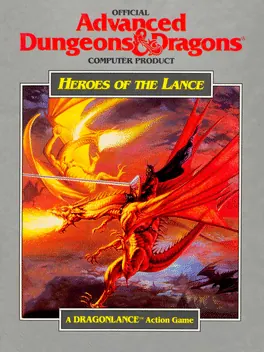
Advanced Dungeons & Dragons: Heroes of the Lance
Heroes of the Lance is a side-scrolling action game. The game used actual Dungeons & Dragons statistics, with statistics for the characters exactly as they were in the rule books. Eight heroes from the Dragonlance novels series must be assembled for the quest, and only one is visible on the screen at a time; when one on-screen hero dies, the next in line appears.
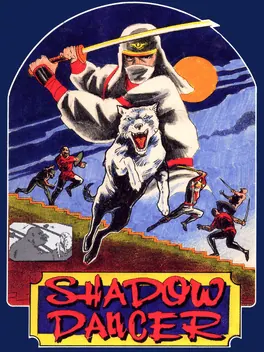
Shadow Dancer
Shadow Dancer is an action platform game developed by Sega for the Sega System 18 arcade system in 1989. A port of the game was published by Sega for the Sega Master System, and ports to several home computers were published by U.S. Gold. It was the first sequel to Shinobi, alongside The Revenge of Shinobi. A similar game titled Shadow Dancer: The Secret of Shinobi was released for the Sega Mega Drive, which features an entirely different set of stages. A terrorist group is planting numerous time bombs throughout the city. The player, a ninja master accompanied by a canine partner, sets out on four missions to dismantle the bombs and destroy the criminal syndicate behind these acts.
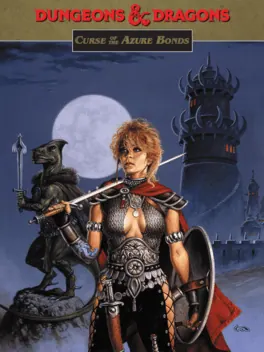
Curse of the Azure Bonds
Welcome to the official Advanced Dungeons & Dragons computer product, Curse of the Azure Bonds, A Forgotten Realms fantasy role-playing epic. This adventure game is based on the rules and background created by TSR, Inc. and a storyline created especially for this game. THE CURSE OF THE AZURE BONDS adventure begins in the frontier city of Tilverton on the border between the great kingdom of Cormyr and the scattered settlements of the Dalelands. The characters begin as experienced adventurers who have been ambushed, captured, and cursed with five magical bonds. Each bond is an azure-blue symbol imprinted just under the skin of each character's swordarm. These bonds have dangerous magical powers that can take control of the characters' actions. The characters' quest in Curse of the Azure Bonds is to search the Realms for the source of the bonds and rid themselves of the bonds' terrible curse.

World Games
World Games is an Olympics-style sports game with arcade-oriented gameplay. The events players can compete in include: •Barrel jumping •Bull riding •Caber toss •Cliff diving •Log rolling •Platform diving •Pole vault •Skiing •Sumo wrestling •Weightlifting

The Immortal
When nightmares come to life... You discover you're not immortal! You're a mighty wizard in search of your lost master, Mordamir. Venture into the dungeon and slove the mysteries of each level. Unravel the secrets of The Immortal! The Immortal is an isometric action-adventure game. Your old mentor Mordamir has disappeared. Probably kidnapped. You're not too sure where he might be, but a dungeon is always a good place to look, so you seek out the nearest one and plunge into its depths. Beware: 8 levels of isometric death await. The Immortal is the prototype of a trial-and-error game. Progress is made by encountering a hazard, dying, solving the problem, encountering the next hazard. To solve a level, you have to know its traps and their patterns by heart. As frustrating as this may sound (it is), The Immortal quite cleverly balances annoyance with curiosity and graphical rewards.
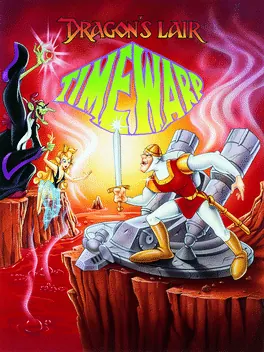
Dragon's Lair II: Time Warp
Dragon's Lair II: Time Warp, the followup to Don Bluth's arcade classic Dragon's Lair, can now be enjoyed on your PC. This fully arcade authentic version includes all of the original scenes you've come to enjoy, and even the unreleased Director's Cut ending not seen in the arcades. Other bonuses include a full watch feature to sit back and enjoy Don Bluth's stunning animation.

Shanghai
Shanghai is a computerized version of mahjong solitaire. After winning a game, the tiles reveal the three-dimensional blinking eye of a dragon behind the game screen. The Macintosh and Sega Master System version shows an animated dragon spitting fire.
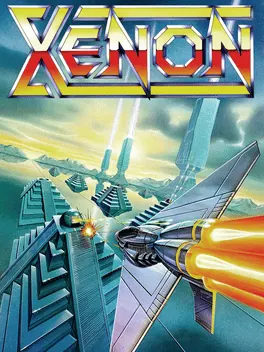
Xenon
Xenon is a 1988 vertical scrolling shooter computer game, developed by The Bitmap Brothers and published by Melbourne House which was then owned by Mastertronic. Xenon was followed in 1989 by Xenon 2: Megablast. The player assumes the role of Darrian, a future space pilot called into action by a mayday report from his superior on a nebula space station. As of late, the colonies of mankind have been under attack by mysterious and violent aliens called the Xenites and it is finally time for Darrian to engage them. Unlike most scrolling shooters, the player can move in any direction instead of straight up. The player craft has two modes, a flying plane and a ground tank. The transition between crafts can be initiated at almost any time during play (except during the mid- and end-of-level boss sections, as well as certain levels where a certain mode is forced), and the mode chosen depends on the nature of the threat the player faces. Destroying some enemies released power-ups the player could catch to enhance their ship.

Déjà Vu: A Nightmare Comes True!!
Déjà Vu is a point-and-click adventure game that draws inspiration from "noir" detective novels that were popular in the 1940s.
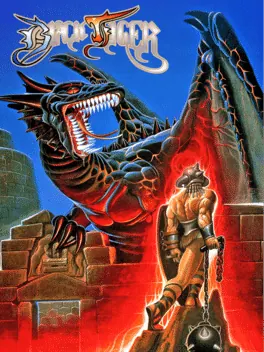
Black Tiger
Black Tiger, known in Japan as Black Dragon, is a 1987 action game released for the arcades by Capcom. A barbarian hero jumps and fights his way through a variety of colourful, enemy-packed levels. The sprawling, eight-way scrolling, two-dimensional levels are packed with hidden bonuses to encourage and reward exploration. Though a percentage of these bonuses consist of dubious and often self-evident "advice", most come in the form of "Zenny coins", currency that allows the player to buy such items as an upgrade to their weapons and armour, keys for treasure chests, and anti-poisoning potions. Special items that reveal coins, upgraded armour, full vitality, extra lives, extra time, or simply bonus points may be found by attacking certain walls. The player's vitality bar will also increase up to three times as a reward for reaching score benchmarks.
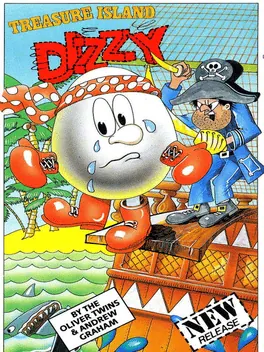
Treasure Island Dizzy
Treasure Island Dizzy is a computer puzzle game published in 1988. Treasure Island Dizzy was the second game in the Dizzy series, and is the sequel to Dizzy - The Ultimate Cartoon Adventure.
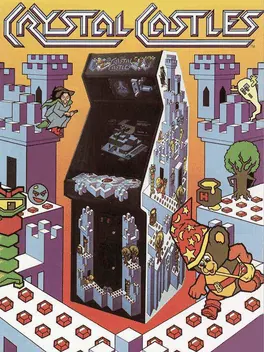
Crystal Castles
Crystal Castles is an arcade game released by Atari, Inc. in 1983. The player controls a cartoon bear by the name of Bentley Bear, who has to collect gems located throughout trimetric-projected rendered castles while avoiding enemies out to get him as well as the gems. Crystal Castles is notable for being one of the first arcade action games with an actual ending, whereas most games of the time either continued indefinitely, ended in what was termed a "kill screen" or simply just restarted from the first level, and to contain advance warp zones.
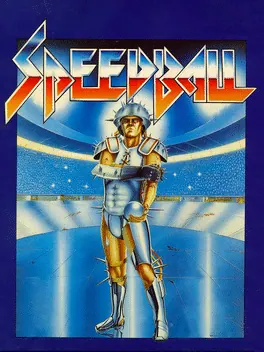
Speedball
Speedball is a futuristic football-like game which takes place on a steel walled floored pitch, 160 feet long by 90 feet wide. There are two teams, and the team scoring the most goals wins. There is a goal at each end of the pitch and a ball warp tunnel in each side of the wall. The warp tunnels can warp a ball from one tunnel to another. The ball is launched from the center of the pit by the automatic launcher in a random direction. There also bounce domes, off of which the ball will be deflected, but over which players are free to move.
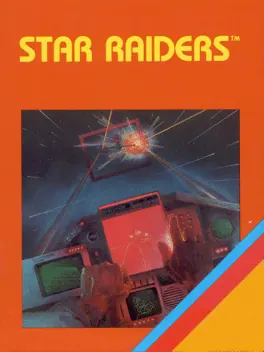
Star Raiders
Star Raiders is a first-person space combat simulator for the Atari 8-bit family of computers. It was written by Doug Neubauer, an Atari employee, and released as a cartridge by Atari in 1979. The game is considered the platform's killer app. It was later ported to the Atari 2600, Atari 5200, and Atari ST. The game simulates 3D space combat between the player's ship and an invading fleet of alien "Zylon" vessels. Star Raiders was distinctive for its graphics, which, in addition to various map and long range scan views, provided forward and aft first-person views, with movement conveyed by a streaming 3D starfield as the player engaged enemy spacecraft. While there had already been target-shooting games using the first person perspective (including 1978's Cosmic Conflict), Star Raiders had considerably higher quality visuals and more complex gameplay. It inspired imitators throughout the 1980s as well as later-generation space combat simulation games including Elite, Wing Commander, and Star Wars: X-Wing. In 2007, Star Raiders was included in a list of the 10 most important video games of all time, as compiled by Stanford University's History of Science and Technology Collections.
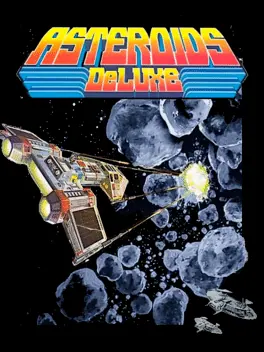
Asteroids Deluxe
Like in the original Asteroids the objective is to score as many points as possible by destroying asteroids and flying saucers. The asteroids come in three different sizes. If the player fires at and hits a large asteroid, it breaks into medium size asteroids. If the player fires at and hits a medium asteroid, it breaks into small asteroids. If a player fires at and hits a small asteroid, it disappears. Different points are awarded for hitting each size of asteroid, and for hitting flying saucers. The player controls a ship that can rotate left and right, fire shots straight forward, and thrust forward. Asteroids Deluxe replaces the hyperspace feature with shields which deplete with use. Other differences include asteroids which rotate and a new enemy which is dubbed a "killer satellite" which would, when shot, break apart into three smaller ships that homed in on the player's position. The screen of the game is wrapped both vertically and horizontally so that if any object moves past the top edge of the screen it reappears on the bottom edge at the same lateral location, and if it moves past the left side of the screen, it reappears on the right side of the screen in the same vertical location. Asteroids Deluxe swaps vector graphics of the original for bitmaps. In 2007, AtariAge self-published a cart release of Asteroids Deluxe for the Atari 7800.
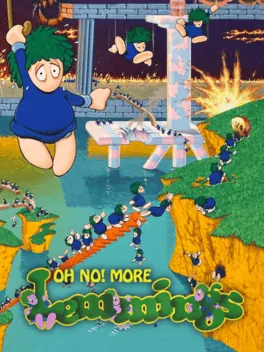
Oh No! More Lemmings
Oh No! More Lemmings is the follow-up to Lemmings. The game features 100 new levels, and all-new graphics and music. It was released in both a stand-alone and an add-on version.
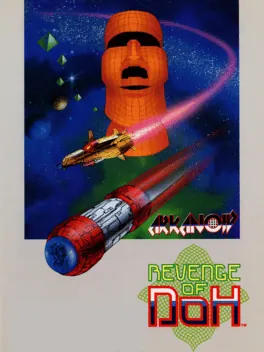
Arkanoid: Revenge of Doh
Arkanoid - Revenge of Doh (a.k.a. Arkanoid 2) is an arcade game released by Taito in 1987 as a sequel to Arkanoid. The mysterious enemy known as DOH has returned to seek vengeance on the Vaus space vessel. The player must once again take control of the Vaus (paddle) and overcome many challenges in order to destroy DOH once and for all. Revenge of Doh sees the player battle through 34 rounds, taken from a grand total of 64. NEW FEATURES: Revenge of Doh differs from its predecessor with the introduction of "Warp Gates". Upon completion of a level or when the Break ("B") pill is caught, two gates appear at the bottom of the play area, on either side. The player can choose to go through either one of the gates - the choice will affect which version of the next level is provided. The fire-button is only used when the Laser Cannons ("L") or Catch ("C") pill is caught. The game also features two new features for bricks. Notched silver bricks, like normal silver bricks, take several hits to destroy. However, after a short period of time after destruction, they regenerate at full strength. Fortunately, clearing a level does not require that any notched bricks be destroyed. Also, some bricks move from side to side as long as their left and/or right sides are not obstructed by other bricks. The US version features an entirely different layout for Level 1 that feature an entire line of notched bricks, with all colored bricks above it moving from side to side. The game features a mini-boss in the form of a giant brain, which will help you practice for DOH. Home versions of Revenge of DOH also featured a level editor, where players could create their own levels or edit and replace existing levels, with the exception of two levels: the mini-boss and DOH.
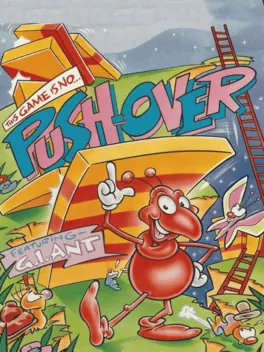
Pushover
Pushover is a platform puzzle game developed by Red Rat Software and published by Ocean Software in 1992 for the Amiga, Atari ST, DOS and Super NES. Notably, the game was sponsored by Smiths' British snack Quavers (now owned by Walkers), where the game plot revolves around the then Quavers mascot 'Colin Curly' losing his Quavers packets down a giant ant hill. The player is then tasked with controlling 'G.I. Ant', a large soldier ant, to recover the Quavers by solving a series of puzzles. The SNES version lacks the Quavers branding, and instead the aim is to recover bundles of cash dropped down the ant hill by Captain Rat. The game consists of 100 levels of increasing complexity over nine different themed worlds. Each level features several interconnected platforms holding a number of "dominoes". The aim is to rearrange the dominoes, such that with a single push, all of the dominoes are toppled, thus opening the exit to the next level. There are 11 different types of domino, identified by red and yellow patterns, each with different actions. The player controls G.I. Ant, who can move certain dominoes by carrying them one at a time. Various factors can result in failure to complete a level. As well as toppling all of the dominoes, the player must be able to access the exit door once the dominoes have fallen. For instance, the player will be unable to reach the exit if a ledge leading to the exit has been destroyed, or if a gap leading to the exit has not been bridged, or if a line of dominoes lie across the exit. G.I. Ant may die by falling from a large height, by falling off the bottom of the screen, or by being crushed under a falling domino. The player is then greeted with the message "You Failed, You Died" and has to restart the level. Also, the level will be failed if any dominoes are destroyed by landing one domino on top of another. Each level has a time limit during which it must be completed. However, if the time runs out the player is still able to continue with the puzzle if they wish. By pausing the game once the time has run out, a small hint will be displayed, giving advice on how to complete the level. As a side note, the hint for level 98 informs the player that the game's designer cannot remember how to complete the level without trickery ("Use a drop! There is a way to make it work with a push, but I can't find it!"). The themed worlds, in order, are an industrial complex, an Aztec world, a space station, an electronic world, a Greek temple, a Medieval castle, a Meccano-inspired world, a dungeon and a Japanese temple. Each world has 11 levels, making a total of 99 regular levels. A packet of Colin's Quavers is retrieved after each world, with nine packets in all to be collected. Many of the early levels are tutorials demonstrating how each type of domino will act. Often there is only a single solution to each level, though some levels have multiple solutions. The final level, level 100, must be completed using dominoes with hidden markings. A password system allows the player to continue an earlier game, without having to restart from the first level. Additionally, upon completing a level the player gains a token, which once a level has been failed, allows the player to return to the point before the domino push, rather than having to return to the initial state of the level.
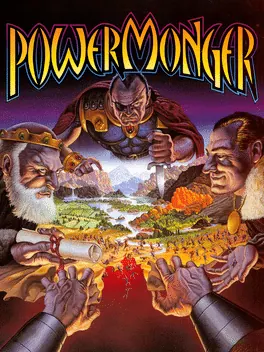
PowerMonger
In a world without kings, power is the only law. No leader controls the destiny of this new world. Yet. Can you? Unite each territory by word or by sword or face bitter defeat at the hands of the other PowerMongers. Encounter a living world. Win the loyalty of farmers, shepherds, merchants, ranchers- even thieves. Hundreds of people with individual homes, jobs, and personalities. React to changing seasons. Store food for the winter- your soldiers won't take orders on an empty stomach.

Indiana Jones and the Last Crusade: The Action Game
Indiana Jones and the Last Crusade: The Action Game is a side-scrolling action title based on the 1989 film of the same name. Players control Indiana Jones through various levels that loosely follow the movie’s plot, including iconic locations like the catacombs and the Zeppelin. Gameplay focuses on platforming, basic combat, and item collection, with limited lives and high difficulty. The graphics and sound vary across platforms, with the Amiga and Atari ST versions generally offering the most polished presentation.
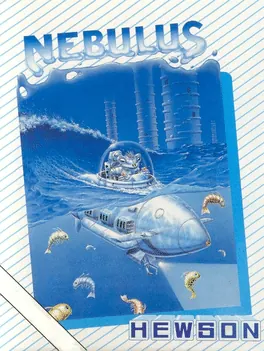
Nebulus
You play a small green guy who needs to blow up eight towers, because their presence is somehow poisoning the water of planets which could potentially be ideal colonies. Unfortunately you need to get to the top of these towers to blow them up. You make your way up to the top of the tower via walkways around the outside of the towers. You need to jump over, kick, and run from various enemies in your journey to the top. Most vertical movement is achieved by jumping onto moving ledges at the right moment. The game was considered revolutionary in its time for its graphic technique. As the main character walked around the outside of the tower, the character was fixed in the middle of the screen while the tower itself rotated. This gave it a pseudo-3D effect. Towers are linked together via a voyage through the sea in your trusty MK.7 submarine. This plays out as a side-scrolling collect-'em-up in which bonus points can be obtained.
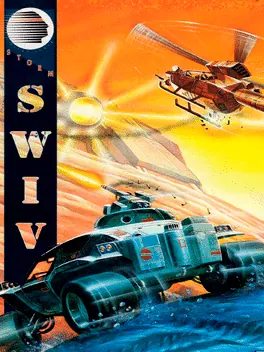
SWIV
SWIV is a vertical scrolling shooter and an unofficial follow-up to Sales Curve's conversion of the side scroller Tecmo arcade game Silkworm. One player controls a helicopter and the other a jeep, with the jeep transforming into a boat when the vehicles pass over water. As well as a host of blaster fodder the game also includes a mid-level enemy inspired by the "Goose" enemy from the earlier title Silkworm. Pieces of this enemy would fly onto the screen and assemble into one vehicle before commencing to fire at the players' vehicles. When destroyed the "goose" would drop power-ups.
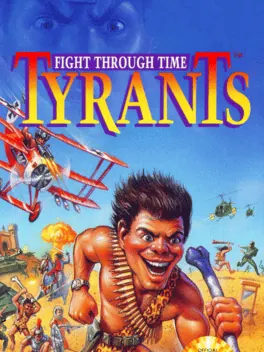
Tyrants: Fight Through Time
First you choose one out of four different characters to represent you, Scarlet (red army), Oberon (yellow army), Caesar (green army), or Madcap (blue army). The game is split into 10 levels - the first 9 are groups of 3 territories which can be completed in any order, while the final 'Mother of All Battles' has its own surprises. Land is mostly of sand, grass or ice. You start with 100 men and you can use whatever quantity you find necessary on each island. The rest men left will go to another level with another new 100. In the second half of the game you can freeze men to save them for the Mother of All Battles. Once you select your island and place for your HQ, you must do some research for better weapons and defences. On the roof of your buildings you can put protectors like archers, gunmen, boiling oil men, and later on even laser turrets. If you send a team of unarmed men into an unoccupied square, they will build an additional base there, with larger armies completing this more quickly. Later on higher levels, you'll also build mines and factories, as you'll need to dig a certain material for higher level weapons, depending on whether the area you're on is rich with a certain material or not. With each next level, you'll start from a higher technology level and be able to progress to one higher level up than at the previous level
Action Fighter
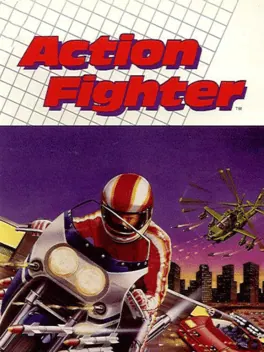
Take to the streets or take to the skies. Because Action Fighter is the incredible, transformable combat vehicle. You start out on a customized cycle. Built with enough speed and power to jump over water and overtake enemies. Then, by finding the right parts along the way, you'll change your cycle into a supercharged, state-of-the-art sports car. Next, add two turbojets to make your car airborne. And take to the skies. Down hyped-up helicopters and jet spaceships from above. And no matter which vehicle you're manning- or who you're after- get ready to stand by for action!
Turrican II: The Final Fight
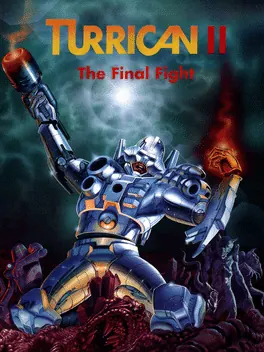
Turrican II: The Final Fight is a platformer/shooter as typically seen on consoles, but designed for home computers from the ground up. Its plot is - naturally - very simple: an evil mega-robot called The Machine attacks the United Planets Ship Avalon 1, slaughtering all who resist. All - except Bren McGuire, who manages to escape and slips into the experimental Turrican bionic armor. As Turrican, he strives to show The Machine who's the boss. Unlike other games of its type, this game contains three levels of horizontal shooter action in the spirit of R-Type or the developers' own Katakis. Six large worlds are to be explored, where you are basically free to go everywhere you want, since there is no automatic scrolling and the levels are packed with hidden extra lives and weapons. All those levels are very different: the first one in the rock desert is pretty colorful with parallaxing rainbow background and happy music, while the following worlds get darker and darker.
Lure of the Temptress
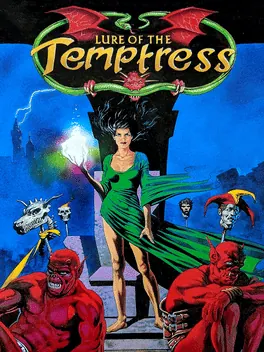
Lure of the Temptress is an Adventure game, developed by Revolution Software and published by Konami, which was released in 1992.